














1. Summary of Khmer Culture in An Giang
1.1. The Khmer Community in An Giang's Cultural Landscape
The Khmer people are one of the largest ethnic minority communities in An Giang province, accounting for about 8% of the total population with over 399,000 people, concentrated in Tri Ton, Tinh Bien, Thoai Son, and Tinh Bien town. After centuries of living in the Mekong Delta region, this community has contributed to shaping the local diverse cultural landscape. Khmer villages (phum sóc) with their traditional language, customs, and folk arts create a unique cultural space within An Giang's multi-ethnic fabric.
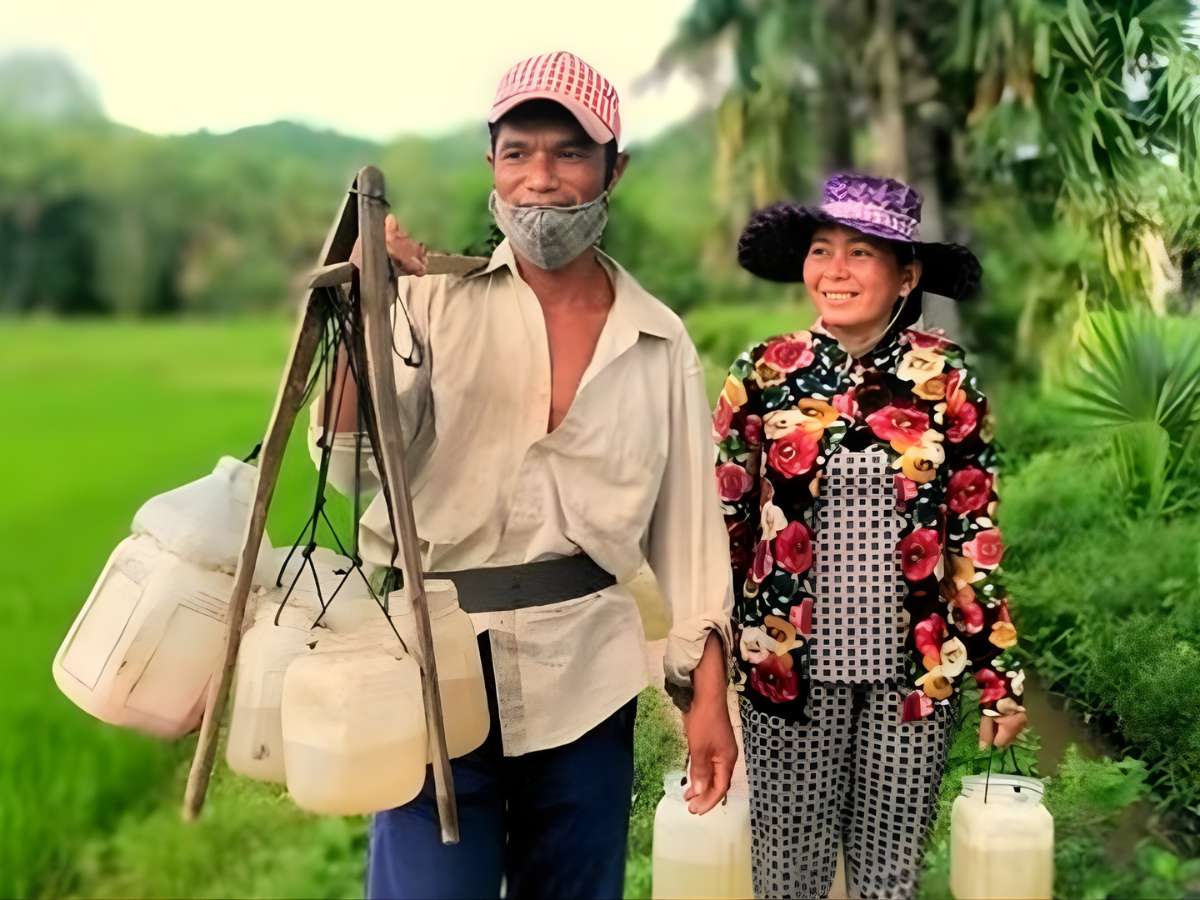
The Khmer community of An Giang lives in close connection with the traditional agricultural space of Tri Ton. (Source: Collected)
In the process of formation and development of the Mekong Delta region, the Khmer people play an important role in preserving values associated with agriculture, beliefs, and spiritual life. Despite many historical fluctuations, the community has maintained internal cohesion while flexibly adapting to surrounding cultural exchanges. Phum sóc is not only a place of residence but also a space for the cultural life of the An Giang Khmer people and beliefs, where traditional values are passed down through generations.
1.2. Process of Formation and Development of Cultural Identity
The Southern Khmer people originate from the ancient Khmer community that inhabited a large part of Southeast Asia centuries ago. Upon settling in the Mekong Delta, they engaged in long-term contact with the Kinh and Hoa residents, leading to multidimensional cultural exchange. Nevertheless, the Khmer community has preserved core elements such as their own language, Theravada Buddhism, and customs related to the traditional agricultural calendar.
Cultural exchange is not only evident in daily life but also clearly imprinted in performing arts, temple architecture, and festival life. Khmer culture in An Giang is a combination of the imprint of the ancient Angkor civilization and the characteristics of Southern riverine culture. This has formed an identity that is both local and reflects a long historical depth.
1.3. Cultural Values of the Khmer People in Modern Life
In the modern context, the culture of the An Giang Khmer people continues to be maintained and adapted to meet the community's development needs. Traditional activities such as festivals, music, folk dances, and temple architecture still play an important role, closely linked to social life. These activities contribute to strengthening community connections and preserving cultural identity.
Furthermore, Khmer cultural values are increasingly integrated into experiential tourism activities, attracting the interest of domestic and international visitors. Tourists visiting An Giang not only explore the natural landscape but also have the opportunity to discover the depth of local culture. Therefore, the preservation and promotion of Khmer culture become an important foundation for the sustainable development of the locality.
2. Religious Life and Khmer Temple Architecture
2.1. Theravada Buddhism and its Role in Spiritual Life
Theravada Buddhism holds a central position in the spiritual life of the Southern Khmer community, profoundly influencing life views and social interactions. This religion not only guides spiritual beliefs but also contributes to shaping moral standards and community lifestyles over generations. For the Khmer people of An Giang, Buddhist practices are intertwined with daily life, from production activities to important life events.
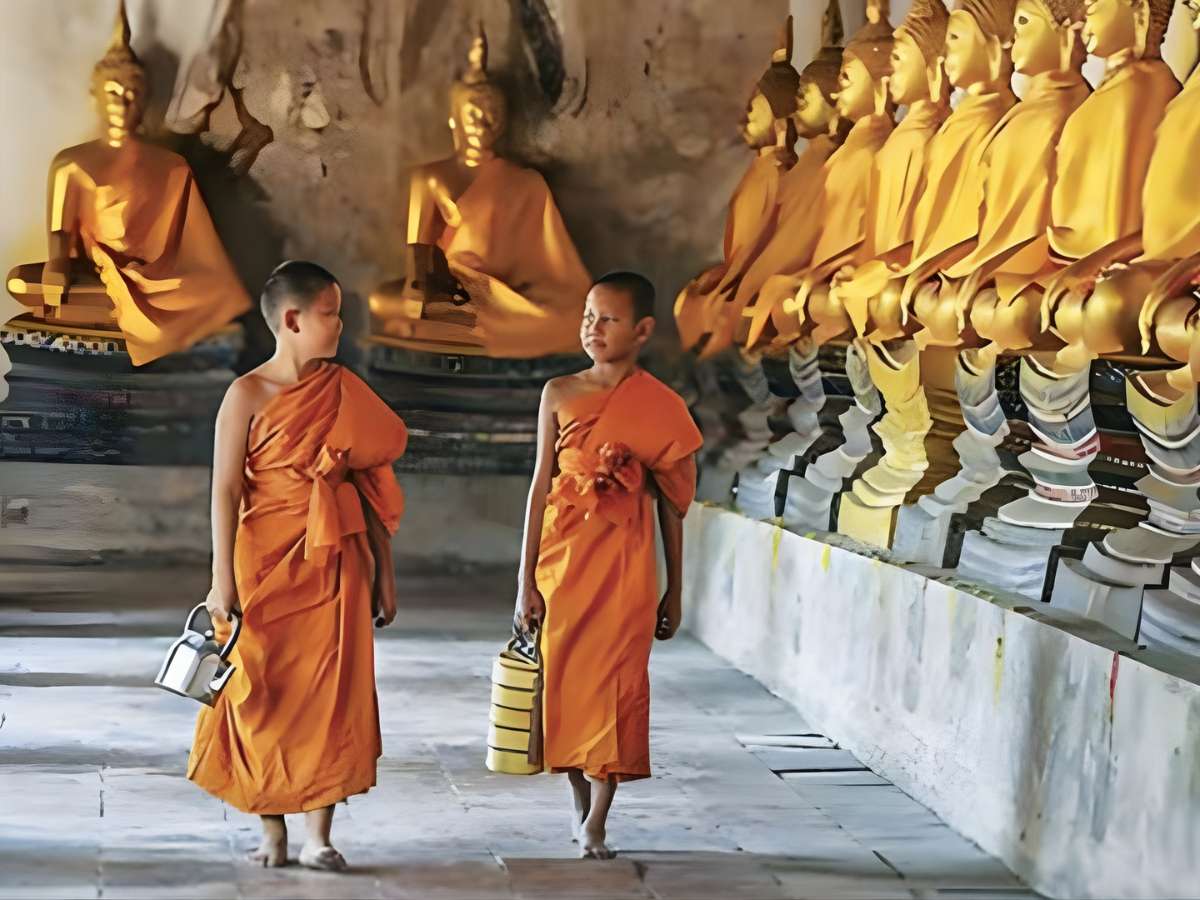
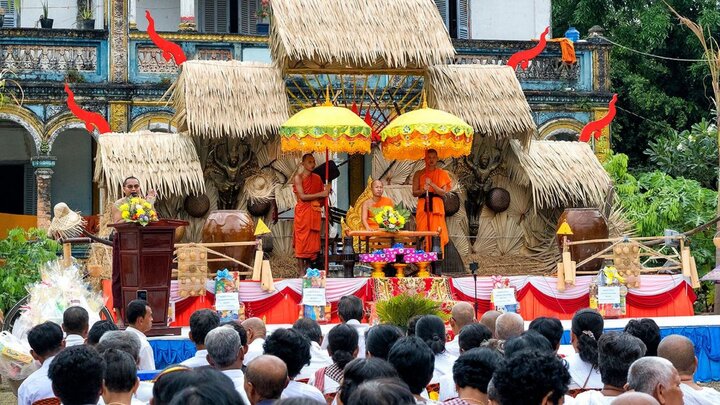
Theravada Buddhism plays a central role in the spiritual life of the Khmer people. (Source: Collected)
In the villages, Khmer pagodas serve as centers for religious activities and spiritual education. Monks not only perform religious rituals but also guide the community on doctrine, ethics, and social behavior. Through study and ceremonial activities, Theravada Buddhism contributes to maintaining strong cohesion among community members.
Besides, collective Buddhist activities also create opportunities for people to participate in charitable programs and community events. Traditional festivals such as Kathina robe offering, Buddha bathing, or procession of the Great Calendar attract a large number of Buddhists. Through these, the spiritual life of the Khmer people is nurtured in a distinctly communal religious space.
2.2. Khmer Pagoda Architecture in An Giang
Khmer pagoda architecture in An Giang is one of the prominent features of the Southern Vietnamese cultural space. The pagodas often have multi-tiered curved roofs, decorated with intricate patterns and mythical Khmer figures. These details reflect the aesthetic standards and artistic values preserved through generations.
The dominant colors in Khmer pagoda architecture are typically shades of yellow and orange, associated with the symbolism of Theravada Buddhism. The color schemes and spatial arrangements create a sense of solemnity, while also expressing the connection between people and the spiritual world. Each pagoda, therefore, is not just a religious structure but also a cultural entity with multiple layers of meaning.
2.3. Khmer Pagodas as Community Cultural Centers
Khmer pagodas extend their role beyond worship to serve as important community cultural centers. Activities such as teaching the Khmer language, imparting traditional customs, and organizing community festivals are frequently held here. These activities contribute to maintaining the connection between generations within the villages.
In many localities, pagodas also host classes for traditional folk dance, music, and life skills for youth. The integration of cultural education with religious activities helps younger generations understand and connect more deeply with their community's identity. This is a crucial factor in preserving Khmer culture amidst the changes of modern society.
3. Traditional Festivals and Folk Cultural Activities
3.1. Typical Festivals of the Khmer People in An Giang
The traditional festivals of the Khmer people in An Giang are closely linked to the agricultural cycle and the community's religious life. The Chol Chnam Thmay festival, usually held around mid-April according to the Khmer traditional calendar, marks the transition from the old year to the new agricultural season. During this time, Buddhist ceremonies and community activities are organized at pagodas and villages.
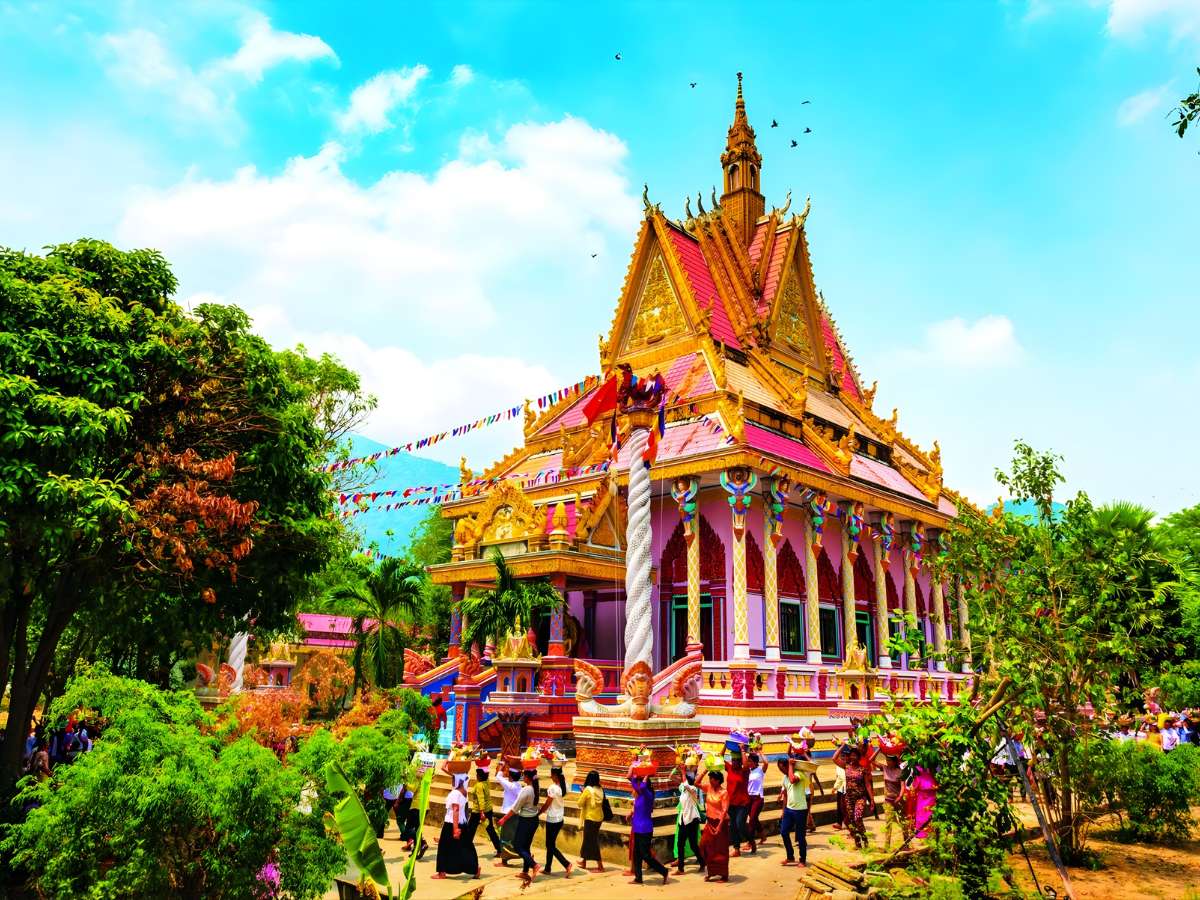
Khmer pagodas in An Giang are spaces where typical cultural festivals take place. (Source: Collected)
The Sen Dolta Festival is an occasion for the Khmer people to remember their ancestors and the deceased, reflecting traditional views on filial piety and family roots. The festival usually takes place at the end of the 8th lunar month, with worship rituals at pagodas and within families. It is also a time for the community to gather, strengthening intergenerational bonds.
3.2. Traditional dance, music, and theater arts
Traditional arts play an important role in the spiritual and cultural life of the Khmer people in An Giang. Forms such as Romvong dance, ngũ âm music, and Dù kê and Rô băm theater are often featured during festivals and community events. These forms reflect the aesthetic values and spiritual life of the Khmer residents over generations.
Romvong dance is a familiar circle dance, often performed collectively during festive events. The gentle, rhythmic movements express community spirit and the connection among participants. This dance is not only entertaining but also a means of cultural exchange within the villages.
3.3. Traditional costumes and cuisine
The traditional costumes of the Khmer people in An Giang are often worn during important festivals and community events. Khmer-style áo dài combined with a khăn rằn reflect aesthetic styles and cultural values preserved over generations. The attire not only holds ceremonial significance but also represents the community's cultural identity.
Khmer cuisine is closely linked to agricultural life and traditional beliefs. Dishes are often prepared with local ingredients, suited to the natural conditions of the delta region. During festivals like Ok Om Bok, traditional dishes contribute to creating a distinct ceremonial community atmosphere.
4. Stories of An Giang Khmer Culture and Tourist Experiences
4.1. Sunset Town
Sunset Town, located in Phu Quoc Special Administrative Region, An Giang Province, is a coastal tourism complex associated with evening performances. This area features fireworks displays twice every night, year-round, often linked with major shows. The Symphony of the Sea show takes place at the Kiss Bridge area, while Kiss of the Sea is held at a nearby stage.
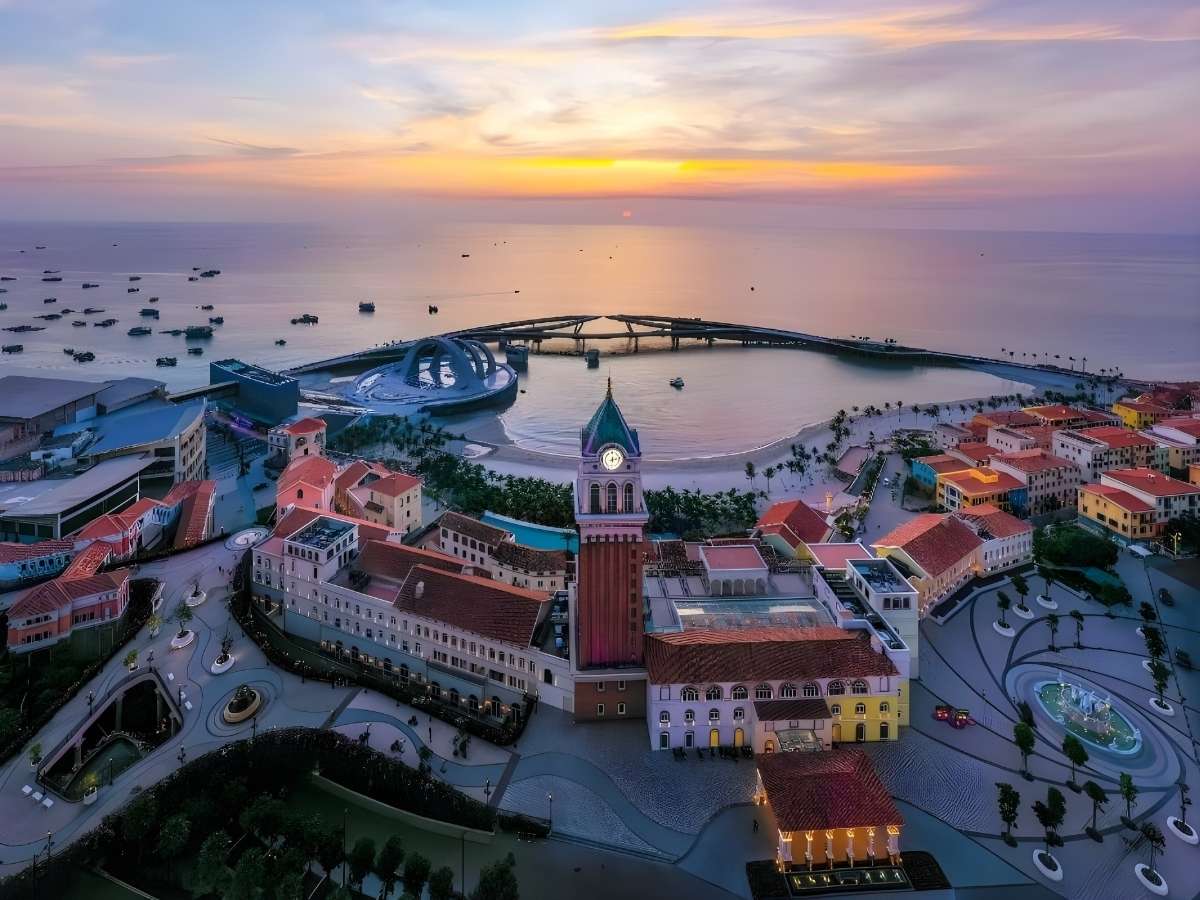
Overview of the square and art performance space in the South of the island. (Source: Collected)
Kiss Bridge is an architectural highlight in Sunset Town, put into operation from the end of 2023. The structure has two branches extending into the sea, creating a gap in the middle to form a characteristic view as the sun sets. The space of the square, sea, fireworks, and art performances helps this area become a night tourism experience destination in the South of the island.
4.2. Sun World Hon Thom
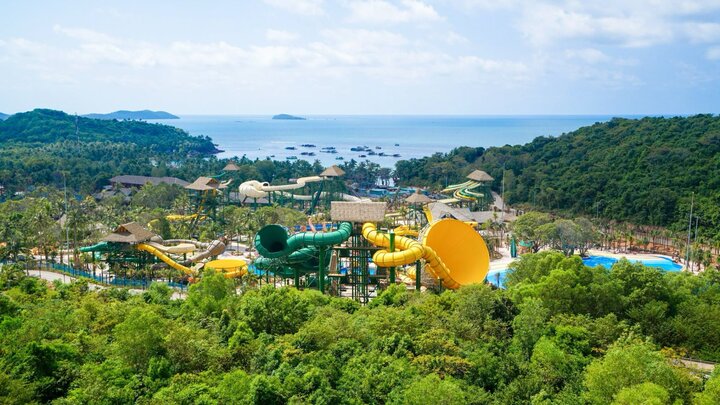
Sun World Hon Thom is a complex of entertainment and resort at Hon Thom, Phu Quoc Special Administrative Region, An Giang province. Within the premises is Aquatopia water park, developed in the model of a themed water park with 6 different zones. Game groups are arranged according to the level of experience, including a thrill zone, a family zone, and a children's zone.
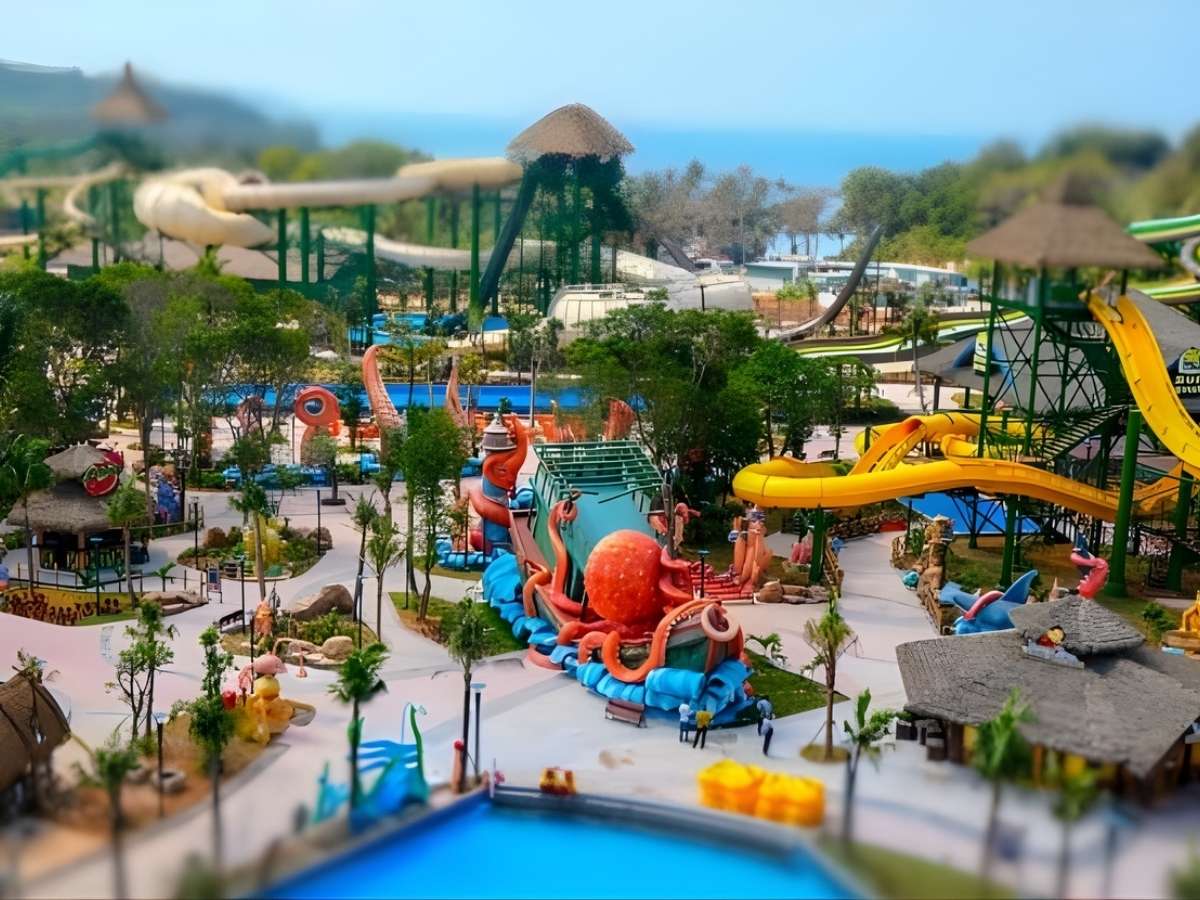
Overview of Aquatopia water park with unique marine creature themed games. (Source: Collected)
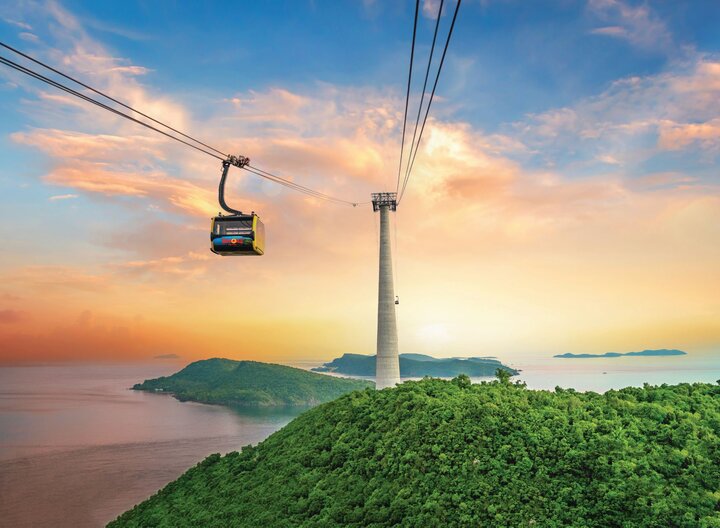
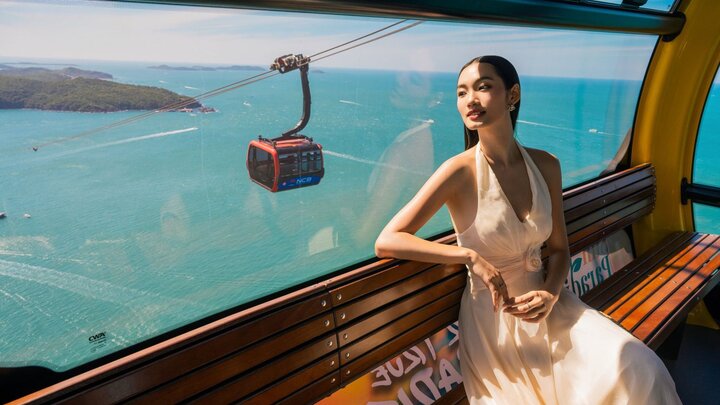
The Hon Thom Cable Car was inaugurated in 2018, connecting An Thoi station with Hon Thom island across the southern waters of Phu Quoc. The structure is 7,899.9 m long and was recognized by Guinness as one of the longest three-rope sea-crossing cable cars. The average travel time is about 15 minutes, offering a panoramic view of the An Thoi archipelago from above.
>>> Book Sun World Hon Thom tickets now to fully explore Hon Thom HERE.
4.3. Ho Quoc Pagoda
Ho Quoc Pagoda, also known as Truc Lam Ho Quoc Zen Monastery, is located in Phu Quoc Special Administrative Region, An Giang province. Construction began in 2011 and was completed in 2012. It is part of a complex covering approximately 110 hectares, with the pagoda area occupying a portion of this land. The pagoda's architecture reflects traditional Buddhist influences, with its back against the mountains and its facade facing the sea.
During a trip to An Giang after the merger, Ho Quoc Pagoda adds a spiritual dimension alongside island experiences and modern entertainment. The pagoda's space is often noted for its wide landscape axis, stone steps, and sea views. This destination is suitable for groups interested in culture, architecture, and a leisurely pace of exploration.
The culture of the Khmer people in An Giang reflects the historical depth and unique spiritual life of the Mekong Delta region. Through beliefs, festivals, and community activities, these cultural values continue to be preserved and adapted to the modern context. This contributes to enriching the journey of discovering Vietnamese culture through experiential tourism.