















1. Learn about the Oc Eo cultural festival
1.1. Oc Eo culture in the historical flow of the Southern region
The Oc Eo culture refers to an archaeological culture formed in the Southern region, existing from the 1st to the 7th century AD. This culture is associated with the living space of ancient residents in the present-day Mekong Delta, reflecting the economic life, beliefs, and trade of the indigenous community.
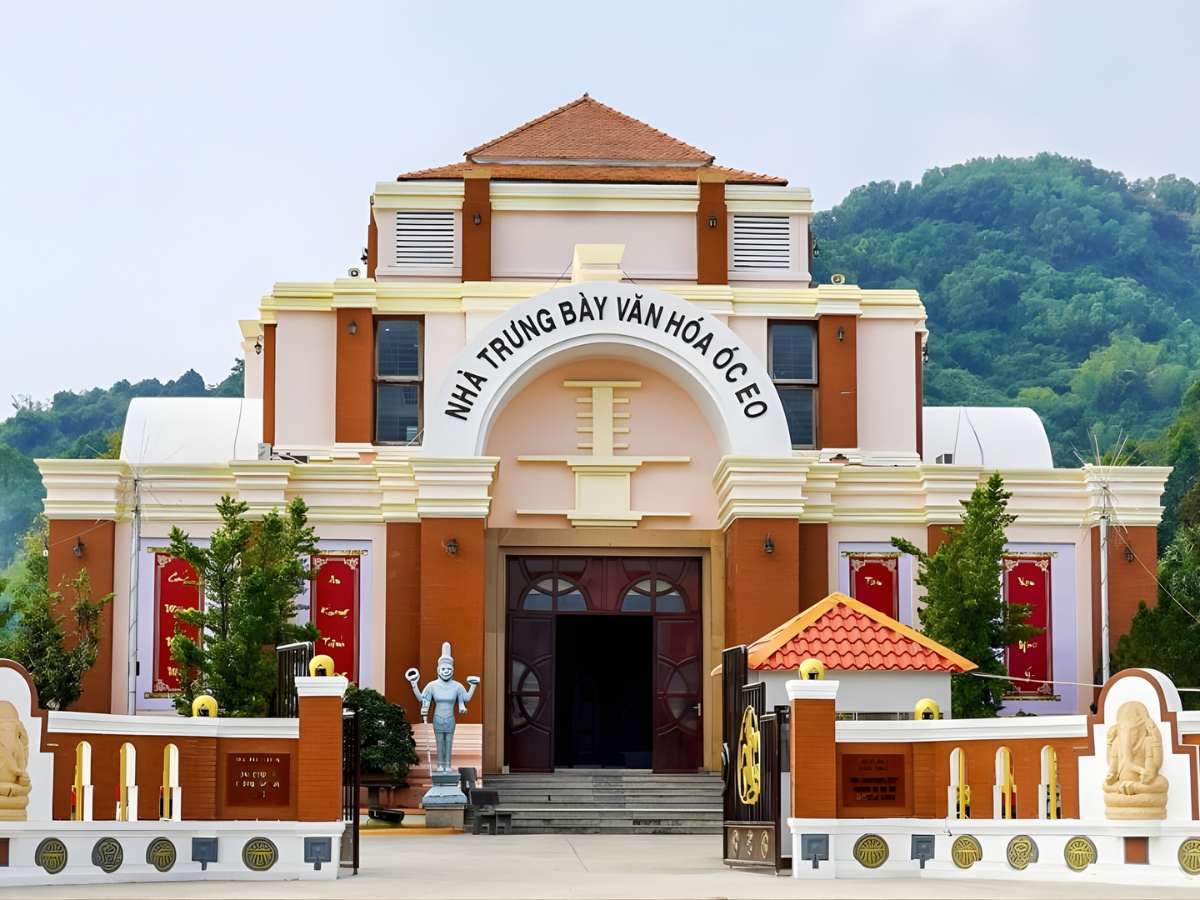
The Oc Eo Cultural Space reflects the historical depth of ancient Southern Vietnam. (Source: Collected)
Archaeological discoveries show that Oc Eo was once a cultural and commercial center of the Funan Kingdom, participating in the ancient Southeast Asian trade network. Numerous artifacts, architectural remains, and traces of habitation found have contributed to sketching a picture of a society with a high level of organization and diverse cultural exchange.
The Oc Eo Ba The archaeological site, located in Oc Eo town, Thoai Son district, An Giang province, is where many typical traces of this culture are concentrated. The site's space, with its system of architectural foundations, artifacts, and ancient living traces, provides conditions for researchers and tourists to directly access the formation history of the Oc Eo residents.
1.2. Oc Eo Cultural Festival and its significance in honoring heritage
The Oc Eo Cultural Festival is organized to preserve and introduce the historical and cultural values associated with the Oc Eo archaeological culture to the community. Through activities such as ritual reenactments, heritage exhibitions, and folk cultural events, the festival helps the public access heritage in a more visual and understandable way.
Besides its role in introducing heritage, the festival also contributes to raising social awareness about the value of archaeological sites in Southern Vietnam. The activities are based on scientific research results, thereby creating a foundation for preserving and promoting heritage in the context of cultural and tourism development.
The festival space also serves as a connection between historical education and tourism experience, aiming to develop cultural tourism products associated with local identity. Through the festival, Oc Eo heritage is placed in a closer relationship with modern life and the exploration needs of tourists.
2. Historical Flow of the Oc Eo Cultural Festival
2.1. From archaeological discovery to contemporary festival space
Archaeological excavations in the Oc Eo Ba The area, An Giang province, conducted since the mid-20th century, have opened new research avenues into the history of Southern Vietnam. Initial findings helped identify an ancient culture associated with the settlement system, crafts, and trade of the indigenous people in the Mekong Delta region.
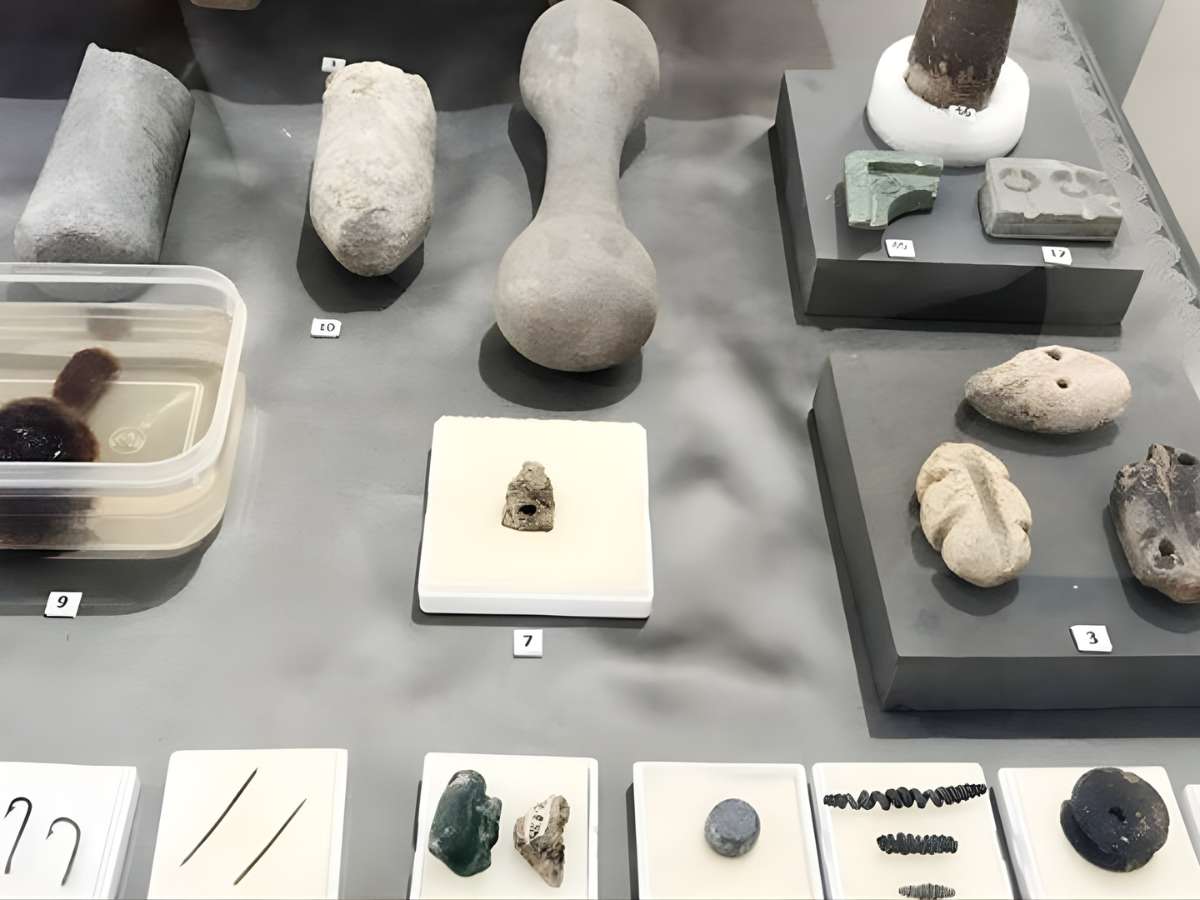
Oc Eo artifacts are scientifically displayed in a modern archaeological space. (Source: Collection)
Based on archaeological research results, many scientific activities and heritage exhibitions have been deployed to introduce the cultural values of Oc Eo to the community. Seminars, exhibitions, and historical education programs contribute to bringing archaeological knowledge closer to the public, students, and tourists.
This process lays the foundation for the formation of the Oc Eo cultural festival as a space connecting academia and experience. The festival is not only based on research materials but is also developed in an open direction, helping the public access heritage through interactive cultural activities.
2.2. Time and space for organizing the festival
The Oc Eo cultural festival is usually organized at times suitable for local cultural and educational activities. The selection of the festival's timing helps attract community participation, especially from students and tourists interested in the history of the Southern region.
The festival space is arranged in areas associated with archaeological sites and cultural exhibition facilities within Oc Eo town. This arrangement allows attendees to experience the festival while directly accessing archaeological traces and heritage conservation spaces.
The combination of historical sites and cultural activity areas makes the festival a destination for exploration. Visitors can follow a continuous tour route from heritage sites to participate in experiential activities, thereby gaining a deeper understanding of the formation context of Oc Eo culture.
3. An interesting journey of discovery with Oc Eo culture
3.1. Traditional rituals bearing the mark of Oc Eo
One of the central activities of the festival is the re-enactment of rituals with the religious and spiritual significance of the ancient Oc Eo inhabitants. Rituals of incense offering, prayer for peace, and ancestor veneration are based on artifacts and religious and spiritual symbols recorded by archaeology, contributing to reflecting the spiritual life of the ancient community. Although not a detailed original reconstruction, these rituals help participants feel the connection between tradition and the present.
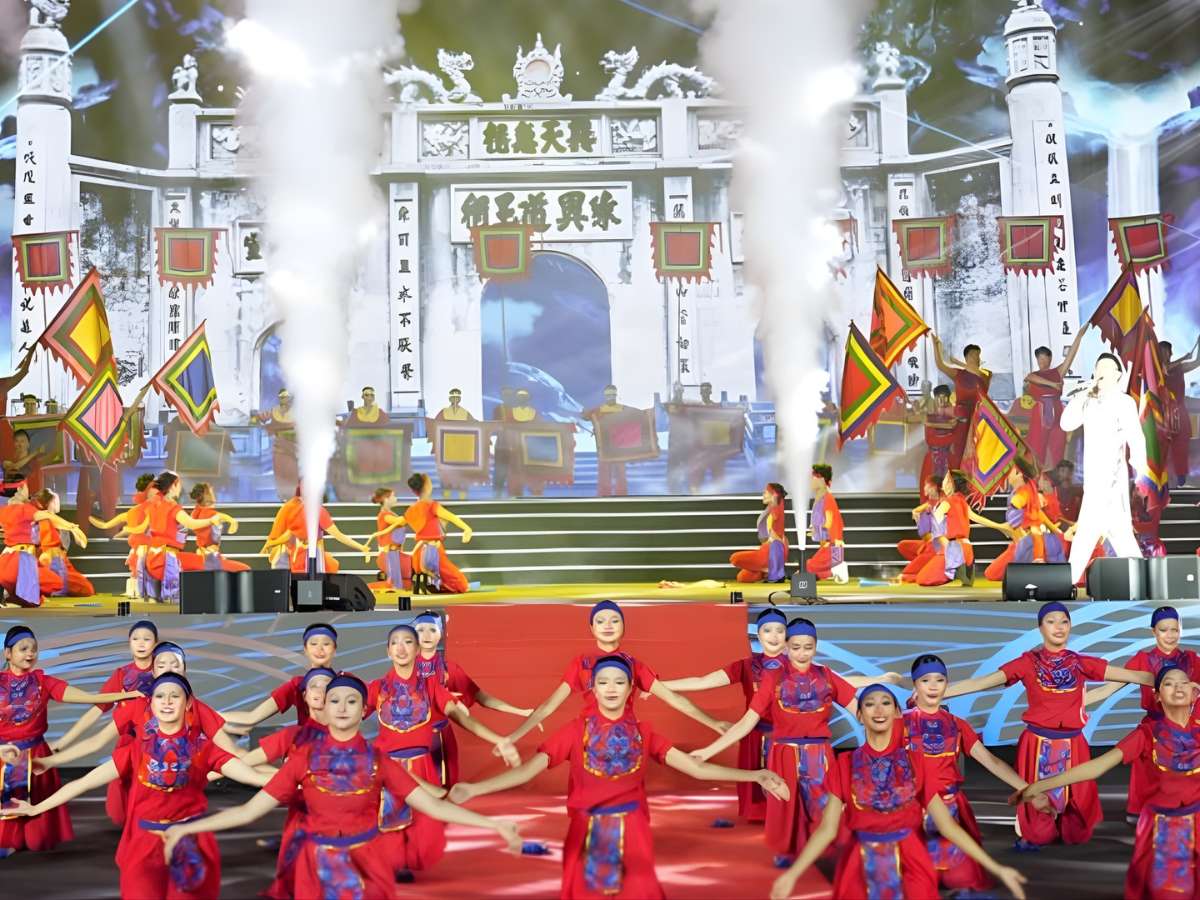
Rituals recreating Oc Eo culture are strongly imbued with traditional beliefs. (Source: Collected)
The recreated rituals also emphasize the role of religion and beliefs in the life of ancient Oc Eo people, thereby illustrating the relationship between humans and deities as reflected in artifacts, statues of deities, and religious architectural elements discovered at the site.
Participating in or observing rituals during festivals helps visitors approach heritage from a cultural experience perspective. The ritual space is organized in a clear sequence, helping participants understand the meaning of each action and symbol in ancient spiritual life. Thus, rituals become a bridge connecting the spiritual values of Oc Eo culture closer to today's community.
3.2. Art Performances and Folk Activities
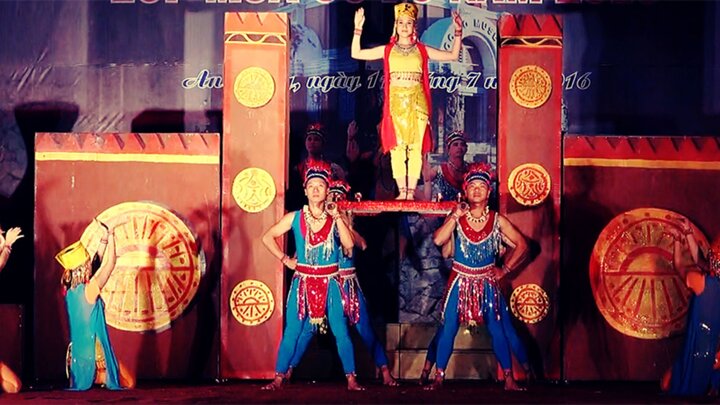
Within the framework of the festival, folk cultural performance activities are organized to reflect the community life of ancient times. Dance performances, traditional music, introductions to ancient costumes, and handicraft activities help create a rich experiential festival atmosphere. Artisans and local communities participate in demonstrating traditional handicraft production methods, traditional crafts, and how costumes were worn through recreated collections.
Folk games, art exhibitions, and shared activities among participants also create a connection between the past and the present – where participants not only observe but also directly learn and engage in traditional cultural activities.
Folk activities during the festival contribute to recreating the community life of ancient Oc Eo residents. Through music, movement, and performance spaces, visitors can imagine how ancient people were connected to labor, rituals, and daily life. These experiences help folk art to be not only seen but also felt through multiple senses.
3.3. Archaeological Exhibitions and Museum Experiences
An indispensable part of the festival is the archaeological exhibition and museum experience area, which displays artifacts, site models, and interactive spaces. At these points, participants can view collections of typical artifacts such as statues, jewelry, tools, and other archaeological items, helping them gain a deeper understanding of the life, techniques, and art of Oc Eo culture.
The experiential space also includes interactive exhibition rooms, allowing visitors and students to find detailed information about sites such as canal systems, ancient residential architecture, and ancient trade transportation methods. This activity is both educational and attracts the interest of academic and cultural tourism groups.
Besides its exhibition role, the archaeological space is also designed as a discovery stop. Visitors can access heritage information through commentary systems, models, and visual materials. This organization method makes the process of understanding Oc Eo culture coherent and suitable for many visitor groups.
4. Tourist Attractions That Can Be Connected When Participating in the Oc Eo Cultural Festival
4.1. Sun World Hon Thom
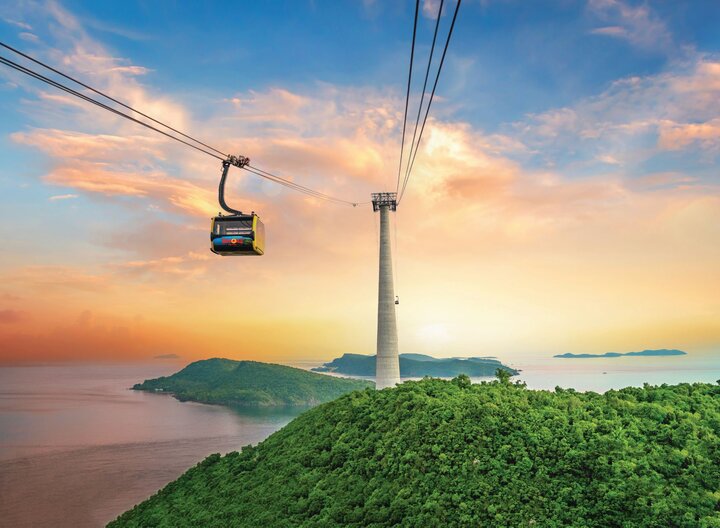
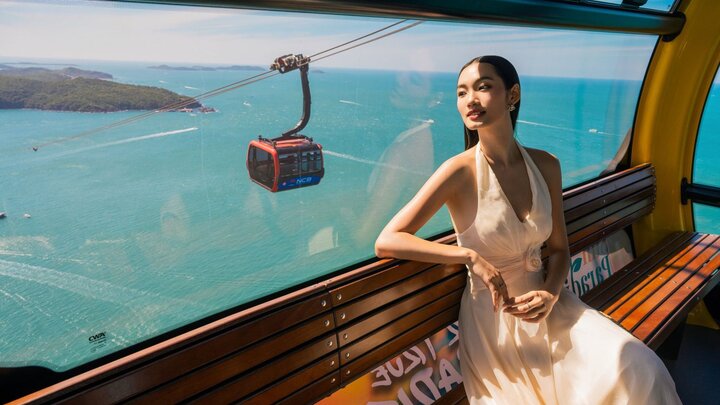
Sun World Hon Thom is an entertainment destination in the southern part of Phu Quoc, suitable for connecting in a travel itinerary after participating in the Oc Eo Cultural Festival. The highlight of this area is the 3-wire cable car line, 7,899.9 m long, recognized by Guinness since 2018.
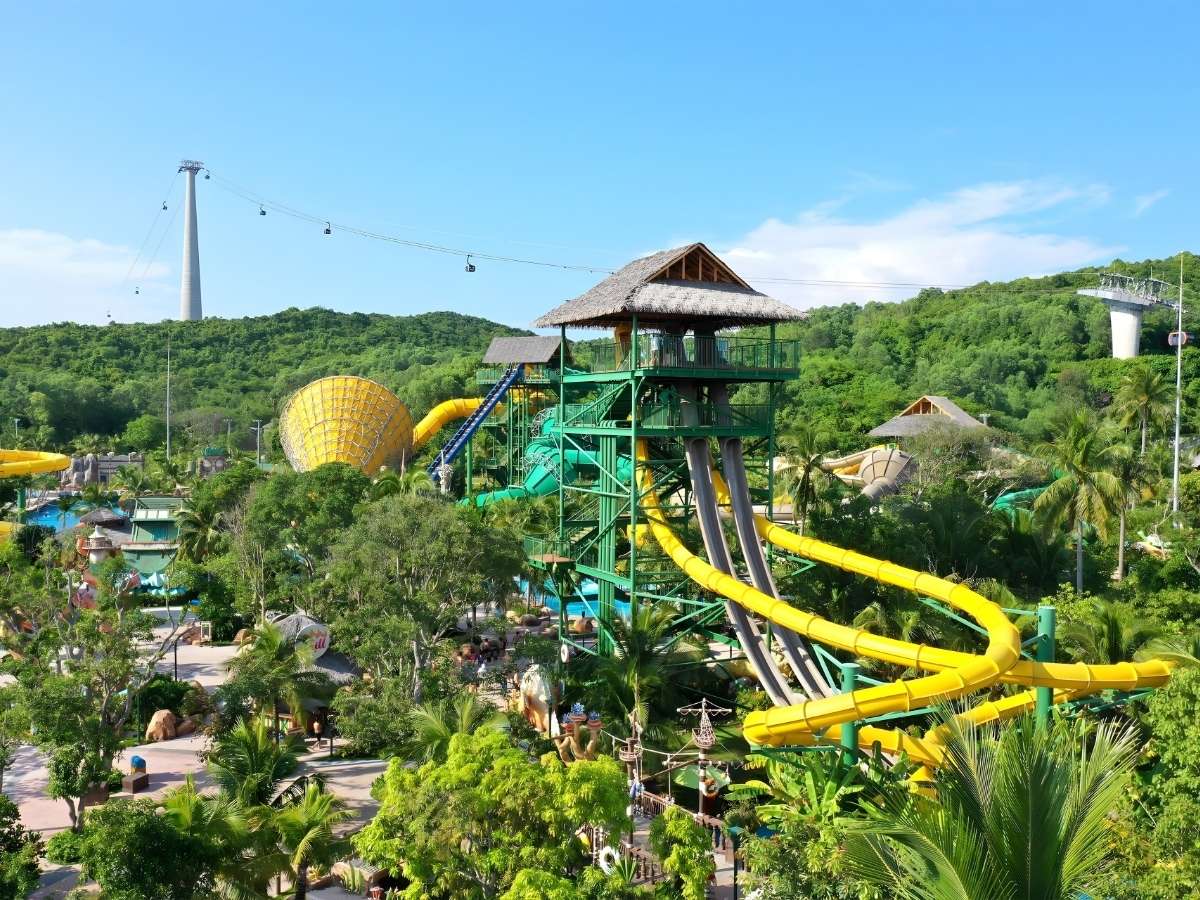
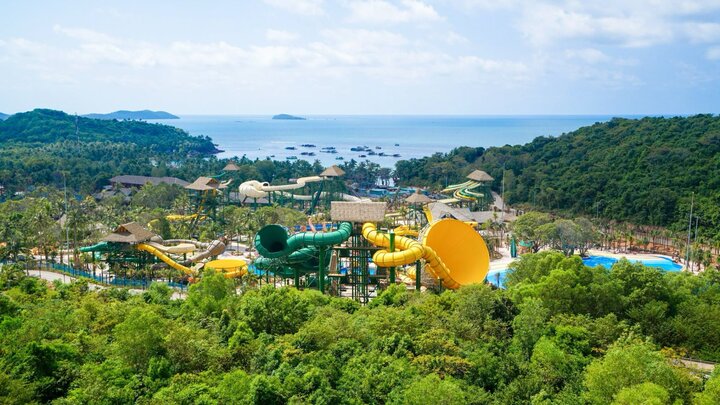
System of swimming pools and thrilling water slides at Aquatopia Hon Thom. (Source: Collected)
At Hon Thom, Aquatopia water park has many underwater game zones, suitable for families and young guests. The connection of the An Giang – Phu Quoc route helps the journey add elements of beach resort, entertainment, and island landscape experience.
>>> Book Sun World Hon Thom tickets now to fully explore Hon Thom HERE.
4.2. Sunset Town
Sunset Town is a coastal entertainment destination in South Phu Quoc, notable for its Mediterranean architecture, pedestrian spaces, and evening performance programs. This area features fireworks twice every night through two main shows, running 365 days a year according to the announced operating schedule. Here, the Symphony of the Sea show takes place at the Kiss Bridge area, combining marine sports, light, and fireworks displays. The Kiss of The Sea show is held at a nearby stage, utilizing water, fire, music, and multimedia effects.
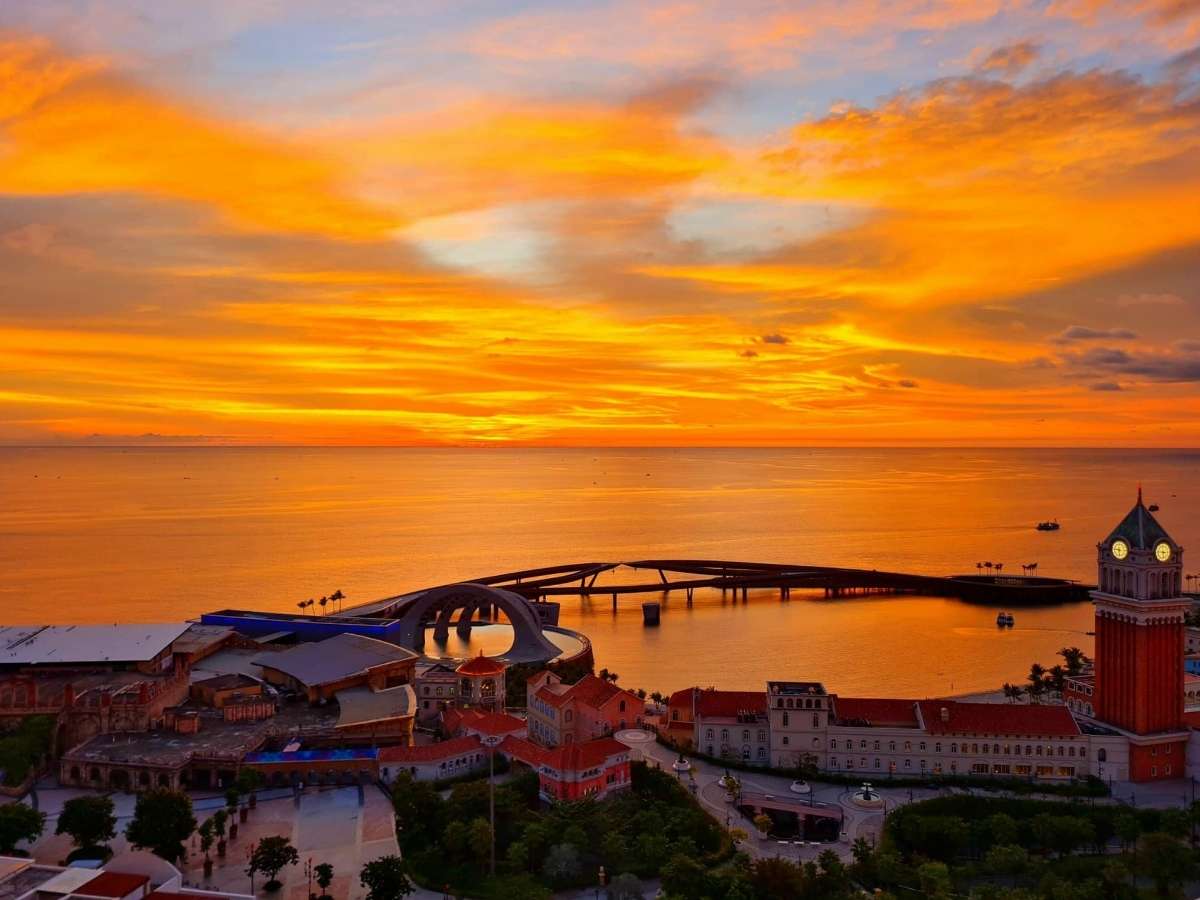
Ideal sunset spot in the South of Phu Quoc island. (Source: Collected)
The highlight is the Kiss Bridge here, a structure facing the sea and often chosen by tourists to watch the sunset, take photos, and follow shows. The architectural space in this area is built in the style of a coastal town, with streets, squares, and sea observation points. When combined with festival itineraries, Sunset Town adds a layer of experience about culture, landscape, and the night economy in Phu Quoc.
4.3. Khem Beach Phu Quoc
Khem Beach Phu Quoc is located in the south of the island, about 25 km from the old Duong Dong area. This beach has light-colored sand, calm waters depending on the time of year, and is often mentioned in beach resort itineraries in Phu Quoc. The space at Khem Beach is suitable for swimming, relaxing, taking photos, and enjoying local seafood. In the itinerary connecting after the Oc Eo Cultural Festival, this destination helps balance heritage, festival, and beach resort elements.
During peak seasons, Sao Beach area sees an increase in visitors due to its popularity in Phu Quoc's tourist routes. Tourism activities at this beach are often associated with dining services, chair rentals, water sports, and landscape photography. When included in a combined itinerary, Sao Beach adds an island element, balancing festival activities, entertainment, and relaxation.
The Oc Eo Cultural Festival is a space that brings Southern Vietnamese archaeological heritage closer to contemporary life. Through rituals, art, and experiential activities, the festival at Sun World Hon Thom contributes to connecting history with today's cultural tourism journeys. This is also a way for the cultural values of Oc Eo to continue to be recognized and spread in the context of sustainable tourism development.