















1. Overview of the Ok Om Bok Festival An Giang
1.1. The Ok Om Bok Festival in the Cultural Life of the Khmer People
The Ok Om Bok festival plays an important role in the cultural life and beliefs of the Khmer community in the South. The festival is closely related to agricultural activities, expressing gratitude to the Moon according to the folk beliefs of the Khmer people. Through the moon worship ritual, the community sends its wishes for favorable weather and stable harvests.
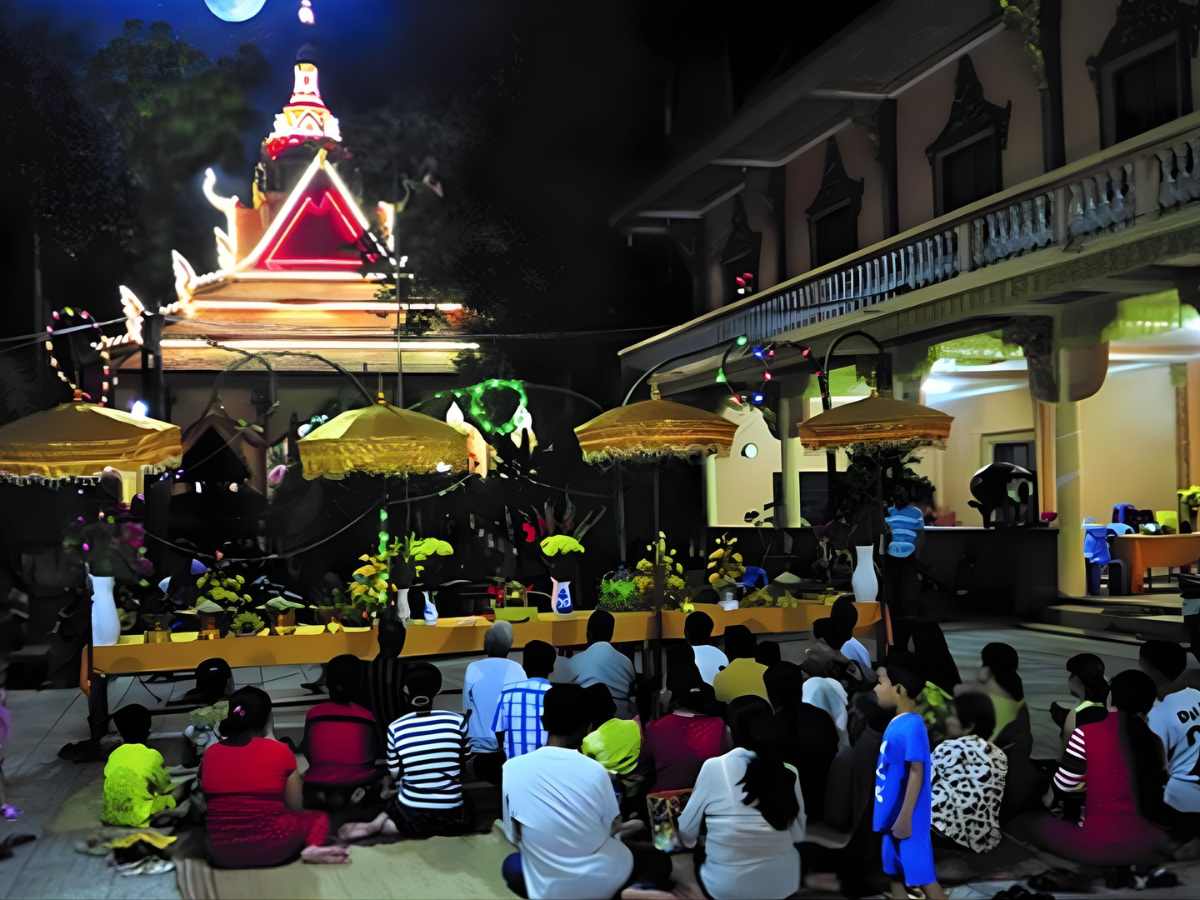
The Ok Om Bok festival takes place solemnly in the space of Southern Khmer temples. (Source: Collected)
Besides its spiritual significance, Ok Om Bok is also an occasion for the Khmer people to gather, meet, and strengthen community bonds in their villages. The festival space becomes a place for cultural exchange, sharing joy after the harvest, and maintaining traditional customs. These activities contribute to enriching the spiritual life of the people in the region.
In An Giang, the Ok Om Bok festival is organized in many places where the Khmer community lives. The festival space extends from the grounds of Khmer temples to residential areas and riverbanks, where activities related to daily life take place. The combination of natural elements and traditional rituals creates the unique characteristics of the festival in this land.
1.2. Time and place of Ok Om Bok festival in An Giang
The Ok Om Bok festival is usually held on the full moon of the tenth lunar month every year, when the full moon appears most clearly in the month. According to Khmer beliefs, this is the appropriate time to express gratitude to the Moon after a cycle of agricultural production. This period also marks the end of the main harvest season for the people.
In An Giang, the festival is often organized in conjunction with cultural, sports, and tourism events for the Khmer community. Ritual activities and festival parts are arranged alternately, creating a community living space that lasts for many days. Some riverside areas and Khmer cultural activity sites become centers for organizing the festival.
The choice of festival venues is often linked to the daily life of the local community. Open spaces, close to rivers, allow traditional rituals to be performed completely and conveniently for community activities. This helps preserve the original nature of the Ok Om Bok festival over the years.
1.3. Cultural values and tourist attraction of the festival
The Ok Om Bok festival contributes to preserving the traditional cultural values of the Southern Khmer people through its system of rituals and community activities. Activities such as moon worship, floating water lanterns, or boat races reflect folk beliefs and a long-standing connection with nature. Through the festival, spiritual values are passed down between generations in the community.
Besides its cultural significance, the festival also creates an attraction for tourists interested in cultural tourism experiences. Participating in festival activities helps tourists better understand the spiritual life and customs of the Khmer people. The community atmosphere offers an intimate perspective on the culture of the Mekong Delta.
The combination of traditional festivals and local tourism activities helps broaden the experience for tourists visiting An Giang. The festival becomes a highlight in the cultural exploration journey, alongside spiritual and ecological destinations in the region. This is also an opportunity to promote Khmer cultural identity to a wider range of tourists.
2. Cultural imprint and meaning of the Ok Om Bok festival
2.1. Tracing back to the origin of the Ok Om Bok festival
The Ok Om Bok festival originates from the traditional moon worship ritual of the Southern Khmer community, linked to the rice farming cycle. According to folk beliefs, the Moon directly influences weather and crop growth throughout the season. Therefore, the festival was formed as a ritual of gratitude after a period of labor in the fields.
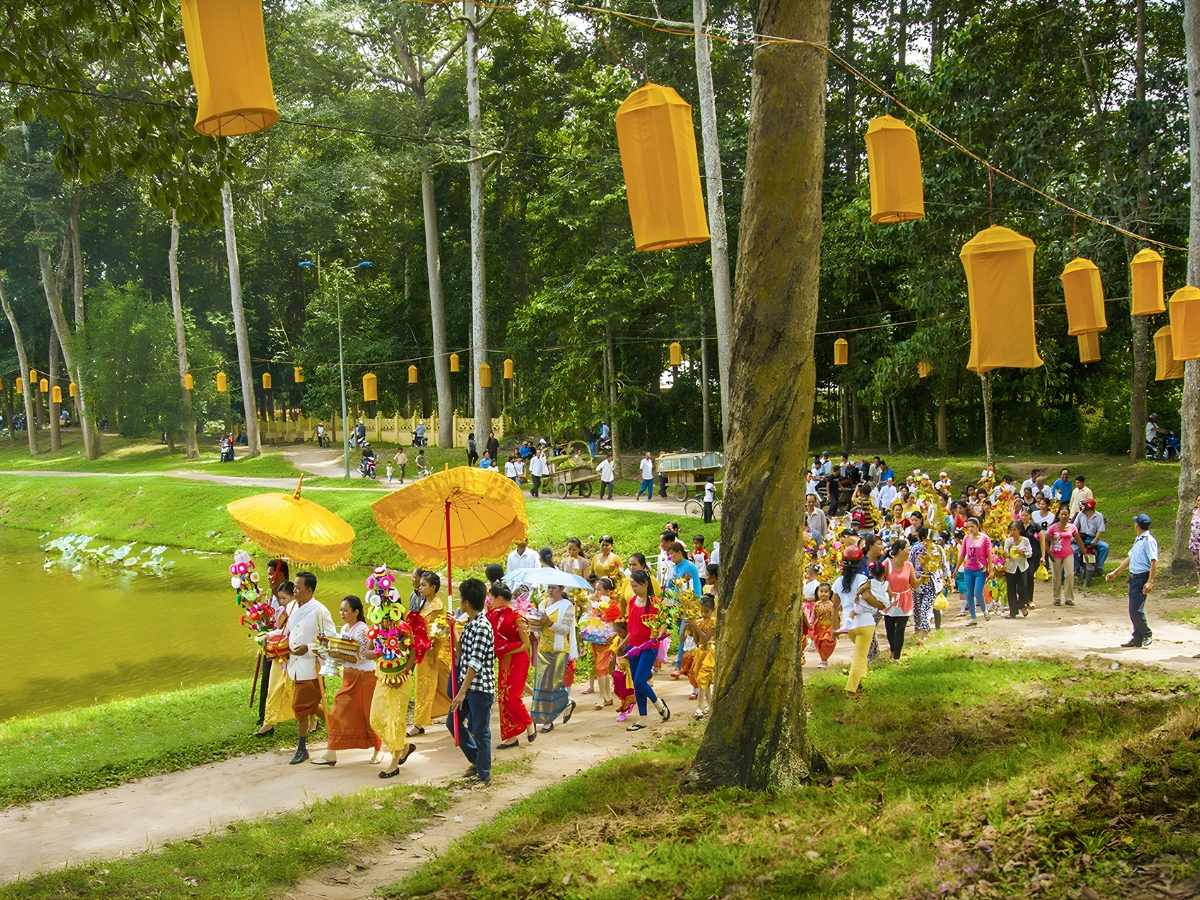
The Ok Om Bok procession ritual reflects the origins of the traditional agricultural beliefs of the Khmer people. (Source: Collected)
The festival is held on the full moon of the tenth lunar month, coinciding with the end of the main harvest season of the year. This is when people have the opportunity to rest, prepare for the new farming cycle, and organize community activities. The moon worship ritual therefore bears the imprint of traditional agricultural culture.
Over time, the Ok Om Bok festival has not only served a religious role but has also become a common cultural activity for the Khmer community. The rituals are maintained and passed down through generations, reflecting the connection between humans and nature. The festival contributes to shaping the unique cultural identity in the spiritual life of the Southern Khmer people.
2.2. Spiritual Significance in the Moon Worship Ritual
The moon worship ritual is the central content of the Ok Om Bok festival, expressing gratitude to the Moon according to Khmer beliefs. People believe that the Moon helps regulate the climate and protect crops throughout the farming year. Offering sacrifices under the moonlight signifies sending reverence and praying for peace.
In the ritual, familiar offerings such as 'com dep' (pounded rice flakes), fruits, and agricultural products are carefully arranged. These items are associated with the fruits of labor, symbolizing prosperity after the harvest. The moon worship space is conducted with solemnity yet closeness, reflecting the community's spiritual life.
The moon worship ritual is often held at pagodas or within families, creating a connection between individuals and the community. This activity helps strengthen spiritual beliefs and maintain traditional values. Thus, the festival becomes an occasion for the community to look forward to positive things for the new year.
2.3. Cultural Symbols in the Ok Om Bok Festival
In the Ok Om Bok festival, many cultural symbols clearly reflect the spiritual life of the Southern Khmer people. 'Com dep' is a familiar offering, representing the fruits of agricultural labor and the connection to the fields. Offering 'com dep' to the Moon signifies gratitude to nature after a harvest.
The full moon is a pervasive symbol of the festival, associated with the concepts of abundance and reunion. The night of the full moon in the tenth lunar month becomes the time when rituals and community activities take place under the moonlight. This atmosphere creates a sense of peace and solemnity in people's spiritual lives.
Furthermore, the imagery of rivers and water is also an important symbolic element in the Ok Om Bok festival. Activities taking place on the river reflect the living environment closely tied to the canal system of the Mekong Delta. The presence of water elements shows the harmonious relationship between humans, land, and nature in Khmer culture.
3. Characteristics Defining the Ok Om Bok Festival in An Giang
3.1. Spiritual Values in the Traditional Moon Worship Custom
The moon worship ritual is an important part of the Ok Om Bok Festival in An Giang, usually taking place on the full moon night of the tenth lunar month. People gather at pagodas or community areas to prepare offerings for the Moon. The ritual space is solemn, linked to the folk beliefs of the Khmer people.
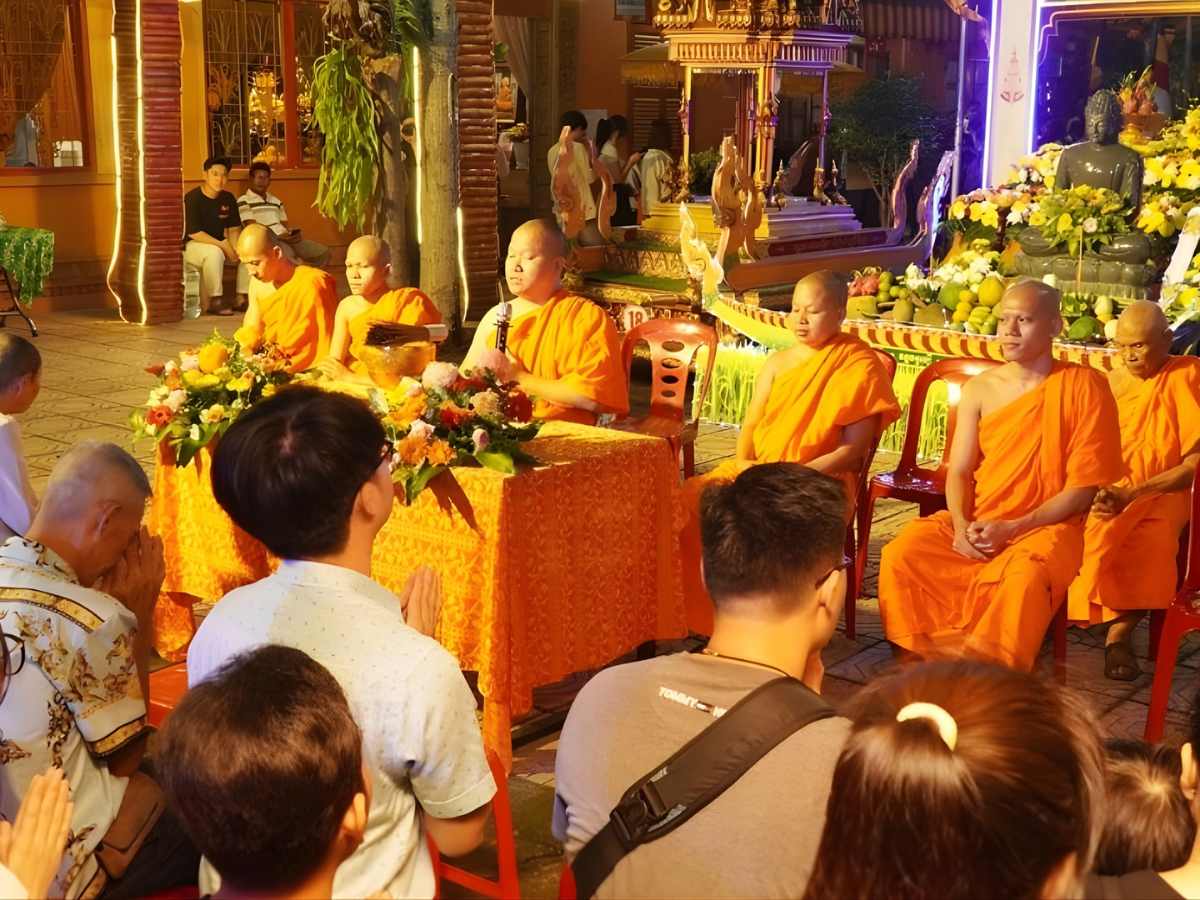
The moon worship ceremony is solemnly organized, carrying deep spiritual significance. (Source: Collected)
The moon worship offering tray includes familiar offerings such as flattened rice flakes, fruits, and local agricultural products. These offerings represent the fruits of labor after a farming season and express gratitude towards nature. The preparation of offerings is done carefully, reflecting respect in spiritual life.
3.2. Water Lantern Releasing Ceremony and its Meaning of Praying for Luck
The water lantern releasing ceremony is a symbolic activity during the Ok Om Bok festival, usually taking place after the moon worship ceremony. The lanterns are released to float along the water under the moonlight, creating a gentle evening scene. This activity is closely linked to the riverine life of the Mekong Delta residents.
Water lanterns are typically made from bamboo, paper, and decorated with simple patterns. Each lantern carries wishes for peace and hopes for the future. Releasing lanterns together creates a close community atmosphere between locals and tourists.
3.3. Dragon Boat Race and Community Cultural Activities
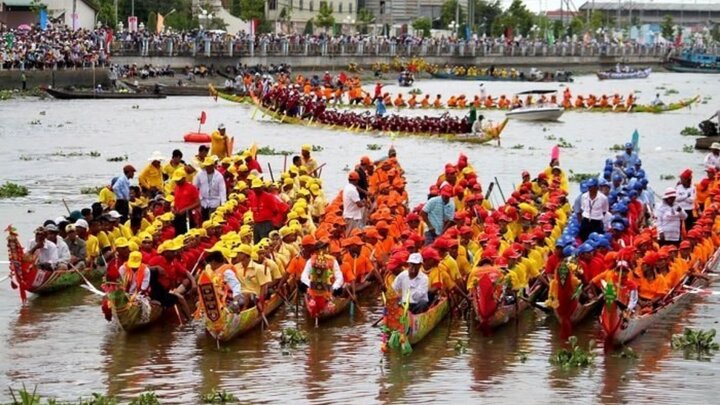
The dragon boat race is an activity that attracts great interest during the festival part of Ok Om Bok. Boat teams from various villages and hamlets compete on the river. This activity embodies the spirit of cooperation and collective strength within the Khmer community.
Dragon boats are traditional vessels with long, narrow designs, closely associated with river life. The race takes place in a vibrant atmosphere with cheers from people on both banks. The sound of drums and rowing rhythms create the characteristic tempo of the festival.
4. Tourist Experience When Participating in the Ok Om Bok Festival in An Giang
4.1. Sun World Hon Thom
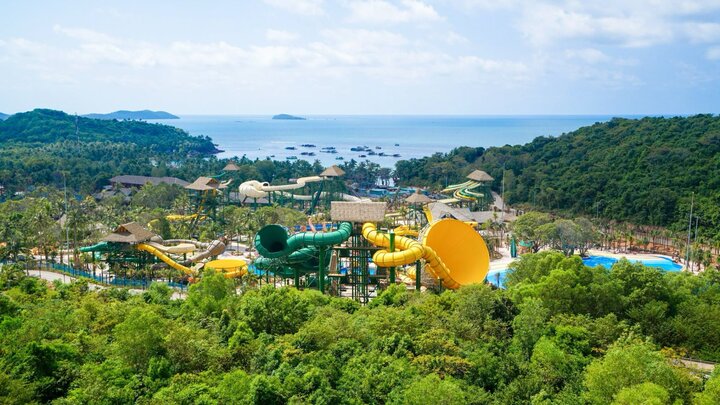
Sun World Hon Thom is a recreational spot that can be connected to a tourist itinerary in An Giang, especially for families and groups with children. This destination is located in the Hon Thom area, Phu Quoc, featuring a complex of marine entertainment, a water park, and a sea-crossing cable car system. The Hon Thom cable car, spanning 7,899.9 meters, is recognized by Guinness as a prominent three-wire cable car system crossing the sea. The cable car route passes through the southern sea area of Phu Quoc, offering panoramic views of the An Thoi archipelago from above.
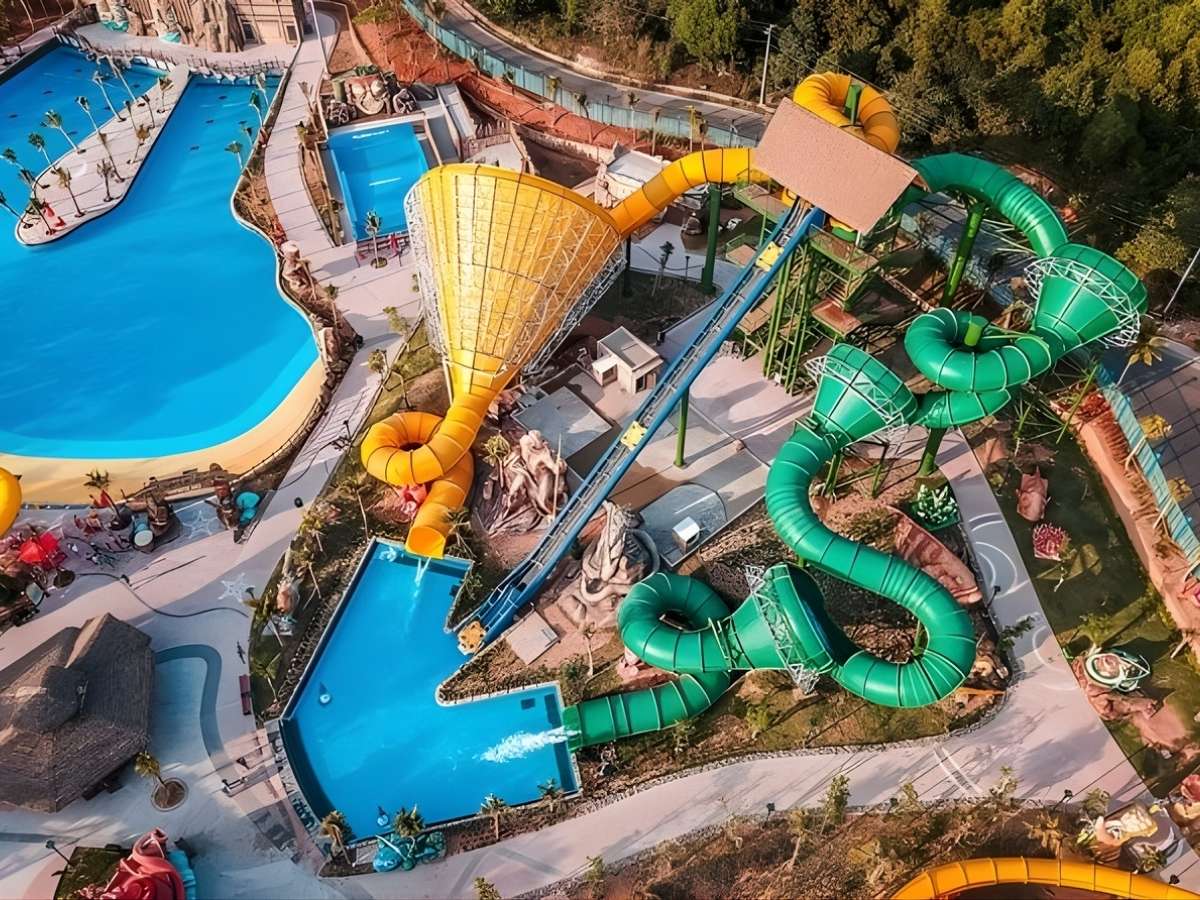
Diverse water play areas and landscapes at Sun World Hon Thom. (Source: Collected)
Aquatopia Water Park is a prominent attraction at the amusement area, with many water play areas designed for different experience groups. This space is suitable to add to the itinerary after festival activities, helping the trip achieve a balance between culture, relaxation, and entertainment.
>>> Book Sun World Hon Thom tickets now to fully explore Hon Thom HERE.
4.2. Hoang Hon Town
Hoang Hon Town is a suitable destination to connect after attending the Ok Om Bok An Giang Festival, especially for groups of guests who want to extend their itinerary to the islands. This area is located in Phu Quoc, An Giang province after the merger, associated with coastal architectural spaces, squares, pedestrian streets, and evening shows.
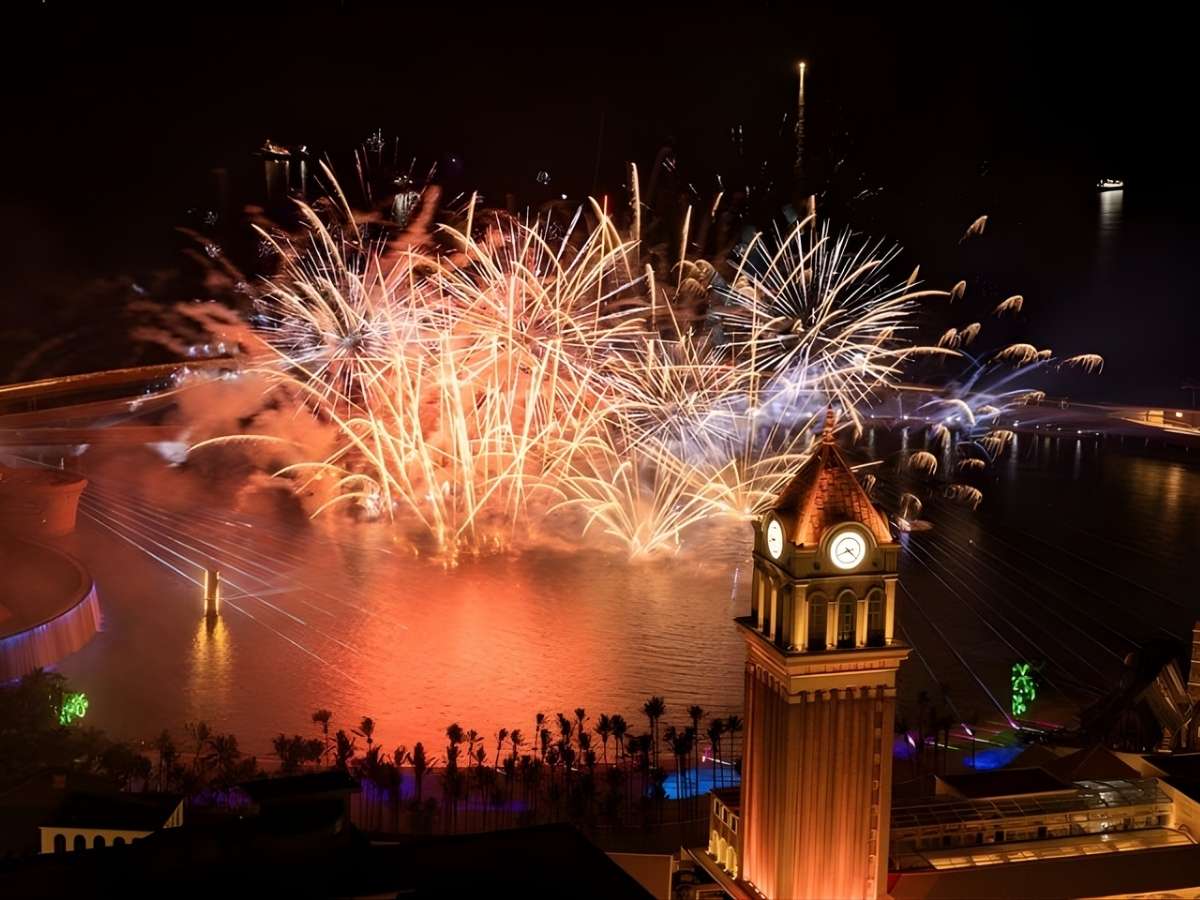
The Kiss of the Sea show combines with night fireworks at Sunset Town. (Source: Collected)
Here, fireworks displays are held twice every night for 365 days, adding more night experience options for tourists. Two notable shows include Symphony of the Sea at the Kiss Bridge and Kiss of The Sea at the nearby stage, combining light, water, music, and performance effects.
The Kiss Bridge is the highlight of the area, often referred to as a check-in icon in South Phu Quoc. This structure is located facing the sea, suitable for late afternoon hours when tourists can observe the sunset and the bay.
4.3. Mong Tay Island
Mong Tay Island is a suitable suggestion for groups of tourists who want to connect their festival itinerary with island experiences. This island is part of the cluster of islands around Phu Quoc, often mentioned along with spots like Gam Ghi Island, May Rut Island, and Dua Island.
The atmosphere at Mong Tay Island is suitable for resting, swimming, taking photos, and enjoying local seafood. Some domestic travel articles note it as a stop chosen by tourists on their journey to explore the small islands around Phu Quoc.
When connecting with the Ok Om Bok Festival of An Giang, Mong Tay Island can be arranged towards the end of the itinerary to reduce the pace of travel. This combination helps the journey include elements of Khmer culture, community activities, night entertainment, and beach relaxation.
The Ok Om Bok Festival of An Giang clearly reflects the cultural life and beliefs of the Southern Khmer community. Through rituals and community activities, the festival contributes to preserving traditional values associated with nature and waterways. This is a suitable stop for tourists interested in cultural experiences during their exploration of the Mekong Delta.