















1. Tri Ton Palm Fields in the Natural Space of An Giang
1.1. Geographical Features and Natural Elements
Tri Ton is located in the western part of An Giang province, belonging to the Bay Nui region, also known as That Son. It is a region of low hills interspersed with plains, covering an area of over 598 km² with a population of over 110,000 people, mainly living in rural areas. The terrain here clearly shows a semi-mountainous characteristic, with low hills surrounding vast open rice fields, interspersed with long-standing palm fields. This natural space creates the characteristic expansive feeling of the Mekong Delta.
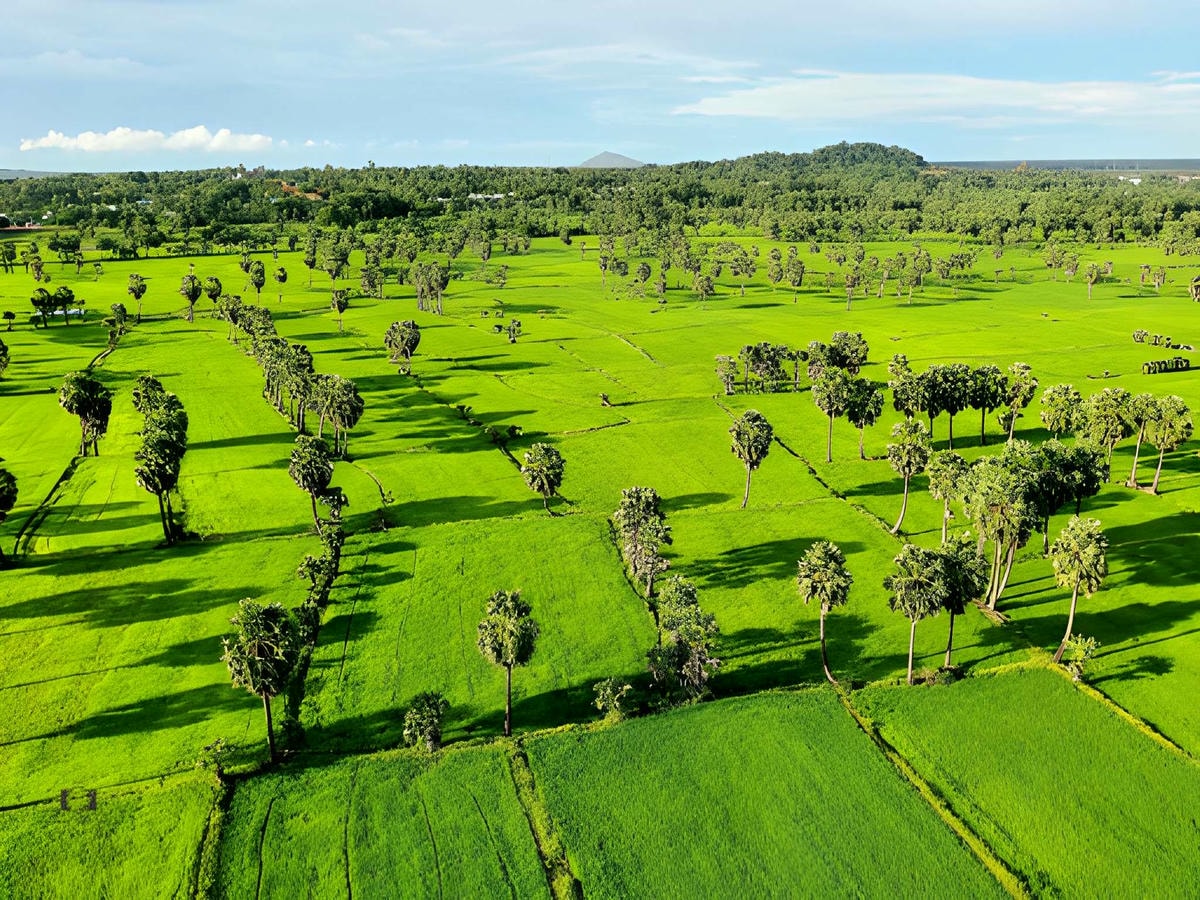
Tri Ton stands out for its distinctive geographical location and the Mekong Delta's rice field landscapes. (Source: Collected)
The sugar palm tree is concentrated in Tri Ton and Tinh Bien within the Bay Nui region, where geological and climatic conditions are suitable for the trees to grow in large clusters. Rows of trees stretch from the hillsides down to the low-lying fields, creating continuous green patches in the open space. This landscape contributes to shaping the unique natural appearance of Tri Ton.
A noticeable feature in Tri Ton is the harmonious combination of low hills and rice fields, making the sugar palm fields not just valuable for production. From a distance, green-covered mountain peaks can be observed, while below are flat fields stretching as far as the eye can see. This natural layered arrangement makes Tri Ton a destination offering characteristic rural landscape experiences.
1.2. Sugar Palm Trees and the Imprint of Tri Ton Land
The sugar palm is a perennial tree, averaging 15 to 30 meters in height, with a straight trunk and a rounded canopy at the top. It has been closely associated with the lives of local people for generations. The name of this tree originates from the Khmer word "th’not," which was later phonetically adapted to "thốt nốt" through long-term usage. This name gradually became familiar and intrinsically linked to the Bay Nui region.
1.3. The Beauty of the Landscape and Local Identity
The image of sugar palm fields has long been a familiar identifier for Tri Ton and, more broadly, for An Giang province. Tall rows of trees stand amidst green rice paddies, changing shades with the light at different times of the day, creating a landscape composition that easily attracts nature lovers. Consequently, the sugar palm is not only viewed as a crop but also as an element that shapes the local landscape identity.
2. The Beauty of Tri Ton's Sugar Palm Fields Through Each Season
2.1. The Flood Season and the Characteristic Mekong Delta Scenery
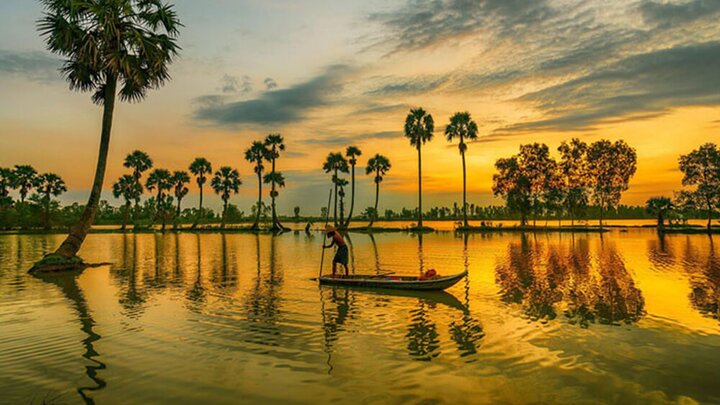
During the rainy season in the Mekong Delta, typically from around August to late October, water from the upper Mekong River flows in, creating the familiar flood season. The low-lying fields in Tri Ton are submerged, while the sugar palm trees rise above the calm water surface, creating a horizontally expansive scene. Light reflecting on the water's surface moves gently with the wind, making the space appear soft.
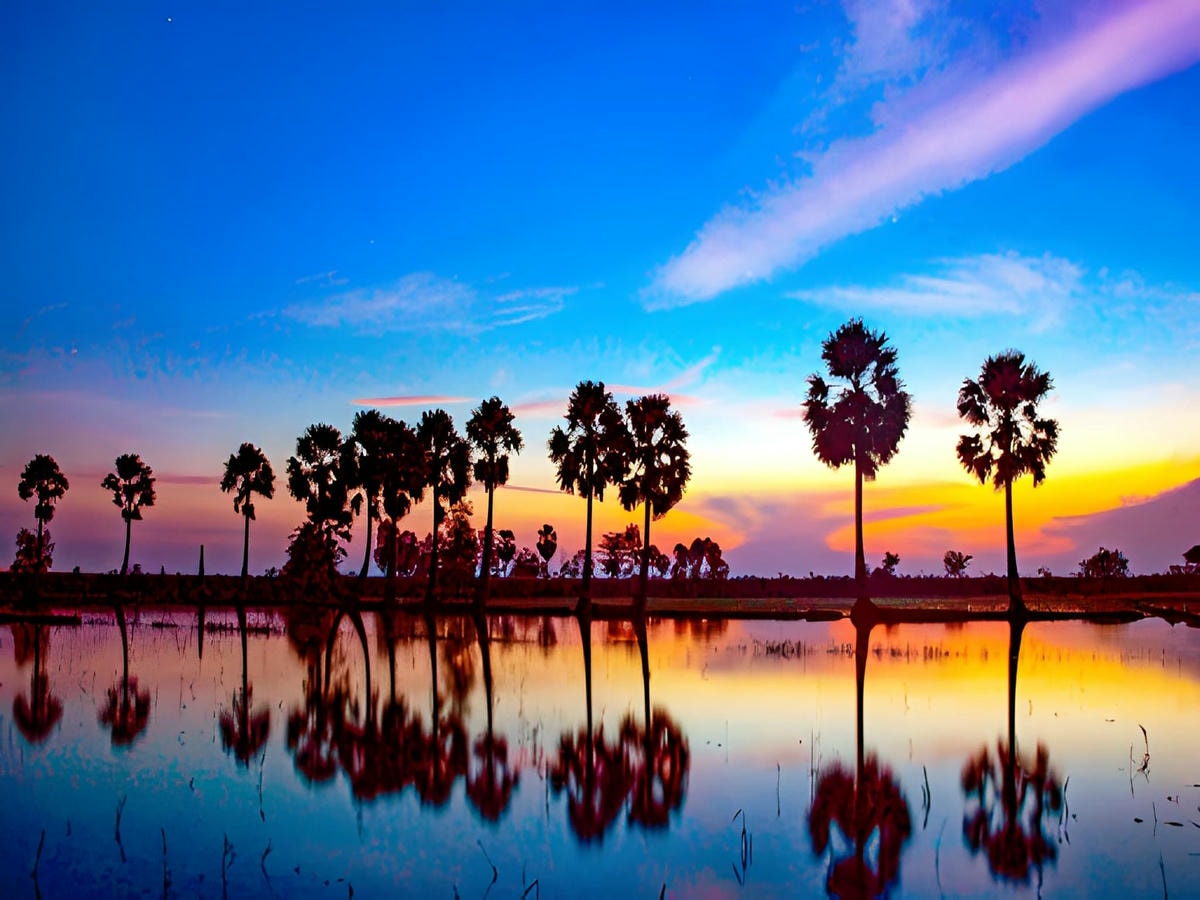
The flood season creates the characteristic Mekong Delta scenery in the Tri Ton fields. (Source: Collected)
The flood season not only holds scenic significance but is also closely tied to the daily life of rural people. Traveling by boat, rising water levels, and changes in production create a different rhythm of life compared to the rest of the year. For tourists, this is a period where it's easy to feel the connection between people and the aquatic environment.
During this time, the green of the Palmyra palm stands out against the water, creating iconic frames for the delta region. The expansive natural space allows observers to clearly feel the seasonal transition of the land and sky. These moments are often chosen to capture the characteristic life and scenery of Tri Ton.
2.2. Dry Season
When the rainy season ends and the dry season begins, from around December to April of the following year, the Tri Ton Palmyra palm fields transition to a dry and airy state. The sky is clear blue, sunlight spreads evenly across the fields, and highlights the Palmyra palm foliage against the vast space. These weather conditions are suitable for sightseeing and observing the landscape.
During the dry season, some surrounding rice fields enter their ripening or harvesting preparation phase, creating patches of light yellow interspersed with the green of the trees. This natural color transition makes the landscape more varied while maintaining a sense of tranquility. Through this, visitors can easily notice the distinct seasonal changes of the Palmyra palm fields.
2.3. Sunrise and Sunset over the Fields
Sunrise over the Tri Ton Palmyra palm fields is when the morning light filters through the leaves, creating long streaks of light on the ground or water surface. The tree shadows cast upon the vast space help clarify the natural structure of the Palmyra palm rows. The early morning moments bring a gentle and slow feeling.
As sunset approaches, the sky turns to warm hues, reflecting on the treetops and the surface of the fields. The late-day light creates a clear contrast between light and dark, making the landscape more serene. This is a suitable time to observe the changing light and feel the natural rhythm of Tri Ton.
3. Tourism Experience at Tri Ton Palmyra Palm Fields
3.1. Check-in and Feel the Local Life Pace
The Tri Ton Palmyra palm fields offer many natural check-in spots with tall trees standing out against the wide fields. Tourists can walk along the internal paths to observe the scenery and feel the openness of the countryside. Each viewpoint reveals a different scene connected to the slow pace of life.
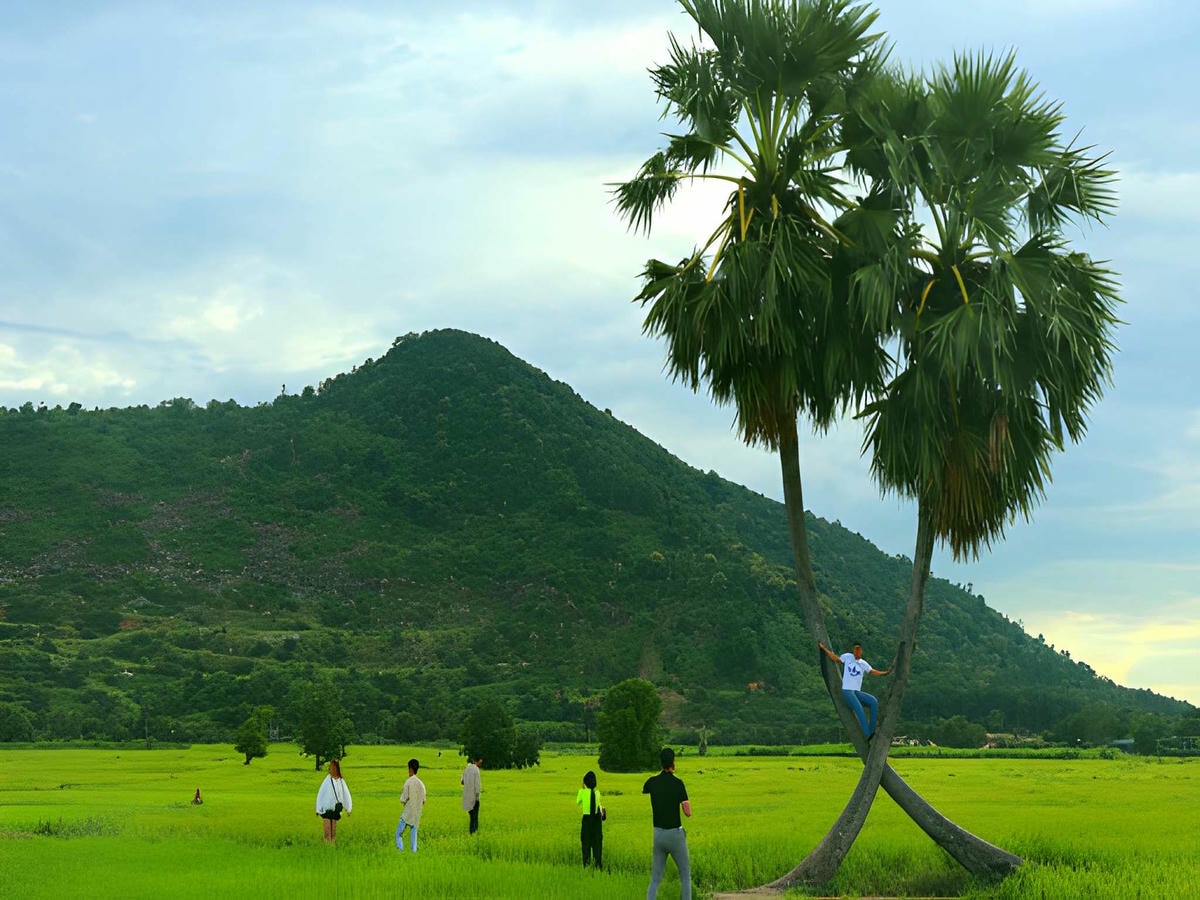
Checking in amidst the palm sugar fields helps you feel the local life of Tri Ton. (Source: Collected)
In some areas, palm sugar trees form a heart shape when two treetops intersect, becoming a familiar stop for many photography enthusiasts. This image often appears prominently against the sky and fields, creating a sense of closeness to nature. The surrounding space is quiet, suitable for stopping to observe and capture moments.
When moving through the fields, visitors can easily encounter images of people tending to crops or harvesting palm sugar sap. These daily activities unfold gently and are tied to the available natural conditions. Through this, the local way of life is clearly and authentically presented.
3.2. Discover Khmer culture associated with palm sugar trees
Palm sugar trees have long been associated with the cultural life of the Khmer community living in Tri Ton and the Bay Nui region. The image of rows of palm sugar trees appears in the living, working, and spiritual spaces of the local people. This creates a strong connection between people and the natural landscape.
In daily life, many parts of the palm sugar tree are utilized to serve living needs. Leaves are used for weaving utensils, tree trunks for simple construction, and flowers and fruits are processed into food. These uses reflect long-term adaptation to the local environment.
Some craft villages in Tri Ton still maintain the traditional method of making palm sugar. Visitors can observe the process of collecting sap, boiling it, and creating the final product in a peaceful rural setting. This experience helps to understand the cultural value associated with palm sugar trees through generations.
3.3. Combine nature journeys from plains to islands
The space of the Tri Ton palm sugar fields offers a horizontal observation of nature with a wide, open view. Visitors can perceive the combination of fields, low hills, and the sky within a single scene. This experience creates a sense of overview and relaxation.
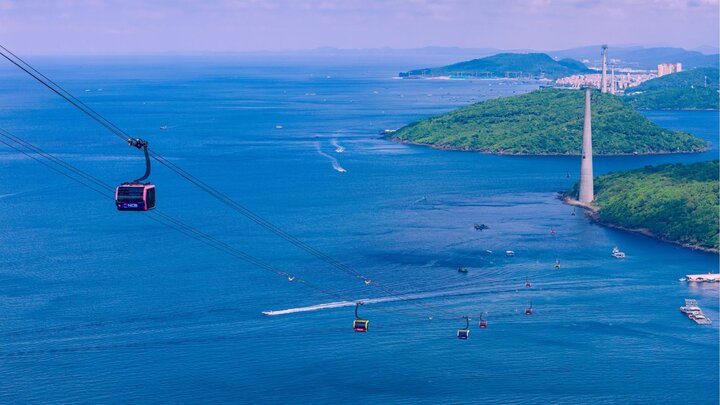
From that feeling, the nature exploration journey expands to panoramic views in island regions. Sun World Hon Thom is a typical destination for experiencing landscape observation from above. Here, visitors access the sea space with a broad and continuous perspective.
The Hon Thom cable car, nearly 7,900 meters long, connects the South of Phu Quoc island with Hon Thom island, opening up a panoramic view of the sea and small islands. Throughout the journey, the island scenery unfolds continuously in depth. This feeling is similar to standing amidst the vast palm sugar fields in Tri Ton.
4. Useful information when visiting the Tri Ton palm sugar fields
4.1. Ideal time of year to visit
The Tri Ton palm sugar fields change their appearance with each season, and the suitable time to visit depends on the desired experience. The rainy season, from approximately August to October, brings flooded fields that reflect light, highlighting the green color of the palm sugar trees. The space at this time is suitable for observing the landscape and feeling the rhythm of life associated with water.
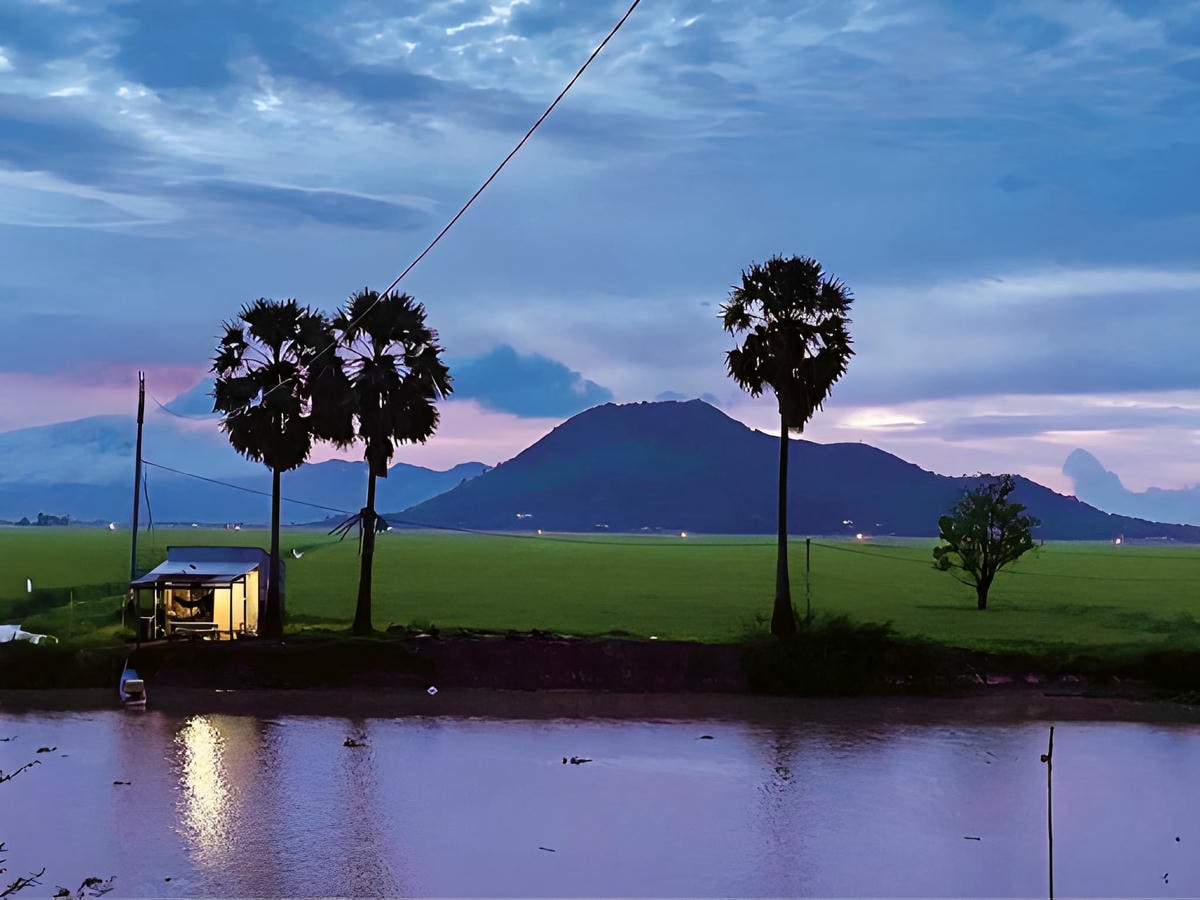
The flood season is a suitable time to visit the Tri Ton field landscape. (Source: Collected)
The dry season, lasting from December to April next year, creates favorable conditions for walking and landscape photography activities. The clear blue sky and stable lighting help the scenery appear clearer. This is also the time when it is easy to move between the field areas.
4.2. Things to know when moving and visiting
Tri Ton is located in the Bay Nui (Seven Mountains) area, so moving to the palm field is mainly by motorbike or personal vehicle. Some internal field roads are quite narrow and uneven. Visitors need to pay attention when moving to ensure safety.
Comfortable clothing and suitable shoes make outdoor sightseeing more convenient. Drinking water and sun protection should also be prepared in advance, especially during the dry season. Careful preparation ensures a smooth journey.
During the visit, preserving the landscape is a priority. Visitors should limit littering and respect the local people's way of life. This contributes to maintaining a harmonious rural environment.
4.3. Suggested relaxed itinerary
The itinerary for visiting the Tri Ton palm field can be arranged for half a day or a full day. The starting point is usually Tri Ton town, then moving along the internal field roads. This way of traveling allows observation of the continuously changing scenery.
Along the journey, visitors can stop at areas with prominent rows of palm trees or open viewpoints. Short stops help to better feel the atmosphere of each area. A slow pace of visiting allows for detailed observation of the scenery.
Besides the palm fields, the itinerary can combine visits to low hills or nearby Khmer temples. This combination makes the trip diverse without being too packed with activities. The overall journey maintains a sense of relaxation and balance.
The Tri Ton palm field is not only a scenic destination but also a space that preserves the cultural values and characteristic rhythm of life in An Giang. Amidst modern and bustling journeys, experiencing this place helps visitors find balance again, making each trip a deep and memorable experience.