















1. Relationship between Tri Ton mountain terrain and Ta Pa Pagoda
1.1. Location of Ta Pa and characteristic mountain-backing setting
Ta Pa Pagoda is located on the slope of Ta Pa mountain in Tri Ton commune, An Giang province, within the characteristic low hills and mountains of the Bay Nui region. This location allows the pagoda to be situated higher than the living space below, creating a view overlooking the surrounding fields, lakes, and green trees. Standing in the main hall area, visitors can clearly feel the openness of the landscape thanks to the gentle slope of the mountain down to the plain.
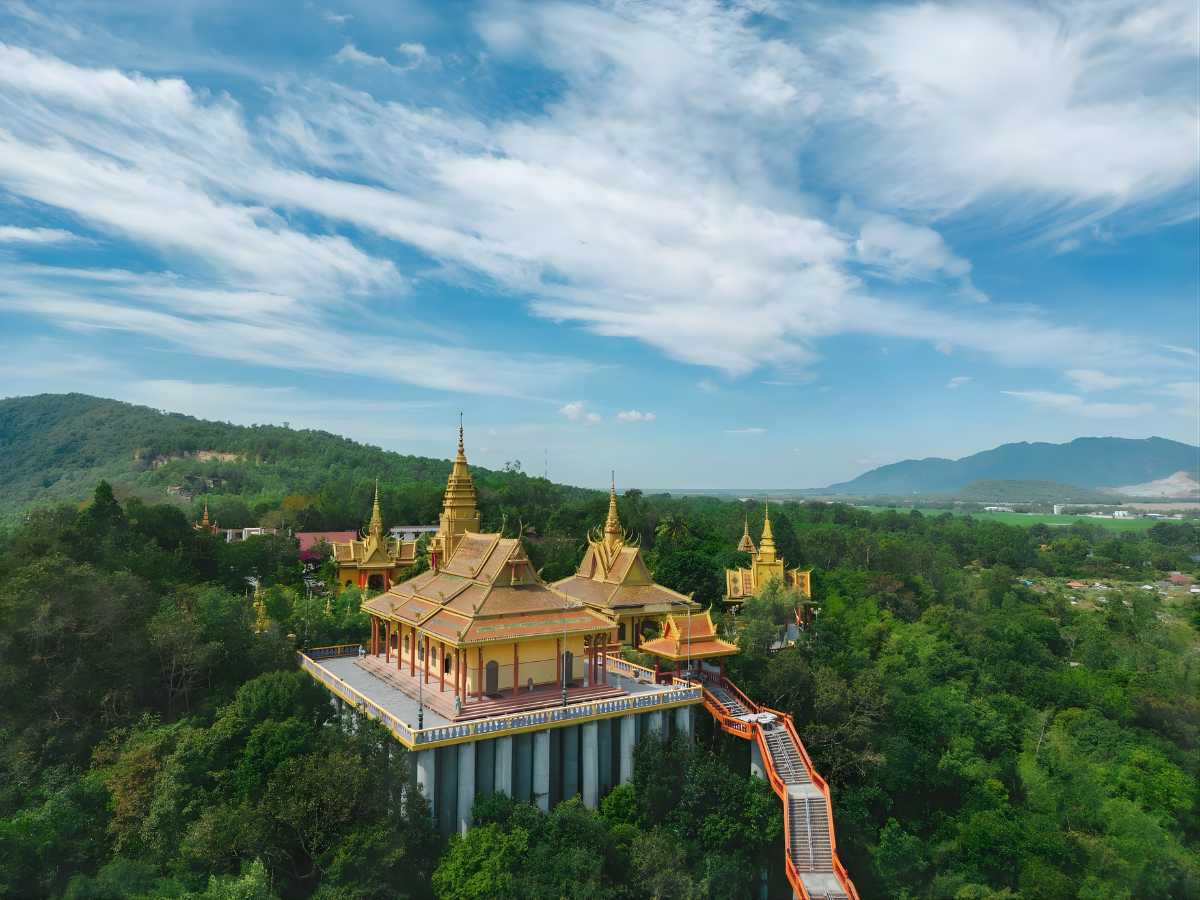
Ta Pa Pagoda stands out amidst the Tri Ton mountains with its distinctive Khmer Buddhist architecture. (Source: Collected)
The distance from Ta Pa Pagoda to the center of Chau Doc city is about 44 km, making it suitable for a day trip to explore Tri Ton. The pagoda's elevated location gives the space a slightly secluded feel, unlike pagodas situated close to plain residential areas. The natural elevation ensures an unobstructed view, while also highlighting the relationship between the pagoda's architecture and the surrounding landscape.
The pagoda was built in 1999 on an area of nearly 4,000 m², initially with simple materials and a modest scale. After many renovations, by the end of 2019, the overall architecture was more complete to serve religious activities and tourism. Its height of about 45 m above the ground allows the pagoda grounds to often catch gentle breezes, creating a comfortable feeling when moving around and resting.
1.2. The combination of pagoda space and natural landscape
The space of Ta Pa Pagoda is closely linked with the rocky landscape, green vegetation, and water surfaces appearing within the same view. From the pagoda grounds, natural elements are not separate but intertwined, creating a harmonious landscape painting between spiritual architecture and the natural environment. The presence of low hills provides the space with clearer visual depth.
The surroundings of the pagoda feature native flora interspersed with hills and lakes, offering a quiet and airy feeling to visitors. Compared to pagodas in plain areas, this place has a distinct change in elevation and landscape composition. This is what creates a different spatial experience when visiting.
Ta Pa Lake, located at the foot of the mountain, serves as a soft focal point for the overall landscape. When light shines on the water surface, the reflection of the sky, trees, and mountainside creates a sense of expanded space. This combination brings a gentle rhythm, allowing visitors to easily slow down their pace.
1.3. The influence of terrain on the visiting experience
The hillside terrain directly affects the experience of visiting Ta Pa Pagoda, starting with the journey up about 240 steps leading to the main hall. Moving from low to high naturally slows down the pace, creating a moment of quiet before entering the spiritual space. The feeling of separation from the activities below gradually forms with each step.
During the ascent, the surrounding landscape changes with altitude, from a close-up view of trees to a wide panorama overlooking the fields and the lake. The changes in light and space are clearly felt through each section of the path. This makes the visiting journey not just about moving but also a process of observation and feeling.
Upon reaching the main hall area, the altitude and quiet space allow visitors to pause and look back at the entire scene below. This experience combines sightseeing, rest, and contemplation. The hillside terrain thus becomes an important part of how Ta Pa Pagoda is fully appreciated.
2. From which angles does Ta Pa Pagoda's architecture stand out?
2.1. The low angle makes the pagoda clearly visible on the mountainside
When viewed from the foot of the hill or the roads leading to the Nui To area, the pagoda structure appears clearly against the green backdrop of the trees. The low-angle view highlights the roof and the characteristic colors of Khmer architecture, while also creating a sense of the structure being separate from its surroundings. The difference in elevation makes the pagoda easily recognizable from a distance.
This perspective also clearly shows how the pagoda utilizes the terrain to create a visual effect. As the light changes throughout the day, especially in the morning or afternoon, the roof and architectural details reflect light differently, increasing contrast with the mountain backdrop. This contributes to the pagoda becoming a focal point in the overall Tri Ton landscape.
2.2. The pagoda courtyard opens up to a wide view below
From the pagoda courtyard, the view extends to the fields and residential areas below, creating a continuous, unobstructed observation space. This is a popular spot for sightseeing as it allows for a panoramic view of the entire Ta Pa area within a single frame. At different times of the year, the landscape changes noticeably according to the rice cultivation cycle.
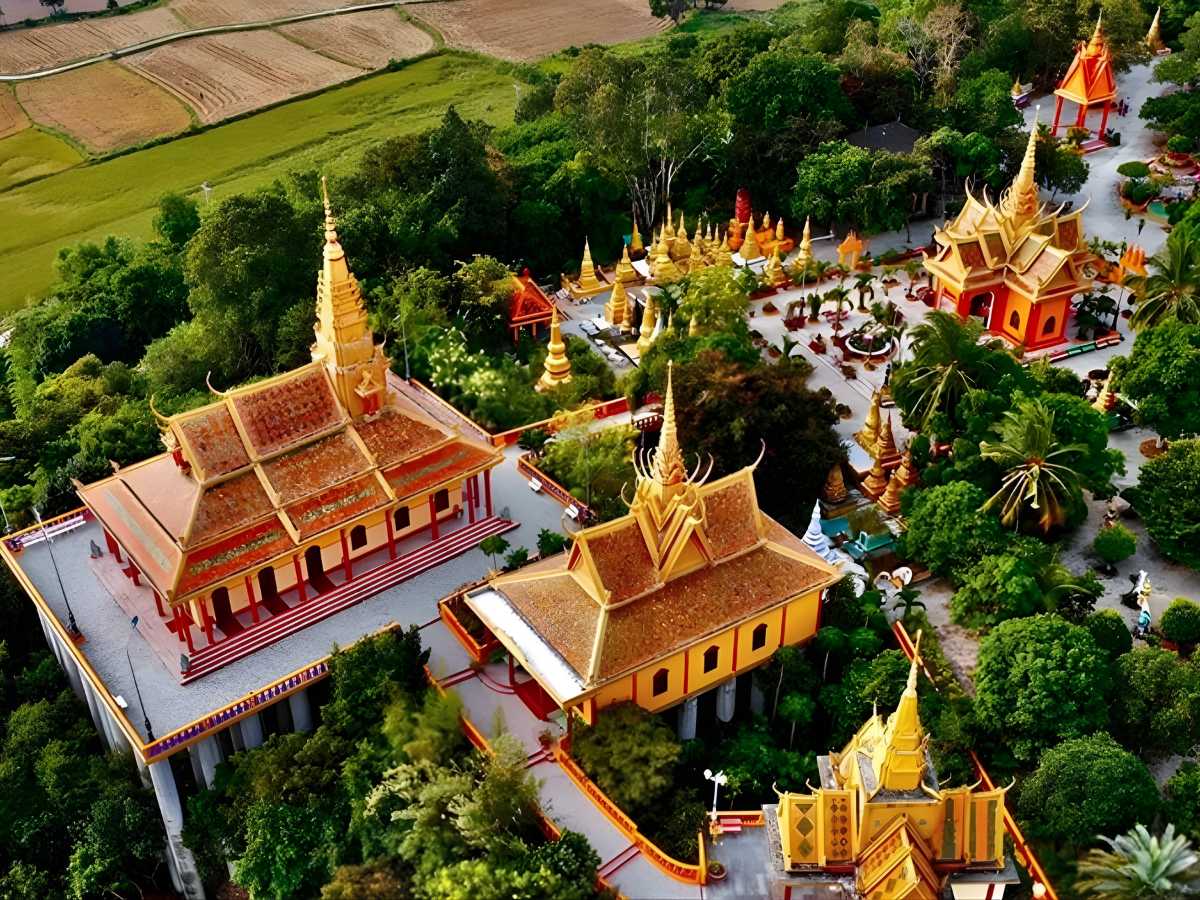
The space of Ta Pa pagoda opens up a panoramic view from the mountainside down to the plains. (Source: Collected)
The view from the pagoda's courtyard also helps clearly identify the terrain structure of the area, with layers of space from near to far, including hills, fields, and low mountains. This stratification creates depth for the landscape, while also enhancing the visual experience. Visitors can observe agricultural activities taking place below without needing to move much.
2.3. Side views reveal the prominent colors of the structure
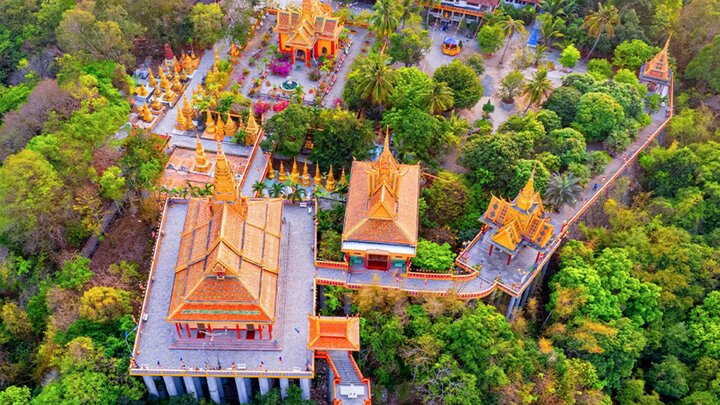
Observed from points along the hillsides or surrounding roads, the pagoda's colors stand out against the natural green background. Khmer architecture often uses colors like yellow, red, and blue, creating a clear contrast with the surrounding environment. Side views help to clearly show the decorative details and the proportions of the structure.
Furthermore, side views also reveal how the pagoda is arranged according to the sloping terrain, with steps and pathways leading up to each area. This reflects a design that adapts to natural conditions rather than leveling the ground. As a result, the structure maintains its connection with the overall landscape of the Bay Nui region.
3. The path to Ta Pa pagoda influences the journey
3.1. The slope requires a slower pace of movement
The path leading to the pagoda has a relatively noticeable slope, especially on the stair sections, requiring visitors to adjust their pace. Moving slowly not only helps conserve energy but also allows for observation of the surrounding scenery along each segment. This is a common feature in tourist spots located on hills in Tri Ton.
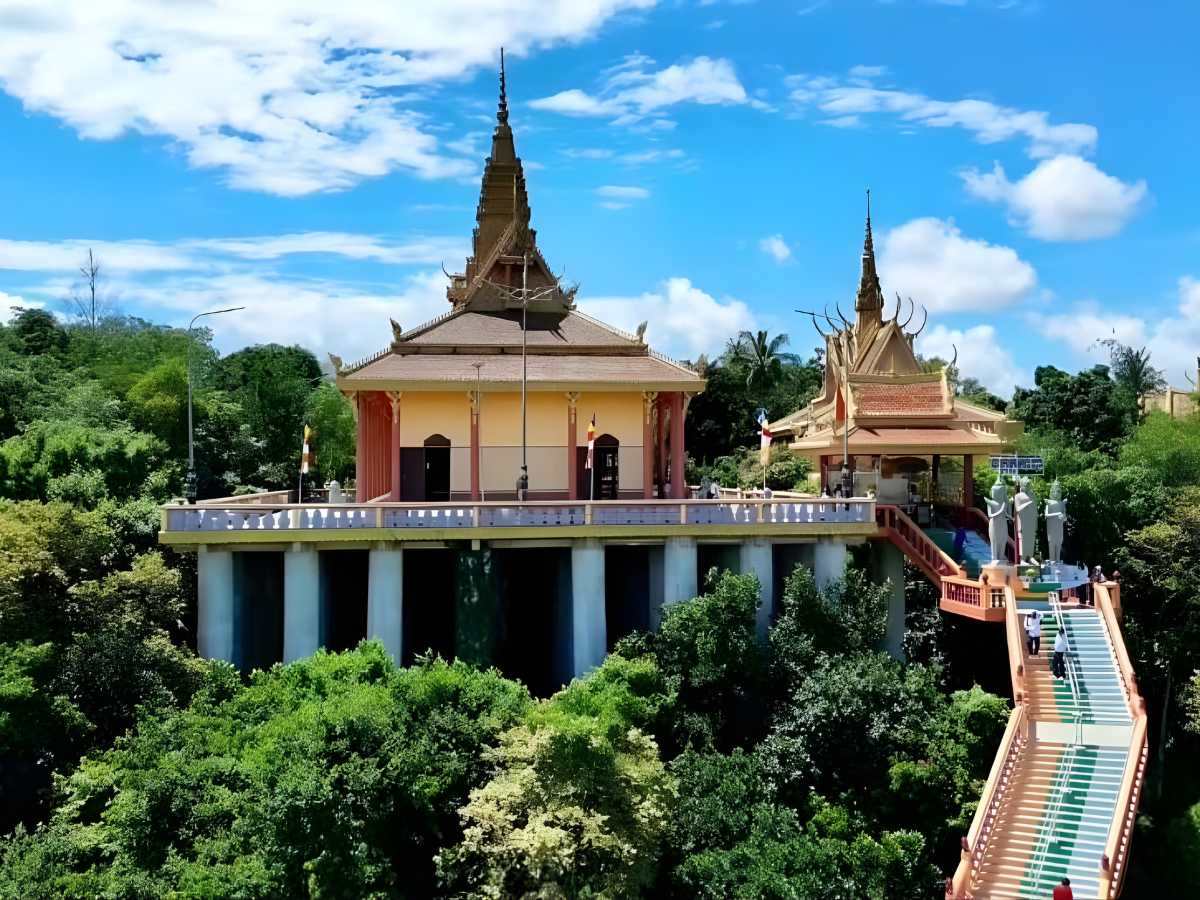
At different times of the day, creating different sightseeing experiences. (Source: Collected)
The slope also divides the journey into many small stages, each offering a different perspective of the landscape below. As you ascend, the view expands, allowing visitors to perceive a distinct change in space. This contributes to making the trip more profound rather than just a single destination.
3.2. Road surface determines convenience when going to the pagoda
The road leading to the pagoda includes both stairs and slopes, with varying degrees of completion depending on the area. Sturdily constructed sections facilitate more stable movement, while natural or less improved sections can be difficult when it rains. This factor directly affects travel time and experience.
Choosing the right time, such as dry days, helps increase convenience when approaching the pagoda. Additionally, the road system also reflects the level of tourism development in the area, as many sites in Tri Ton have had their infrastructure improved to serve the increasing number of visitors.
3.3. Sunny weather makes the approach more tiring
Sunny weather in the Tri Ton area, especially during the dry season, can make the journey to the pagoda more exhausting. High temperatures combined with the slope cause the body to expend energy quickly, particularly during midday hours. This is a factor to consider when planning a visit.
However, sunny weather also offers an advantage in terms of visibility, as the light makes the scenery clearer and colors more vibrant. This facilitates observation and photography from high points like the pagoda. The combination of weather conditions and terrain creates a unique characteristic for the experience in this area.
4. Combining Tà Pạ scenery in a short itinerary
4.1. Visit the pagoda first for a high-angle view
Starting the journey at the pagoda allows visitors to get an overall view of the Tà Pạ area from the beginning. From the high vantage point, the entire landscape of fields, lakes, and low mountains is clearly visible, helping to define the spatial structure of the area. This is a common approach when visiting Tri Ton.
The view from the pagoda also helps identify the next points in the itinerary, such as Tà Pạ Lake or the fields below. This makes movement more directed, avoiding fragmented sightseeing. This is particularly suitable for short day trips.
4.2. Move to Tà Pạ hill to expand the landscape
After leaving the pagoda, moving to the hill and Tà Pạ Lake area expands the experience from a high-angle view down to a closer space. The lake with its characteristic blue color located on the hilltop creates a distinct focal point compared to the fields below. This transition makes the journey cohesive yet diverse.
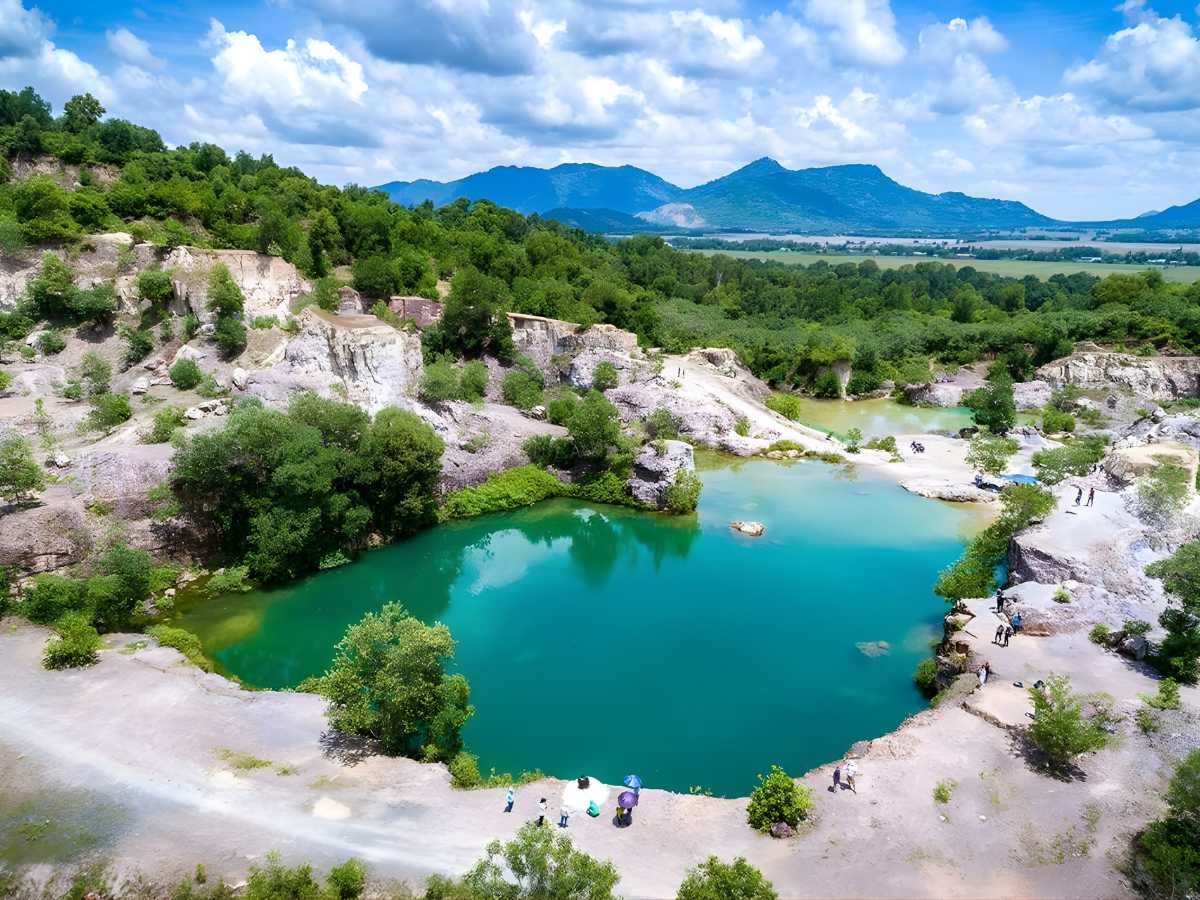
Visiting Ta Pa Pagoda in the morning or afternoon helps to fully appreciate the natural scenery. (Source: Collected)
Ta Pa Hill is also a place where one can observe the scenery from various directions, from rice fields to distant mountains. This creates a richness of perspectives without having to move too far. The area often attracts a large number of visitors due to its combination of nature and characteristic terrain.
4.3. Conclude with a resting point near Tri Ton area
Concluding the journey at resting points near the center of Tri Ton helps to rebalance the pace after moving on steep terrain. This area has many services for tourists and is also located near main roads, making it convenient for subsequent travel. This is a common way to organize a trip when visiting the Bay Mountains region.
Concluding in a low-lying area also gives visitors a contrasting perspective compared to standing at a height, thereby completing the spatial experience. The continuous change between altitudes creates a clear perception of the characteristic terrain of Tri Ton, where mountains and plains are combined in the same area.
Ta Pa Pagoda leaves a lasting impression thanks to its elevated location and the panoramic view of Tri Ton's layered landscape. The combination of Khmer architecture and hillside terrain creates an experience that is both spiritual and connected to nature. Ta Pa Pagoda is often mentioned in combined tour routes, where Sun World Hon Thom represents leisure while An Giang adds the spiritual element.