















1. Cu Lao Ong Ho in the Southern Water Region
Cu Lao Ong Ho lies in the middle of the Hau River, in My Hoa Hung commune, An Giang province, formed from the long-term alluvial deposition process along the natural flow. Its location between two river branches creates a distinctive nổi land in the Southern water landscape. From its formation conditions, the islet clearly reflects the relationship between nature and the life of the Western region's residents.
Cu lao Ong Ho appears as a residential space closely associated with the flow of the Hau River. (Source: Collected)
The landscape on the islet is a combination of water surfaces, a system of small canals and ditches, and green patches from fruit orchards. The crisscrossing canals serve both to channel water and facilitate daily life and agricultural cultivation. The overall landscape bears the familiar appearance of the Mekong Delta region.
Small village paths running along residential areas and gardens help shape the living structure on the islet. Houses are often integrated with gardens, ponds, and waterfront landings, creating a connection between living and production spaces. This organization demonstrates the residents' flexible adaptation to the riverine environment.
Thanks to the fertile alluvial soil, Cu lao Ong Ho is favorable for traditional rice cultivation and fruit growing. The production and daily life of the people operate according to the seasonal ebb and flow of the water. This very connection creates the unique character of the islet amidst the Hau River.
2. Daily Life and Activities on Cu lao Ong Ho
2.1. Villages, Gardens, and a Slow Pace of Life
The rural landscape on Cu lao Ong Ho is formed by the harmonious interweaving of houses and fruit orchards. Simple houses hidden under green canopies create a sense of closeness to nature. This is a familiar image for tourists exploring the riverine life of An Giang province.
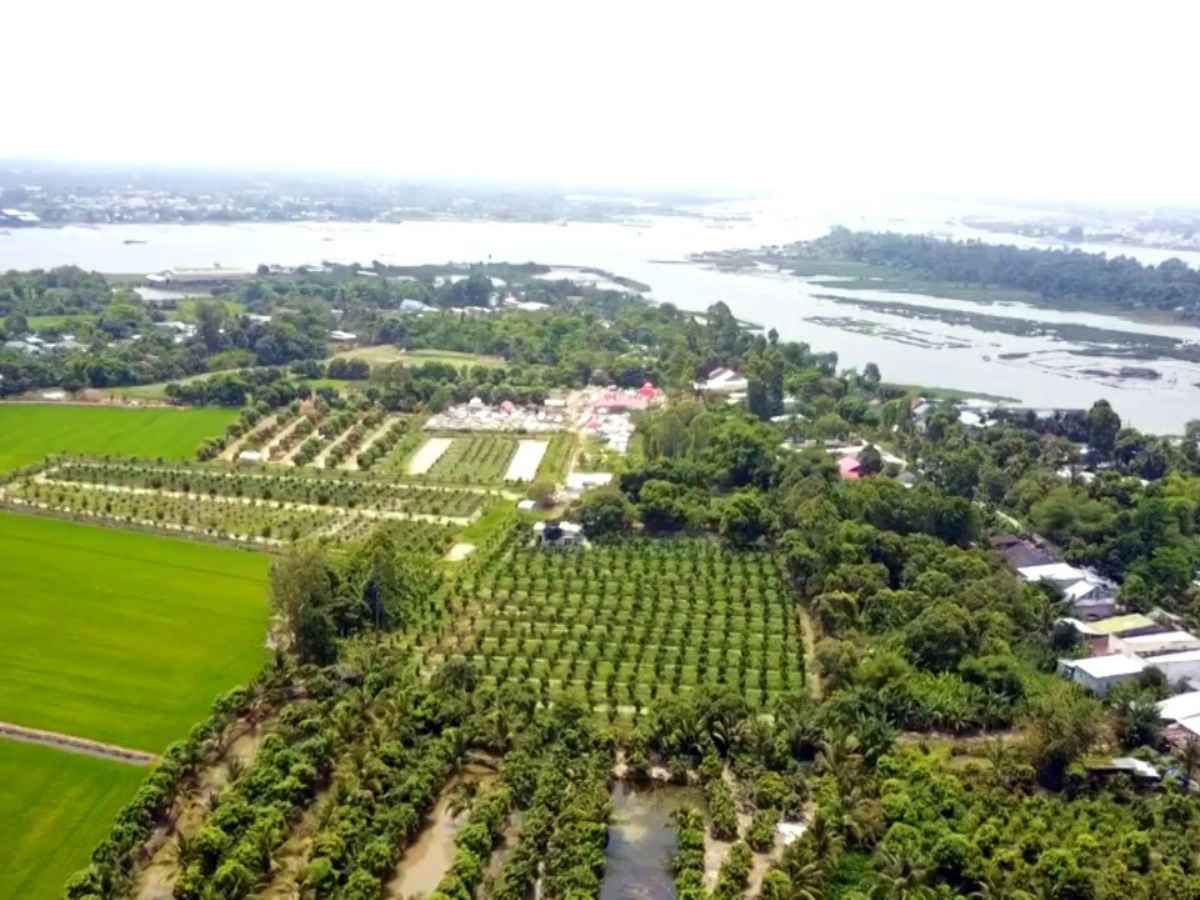
The rural space on the islet is shaped by gardens, canals, and the slow pace of life of riverside residents. (Source: Compilation)
Small dirt paths and garden walkways contribute to preserving the characteristic tranquility of the rural space. The sounds of boats, the daily activities of the people blend into the general scenery, creating a gentle rhythm of life. All activities proceed slowly and are not influenced by the urban pace of life.
The rhythm of residents' lives is closely tied to the water seasons of the year. When the water rises, travel and production depend more on boats, while during the dry season, people focus on rice fields and tending to gardens. Seasonal changes create a stable and familiar rhythm of life on the islet.
2.2. Riverine Transportation and Connection with Long Xuyen
Riverine transportation plays an important role in connecting Ong Ho islet with Long Xuyen city. Ferries, boats, and sampans are familiar means of transport for local residents. Travel is mainly based on the existing natural river system.
O Moi ferry terminal is the main transit point between the islet and the mainland area of Long Xuyen. People use ferries to travel, exchange goods, and for daily life. Crossings occur regularly, maintaining the connection between the two riverbanks.
Besides ferries, small canals facilitate the transportation of agricultural products and seafood. Boats not only serve livelihoods but are also integral to the daily lives of residents. Thanks to this, the islet maintains its economic and social ties with the surrounding areas.
2.3. Ong Ho Islet in Community Memory
For local people, Ong Ho islet is a space that holds many cherished memories across generations. Stories about the process of pioneering and living are passed down in daily life. These memories contribute to shaping the community's identity in this riverine land.
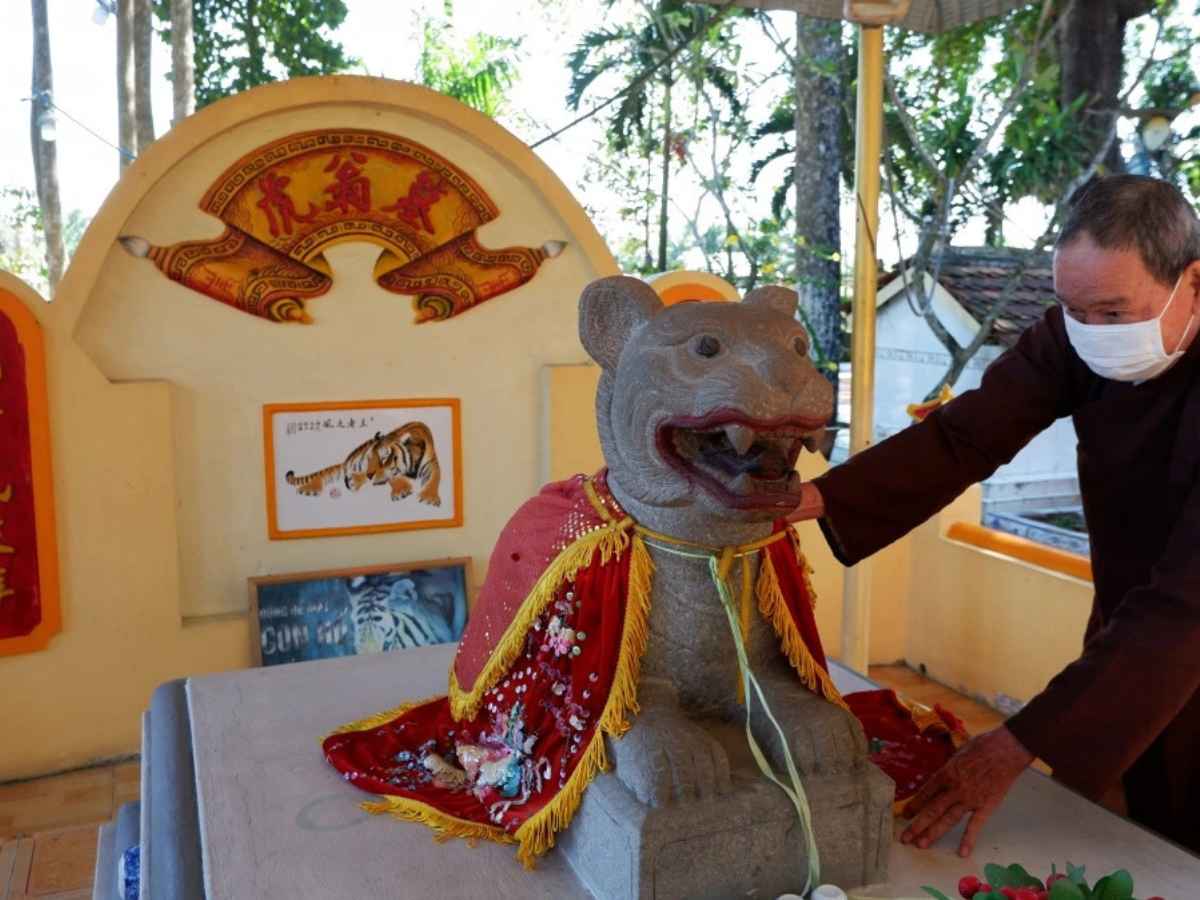
The name “Ong Ho” is associated with a folk tale about a tiger appearing in the middle of the river during the early days of reclamation. This legend is told as part of the spiritual life of the islet's residents. Over time, the story has become a unifying element for the community.
Besides the legend, memories of building houses, farming, and adapting to the riverine environment are also preserved through generations. Everyday stories reflect the strong bond between people and the land. Thus, Ong Ho islet is not just a geographical location but also a cultural imprint in the collective memory of the Mekong Delta.
3. Emotional Experiences and Cultural Depth at Ong Ho Islet
3.1. Walking, Observing, and Feeling the Space
By choosing to walk around Ong Ho islet and along the tree-shaded small paths, visitors have the opportunity to experience the local pace of life more slowly than in urban environments. Traveling on foot allows observers to clearly see every detail of the countryside, such as houses, fruit gardens, and the network of canals winding through residential areas. Through this, the way residents organize their living space in connection with nature and seasons becomes more apparent.
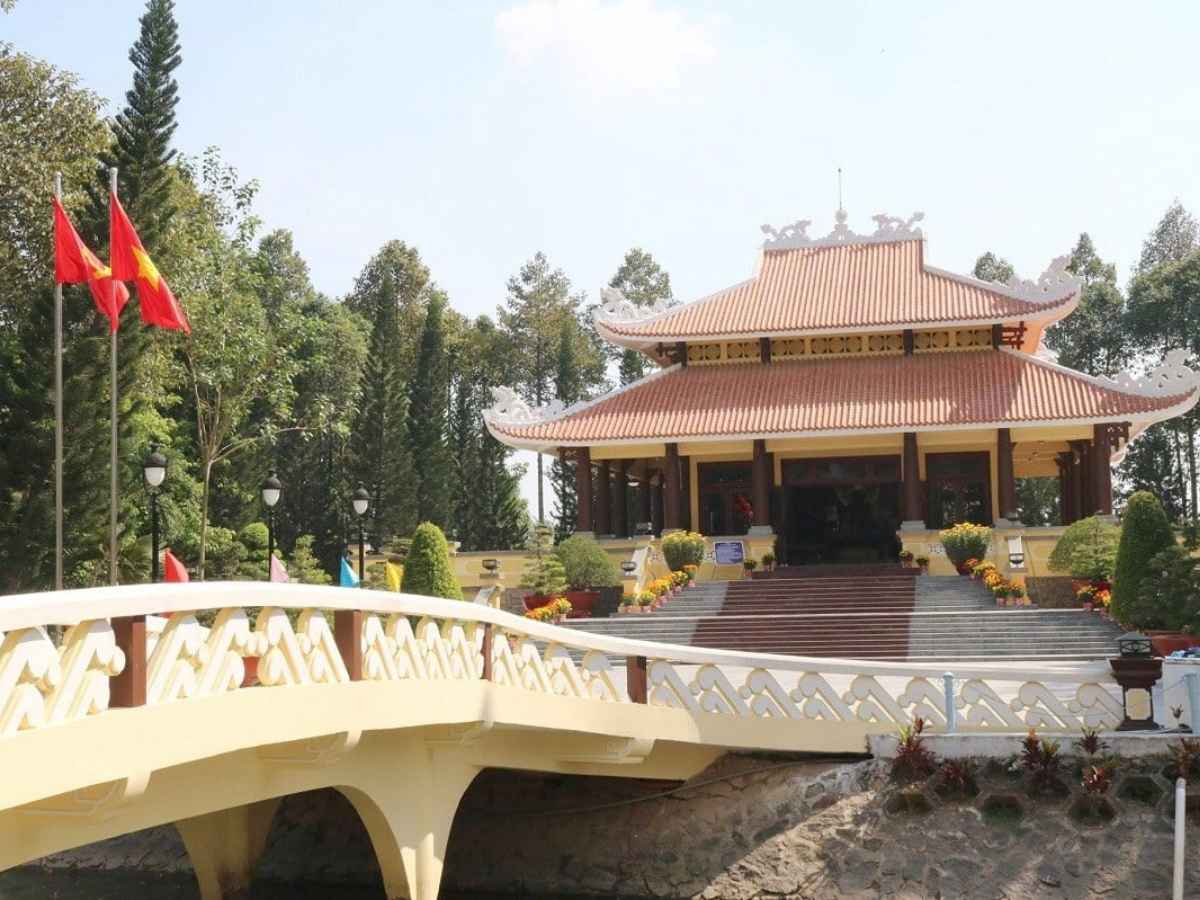
Walking along the small paths helps visitors clearly observe the village structure and daily life on the islet. (Source: Collected)
In the early morning or late afternoon, the space on the islet becomes quiet as soft light covers the water surface and gardens. This time brings a sense of relaxation, helping the observation of daily life to be more natural and complete. Such moments create conditions for visitors to pause and feel more deeply about the riverine environment.
Walking through gardens and along canals also helps visitors clearly recognize the connection between people and the natural environment. Each step brings visitors closer to daily activities such as caring for fruit trees or harvesting vegetables. This experience is not just about moving through space but also an emotional journey connected to life on the islet.
3.2. Historical Space and Perceptual Depth
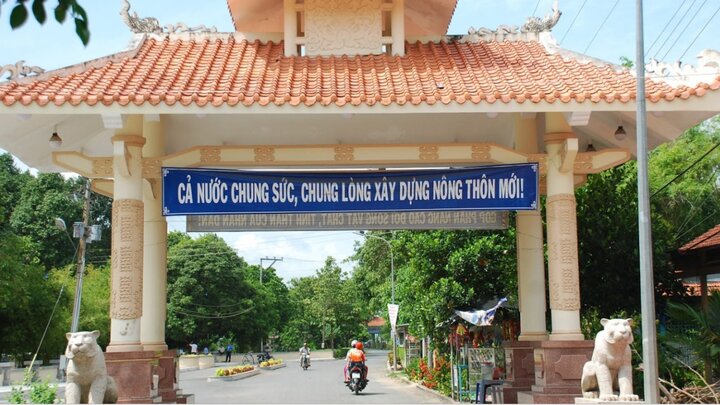
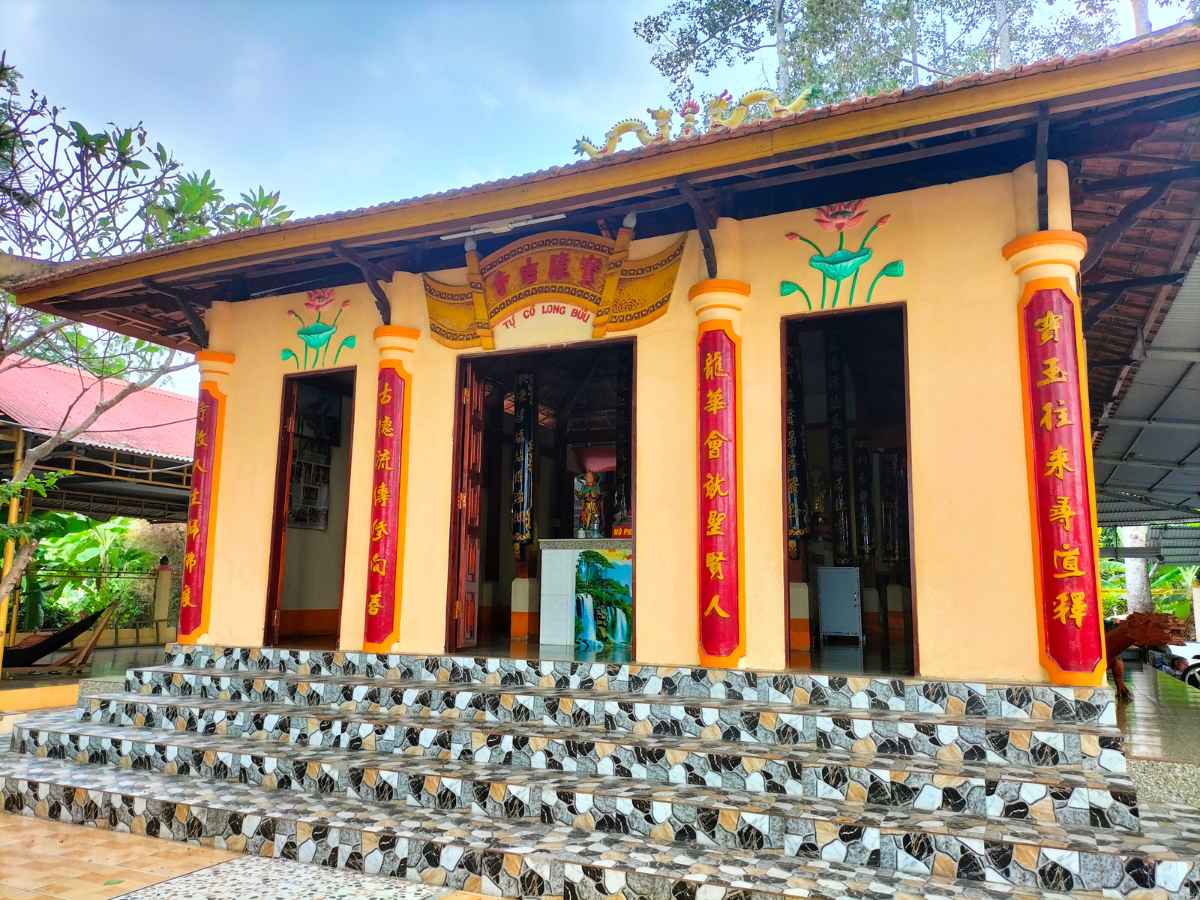
The space of Cu lao Ong Ho is also associated with historical sites such as the memorial area of President Ton Duc Thang and ancient houses that still preserve traditional living customs. When visiting these areas, visitors directly access historical segments related to the formation and development of the resident community. The existing traces help the visiting space go beyond a pure perception of the landscape.
Entering the exhibition area or following the paths leading to ancient houses gives visitors a sense of connection with the past. Stories about land reclamation, settlement, and preservation are recreated through space and artifacts. Thus, history is no longer an abstract concept but becomes more familiar and easier to grasp.
The parallel presence of current life and historical traces creates perceptual depth for the tour. Visitors can clearly feel the connection between the past and the present in each living space. This contributes to enriching the cultural experience when learning about Cu lao Ong Ho.
3.3. Combined Island and Sea Tours
The feeling of observing and contemplating the space at Cu lao Ong Ho evokes associations with the experience of appreciating contemporary art at Sun Signature Gallery. In both spaces, the experiencer is encouraged to go slowly, observe carefully, and feel the depth rather than passing by quickly. The focus on emotion and space plays an important role in how the experience is received.
In a contemporary art environment, viewers approach works through light, space, and spatial arrangement. On the islet, similar elements are expressed through the water surface, trees, canals, and the peaceful rhythm of life of the residents. Both create conditions for the experiencer to connect through personal feelings.
This similarity places visitors in an active role of learning and contemplation. Each moment of observation has its own meaning, contributing to a deeper understanding of space and culture. The experience therefore does not stop at sightseeing but opens up emotional depth.
4. Useful Tips and Notes for Visiting Cu lao Ong Ho
4.1. When is the Appropriate Time to Visit
Early morning and late afternoon are suitable times to visit Cu lao Ong Ho during the day. The gentle light makes walking and observing the scenery more pleasant. This is also when the local pace of life is slow, allowing for a clearer perception of the space.
Early morning and late afternoon are ideal times to fully experience the tranquility of Cu Lao Ong Ho. (Source: Collected)
In the late afternoon, the sunset light shining on the water and gardens creates a sense of calm. This time is suitable for observing the daily lives of the people after a day's work. The space becomes peaceful and easily leaves a deep impression.
During the months of alluvial rain or high water season, the Hau River's water level rises, expanding the landscape. The canals become clear, facilitating boat travel. This is a suitable time to explore the riverine characteristics of the islet.
4.2. Transportation and Effective Exploration Methods
To reach Cu Lao Ong Ho, visitors need to travel by ferry or boat from O Moi ferry terminal. This is the main waterway connecting the islet to the mainland area of Long Xuyen. Using this mode of transport helps visitors access the space in line with the local rhythm of life.
Ferries and boats reflect how residents move daily between the two riverbanks. By choosing this mode of transport, visitors have the opportunity to integrate with local life. The travel experience thus becomes part of the exploration journey.
From the ferry terminal, the tour can begin with a walk through small village paths. This route leads visitors to residential areas, gardens, and the canal system. This slow exploration method helps to perceive the space more clearly.
4.3. Behavior and Respect for the Rural Space
When visiting Cu Lao Ong Ho, appropriate behavior in a rural environment is important. This is a long-standing living space for residents who are attached to traditions and natural rhythms. Respect helps maintain a peaceful environment for the local community.
Visitors should remain quiet when moving near residential areas and limit loud noises. This contributes to protecting the daily lives of the people on the islet. The common space is thus kept in a harmonious state.
Furthermore, preserving the natural landscape is also an important factor. Visitors should avoid littering, use designated paths, and not disturb plants or ponds. These small actions contribute to protecting the environment and the values of Cu Lao Ong Ho.
Cu Lao Ong Ho offers a gentle conclusion to the exploration of An Giang, where lush nature blends with a peaceful pace of life. The village paths and fruit gardens evoke a sense of familiarity and closeness. When mentioning Cu Lao Ong Ho, Sun World Hon Thom serves as a reference point to broaden the perspective on the diversity of tourism space types.