
















1. Tri Ton Lotus Field in the Natural Picture of An Giang
1.1. Location and Natural Characteristics of Tri Ton Lotus Field
Tri Ton Lotus Field is located in Tri Ton district, An Giang province, in the Bay Nui region, characterized by its semi-mountainous terrain, which is rare in the Southwest region of Vietnam. The space here is an interweaving of rice fields, low-lying areas, and gentle mountains, creating favorable conditions for natural seasonal lotus cultivation. This combination makes the landscape of the Tri Ton Lotus Field possess a different hue compared to many familiar lotus-growing areas.
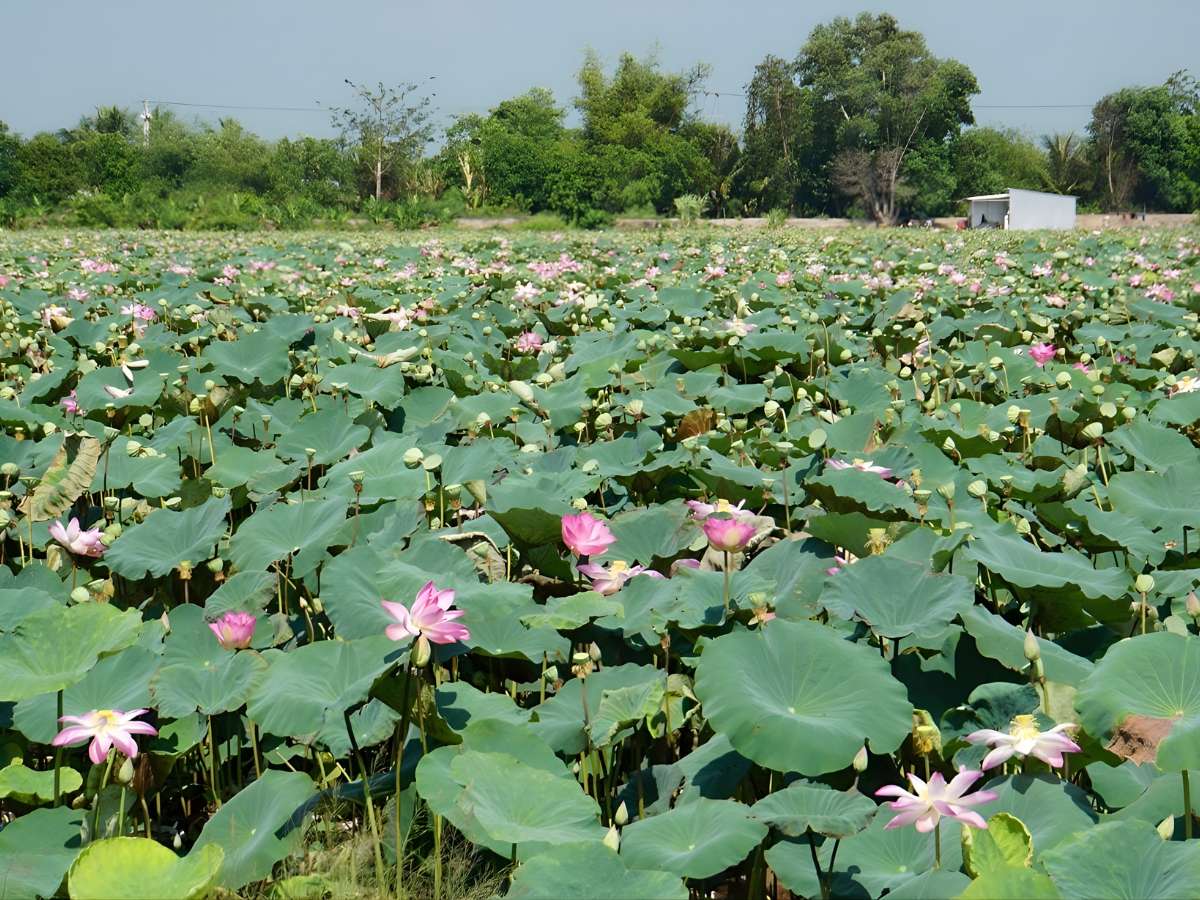
The lotus fields of Tri Ton open up a peaceful natural space amidst the rural countryside of An Giang. (Source: Collected)
Unlike lotus fields that grow on flat water surfaces, lotus in Tri Ton usually grows near the foot of mountains or in low-lying fields with stable water channel systems. Sufficient water combined with clay-rich soil helps the lotus plants grow according to the distinct dry-wet seasons of the Mekong Delta. As a result, lotus strips appear interspersed with mountainous landscapes, creating a harmonious natural composition.
The stratification between low hills and water fields allows the Tri Ton lotus fields to retain the natural characteristics of the delta's periphery. The green of lotus leaves, the pink of the flowers, and the wide-open sky create an airy natural picture. This is also a factor that helps this area become a stopover point for experiences rather than short-term visits.
1.2. The beauty of the landscape and the emotions the lotus fields evoke
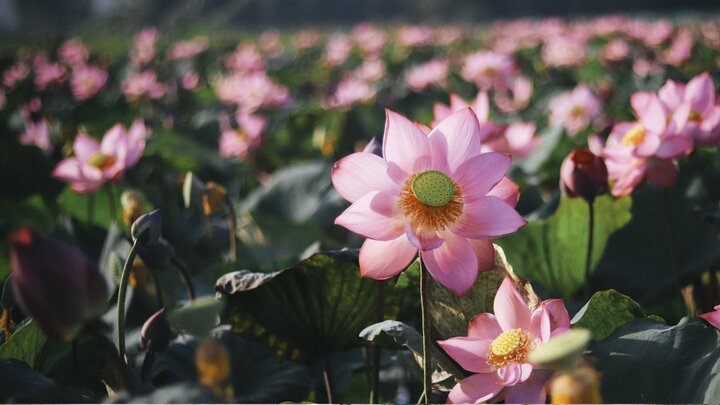
The Tri Ton lotus fields possess the gentle beauty of lotus flowers as pink blossoms rise amidst vast green leaves. The landscape here evokes a sense of peace, suitable for trips seeking tranquility in nature. In the distance, the outlines of low hills add depth to the space.
The open space of the lotus fields provides an airy feeling, where visitors can easily sense the slow pace of life in the rural An Giang region. The subtle scent of lotus in the air in the early morning or late afternoon enhances the experience. Nature almost entirely fills the frame, limiting urban elements.
The contrast between the green of the lotus fields and the pink of the flowers creates a soothing visual. This scenery is suitable for activities such as strolling, sightseeing, and photography in a spacious environment. All movements are slow, allowing visitors' emotions to relax with the natural rhythm.
1.3. The contribution of the lotus fields to local life
For the people of Tri Ton, lotus is a part of their daily life and agricultural production. Lotus is grown for harvesting seeds, stalks, and leaves, serving local culinary needs and small-scale trade. Lotus cultivation helps residents utilize the natural conditions of the semi-mountainous region.
Besides its agricultural value, the lotus fields also contribute to community tourism development in Tri Ton. Visitors often combine lotus sightseeing with a journey to explore the Seven Mountains and cultural sites in the area. This creates additional indirect income for local residents.
In spiritual life, the image of the lotus is associated with purity and closeness to nature. Lotus fields thus become a source of inspiration for creative activities and documenting life in the Mekong Delta. The role of lotus is not limited to the landscape but also present in the rhythm of local cultural life.
2. How the Tri Ton lotus season affects the landscape
2.1. The period when lotus blooms densely, creating a multi-colored field
During the peak season, usually from June to August, the density of lotus in the fields reaches its highest, with water coverage up to 80–90% in some areas. The simultaneous blooming of flowers creates a layer of pink interspersed with green, forming a multi-colored picture with many different layers. Clusters of flowers at different heights create a visual effect when viewed from afar, making the space appear dense and clearly deep.
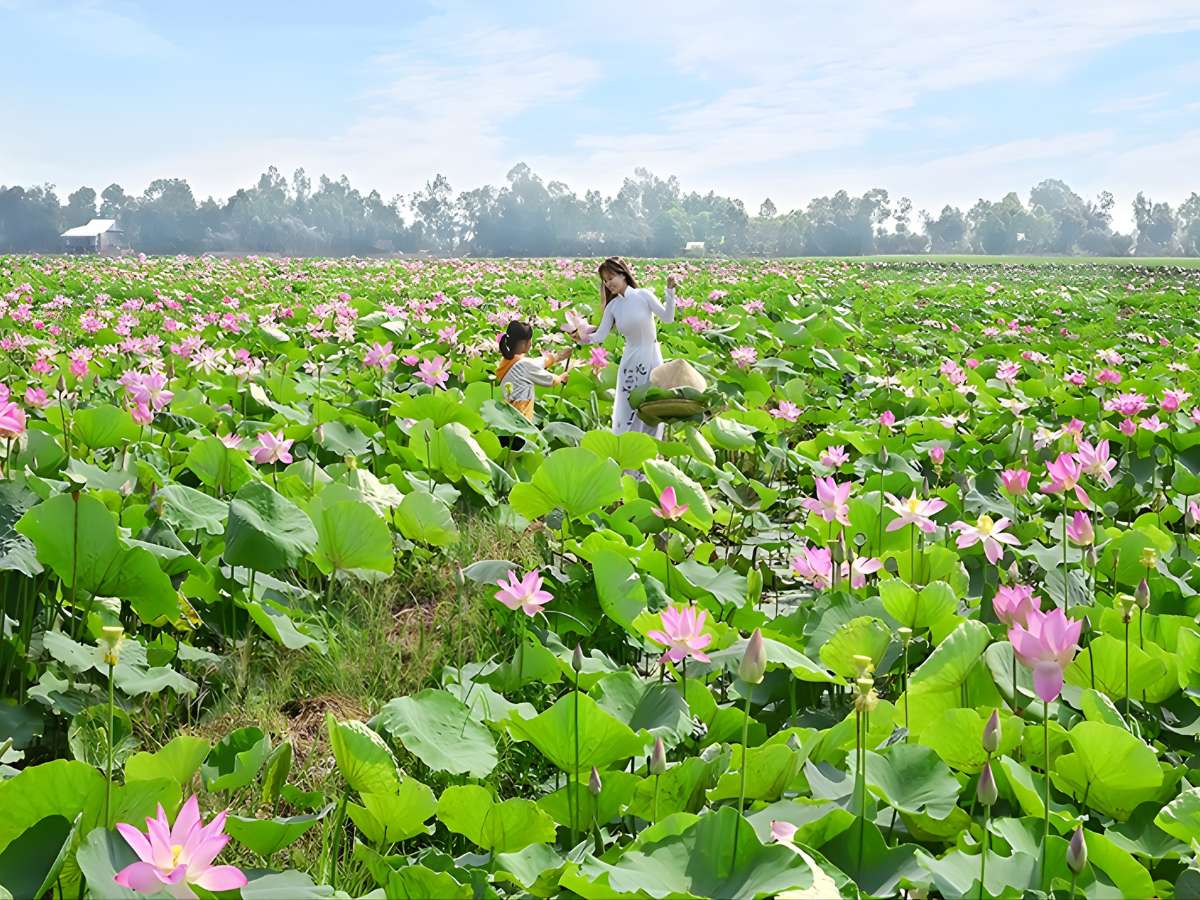
Lotus flowers blooming create a visual highlight and a sense of relaxation for visiting tourists. (Source: Collected)
This change not only affects aesthetics but also impacts the microclimate in the area. The thick layer of leaves helps reduce water surface temperature and limit evaporation, contributing to maintaining humidity in the surrounding environment. This also creates favorable conditions for aquatic organisms to develop, increasing biodiversity in the lotus growing area.
2.2. Sparse lotus stage revealing many water areas
As it passes the peak stage, the density of flowers and leaves begins to decrease, revealing more open spaces on the water surface. These water areas reflect light and the sky more clearly, creating a change in landscape structure. Instead of a covered surface, the space becomes more airy, with an alternation between lotus patches and water, bringing a light and open feeling.
This stage is often suitable for those who want to observe individual lotus clusters in detail or take photos with a simpler composition. The reduced density also makes it easier to move along the paths between the lotus fields, while reducing the risk of obstructed views. This is an important transitional period in the lotus's growth cycle, reflecting the natural changes of the ecosystem.
2.3. End of season creates a different feeling from the peak blooming period
In the late season, the number of flowers decreases significantly, with most plants transitioning to an aged state with withered leaves and dry seed pods. The landscape at this time carries a more subdued tone, mainly brown and dark green, creating a distinct difference from the peak blooming period. Although there are no longer vibrant colors, the structure of the lotus plants and the water surface become more distinct.
This change helps observers recognize the natural cycle of the lotus, from strong growth to the end of the season. Some activities, such as harvesting lotus seeds, take place at this time, reflecting the economic role of the crop. Although not the peak aesthetic period, the end of the season still holds its own value in observing and documenting landscape changes.
3. How to take more natural photos in lotus fields
3.1. Stand on small paths to capture multiple layers of lotus
Small paths between lotus fields are usually created for care and harvesting, and they also serve as suitable spots for photography. By standing on these paths, photographers can utilize the layers of lotus on both sides to create depth in the frame. The arrangement of foreground, middle ground, and background layers helps make the photo balanced and well-structured.
Additionally, maintaining a position on the path helps minimize impact on the crops and provides a stable viewpoint. Natural light shining from the sides or behind can highlight the outlines of leaves and flowers, enhancing the visual effect. This is a common approach in agricultural landscape photography, especially in lotus-growing areas like the Tri Ton lotus field.
3.2. Choose open spaces to avoid leaves obstructing the frame
In many cases, large lotus leaves can obscure the subject or create a cluttered composition if not arranged properly. Choosing open spaces between lotus clusters helps create an airy feel in the frame, while also highlighting the main subject. These open spaces often appear during the sparse lotus stage or at the edges of the field.
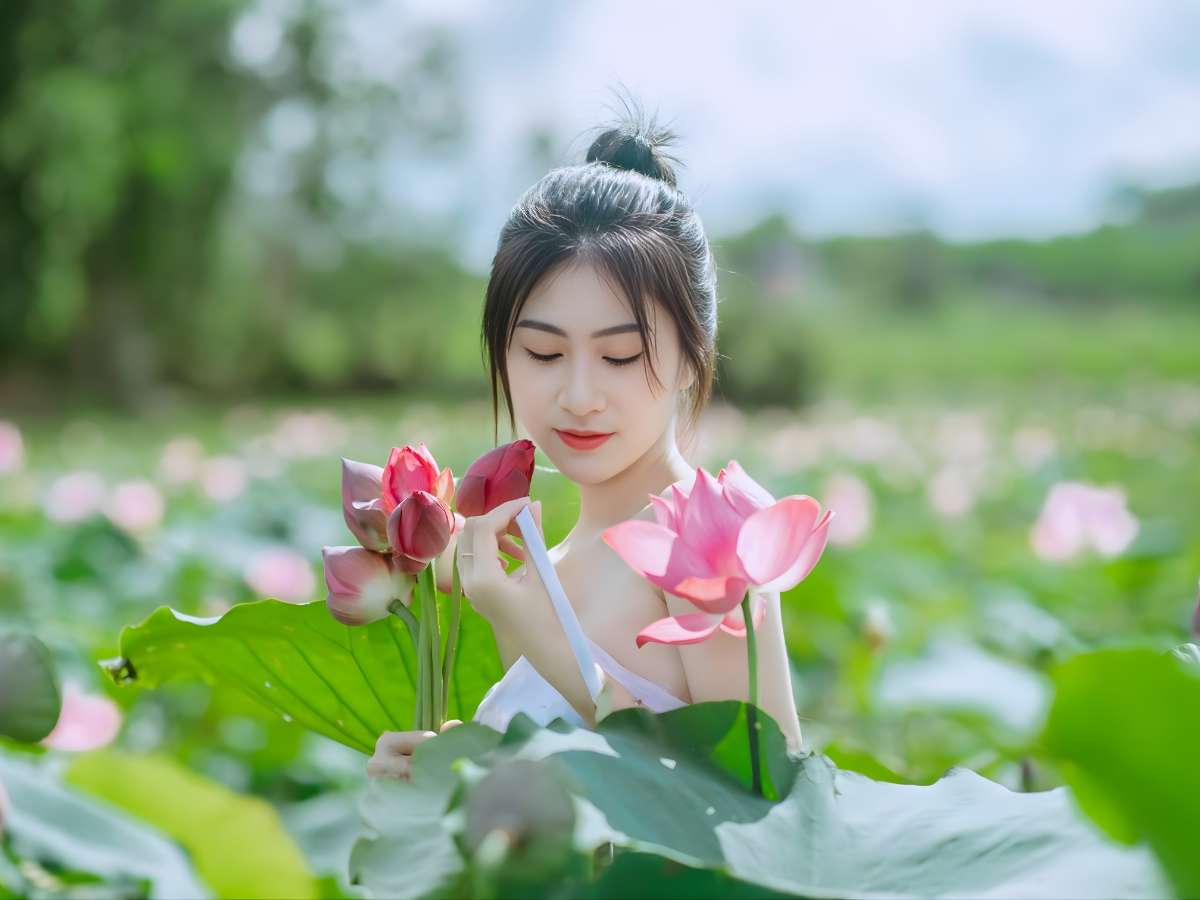
The lotus landscape of Tri Ton creates a gentle visiting experience, suitable for slow travel and photography. (Source: Compilation)
When composing the frame, the combination of empty space and surrounding lotus clusters helps balance the composition and avoid excessive detail. Light reflecting from the water surface in the empty spaces can also create highlights, increasing the brightness of the photo. This approach is suitable for minimalist photos or those focusing on a specific subject.
3.3. Lower the camera angle to give the lotus surface depth
Lowering the camera angle helps the photographer include more layers of lotus in the frame, creating a more pronounced sense of depth compared to a horizontal or top-down shot. When the camera is placed near the water surface or at the level of the lotus leaves, the front layers of lotus become the foreground, while the back layers form the background, giving the photo a clear spatial structure.
This shooting angle also helps utilize the light reflecting on the water surface, highlighting details such as leaf veins or petals. When combined with early morning or late afternoon light, the shadow and color effects will be more pronounced. This is a technique often used in nature photography to enhance the realism and depth of images.
4. How to visit lotus fields without affecting cultivation
4.1. Use the designated paths between lotus plots
Lotus fields are usually divided into plots with clear paths for care and harvesting. Moving along these paths helps avoid breaking the lotus stems or roots, which are located under the soft mud. When many people move off the paths, the pressure on the soil can alter the substrate structure, affecting the plants' growth.
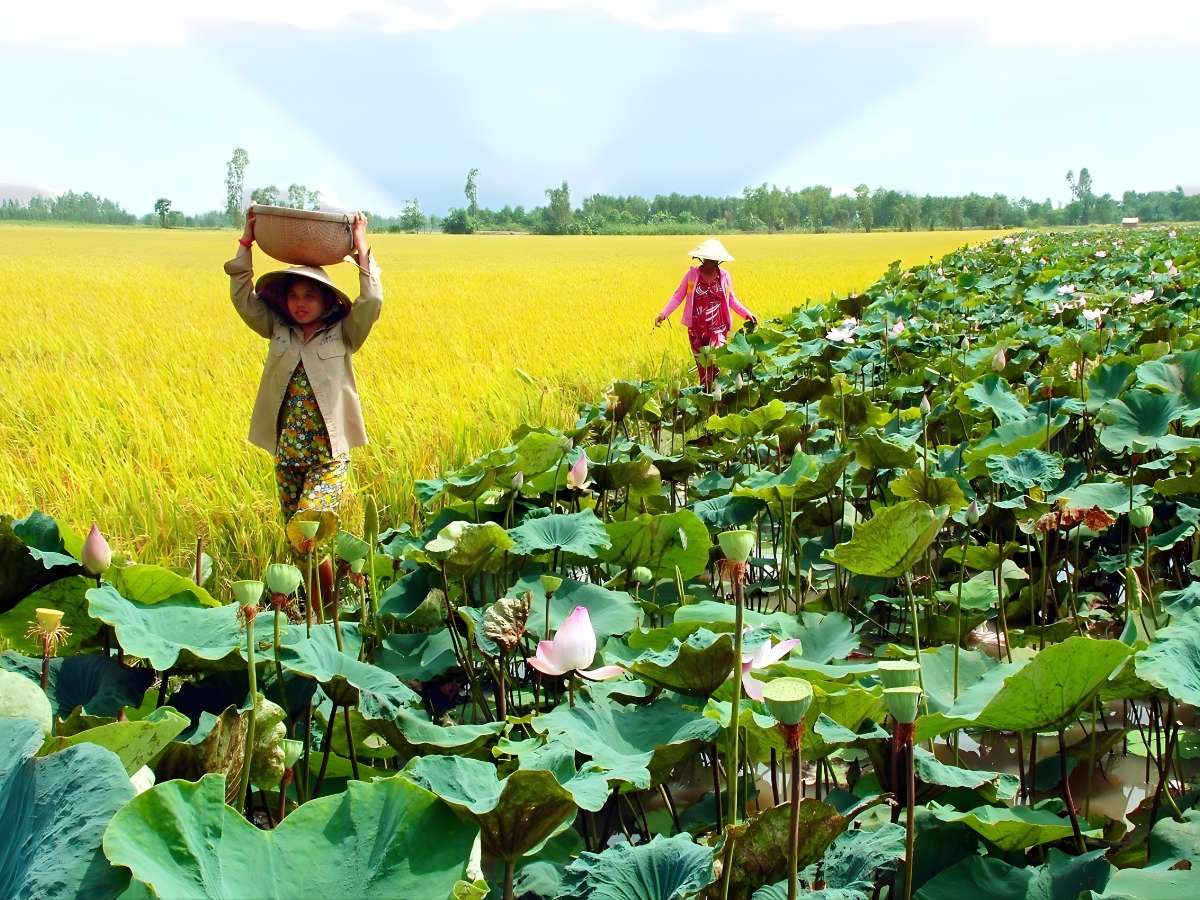
The early season of the lotus field space has characteristic ecological features, creating an extremely tranquil scenery. (Source: Collected)
Furthermore, adhering to the pathways helps maintain a stable landscape, avoiding disruption to the natural layout of the lotus field. This is especially important in areas combined with tourism, where image and experience are considered crucial factors. The cooperation between visitors and growers helps maintain long-term effectiveness for both parties.
4.2. Do not step into the mud to change shooting angles
Stepping into the mud is not only unsafe but can also damage the soil structure and the root system of the lotus plants. The mud layer in the field is usually soft and contains many young roots; when stepped on, it affects the plant's ability to absorb nutrients. This can reduce yield or cause uneven plant growth in subsequent seasons.
Instead of moving into the mud, visitors can change their shooting angles by moving along the pathways or adjusting the camera angle. Modern photography techniques allow for creating various perspectives without direct contact with the cultivation area. This approach helps protect the farming environment and maintain product quality.
4.3. Do not pick flowers or touch lotus plants forcefully
Lotus flowers are economically valuable and also the main element creating the landscape of the field. Picking flowers or touching plants forcefully can break stems or cause petals to fall, directly affecting yield and commercial value. Furthermore, forceful impact can spread diseases between plants if not controlled.
Maintaining distance and observing instead of direct contact is the appropriate way to protect lotus plants. This not only helps maintain yield but also preserves the intact image of the lotus field throughout the season. Raising visitor awareness plays a crucial role in the sustainable development of agriculture-linked tourism models.
The Tri Ton lotus field offers a gentle feeling with its spacious atmosphere and the slow pace of life in the Bay Mountains region. During the lotus season, it is a suitable destination for those who want to connect with nature. In articles introducing tourist routes in the Mekong Delta, the Tri Ton lotus field appears as a natural splash of color complementing the familiar experiences at Sun World Hon Thom.