















1. Khmer "Com Dep" in the Cultural Life of the South
1.1. Origin of Khmer "Com Dep"
Com dep is a traditional dish of the Khmer people in the South, closely associated with the wet-rice agriculture and the seasonal farming rhythm. In provinces such as Soc Trang, Tra Vinh, and An Giang, young glutinous rice grains are selected as the main ingredient, reflecting the strong relationship between people, fields, and rice plants. The process of making com dep usually begins when the rice is just ripe, when the grains are still milky, carrying the meaning of the first harvest of the agricultural production year.
1.2. Cultural and Spiritual Significance of "Com Dep"
For the Khmer community, com dep is not just a familiar dish but also carries spiritual significance tied to agricultural beliefs. The young glutinous rice used in its preparation signifies respect for nature and the conditions that nurtured the crops. Through generations, com dep has become a symbol of the wish for a prosperous life, family cohesion, and community in Southern Vietnamese life.
1.3. "Com Dep" in the Ok Om Bok Festival
During the Ok Om Bok festival of the Khmer people in the South, com dep plays an important role in traditional rituals and is always present on the offering tray. The festival takes place on the full moon of the tenth lunar month, aiming to express gratitude to the moon and the natural elements that supported agricultural production. Through the moon worship ritual, com dep not only holds material value but also embodies the faith and connection between humans and nature.
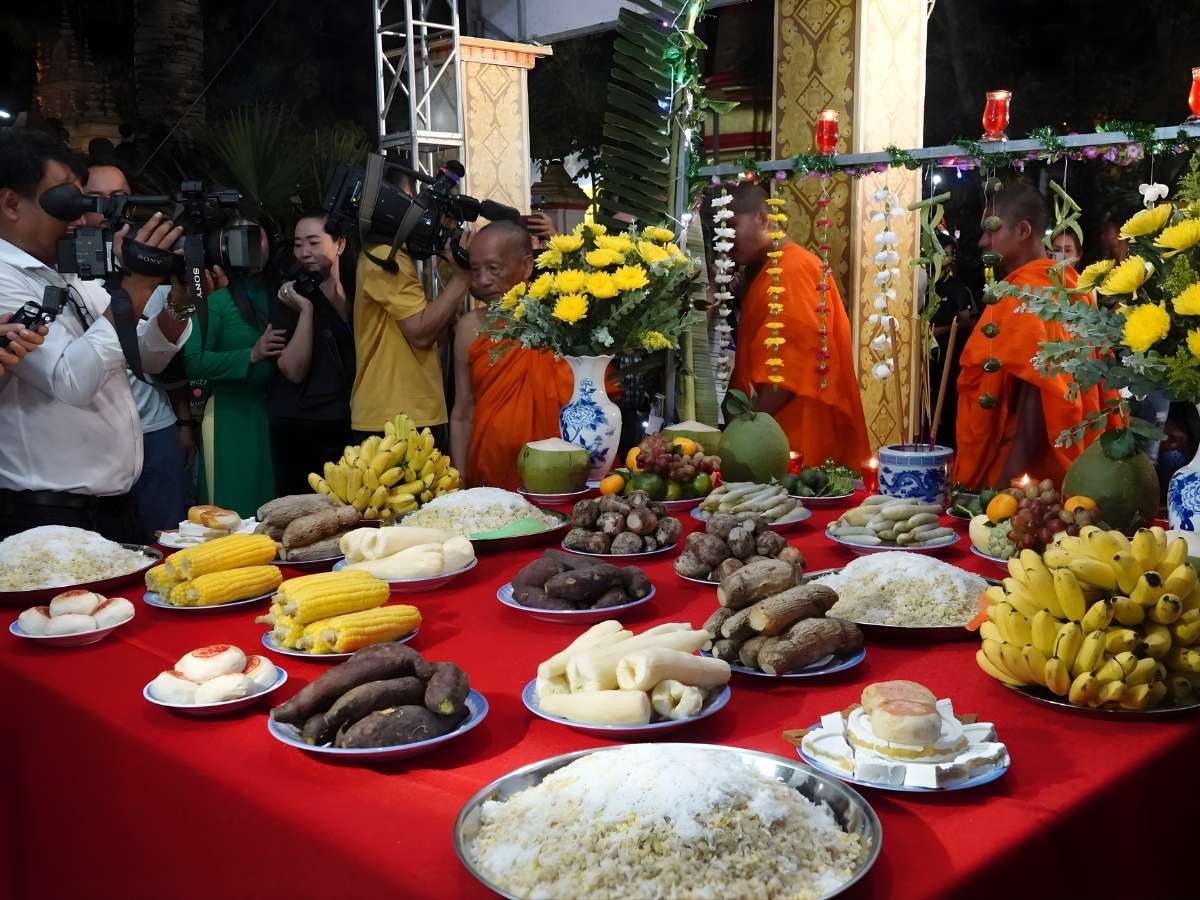
Young rice flakes are solemnly displayed during the traditional Ok Om Bok festival. (Source: Collected)
During the moon worship ritual, the offering tray is usually arranged with familiar products such as coconuts, sweet potatoes, bananas, and young rice flakes. A symbolic ritual involves feeding young rice flakes to children and listening to their innocent wishes. This moment signifies the connection between generations, while also conveying hopes for a peaceful life for the family and community.
2. Traditional Process of Making Khmer Young Rice Flakes
2.1. Main Ingredients and How to Choose Young Glutinous Rice
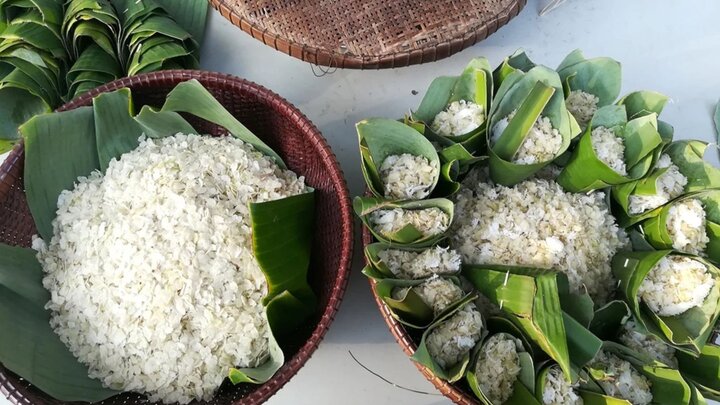
The main ingredient for making Khmer young rice flakes is young glutinous rice grains that are just ripe, usually harvested at the end of the rainy season and the beginning of the dry season when the grains start to develop a milky consistency. At this stage, the rice retains its chewiness and natural aroma, suitable for the roasting and pounding process. Before processing, the rice is carefully selected, removing empty grains and cleaning it to ensure the quality of the finished product.
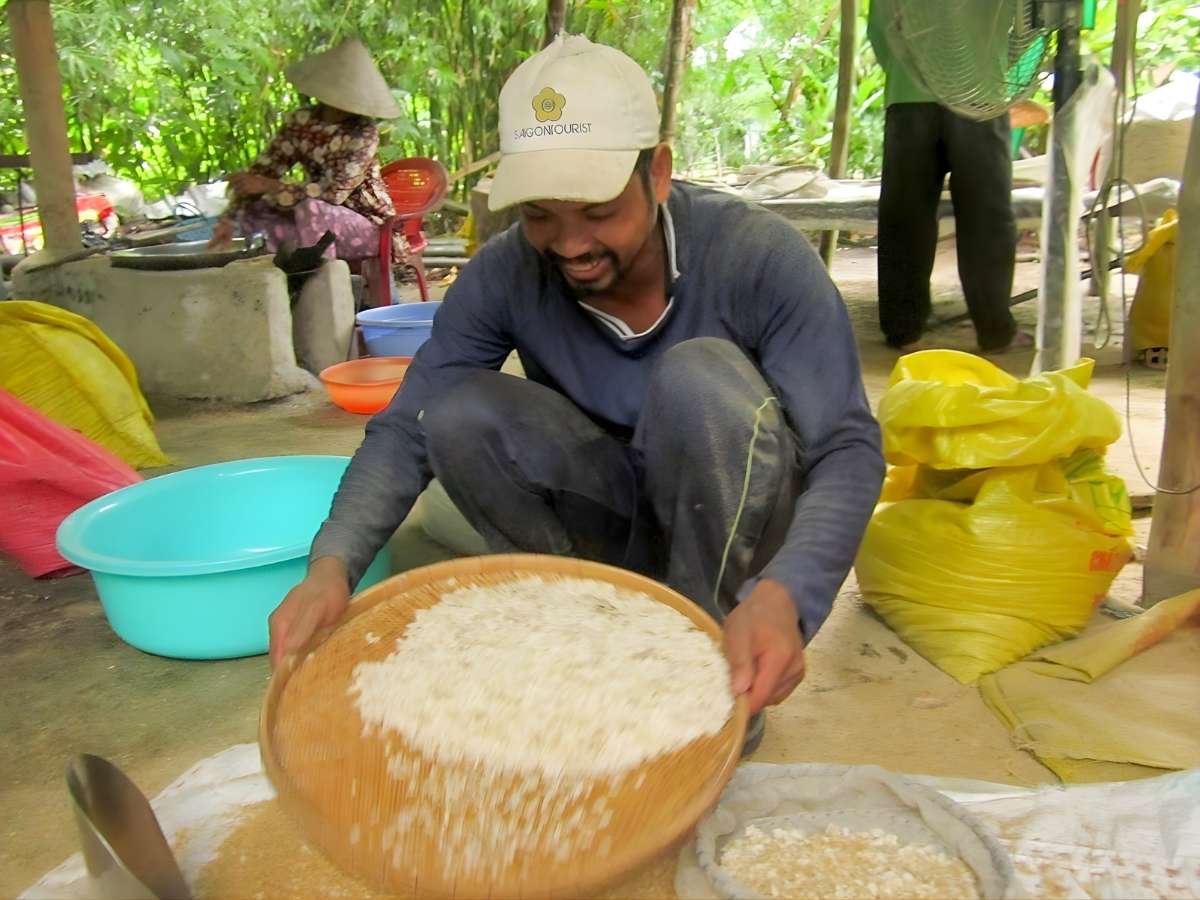
Ingredients of young green sticky rice are carefully selected for the com dep dish (Source: Collected)
Young sticky rice is usually kept right after harvest because this is when the starch and moisture content in the grain are balanced. If the sticky rice is too old, the com will be hard and less chewy, while if it's too young, the grains are easily mushy during processing. Choosing the sticky rice is therefore considered a crucial step, directly affecting the flavor and texture of the com dep.
2.2. The processing stages of com dep
The process of making com dep begins with roasting the young sticky rice over low heat so the grains cook evenly and do not burn. Khmer people often use wide-mouthed clay pots, combined with continuous hand stirring to ensure the sticky rice grains reach the right level of doneness. This stage requires skill and experience for the sticky rice to retain its natural aroma.
After roasting, the sticky rice is put into wooden mortars to be pounded into thin, flat pieces. Family members often take turns pounding the rice, creating a steady rhythm and fostering connection. When pounding is complete, the com is winnowed to remove the husks and prepared for the next step of mixing with other ingredients.
2.3. The importance of community in the com dep making process
Making com dep is not just a culinary activity but also a communal living practice in Khmer villages. During the Ok Om Bok festival season, many families gather to participate in all stages, from roasting the rice to pounding the com. Adults, youth, and children can all contribute, creating a warm and close-knit atmosphere.
Through this shared activity, the experience and techniques of making com dep are naturally passed down between generations. This practice helps preserve traditional crafts and strengthens community spirit in Khmer life. It also serves as an occasion for children to understand the value of labor and their local cultural identity.
3. The flavor and how to enjoy Khmer com dep
3.1. The characteristic flavor of com dep
Khmer com dep carries the light aroma of new rice, evoking a rustic and close-to-nature feeling of the Southern Vietnamese fields. The com grains are chewy and soft, with a natural mild sweetness from the young sticky rice, not too strong or overpowering. When tasted, one can perceive the balance between the aroma and the characteristic soft, fluffy texture.
During preparation, com dep is often mixed with shredded coconut and a moderate amount of palm sugar or coconut milk. This combination adds a light richness and rounds out the flavor of the traditional dish. The taste thus becomes harmonious, complementing rather than overpowering the original aroma of the sticky rice.
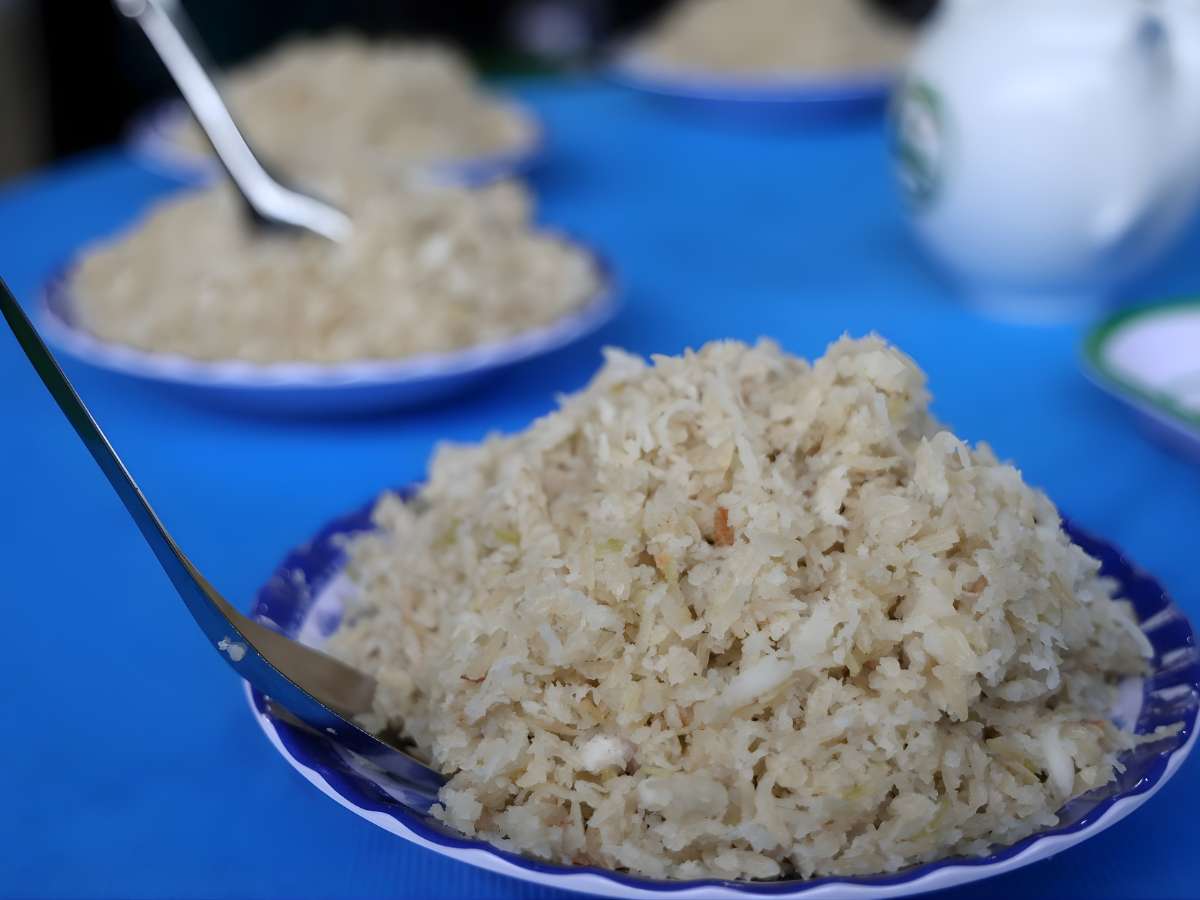
Finished com dep has natural colors and a characteristic sweet and savory flavor (Source: Collected)
The manual roasting and pounding method also contributes to shaping the unique flavor of Khmer com dep. Each batch of com dep can have different nuances depending on the maker's experience and perception. This absolute non-uniformity creates the artisanal character and cultural value of the dish.
3.2. Popular ways to eat com dep
The familiar way to eat com dep is to mix it with shredded coconut and sugar, then eat it directly while it's still soft. Some places also wrap com dep in soft rice paper or banana leaves for convenience. This way of eating preserves the original flavor and the chewy, fragrant texture of the com dep.
Additionally, com dep is combined with ripe bananas to create a natural sweetness and make it easier to eat. Bananas help to mellow the glutinous rice flavor and increase the dish's softness. This combination often appears in the daily life of the Khmer people in the South.
In modern life, com dep is also transformed into many different dishes. Some families use com dep as a filling for cakes, mixed with green beans and sugar to make traditional cakes. These methods help com dep adapt to diverse tastes while retaining its unique characteristics.
3.3. Com dep in contemporary life
Today, com dep is not only present during festivals but also in the daily lives of the Khmer people. This dish is gradually being introduced in cultural spaces and local culinary events. This allows com dep to reach a wider audience, especially tourists.
At Khmer cultural festivals in the South, com dep making demonstrations attract the attention of attendees. Tourists can directly observe the preparation process and enjoy com dep on the spot. This experience offers an intimate glimpse into local life and culture.
Furthermore, com dep appears in traditional food stalls at tourist attractions and festival areas. Incorporating this folk dish into contemporary settings demonstrates the flexible adaptation of Khmer culinary culture. Through this, com dep continues to be preserved and spread in the context of a changing society.
4. Southern Phu Quoc and the Khmer Com Dep Cultural Experience
4.1. Ho Quoc Pagoda (Truc Lam Ho Quoc Zen Monastery)
Ho Quoc Pagoda, located in Duong To ward, Phu Quoc city, Kien Giang province, faces the East Sea. The structure is built in the style of a Zen monastery, combining traditional Buddhist architecture with the coastal mountain and forest landscape on a mountainside about 100 meters above sea level. The terrain within the complex varies, offering a wide view of the distant bay.
Construction began in the early 2010s, and it has become a religious site combined with a tourist attraction in the south of the island. The area often sees an increase in visitors during holidays and weekends, according to recent records from the Kien Giang Department of Tourism. The quiet atmosphere and low building density help the area maintain its landscape balance.
4.2. Sun World Hon Thom
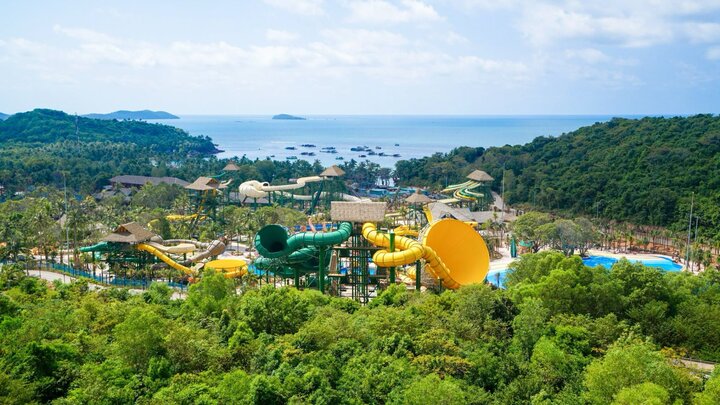
Aquatopia Water Park is located on Hon Thom island, An Thoi ward, Kien Giang province, and began operation in 2018. The park features over 20 water attractions, divided into several themed zones related to marine life and tropical forests. Hon Thom island covers an area of about 5.7 km², facilitating the development of marine tourism activities and welcoming thousands of visitors daily during peak season.

Sun World Hon Thom tourist destination attracts thousands of visitors. (Source: Compilation)
Some games are designed to international safety standards with diverse slides and a separate area for children. The landscape space combines greenery and entertainment facilities to enhance the sightseeing experience. Visitor numbers to this area often increase during the dry season from November to April.
The Hon Thom cable car line is approximately 7,899.9 m long, recognized as the world's longest three-rope sea-crossing cable car. The system connects An Thoi ward to Hon Thom island, with a travel time of about 15 minutes and a capacity of thousands of passengers per hour. The project was put into operation in 2018, contributing to connecting the tourist spots in the South of the island.
>>> Book Sun World Hon Thom tickets now to fully explore Hon Thom HERE.
4.3. Sunset Town
Sunset Town, located in An Thoi ward, Kien Giang province, is a coastal tourism-entertainment complex in the South of the island. The area hosts fireworks displays twice every night, running 365 days a year, creating a large-scale night tourism space in the southern island region. The architectural space is inspired by the Mediterranean style with a square and a pedestrian street.

The combination of Mediterranean architecture and the seascape of Phu Quoc. (Source: Collected)
The two shows “Kiss of The Sea” and “Symphony of The Sea” are held periodically with water and light effects on the sea. The Kiss Bridge is an architectural highlight, connecting two branches of the work facing the ocean. This area forms a nighttime entertainment space in the South of the island.
Amidst the modern pace of life, Khnmer sticky rice flakes retain their rustic charm associated with the Southern agricultural culture. Each grain of sticky rice flakes reflects the bond between people, nature, and the spiritual life of the Khmer community. Experiencing and appreciating sticky rice flakes is also a way to preserve traditional cultural values on today's travel journey.