
















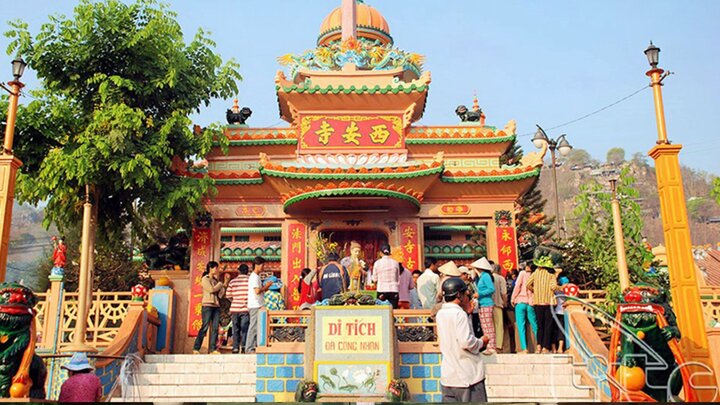
1. Tay An Pagoda has left its own mark on the Sam Mountain pagoda system
Tay An Pagoda , also known as Tay An Ancient Temple, is a Buddhist temple of the Northern宗 sect, located at the foot of Sam Mountain, Vinh Te Ward, Chau Doc City, An Giang Province. Built in the mid-19th century and undergoing many renovations, the pagoda has accompanied the spiritual life of the local people through many generations. Its location near the main road leading to Sam Mountain makes Tay An Pagoda a familiar stop for tourists in the area.
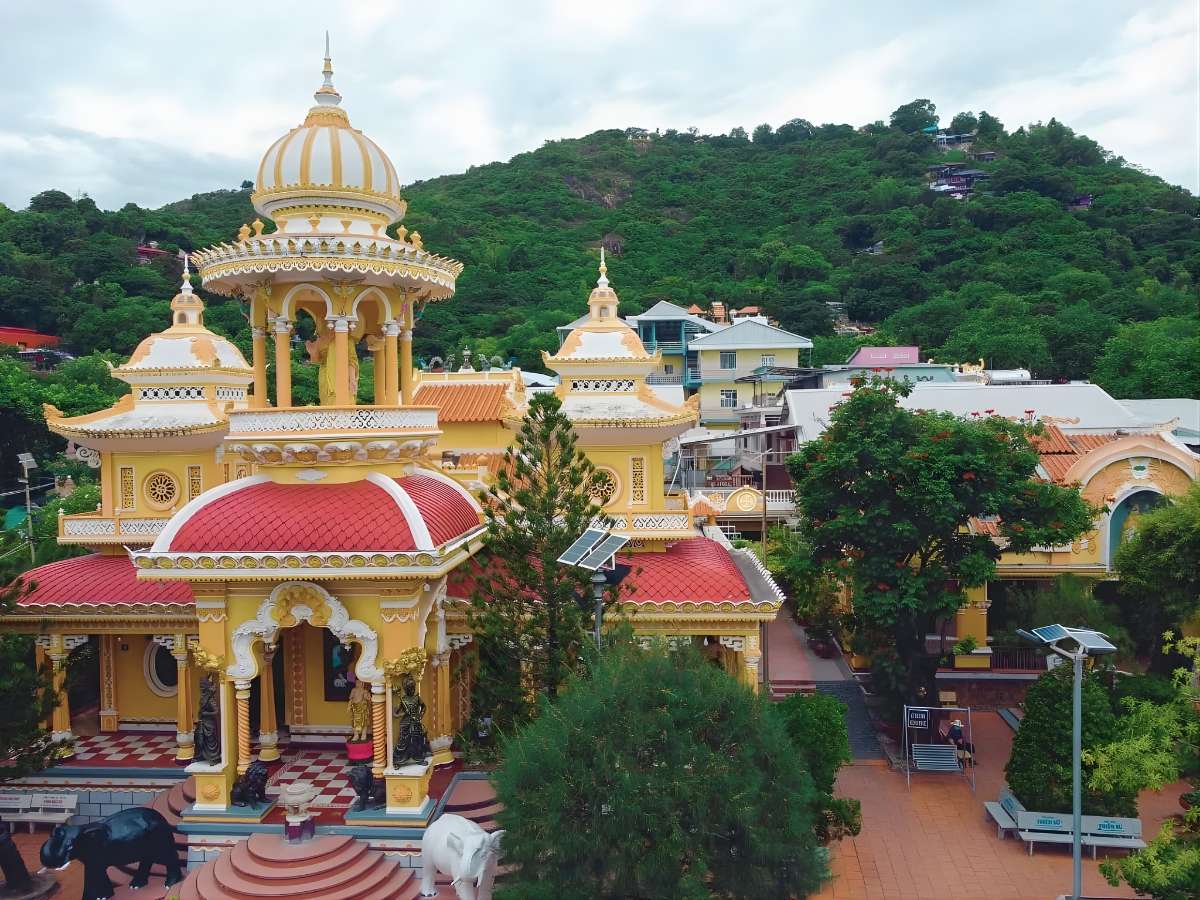
Tay An Pagoda stands out with its location at the foot of Sam Mountain, connecting the spiritual space and the urban area of Chau Doc. (Source: Collected)
Over more than a century of formation and development, Tay An Pagoda is not only a place for religious activities but also contributes to preserving the cultural values of the Chau Doc region. The pagoda was recognized as a national architectural art relic in 1980, according to its relic ranking dossier, reflecting the historical and architectural values characteristic of the structure. Its preservation and maintenance over time have helped the pagoda become an iconic destination within the complex of pagodas around Sam Mountain.
The pagoda's history is linked to many important figures and milestones in the religious life of Southern Vietnam in the 19th century. Over time, Tay An Pagoda has gradually become a bridge between Buddhist beliefs and cultural tourism activities in An Giang. The combination of its geographical location, architecture, and historical value helps the pagoda create its own unique impression on the sightseeing journey of Sam Mountain for visitors from near and far.
2. Areas Worth Spending Time When Visiting Tay An Pagoda
2.1. The facade makes a strong impression from the first glance
The facade of Tay An Pagoda is striking with its dome and tower system reminiscent of Indian-Islamic architecture, unlike the traditional curved roofs commonly seen in Vietnamese pagodas. The structure has a total of 12 small towers and one large central tower, painted white combined with light yellow, creating harmony in the overall design. These details make the facade a distinct focal point when viewed from afar.
The symmetrical layout of the facade allows observers to easily recognize the balance in its design. Large arched doorways and the front corridor add depth to the structure, while also making the space more airy in the tropical climate. This is also an area often chosen for a pause to observe before entering, helping to visualize the overall architecture of the pagoda.
2.2. The main hall clearly shows architectural fusion
The main hall of the pagoda is where the combination of various architectural styles is most evident. Inside, large pillars are arranged in rows, combined with a dome system that creates a sense of spaciousness and solemnity. Buddha statues are arranged in a traditional order, including many statues dating back to the 19th century.
The architectural fusion is also reflected in decorative details such as patterns, bas-reliefs, and interior colors. These elements are both religious and indicative of cultural reception from various sources during the construction process. Maintaining many of the original ancient details makes the main hall a space of research value for the history of religious architecture in Southern Vietnam.
2.3. The pagoda courtyard facilitates overall observation
The courtyard in front of the pagoda is designed to be spacious, providing convenient conditions for observing the entire structure. From this vantage point, one can clearly see the towers, domes, and surrounding corridor system. The open space allows visitors to move easily and choose suitable viewing angles to approach each architectural detail.
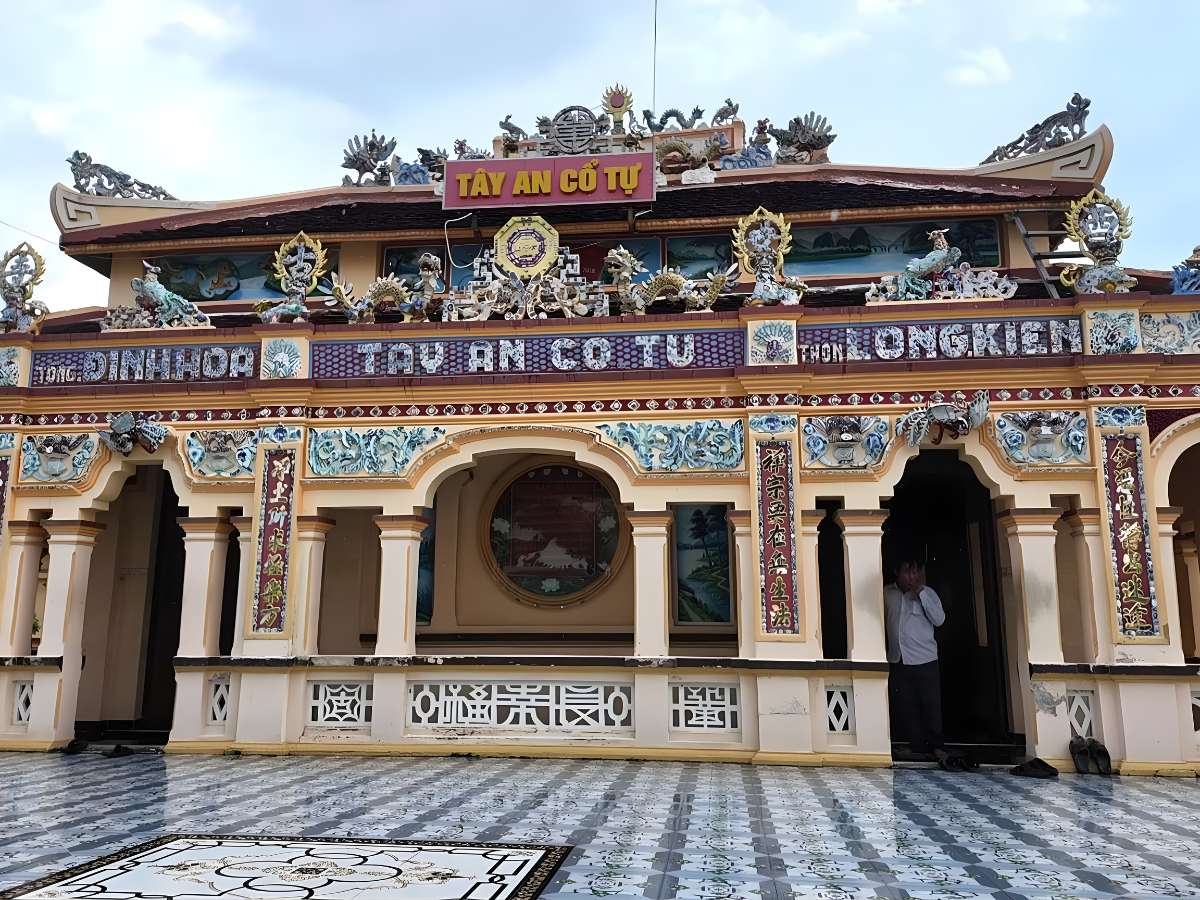
The architecture of Tay An Pagoda shows the intersection of Vietnamese Buddhism and characteristic Indian style. (Source: Collected)
Besides observation, the courtyard also serves as a gathering place for major festivals. With a relatively large area, the courtyard helps separate the outer space from the inner sanctuary, creating a reasonable transition when entering the worship area. This contributes to maintaining order and solemnity in the overall space of the pagoda.
3. Best experiences for visitors when visiting Tay An Pagoda
3.1. Admire the characteristic architecture before entering the inner sanctuary
When visiting Tay An Pagoda, observing the exterior architecture before entering the inner sanctuary helps to better visualize the overall structure of the work. Details such as towers, domes, and characteristic colors can be clearly seen from the front courtyard. This is a step that helps visitors access the space systematically.
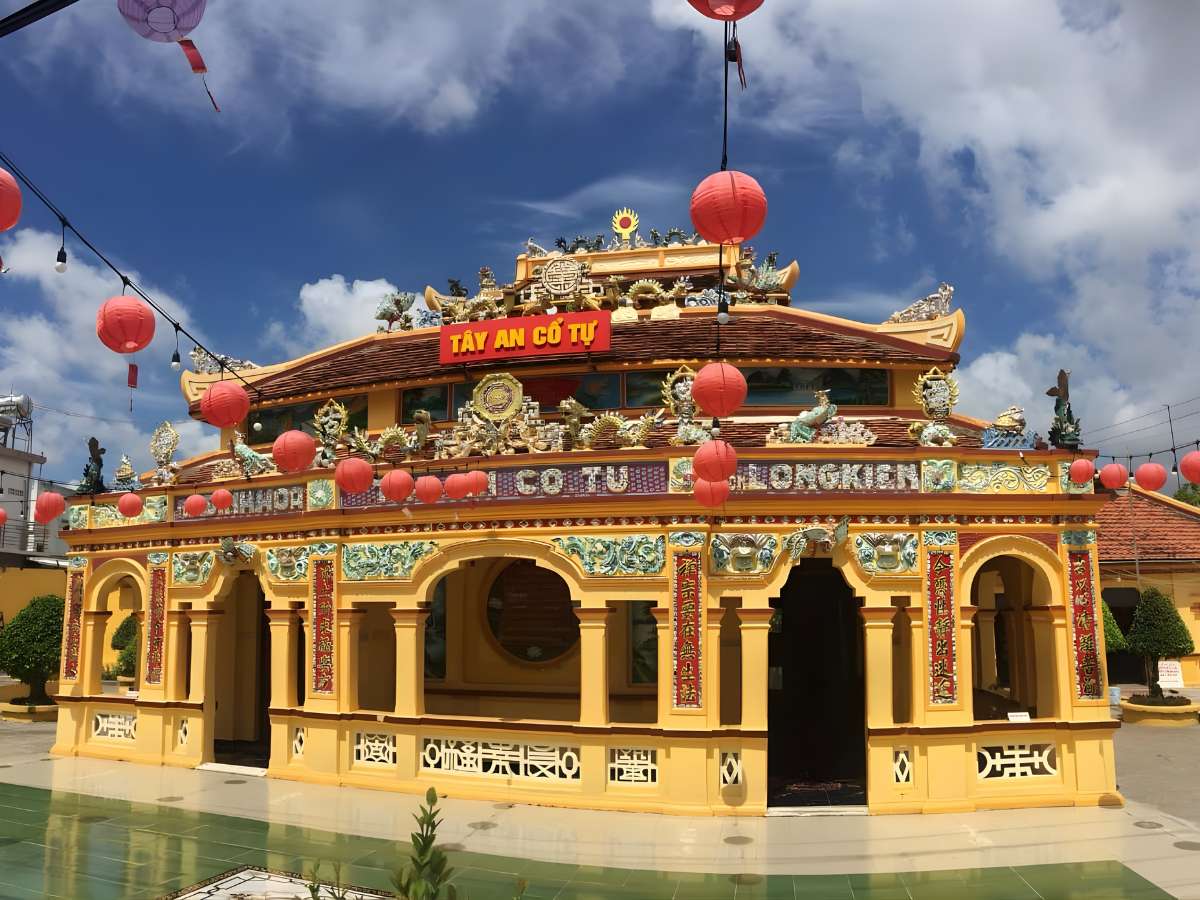
Tay An Pagoda serves as the starting point for visitors' journey to Sam Mountain. (Source: Collection)
Taking time to observe the exterior also helps identify the pagoda's differences from other religious structures in the area. Characteristic architectural elements create a unique identity, while also reflecting the process of cultural exchange throughout history. This approach is suitable for those interested in architecture and history.
3.2. Spend time feeling the spiritual atmosphere at the pagoda
The interior space of the pagoda is tranquil, suitable for experiencing the spiritual atmosphere. Worship activities take place regularly, creating a stable daily rhythm. Visitors can observe the arrangement of Buddha statues, the layout of the space, and how people perform rituals, thereby gaining a deeper understanding of religious life.
Spending time within the sacred area helps to better understand the pagoda's role in the spiritual life of the local community. This space not only serves religious purposes but also acts as a community connection point. The combination of architectural elements and religious activities creates an experience of observation and feeling, while reflecting the characteristic culture of the region.
3.3. Combine Tay An Pagoda with the Sam Mountain tour
The pagoda is located in the Sam Mountain area, which hosts many other attractions such as shrines, tombs, and other religious structures. Combining Tay An Pagoda into the tour itinerary helps optimize travel time and broaden the experience. The distances between sites are not too far, making it convenient for a day trip.
The connection between these attractions creates a systematic tourist route. Visitors can access various types of architecture and beliefs within the same area. This helps to clarify the overall picture of the cultural and religious life in Chau Doc, An Giang.
4. How to visit Tay An Pagoda more conveniently in practice
4.1. Prioritize less crowded times for easier observation of the structure
Choosing the right time to visit directly affects the experience at the pagoda. Early morning or early afternoon hours usually have fewer people, making it easier to observe the architecture. This is especially important for those who want to learn in detail about the structure and layout.
When the number of visitors is not too large, the pagoda's atmosphere becomes more tranquil, suitable for overall appreciation. Movement is also easier, reducing crowding in central areas. This enhances the quality of the experience without disrupting the pagoda's general activities.
4.2. Maintain a slow pace in the worship area
In the worship area, maintaining a slow pace helps preserve the necessary solemnity. This is a space for religious activities, so noise and rapid movement should be minimized. This ensures an appropriate environment for those performing rituals.
Moving slowly also allows for closer observation of architectural details and interior arrangements. Visitors can recognize many symbolic and historical elements by taking the time to observe. This approach is suitable for a deep understanding of the pagoda's cultural value.
4.3. Choose a suitable vantage point to capture the entire pagoda facade
Selecting an appropriate standing position helps capture the entire facade of Tay An Pagoda in one frame. The courtyard in front is often used for observation and photography, offering a wide and unobstructed view. From here, the entire system of towers and domes can be encompassed.
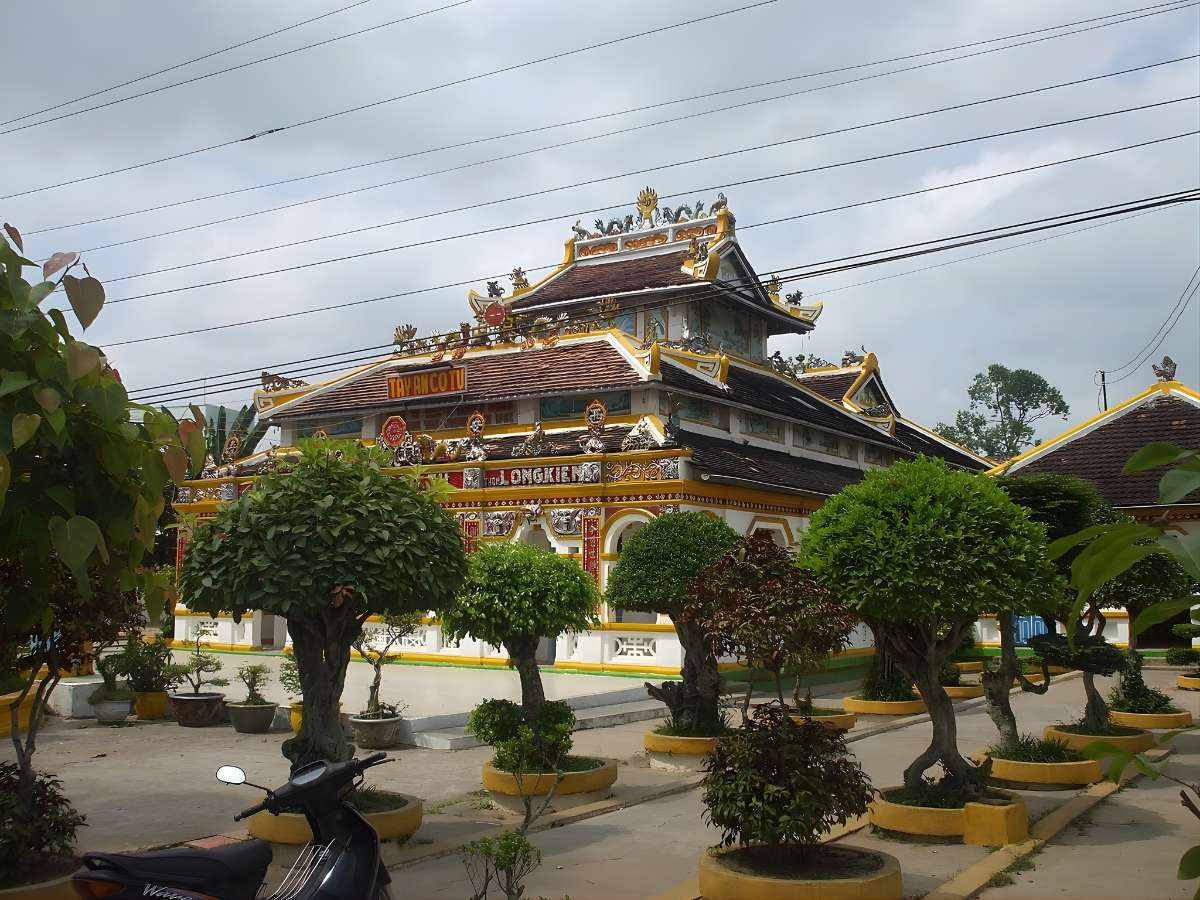
Morning is the ideal time to visit Tay An Pagoda in a quiet and airy space. (Source: Collected)
Additionally, adjusting the shooting angle and distance also affects the ability to showcase the details of the structure. Visitors can try various positions to find a suitable viewing angle. This helps capture clear images of the architecture, while also reflecting the true characteristics of the pagoda's space.
4.4. Check the weather before visiting
Weather conditions in the Sam Mountain area can directly affect the visiting experience, especially during the rainy season months from approximately May to November. When it rains, the pagoda courtyard and walkways can become slippery, limiting movement and observation of the architecture. Monitoring the weather forecast before arrival helps in proactively arranging a schedule that suits the actual conditions.
On sunny days, temperatures in Chau Doc can range from 30 to 35 degrees Celsius, making outdoor movement more tiring without preparation. Choosing to visit in the morning or late afternoon helps reduce the impact of the weather on the experience. At the same time, natural light during these hours is also favorable for observing and capturing images of the structure.
Tay An Pagoda is a stopover with clear architectural and cultural value in the journey to explore Chau Doc. The pagoda's space creates a solemn and tranquil feeling, suitable for concluding the Sam Mountain tour in a gentle way. If Sun World Hon Thom is a symbol of modern tourism, then Tay An Pagoda embodies the long-standing architectural and spiritual values of the Bay Nui region.