















1. Overview of Chua Phat Lon Nui Cam (Big Buddha Pagoda of Forbidden Mountain)
1.1. Role associated with the geographical location of Nui Cam (Forbidden Mountain) in the That Son region
Chua Phat Lon Nui Cam (Big Buddha Pagoda of Forbidden Mountain) is located on Nui Cam (Forbidden Mountain), in Nui Cam commune, An Giang province, in the Mekong Delta region. This location is part of the That Son (Seven Mountains) complex, which is closely linked to the long-standing cultural and spiritual life of the local residents. The mountainous landscape creates a distinctive setting, markedly different from the surrounding plains.
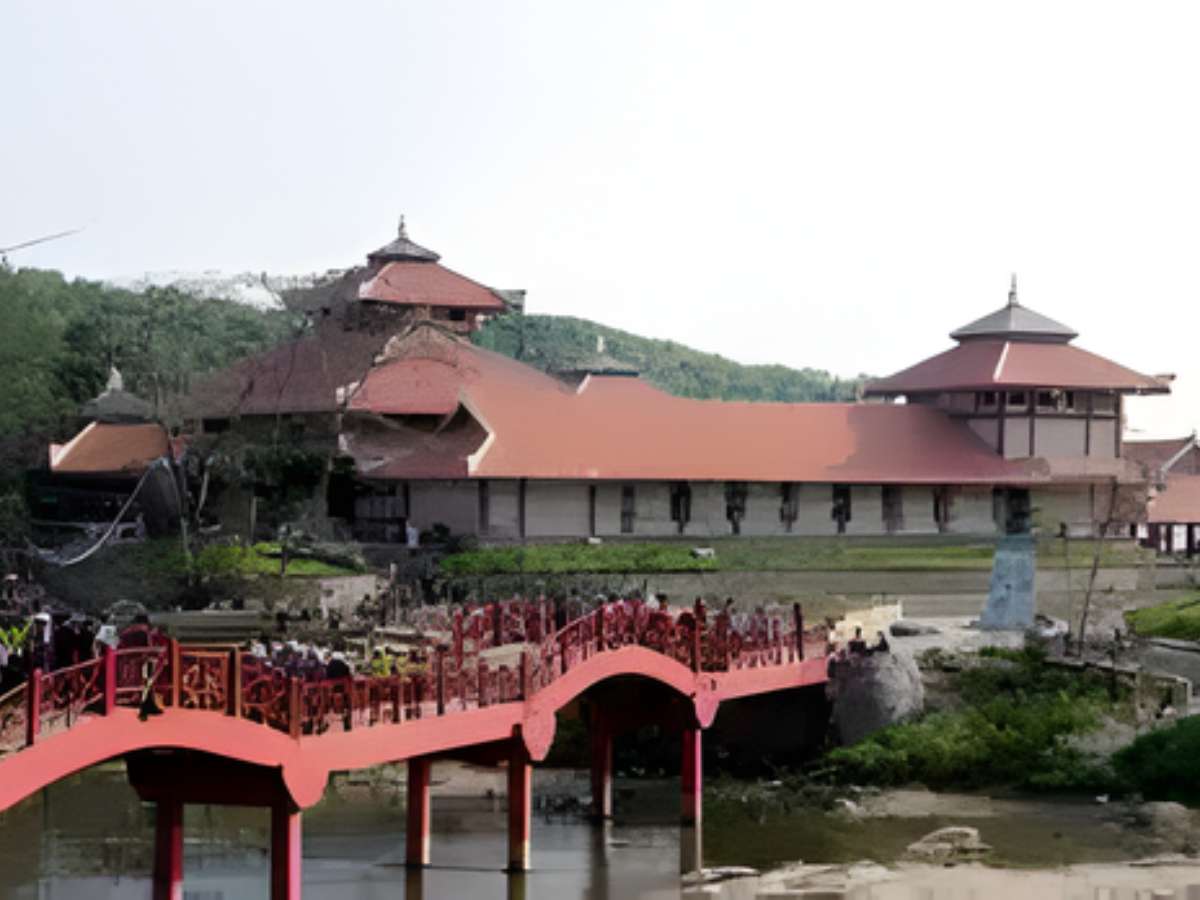
Panoramic view of Mount Cam standing out amidst the plains, playing a central role in the That Son region. (Source: Compilation)
Mount Cam, with an altitude of about 710 m above sea level, is one of the highest mountains in the That Son region. Its high and sprawling terrain makes it an ideal spot for observing the expansive landscape of An Giang province. The presence of Mount Cam contributes a natural highlight to the low-lying plain area.
With a system of spiritual structures scattered on its slopes and summit, Mount Cam plays an important role in religious practices. It frequently welcomes locals and tourists for Buddhist worship, sightseeing, and seeking a tranquil space. Spiritual tourism activities have also gradually formed and developed alongside traditional religious life.
1.2. Formation and Development Process of Phat Lon Pagoda on Mount Cam
Phat Lon Pagoda on Mount Cam, also known as Phat Lon Monastery, was built in 1912 on a plot of land near the summit of Mount Cam. Initially, the pagoda had only a Buddha statue about 1.8 m high, which, according to pagoda records, was called Phat Lon (Great Buddha) by locals to distinguish it from other statues in the area. This name gradually became the familiar identifier for the pagoda.
Through many stages, the pagoda has been renovated to preserve its religious values and meet the needs of spiritual activities. In 2007, the main hall began to be rebuilt, giving the pagoda a more magnificent appearance. By the mid-2000s, the grounds were expanded to an area of about 13,160 m², accommodating the increasing number of visitors.
Along with the renovation process, sightseeing and spiritual tourism activities around the pagoda have gradually taken shape. Mount Cam has thus become a familiar stop on the journey to explore An Giang. Visitors often combine visiting the pagoda, paying homage, and enjoying the mountain scenery.
1.3. Spiritual Significance of the Maitreya Buddha Statue on Mount Cam
A notable highlight at Phat Lon Pagoda is the Maitreya Buddha statue, approximately 33.6 m high, built in the early 2000s. The structure uses reinforced concrete, depicting Maitreya Buddha with a gentle smile. This image contributes to the distinctive character of the spiritual space on Mount Cam.
In Buddhist belief, Maitreya Buddha is associated with joy, peace, and serenity in spiritual life. Many Buddhists and tourists come here wishing for peace, blessings, and to regain mental balance. The area around the statue often brings a sense of relaxation after the sightseeing journey.
The Maitreya Buddha statue is not only a place for worship but also a stop for individuals to pause and reflect. This symbol helps shape the spiritual experience when visiting Mount Cam. The statue's presence adds spiritual depth to the journey of sightseeing and pilgrimage.
2. What are the outstanding features of Phat Lon Pagoda on Mount Cam?
2.1. The Maitreya Buddha statue is the clearest central viewpoint
The Maitreya Buddha statue is located in a high and open position, forming the central viewpoint of the entire Mount Cam area. From various approaches, especially when traveling by cable car, the statue appears clearly with its large size and prominent color. This helps orient visitors from the beginning of their journey and creates a sense of connection between the surrounding areas.
Beyond the visual aspect, placing the statue in a central location also helps organize the surrounding space logically. Paths, prayer grounds, and pagoda areas are arranged to expand from this central point, creating cohesion in the overall architecture. As a result, the area becomes an easily recognizable stopping point on the journey to explore Mount Cam.
2.2. The surrounding pagoda area expands according to the mountain terrain
The pagoda area surrounding the statue is built according to the natural terrain of the mountain, with steps and paths winding along the slopes. This helps maintain harmony between the architectural works and the natural landscape, while also creating a diverse travel experience for visitors. The open space allows the pagoda areas to connect without feeling separate.
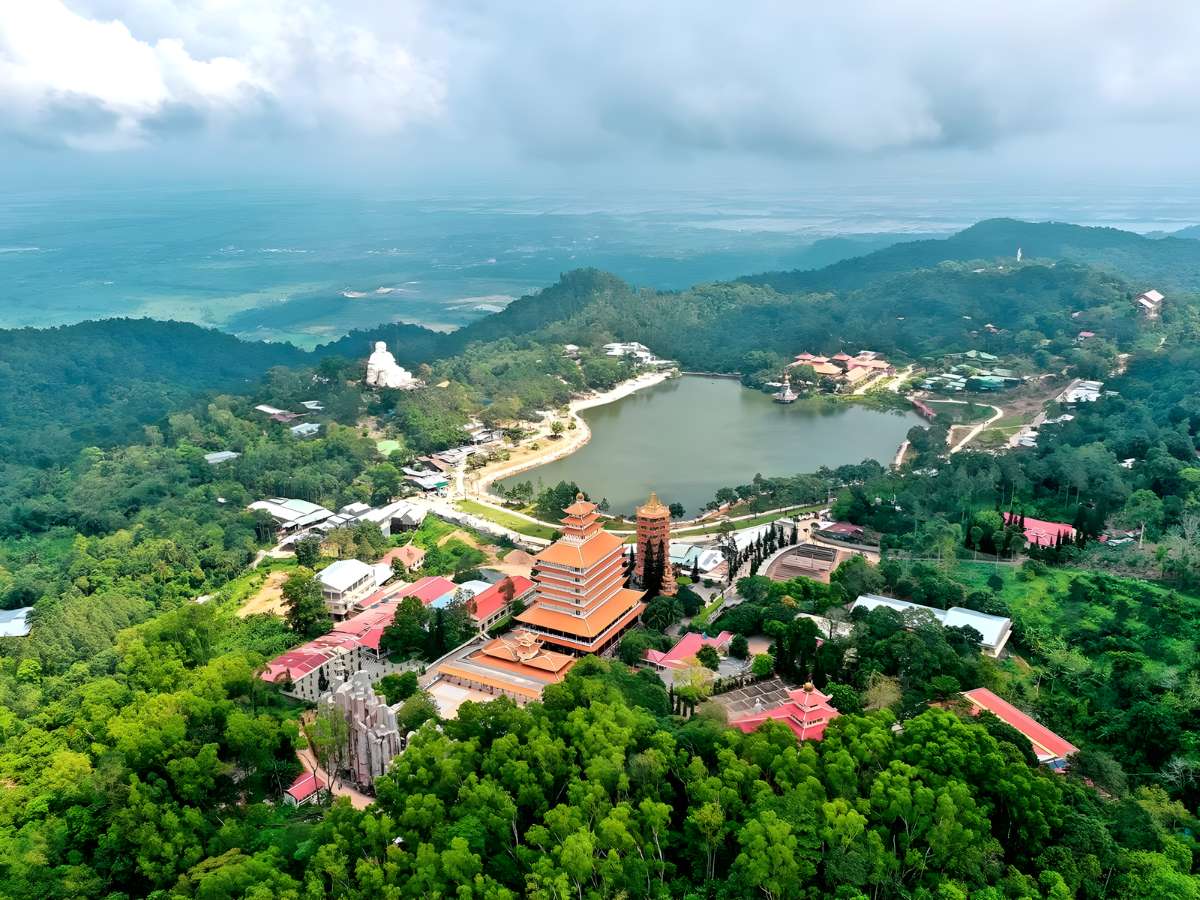
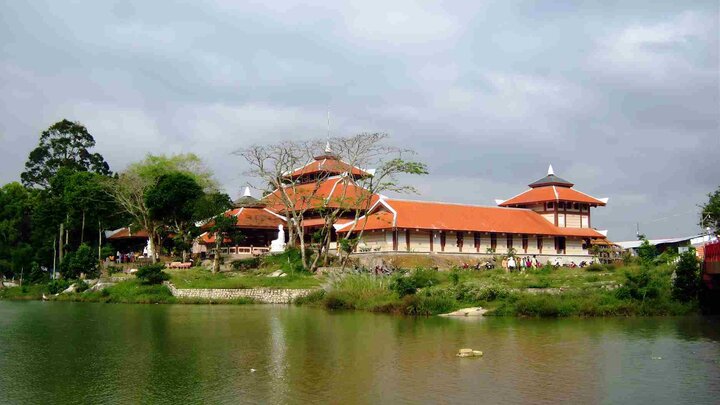
The complex of pagodas on Cam Mountain is harmoniously distributed along the mountainside and green forest. (Source: Collected)
The expansion according to the terrain also helps to maximize the available spaces, creating many different resting points within the same area. These areas serve both religious activities and act as scenic viewpoints. This arrangement contributes to the flexibility in the visiting experience at Great Buddha Pagoda Cam Mountain .
2.3. Views down the mountainside create a unique attraction
From the statue area and surrounding paths, visitors can observe the panoramic view of the mountainside and the plains below. The open view creates a sense of spaciousness, especially during times with changing clouds or light throughout the day. This is a factor that differentiates it from many spiritual tourist destinations located in the plains.
This view not only has landscape value but also contributes to enhancing the overall visitor experience. The combination of visiting pagodas and enjoying natural scenery makes the journey more diverse, suitable for many different groups of people. This is one of the factors that retain visitors when they come to the area.
3. How to get from the foot of the mountain to the pagoda area
3.1. Take the cable car to save travel time
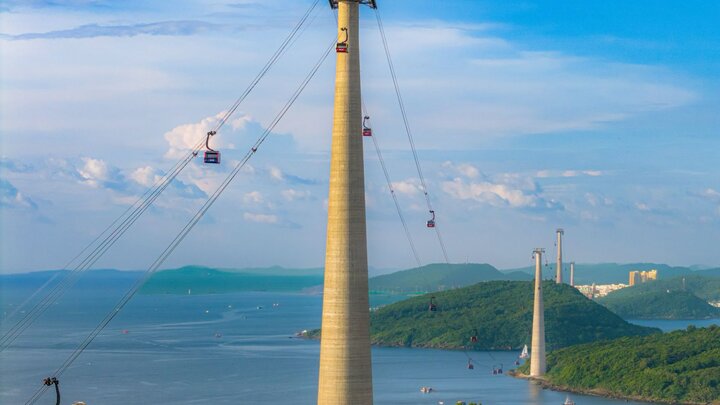
The cable car system at Cam Mountain was put into operation to shorten the travel time from the foot of the mountain to the central area. The cable car journey usually takes about 10–15 minutes, significantly reducing the time compared to walking. This is a suitable option for many groups of visitors, especially the elderly or families.
In addition to saving time, the cable car also offers a panoramic view from above, allowing visitors to observe the mountain terrain and surrounding areas. This experience contributes to enriching the journey, creating a difference compared to conventional modes of transport. This is also a popular way to visit Great Buddha Pagoda Cam Mountain .
3.2. Short walk from the station to the main area
After getting off the cable car, visitors need to walk a short distance to reach the statue area and the main pagoda. This path is usually designed with clear stairs and walkways, convenient for movement. Walking allows visitors to observe the scenery and feel the surrounding space.
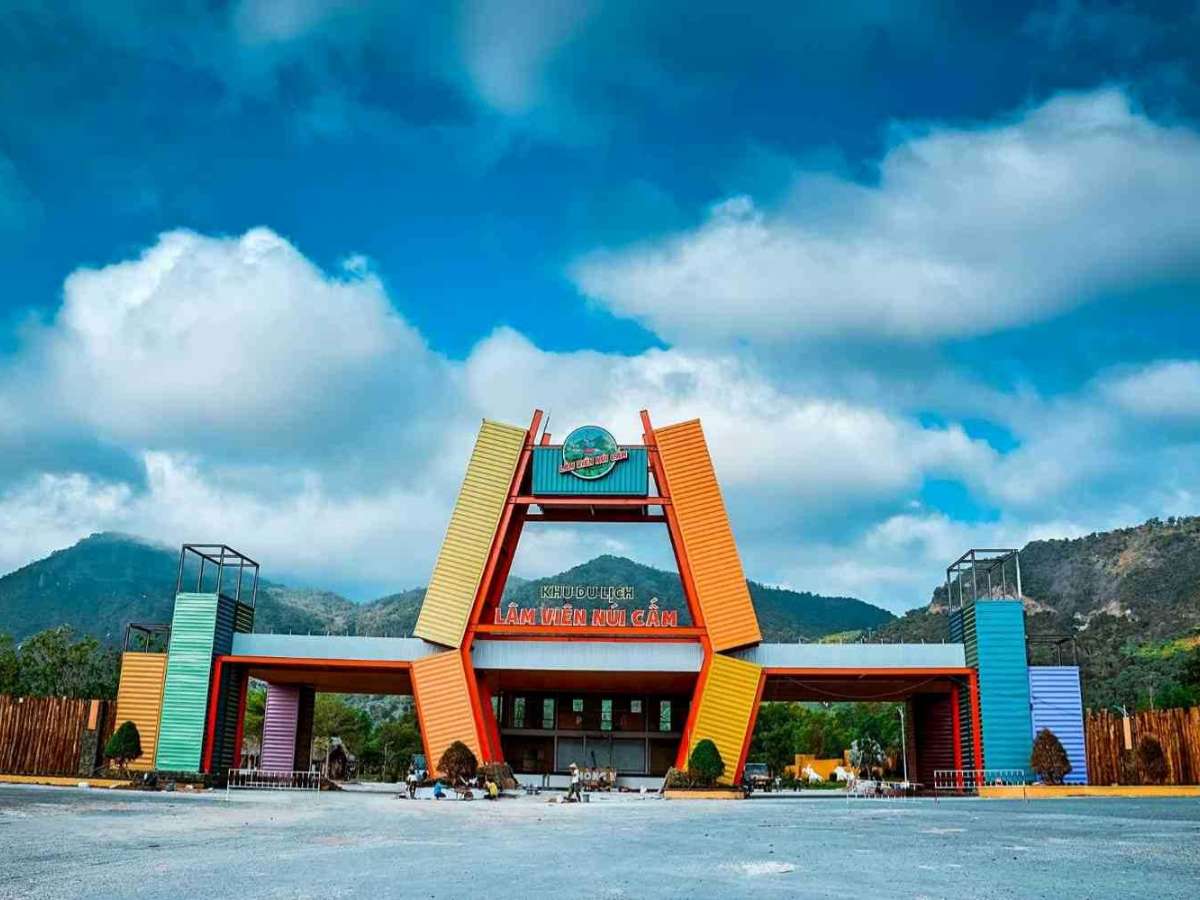
The traffic axis leading up to Cam Mountain conveniently connects Chau Doc with the spiritual area. (Source: Collected)
This is also a transitional phase between the journey and the sightseeing experience, helping to adjust the pace appropriately. Small rest stops along the way provide opportunities for rest and photography, while also ensuring the journey is not interrupted. This contributes to enhancing the overall experience in the area.
3.3. Arrange the order of stops to avoid backtracking
Arranging the order of visiting stops helps optimize time and limit repetitive travel. Typically, visitors can start from the central statue area, then move to nearby pagodas, and finally to scenic spots. This arrangement ensures the journey flows continuously in one direction, avoiding multiple returns.
Furthermore, pre-determining the route helps control time according to the day's schedule. This is especially important during peak visitor times when areas can become crowded. Planned movement enhances sightseeing efficiency and reduces time pressure.
4. Time allocation at the Big Buddha Pagoda area
4.1. Focus on visiting the central statue area
The Maitreya Buddha statue area is usually the main stop, where visitors spend the most time during their journey. The spaciousness and clear views make this area suitable for sightseeing, photography, and observing the landscape. Spending more time here allows for a fuller and uninterrupted experience.
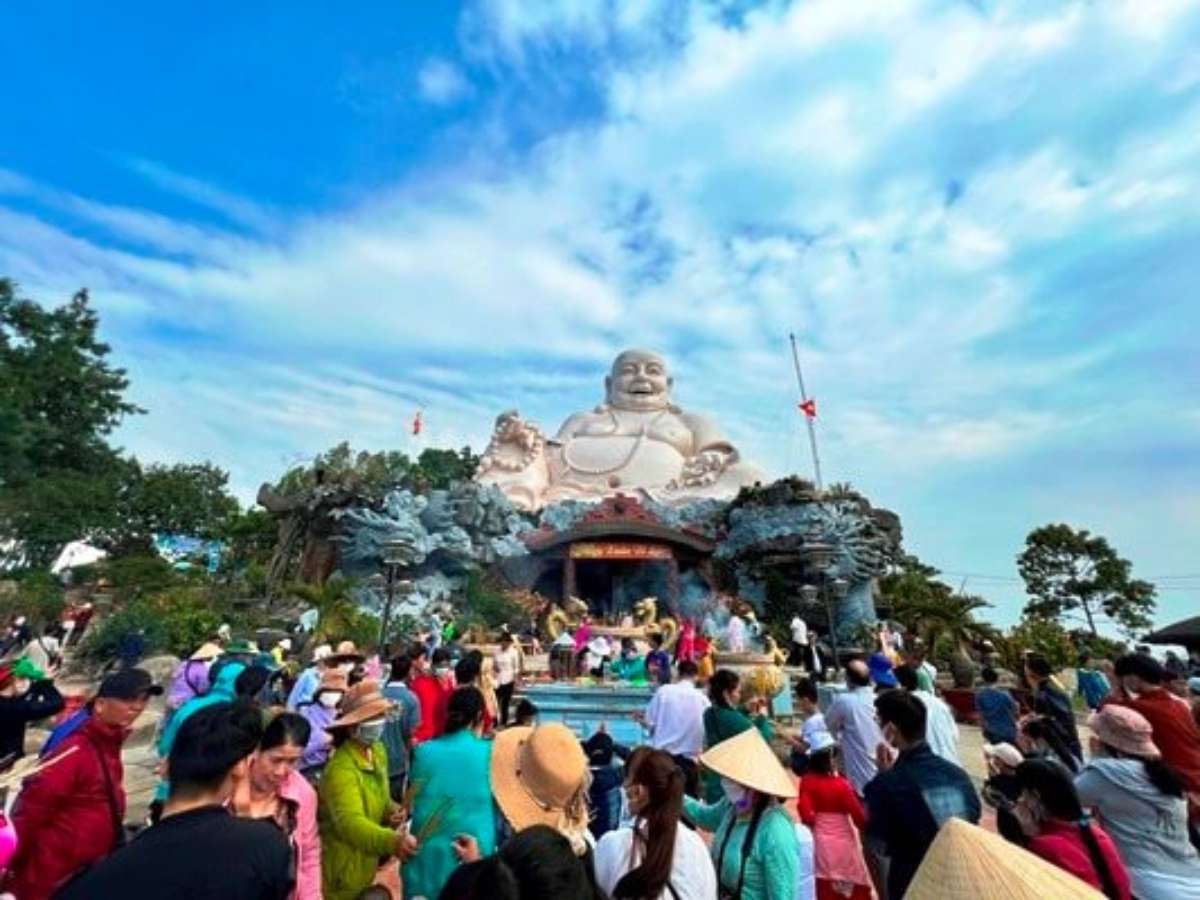
The scenery of Nui Cam (Forbidden Mountain) is ideal for visiting during the dry season with stable weather. (Source: Collected)
Furthermore, this is also an area where many religious activities take place, so allocating reasonable time allows visitors to participate in or observe these activities. This contributes to creating a connection between tourism and culture, making the trip more multi-dimensional.
4.2. Moderate Time Allocation for Nearby Pagodas
The nearby pagodas are usually smaller in scale but still possess their own cultural and architectural values. Allocating a moderate amount of time ensures a full experience without excessive duration. These areas are often located close to each other, convenient for continuous movement.
Reasonable time allocation helps avoid spending too much time at one spot and missing out on others. This is especially important for trips with limited time, when balancing multiple activities is necessary. This approach makes the itinerary more efficient.
4.3. Short Period for Observing Surrounding Mountain Scenery
The time spent observing the mountain scenery does not need to be excessively long but still plays an important role in the overall experience. High vantage points allow visitors to survey the entire area, creating a different feeling compared to typical tourist spots. Stopping for a short period helps balance sightseeing and rest.
This period also helps adjust the pace of the journey, creating a break before continuing the movement. This is particularly useful on trips lasting many hours, helping to maintain visitor comfort. As a result, the experience in the area becomes complete and not overwhelming.
The Great Buddha Pagoda of Nui Cam (Forbidden Mountain) offers a solemn conclusion to the exploration journey in An Giang. The majestic Buddha statue amidst the mountainous landscape creates a sense of tranquility and reverence. When introducing The Great Buddha Pagoda of Nui Cam, Sun World Hon Thom is used to highlight the diversity of tourism types.