















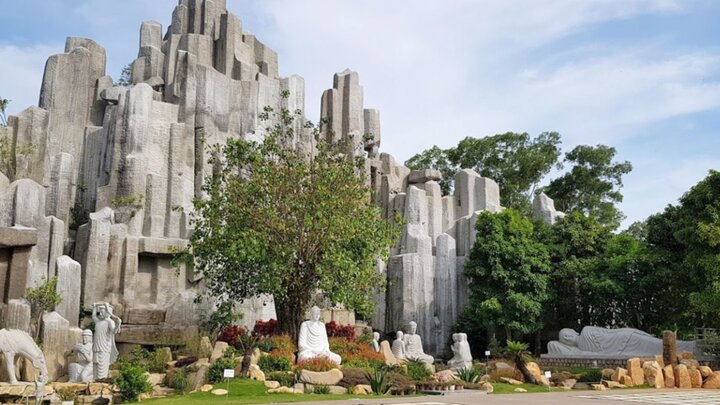
1. An Giang Travel Scene: Cam Mountain and Van Linh Pagoda
Van Linh Pagoda is a representative pagoda in the spiritual tourism complex located on Cam Mountain, in Vo Dau Hamlet, Nui Cam Commune, An Giang Province, at an altitude of about 535 m above sea level. The pagoda is situated at the foot of Vồ Bồ Hông peak, adjacent to Thuy Liem Lake with a capacity of about 60,000 m³ of water, creating a harmonious space between architecture and natural landscape. Thanks to this location, the pagoda has become a familiar stopover on the journey to explore Cam Mountain.
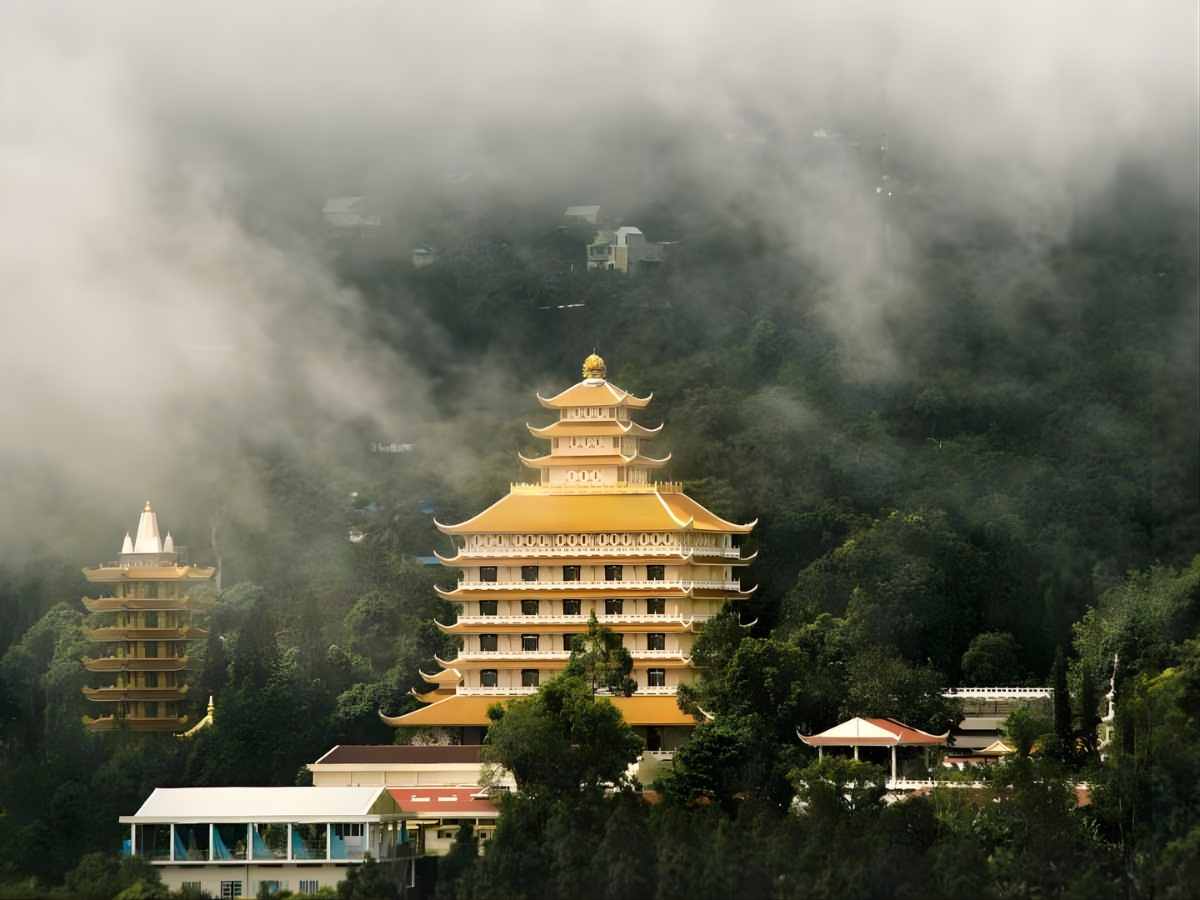
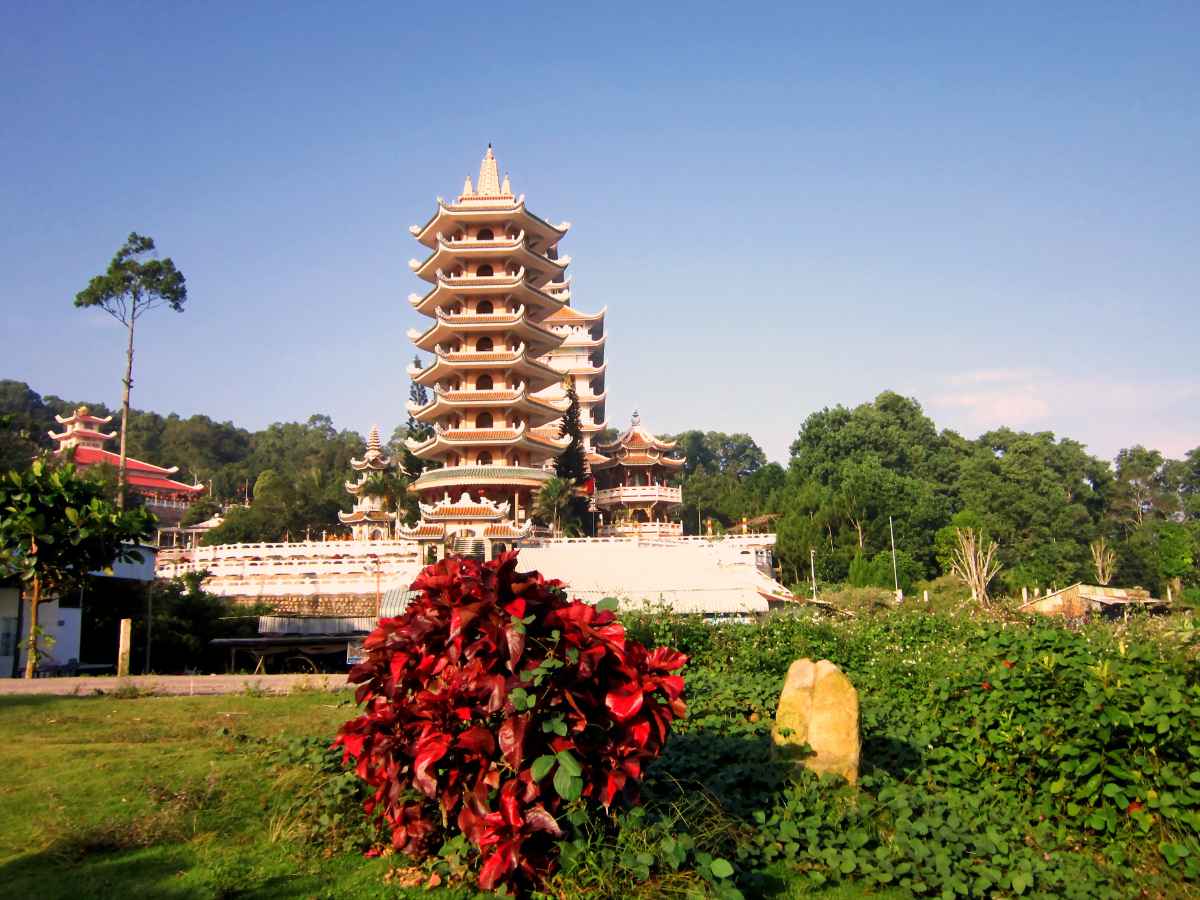
Van Linh Pagoda stands out in the overall Cam Mountain tourism with its characteristic location and scale. (Source: Collected)
From Van Linh Pagoda, visitors can easily connect to nearby attractions such as the Maitreya Buddha statue, Phat Lon Pagoda, and the cable car tourist area on the mountainside. Travel between locations is convenient, suitable for a day trip. This helps the pagoda play a connecting role in the overall spiritual tourism space of Cam Mountain.
Compared to pagodas located at the foot of the mountain or in residential areas, Van Linh Pagoda offers a different experience thanks to its high location and spacious environment. The cool air and expansive view make the visit more relaxing. Moving from the foot of the mountain upwards, visitors can clearly feel the shift in pace of life and scenery.
2. What attractions does Van Linh Pagoda have?
2.1. The Main Hall attracts visitors with its outstanding scale
The main hall of Van Linh Pagoda is built on a large scale, serving as the central area of the pagoda's architecture. Inside the main hall is a solid stone statue of Sakyamuni Buddha weighing about 2 tons, along with a system of Bodhisattva bas-reliefs and guardian symbols arranged symmetrically. The spatial structure follows the traditional Mahayana Buddhism, combining stone materials with a layout along the central axis.
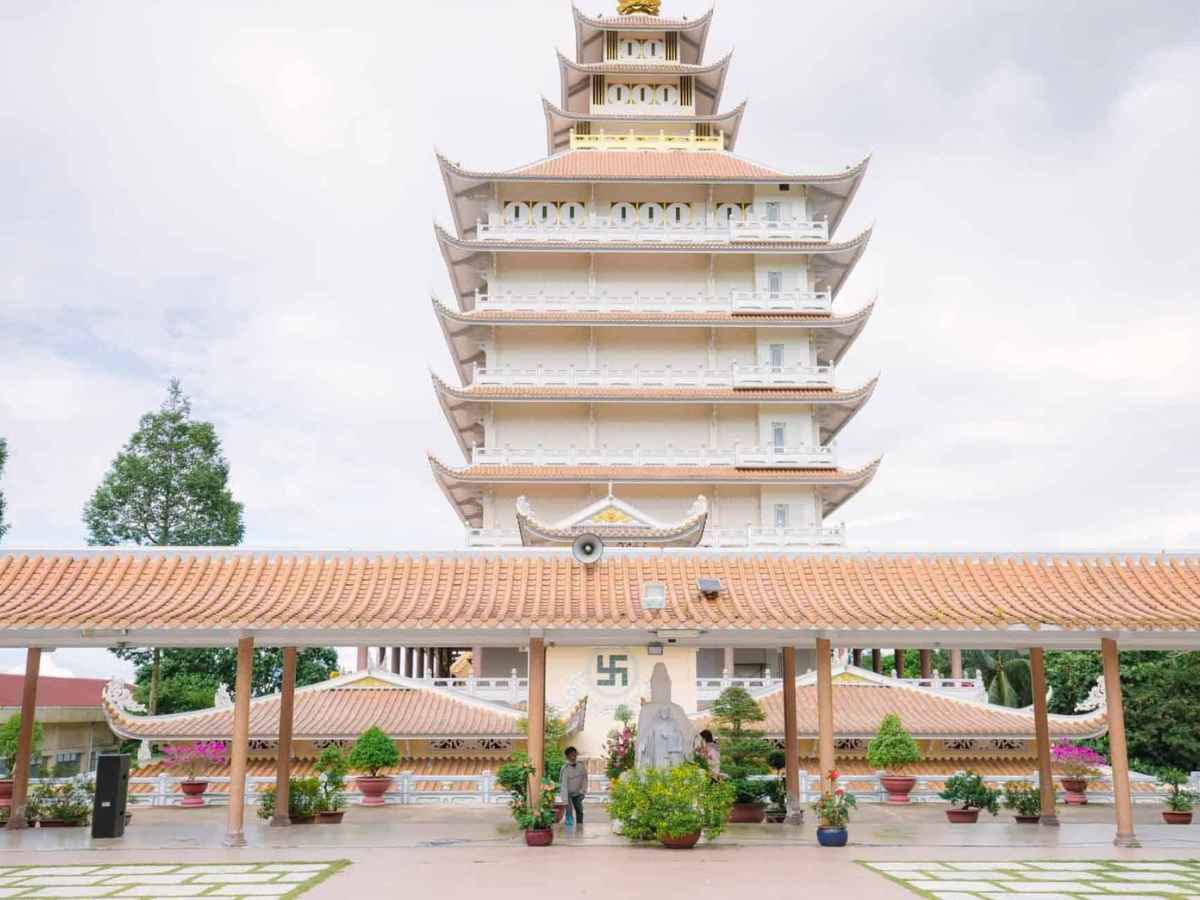
The high-level Buddhist architecture of Chua Van Linh creates a visual impression amidst the mountains and forests. (Source: Collected)
Besides the scale factor, the main hall is also the center for main religious activities, especially during major festivals such as the ancestor's death anniversary for founding the mountain. The interior space is designed to be airy, suitable for large crowds during peak season. This helps the main hall ensure its worship function while also meeting sightseeing needs on a spiritual tourism journey at Nui Cam.
2.2. Tall towers create identification points from a distance
The system of towers at the pagoda serves to create identification points from afar, especially structures like the Quan Am tower, about 40m high, and the octagonal bell tower. These towers are located in front of the main hall, creating a clear foreground architecture. Thanks to their prominent height, the towers can be observed from various positions on the mountainside.
Inside the bell tower hangs a large bell weighing about 1.2 tons, and an Amitabha Buddha and Quan Am statue are arranged on each floor. This vertical spatial organization enhances visibility and creates resting points for visitors. This is also a factor that helps shape the characteristic architectural image of the Nui Cam area in tourism materials.
In addition to architectural value, the tower system also serves as orientation points in the journey to explore the mountain area. From many travel routes, visitors can rely on the location of the towers to determine the direction to the pagoda's central area. This is particularly useful in terrain with multiple levels and many paths, such as at Nui Cam. The combination of religious function and spatial orientation makes the towers an important element in the overall architecture.
2.3. The pagoda courtyard expands according to the mountainside terrain
The pagoda courtyard is built in a terraced style, suitable for the mountainside terrain and facilitating movement between areas. This spacious area serves as a connection between the main hall and auxiliary structures such as gardens, stupas, and accommodation areas. The floor plan organization by levels maximizes the use of natural terrain.
From the pagoda courtyard, visitors can observe the panoramic view of the Thuy Liem Lake area and the plains beyond, creating a distinct visual experience. This area is often used for resting and taking photos, and it also serves as a transit point on the journey to explore Nui Cam. The combination of architecture and landscape makes this area play an important role in the overall sightseeing experience.
3. What parts of Chua Van Linh should be seen first
3.1. Observe the overall view from the outer pagoda courtyard
Starting the visit from the outer courtyard helps to visualize the overall layout of Chua Van Linh before moving deeper inside. From this position, one can observe the architectural layers including towers, the main hall, and auxiliary areas, and determine a reasonable direction to avoid repetitive movement. The courtyard space is designed in a terraced manner, suitable for the mountainside terrain, providing a wide and clear view. This is a guiding approach that helps visitors easily grasp the overall structure.
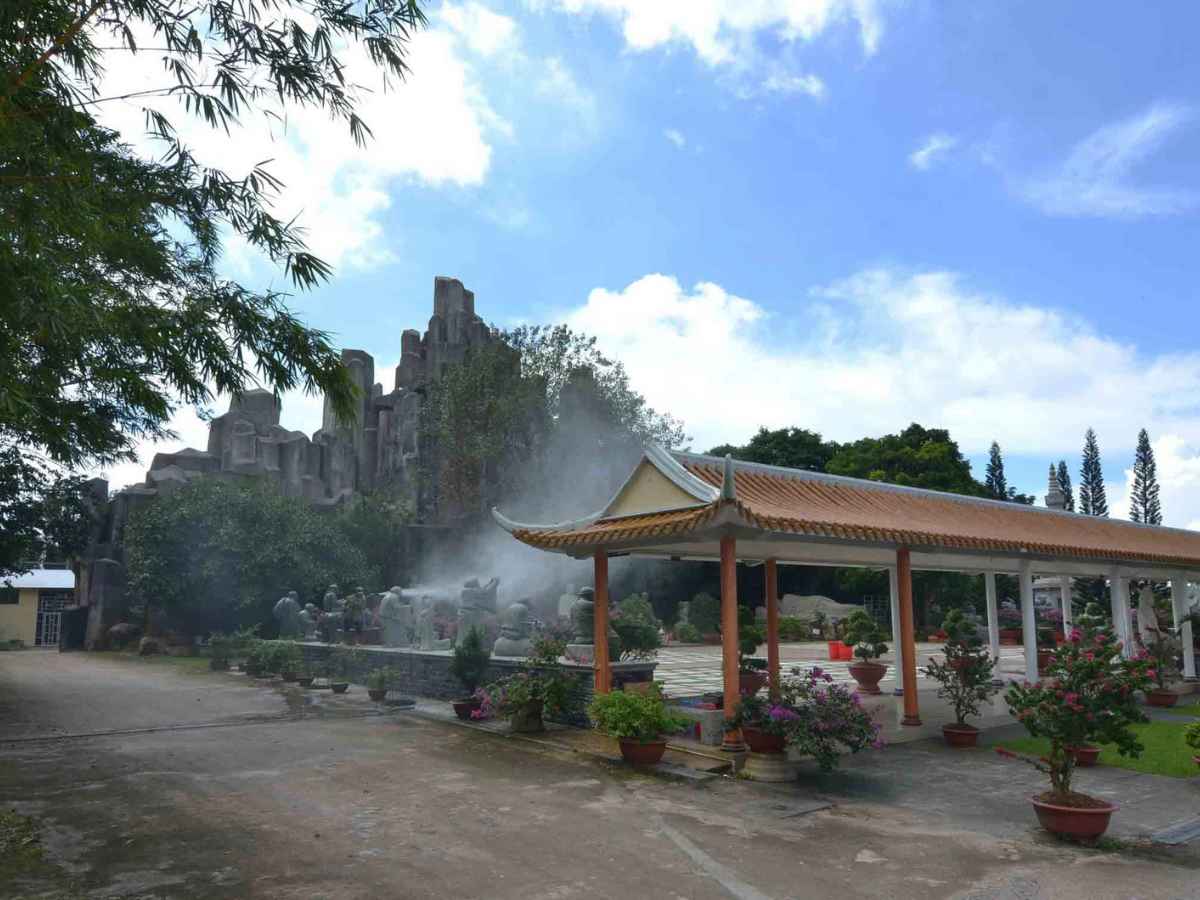
The temple space provides a sense of separation and tranquility compared to the residential area below. (Source: Collected)
Besides the orientation element, the outdoor courtyard area allows observation of the connection between the temple and the surrounding Núi Cấm (Forbidden Mountain) landscape. From here, one can see Thủy Liêm Lake, walking paths, and scattered structures on the mountain slopes, creating an overview before moving deeper. Spending time observing at this point helps to avoid missing important areas. This also supports reasonable time allocation throughout the entire tour.
3.2. Accessing the Main Hall via the Main Walkway
After observing the overall view, the movement along the main axis leading to the main hall is a suitable choice for accessing important sections. This path is designed to be wide and clear, directly connecting the temple courtyard to the central area, facilitating smooth movement. Along the route, structures such as towers and miniature landscapes are arranged on both sides, creating a logical spatial transition. This organization helps visitors gradually approach from the open space to the spiritual area.
Following the main axis also allows for experiencing the space in order from outside to inside, consistent with the common structure of Buddhist constructions. During movement, visitors can stop at intermediate points to observe architectural details and landscapes. This creates a rhythmic journey, without interruptions or omissions. A clear sequential approach contributes to enhancing the visiting experience within the temple grounds.
3.3. Stopping at the High Ground for a Panoramic View of Núi Cấm
The high ground within the temple complex is a suitable stopping point for observing the panoramic view of Núi Cấm (Forbidden Mountain) and the plains below. From this vantage point, one can see large structures such as the Buddha statue and Thủy Liêm Lake, offering a comprehensive view of the entire tourist area. The elevation expands the field of vision and creates a contrast with the lower viewpoints. This is an area often chosen for capturing panoramic shots during the journey.
The elevated space is characterized by its openness and lower temperature compared to the areas below, making it more convenient for resting after movement. From here, visitors can review the entire route taken, from the temple courtyard to the main hall and auxiliary areas. Concluding the journey at this location provides a clear sense of completion. It also helps to consolidate the entire visiting experience within the Núi Cấm (Forbidden Mountain) space.
4. The Position of Vạn Linh Temple in the Núi Cấm Tour Itinerary
4.1. Prioritizing Spiritual Attractions
If the itinerary focuses on spiritual elements, placing Vạn Linh Temple at the beginning helps shape the experience right from the start. This is suitable for pilgrim groups who often prioritize visiting religious sites before moving to other scenic spots. This arrangement helps optimize the time within the day.
Visiting Van Linh Pagoda early in the morning allows for a complete experience in the fresh air. (Source: Collection)
Additionally, visiting the pagoda at the beginning of the itinerary helps avoid crowds during noon and afternoon hours. The morning space is usually more airy, suitable for sightseeing and worship activities. This contributes to improving the overall experience on the Nui Cam tourist route.
4.2. Connecting other attractions
In case of combining multiple attractions such as Buddha statues, lakes, and shrines, placing the pagoda in the middle helps balance the itinerary. This is a common itinerary organization method, allowing for reasonable time allocation between points of different natures. The pagoda's location in the center of the tourist area facilitates connectivity.
Stopping at the pagoda in the middle of the itinerary also helps create a break between travel segments. The spacious courtyard and numerous resting spots support physical recovery before continuing exploration. This is suitable for day-long tours in the Nui Cam area.
4.3. For a circular route on the mountain
Placing the pagoda at the end of the itinerary is a suitable choice when wanting to conclude the tour with a peaceful atmosphere. After traveling through crowded spots, returning to the pagoda helps create a balanced experience. This is an organizational method often applied in combined resort and sightseeing tours.
Ending the journey at the pagoda also facilitates convenient travel down the mountain or back to the central area. The pagoda's location within the internal road system allows for quick connection to main routes. This helps optimize travel time throughout the entire trip.
Van Linh Pagoda leaves a strong impression thanks to its elevated location and majestic architecture amidst the mountains. Concluding a visit here, tourists can easily feel the harmony between nature and spirituality. Van Linh Pagoda is often included in articles as a spiritual stop, alongside modern destinations like Sun World Hon Thom.