















What Makes the MICHELIN Guide’s Restaurant Evaluation Process Different
A notable feature of the MICHELIN Guide’s approach to evaluating restaurants is that the focus is placed on the quality of the food rather than the luxury of the setting or the scale of investment. Under the MICHELIN Guide’s universal criteria, inspectors assess five key factors: the quality of the ingredients, mastery of cooking techniques, harmony of flavours, the personality of the cuisine as expressed through the dishes, and consistency both over time and across the entire menu.
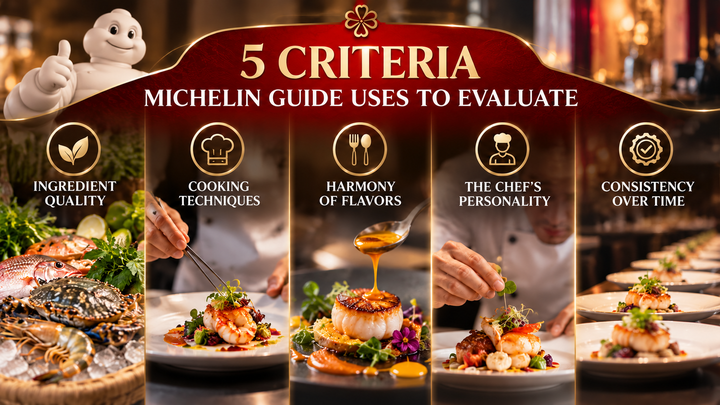
Under the MICHELIN Guide’s universal criteria, inspectors evaluate restaurants based on five key factors.
This means that an opulent dining room, a prestigious location or elaborate service does not automatically provide an advantage when it comes to earning a MICHELIN Star. Conversely, a restaurant with a modest setting can still be recognised by the MICHELIN Guide if its food is sufficiently compelling. The difference lies in what diners actually experience on the plate: how ingredients are selected, how techniques are applied, whether the flavours are harmonious, and whether that level of quality can be maintained consistently over repeated visits.
Therefore, when the MICHELIN Guide comes to Phu Quoc, the question is not simply which restaurant is more luxurious or has received greater investment. What matters more is which establishment can transform ingredients, technique and culinary personality into a clearly defined experience and maintain that quality consistently. This principle opens the door for the many different facets of Phu Quoc’s culinary scene to be considered under the same set of evaluation standards.
From Local Dishes to Fine Dining: Different Paths to MICHELIN Recognition
One common misconception about the MICHELIN Guide is that appearing in the selection automatically means receiving a star. In reality, a MICHELIN Star is just one of several forms of recognition, alongside Bib Gourmand and MICHELIN Selected. This also shows that the MICHELIN Guide is not reserved solely for expensive fine-dining restaurants: local eateries, bistros, street food establishments and high-end restaurants across a wide range of styles and price points can all be considered, with food quality remaining the central focus.
For Phu Quoc, this approach opens up a multi-layered culinary landscape. From seaside seafood restaurants and dishes rooted in local life to carefully developed restaurants and fine-dining establishments, each format can tell a different story about the Pearl Island. The distinction lies not in which place is more elaborate, but in how each establishment translates ingredients, technique and identity into genuine quality on the plate.
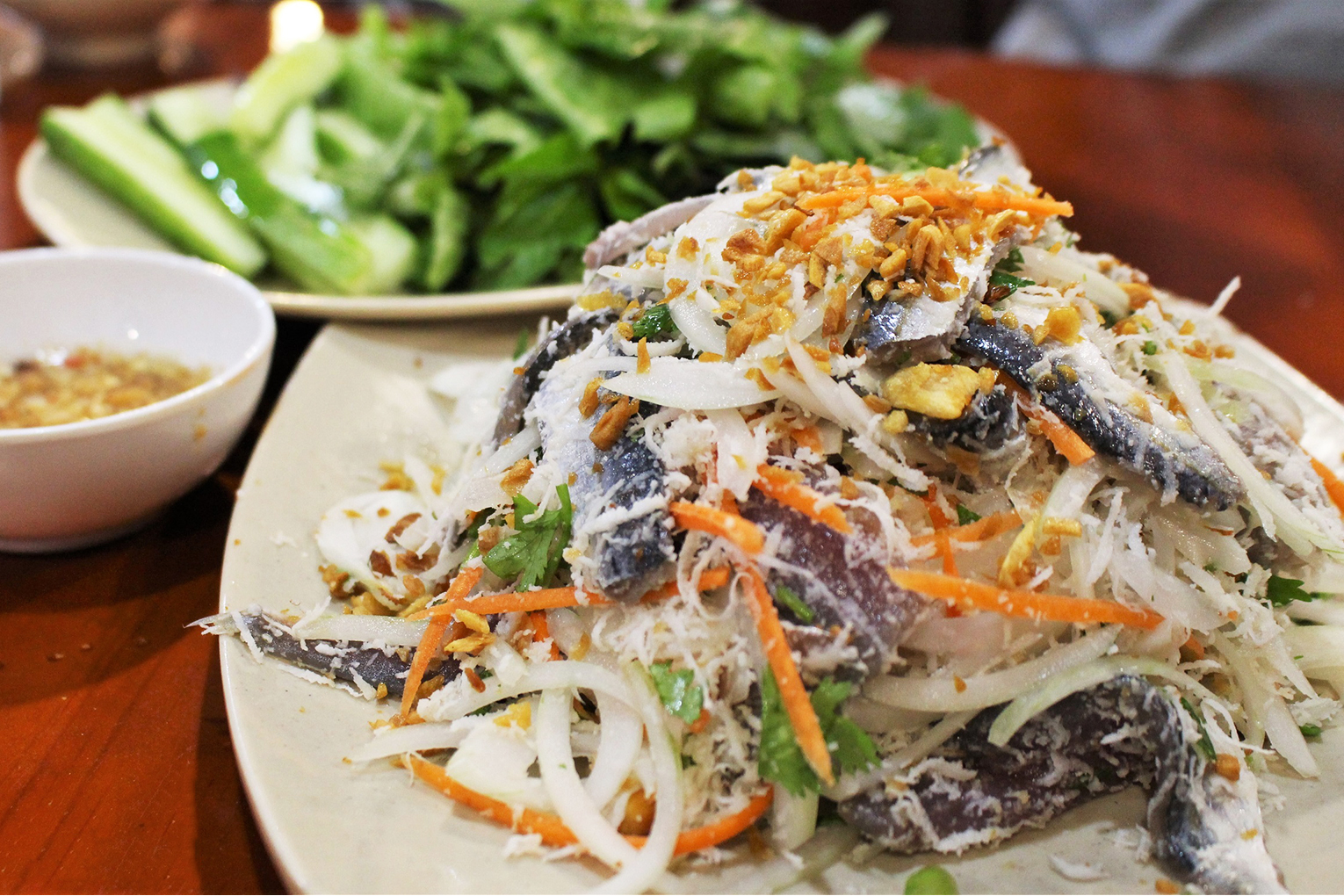
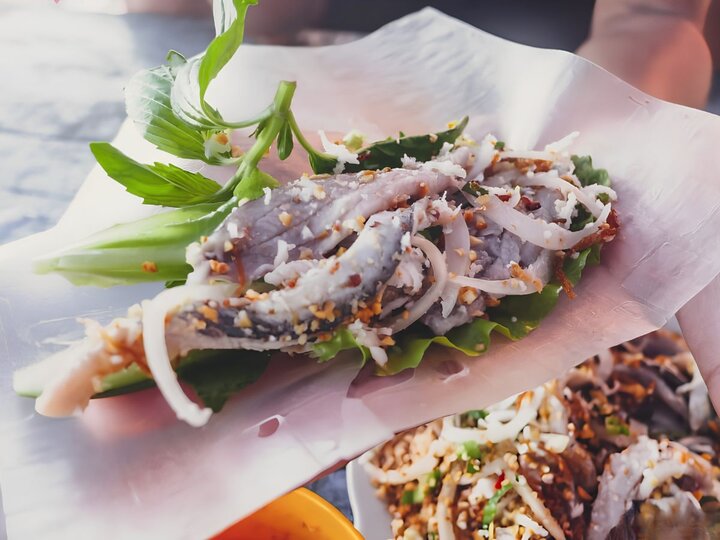
Phu Quoc herring salad is well known among diners for its distinctive flavour and unique preparation. (Source: Collected)
This richness provides abundant inspiration for each dining establishment to tell its own story of the Pearl Island through food. Whether rooted in the familiar flavours of local life or expressed through modern culinary techniques, different styles can all be considered by the MICHELIN Guide according to the same core criteria of food quality and consistency.
>>> See more: Discover Phu Quoc Cuisine – Which Dishes Deserve to Be Called the Pearl Island’s Culinary “Calling Cards”?
What Is the Difference Between a MICHELIN Star, Bib Gourmand and MICHELIN Selected?
To read a MICHELIN selection correctly, it is important to clearly distinguish between three terms that frequently appear. They are not three “star levels”, but rather different forms of recognition within the Guide.
MICHELIN Star – recognition for outstanding culinary quality: Awarded to restaurants offering outstanding cuisine, with three levels: One Star (“worth a stop”), Two Stars (“worth a detour”) and Three Stars (“worth a special journey”). It is important to note that stars are awarded to restaurants, not chefs, and are entirely separate from the “five-star” rating system used for hotels.
Bib Gourmand – good quality at a reasonable price: Awarded to establishments offering good-quality food and good value for money (“good quality, good value cooking”). Bib Gourmand should not simply be understood as referring to “cheap restaurants”; the essence of this distinction is good-quality cooking at a reasonable price.
MICHELIN Selected – selected for inclusion in the Guide: These are restaurants chosen and recommended by MICHELIN inspectors for inclusion in the Guide but which have not been awarded a MICHELIN Star or Bib Gourmand in that year’s selection. They are still establishments recommended by the MICHELIN Guide based on the quality of their food.
BEING INCLUDED IN THE MICHELIN GUIDE ≠ HAVING A MICHELIN STAR. This distinction is particularly important. If visitors look only at the number of stars, they may overlook a significant part of the culinary landscape: establishments deeply rooted in local identity, restaurants recommended as MICHELIN Selected, and Bib Gourmand venues offering good-quality food at reasonable prices. |
Sustainable Dining Trends: Opportunities for the MICHELIN Green Star on the Pearl Island
Alongside its traditional distinctions, the MICHELIN Green Star recognises restaurants at the forefront of sustainable culinary practices. As a sensitive island and marine ecosystem, Phu Quoc has significant potential to develop in this direction — from prioritising responsibly sourced seafood and reducing plastic waste to making full use of seasonal local produce.
Respect for the environment and the development of short supply chains, whether farm-to-table or sea-to-table, not only help preserve the freshness of ingredients but also reflect a more responsible approach to cuisine. These factors could become important in helping Phu Quoc’s culinary scene make a deeper impression on MICHELIN inspectors.
When the Island’s Culinary Identity Comes into MICHELIN’s View
In its official announcement of the expansion to Phu Quoc, the MICHELIN Guide highlighted several elements that shape the island’s culinary identity: seafood, fish sauce, pepper and a food culture closely connected with fishing village life.
These elements create a distinctive foundation for Phu Quoc cuisine. Seafood reflects the rhythms of life on an island; fish sauce and pepper have become recognisable signatures of the destination; while fishing village culture gives each dish a specific local story. Together, they provide the ingredients for Phu Quoc to be recognised through flavour, rather than scenery alone.
Alongside this local foundation, the MICHELIN Guide has also acknowledged an evolving culinary landscape shaped by culinary talent with international experience. The interplay between local ingredients and new approaches could create more ways to tell the story of Phu Quoc on the plate — more modern and diverse, while still retaining a clear sense of place.
Increasing the Added Value of Local Agricultural and Seafood Products
The presence of the MICHELIN Guide brings not only greater recognition for restaurants, but also significant opportunities for Phu Quoc’s agricultural and seafood value chain. Familiar products such as traditional fish sauce, ripe peppercorns, wild sim fruit, Ham Ninh crab, and bien mai scallop adductor muscle can gain greater commercial and culinary value when introduced into high-end dining experiences.
As chefs pursue excellence in every flavour, they can encourage local fishermen and farmers to maintain high-quality production standards, preserve traditional processing methods and enhance the brand value of local specialities in international markets.
Reading the MICHELIN Phu Quoc 2027 Selection: Looking Beyond the Stars
When the Phu Quoc selection in the MICHELIN Guide Vietnam 2027 is announced, simply counting the number of starred restaurants will not tell the whole story. MICHELIN Star, Bib Gourmand and MICHELIN Selected represent different forms of recognition, together helping to paint a broader picture of the destination’s culinary landscape. Viewed this way, the MICHELIN Guide can become a useful reference map for travellers seeking to explore Phu Quoc across a wide variety of culinary styles and price points.
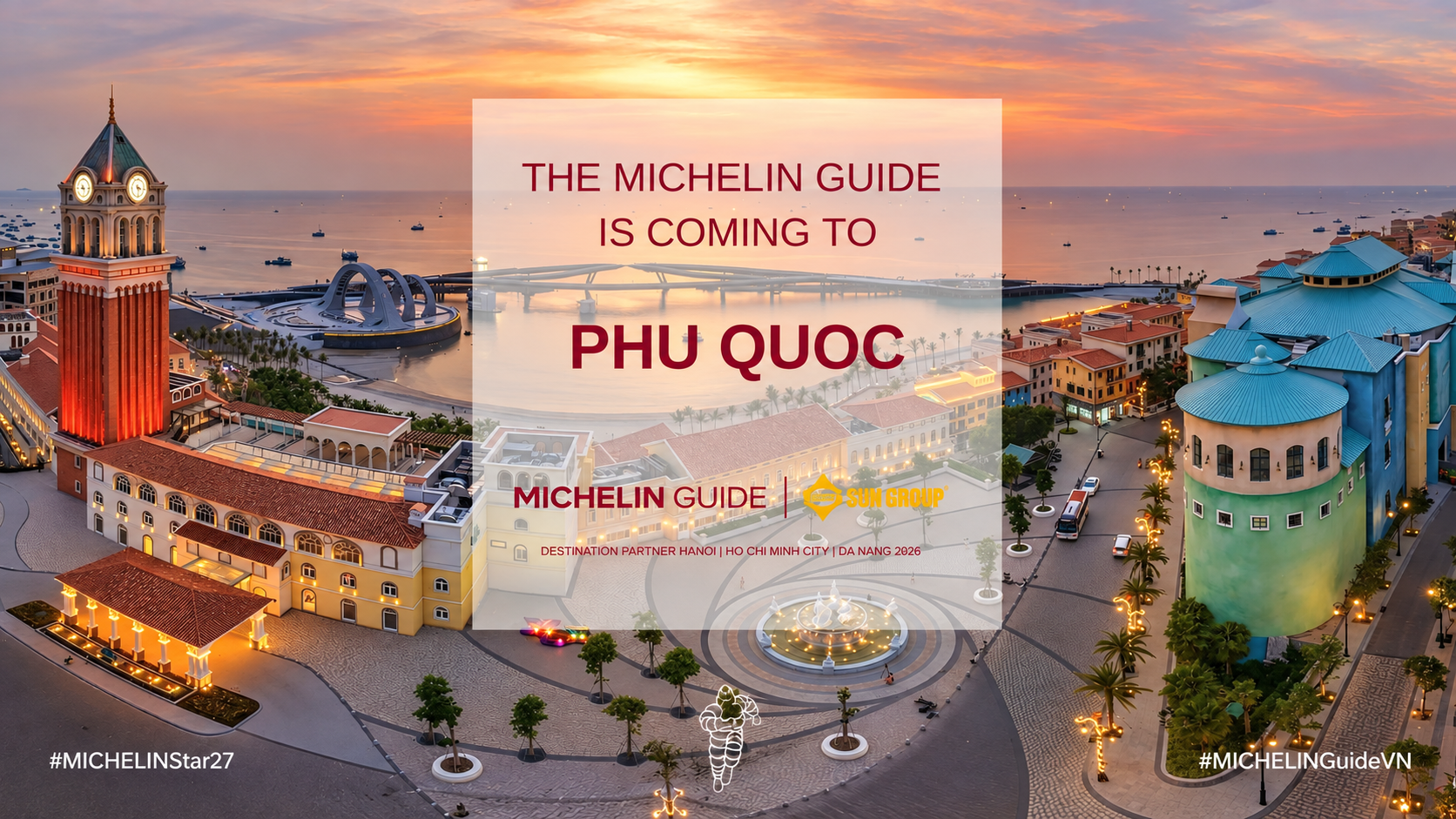
On this culinary map, a local eatery rooted in traditional flavours and a fine-dining restaurant may be recognised in different ways, but both are assessed first and foremost on the quality of their food. This allows the MICHELIN selection to reflect the many layers of Phu Quoc’s culinary landscape — from dishes closely connected with the sea and fishing village life to new expressions created by contemporary restaurants.
Tips for Diners Exploring MICHELIN Cuisine in Phu Quoc
To enjoy a more complete experience when discovering Phu Quoc cuisine in the spirit of MICHELIN, diners may consider the following tips:
Broaden your culinary perspective: Do not focus solely on fine-dining restaurants or on “chasing stars”. Take time to explore Bib Gourmand and MICHELIN Selected establishments as well, to experience more fully the rhythm of local life and the authentic, unpretentious flavours of the Pearl Island.
Eat with the seasons: Phu Quoc seafood is strongly influenced by weather conditions and seasonal winds. Prioritise dishes prepared with ingredients that are at their freshest during the relevant fishing season.
Plan and book early: Restaurants included in the MICHELIN Guide often attract large numbers of visitors. Making a reservation in advance can help ensure a smoother culinary journey.
The presence of the MICHELIN Guide is more than simply a selection process; it marks an important milestone in strengthening Phu Quoc’s position on the global culinary map. Whether at a modest eatery infused with the spirit of a fishing village or an elegant fine-dining restaurant, what ultimately creates a strong and lasting impression is the elevation of local ingredients, culinary creativity and a deep appreciation for the gastronomic heritage of the Pearl Island.