















1. Phu Quoc’s cuisine: A journey from island treasures to a distinctive culinary identity
A travel destination may captivate visitors with magnificent natural landscapes or luxurious resorts. Yet it is often the flavors of its cuisine that leave the deepest impression in their memories. Just as Hanoi takes pride in pho and Ho Chi Minh City is synonymous with com tam (broken rice), Phu Quoc stands out for its rich, sea-inspired flavors and the enduring cultural heritage of its fishing villages.
Michelin’s official inclusion of Phu Quoc in its selection, with the list expected to be announced in 2027, marks an important milestone in affirming the island’s culinary standing. This is a golden opportunity to redefine and elevate its core culinary values—not simply by celebrating individual dishes, but also by showcasing traditional cooking practices and the distinctive local ingredients that define this island destination.
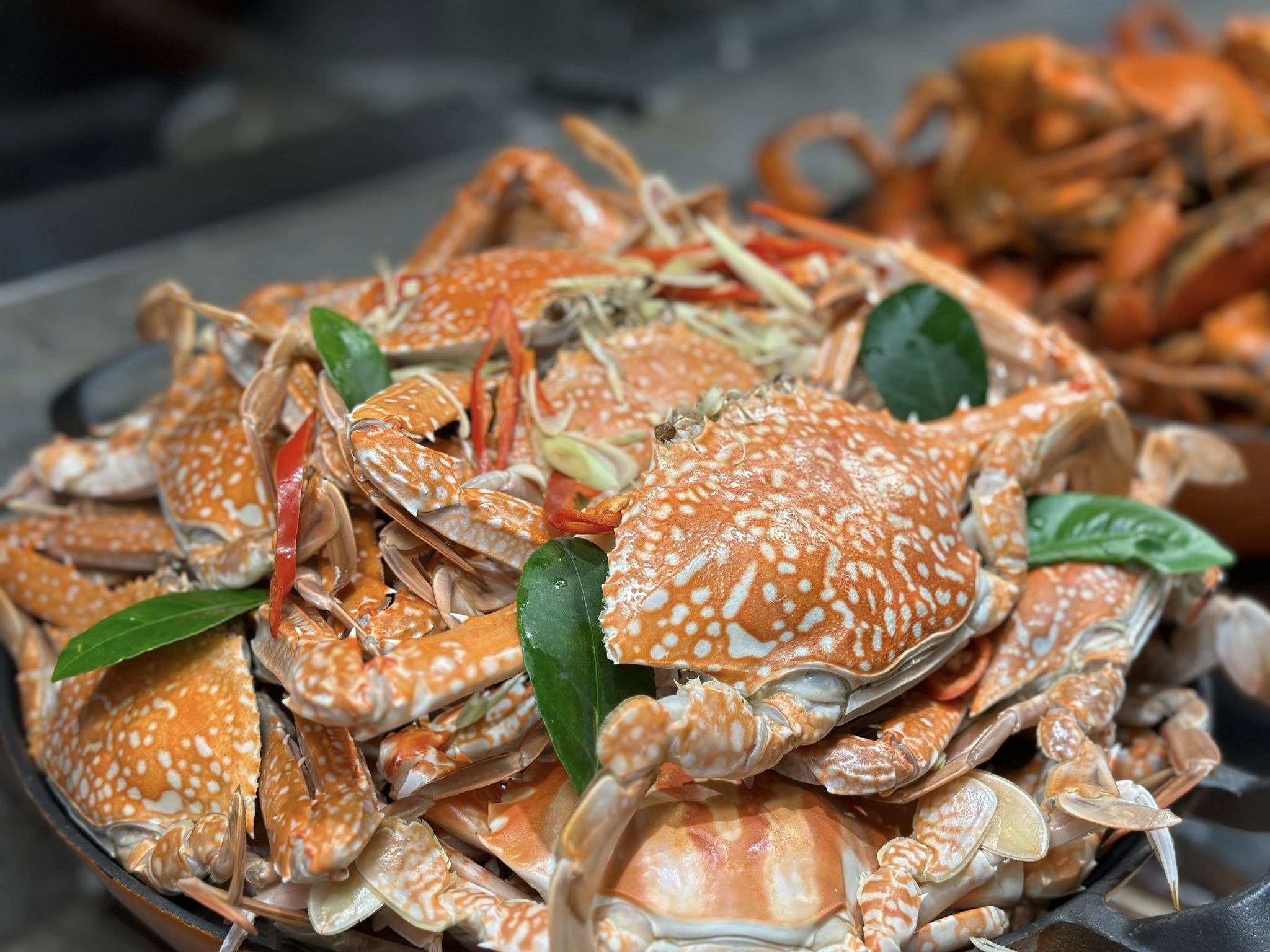
Ham Ninh crab is one of Phu Quoc’s best-known seafood specialties. (Source: Collected)
With its abundant seafood resources, the Pearl Island offers ingredients for a wide range of familiar dishes, from Ham Ninh crab and herring to sea urchin, round scad, and pen shell adductor muscles. With such fresh ingredients, preparation does not need to be elaborate. Crab can be steamed to preserve its natural sweetness, round scad grilled to bring out its aroma, and sea urchin paired with scallion oil for a distinctive richness. Each dish offers a different way to enjoy the island’s bounty, yet all share a direct connection between local communities and the sea.
While seafood reflects the richness of the waters surrounding the island, fish sauce and pepper reveal the depth of its traditional industries. Phu Quoc fish sauce is closely associated with the process of fermenting anchovies in wooden barrels, while the island’s pepper is prized for its distinctive aroma and pungent heat, complementing dishes ranging from rustic local fare to refined cuisine. These are more than just seasonings; they are local products that tell a story of ingredients, production techniques, and expertise passed down through generations.
Taken together, these elements show that Phu Quoc’s culinary strength lies not in any single flavor, but in the combination of fresh seafood, locally grown spices, and fishing village culture. These foundations give the Pearl Island a distinctive identity within Vietnam’s diverse culinary landscape.
2. Must-try dishes: Bun quay, herring salad, and other Pearl Island specialties
From local ingredients to finished dishes, Phu Quoc’s culinary identity is most evident in experiences rooted in everyday local life. Among them, bun quay and herring salad stand out as two specialties worth discovering during a visit to the island.
Bun quay – A unique interactive dining experience
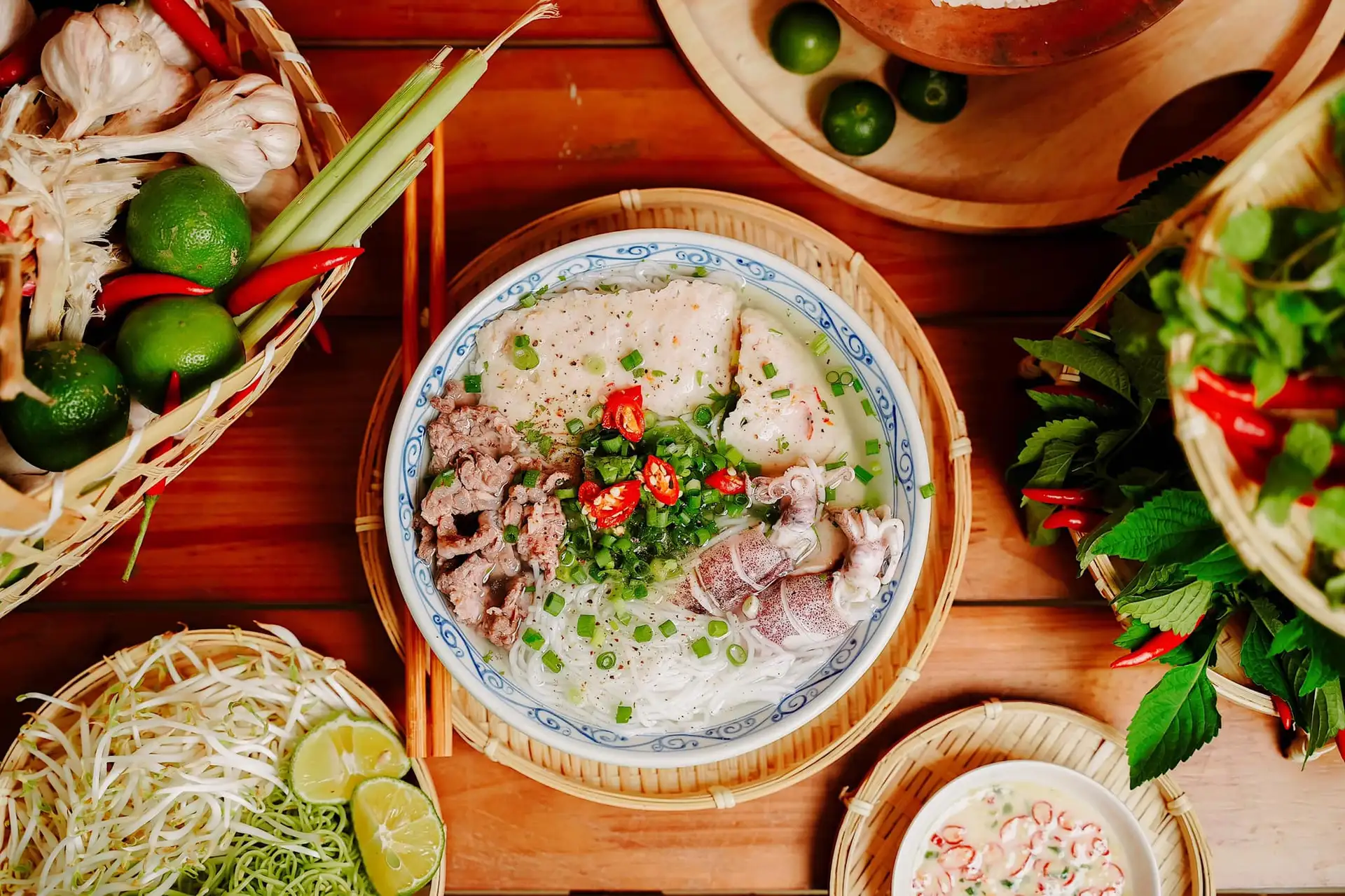
Phu Quoc bun quay is a flavorful dish featuring freshly made noodles, seafood cakes, and hot broth. (Source: Collected)
Phu Quoc bun quay stands out for its freshly pressed noodles, finely ground shrimp and fish cakes, and steaming hot broth. One of its most appealing features is the chance for diners to mix their own dipping sauce using fish sauce, sugar, calamansi, and chili to suit their taste. This hands-on ritual turns a simple meal into a fun and interactive dining experience.
In Phu Quoc, restaurants such as Kien Xay and Thanh Hung have become familiar recommendations for those looking to try this local specialty. Bun quay also highlights a distinctive aspect of the island’s cuisine: its appeal does not necessarily come from complex techniques or elaborate presentation, but can stem from fresh ingredients, preparation on the spot, and unique local dining traditions.
Phu Quoc herring salad – The rich flavors of the sea
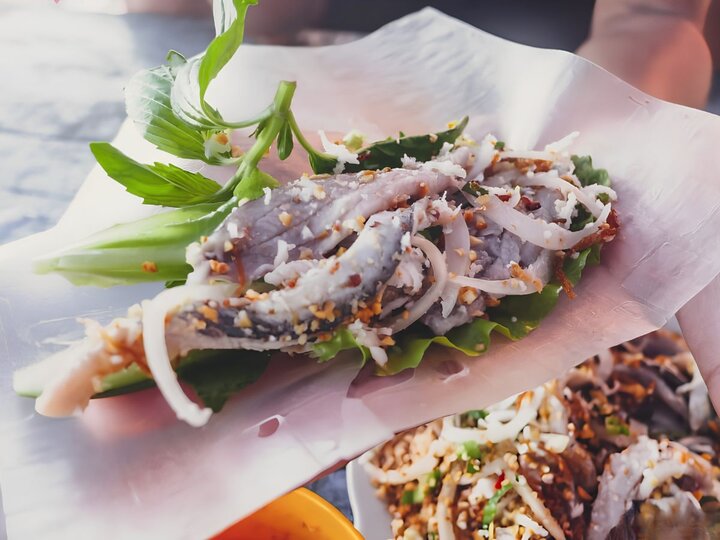
Phu Quoc herring salad brings together fresh raw herring, rich shredded coconut, onions, and distinctive local wild herbs. Wrapped in rice paper and dipped in a flavorful sauce made with Phu Quoc fish sauce, each bite delivers a refreshing blend of fresh, vibrant flavors that is hard to resist.
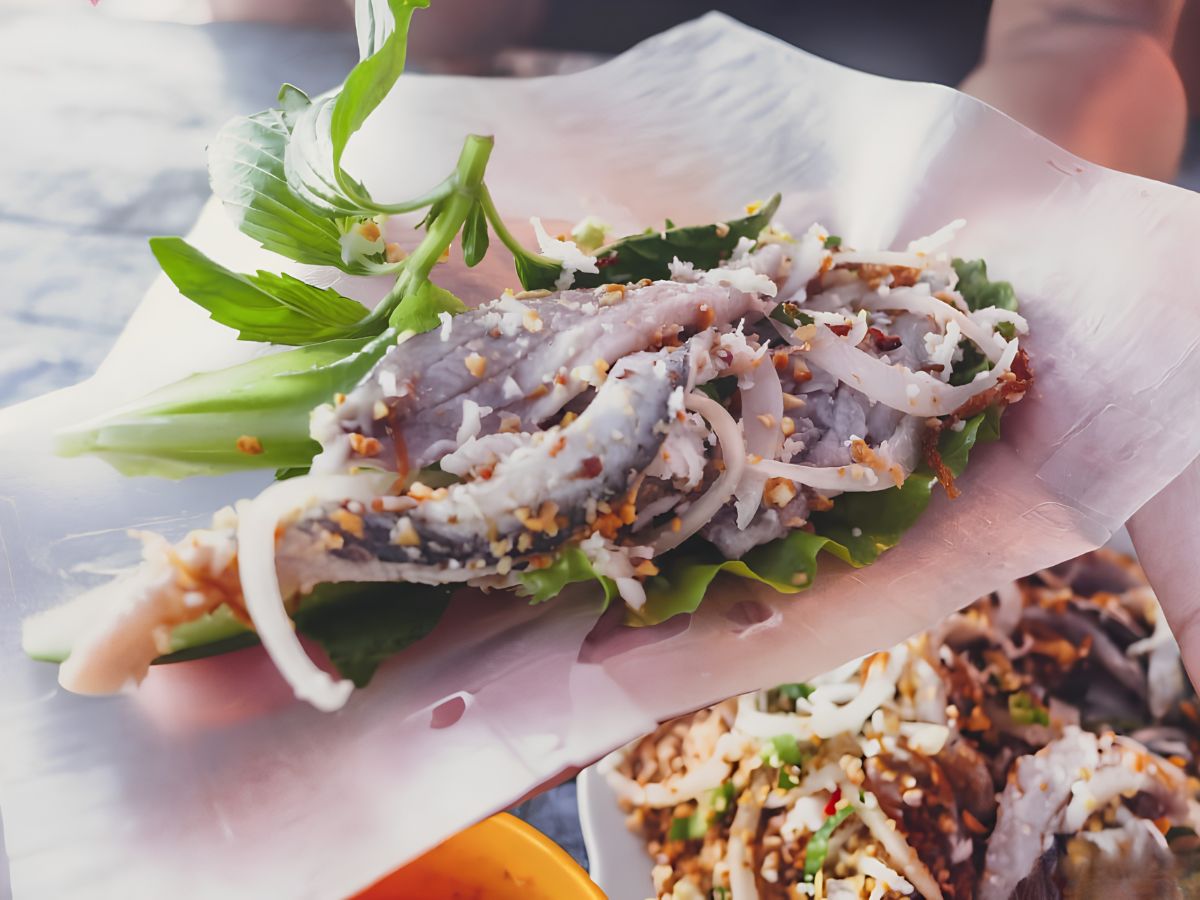
Herring salad combines the sweetness of fresh fish with shredded coconut and aromatic herbs. (Source: Collected)
Ham Ninh crab and a host of irresistible local specialties
Other must-try dishes include Ham Ninh crab, renowned for its firm, naturally sweet meat; bun ken, a distinctive noodle soup with a rich, fragrant coconut milk broth; and grilled sea urchin topped with scallion oil. Each dish is another piece of the puzzle that makes Phu Quoc’s culinary culture so appealing.
What makes these specialties particularly meaningful is their close connection to local life. Behind a bowl of bun quay lies a process of ingredient preparation and a dining tradition shaped over time. Behind a seafood platter are fishing practices, careful ingredient selection, and accumulated cooking expertise. For fish sauce and pepper, the story extends from producing these local specialties to the ways they are used in everyday cooking.
It is this connection between food and the people who make it that gives a culinary tradition its depth. To become a destination’s culinary calling card, a dish must go beyond being just another menu option. It should inspire visitors to discover where it originated, how it is made, and the people who preserve its distinctive flavors.
3. Elevating the dining experience: From casual eateries to fine dining restaurants
A culinary destination that appeals to international visitors needs both a strong local identity and the ability to cater to a wide range of diners. In Phu Quoc, that journey can begin at a local eatery, continue with a seafood meal in a fishing village, and culminate in a restaurant at a luxury resort.
In each setting, ingredients from the same region can be experienced in different ways. At casual eateries, diners can enjoy the familiar flavors of bun quay, bun ken, or a plate of steamed crab. At resort restaurants, seafood and local specialties can inspire menus crafted around Vietnamese or international culinary styles.
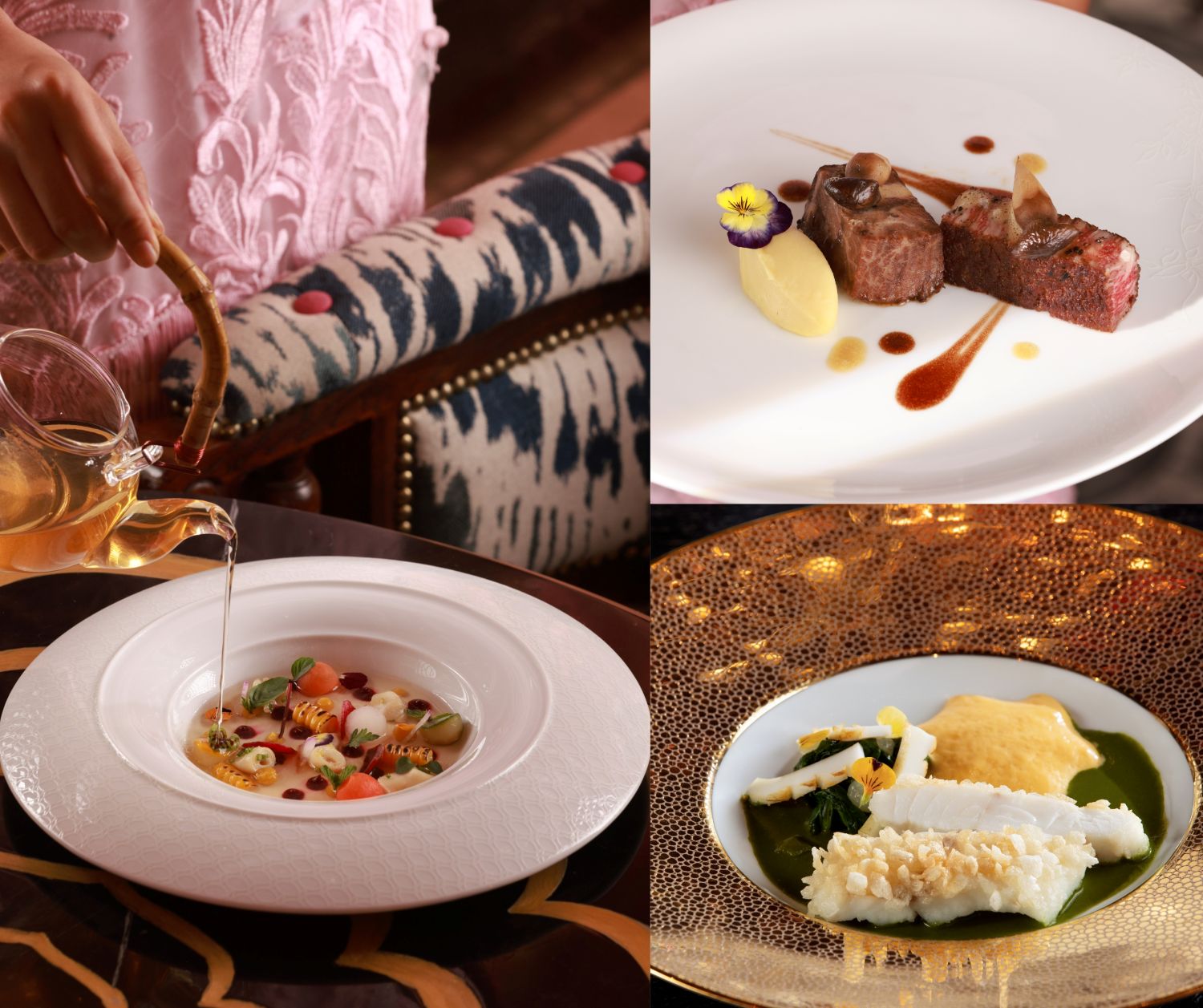
Dining at Pink Pearl by Olivier Elzer, JW Marriott Phu Quoc Emerald Bay. (Source: Collected)
For example, Pink Pearl by Olivier Elzer at JW Marriott Phu Quoc Emerald Bay embraces French cuisine with Mediterranean influences, set within its signature pink mansion. Corallo at Premier Village Phu Quoc Resort offers a seaside dining experience, while Lửa Restaurant at New World Phu Quoc Resort stands out for its charcoal-grilled dishes. These venues provide additional options for visitors looking to combine culinary exploration with a luxury holiday.
This diversity is also evident in Sunset Town, where Seta presents contemporary Cantonese cuisine, while Mare serves dishes inspired by Italian and Mediterranean flavors. Alongside local specialties, these dining experiences help Phu Quoc cater to international visitors with different tastes and expectations.
However, developing culinary tourism does not mean every dish needs to be transformed into fine dining. The appeal of a bowl of bun quay still lies in its preparation, flavor, and the experience of enjoying it at a local eatery. Likewise, a seafood meal by the sea has its own charm, thanks to fresh ingredients and the setting. The priority is to help both casual eateries and upscale restaurants maintain quality while giving visitors a better understanding of each dish’s origins.
From a destination perspective, this combination also creates more opportunities for visitor spending throughout the day. A morning spent discovering local cuisine can lead into lunch at a fishing village and conclude with dinner by the sea. Food thus becomes an integral part of the travel itinerary rather than merely a service accompanying accommodation.
The Michelin Guide’s expansion to include Phu Quoc offers an opportunity to bring these culinary stories to greater international attention. However, a lasting culinary reputation depends on more than recognition from a guide. It also requires consistent food quality, a distinctive identity, and experiences compelling enough to bring visitors back.
As the MICHELIN Guide selection for Phu Quoc is expected to be announced in 2027, the question remains: which dishes will earn their place as the island’s culinary calling card? Ultimately, it is the authentic flavors, distinctive cuisine, well-rounded dining experiences, and warm hospitality of local residents that will leave a lasting impression and draw visitors back to the Pearl Island.