
















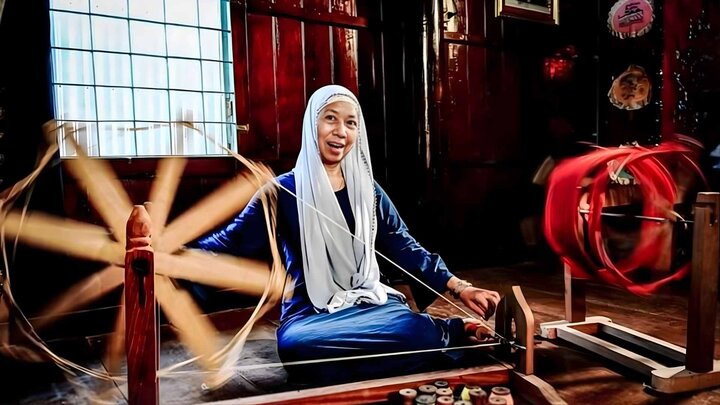
1. Overview of Chau Phong Brocade Weaving Village
Chau Phong Brocade Weaving Village is located in Chau Phong commune, An Giang province, where the Cham community has maintained the weaving craft in their daily lives for over two centuries, according to the cultural documents of the Cham community in An Giang. This is not a reconstructed model or a museum for visitors, but a real living space of the traditional craft village. The weaving craft is closely linked to the family, with the sound of the shuttle echoing every day within the living space.
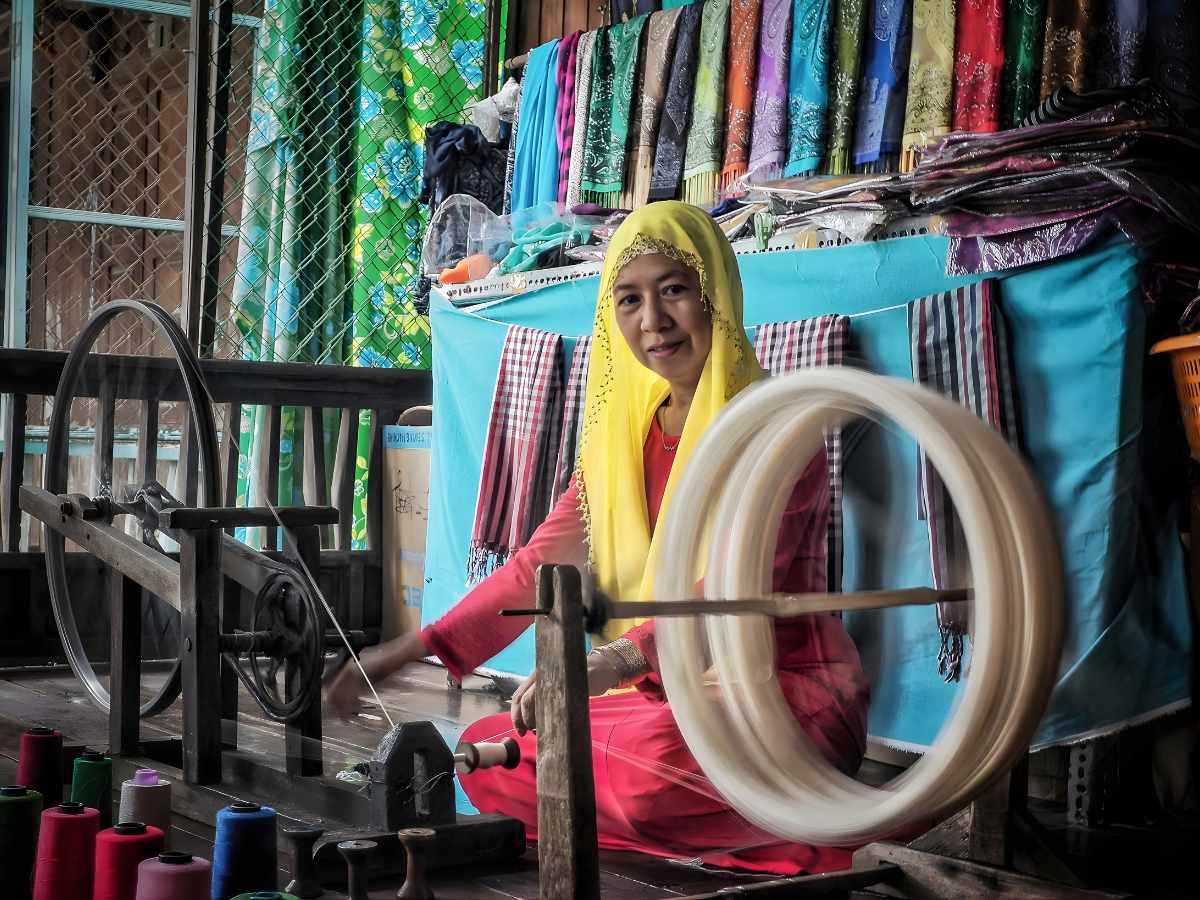
Chau Phong brocade weaving village reflects the traditional craft activities associated with the life of the Cham people in An Giang. (Source: Collected)
In the daily life of the people of Chau Phong, the loom is inseparable from their activities and is present as a part of the home. Weaving activities take place in parallel with family life, reflecting the close relationship between handicraft labor and local culture. This helps visitors clearly feel the rhythm of the craft village that is still operating.
The history of brocade weaving in Chau Phong began in the early 19th century, when the Cham community settled along the Hau River and developed weaving techniques from natural materials. Over time, the weaving craft has maintained a high level of craftsmanship from preparing threads, dyeing colors to creating patterns. Each product not only serves the user's needs but also reflects the cultural identity passed down through generations.
2. What to see when visiting Chau Phong brocade weaving village
2.1. Hand looms showcase the artisans' skill
One of the most noticeable features in the craft village is the system of wooden hand looms, used in most households. These looms have a simple structure but require high skill from the artisans to adjust threads and create precise patterns. The weaving process usually takes place continuously for many hours, demonstrating patience and meticulousness.
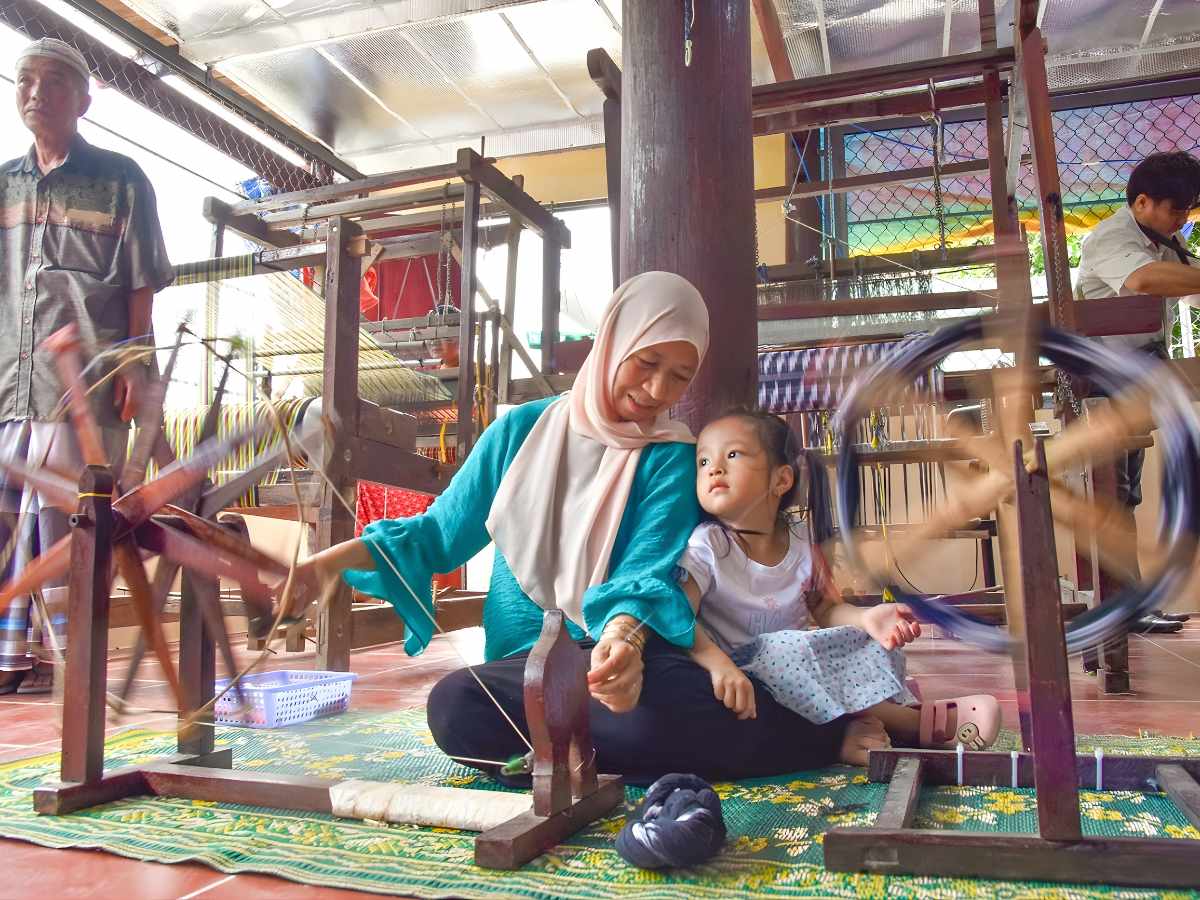
The space of Chau Phong craft village reflects the connection between residential architecture and handicraft activities. (Source: Collected)
The weavers here are mainly women, who can memorize dozens of different patterns without needing drawings. Each product can take from a few days to several weeks to complete, depending on complexity. Observing the looms helps visitors better understand the value of manual labor and the effort behind each product.
2.2. Weaving threads and color palettes create a unique identity
The weaving threads in the craft village are usually made from cotton or synthetic fibers, then dyed using traditional or industrial methods. The color palette of Chau Phong brocade is quite diverse, with red, black, yellow, and blue often appearing frequently. Each color carries its own meaning, associated with the beliefs and life of the Cham people, while also reflecting aesthetic concepts maintained through generations and indicating social stratification in clothing use.
The thread dyeing process is also an important step, directly affecting color fastness and product quality. The artisans must control the temperature and dyeing time to achieve the desired colors. This creates a distinction between handmade products and mass-produced items, while also contributing to shaping the craft village's identity and maintaining stable quality across product batches under the region's specific climate conditions.
2.3. Finished products clearly reflect the Cham brocade style
Brocade products at Chau Phong brocade weaving village include many types such as scarves, skirts, shirts, bags, and decorative items. Each product features characteristic patterns with geometric motifs, lines, and cultural symbols. These are the result of accumulated experience over many generations.
These products not only serve the needs of the community but are also sold to tourists and the external market. The value of the products depends on their sophistication and completion time, ranging from a few hundred thousand to several million Vietnamese dong. This clearly reflects the Cham brocade style and the position of the weaving craft in modern life.
3. What experiences are worth trying for visitors at Chau Phong weaving village?
3.1. Observe each stage to understand how brocade is made
When visiting, tourists can follow the entire weaving process from preparing the threads, setting up the loom, to finishing the weaving. Each stage has its own technical requirements, demanding precision and smooth coordination. Direct observation helps viewers better understand the manual production process.
Many workshops also allow visitors to try weaving under the guidance of the artisans. This is an interactive experience that helps participants clearly feel the difficulty of the craft. Through this, the value of brocade products is perceived more concretely rather than just through display.
3.2. Chat with artisans to understand the stories behind the patterns
A notable aspect of visiting is the opportunity to chat directly with the weavers. They often share the meanings of the patterns, the origins of the craft, and the changes in the production process. These stories help visitors gain a deeper understanding of the culture and life of the Cham community.
Through communication, visitors can also notice the differences between generations in maintaining the craft. Younger people tend to incorporate modern elements into their products, while older generations adhere to traditional styles. This interplay creates diversity in products and approaches to the market.
3.3. Purchase handmade products as souvenirs after the trip
Choosing brocade products as souvenirs is part of the visiting experience. Products at Chau Phong brocade weaving village are usually sold directly at people's homes or at product introduction points. This allows visitors to easily access and learn about the origin of the products.
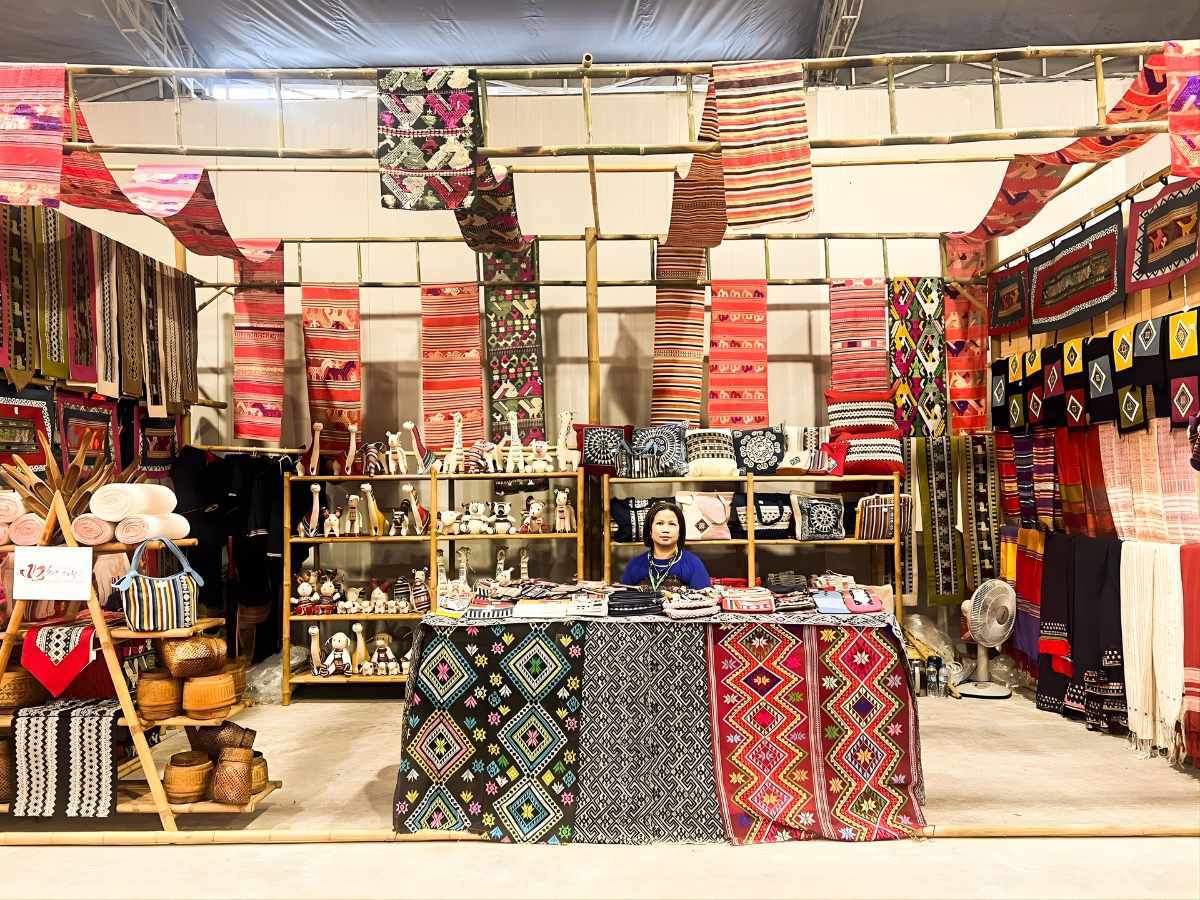
Textile weaving activity at Chau Phong offers a tourism experience of watching the craft in operation. (Source: Collected)
When purchasing goods, visitors can directly interact with artisans to learn more about materials, weaving time, and preservation methods. This is also a way to contribute to maintaining traditional crafts through product consumption. Shopping activities in the craft village therefore carry both economic and cultural significance.
4. How to visit Chau Phong textile weaving village more fully
4.1. Choose less crowded times to easily observe the weaving looms
The timing of your visit significantly affects your ability to observe the manual weaving processes at Chau Phong. Mornings from around 8 AM to 10 AM or early afternoons are usually when the craft village is quieter and the number of visitors is not yet too high. This allows tourists to get closer to the looms, clearly observe the artisans' techniques, and listen to the characteristic sounds of the weaving activity.
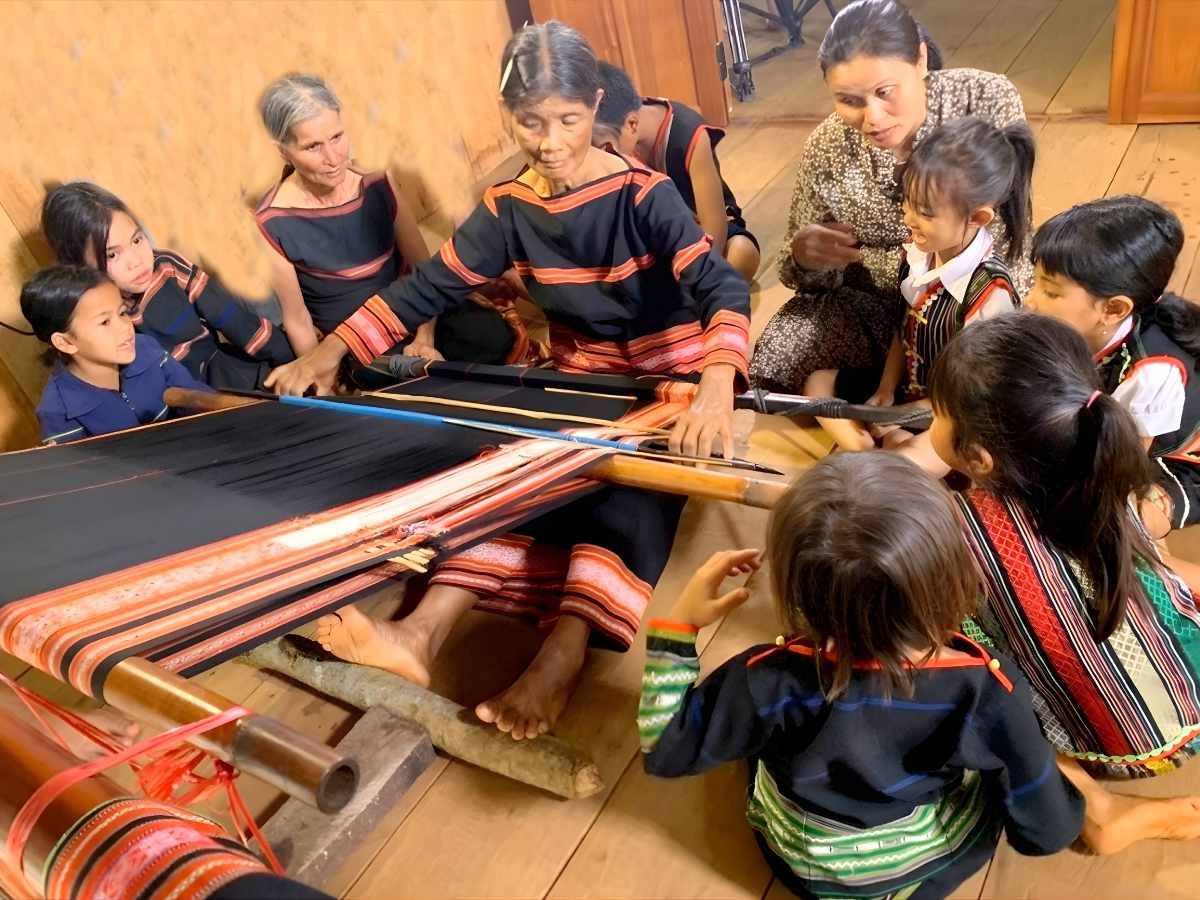
Visiting Chau Phong brocade weaving village at a slow pace helps to clearly feel the value of traditional culture. (Source: Collected)
On weekends or holidays, the number of visitors increases significantly, which can limit access to production spaces. According to local records, the peak season usually falls between May and August, when the demand for tourism in the Mekong Delta increases. Choosing the right time helps enhance the quality of the experience and reduce pressure on the community of residents in the craft village.
4.2. Maintain a slow visiting pace within the craft village space
The space at Chau Phong brocade weaving village is for community activities, where production and daily life occur side by side. Moving slowly, stopping to observe each loom or each stage will help visitors better understand the process of making brocade. This also creates an opportunity to clearly feel the rhythm of life and how people maintain their traditional craft day by day.
This form of visiting is suitable for the trend of experiential tourism, where the elements of feeling and interaction are emphasized more than quickly moving through many places. Spending time in each space helps to record details about patterns, colors, and weaving techniques. The slow visiting pace also contributes to maintaining a balance between tourism activities and the daily lives of the residents.
4.3. Respect residents' activities when taking photos
When visiting the craft village, photography should be done within the framework of respecting the living space of the local people. Many households are both living spaces and places where looms are set up, so asking for permission before taking pictures is necessary. This helps maintain privacy and avoid disrupting production activities that take place during the day.
In addition, visitors should pay attention to maintaining general hygiene and not affecting the work of the artisans. Actions such as touching looms or products without permission can disrupt the workflow. Adhering to basic rules contributes to maintaining a sustainable tourism environment and creating harmony between visitors and the local community.
4.4. Combine visits to nearby cultural sites to broaden the experience
Combining visits to nearby cultural sites makes the journey in Tan Chau more diverse and profound. Around Chau Phong brocade weaving village, there are also Islamic mosques of the Cham community and traditional residential areas with their own architectural characteristics. This allows visitors to access many different cultural aspects in a single trip.
Besides cultural factors, traveling between nearby locations also helps optimize sightseeing time within the day. According to local tourism development orientation, destinations are planned in a linked manner to enhance visitor experience. This combination contributes to creating an exploratory journey, rather than just focusing on a single craft village.
Concluding the journey at Chau Phong brocade weaving village, visitors not only tour but also gain a deeper understanding of the life and traditional craft of the Cham people in An Giang. Unlike the modern tourist pace at Sun World Hon Thom, Chau Phong brocade weaving village clearly reflects the traditional handicraft activities of the Cham people.