















Building a large-scale aviation infrastructure project can take years in many countries, even where advanced technology and abundant resources are available.
For example, according to Changi Airport Group, Terminal 4 at Changi Airport in Singapore, covering 225,000 m², began construction in early 2014 and was completed in December 2016, taking nearly three years. At the peak of construction, more than 4,000 workers were mobilised. The terminal officially began serving passengers in October 2017.
Meanwhile, Istanbul Airport in Türkiye required around 42 months to complete its first phase. According to Anadolu Agency, this phase was inaugurated on 29 October 2018, with a designed capacity of 90 million passengers per year.
More notably, Beijing Daxing International Airport in China, renowned for its starfish-shaped architecture, began construction in late 2014 and entered operation in September 2019. According to the Civil Aviation Administration of China, the project features a 700,000 m² terminal and four runways in its first phase.
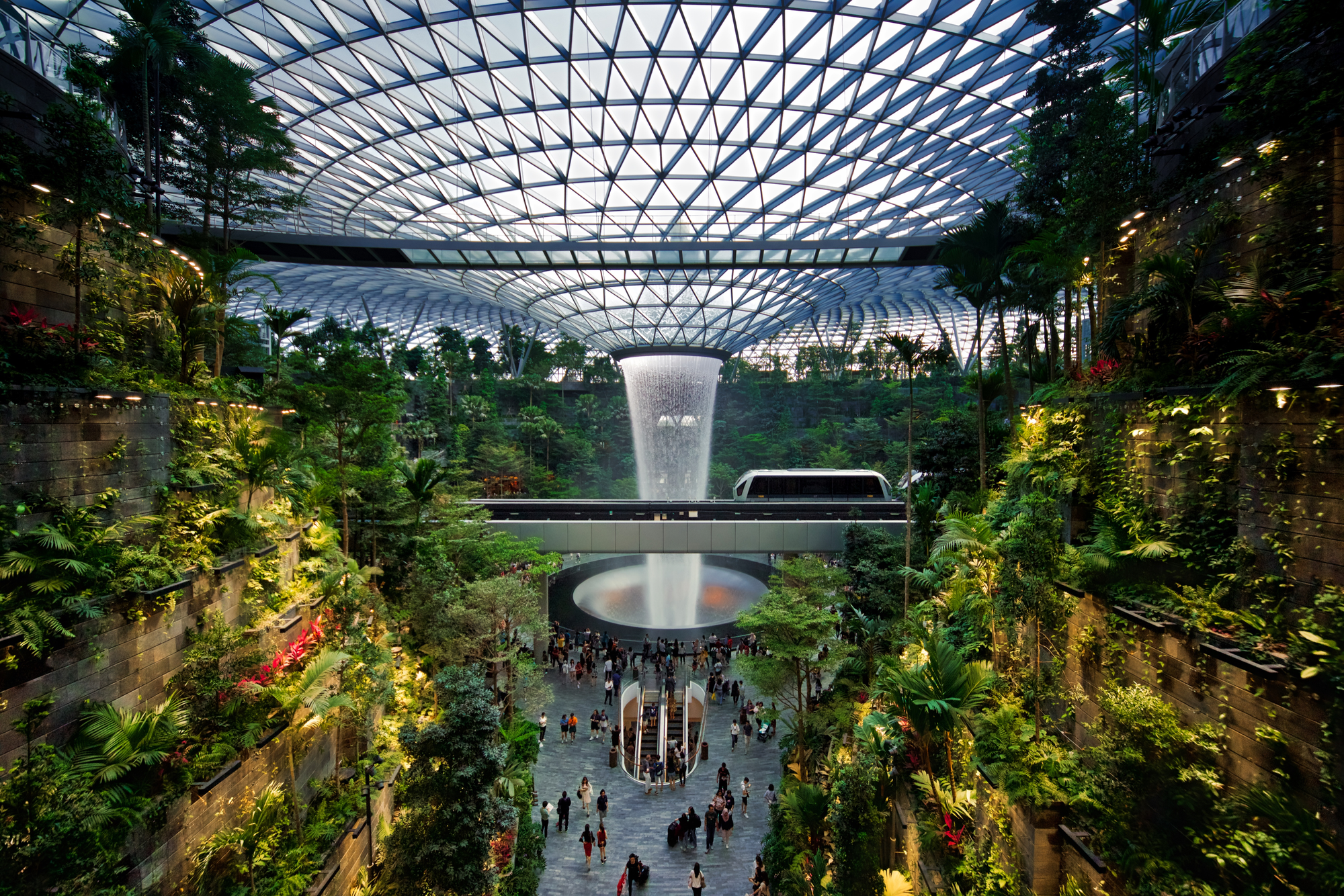
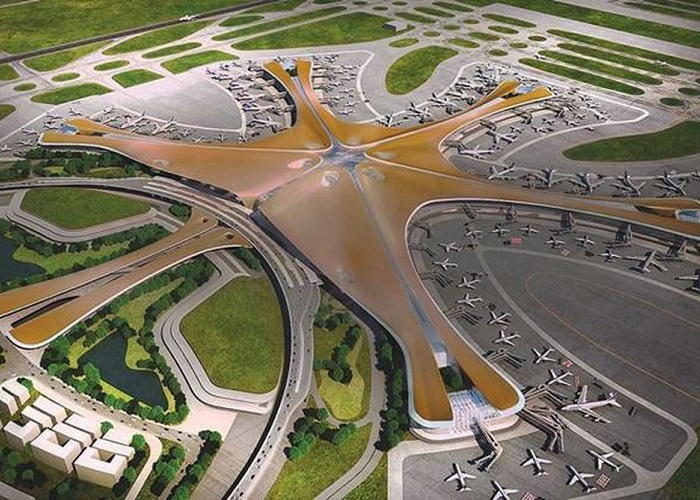
Mega projects in developed countries can take several years to complete. (Photos: Changi Airport, Beijing Daxing International Airport)
Each project differs in scale, technical requirements and construction conditions. However, these timelines partly illustrate the complex preparation and construction process required to deliver modern aviation infrastructure.
In Vietnam, a race against time is under way on Phu Quoc Island, An Giang Province. In preparation for the APEC 2027 Economic Leaders’ Week, a series of airport, transport, convention and accommodation projects are being developed simultaneously, with many components targeted for completion within around 18–24 months.
Mega Projects Take Shape as Construction Accelerates
One of the key highlights of the new infrastructure network is APEC Boulevard, an approximately 3-km-long, 68-metre-wide road connecting major transport corridors with the convention complex in southern Phu Quoc.
Under Prime Ministerial Decision No. 948/QD-TTg, the APEC Boulevard project has a preliminary total investment of VND 1.82 trillion and is included in the list of projects serving APEC 2027.
Along this corridor, the high-rise hotel complex at Bai Dat Do is gradually taking shape. The “Ruby Beach Hotel Boulevard” comprises 17 towers and is expected to provide around 7,000 rooms in its first phase. Of these, one hotel expected to carry the JW Marriott Marquis brand has reached the 22nd floor, while another expected to operate under the W Hotels brand has reached the 32nd floor. Contractors are targeting a construction pace of one floor every 3.5 days.
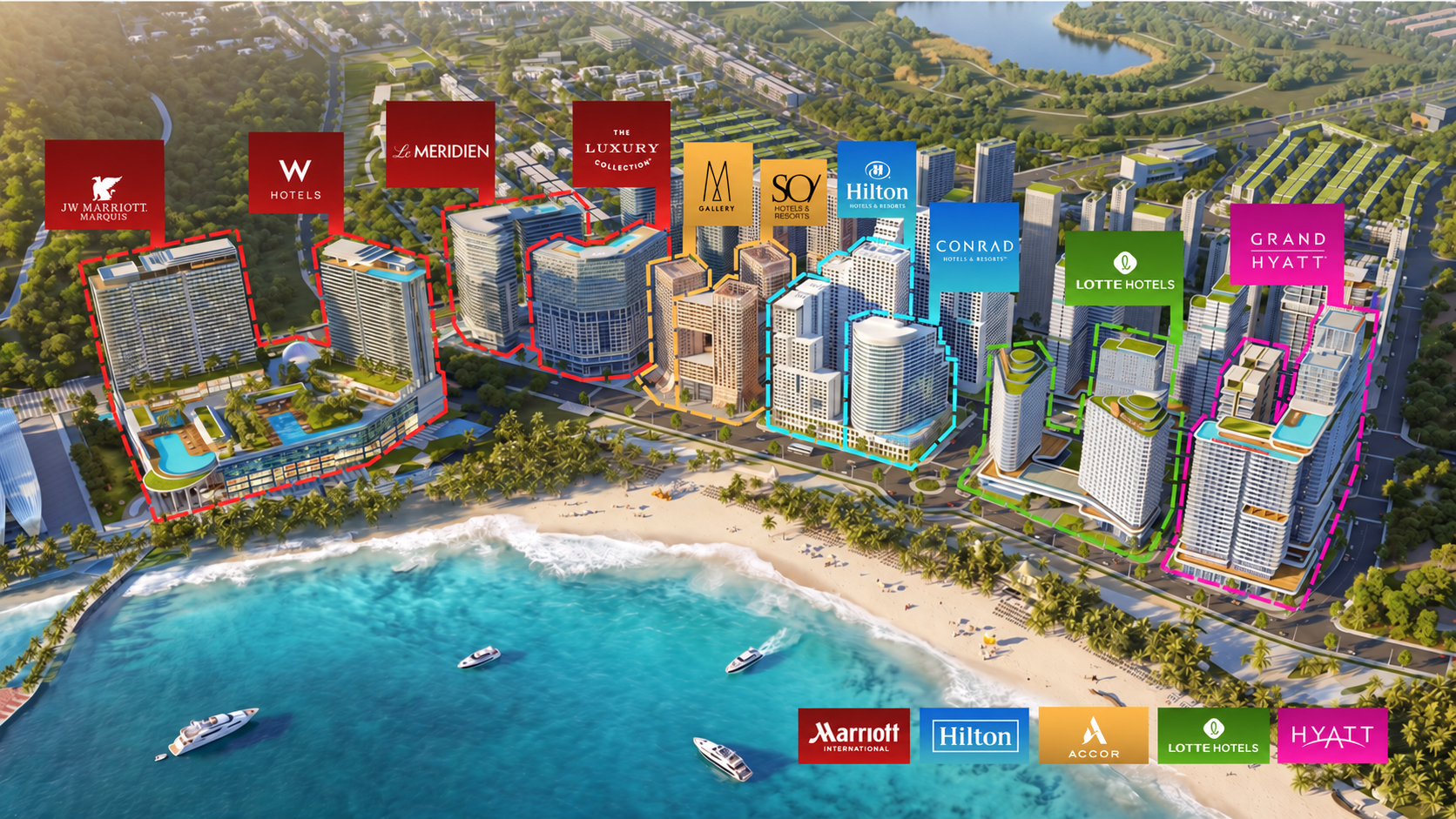
The hotel boulevard in Phu Quoc. (Photo: Sun Group)
It is not only the beachfront towers that are rapidly taking shape; construction at Phu Quoc Airport is also changing quickly.
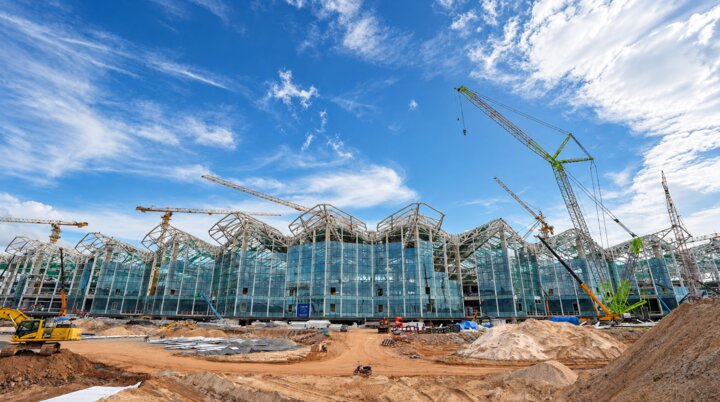
Specifically, after around one year of construction, approximately 95% of the concrete structure of Terminal T2 has been completed, the main steel roof structure is finished, and many components have moved into the equipment installation and finishing stage. The terminal, inspired by the image of the Fire Phoenix, together with other phase-one components, is expected to begin serving operations from April 2027.
About 17 km from the airport, the APEC Convention and Exhibition Centre and the Multi-purpose Performance Hall are also accelerating. According to an update published by VnExpress in August 2026, the Convention Centre had completed around 98% of its reinforced concrete structure and 93% of its steel structure, while the Multi-purpose Performance Hall had reached about 97% completion of its reinforced concrete works.
At the same time, the approximately 17.5-km light rail transit (LRT) line connecting the airport with the convention centre has begun rail installation on several sections. Bridges, tunnels, stations and the rail bed are being developed in parallel.
These projects are gradually forming an integrated system of transport, convention and accommodation infrastructure, designed not only to serve APEC 2027 but also to expand Phu Quoc’s capacity to welcome visitors in the future.
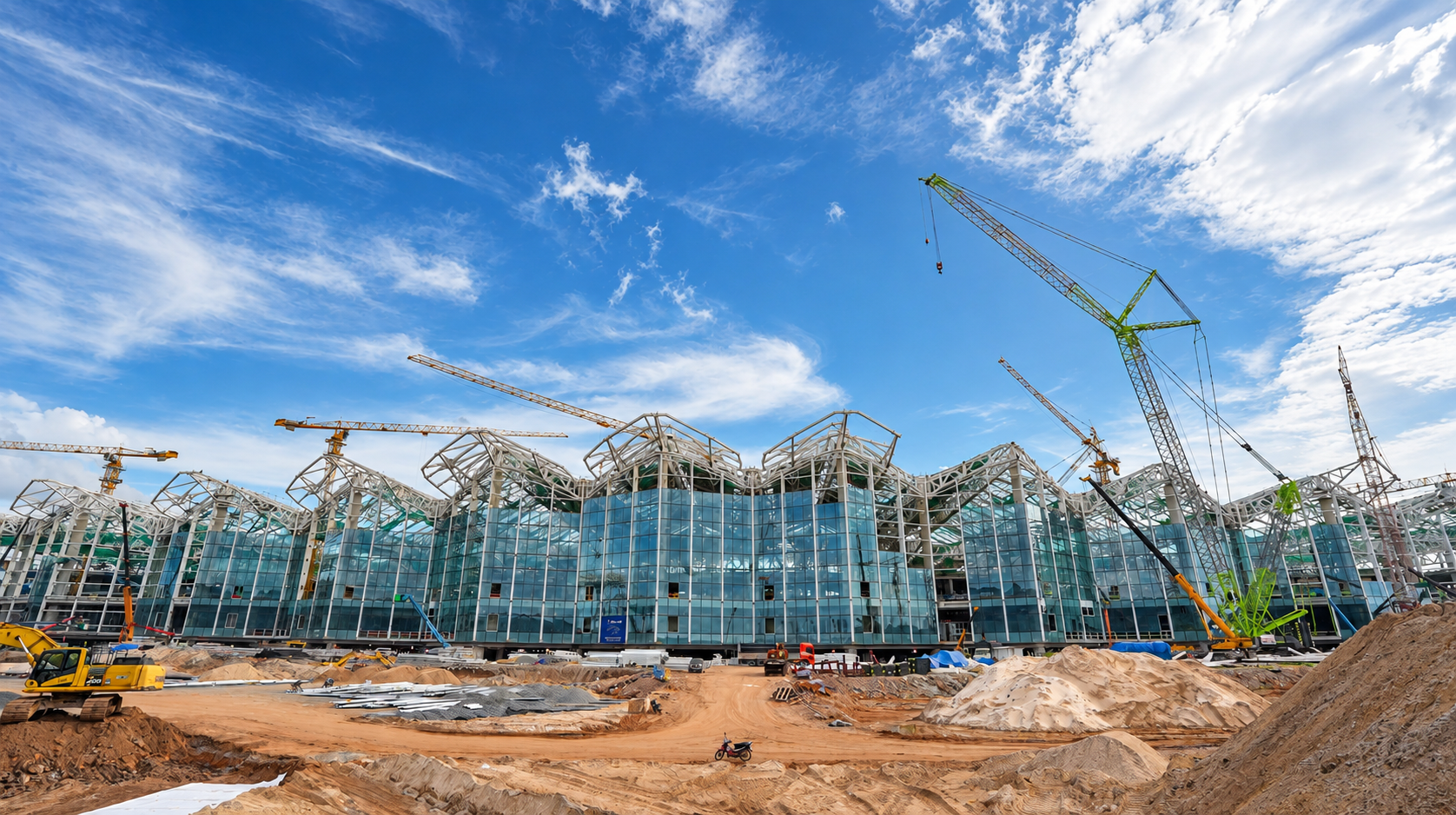
The glass façade of Terminal T2 at Phu Quoc International Airport is gradually being completed, shaping the appearance of the building inspired by the “Fire Phoenix”. (Photo: Phu Quoc International Airport)
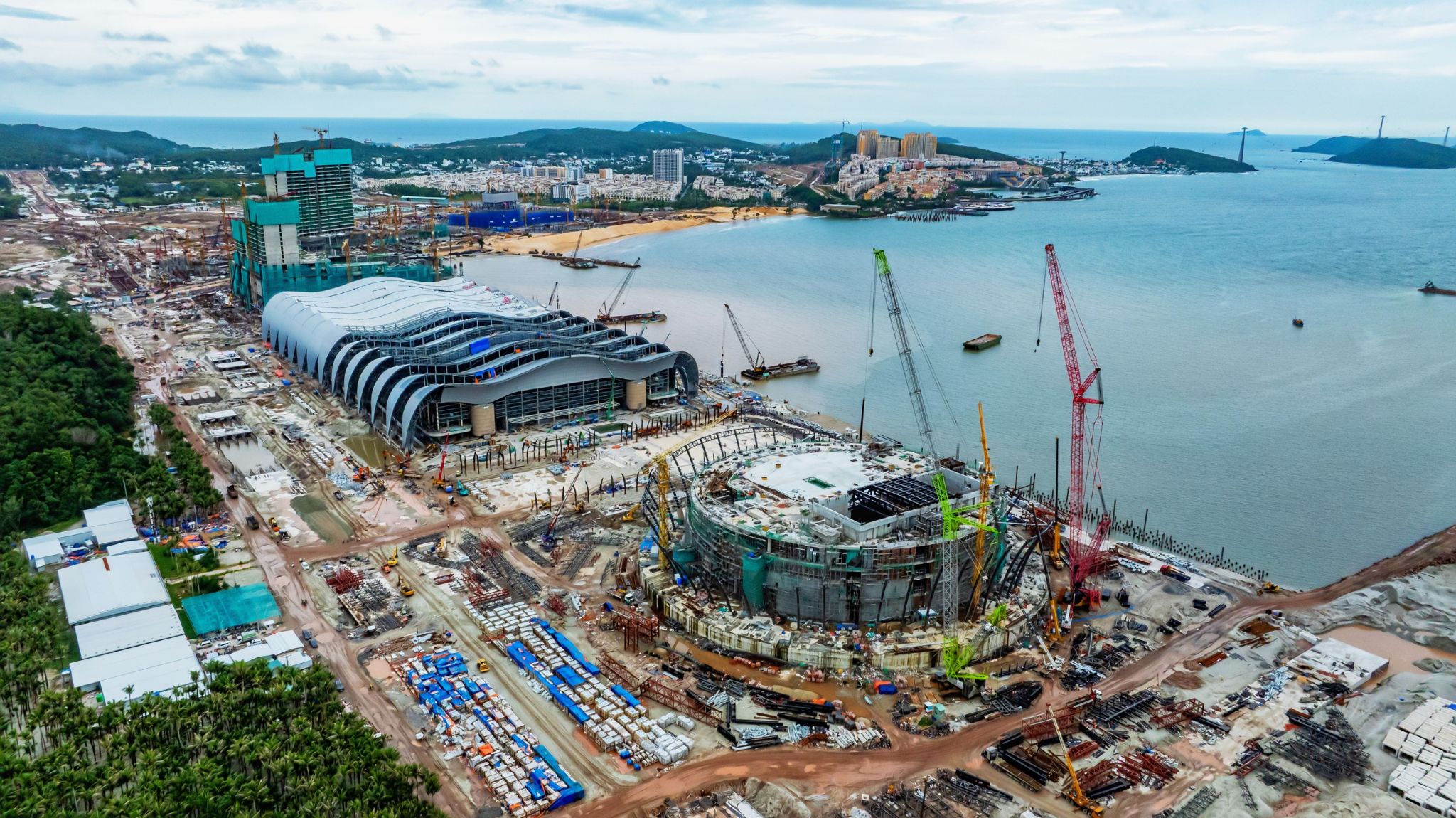
The APEC Convention and Exhibition Centre and Multi-purpose Performance Hall complex has taken relatively clear shape along the Phu Quoc coastline. (Photo: Phu Quoc Electronic Information Portal)
More Than 7,600 People on a Mega Construction Site, Working Through the Night During the Rainy Season
Behind the rapid construction pace is the intensive work of thousands of engineers and workers.
According to the Phu Quoc International Airport Project Management Board, on 25 September 2026 alone, the airport construction site mobilised 7,671 engineers and workers across Terminal T2, the VIP terminal, the airline catering facility, aircraft aprons, Runway No. 2 and related infrastructure.
Hoang Thanh Binh, Coteccons Project Director at the airport, said the site operates from 7:00 a.m. through the night. During the peak phase of structural construction, the contractor mobilised between 2,300 and 2,600 workers and around 200 pieces of equipment, with concrete pours reaching as much as 3,000 m³ on some days.
The pressure is even greater as many projects are being carried out during Phu Quoc’s rainy season. According to Tran Minh Khoa, Chairman of the Phu Quoc Special Zone People’s Committee, simultaneous construction across multiple sites is placing significant pressure on labour, materials, equipment and transport to the island.
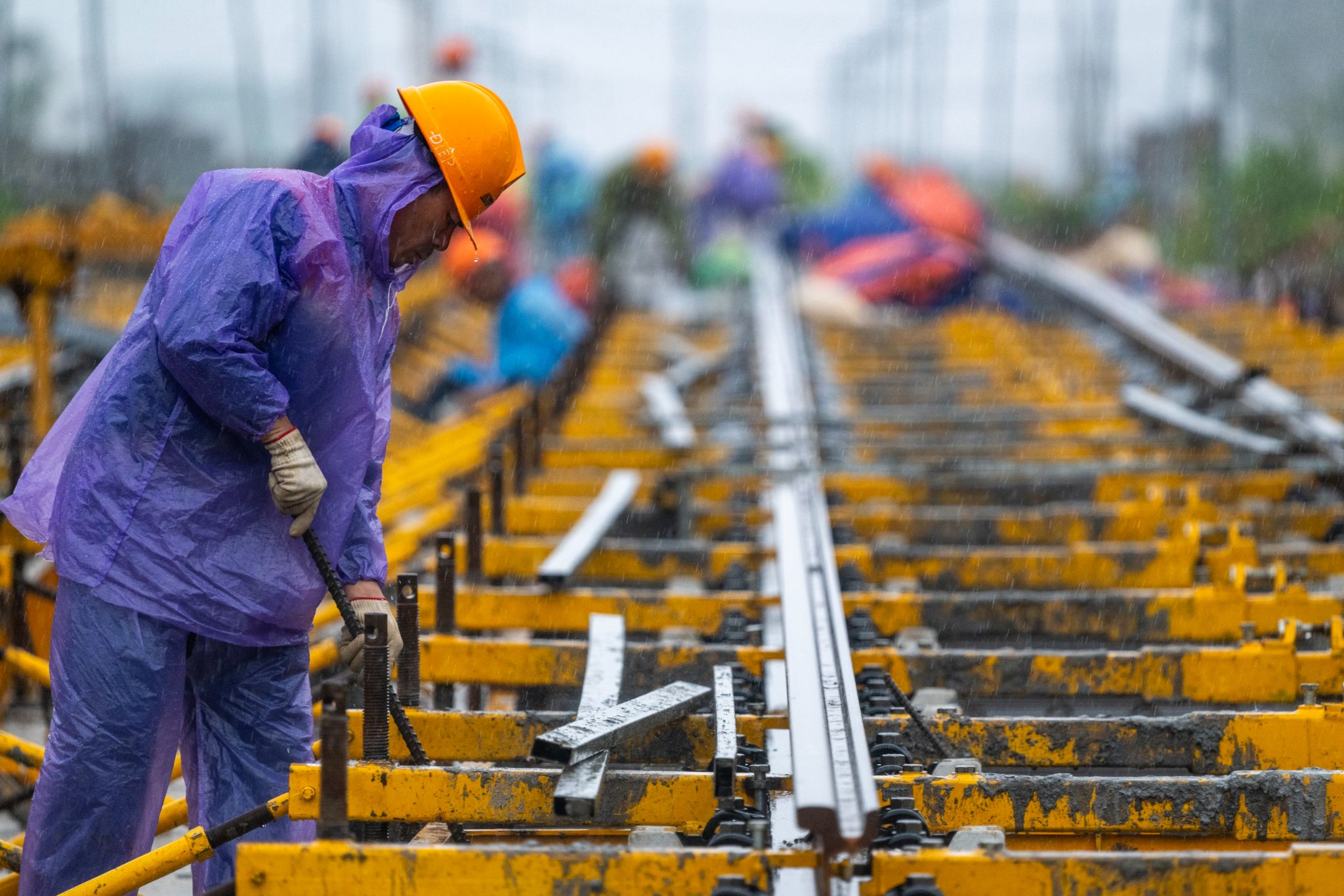
Workers continue laying tracks for the LRT light rail line in the rain. (Photo: Investor)
From floodlit construction sites working through the night to towers steadily rising along the coast, Phu Quoc is gradually transforming its appearance ahead of APEC 2027. Although considerable pressure remains in completing, inspecting and preparing the projects for operation, the current pace of construction reflects the scale of the effort to mobilise resources and bring these key developments to completion on schedule.
Source: CafeF – Thu Phuong