















1. Svay Ton Pagoda - a space for practice and meditation
1.1. Daily life rhythm inside Svay Ton Pagoda
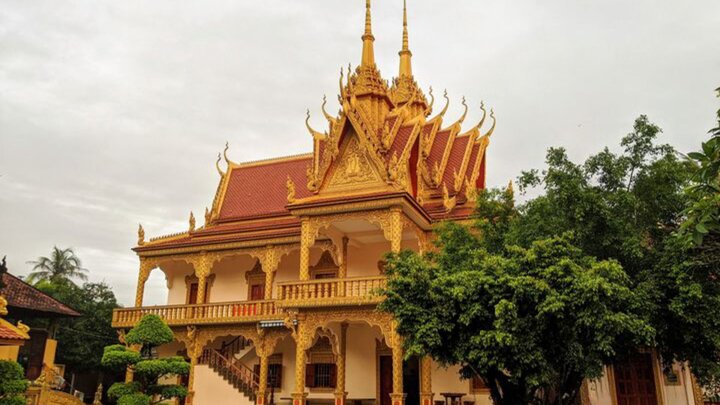
Svay Ton Pagoda , also known as Xa Ton Pagoda, is located in Hamlet 3, Tri Ton, An Giang province. It is a Khmer Buddhist pagoda with a history of over 300 years. The pagoda's space is closely linked to the daily practice of monks and local Buddhists, following a traditional schedule. Activities such as chanting, worship, and internal affairs clearly reflect the pagoda's primary role as a place of practice, not emphasizing tourism.
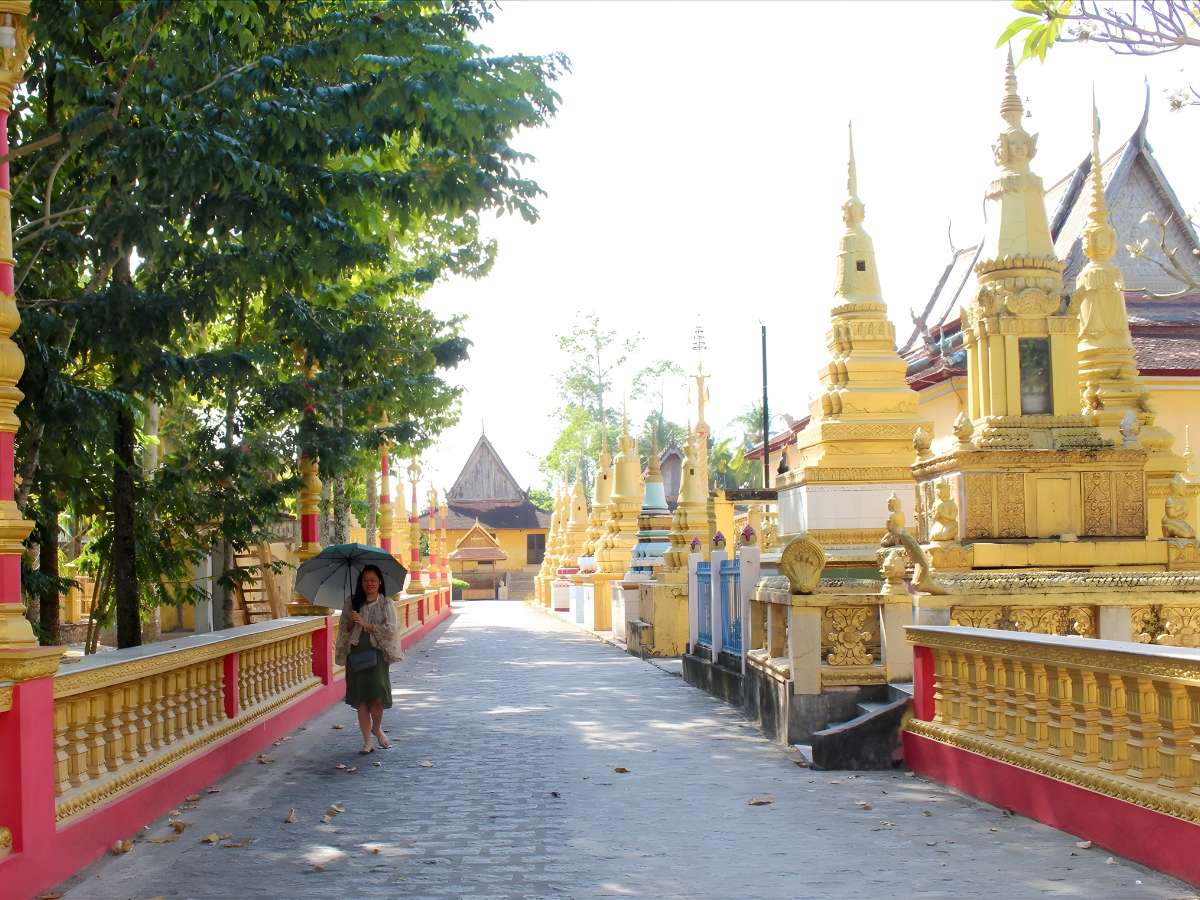
The walkway space of Svay Ton pagoda evokes a peaceful daily life rhythm. (Source: Collected)
The rhythm of life inside the pagoda is regular, not much affected by external visitors, creating a stable and tranquil atmosphere. The times of day are clearly divided for the practice, daily activities, and rest of the monks. This helps visitors easily perceive Svay Ton pagoda as a true spiritual living space.
1.2. The relationship between Svay Ton pagoda and the Khmer community in Tri Ton
Svay Ton pagoda plays an important role in the spiritual life of the Khmer community in Tri Ton, similar to many other Theravada pagodas in the Mekong Delta region. The pagoda space not only serves for worship but also as a place to teach morality, preserve Khmer customs and script for the younger generation. These activities help the pagoda become a cultural center closely associated with community life.
During traditional festivals such as Chol Chnam Thmay or Sene Dolta, the pagoda is where people gather for activities, perform rituals, and meet. The festivals are held in a solemn atmosphere, reflecting the strong connection between beliefs and daily life. As a result, Svay Ton pagoda is not separate from the community but always present as part of the Khmer Tri Ton cultural life.
1.3. The spiritual value that Svay Ton pagoda brings to visitors
For visitors, Svay Ton pagoda offers a gentle spiritual experience thanks to its quiet space and the clear presence of monastic activities. The sounds of chanting, the scenery of the grounds, and the traditional architecture create an environment for visitors to slow down and listen to themselves. This experience differs from a quick tour, which is more focused on capturing images.
Many people come to the pagoda for spiritual rest, seeking balance after continuous travel. The serene space helps emotions settle, creating a necessary pause in the journey. This factor makes Svay Ton pagoda a suitable destination for those interested in cultural depth and spiritual life.
2. How are Khmer imprints reflected at Svay Ton pagoda?
2.1. The main hall showcases clear Khmer architectural language
The main hall of the pagoda clearly exhibits Khmer architectural characteristics through its multi-tiered roof structure and intricate carved details. The curved lines and divine figures appearing on the roof and columns create a clear symbolic composition. This architecture not only has aesthetic value but also reflects the beliefs and religious concepts of the Khmer community. The preservation of these details helps maintain identity during development.
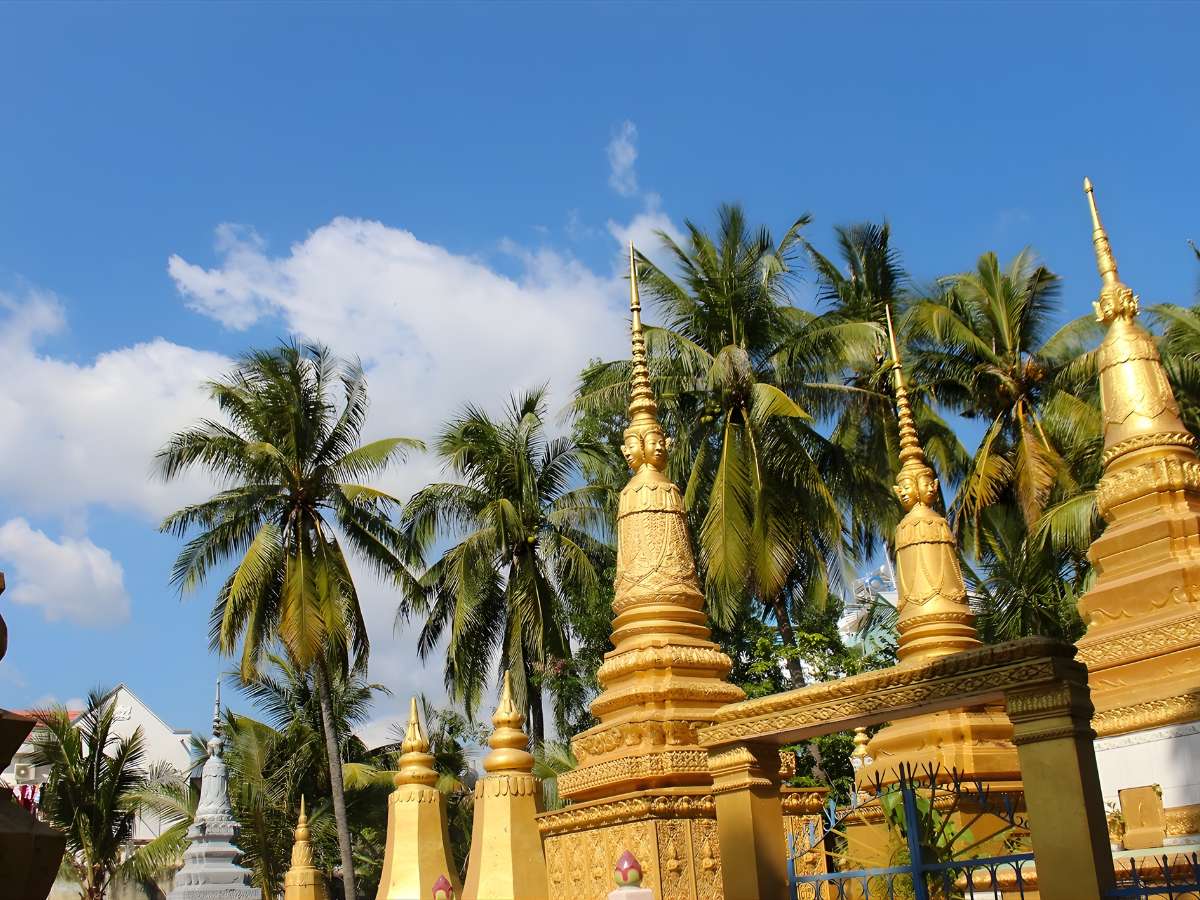
The cluster of Khmer golden towers stands out in the overall spatial layout of the pagoda. (Source: Collected)
Inside the main hall, the arrangement of Buddha statues and the worship space follows the traditional rules of Theravada Buddhism. Natural light is utilized through large windows, creating a balance between light and enclosed space. This helps enhance solemnity without creating a heavy feeling. The overall architecture shows a combination of religious elements and traditional construction techniques.
2.2. Colorful patterns create a unique identity for the pagoda
The patterns at the pagoda use many colors such as yellow, red, and blue, creating prominence while maintaining overall harmony. The motifs are often inspired by nature and mythology, reflecting the Khmer people's perception of the world and the universe. Each detail has its own position and meaning, not merely decorative. This helps create a clear identity system for the pagoda.
Color is not only present on walls and roofs but also used in statues and worship items. The color coordination is done according to traditional principles, ensuring consistency throughout the space. This allows visitors to easily recognize the cultural characteristics at first glance. As a result, the pagoda becomes a point that clearly expresses the Khmer imprint in the region.
2.3. Open courtyard provides a full view of the overall layout
The spacious courtyard in front of the main hall serves as a transitional space between the outside and the worship area. From this position, visitors can observe the entire architectural layout without obstruction. This makes accessing the space easier and more intuitive. The pagoda courtyard is also where many community activities take place during festivals.
The design of the open courtyard not only serves aesthetic purposes but also meets the community's daily needs. Large gatherings can take place without affecting the main hall. This shows careful consideration in dividing the space between religious functions and daily activities. As a result, the overall architecture maintains balance and flexibility.
3. What experience does the pagoda's living space evoke?
3.1. The rhythm of practice creates a sense of tranquility for visitors
The rhythm of practice at the pagoda occurs regularly and is not interrupted by external factors, creating a stable environment for visitors. Chanting and gentle activities help maintain silence in the space. This makes it easy for visitors to adjust their psychological state while visiting. This experience is different from crowded tourist attractions.
The tranquility is not a result of limiting visitors but comes from how activities are organized within. Activities are reasonably allocated by time and space, avoiding conflicts. This helps maintain order without imposing overly strict regulations. Therefore, the experience at the pagoda is natural and accessible.
3.2. The pagoda grounds reflect Khmer community life
The pagoda grounds are not only a place for practice but also clearly reflect the daily life of the local Khmer community. Living areas such as monks' residences, study areas, and reception areas are all arranged within the same space. This shows the connection between religion and social life. Visitors can observe various activities in one area.
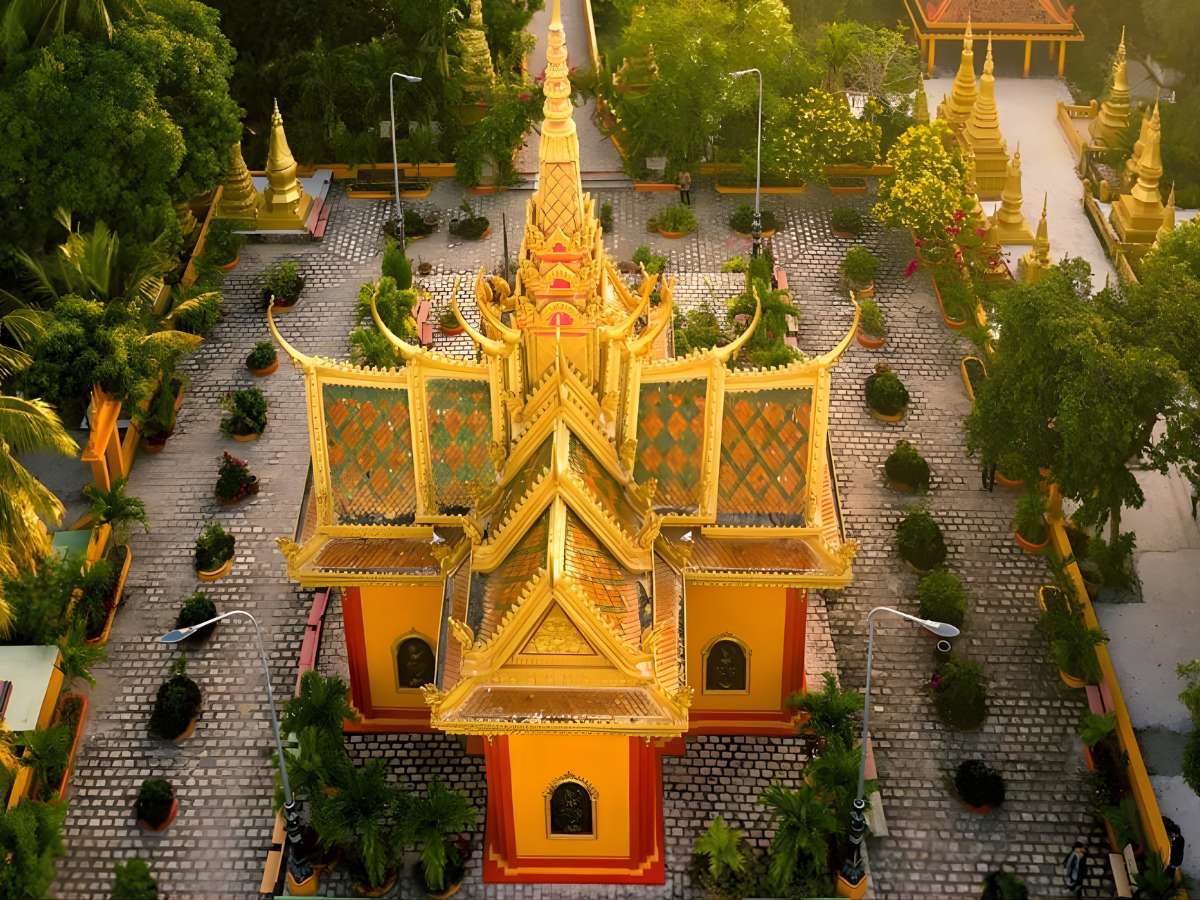
During weekdays, the central space of Svay Ton Pagoda is quiet, creating a focal point for community activities. (Source: Collected)
The presence of people within the temple grounds is frequent and not event-driven. They come to the temple to perform rituals or participate in common activities. This helps the temple maintain its central role in community life. As a result, the temple space becomes a part of the local rhythm of life.
3.3. Daily sounds make the space less distant
Although tranquil, the temple space still has everyday sounds such as footsteps, quiet conversations, or sounds from daily activities. These elements help the space not become too detached from the outside world. This creates a sense of closeness for visitors. The balance between quietness and liveliness makes the experience natural.
These sounds do not affect the solemnity; on the contrary, they reflect the reality of life within the temple. Maintaining normal activities helps the temple not become a purely symbolic space. This allows visitors to better feel the connection between religion and life. As a result, the experience becomes more multi-dimensional.
4. Rules for visiting Khmer temples for visitors
4.1. Dress modestly when entering the worship area
Modest attire is considered one of the basic requirements when entering the worship area in a Khmer temple. This not only shows respect for the sacred space but also complies with the general regulations of many religious institutions. Visitors should avoid overly short or bare-shouldered clothing. Adhering to this rule helps maintain solemnity.
Besides aesthetics, clothing also reflects the visitor's attitude towards local culture. Choosing appropriate attire helps create a good impression and avoid misunderstandings. This is especially important in a context where the temple is still a place for community activities. As a result, the visiting experience proceeds more smoothly.
4.2. Keep volume low near the main hall
The main hall is where important rituals take place, so keeping the volume low is necessary. Visitors should refrain from loud conversations or using sound-emitting devices. This helps avoid disrupting religious practices. Maintaining quietness also preserves the common space.
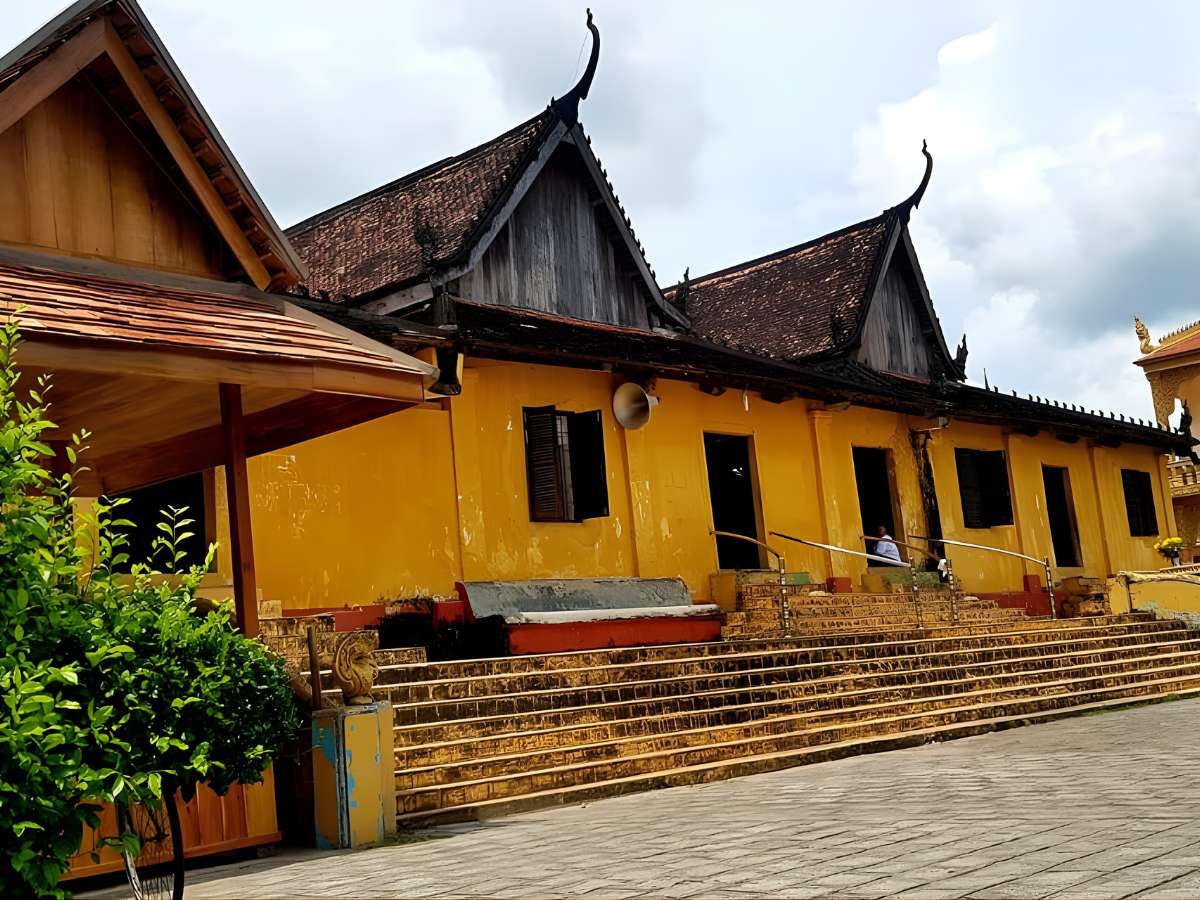
The ancillary architectural structures reflect a simple, tranquil, and quiet monastic life. (Source: Collected)
Keeping voices low is not just a rule but also a way to show respect for those practicing within the pagoda. Adhering to this regulation helps create a suitable environment for both practitioners and visitors. This contributes to maintaining order and harmony within the space. Consequently, everyone's experience is ensured.
4.3. Ask before photographing people engaged in activities
Taking photos within the pagoda should be done with consideration, especially when people are present. Visitors should ask for permission before taking pictures to avoid causing discomfort or violating privacy. This demonstrates respect for the local community. Adhering to this rule helps maintain positive relationships.
Additionally, some areas within the pagoda may restrict photography due to religious rituals. Visitors should observe and follow on-site instructions. This helps avoid inappropriate situations. Thus, the visit proceeds smoothly without affecting others.
Svay Ton Pagoda concludes the Tri Ton journey with a spiritual space deeply imbued with Khmer cultural identity. The traditional architecture and the rhythm of monastic life here help visitors gain a better understanding of the local community's spiritual life. The Khmer cultural space at Svay Ton Pagoda helps balance the itinerary's content when placed alongside high-entertainment destinations like Sun World Hon Thom.