















At 8:00 a.m., Tran Thai Binh begins his shift on the beach of a resort just a few kilometres from Phu Quoc Airport. Overhead, aircraft descend one after another, their engines drowning out the sound of the waves. In front of him, giant decorative elephant sculptures stand close to the water’s edge, creating a popular check-in spot where visitors often stop for photos.
He picks up a shovel and levels the pools of water left behind by the previous night’s tide. Once the work is done, he quietly looks out to sea and cheerfully shares how his life has changed on this very beach. At the age of 52, he says this is the “first time I have had a steady monthly salary and social insurance”.
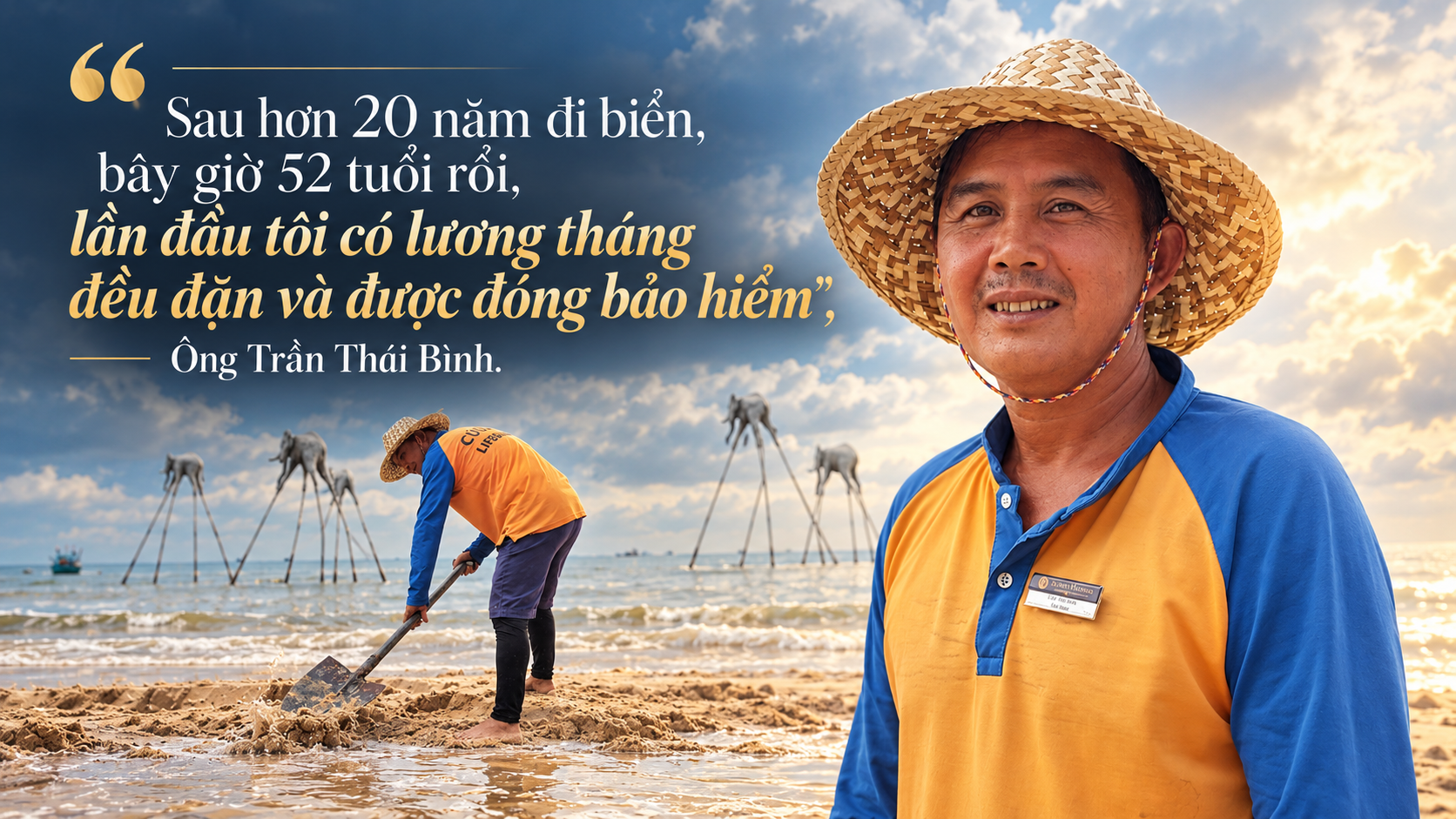
The waters he watches over today are the same waters that sustained him more than twenty years ago. Back then, he went to sea to catch fish. Today, he goes to sea to keep people safe.
“Fishing is unpredictable, and there are many costs you have to cover,” he said. To make a living from the sea, fishermen need partners to go out with and capital to invest in larger boats. Nearshore fishing has also become increasingly difficult: “Marine resources are becoming more and more depleted.”
The turning point came when he saw a recruitment post in a Facebook community group. The interview focused on just two things: swimming and first aid. A lifetime of experience at sea suddenly became an advantage. He now works eight hours a day, earns nearly VND 10 million per month, has one day off each week, and his workplace is only two kilometres from home.
Memories of an Untouched Island and Red Dirt Roads Where “Sunny Days Were Dusty, Rainy Days Were Muddy”
Binh’s career-change story takes on its full meaning when viewed against the Phu Quoc of two decades ago.
Nguyen Tan Thanh arrived in Phu Quoc as an infant in his mother’s arms. After his father died when he was young, his mother brought him and his siblings from Quang Ngai to the island to live with relatives on her side of the family. The household then made a living from fishing and various other jobs in An Thoi. His memories are of years marked by hardship: “There was no national power grid, so we used generators for electricity; the roads were red dirt — dusty in the sun and muddy in the rain; houses were all simple single-storey homes, nothing as attractive as they are today,” he recalled.
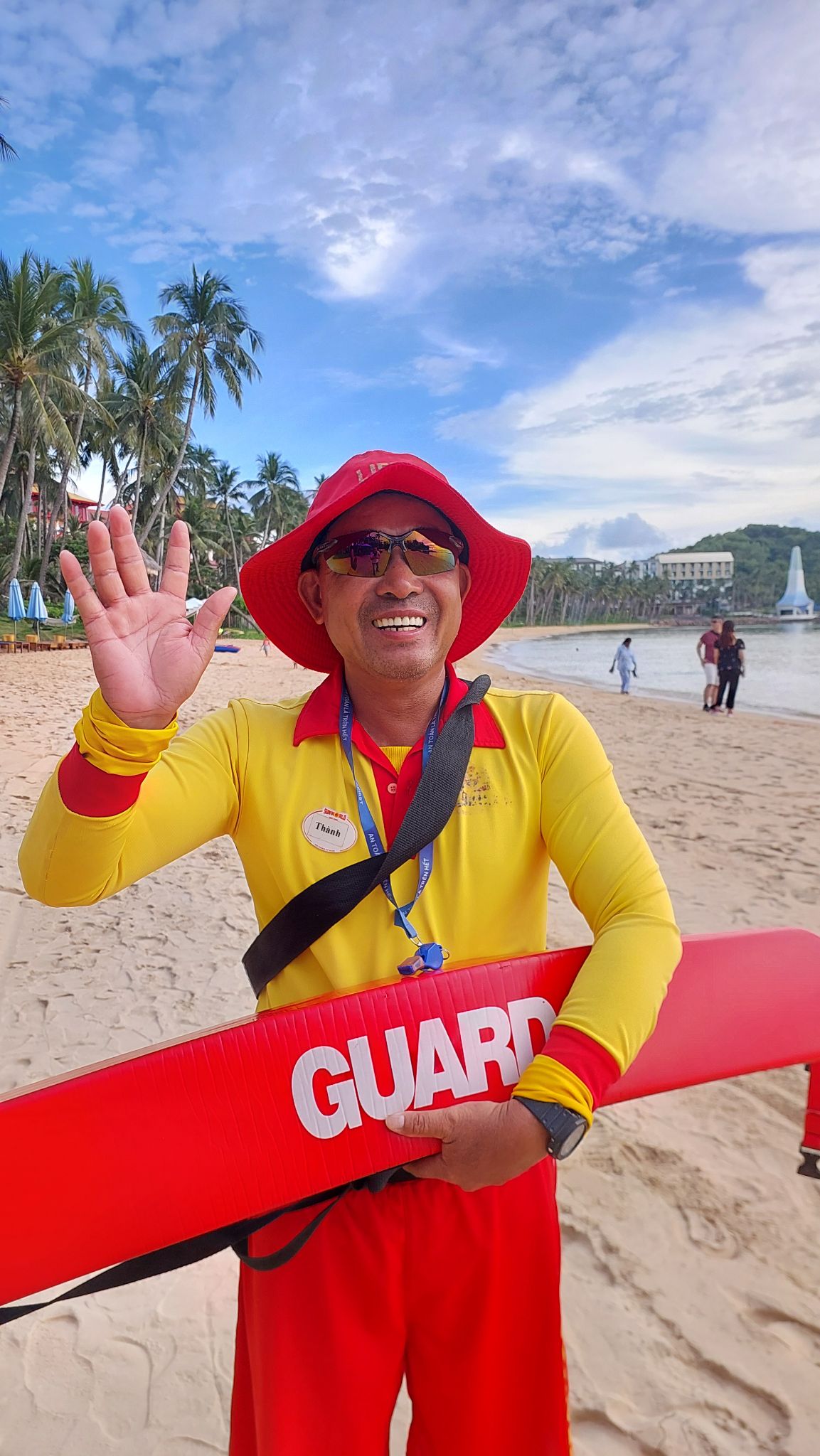
Nguyen Tan Thanh, a lifeguard at Hon Thom Beach. Photo: Thien Phuc
Bai Kem, now considered one of the world’s most beautiful beaches, was then home to only a few thatched huts selling fish and grilled seafood. Tourism was virtually non-existent. “Life on the island was still very difficult back then,” he recalled.
Thanh followed a path similar to Binh’s. After several years of fishing amid “unstable earnings and rough seas”, he worked as a restaurant server near Bai Kem. Around 2019–2020, he became a lifeguard at Hon Thom Beach, within a water park complex operated by Sun Group.
For the past six years, his working day has begun at 8:30 a.m. with wiping down chairs and collecting rubbish on the beach before watching over swimmers. His shift officially ends at 5:00 p.m., but he only leaves after the final visitor has boarded the cable car.
He smiles as he talks about a job that is both convenient and well suited to his swimming skills and years of experience at sea. Each month, he earns more than VND 10 million, receives a daily meal allowance of VND 100,000 and an annual seniority bonus at the end of the year.
What makes him even happier are employee benefits he had never experienced before. “On International Children’s Day, the company gives VND 200,000 to each employee’s child, and family members can enjoy the park free of charge... At the places I worked before, we never had anything like this,” he said with a laugh.
Midway through his story, he pauses and turns to direct a group of foreign visitors towards the showers and changing rooms using a few English phrases and a friendly smile. He candidly admits that the English he learned in company classes is still “not very good”. But he can guide visitors to the swimming pool, toilets or cable car station, relying partly on memorised phrases and partly on reading their gestures.
Fishing on Weekends, Building APEC Hotels on Weekdays
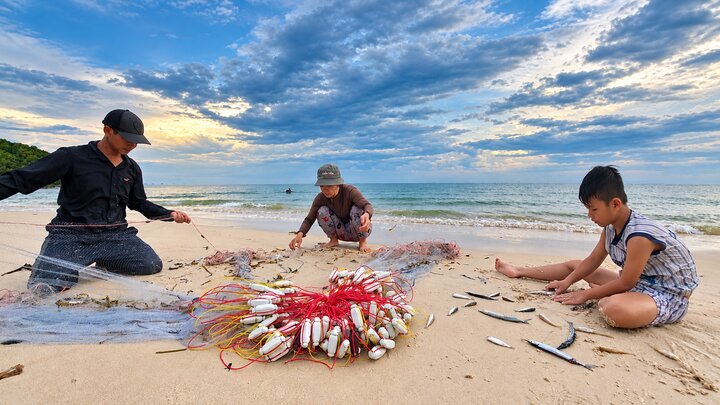
On a sunny weekend afternoon in mid-October, Bai Sao glows beneath golden sunlight and turquoise water. Tran Van Thanh, together with his wife, children and a nephew, has just hauled in a nearshore fishing net, and the whole family gathers to sort the catch into bags. There are so many fish that he laughs: “There are too many — we can hardly manage them all.”
The family travelled six to seven kilometres by motorbike to get there. Thanh is a native of Phu Quoc and also has a beach near his home, but he says fish come closer to shore more often at Bai Sao. They keep the catch for meals and sell any surplus at the market. “It is just a small-scale catch, almost like taking a break and having some fun,” he said.

Tran Van Thanh’s family takes advantage of the weekend to relax and fish along Bai Sao Beach.
After gathering the fish, shaking the sand from the net and leaving the full bags on the beach, the whole family runs into the sea to swim and play.
On Monday morning, Thanh is back at the Bai Dat Do construction site, where the hotel complex serving APEC 2027 is rising day by day. Working as a construction assistant, he earns an average of more than VND 500,000 per day. During intensive periods with continuous overtime, his daily income can exceed VND 1 million.
“There are so many jobs on the island now. Everywhere is hiring — I only worry that I might not have enough strength to do all the work,” he said with a laugh.
Thanh readily admits that construction work is also demanding, especially when projects are racing against tight deadlines. But when asked how it compares with his years at sea, he answered immediately, without hesitation: “Better — much better!”
For a man who once made his living amid rough seas, the ocean is no longer a place where he has to struggle for survival, but somewhere to relax with his family after days of work.
Thanh’s story also reflects the rapid transformation taking place across Pearl Island. According to Tran Minh Khoa, Chairman of the Phu Quoc Special Zone People’s Committee, 21 projects serving APEC 2027 are being implemented with the determination to “overcome the heat and beat the rain”. The heavy workload and tight schedule have sharply increased demand for labour. “Mobilising workers, labourers and even management personnel is also a major challenge,” Khoa said.
For fishermen like Thanh, that labour shortage represents an opportunity. They are physically fit, accustomed to sun and wind, and already live on the island. At the end of the day, they can return home, and at weekends, head back to the sea with their wives and children.
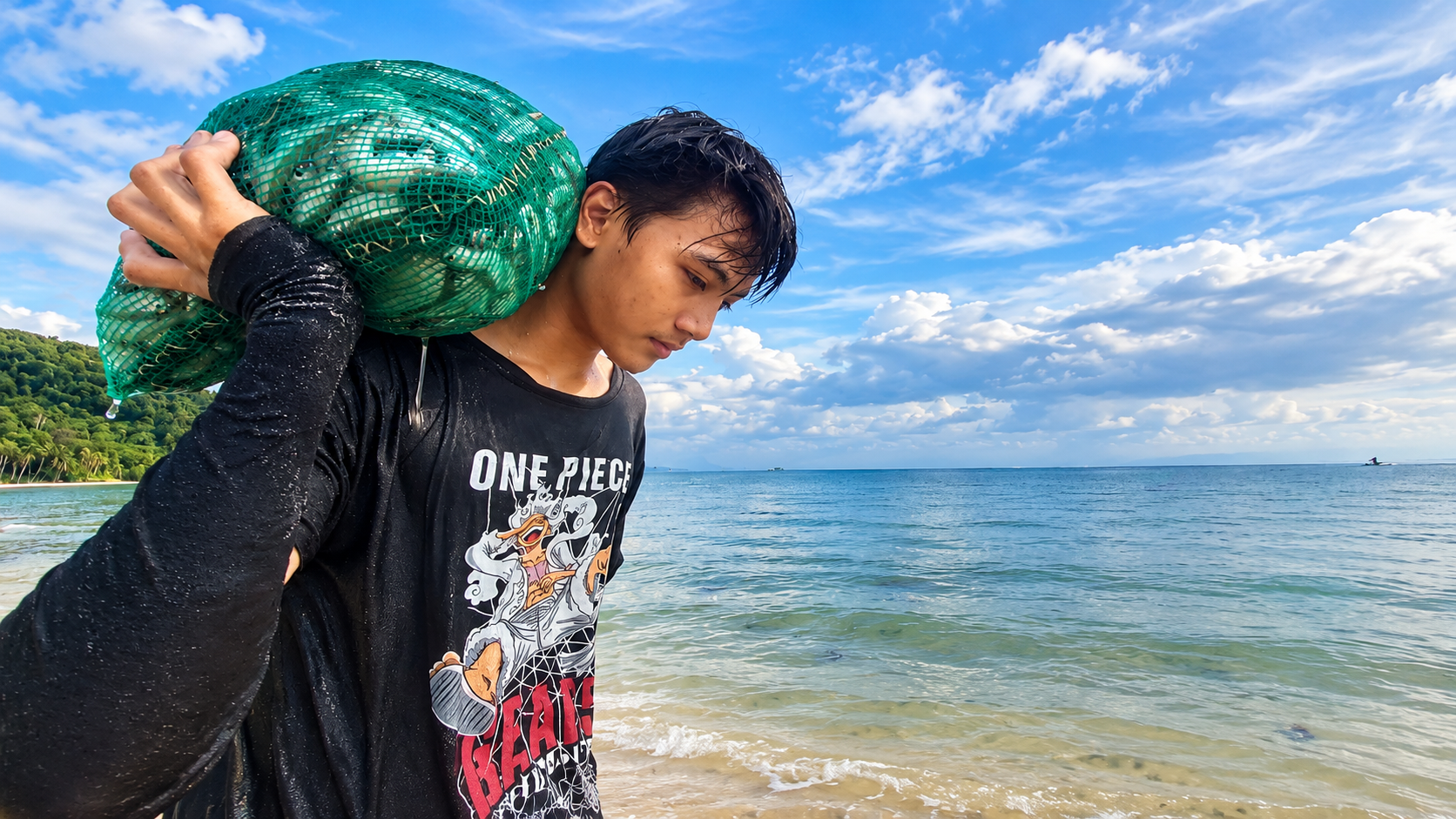
After an afternoon of setting nearshore nets with his family over the weekend, Tran Van Thanh’s nephew carries a heavy sack of fish on his shoulder. Fishing has now become little more than a leisure activity and a way for the family to enjoy fresher meals together.
A Generation That No Longer Needs to Leave Home
Early in the morning at Rixos resort on Hon Thom Island, before guests arrive, Ho Thanh Hau and Tran Thanh Thien have already arranged the locker keys for their colleagues. The two young men then begin their familiar patrol rounds, from the beach to each swimming pool. They take photos of the premises and inspect fire prevention and firefighting equipment.
Both young men are from An Giang. After finishing high school, they worked as lifeguards at a tourist attraction. An acquaintance already working on the island introduced them to the opportunity, and they submitted their applications and were hired. Their swimming ability and previous experience supervising swimming pools turned out to be a perfect fit for the new role: keeping guests safe at a resort with a beach and multiple swimming pools. Once the resort officially opens, they may return to their core profession as lifeguards.
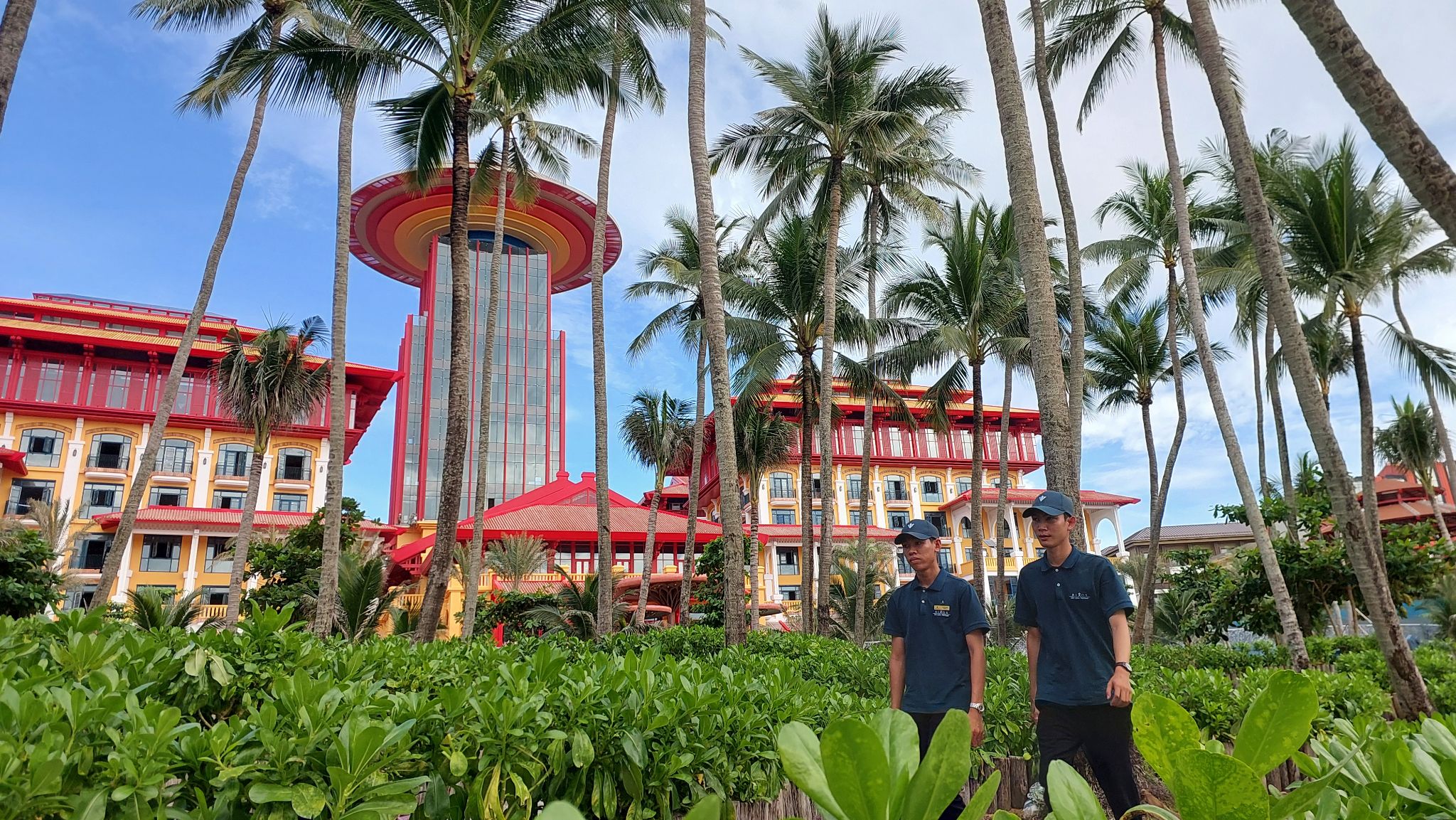
Ho Thanh Hau and Tran Thanh Thien, employees at Rixos resort.
What excites the two young men most, however, is not only the income but also the opportunity to learn. “Working here gives us many opportunities to exchange knowledge and learn new things,” Thien said. From knowing almost no English, both now take part in structured training courses and communicate daily with foreign guests and colleagues. For young people who have only recently finished high school, working at the resort is much like attending a vocational school built to international standards, where they can receive training, gain experience and earn a stable income at the same time.
Employment opportunities are also expanding right in their hometown. “The salary is stable, and there are so many jobs — really a lot,” Thanh Hau said enthusiastically. According to him, since the resort began operations, more and more local young people have been able to find jobs like his. As projects serving APEC 2027 are completed and more high-end hotels and resorts continue to open, the two young men expect employment opportunities across Pearl Island to grow even further.
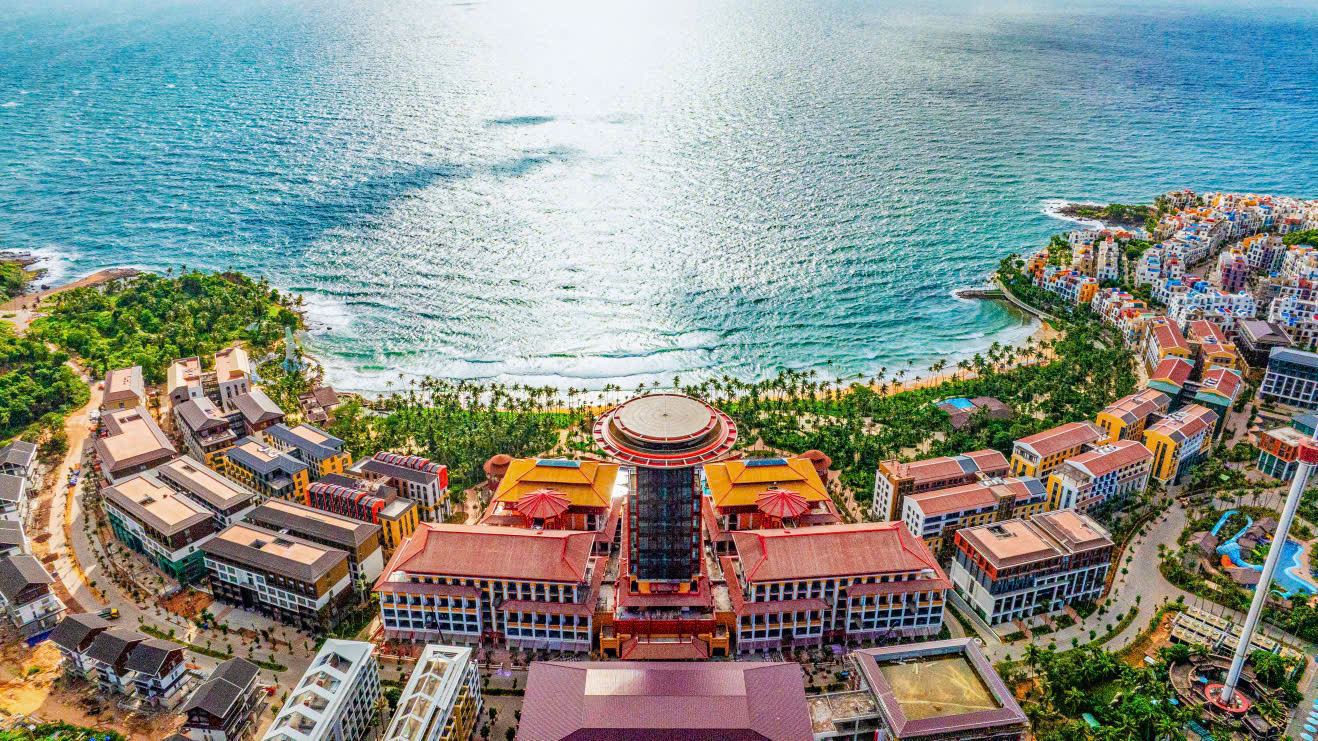
Panoramic view of Rixos resort on Hon Thom Island. Photo: Hoang Ha
According to Tran Minh Khoa, Chairman of the Phu Quoc Special Zone People’s Committee, “When the upcoming high-end accommodation facilities begin operating to serve APEC, a large workforce will be employed here, creating stable jobs and income for local residents. To help people seize these opportunities, the special zone has also launched the free Hello World English programme for all residents.” He added that “workers on the island must also continuously improve their skills, particularly their English and service standards.”
For those who grew up with generators and red dirt roads, APEC 2027 is more than just a conference. “Our expectations are very high. APEC will help Phu Quoc change in the years ahead,” Binh said. Thanh hopes to see a Phu Quoc that is “green, clean and beautiful like Singapore.”
As evening falls, aircraft continue to descend one after another. Binh stands beside the decorative elephant sculptures by the sea, watching visitors wait for sunset. On Hon Thom, Thanh waits until the final guest has boarded the cable car before heading home. At Bai Dat Do, the hotel towers he has helped build rise another floor higher.
The sea is still there. The difference is that people in Phu Quoc no longer go to sea because they have no other choice. And their children may no longer need to leave the island in search of a future, because that future is now being built in their own hometown.
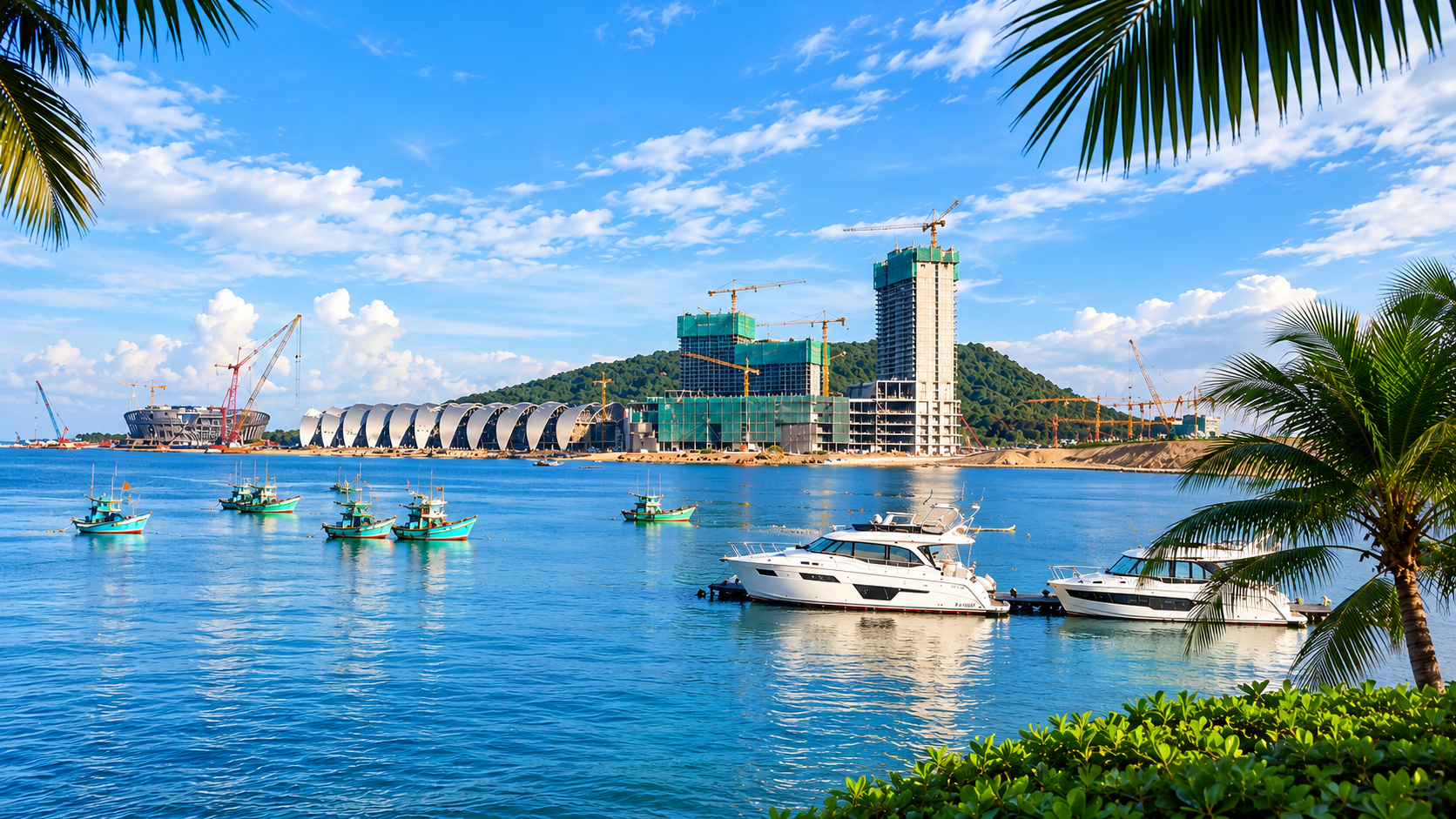
A panoramic view of the APEC Convention and Exhibition Center, the Multi-purpose Performance Venue, and the APEC hotel complex taking shape at remarkable speed along the coast of Phu Quoc. Photo: Thien Phuc