
















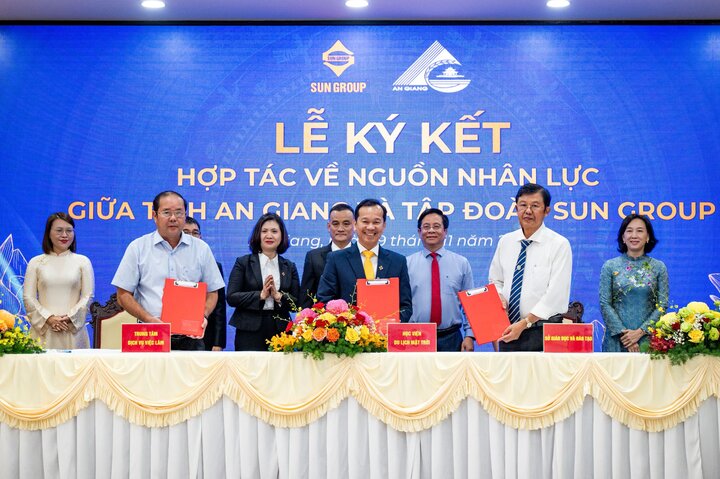
Phu Quoc faces massive demand for workers
"An Giang has a population of around five million. There is no reason why An Giang and Phu Quoc should face a shortage of workers."
"The province is developing, and many job opportunities are being created, yet local people are unable to find employment in their own homeland. Who should be held responsible for this?"
These were among the pointed questions raised by Ho Van Mung, Chairman of the An Giang Provincial People's Committee, at a ceremony on the afternoon of November 19 to sign human resource development agreements between the province, educational institutions and Sun Group.
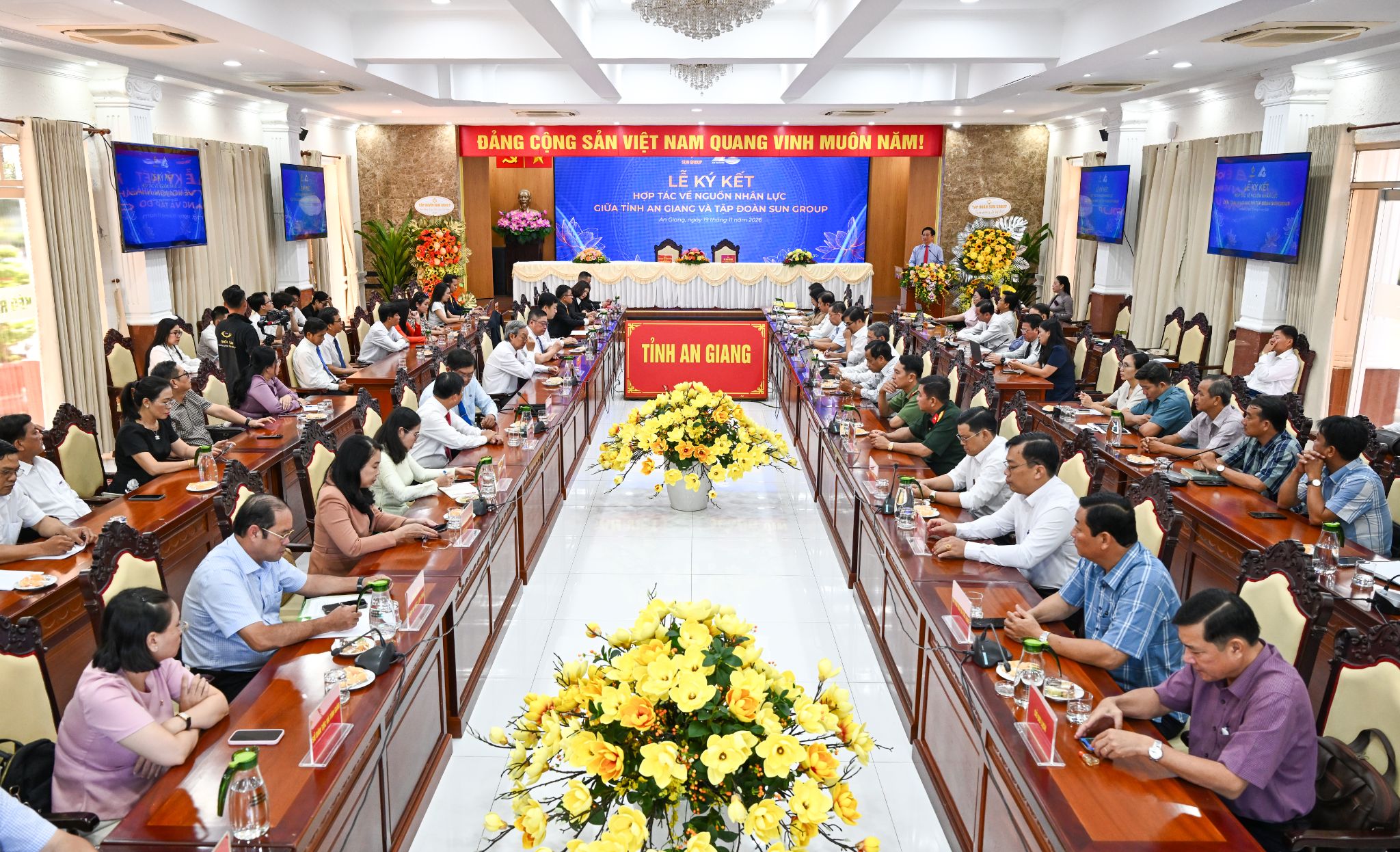
An overview of the human resource development cooperation signing ceremony between An Giang Province, educational institutions and Sun Group on November 19.
According to the provincial chairman, addressing the mismatch between workforce supply and demand is not the responsibility of businesses or the education sector alone. It requires coordinated action from the entire political system, training institutions and the business community.
Vietnam's role as host of APEC 2027 is opening up significant development opportunities for Phu Quoc, while creating an urgent need for workers to support numerous tourism, service and infrastructure projects currently underway.
An Giang has identified Sun Group as its largest strategic investor for the coming period, working alongside the province to develop Phu Quoc in line with the strategic direction set by Vietnam's Party and State leaders.
"Within the next few months, projects currently under development in Phu Quoc will already require a very large workforce. That is why the province considers this an issue requiring particular attention," Mung said.
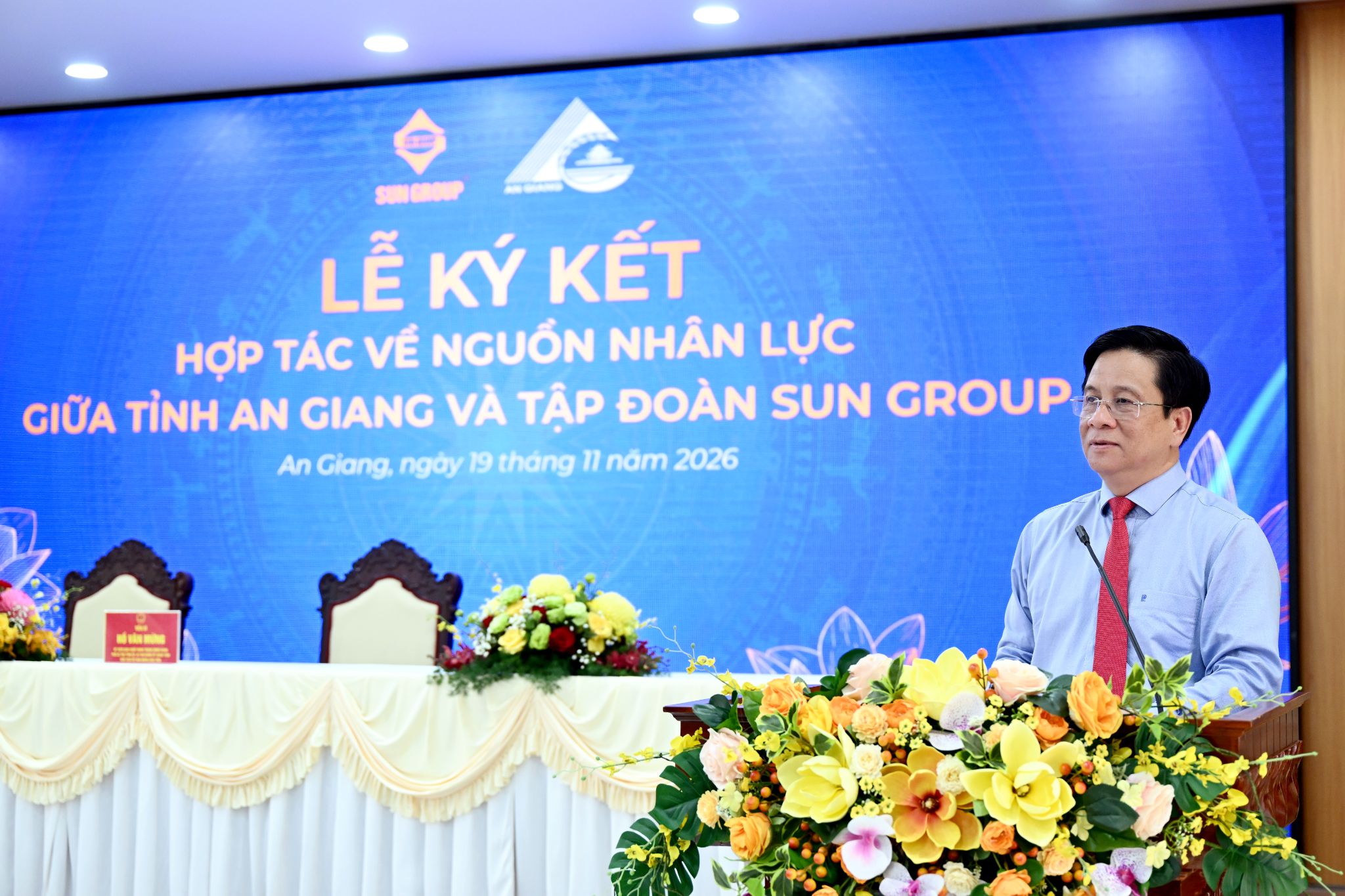
Ho Van Mung, Chairman of the An Giang Provincial People's Committee, speaks at the event, calling for workforce training to be closely aligned with actual labor market demand.
The paradox is that while businesses need skilled workers, a significant proportion of the local workforce remains employed in agriculture, low-skilled occupations or seasonal jobs.
Even those who have completed vocational or higher education may struggle to find work because their qualifications do not match employers' actual recruitment needs.
Figures presented at the event illustrate the scale of the gap between labor supply and demand.
In tourism, hospitality, entertainment, aviation and healthcare alone, Sun Group expects to recruit more than 14,000 new employees in Phu Quoc in 2027.
Meanwhile, among the 8,681 students expected to graduate that year from nine surveyed training institutions, only 3,289 are studying disciplines directly aligned with the company's recruitment needs. Another 1,849 are pursuing related fields and could be considered for employment after receiving additional training.
Even if every graduate in these two groups met the recruitment requirements and chose to work for Sun Group, they would meet only around 36% of the projected demand.
That would still leave a workforce shortfall of nearly 9,000 people.
Against this backdrop, Chairman Ho Van Mung called for a fundamental shift in workforce development: training must no longer be determined simply by what educational institutions are equipped to teach, but by what the labor market actually needs.
He said schools and businesses must first establish clear answers to three questions: "What occupations should we train people for, how many people should be trained, and what specific needs should that training meet?"
The provincial master plan has already identified key economic sectors, providing a basis for educational institutions to forecast workforce demand and adjust their curricula and enrollment targets accordingly.
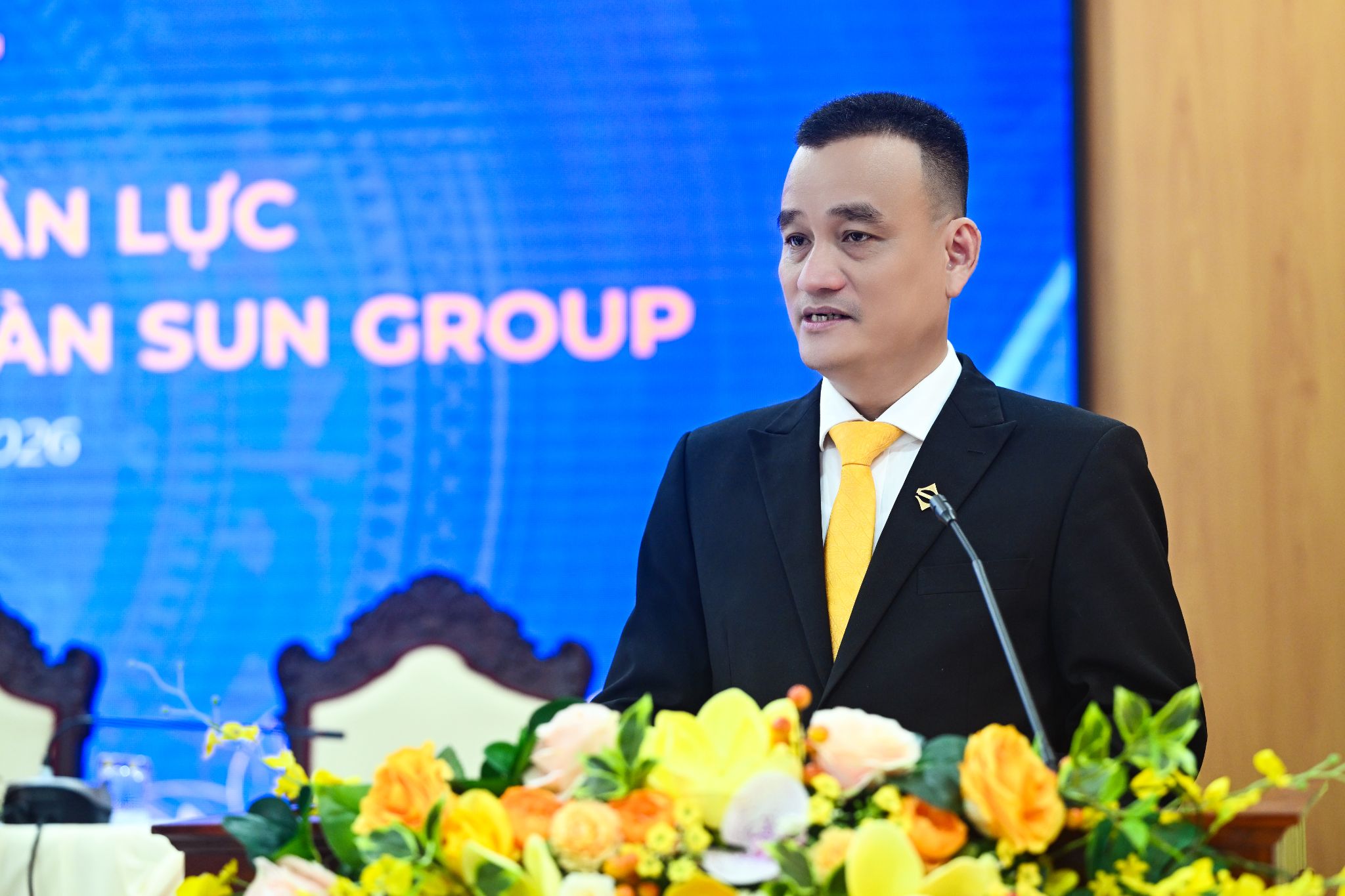
Bui Thanh Trung, Chairman of Sun Group's Southern Region, says the group plans to recruit more than 14,000 new employees in Phu Quoc in 2027.
Mung placed particular emphasis on the need to begin career guidance at the general education level, helping students and parents understand which occupations are in demand locally, what employment opportunities are available and how different career paths could develop.
General education schools should work more closely with vocational institutions and businesses so that students can make informed choices about their next steps after completing lower or upper secondary education.
Beyond training people for the right occupations, Mung also stressed that businesses must take responsibility for employing qualified graduates.
"We need specific agreements and commitments between training institutions and businesses. Once training is completed, businesses must take responsibility for recruiting and employing workers whose skills match their needs," he emphasized.
The provincial leader also noted that recruitment opportunities alone would not be enough to encourage residents to stay and build long-term careers in their home province.
Jobs must come with appropriate incomes, decent living conditions and a positive working environment.
For its part, the provincial administration will step up efforts to ensure residents have better access to information about vocational training programs and local employment opportunities.
Turning training commitments into jobs at home
The provincial chairman's directives began taking concrete shape at the November 19 signing ceremony, where three groups of cooperation agreements were concluded to establish closer links between government agencies, educational institutions and businesses, covering the entire process from career guidance to recruitment.
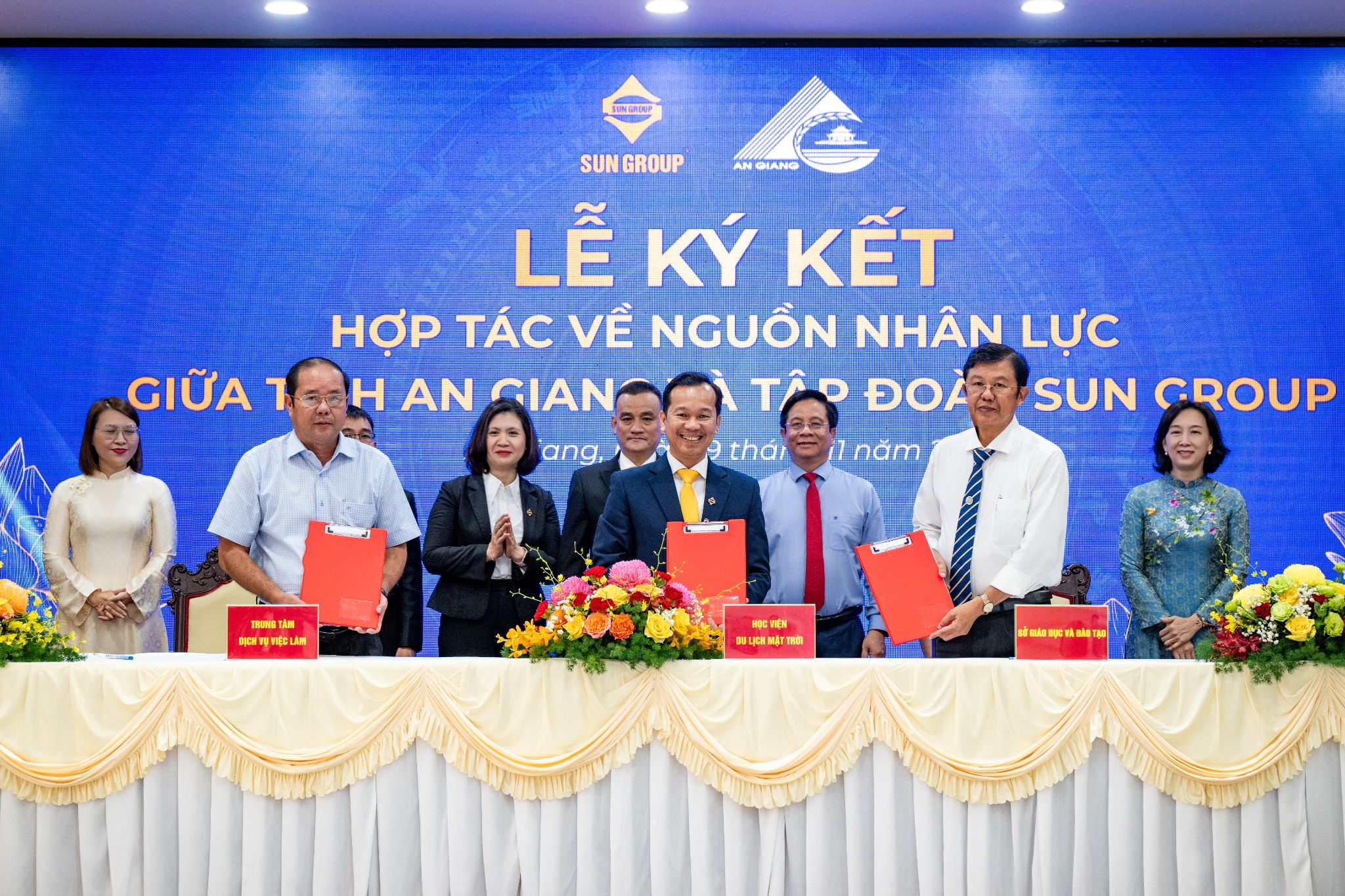
Representatives of Sun Tourism Academy sign cooperation agreements on vocational training and employment connections with the An Giang Department of Education and Training and the provincial Employment Service Center.
At the provincial level, An Giang's Department of Education and Training and Sun Group signed a memorandum of understanding on human resource development for the 2026–2031 period.
The parties will coordinate training plans based on actual workforce demand, covering career guidance, vocational education, practical training, internships and recruitment.
At the institutional level, Sun Group subsidiaries operating in tourism, hospitality, entertainment, aviation and healthcare signed cooperation agreements with eight educational institutions in the province.
They include An Giang University, Kien Giang University, An Giang Vocational College, Kien Giang Vocational College, Kien Giang College, An Giang Intermediate School, the Ethnic Minority Boarding Vocational School and the Vietnam–Korea Phu Quoc Vocational School.
Of particular significance to students seeking vocational education after lower or upper secondary school, as well as workers looking to change careers, the EHL–Phu Quoc Tourism and Hotel Vocational School, also known as Sun Tourism Academy, signed separate cooperation agreements with the An Giang Department of Education and Training and the Department of Home Affairs.
The agreements focus on career guidance, vocational training and employment connections.
They are expected to provide a pathway for local residents to enter tourism and service occupations where demand in Phu Quoc is high, reducing the need to seek employment in other provinces.
At Sun Tourism Academy, students can pursue vocational programs developed according to the standards of Switzerland's EHL Hospitality Business School, which has been a strategic partner of Sun Group since August 2025.
The academy follows a dual-training model in which practical learning accounts for 70% of the curriculum.
Students can gain hands-on experience at hotels and resorts within Sun Group's hospitality ecosystem from their first year, helping them become familiar with real-world professional environments early in their training.
Alongside vocational skills, foreign-language proficiency and service standards aligned with international hospitality requirements, students may also benefit from financial assistance, dormitory accommodation and recruitment opportunities within the group's businesses.
To ensure the agreements translate into tangible results rather than remaining commitments on paper, a seminar titled "Unlocking Phu Quoc's workforce potential ahead of APEC 2027" was held immediately after the signing ceremony.
Participants discussed practical measures to turn education and training partnerships into effective workforce development and recruitment programs.
As Chairman Ho Van Mung emphasized at the event, the ultimate measure of success will not be the number of cooperation agreements signed.
It will be the number of people trained for occupations that employers genuinely need, who subsequently secure stable jobs and have the opportunity to build lasting careers in their home province of An Giang.