
















A 33-Tonne Machine on the Nearly VND 9 Trillion Light Rail Line
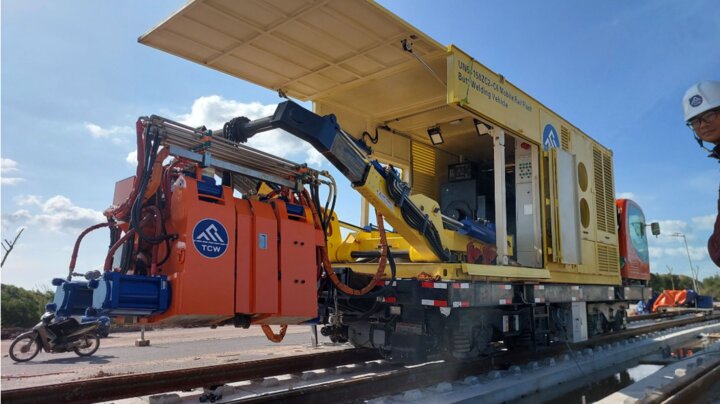
Under the intense early-November sun, a 33-tonne rail welding machine stands out at the Phu Quoc light rail transit (LRT) construction site with its yellow body, orange cabin and hydraulic boom system connected to a specialised welding head. Along the tracks, engineers and workers are busy aligning the rails and preparing the joints.
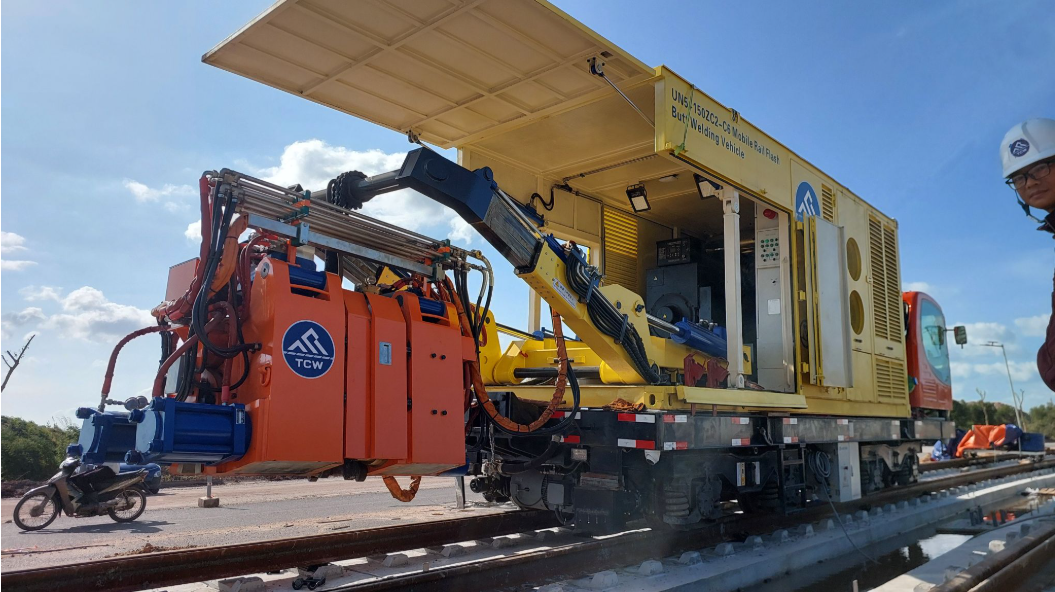
The 33-tonne automatic rail welding machine is helping accelerate construction of the LRT line serving APEC 2027.
Mounted on a rail trolley system, the machine can move along the track and weld rail sections directly at the construction site instead of transporting them back to a workshop. The automated technology reduces welding time for each joint to just 3–4 minutes, helping speed up construction of the rail line serving APEC 2027.
According to Nguyen Huy Thanh, a representative of the rail welding contractor, this is the first time the company has deployed a mobile automatic rail welding machine on the Phu Quoc LRT line, marking a step forward in technology application and in the ability of Vietnamese workers to operate and master advanced equipment.
Thanh also said that the equipment was imported from a manufacturer ranked among the world’s top five suppliers of railway construction equipment and technology.
The introduction of the machine marks the transition from track installation to rail welding, gradually completing the railway on one of the key transport projects serving the APEC 2027 Economic Leaders’ Week.
The Phu Quoc LRT line is 17.59 km long, connecting Phu Quoc International Airport with the APEC Convention and Exhibition Centre and southern Phu Quoc. The project includes six stations and has a total investment of nearly VND 9 trillion. It is being implemented under a public-private partnership (PPP) model through a build-operate-transfer (BOT) contract. State capital accounts for 70% of the investment, while Sun Group contributes the remaining 30%.
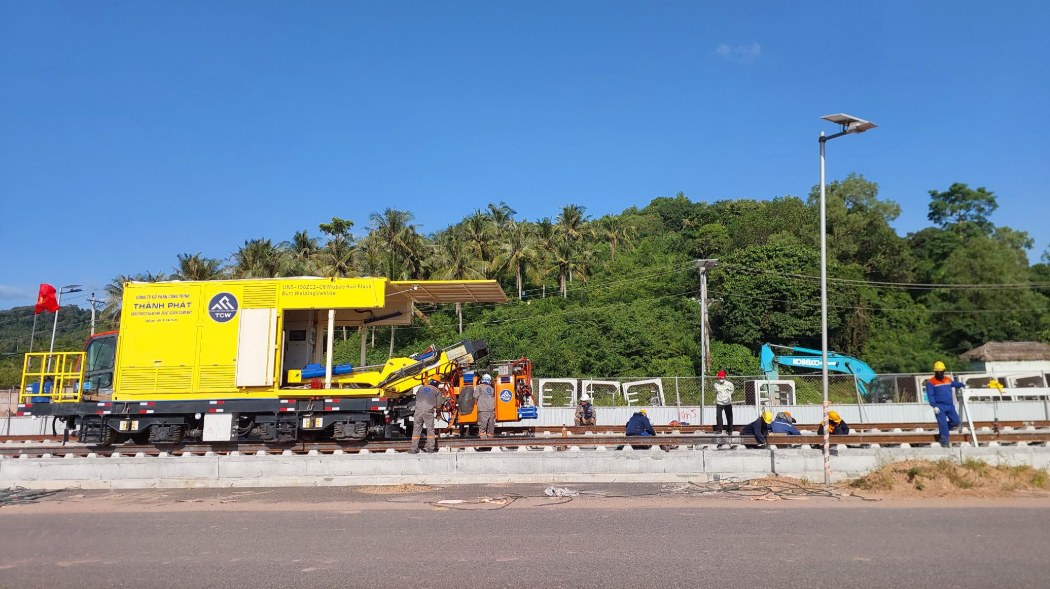
The automatic rail welding machine was imported from a leading global manufacturer.
Each Weld Takes Just 3–4 Minutes, with Productivity 3–4 Times Higher
The machine stands out for its ability to automate the welding process, shortening the time required for each rail joint and allowing continuous work along the line.
According to Thanh, under favourable site conditions, the equipment can weld 250–300 metres of single rail per day, equivalent to more than 20 joints. The automatic welding process itself takes only around 3–4 minutes per joint.
Previously, using the thermite welding method, a team of 6–8 workers could typically complete only 4–6 welds per day, or up to around eight under favourable conditions.
“Thermite welding has very low productivity. A welding team can complete only 4–6 joints per day, at most eight, equivalent to just over 100 metres of track per day,” Thanh said.
With the new equipment, the contractor estimates that productivity can increase by three to four times. The team directly operating the machine requires a minimum of three people, excluding workers responsible for preparing and moving the rails.
The machine uses electric flash-butt welding technology. The two rail ends are heated and pressed together using a specialised system, with technical parameters configured to suit each type of rail.
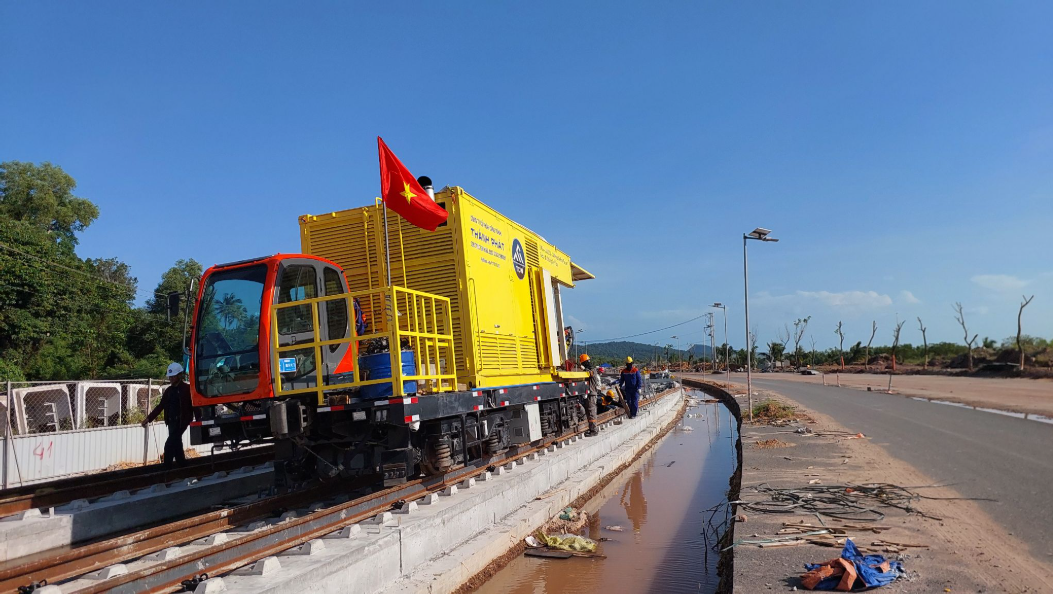
The automatic rail welding process takes only around 3–4 minutes per joint, with productivity three to four times higher.
However, faster welding does not mean the entire process takes only a few minutes. Before each joint is welded, workers must prepare and align the rail ends and check all technical conditions. After welding, the joint must also be ground and finished.
The machine has two control modes. For longer-distance movement, the operator sits inside the cabin and monitors operations through a camera system. For shorter movements, workers use a handheld controller directly on site.
Notably, the entire operating team consists of Vietnamese workers who previously participated in railway projects in Myanmar and received advanced training before being deployed to Phu Quoc.
Central Government Direction and Local Support to Resolve Bottlenecks
The automatic rail welding technology has been introduced as infrastructure projects serving APEC 2027 in Phu Quoc enter an accelerated construction phase, under the direction of the Government, National Assembly, Party and State leaders, with coordination from An Giang Province and the Phu Quoc Special Zone authorities.
On 25 October, National Assembly Chairman Tran Thanh Man and a central government delegation, including Standing Deputy Prime Minister Pham Gia Tuc, directly inspected key projects in Phu Quoc, including the LRT line. On the same day, Ho Van Mung, Chairman of the An Giang Provincial People’s Committee, said that projects serving APEC remain closely aligned with the planned schedule and reaffirmed the determination to complete the works before 30 June 2027.
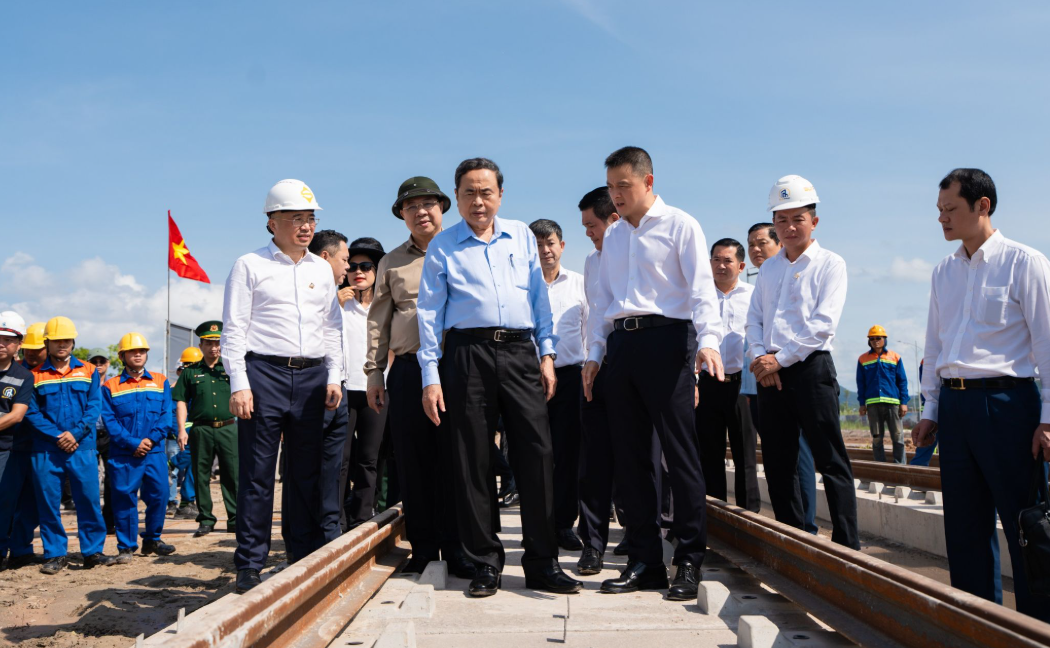
National Assembly Chairman Tran Thanh Man and a central government delegation inspect the Phu Quoc LRT project in late October 2026.
To accelerate progress, An Giang Province is coordinating with ministries, agencies, the special zone authorities and investors to resolve bottlenecks related to procedures and site clearance, creating favourable conditions for construction units to carry out their work.
At the construction site, Sun Group and contractors are increasing manpower and equipment and deploying multiple construction teams simultaneously. Roadbed, bridge, tunnel, station and track installation works are being carried out in parallel, taking advantage of favourable weather conditions to accelerate progress.
In addition to mobilising workers, the introduction of specialised equipment such as the automatic rail welding machine is helping construction units improve productivity and shorten the time required for technically demanding stages.
According to reports from late October to early November 2026, the Phu Quoc LRT construction site had mobilised around 1,300 engineers and workers across seven construction fronts.
According to Nguyen Tat Dat, Site Manager for the track supply and installation package, by the end of October, the project had installed more than 11 km out of a total of approximately 35 km of single track required for the double-track line.
Other components are also being implemented in parallel. All bored piles in the bridge and tunnel areas have been completed, while structural works at the stations are continuing. The tunnel section connecting DT.975 road to Phu Quoc Airport has completed the reinforced concrete structures of the tunnel tubes and is being prepared for track installation.
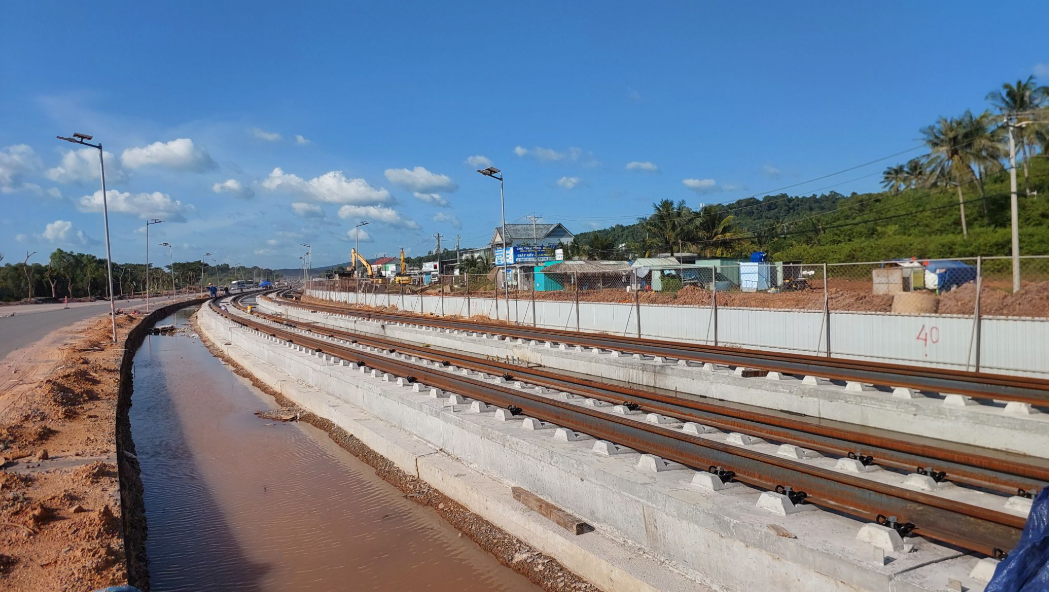
More than 11 km of track on the Phu Quoc LRT double-track line has been installed.
For rail welding specifically, the automatic machine began operating on 5 November. After the first few days, more than one kilometre of rail had been welded.
Following the track installation and welding phase, the project will continue with completion, calibration and testing of technical systems. Under the current plan, the line is expected to begin commercial operation in November 2027, serving the APEC 2027 Economic Leaders’ Week.
Beyond meeting transport demand during the international event, the LRT line is also expected to form a public transport corridor connecting the airport with tourism, service and urban areas in southern Phu Quoc, helping reduce pressure on road traffic.
According to CafeBiz