















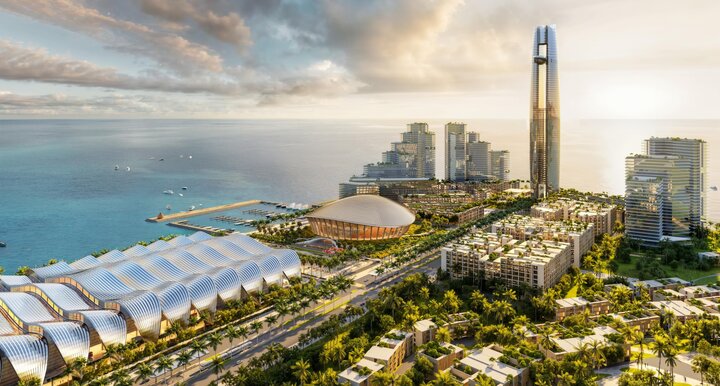
“Unprecedented, Even in the Middle East”
In an article on the rise of Vietnam’s tourism sector, Fortune quoted Alexandra Murray, Vice President and Head of Southeast Asia at Hilton, as saying that the pace of tourism infrastructure development in Vietnam is something she has “not seen in any other country, even in the Middle East.”
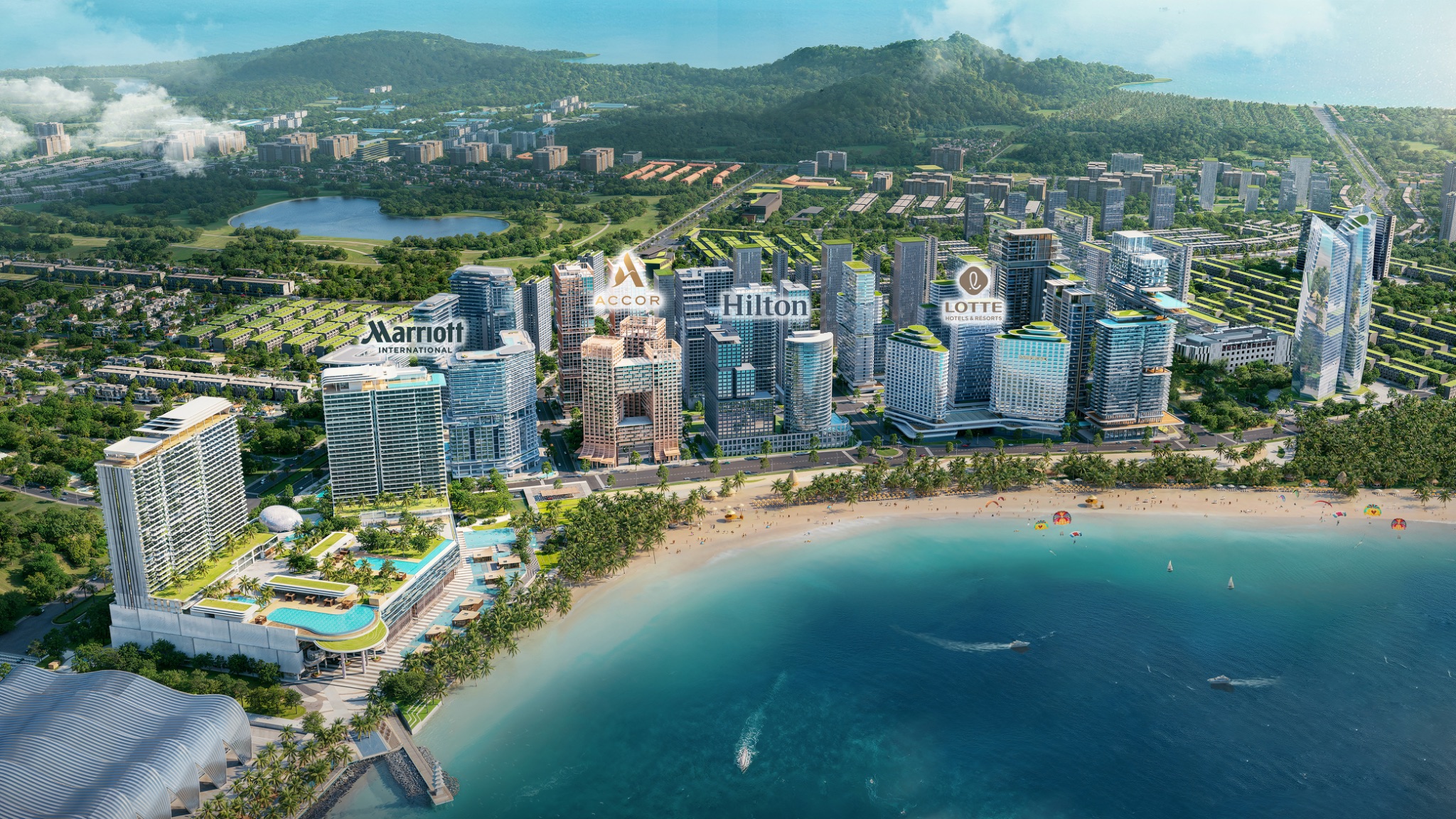
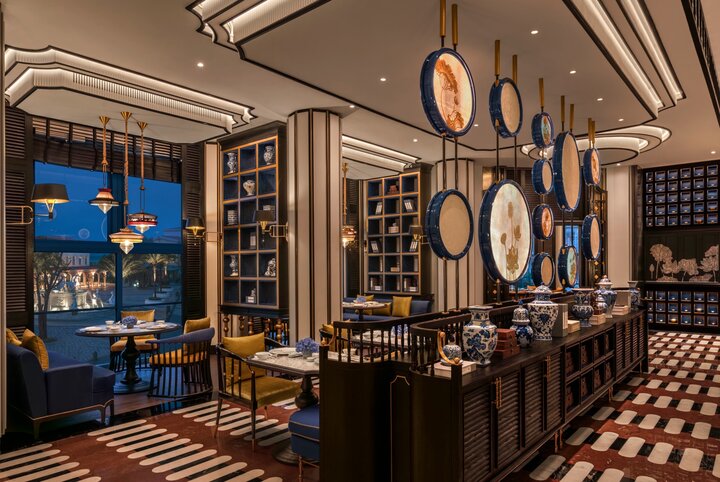
A hotel “city” is being developed by Sun Group in the Bai Dat Do area of Phu Quoc, bringing together 13 high-end hotel brands from five of the world’s leading hotel management groups.
This is one of the most noteworthy observations in the article. According to Fortune, the momentum behind Vietnam’s tourism breakthrough comes not only from increasingly open visa policies and expanded air connectivity, but also from a strong infrastructure investment strategy and the growing involvement of the private sector in shaping new destinations.
These investments are not merely intended to increase visitor capacity. They are aimed at a longer-term goal: enhancing the quality of experiences, extending visitors’ length of stay and increasing tourist spending. This is also the foundation for Vietnam to gradually strengthen its competitiveness against leading destinations in Southeast Asia.
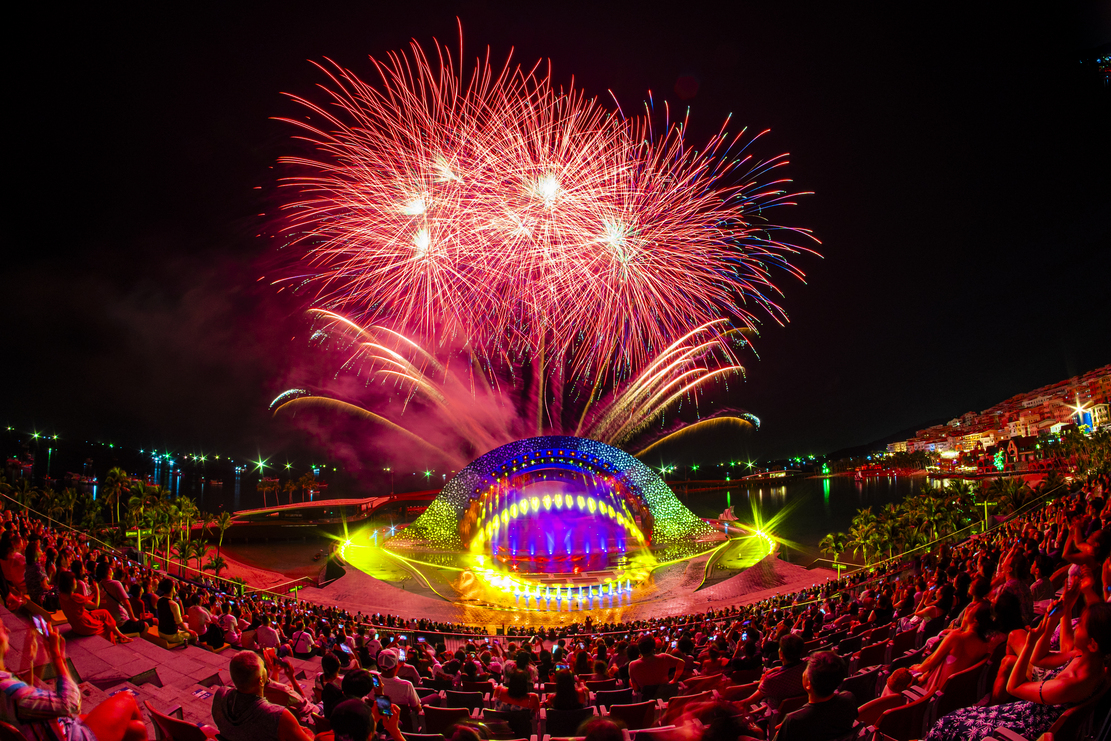
Phu Quoc is lit up by two fireworks shows every night in Sunset Town
To realise this goal, alongside public investment, the Government is encouraging greater participation from the private sector in the development of infrastructure and large-scale tourism ecosystems. It is this synergy between policy and enterprise that is creating a new wave of investment in Vietnam’s tourism industry.
Phu Quoc: A Focal Point of the New Investment Wave
Within this tourism development strategy, Phu Quoc has emerged as one of the clearest examples.
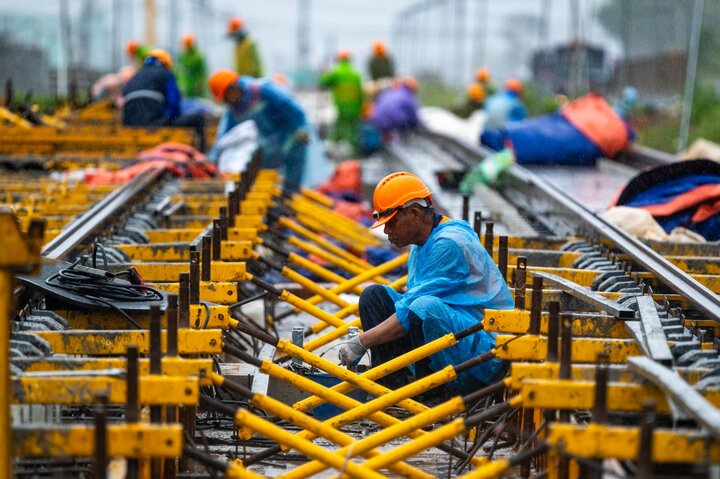
Ahead of APEC 2027, the Pearl Island is undergoing a comprehensive infrastructure upgrade. Sun Group has been assigned to study and implement several key projects, including the expansion of Phu Quoc International Airport, the development of the APEC Complex, the expansion of Provincial Road DT.975 and the development of an LRT line connecting the airport with the APEC Convention and Exhibition Centre.
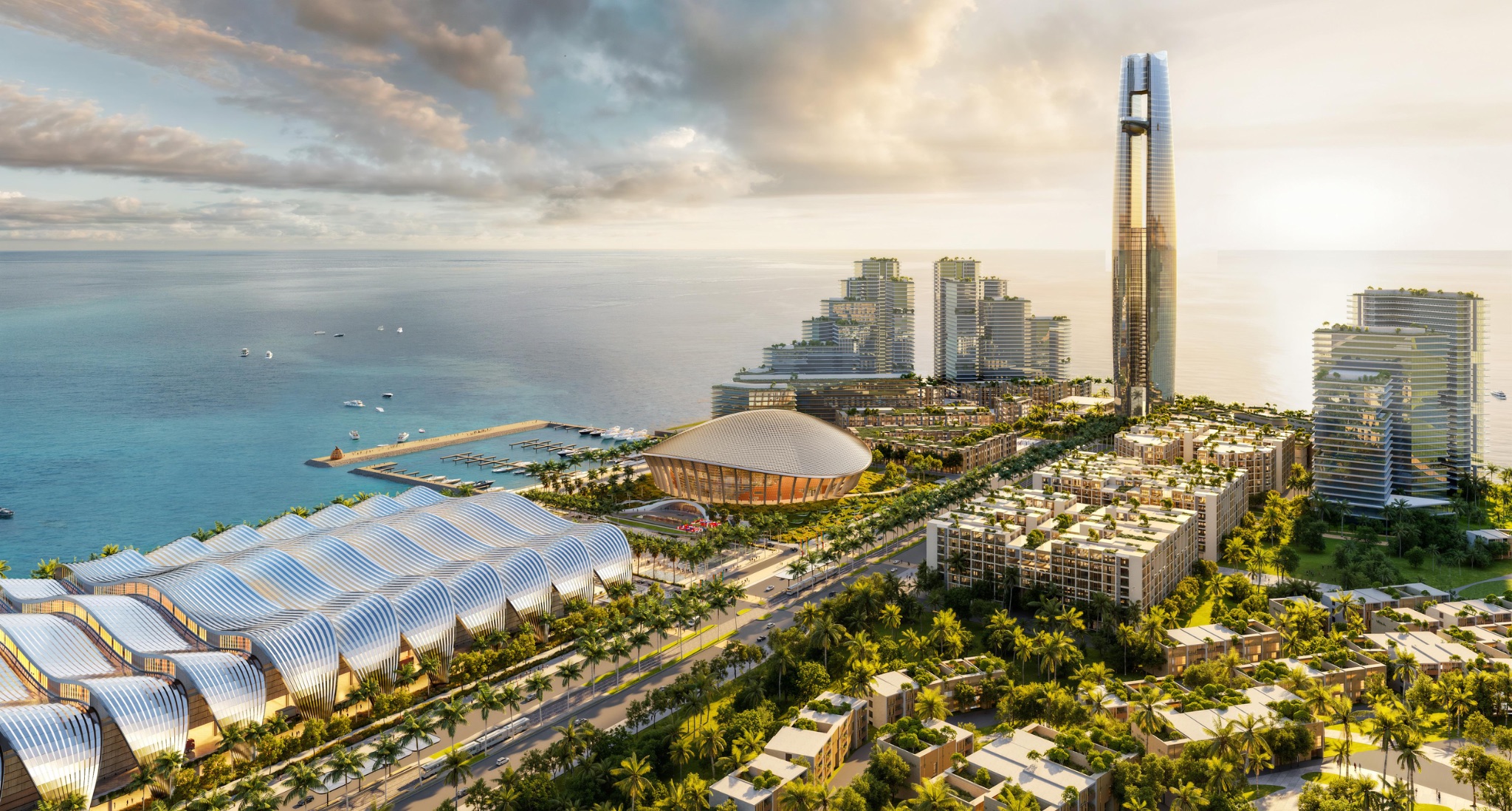
Rendering of the APEC Complex in Phu Quoc.
These are not only projects designed to serve an international event, but also infrastructure that will lay the groundwork for Phu Quoc’s long-term development. Once completed, the new infrastructure system will increase visitor capacity, ease traffic pressure and expand the island’s space for urban, commercial, service and tourism development.
In parallel with transport infrastructure, Sun Group is also investing heavily in the hospitality sector, with plans to develop around 17,400 high-end hotel rooms and serviced apartments, with total investment of nearly VND91.6 trillion. Part of this supply will be put into operation to serve APEC 2027, while also creating a foundation for Phu Quoc to welcome MICE groups, high-end leisure travellers and markets with more demanding service standards.
One point Fortune particularly highlighted in its article is the growing trend of partnerships between Vietnamese enterprises and international groups to raise product and service standards. In Phu Quoc, Sun Group has partnered with Changi Airport International (CAI), a subsidiary of Changi Airport Group, in the development and operation of Phu Quoc International Airport. According to Fortune, such partnerships not only bring international-standard management and operational expertise, but also help enhance the destination’s connectivity capacity.
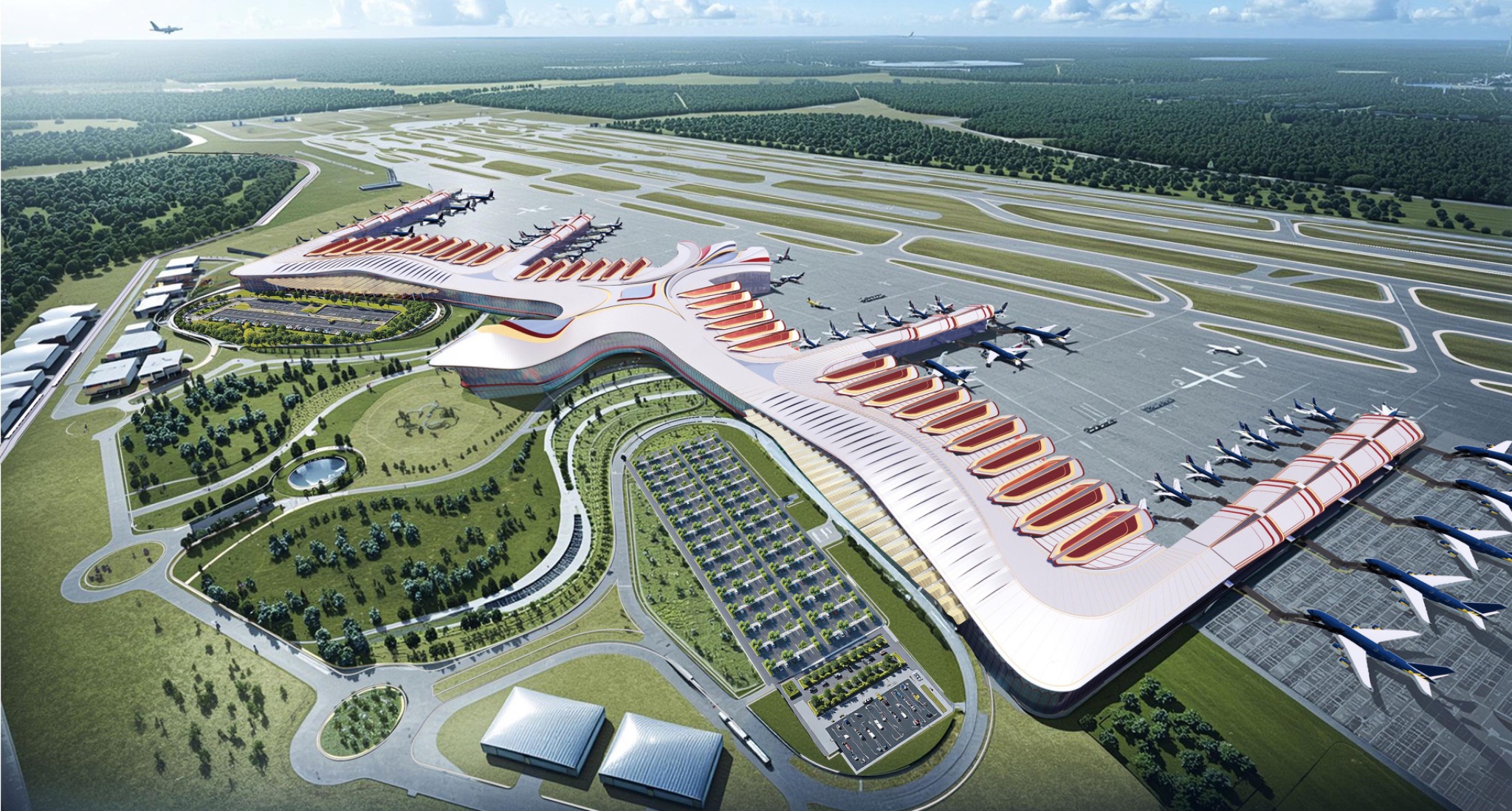
Sun Group has partnered with Changi Airport International (CAI), a subsidiary of Changi Airport Group, in the development and operation of Phu Quoc International Airport.
In the resort sector, Sun Group continues to cooperate with Accor and Ennismore to bring the Rixos brand to Hon Thom, developing a premium all-inclusive resort model. Along the East-West axis of Hon Thom, brands such as TRIBE, Ibis Styles by Accor, Fairfield by Marriott and Moxy Hotels are also planned for development, serving a diverse range of guest segments, from high-end leisure travellers to young lifestyle-oriented customers.
It is the combination of domestic developers and the world’s leading management brands that is creating new appeal for Vietnam’s tourism industry. Large-scale infrastructure projects, together with an increasingly complete ecosystem of resorts and services, are helping reshape the way the world sees Vietnam — not only as a destination rich in natural landscapes and cultural identity, but also as a country with modern infrastructure, high-quality products and the capacity to host international events at scale.
Seen from Phu Quoc, Fortune’s observation on Vietnam’s wave of tourism infrastructure investment is clearly reflected in the increasingly prominent role of the private sector. With pioneering enterprises such as Sun Group, from transport infrastructure and hospitality to cooperation with international partners, the Pearl Island is becoming a testament to how Vietnam is upgrading destination quality, strengthening competitiveness and gradually moving closer to its goal of becoming one of Southeast Asia’s leading tourism hubs.