

















1. Learn about Tuc Dup Hill An Giang
1.1. Geographical features and natural context
Tuc Dup Hill is located in O Lam commune, An Giang province, in the Southwest region of the Mekong Delta and is part of the That Son mountain range. The terrain here belongs to Co To mountain in the Phuong Hoang Son range, with an altitude of about 200 to 300 m above sea level, and a base circumference of over 2,000 m. The combination of rocky mountains and the surrounding plain creates a landscape with depth and an open view.
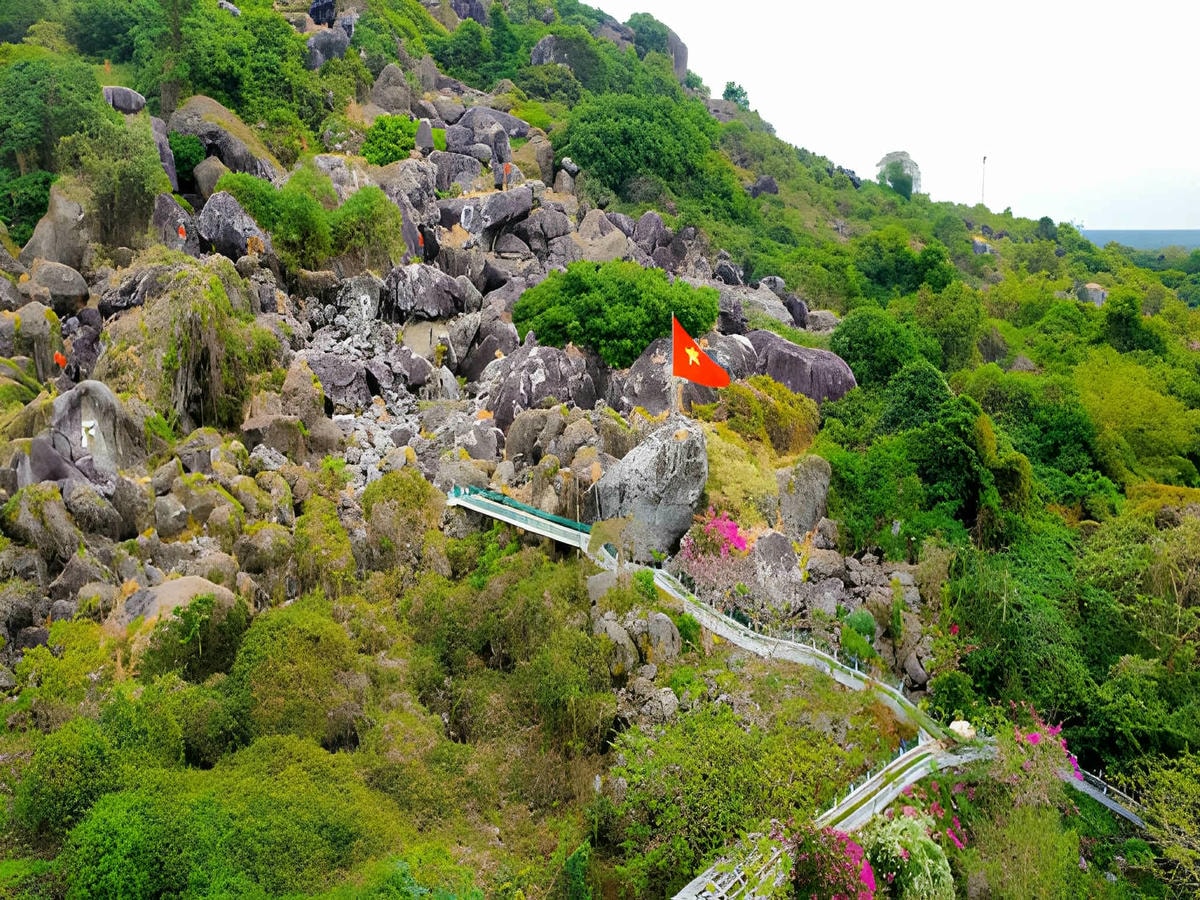
Tuc Dup Hill possesses a special geographical location, with a landscape of rocky mountains blending with the Mekong Delta. (Source: Collected)
The system of caves and rock crevices at Tuc Dup Hill was formed from naturally stacked rock formations over time, creating a layered geological structure. The space inside the hill is covered by wild vegetation and trails leading deep into the mountain, clearly reflecting the natural characteristics of the area. These elements contribute to creating a landscape setting that is both secluded and connected to the surrounding ecosystem.
1.2. Explanation of the name Tuc Dup Hill
The name Tuc Dup is believed to originate from the Khmer language, meaning water flows at night, linked to a folk story passed down in the local community. According to legend, early settlers found a cool underground water source after a dream about a stream, thus naming the hill as a mark of memory. This story has been passed down through generations, contributing to the cultural depth of the địa danh.
The way large and small rocks are stacked, forming many intricate alleys and deep caves, also contributed to the distinctive name of Tuc Dup Hill. Over time, natural weathering combined with human exploitation has created a terrain with many intersecting entrances and exits. These elements reflect the interaction between natural landscapes and the traces of human use throughout history.
1.3. Historical value and distinctive spirit
Tuc Dup Hill holds historical significance as it was used as a base during the resistance against America, associated with the activities of sheltering and living for the revolutionary forces. The cave system inside the hill played an important role in providing cover, organizing meetings, storing food, and providing medical care under wartime conditions. The remaining traces clearly reflect the context of human survival and adaptation to the natural terrain.
The battles that took place in this area have left many marks on the memory of the local community, making Tuc Dup Hill a spiritual symbol associated with enduring will. The relic site today helps visitors visualize, to some extent, the life and sacrifices during a turbulent historical period. The spiritual value of this địa danh is still preserved through conservation and educational visits.
2. Historical Imprints at Tuc Dup Hill
2.1. Tuc Dup Hill during the war period
During the anti-American war period, Tuc Dup Hill was used by the army and people of An Giang for various activities. The complex terrain and secluded cave system made it a space for shelter and maintaining communication under siege. Areas within the hill were also used to store food, medicine, and supplies for long-term living.
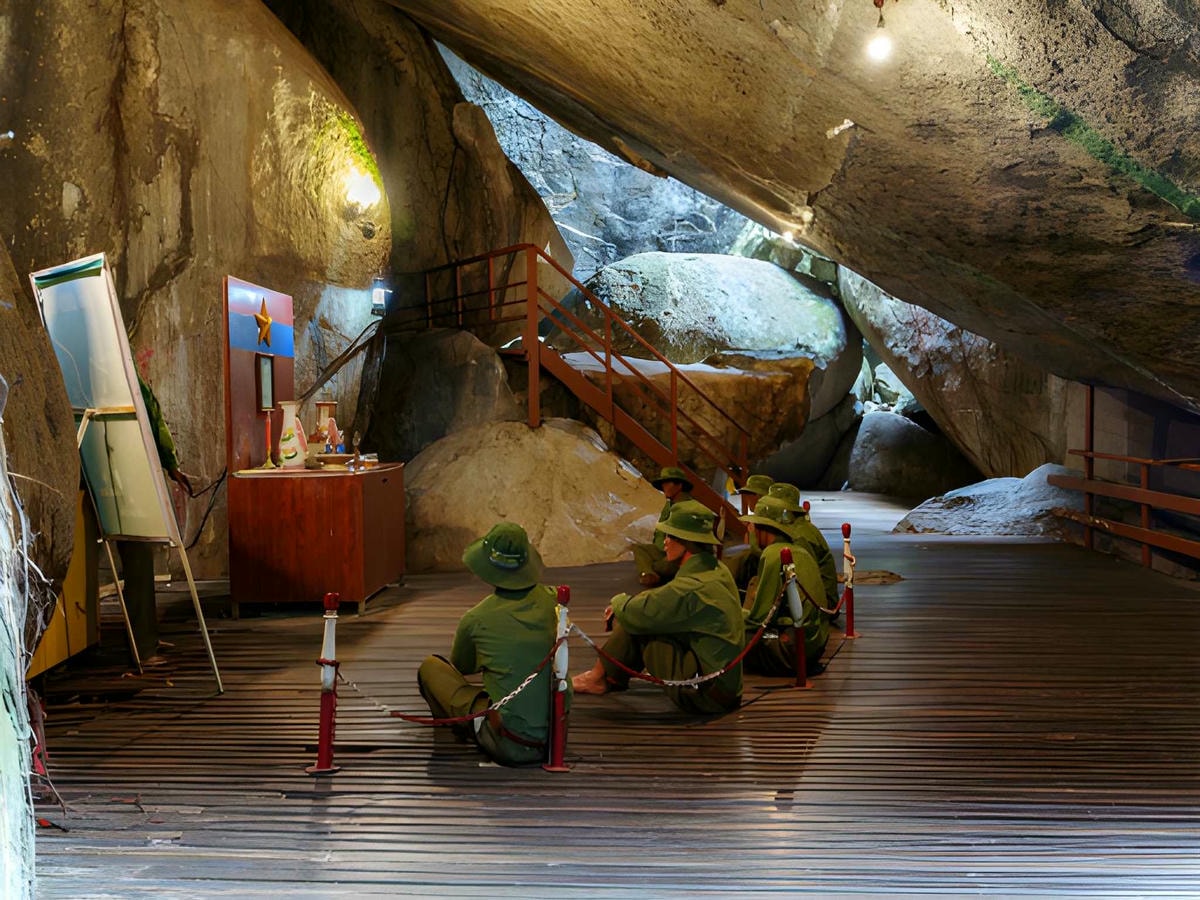
Tuc Dup Hill marks an important historical role during the war period. (Source: Collected)
2.2. Unique cave system and fortifications
The cave system at Tuc Dup Hill consists of many large and small caves connected into a complex network formed by nature and exploitation. During the war, these caves served as living, training, and storage areas for essential supplies for the local forces. The interconnected structure allowed for flexible movement and hiding in various situations.
Some caves were named according to their function, such as the Military Medicine Cave, Youth Cave, C6 Hall, or Military Command Cave. These names help to better illustrate how living and working spaces were organized within the hill. Through this, visitors can feel the adaptability and creativity of people in special circumstances.
The natural fortifications at Tuc Dup Hill not only hold historical value but also attract those interested in researching and learning about the war. The combination of wild landscapes and remaining traces creates a deeply layered visiting space. This is also a factor that helps the relic site maintain its stable appeal over time.
2.3. Stories and memories that remain
Stories passed down within the local community surrounding Tuc Dup Hill help to clarify the historical picture of this area. Memories of living in difficult conditions are still preserved through oral accounts and markers at the site. Memorial steles and exhibition areas now serve to connect the past with the present, allowing visitors to better understand the historical value of the place.
3. Visiting Tuc Dup Hill Today
3.1. Exploring the rocky landscape and caves
The journey to explore Tuc Dup Hill primarily follows marked trails around the hill, leading visitors through natural stone steps and interconnected cave systems. The stacked rock terrain combined with open spaces overlooking the plains allows visitors to clearly feel the transition between the mountains and the lowlands. Each cave, from the C6 Hall Cave to smaller nooks, reflects historical imprints tied to the natural context of the area.
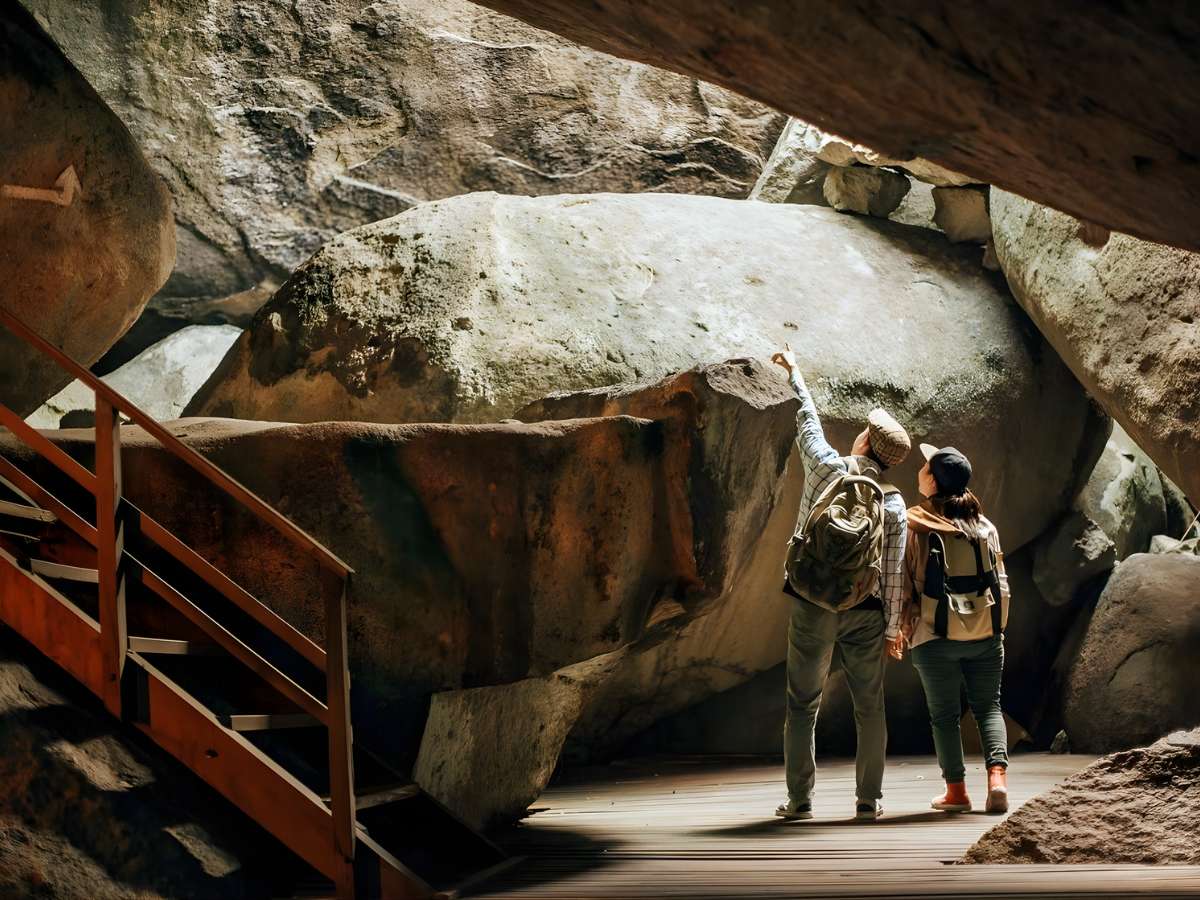
Explore the landscape of rocky mountains and caves at Tuc Dup Hill, holding historical and natural value. (Source: Collected)
As you move deeper into the cave area, many limestone cliffs still retain their vertical structure along with the narrow crevices characteristic of rocky terrain. The interior space helps visitors imagine how revolutionary forces once used the caves as living quarters and shelters during the war. The combination of rocks, light, and narrow passages creates an exploration experience linked to historical and geological elements.
Many caves are equipped with signs introducing their names and past functions, making the visit more clearly guided. Trails around the hill also lead to viewpoints offering panoramic views of the surrounding terrain. From small stone paths to open cliffs, the landscape at Tuc Dup Hill provides a diverse experience throughout the journey.
3.2. Memorial and Cultural Exploration Space
The memorial space at Tuc Dup Hill is organized with many areas displaying artifacts, images, and information related to the war period. This arrangement helps visitors access history through a tangible space rather than just dry documents. The displayed artifacts reflect the daily life, combat, and living conditions of the revolutionary forces in the area.
Memorial steles and statues within the relic site create a quiet space, suitable for pausing and observing. The remaining traces on the rocks along with the accompanying notes help viewers better understand the historical context that once unfolded here. Concentrating these historical imprints into a unified space adds emotional depth to the tour.
3.3. Suggestions for Flexible Combination with Modern Experience Itineraries
When visiting historical sites like Tuc Dup Hill, many tourists choose to combine them with resort and entertainment destinations to balance their experience. Interweaving historical spaces with modern tourist attractions makes the trip more emotionally flexible. This arrangement is suitable for longer journeys when visitors want to broaden their perspective on Vietnamese tourism.
A commonly cited example is large-scale amusement parks and tourism infrastructure like the cable car at Sun World Hon Thom, which offers a different experience compared to historical sites. Although not located in the same An Giang province, connecting these destinations helps to better visualize the diverse development of the tourism industry. The combination of historical elements and modern experiences contributes to a more complete overall exploration journey.
4. Tips for Visiting Tuc Dup Hill
4.1. Best Season to Visit
The suitable time to visit Tuc Dup Hill is generally during the dry season, from November to April of the following year, when weather conditions are more stable. Dry weather makes it easier to travel on stone paths and inside caves. Visitors can spend their time exploring fully without being interrupted by heavy rain.
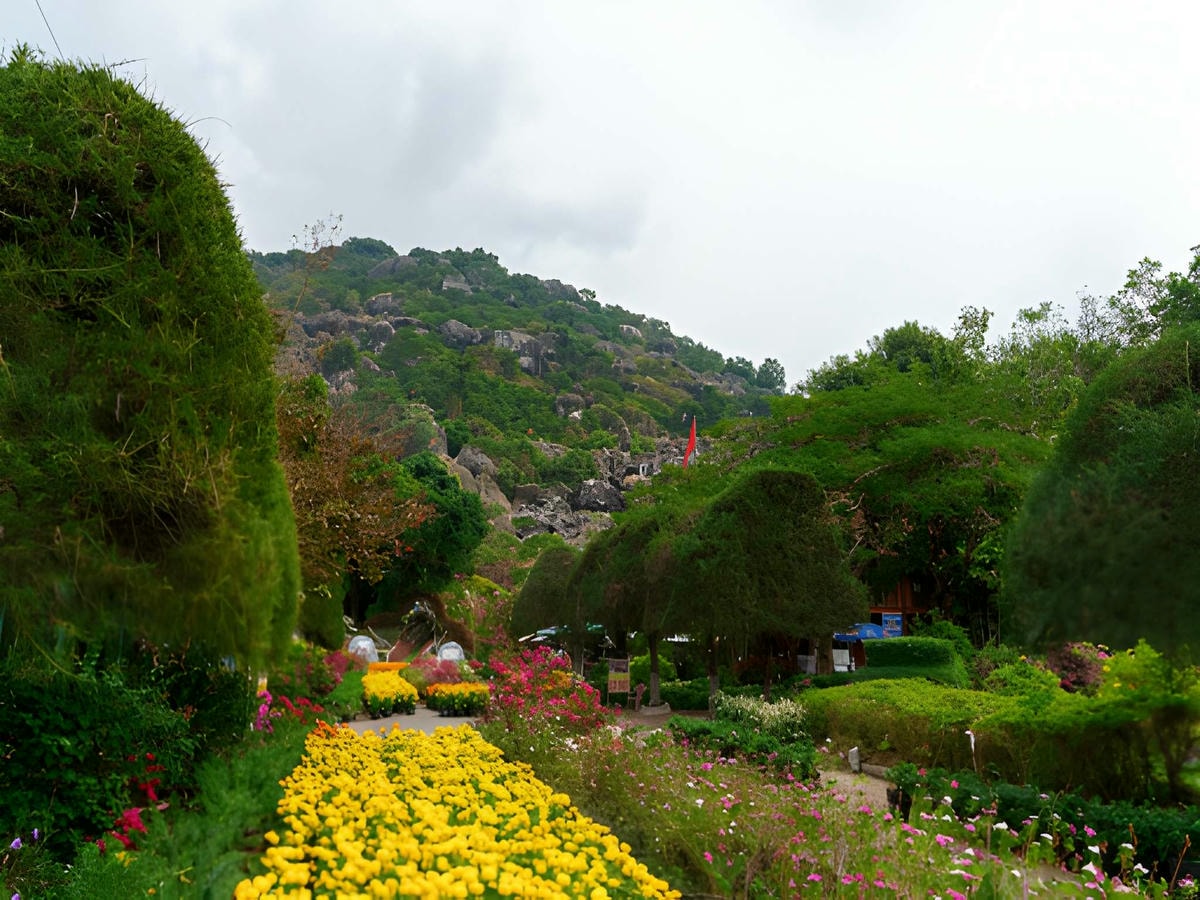
The dry season is the ideal time to visit and explore Tuc Dup Hill. (Source: Collected)
During the dry season, visibility from the high vantage points around the hill is also clearer, convenient for observing the surrounding landscape. The temperature during this period is relatively pleasant, suitable for outdoor walking and sightseeing activities. Choosing the right time contributes to enhancing the overall experience when exploring the relic site.
4.2. Things to note when visiting historical sites
When visiting Tuc Dup Hill, visitors should prepare light clothing and shoes with good grip to suit the steep rocky terrain. Many areas have narrow paths and uneven surfaces, requiring attention during movement. Appropriate preparation helps minimize risks and provides a greater sense of security while visiting.
In addition to clothing, visitors should follow the designated paths and adhere to the guidelines at the relic site. Preserving order and refraining from disturbing historical traces helps protect the historical value of the area. Conscious visiting behavior also contributes to maintaining a shared space for subsequent visitors.
4.3. Expanding your An Giang exploration journey
After visiting Tuc Dup Hill, visitors can combine it with exploring other prominent destinations in An Giang to diversify their experiences. Connecting historical and ecological tourist spots helps create a more balanced journey. This is particularly suitable for multi-day trips in the region.
Tra Su Melaleuca Forest is a frequently chosen destination due to its characteristic natural scenery of the Mekong Delta. With an area of approximately 845 hectares, the forest offers a sightseeing experience closely linked to its flooded ecosystem. Combining destinations within the same itinerary makes the An Giang trip more cohesive and easier to plan.
Additionally, nearby cultural sites such as temples, pagodas, or other historical relics contribute to broadening the cultural and religious perspective of the Mekong Delta region as visitors travel from An Giang to other areas. Traditional festivals and temple architecture, deeply rooted in local history, also enrich the cultural experience.
Tuc Dup Hill is not only a relic that commemorates the resilient fighting spirit of the army and people of An Giang but also a destination that helps visitors gain a deeper understanding of the value of peace today. The mountainous landscape interspersed with natural cave systems creates a solemn yet intimate atmosphere, suitable for those who wish to combine sightseeing, historical learning, and contemplation. Visiting Tuc Dup Hill is therefore meaningful as a journey of reflection, to better feel the cultural depth and traditions of the Bay Mountains region.