















1. Tri Ton Hot Air Balloon Festival in the An Giang Tourism Picture
1.1. Geographical Context and Organization Space
Tri Ton District belongs to An Giang province, located in the Bay Nui (Seven Mountains) region with a stratified hilly terrain system, creating a distinct landscape compared to most of the Mekong Delta region. Mountain ranges such as Co To Mountain or Phuong Hoang Mountain, about 614m high, contribute to shaping an open space where the sky and the ground have a clear connection. This terrain factor creates favorable conditions for large-scale outdoor performance activities.
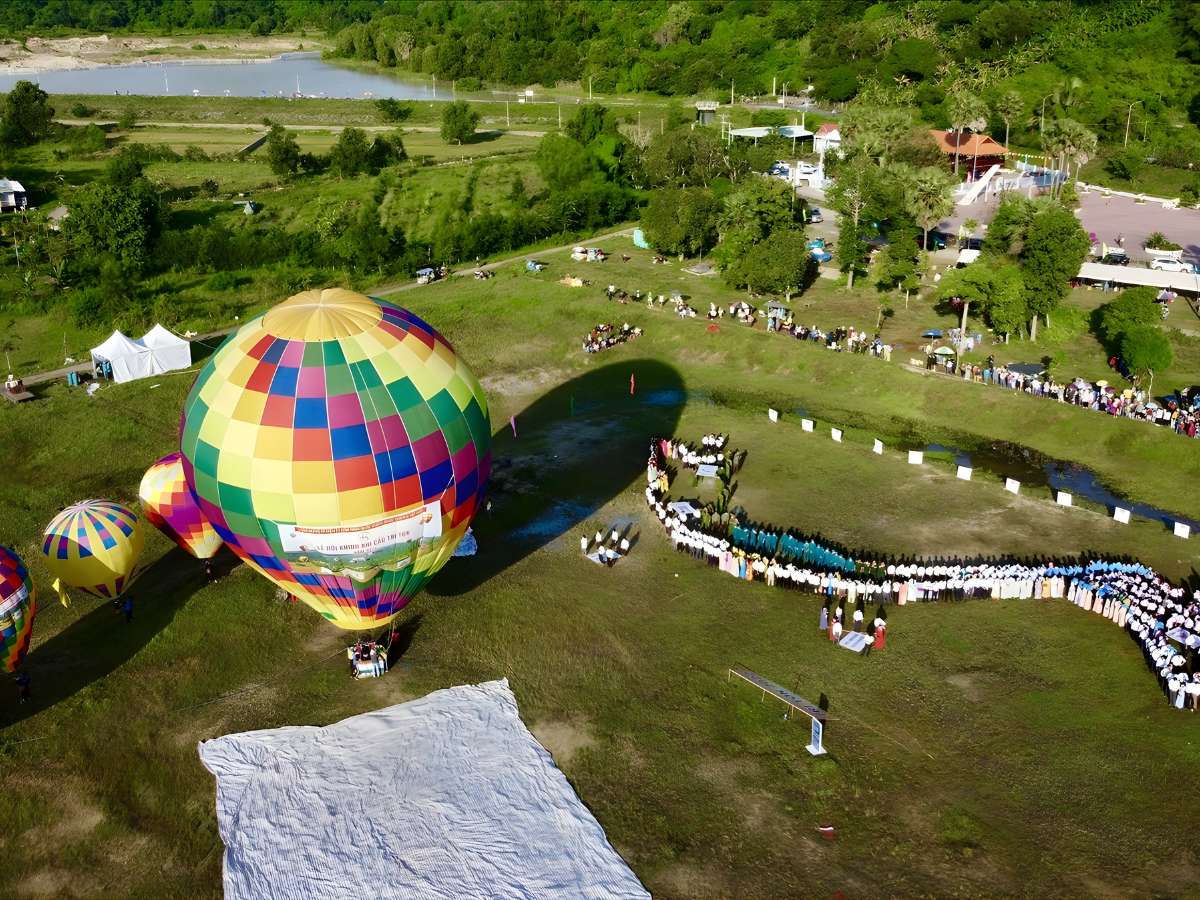
The venue for the Tri Ton hot air balloon festival stands out amidst the Seven Mountains (Bay Nui) terrain of An Giang. (Source: Collected)
Ta Pa Soai Chek tourist area was chosen as the venue due to its large, relatively flat land area, interspersed with open hillsides. This space is suitable for launching and displaying hot air balloons, as the open sky allows viewers to easily observe from various positions. The combination of the event grounds and the surrounding landscape contributes to shaping the overall festival atmosphere.
The festival was held in early September 2022, from the 1st to the 3rd, coinciding with the National Day holiday. During this time, a large number of local residents and tourists visited to experience tethered hot air balloon rides or observe from the ground. The festive atmosphere thus spread throughout the Bay Nui region during the event days.
1.2. What role does the festival play in local tourism orientation?
The hot air balloon festival in Tri Ton was organized to refresh the image of this mountainous area on the An Giang tourism map. Through the event, the locality expanded its target audience, moving beyond traditional festivals like the Bay Nui buffalo racing. This is considered an experimental step in diversifying tourism products linked to natural spaces.
The event gathered approximately 17 hot air balloons of various sizes, with most being tethered balloons flying at altitudes of 20m to 40m. Some balloons were released at higher altitudes to offer panoramic views of the Bay Nui region from above. These experiences provide additional sightseeing options for visitors to Tri Ton.
Besides the hot air balloon activities, the festival also included programs such as paragliding performances and local food stalls. These activities contribute to extending visitors' stays and enriching their experiences. As a result, Tri Ton is not only associated with its indigenous culture but also gains a new identity from outdoor events.
1.3. Target audience of the festival
The hot air balloon festival in Tri Ton targets various public groups, from families to young people and tourists who enjoy open-space experiences. Tethered balloon flights and observation activities are suitable for both adults and children, facilitating group outings. The festival atmosphere is therefore distinctly communal.
Young people attend the festival as an opportunity to experience and capture visual moments against the backdrop of the wide sky and rolling hills. Families see it as a chance to participate in outdoor activities during the holiday, combining sightseeing and entertainment. The diversity of attendees helps maintain a vibrant atmosphere throughout the event.
Additionally, community areas around the festival, such as food stalls, folk games, and performance spaces, also attract those interested in local culture. These activities create meeting points between locals and tourists. Thus, the festival is not just a display event but also an open space for interaction.
2. Main Activities at the Tri Ton Hot Air Balloon Festival
2.1. Hot Air Balloon Performances and Highlight Times
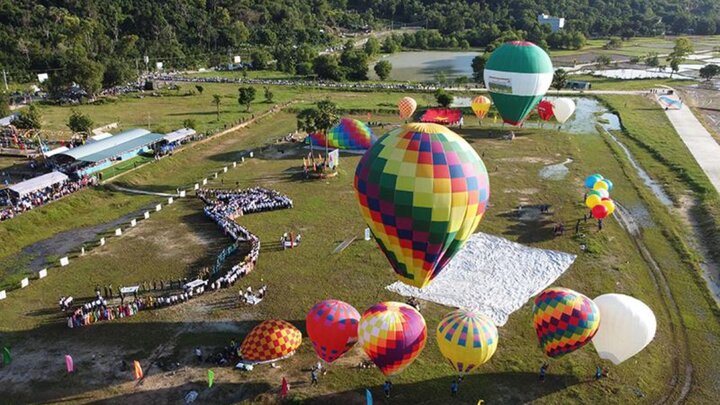
The hot air balloon performance activities at the festival are scheduled at fixed times during the day to ensure safety and visual experience. Mornings typically start from around 7:00 AM to 9:30 AM, when weather conditions are cooler and winds are more stable for tethered flights. During this period, hot air balloons appear at altitudes of 20m to 40m, creating distinct highlights against the Bay Nui sky.
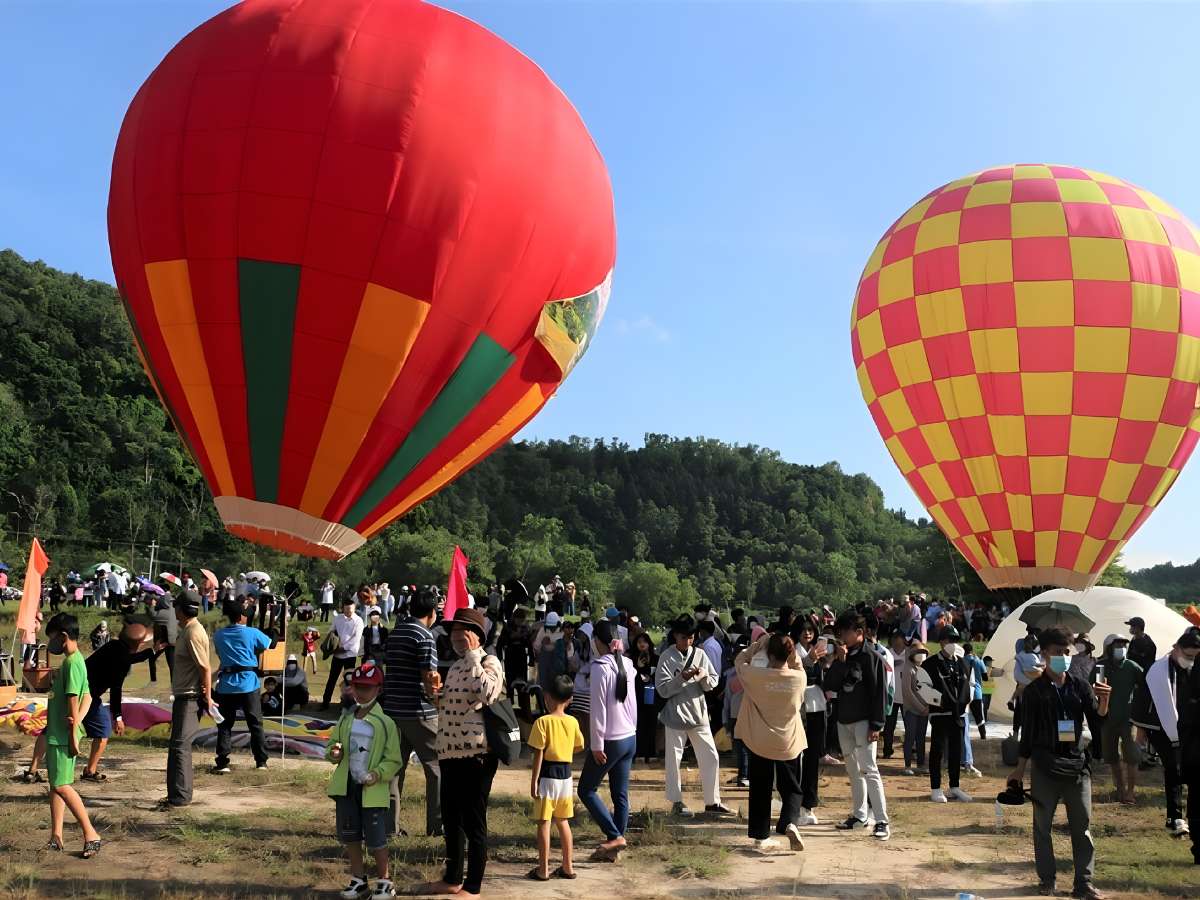
The hot air balloon performance activity attracted a large number of tourists in the morning of the festival. (Source: Collected)
The afternoon is the next time slot for the performance activity, usually starting from around 3:30 PM onwards. The late-day light helps the colors of the hot air balloons become softer, while also highlighting the contours of the surrounding hills and mountains. The change in light brings a different feeling to viewers compared to the morning.
2.2. Community activity space around the festival area
Besides the main performance area, the area around the festival is arranged with many community activities serving tourists and local people. Food stalls introducing characteristic dishes of the Bay Nui region provide opportunities for attendees to both visit and enjoy local flavors. This combination helps the festival experience remain uninterrupted between performance slots.
In addition to cuisine, cultural exchange and art performance activities are also organized alternately throughout the day. These programs are connective, creating a space for attendees to pause, rest, and observe. As a result, the festival area always maintains a flow of people throughout its duration.
2.3. Media image and spread
The Tri Ton hot air balloon festival attracts attention due to the prominent visual element of colorful hot air balloons appearing against a wide sky. The combination of the sky, hills, and the slow movement of the balloons creates frames that are easily captured in photos and videos. This is a distinguishing feature compared to many familiar festival activities in the Mekong Delta region.
The images of hot air balloons flying at different altitudes offer an open perspective on the landscape of the Bay Nui region. When shared on social media, these moments quickly attract the attention of those interested in experiential tourism. Thus, information about Tri Ton reaches a wider audience.
3. Cultural and emotional elements of the festival
3.1. The interplay between nature and people
The hot air balloon festival space in Tri Ton is formed by the combination of the open nature of the Bay Nui region and human-organized activities. The high sky, along with the hilly terrain and fields, provides conditions for hot air balloons to be clearly visible to viewers. This arrangement helps the festival activities be closely integrated with the surrounding natural landscape.
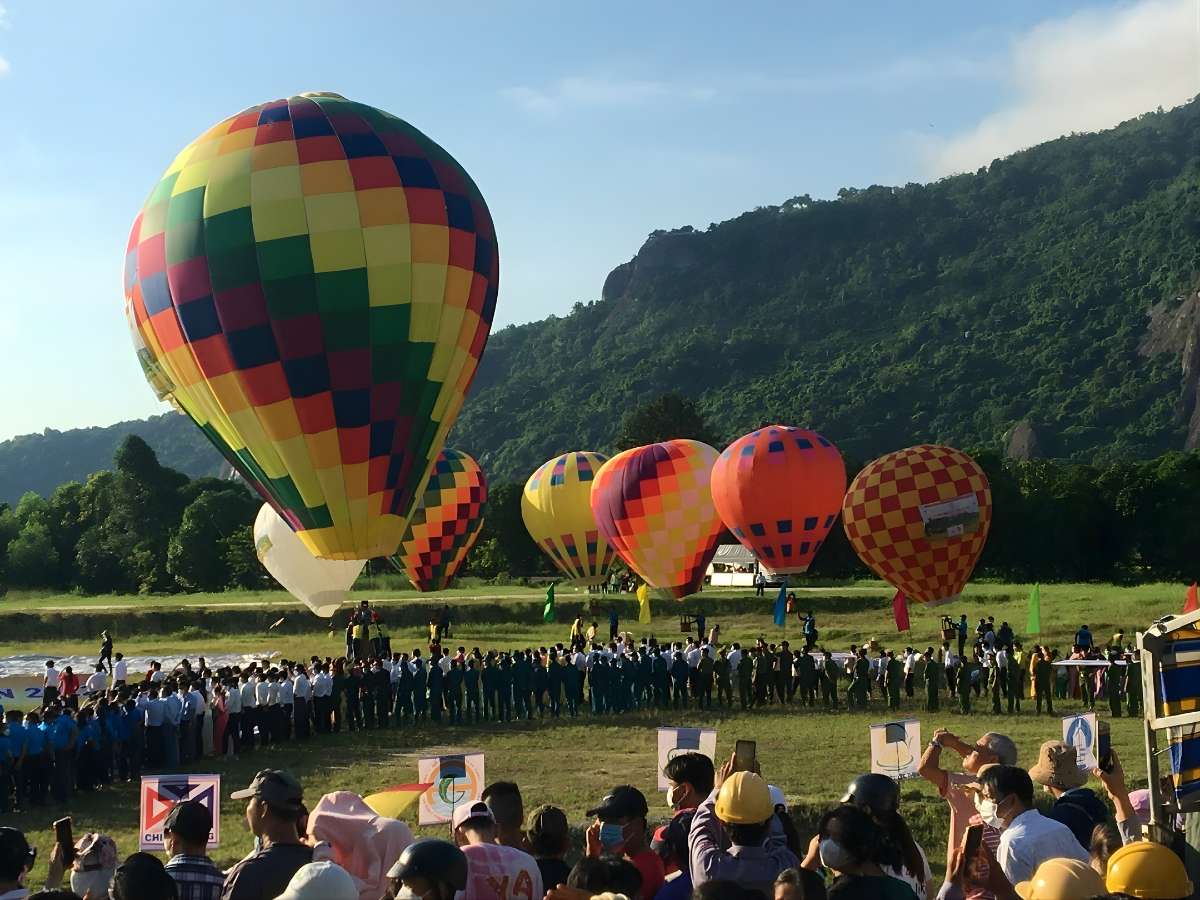
The interplay between Tri Ton's nature and unique outdoor festival activities. (Source: Collected)
From various observation points, attendees can see hot air balloons standing out against the vast sky. This image creates a sense of space opening up both horizontally and vertically. The interplay between natural landscapes and organized elements highlights humanity's role in utilizing outdoor spaces.
3.2. Attendee Perceptions
Festival attendees often share a sense of relaxation while watching the hot air balloons gradually ascend. The slow movement of the hot air balloons against the sky creates a gentle experiential rhythm, fitting for Tri Ton's open space. This is a factor that causes many people to spend more time observing.
The diverse colors of the hot air balloons combined with natural daylight create continuous visual changes. Conversations and surrounding activities contribute to forming a communal festival atmosphere. Attendees observe and exchange feelings, creating a connection within the shared space.
4. From Event to Multi-Destination Discovery Journey
4.1. Tri Ton in the Western Vietnam Discovery Route
The hot air balloon festival helps Tri Ton be perceived as an experiential stop on a journey to discover the Southwestern region of Vietnam. Instead of being solely associated with spiritual tourism or traditional festivals, the locality appears more dynamic through outdoor event activities. This opens up new options for tourists when planning their itineraries in the region.
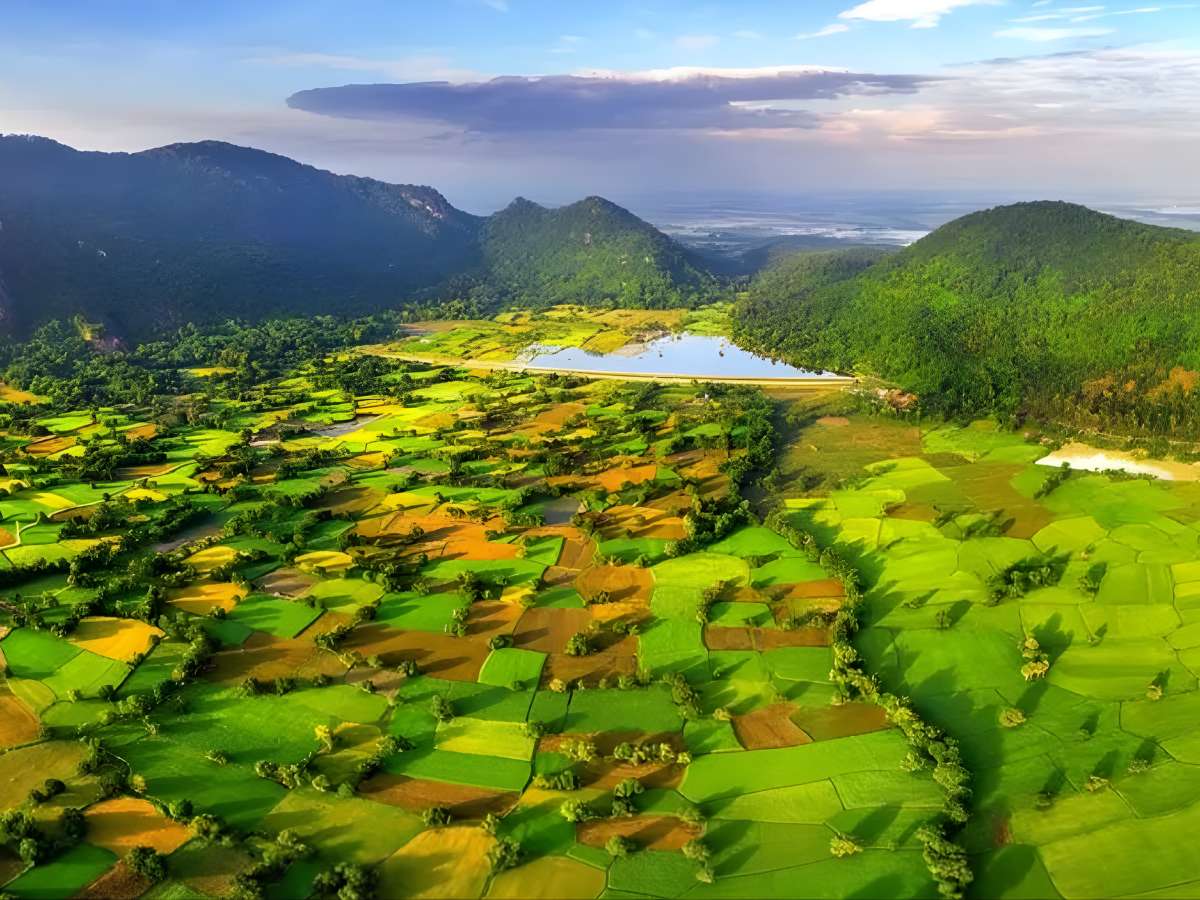
The Tri Ton landscape viewed from above expands the Mekong Delta tourism experience. (Source: Collected)
Within the Mekong Delta's tourism circuit, Tri Ton boasts landscape advantages with its system of mountains, lakes, and open spaces. The hot air balloon festival adds a temporal layer of experience, ensuring trips are not solely about sightseeing. The combination of landscape and events contributes to extending tourist stays.
4.2. Connecting Tourism Thinking with Island Destinations
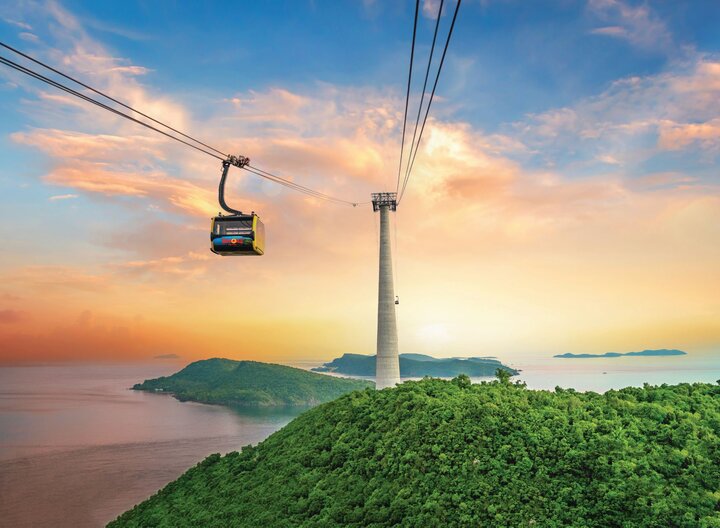
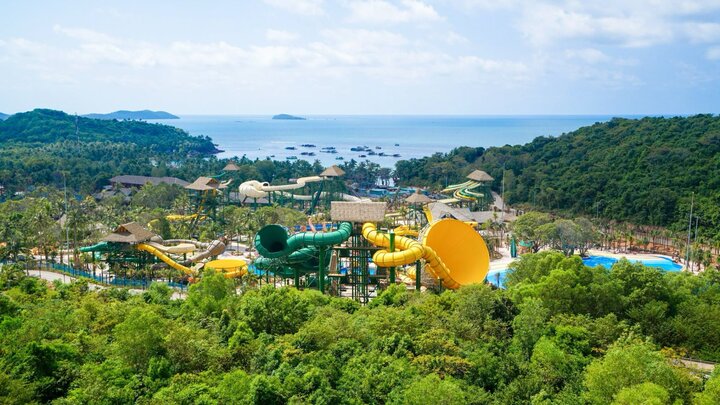
From the visual experience at the Tri Ton hot air balloon festival, one can observe a commonality in how many destinations currently utilize open spaces. Tourism development models in island areas, such as Sun World Hon Thom, demonstrate a trend of combining natural landscapes with performance activities. This approach aims to create multi-layered experiences for tourists.
Despite the topographical differences between mountains and islands, the thinking behind organizing experiences remains similar. Both leverage natural spaces as the primary backdrop for human activities. This helps visual emotions become the guiding factor in the tourism journey.
4.3. Suitable Timing for Attending the Festival
The Tri Ton hot air balloon festival is typically held in early September, coinciding with the National Day holiday. This timing makes it easier for tourists to arrange their schedules without significant adjustments to personal plans. The temporal factor contributes to facilitating festival attendance.
During the day, early morning and late afternoon hours are generally more suitable for observing hot air balloons. Stable lighting and weather conditions allow activities to proceed more completely. Simultaneously, the visual experience becomes clearer and easier to capture.
The Tri Ton hot air balloon festival contributes to opening a new approach for An Giang tourism by exploiting the sky space and natural landscapes. The event not only provides a visual experience but also creates a connection between community activities and tourism emotions. In the general flow of development, the festival evokes associations with modern performance models like Kiss of The Sea, where space and experience play a central role.