















1. Overview of Tra Su Melaleuca Forest An Giang
1.1. Terrain and Natural Conditions
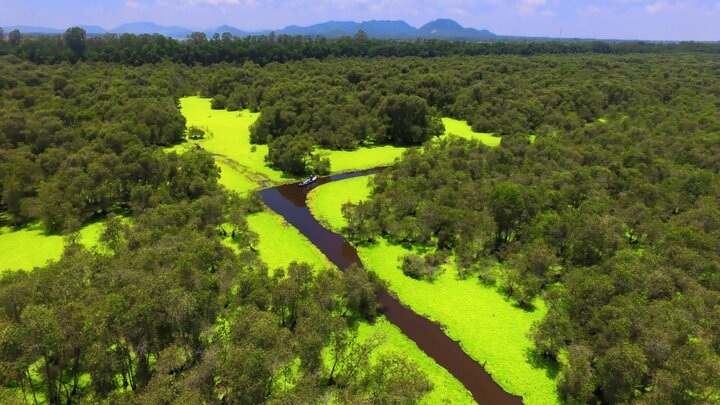
Tra Su Melaleuca Forest is located in An Cu, An Giang province, about 30 km from the center of Chau Doc city and borders the Vietnam and Cambodia border area. This location helps the forest become an intersection between the flooded ecological space and the border region's cultural life. Thanks to this, Tra Su is often chosen for journeys to explore the nature of the Southwest region of Vietnam.
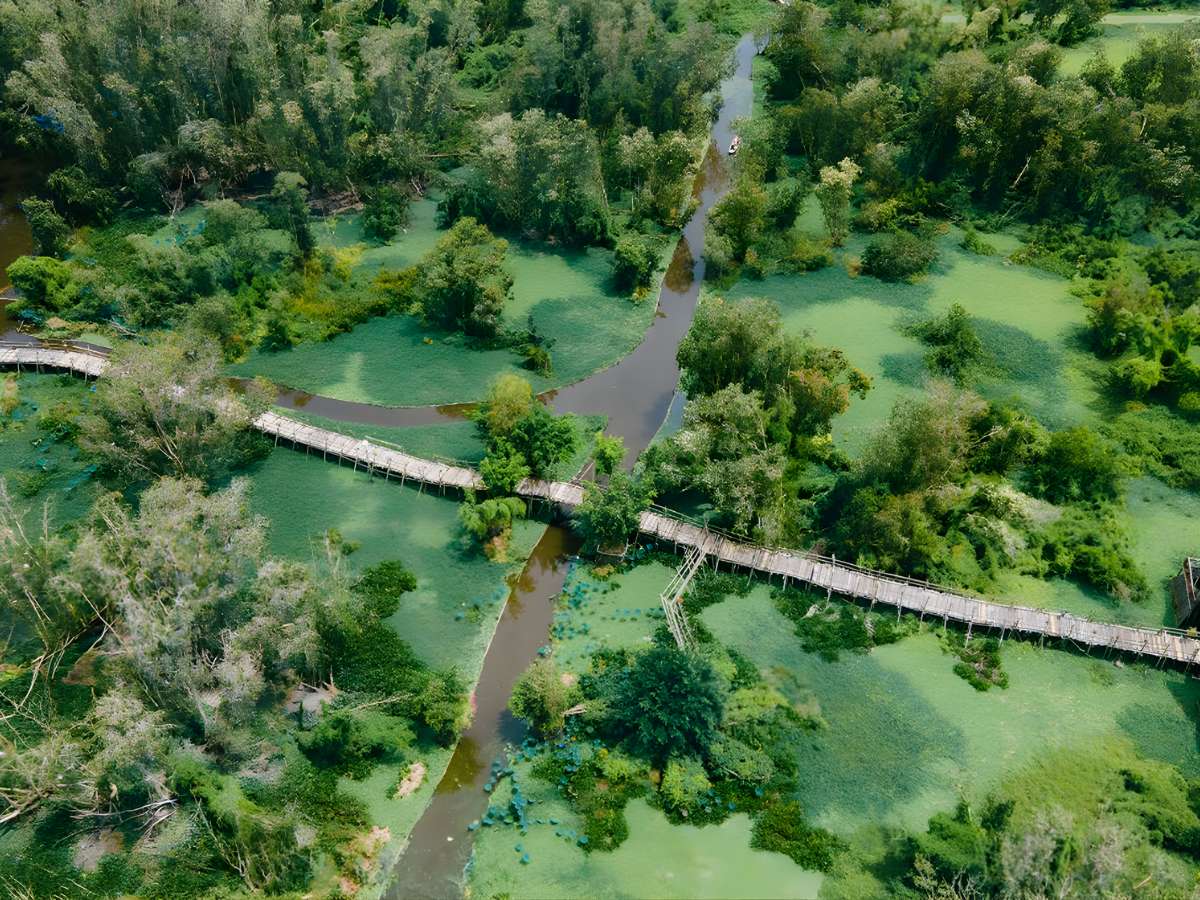
Tra Su Melaleuca Forest has a special geographical location, highlighting the wetland ecological landscape in An Giang. (Source: Collected)
The forest has a core area of about 845 hectares and a buffer zone of over 1,100 hectares, formed based on the characteristic hydrological features of the downstream Mekong River. The entire space is covered by wetland terrain, accumulated alluvium, and a natural distribution of canals and ditches. This structure provides a favorable foundation for the stable seasonal development of the melaleuca forest.
The natural context of the Tra Su Melaleuca Forest is clearly influenced by the annual flood season, especially during the high water period from September to November. As water levels rise, canals and ditches expand, and aquatic vegetation grows and covers the water surface. This seasonal change contributes to shaping the characteristic landscape and ecosystem of the forest.
1.2. Ecological Value and Biodiversity
Tra Su Melaleuca Forest boasts a diverse ecosystem with many characteristic animal and plant species of the Mekong Delta wetlands. The vegetation is mainly melaleuca trees, combined with aquatic species such as duckweed, lotus, water lily, and various seasonal aquatic grasses. This ecological space plays an important role in maintaining a stable living environment for native species.
The melaleuca forest area is home to over 70 species of water birds from many different families, including the Sarus Crane and the Oriental Darter, both listed in the "Vietnam Red Book". In addition, there are hundreds of plant species, small mammals, reptiles, and aquatic life that live according to the water level cycle. This biodiversity has long-term conservation significance and serves as a basis for environmental research and education activities.
The ecological value of Tra Su Melaleuca Forest is also demonstrated through its role in regulating the climate and protecting the wetland system of the Mekong Delta. The forest contributes to maintaining water resources, mitigating erosion, and supporting hydrological balance in the region. In the context of climate change, conserving the melaleuca forest ecosystem is of practical significance for the environment and the lives of local communities.
1.3. Significance of Tra Su Melaleuca Forest in An Giang Tourism
Tra Su Melaleuca Forest is a familiar destination in An Giang province's ecotourism system and plays an important role in diversifying local tourism products. Each year, the forest welcomes a large number of domestic and international tourists who come to learn about the Mekong Delta's wetland ecosystem. Tourism activities here contribute to balancing experience exploitation with the preservation of natural values.
In the overall picture of An Giang tourism, Tra Su Melaleuca Forest creates a distinct highlight alongside spiritual and mountainous destinations such as Ba Chua Xu Temple on Sam Mountain or Cam Mountain. The combination of nature and culture makes the journey to explore this land more multi-dimensional. This reflects the trend of experiential tourism associated with unique ecological spaces.
2. Characteristic Activities at Tra Su Melaleuca Forest
2.1. Boating through the Melaleuca Forest
Boating through the melaleuca forest is an experience chosen by many tourists when visiting the area. Visitors can travel by hand-rowed boats or motorboats, moving slowly along small canals surrounded by lush green melaleuca forests. The gentle pace allows for a clear perception of the quiet atmosphere and closeness to nature.
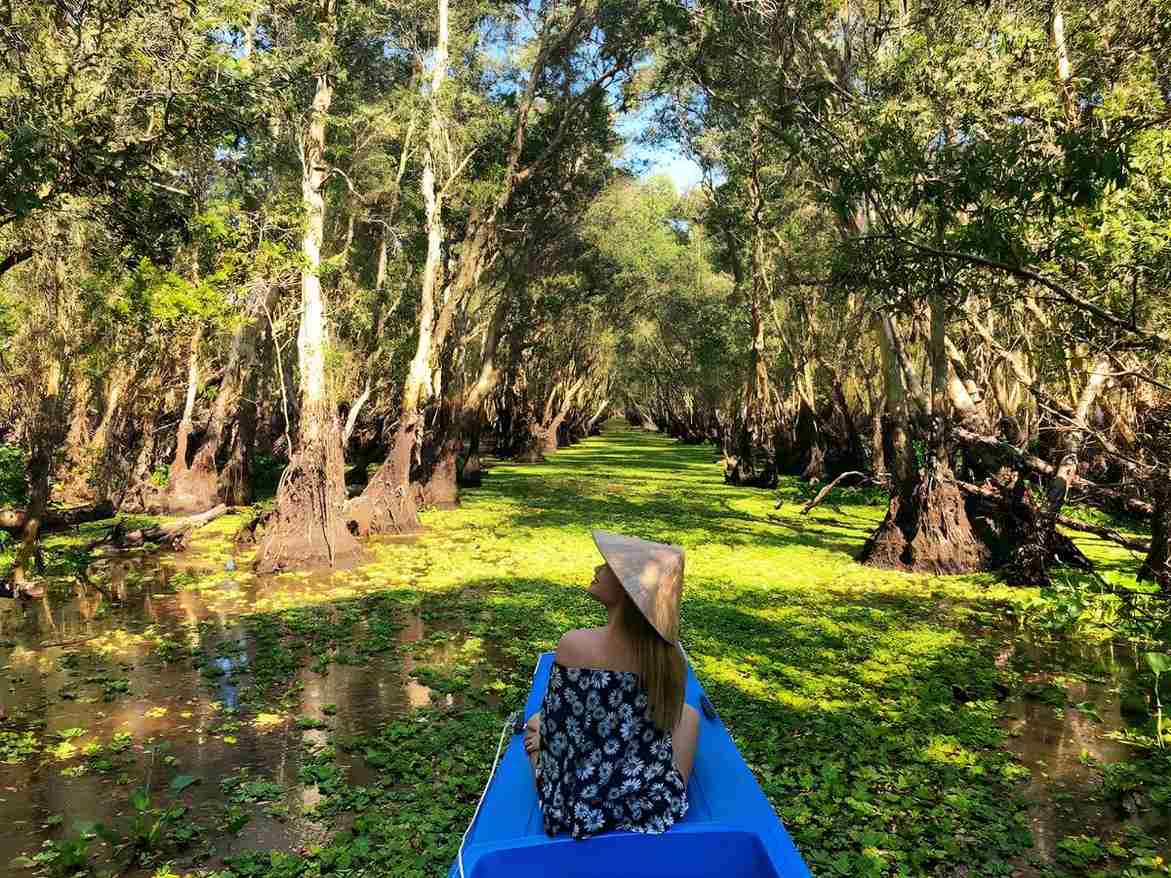
Cruising by boat through the melaleuca forest offers an immersive nature experience. (Source: Collected)
The boat journey provides an opportunity to observe the vegetation and natural life up close. The gentle sound of water lapping against the boat blends with the green of the forest, creating a relaxing feeling throughout the trip. This experience is suitable for nature lovers who wish to temporarily escape the urban pace of life.
2.2. Flooding Season and a Unique Natural Landscape
The flooding season at Tra Su Melaleuca Forest typically occurs from September to November, when the water level of the Mekong River rises and spreads throughout the flooded forest areas. During this time, the melaleuca forest landscape takes on a characteristic color with the water surface blending with the tall melaleuca trees. The combination of sky, water, and trees creates a natural space with the unique imprint of the Southwest region of Vietnam.
The flooding season also makes the landscape within the forest more open. The flooded canals allow boats to move easily and open up many new perspectives. This offers a different experience compared to the dry season, when the water level is low and the paths are narrower.
2.3. Observing Birds and Wildlife
Tra Su Melaleuca Forest is home to many species of water birds, including the Greater Adjutant and the Oriental Darter, both listed in the "Vietnam Red Book". Visitors can observe birds in the early morning or late afternoon, when they begin their foraging activities and return to their nests. This moment offers a sense of closeness to the forest's natural life.
Besides water birds, the forest is also a habitat for many species of reptiles, small mammals, and aquatic life. The presence of these species creates a vibrant ecological picture during each visit. Observing wildlife helps visitors better understand the conservation value and importance of the wetland ecosystem.
3. Useful Information for Visiting Tra Su Melaleuca Forest
3.1. When is the best time to visit?
Tra Su Melaleuca Forest, located in Van Giao commune, An Giang province, has landscapes that change distinctly throughout the year, offering different experiences for each trip. The flooding season typically occurs from September to November, when the water level rises, the duckweed covers the surface widely, and many bird species appear on the water. This is the ideal period to capture the natural scenery and observe animal life in the flooded environment.
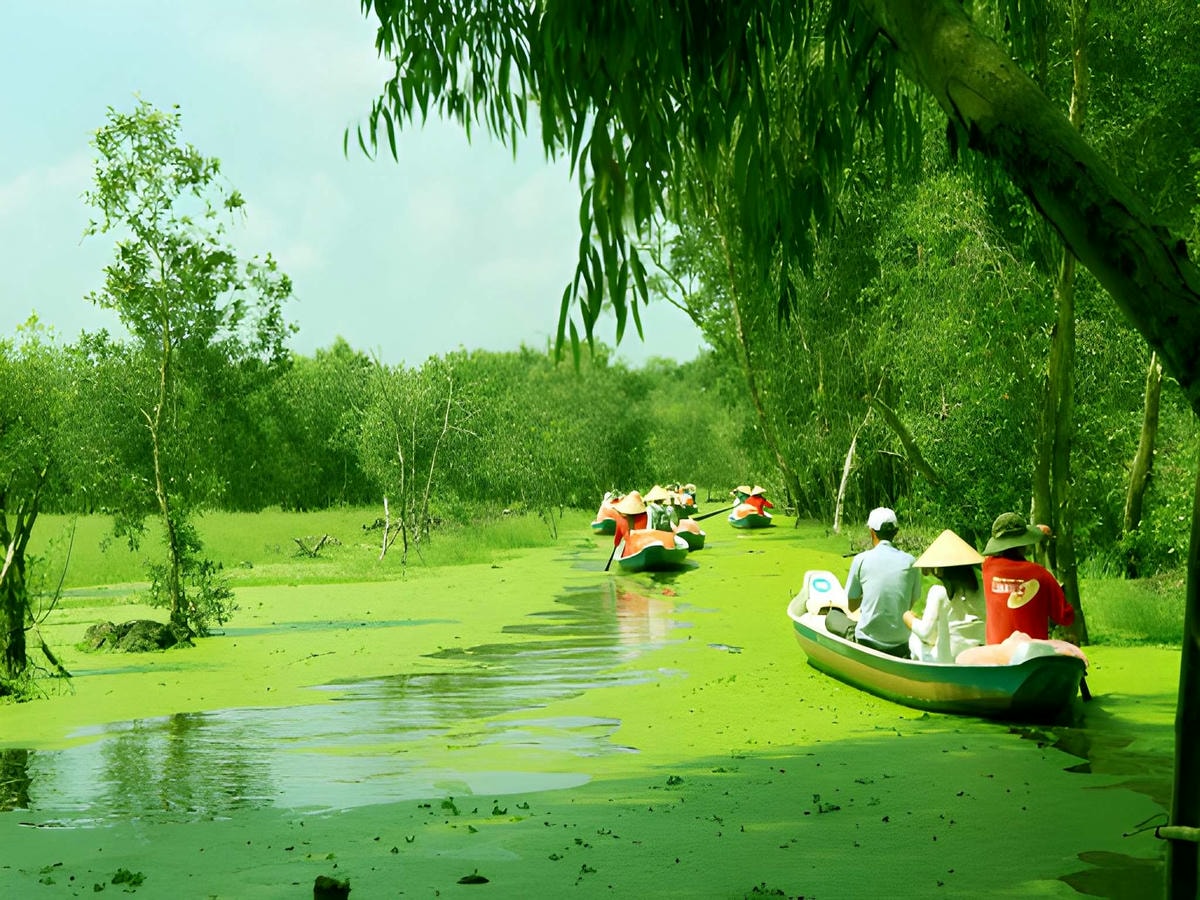
The flood season helps Tra Su Melaleuca forest fully showcase its natural beauty. (Source: Collected)
During the dry season, the melaleuca forest space still retains its cool green color with lower water levels. The weather during this period is quite pleasant, convenient for walking on the bamboo bridges through the forest. The dry season experience is suitable for those who want to enjoy a leisurely pace of sightseeing and a quiet atmosphere.
3.2. Preparing Outfits and Items
Preparing suitable outfits will make your visit to Tra Su Melaleuca forest more convenient. Outfits should be light, breathable, and preferably in neutral colors for easy movement in the natural environment. This choice also aids in photography and outdoor activities.
Besides clothing, some personal items should be prepared before entering the forest. A wide-brimmed hat or cap helps limit sun exposure while traveling by boat or on bamboo bridges. Additionally, sunscreen and personal drinking water are essential items to maintain your physical condition throughout the journey.
3.3. Points to Note During the Experience
Tra Su Melaleuca forest is an ecological tourist area with many activities related to the natural environment, so adhering to visiting regulations is essential. When traveling by boat on the canals, visitors should maintain a stable posture and listen to the boatman's instructions. This helps minimize risks when passing through deep water or areas with currents.
While walking on the bamboo bridges through the forest, move slowly and maintain an appropriate distance from others. Carefully observing the walkway and avoiding playful actions will make the trip safer. At the same time, visitors should limit noise, not touch the plants, and respect the natural lives of the creatures in the forest.
4. Suggestions for Combining Tourism and Additional Experiences in An Giang
4.1. Combining Tra Su Melaleuca Forest with an An Giang Exploration Journey
When planning a visit to Tra Su Melaleuca forest, tourists can combine it with other destinations in An Giang to broaden their itinerary. Spiritual cultural sites such as Ba Chua Xu Temple on Sam Mountain or craft villages near Chau Doc city offer insights into local life. This combination helps balance the trip between natural experiences and learning about local culture.
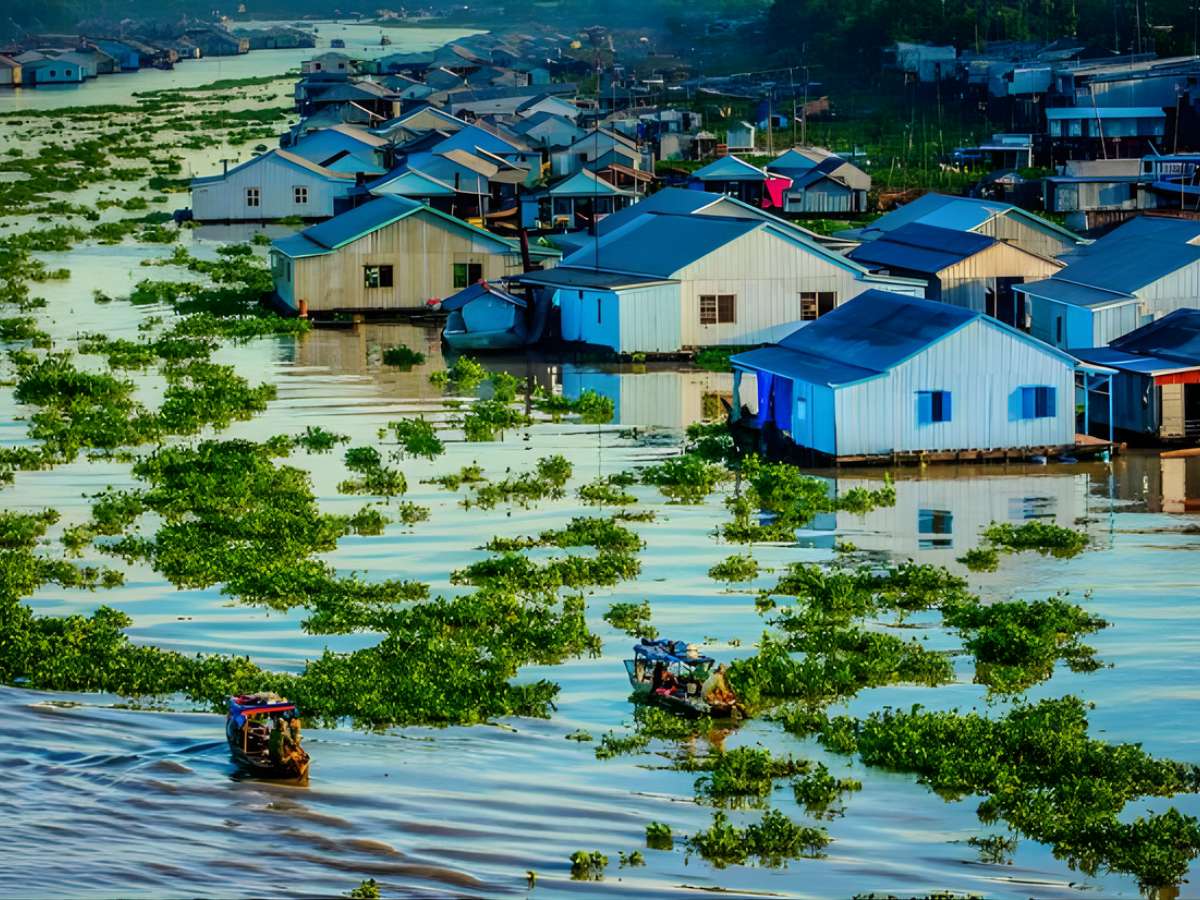
Explore local craft villages integrated into the Tra Su Melaleuca Forest tour. (Source: Collected)
Arranging attractions within the same itinerary helps save travel time. Visitors can spend the morning exploring the melaleuca forest and the afternoon visiting cultural sites in the area. This itinerary organization is suitable for short trips in An Giang.
4.2. Eco-tourism and Modern Resort Experience
The slow-paced natural space at Tra Su Melaleuca Forest evokes the trend of eco-tourism and green resort experiences currently gaining attention. Tourism models that emphasize natural elements often aim to preserve landscapes and create a relaxing atmosphere for visitors. From flooded forests to green integrated resorts, the experience revolves around harmony with the environment.
This trend reflects a shift in travel needs, as many people seek spaces close to nature. Destinations that prioritize balance between humans and landscapes are increasingly chosen for holidays. This indicates that eco-tourism is becoming an important part of the overall development picture.
4.3. Inspiring High-Quality Tourism Trends
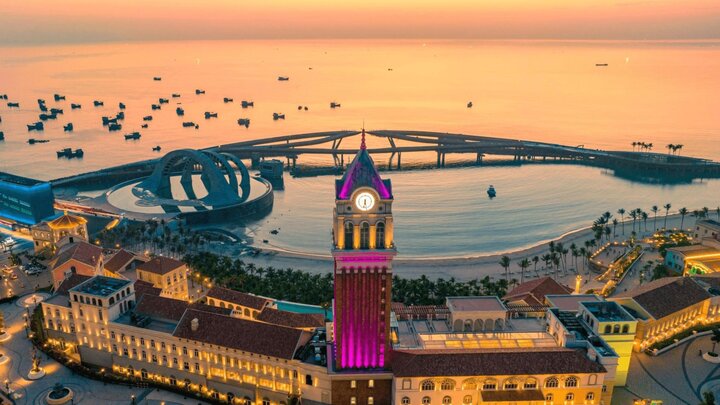
Placing nature at the center of the experience is not only seen in eco-tourism areas like Tra Su Melaleuca Forest. Many high-quality tourism products today also focus on designing open spaces and increasing green areas. This approach helps create a sense of relaxation and connects people with their living environment.
Modern resort complexes often harmonize architecture with the surrounding landscape. The resting experience, therefore, is not just about amenities but also about the perception of space. This trend contributes to shaping how tourists choose destinations in the future.
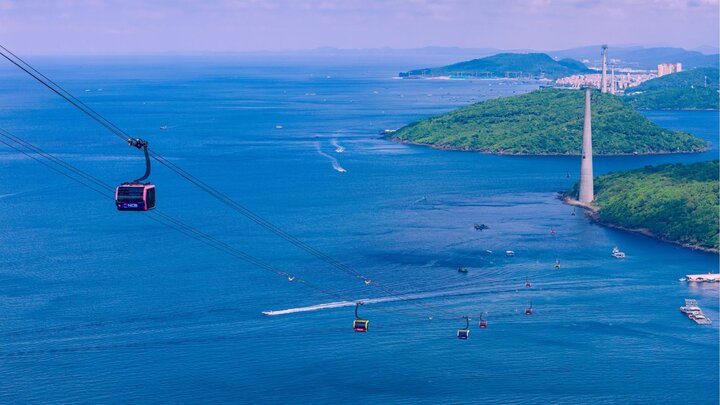
Tra Su Melaleuca Forest is an ecological space that allows visitors to feel the slow pace of life amidst the flooded region of An Giang. The tour model here aligns with the trend of tourism that emphasizes sustainability and nature-based experiences. This approach shares many similarities with Sun World Hon Thom, where natural landscapes are the foundation for the exploration journey.