















1. General Introduction to Tra Su Cajeput Forest Ecological Tourist Area
1.1. Geographical Location: Green Gateway to the Bay Nui Region
Tra Su Cajeput Forest Ecological Tourist Area is located in Van Tra Hamlet, An Cu Commune, An Giang Province, in the western Hau River area and near the Vietnam – Cambodia border. From Chau Doc city center, it takes only about 20–30 km to get here, while from Ho Chi Minh City, the distance is about 220–250 km. The popular route is along Provincial Road 948, turning at Bung Tien bridge to enter the tourist area. With its convenient location, this place easily connects to prominent attractions such as Sam Mountain, Hang Pagoda, or the Tinh Bien area, suitable for a one-day or two-day An Giang exploration trip.
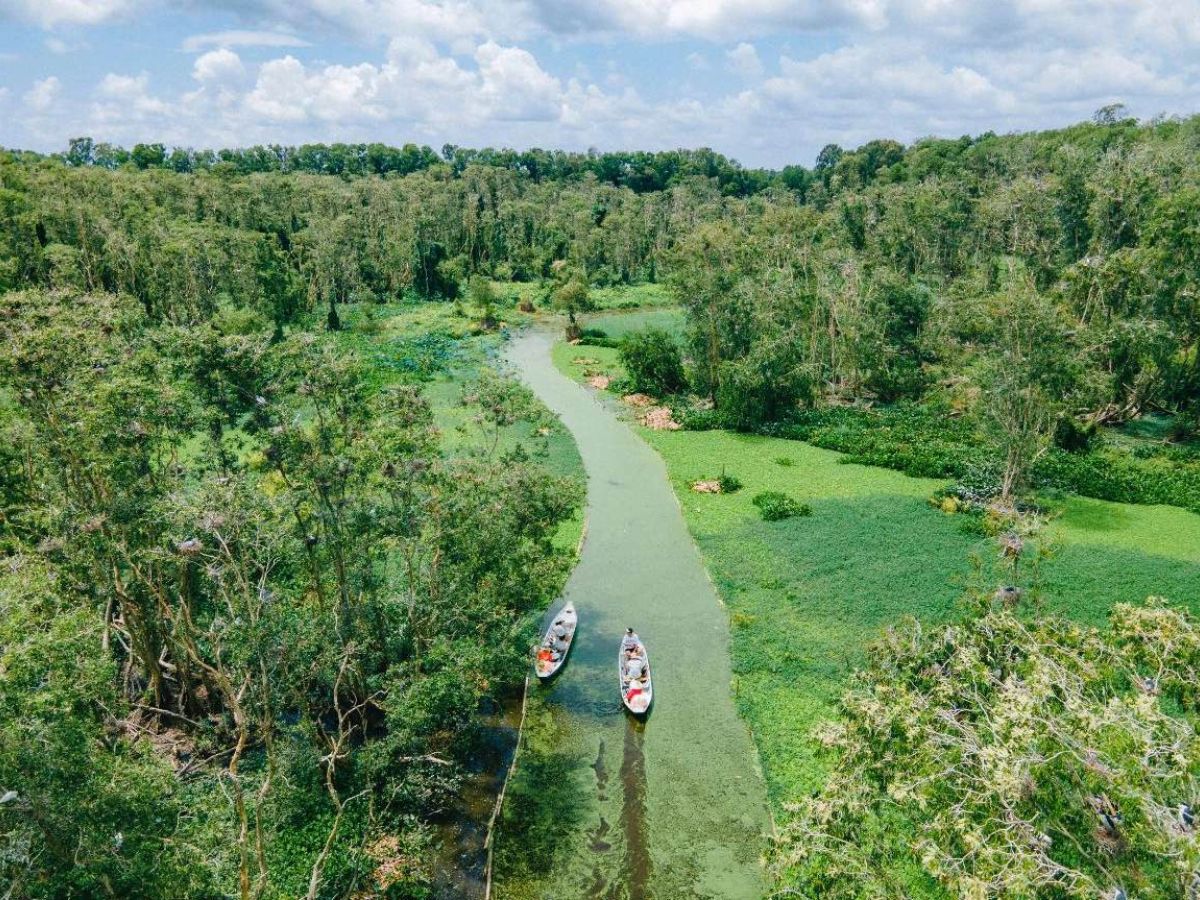
Tra Su Melaleuca Forest Ecotourism Area is located in Van Tra Hamlet, in the Hau River West area. (Source: Collected)
1.2. History of Formation and Ecological Significance
This area was originally a natural flooded forest area, once shrunk due to exploitation and hydrological changes. From 1992–1993, An Giang province implemented ecosystem restoration, gradually regenerating the forest and developing it into a conservation area combined with ecotourism. Currently, Tra Su Melaleuca Forest Ecotourism Area plays an important role in regulating the local environment, helping to retain fresh water, reduce flooding, and limit soil erosion. At the same time, it is also an ecological buffer zone between the Bay Nui area and the Long Xuyen Quadrangle, contributing to maintaining natural balance and protecting the characteristic landscape of the Mekong Delta.
1.3. Biodiversity Value of Tra Su Melaleuca Forest
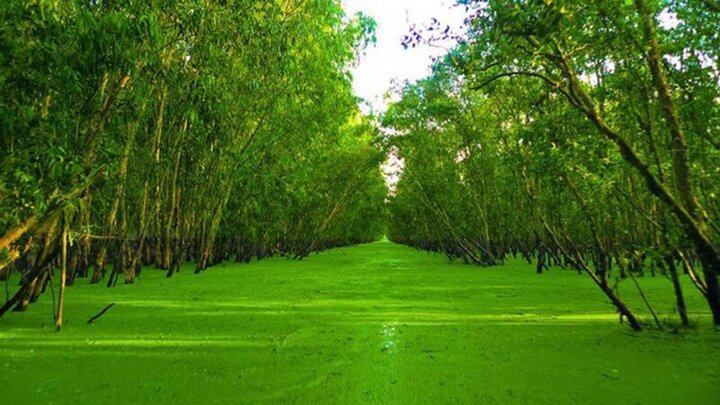
Tra Su Melaleuca Forest Ecotourism Area covers an area of about 845–850 hectares, representing a typical flooded melaleuca forest ecosystem of the Southwest region. It records about 140 plant species, over 70 bird species, along with many fish, reptile, and aquatic animal species. Notably, during the flood season, the green duckweed carpet covering the water surface creates ideal conditions for water birds to live and migrate. This ecosystem not only has conservation value but also serves as a "natural gene bank" for the Mekong Delta region, and is a suitable destination for sightseeing, research, and nature experience activities.
2. Directions to Tra Su Melaleuca Forest Ecotourism Area
2.1. Route from Ho Chi Minh City, Can Tho, Long Xuyen, Chau Doc
To reach Tra Su Melaleuca Forest Ecotourism Area, visitors often travel through major centers like Ho Chi Minh City, Can Tho, or Long Xuyen before reaching Chau Doc, the nearest transit point. From Ho Chi Minh City, one can choose a bus from Mien Tay Bus Station to Chau Doc, taking about 5–6 hours, or travel by private car along National Highway 1 and National Highway 91. From Can Tho and Long Xuyen, the distances are approximately 150 km and 60 km, respectively, conveniently accessible by motorbike or car via National Highway 91. Upon arriving in Chau Doc, visitors continue to cross Tra Su Bridge, turn onto Provincial Road 948, and travel about 6–7 km further to reach the ecotourism area entrance.
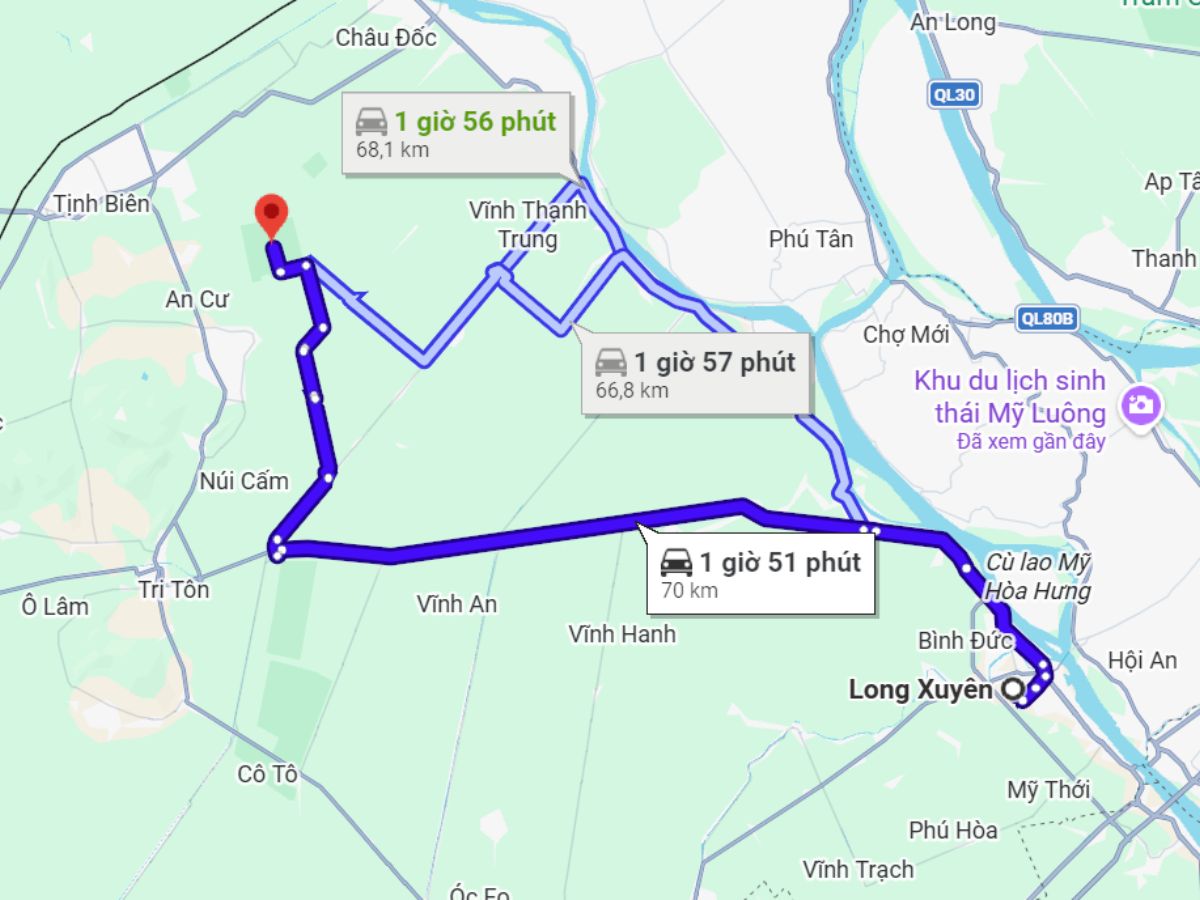
Tourists travel from Long Xuyen to the melaleuca forest for about nearly 2 hours. (Source: Collected)
2.2. Guide to moving within the forest
After entering the Tra Su melaleuca forest ecological tourist area, the exploration journey continues with characteristic means of transport of the riverine region, bringing an experience close to nature. Tourists often start with a tac rang to travel from the pier into the core forest area, then switch to a hand-paddled boat to weave through small canals covered in green duckweed. This is a popular way to travel, helping to observe the ecosystem and water birds clearly.
Additionally, the tourist area has arranged a bicycle path about 2 km long through the forest, suitable for those who want a gentle land experience. Combining multiple means of transport within the same journey not only optimizes time but also helps tourists clearly feel the diversity of the flooded ecosystem at Tra Su.
3. Latest ticket prices and services at Tra Su melaleuca forest ecological tourist area
The Tra Su melaleuca forest ecological tourist area currently applies an entrance ticket price of about 120,000 VND/person, which includes the experience of check-in points and a 2.2 km long bamboo bridge through the forest. Additionally, tourists can purchase an additional motorboat ticket for 60,000 VND/person/trip (round trip) to travel into the core forest, or a hand-paddled boat ticket for 60,000 VND/person/trip to weave through small canal routes.
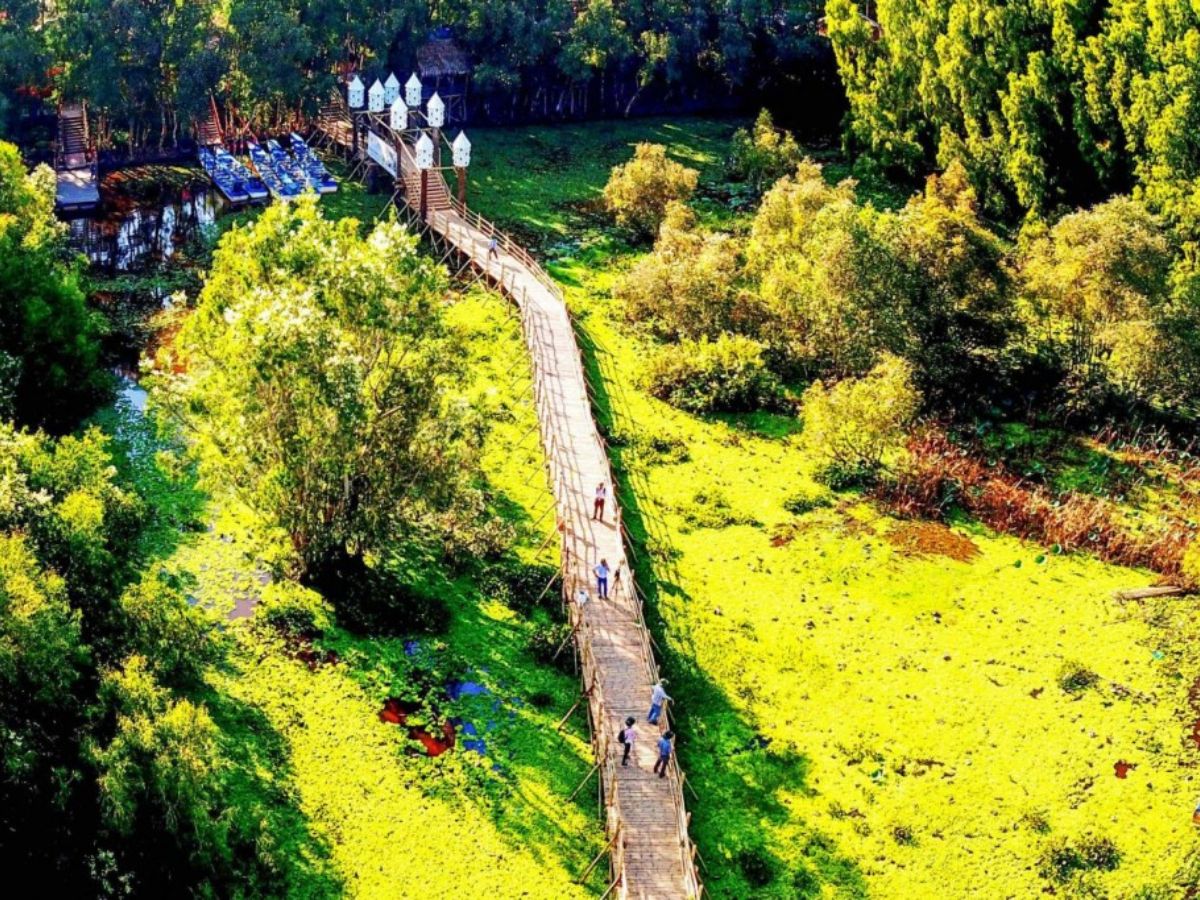
The tourist area has a general entrance ticket price, around 120,000 VND, depending on the time. (Source: Collected)
Some extended services such as visiting the spillway cost from 100,000–500,000 VND depending on the number of guests. For private needs, guests can rent a motorboat or a private canoe from 200,000–250,000 VND/trip. Other amenities include bicycle rental from 50,000 VND/bike, and a guide for about 300,000 VND/trip (maximum 3 hours). Children under 1.3m are free, from 1.3m are charged as adults.
4 . Experiences at Tra Su Melaleuca Forest Ecotourism Area
4.1. Explore the bamboo bridge through the forest
The bamboo bridge through the forest is one of the outstanding structures at Tra Su Melaleuca Forest Ecotourism Area, offering a walking experience amidst the characteristic flooded forest landscape. The bridge spans about 2.2 km, built from bamboo and wood, winding through melaleuca forests and green duckweed carpets. While walking on the bridge, visitors can observe the ecosystem on both sides up close, from the duckweed-covered water surface to the shaded melaleuca canopy. This is also an ideal spot for panoramic photos or to rest during the journey. For a complete experience, it is recommended to visit in the early morning or late afternoon when the light is soft, the air is cool, and the crowds are not yet too large.
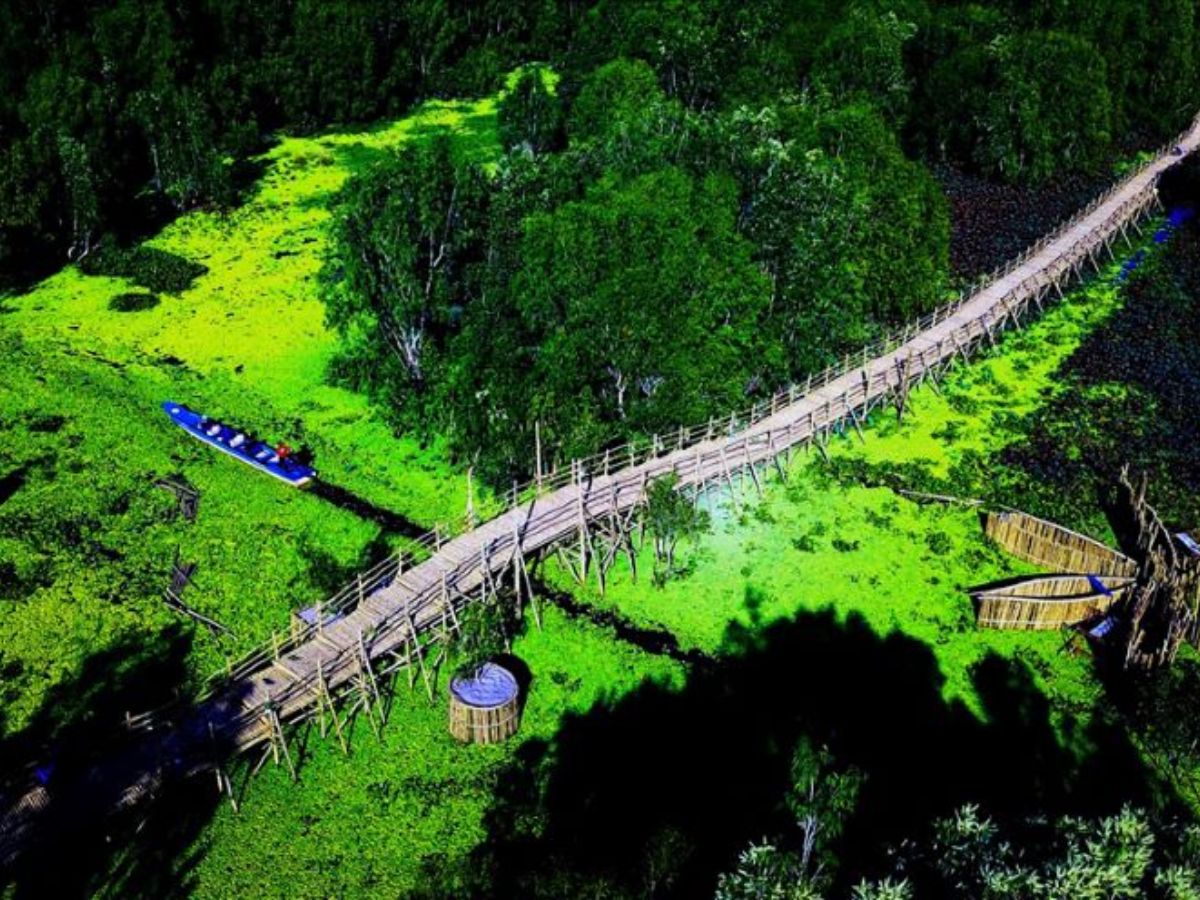
Tourists experience walking on the bamboo bridge through Tra Su cajeput forest. (Source: Collected)
4 .2. Admire the panoramic view from the observation tower
The observation tower at Tra Su cajeput forest ecotourism area is a stopover point that helps tourists capture the entire scenery of the cajeput forest from above. With a height of about 20–25 m, the tower allows you to cast your eyes over the entire flooded area, patches of green duckweed, and even the nearby residential areas of the Bay Nui region. Here, tourists can use binoculars to observe water birds, especially in the early morning or late afternoon when flocks of storks and egrets return to their nests. The elevated space offers a different perspective compared to the water level, helping to clearly feel the scale and diversity of the ecosystem. This is also a suitable spot for resting and taking panoramic photos.
4 .3. Experience rowing boats and motorboats in the flooded forest
The journey to explore Tra Su cajeput forest ecotourism area is often associated with experiences of traveling by motorboat and rowing boat. The motorboat will take tourists across large canals, gliding on the water covered with green duckweed, creating a feeling of moving through a "sea of vegetation". Afterwards, the rowing boat continues to take visitors deeper into the small creeks, where the space becomes quieter, with only the sounds of water and forest birds. This is when tourists can easily observe water birds, fish, and characteristic vegetation. This experience is suitable in the early morning or late afternoon, when the light is beautiful and the ecosystem is most active.
4 .4. Observe water birds and capture nature photography
One of the notable experiences at Tra Su cajeput forest ecotourism area is observing water birds and capturing characteristic natural moments of the flooded ecosystem. The cajeput forest area is home to many species of storks, egrets, herons, and seasonal water birds, often appearing in large numbers in the early morning and late afternoon. Tourists can combine traveling by boat or walking to quiet spots for observation and photography.
5. Cuisine and specialties to try when visiting Tra Su cajeput forest ecotourism area
Not only impressive with its flooded landscape, Tra Su cajeput forest ecotourism area also offers a cuisine experience rich in the Mekong Delta style, associated with the natural products of the Bay Nui – Long Xuyen Quadrangle region. The menu here is not elaborate, but it conquers diners with its freshness, rich flavor, and rustic preparation methods. Grilled snakehead fish is a popular choice with a lightly charred skin, fragrant and sweet fish meat, served with fresh herbs and tamarind fish sauce. During the flood season, linh fish hot pot with dien dien flowers becomes a highlight with its thanh (sourish), lightly fatty taste and characteristic aroma. Besides, chicken grilled with la chuc leaves offers a subtle essential oil aroma, creating a unique and unforgettable aftertaste. After the meal, tourists can choose to buy cajeput honey, herbal tea, or lotus products as a taste of Tra Su to take home.
6. Suggested itinerary for a 1-day exploration of Tra Su cajeput forest ecotourism area
A day at Tra Su cajeput forest ecotourism area can start early in the morning to enjoy the fresh air and the characteristic landscape of the flooded forest. From around 7:00 AM to 10:30 AM, tourists should travel by motorboat into the heart of the forest, then switch to a rowing boat to navigate through small canals covered with green duckweed. This is the ideal time to observe water birds and take photos when the light is still soft. At the end of the morning, continue visiting the bamboo bridge through the forest and ascend the observation tower to admire the panoramic view from above, while also resting before entering a slower pace of experience.
The afternoon, from around 12:30 PM to 2:30 PM, is suitable for combining dining and relaxation in a picnic style. Tourists can have meals at restaurants within the ecotourism area or prepare light snacks for a picnic at the resting huts in the forest. Afterwards, spend time cycling or walking around the ecological trails, enjoying the quiet atmosphere and taking souvenir photos with family. The itinerary is not too packed, prioritizing a gentle experience to maintain the relaxing spirit amidst nature.
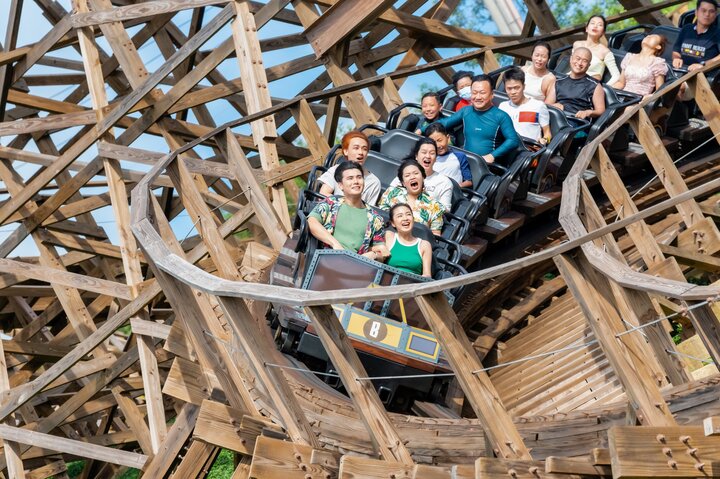
When visiting An Giang, tourists can combine their journey to Ha Tien, then take a ferry to Phu Quoc to experience the island and sea space in the South. Here, tourists can experience the Hon Thom cable car, which is nearly 8 km long and crosses the sea, connecting Phu Quoc Island with the An Thoi archipelago, while admiring the panoramic view of the sea from above.
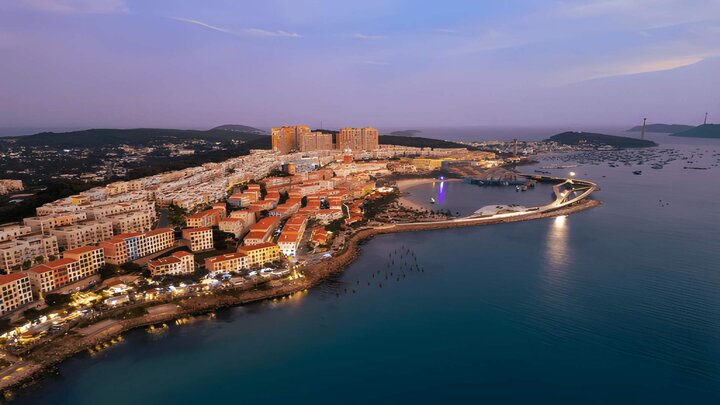
In addition, Sun World Hon Thom is an entertainment destination with modern sea activities and a water park. The Sunset Town area impresses with its Mediterranean-style architecture, many iconic structures, and international-scale shows, creating a vibrant atmosphere in the afternoon and evening. This is a suitable option for tourists who want to combine the Mekong Delta's ecological experience with island resort relaxation.
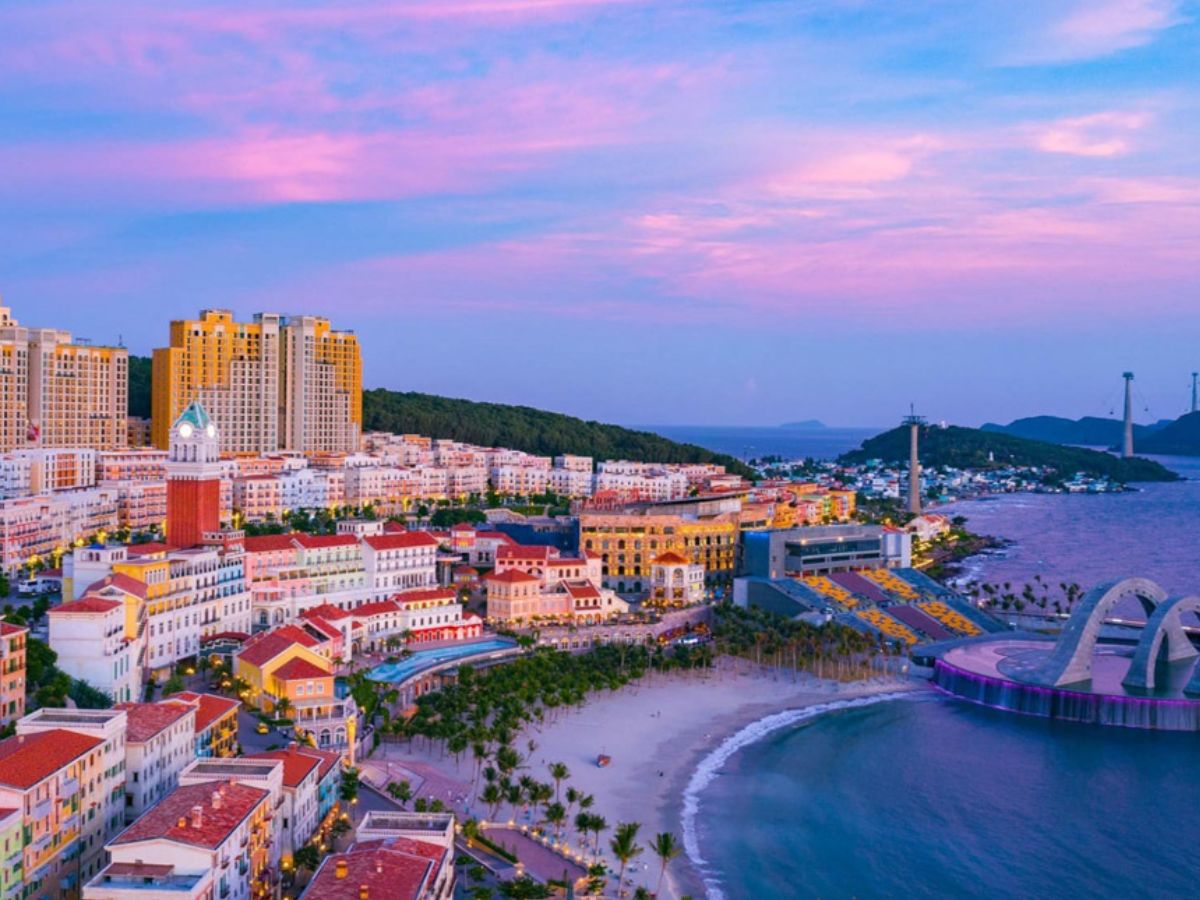
Hoang Hon town space with unique Mediterranean architecture. (Source: Collected)
The journey to explore the Tra Su cajeput forest ecological tourist area not only stops at visiting the flooded landscape but also an opportunity to fully experience the natural rhythm of the Western region. From the canals covered with green duckweed, flocks of birds returning to their nests, to the rustic cuisine rich in river life, each experience brings gentle relaxation.