
















1. Thoai Ngoc Hau Mausoleum in the historical flow of An Giang
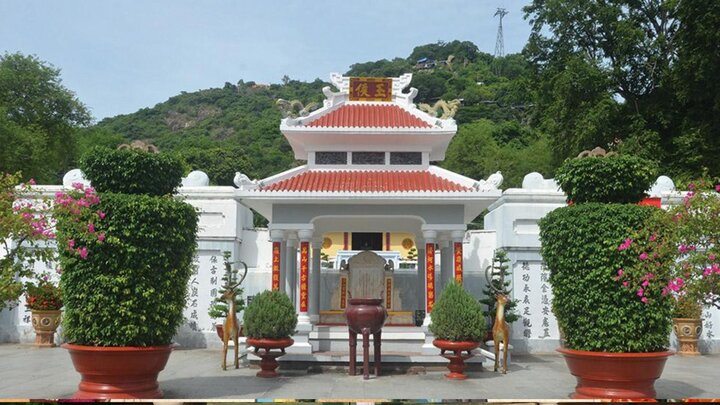
Thoai Ngoc Hau Mausoleum , also known as Son Lang, is a historical and cultural relic located at the foot of Sam Mountain, in Vinh Te Ward, An Giang Province. The structure was built in the early 19th century, associated with the life and career of Nguyen Van Thoai, an official who played an important role in managing and reclaiming the southwestern region under the Nguyen Dynasty. Over time, the mausoleum has become a structure reflecting the formation and development of An Giang.
Thoai Ngoc Hau Mausoleum is located at the foot of Sam Mountain, reflecting the historical imprint of An Giang's formation. (Source: Collected)
Not only is it the resting place of Nguyen Van Thoai and his two wives, but the mausoleum also acknowledges contributions to expanding the territory and stabilizing the lives of residents in this area. The value of the structure lies not in its scale but in its historical significance preserved through generations. The fact that the mausoleum was ranked as a national historical and cultural relic in 1997 demonstrates its role in Vietnam's heritage system.
The location of Thoai Ngoc Hau Mausoleum is within the overall Sam Mountain scenic area, a convergence of many cultural and religious structures familiar to tourists. The presence of the mausoleum creates a natural connection with nearby attractions such as Ba Chua Xu Shrine, Tay An Pagoda, and Hang Pagoda. Consequently, the journey to explore this area is not just for sightseeing but also helps visitors gain a deeper understanding of the historical and cultural context of the Chau Doc region.
2. Notable Spaces within Thoai Ngoc Hau Mausoleum
2.1. The Entrance Gate Evokes the Solemnity of a Relic Site
The entrance gate of Thoai Ngoc Hau Mausoleum is built in the form of two large semi-circular gates, surrounded by thick walls, creating a sense of solidity and enclosure. From the gate, visitors can clearly see the extended spatial axis leading to the main tomb area, forming a symmetrical layout characteristic of Nguyen Dynasty mausoleum architecture. These elements contribute to the orderly organization of the space.
Additionally, the entrance is elevated with laterite stone steps, usually nine steps, leading up to the mausoleum courtyard. This detail serves both a technical function and creates a transition from the outer space to the sacred inner area. This arrangement helps visitors clearly perceive the change in atmosphere, from the traffic area to the memorial zone.
2.2. The Main Tomb Area is the Most Important Stop in the Entire Complex
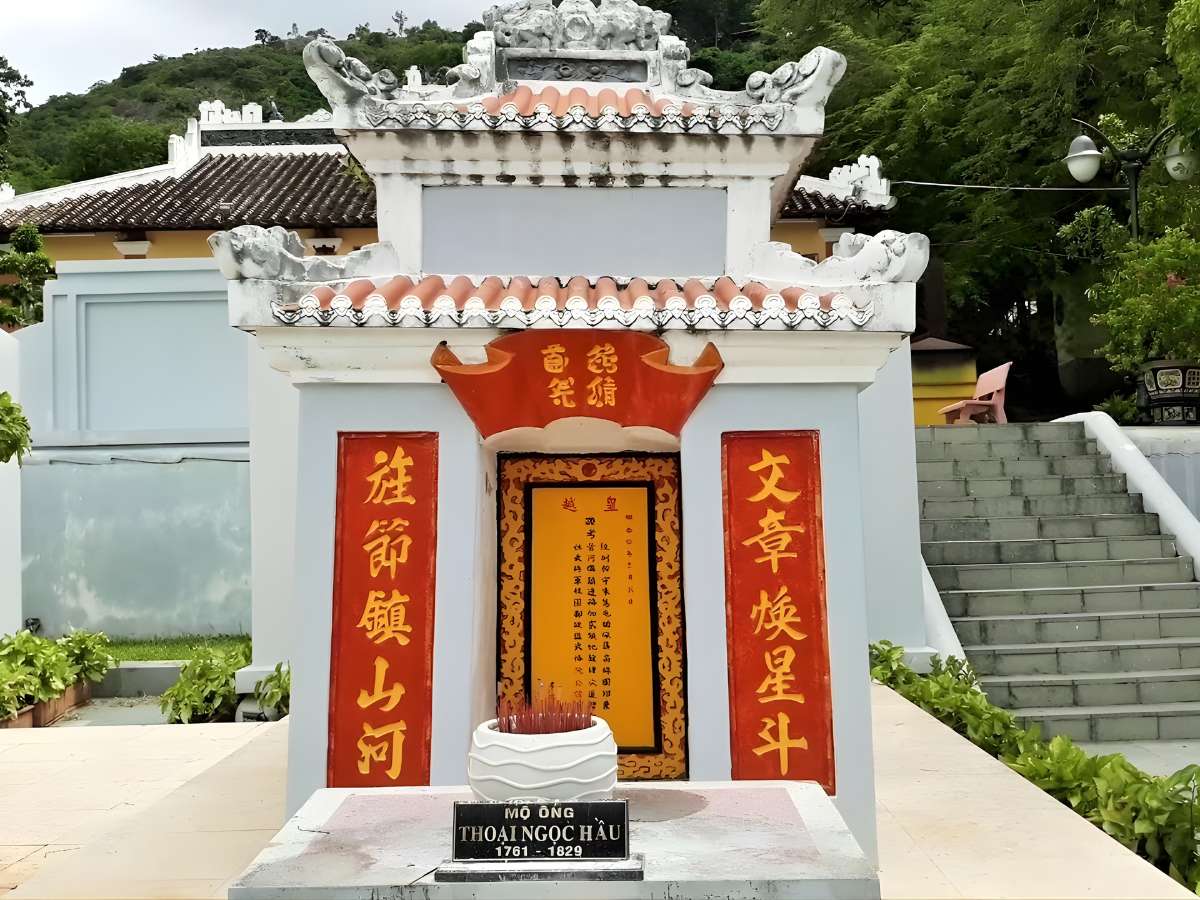
The main tomb area is located at the center of the entire complex, where Thoai Ngoc Hau and his two wives are interred. The tombs are built with traditional materials such as lime mortar, with a screen wall in front inscribed with Han characters, reflecting the popular mausoleum architectural style of the 19th century. This space is usually surrounded by a wall, creating a clear separation from the auxiliary areas.
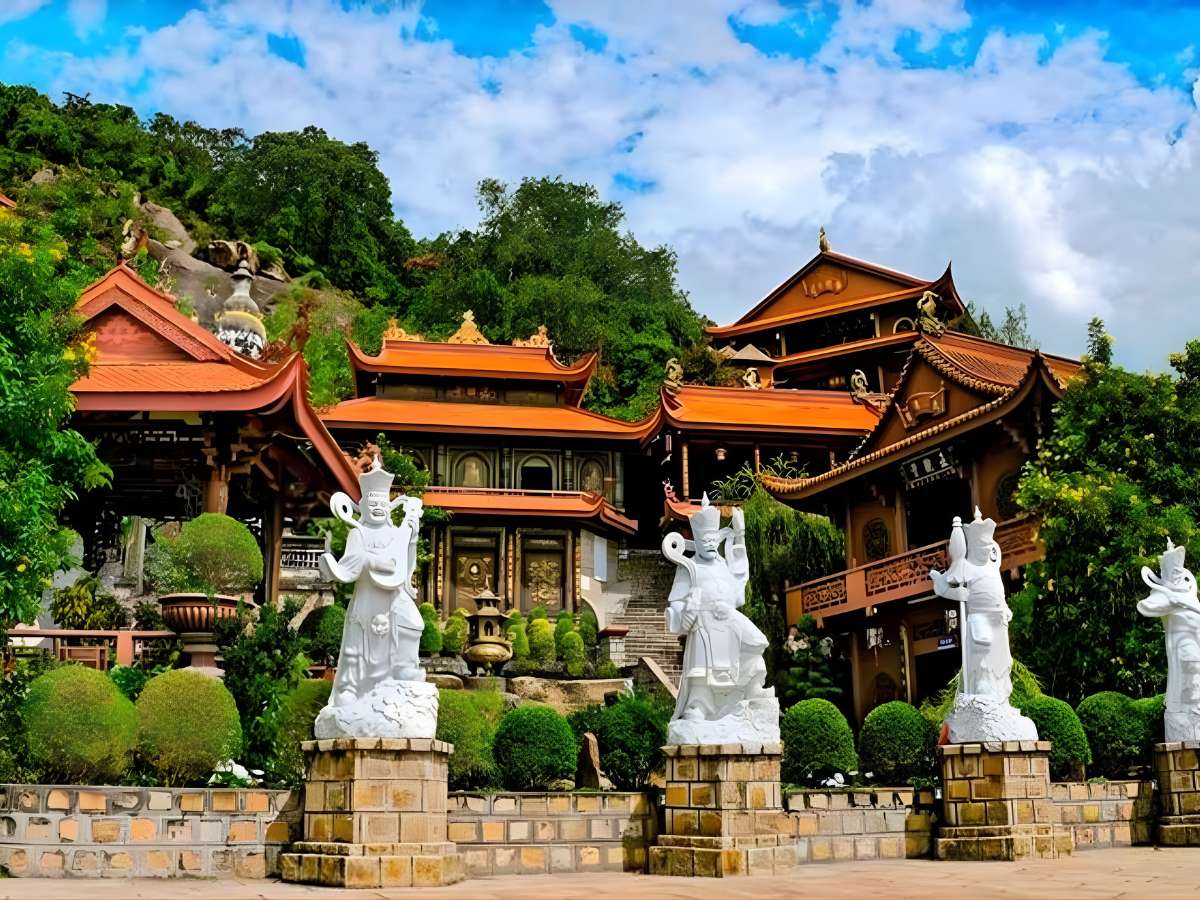
The mausoleum's layout harmonizes traditional architecture with the lush green space of Sam Mountain. (Source: Collected)
Besides the main tomb area, on both sides there are also large plots of land containing many anonymous graves, believed to be the burial place of those who participated in digging the Vinh Te Canal. This indicates that the commemorative significance is not only for individuals but also extends to the labor community in history. This arrangement adds social and humanistic value to the mausoleum.
2.3. Stele inscriptions help visitors quickly understand historical value
Within the mausoleum grounds are stone stelae recording the merits and biography of Thoai Ngoc Hau, including the Thoai Son stele housed in a separate small pavilion. The content of the stelae often uses Han characters, detailing the process of land reclamation, organization of production, and border defense. This serves as direct source material, helping visitors quickly understand the historical context without needing to consult many other documents.
The value of the stelae lies not only in their content but also in their form of expression, with stone carving techniques and decorative layouts in traditional style. The stelae act as a bridge between tangible relics and historical information, giving the mausoleum space more depth in terms of perception. Consequently, visiting is not just about observation but also about the process of learning.
3. Suitable experiences when visiting Thoai Ngoc Hau's Mausoleum
3.1. Learn about historical figures through on-site stelae
One of the suitable experiences when visiting Thoai Ngoc Hau's Mausoleum is to spend time reading the content on the stelae and information boards within the grounds. Details about Nguyen Van Thoai's life, from participating in military campaigns to land reclamation duties, are clearly summarized. This gives visitors an overview of his role in the region's history.
Accessing information directly on-site also helps viewers connect the textual content with the actual space. Standing before the tomb or looking towards the Vinh Te Canal, the information on the stelae becomes more concrete, creating a sense of connection between history and the location. This experience is suitable for those interested in the academic aspect of tourism.
3.2. Observe the mausoleum's architecture in a quiet space
The atmosphere at the mausoleum usually remains quiet, providing a conducive environment for observing architectural details. From the surrounding walls and entrance gates to the tomb area and the temple, each part clearly reflects the construction style of the Nguyen Dynasty. The combination of architecture and the terrain of Sam Mountain makes the overall structure harmonious with the surrounding landscape.
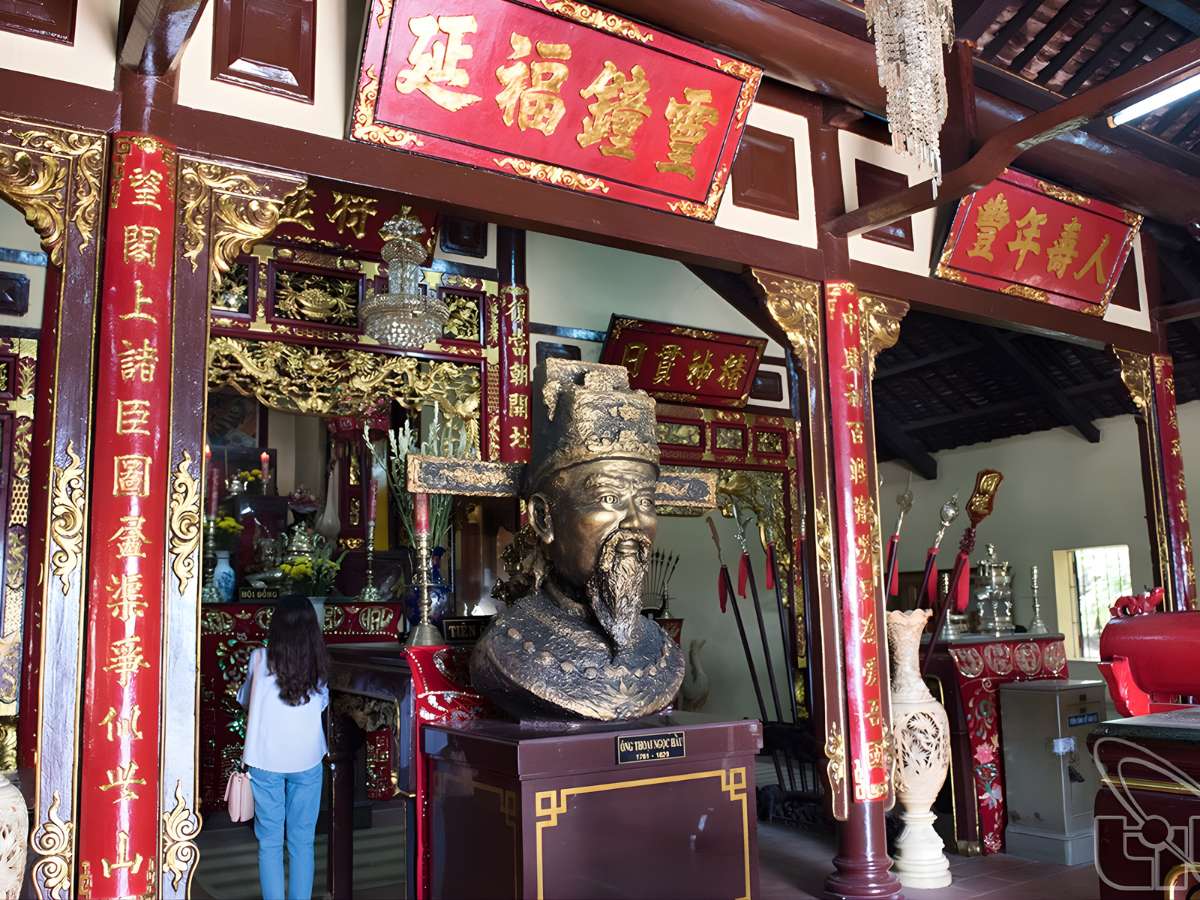
The mausoleum space offers a tranquil visiting experience, suitable for appreciating historical depth. (Source: Collected)
Additionally, elements such as greenery, spacious courtyards, and views of the canal create an easily observable environment without distractions. Visitors can move slowly, observing details like patterns, materials, and spatial arrangements. This approach is suitable for understanding architectural value rather than just a quick visit.
3.3. Combine this relic with the Nui Sam tour route
The mausoleum is located within the Nui Sam relic cluster, near sites such as Ba Chua Xu Temple, Tay An Pagoda, and Hang Pagoda. The distance between these points ranges from tens to hundreds of meters, facilitating convenient combination within a single tour route. This helps optimize time and enhance the connectivity of the exploration journey.
Combining multiple points in the same area also helps visitors better understand the cultural and religious landscape of Chau Doc. From historical tombs to religious structures, each site reflects a different aspect of local life. Consequently, the visit becomes more multi-dimensional in content.
4. How to visit Thoai Ngoc Hau Mausoleum more effectively
4.1. Follow the axis from the entrance to understand the mausoleum's layout
When visiting Thoai Ngoc Hau Mausoleum, moving along the main axis from the entrance to the tomb area helps viewers grasp the overall layout. This axis is usually designed straight, creating a connection between spaces such as the mausoleum courtyard, the small pavilion, and the central tomb area. This movement method suits the symmetrical structure of the complex.
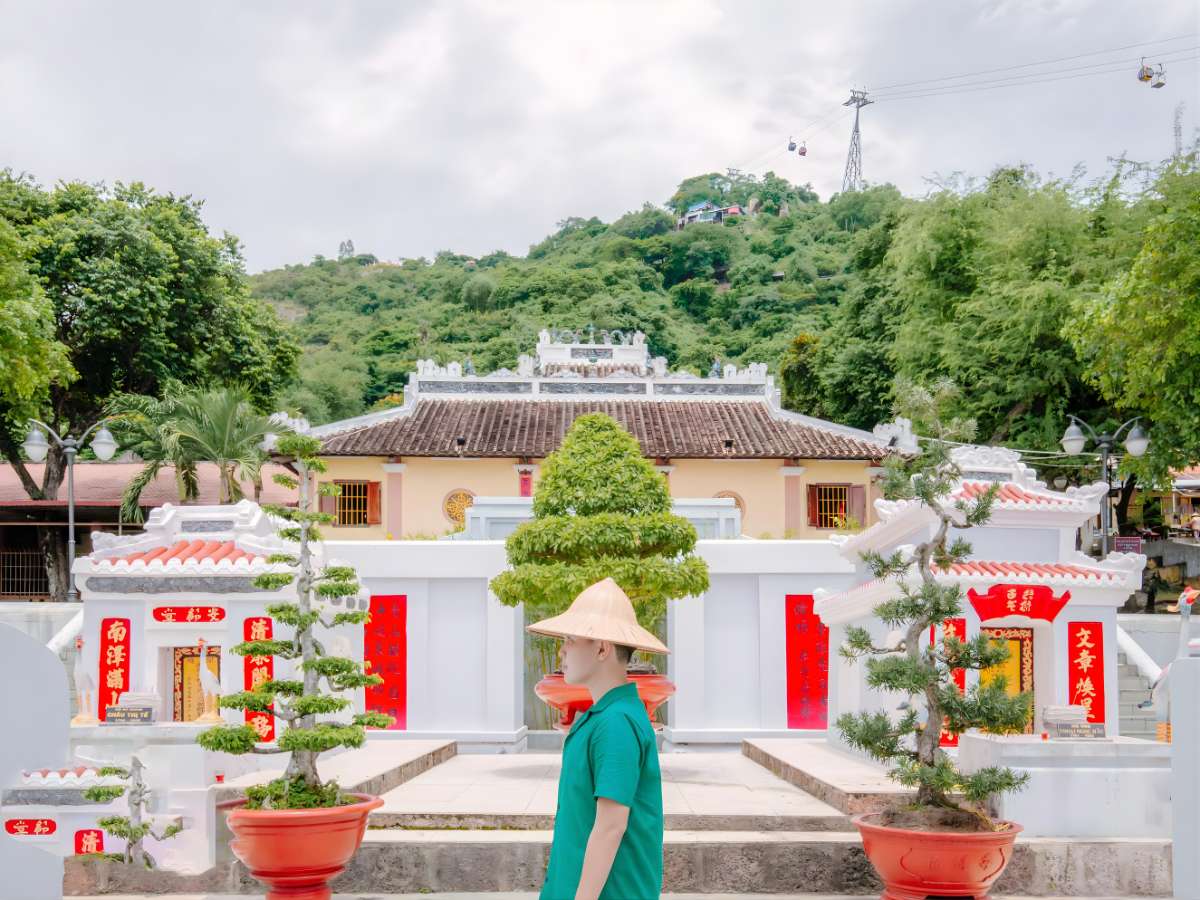
Morning is the ideal time to visit the tomb, enjoying the soft light and peaceful atmosphere. (Source: Collected)
Additionally, following the axis helps observe the order of spatial layers, from outside to inside. This aids in understanding the organization of Nguyen Dynasty tombs, where each area has its own function. Consequently, the visiting experience becomes more systematic rather than fragmented.
4.2. Spend time reading information before taking photos
Before taking photos, reading information boards and steles helps visitors understand the meaning of each area. This prevents approaching the relic solely through images while neglecting the historical content. Information about construction year, figures, and related structures is usually presented within the premises.
With foundational knowledge, observing and capturing images becomes more purposeful. Visitors can choose angles that align with the content they wish to explore, such as the tomb area, stone steles, or the overall architecture. This approach balances experiential elements with image recording.
4.3. Maintain solemnity when moving within the relic site
The tomb site is a place of remembrance, thus maintaining solemnity during movement is essential. Visitors are usually encouraged to walk quietly, speak softly, and avoid behaviors that disrupt the shared space. This helps preserve an atmosphere appropriate to the nature of the relic.
Furthermore, adhering to the regulations at the relic site contributes to protecting the structure from the effects of time and visitor traffic. Small actions like not touching artifacts or not climbing on the tomb area help preserve the original value of the tomb. This is an appropriate approach for historical relics over 200 years old.
4.4. Choose a suitable time to visit during the day
The visiting time for Thoai Ngoc Hau Tomb can directly affect the actual experience, especially as the relic site is located near crowded pilgrimage sites at Sam Mountain. The morning hours from 7 AM to 9 AM usually have a stable number of visitors, with natural light conducive to observing the architecture and reading inscriptions. This is also when the temperature is not too high, suitable for moving around the spacious grounds.
During peak periods such as the 4th lunar month, when the Via Ba Chua Xu festival takes place, the number of visitors in the Sam Mountain area can increase significantly, leading to crowds at the tomb site. Choosing less crowded hours during the day helps reduce congestion and maintain the necessary quiet space. This also facilitates observing details and accessing information more clearly.
Thoai Ngoc Hau Tomb concludes the visiting journey with historical values tied to the land reclamation of An Giang. The solemn space along with the architectural system and steles helps visitors better understand the formation context of the Chau Doc region. Visiting the tomb with Sun World Hon Thom offers a different perspective to the trip, going beyond just sightseeing.