















Record-breaking construction acceleration – Phu Quoc International Airport races against time to welcome APEC 2027
Starting from July 2025, a series of important projects have been urgently constructed, including the construction of runway No. 2, passenger terminal T2, and VIP terminal, creating a key infrastructure foundation for the preparation of APEC 2027 - Vietnam's special foreign affairs event.
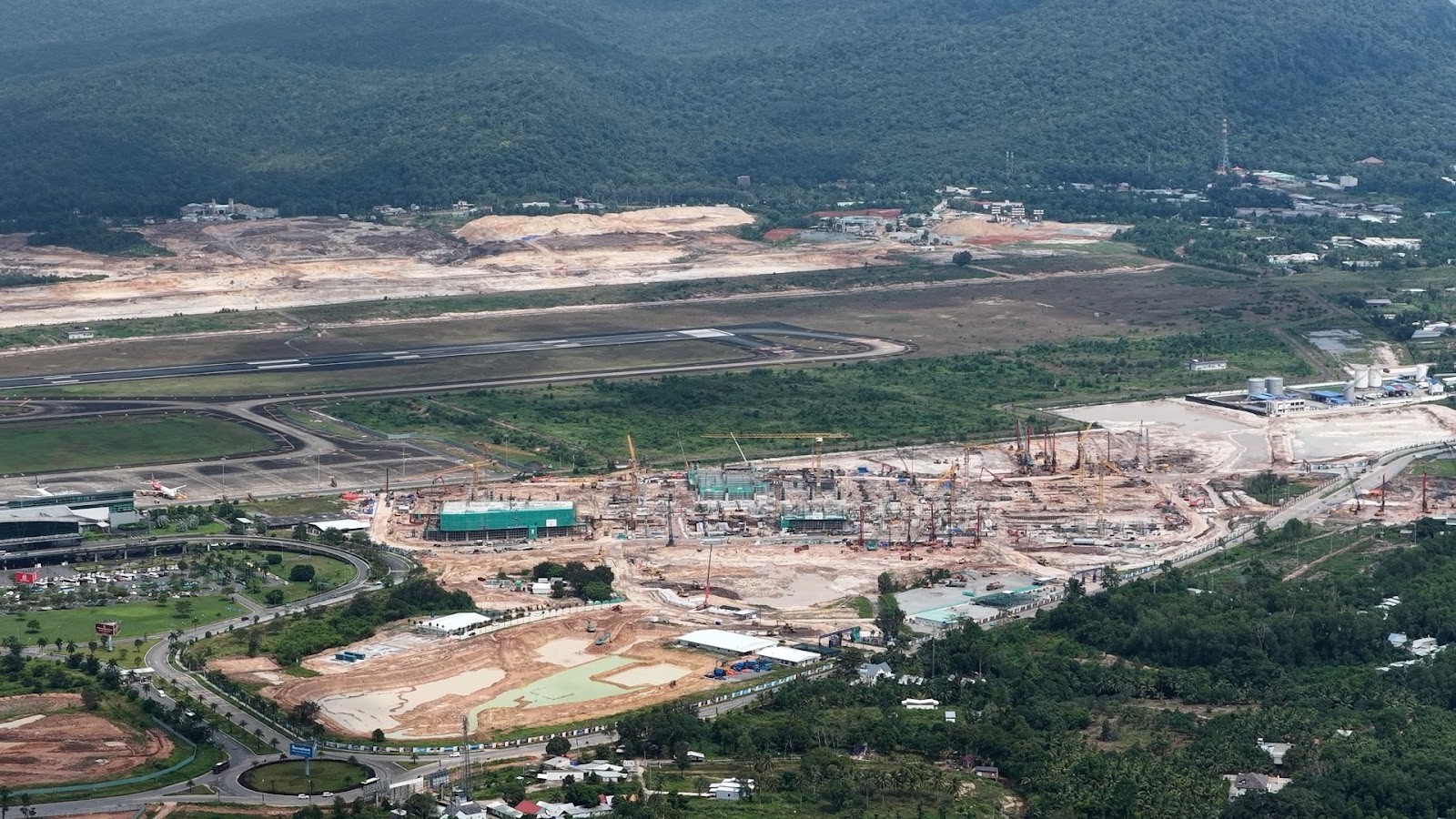
Phu Quoc International Airport Project breaks construction progress.
According to the investor's report, passenger terminal T2 alone has recorded impressive construction progress, completing the structure up to the 4th floor after only 4 months of implementation. It is expected that by the end of 2025, terminal T2 will complete about 85% of the rough structure; the VIP terminal will reach 100% rough structure, 100% steel structure, and complete the entire MEP system (mechanical, electrical, plumbing). These are important progress milestones, showing the determination in organizing construction, mobilizing resources, and overall project coordination.
According to the plan, runway number 2, 3,300m long, will be completed on June 30, 2026; the VIP terminal is expected to be completed on October 15, 2026; passenger terminal T2 will be completed on March 30, 2027, about half a year earlier than the APEC 2027 service milestone. Thus, the entire project is expected to be completed in just 18 months of construction – a rare timeframe for a large-scale, complex aviation infrastructure project requiring high technical standards.
A world-leading modern aviation gateway, elevating Phu Quoc's position on the international map
Not only a project to serve APEC 2027, Phu Quoc International Airport is also oriented to become a world-leading modern aviation gateway, affirming Phu Quoc's position on the international stage. The expansion project, invested by Sun Group Corporation, with a total capital of nearly 22,000 billion VND, is identified as a strategic infrastructure work, creating a long-term foundation for the economic, tourism, and foreign affairs development of the Pearl Island.
According to the approved plan, after completion, Phu Quoc International Airport will meet 4E standard according to the regulations of the International Civil Aviation Organization (ICAO), capable of receiving wide-body aircraft such as Boeing 747, Boeing 787, or Airbus A350. The project has a total planned area of up to 1,050 hectares, increasing the airport's operating capacity to 20 million passengers per year, about 4.5 times the current capacity, meeting the strong growth demand of Phu Quoc in the new phase.
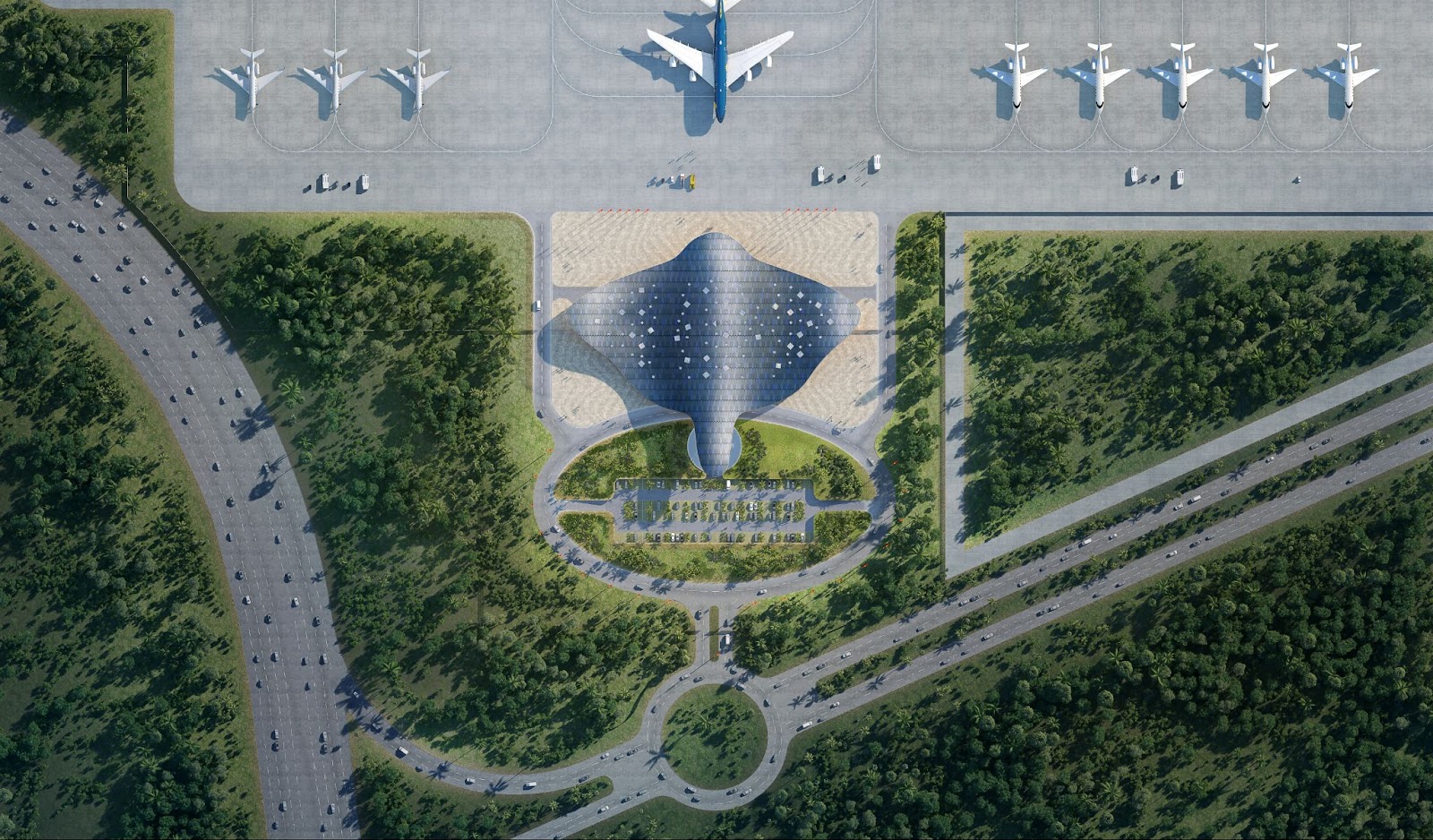
The VIP terminal was designed by Italian architect Marco Casamonti, inspired by the image of a sea eagle – a symbol of freedom and harmony with nature.
The runway and apron infrastructure have been synchronously invested, including the expansion of the existing runway No. 1 to a length of 3,500m and the construction of a new runway No. 2 with a length of 3,300m. The aircraft apron system has been expanded to over 120 parking positions, with up to 71 positions directly connected to modern jet bridges, contributing to enhancing the capacity for international flight operations, optimizing passenger experience, and operational efficiency.
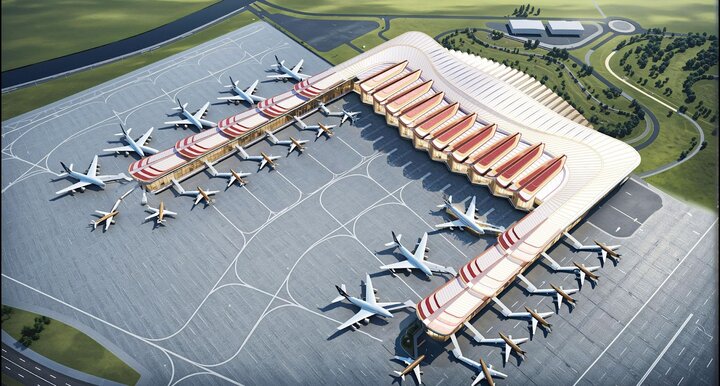
Besides scale and capacity, the project also makes a strong impression in terms of architecture and technology. Passenger Terminal T2 is designed inspired by the image of the Fire Phoenix – a symbol of strength, rebirth, and aspiration for international reach. The VIP terminal, with a construction area of 6,000m², was designed by Italian architect Marco Casamonti, inspired by the image of a sea eagle – a symbol of freedom, agility, and harmony with nature, serving as a reception space for national leaders during APEC 2027 and important events in Phu Quoc in the future.
Notably, Phu Quoc International Airport will synchronously apply a series of world-leading advanced aviation technologies such as the TAM – Total Airport Management model, biometric systems for seamless, contactless journeys, the modern ICS baggage handling system, along with automated apron solutions, underground refueling, and remote-controlled jet bridges. The project is also operated and consulted by Singapore's Changi Airport Group (CAG), aiming to set a new standard for leading smart airports in the region, with check-in times reduced to approximately 15–20 seconds per passenger.
Long-term breakthrough momentum for Phu Quoc
Within the overall preparation for APEC 2027, Phu Quoc International Airport not only serves as the 'gateway' for international delegations but also as a key link in the long-term development strategy of the Phu Quoc special economic zone. The acceleration of key airport projects, completed ahead of schedule, demonstrates a high determination to realize the goal of successfully organizing this particularly important foreign affairs event for Vietnam.
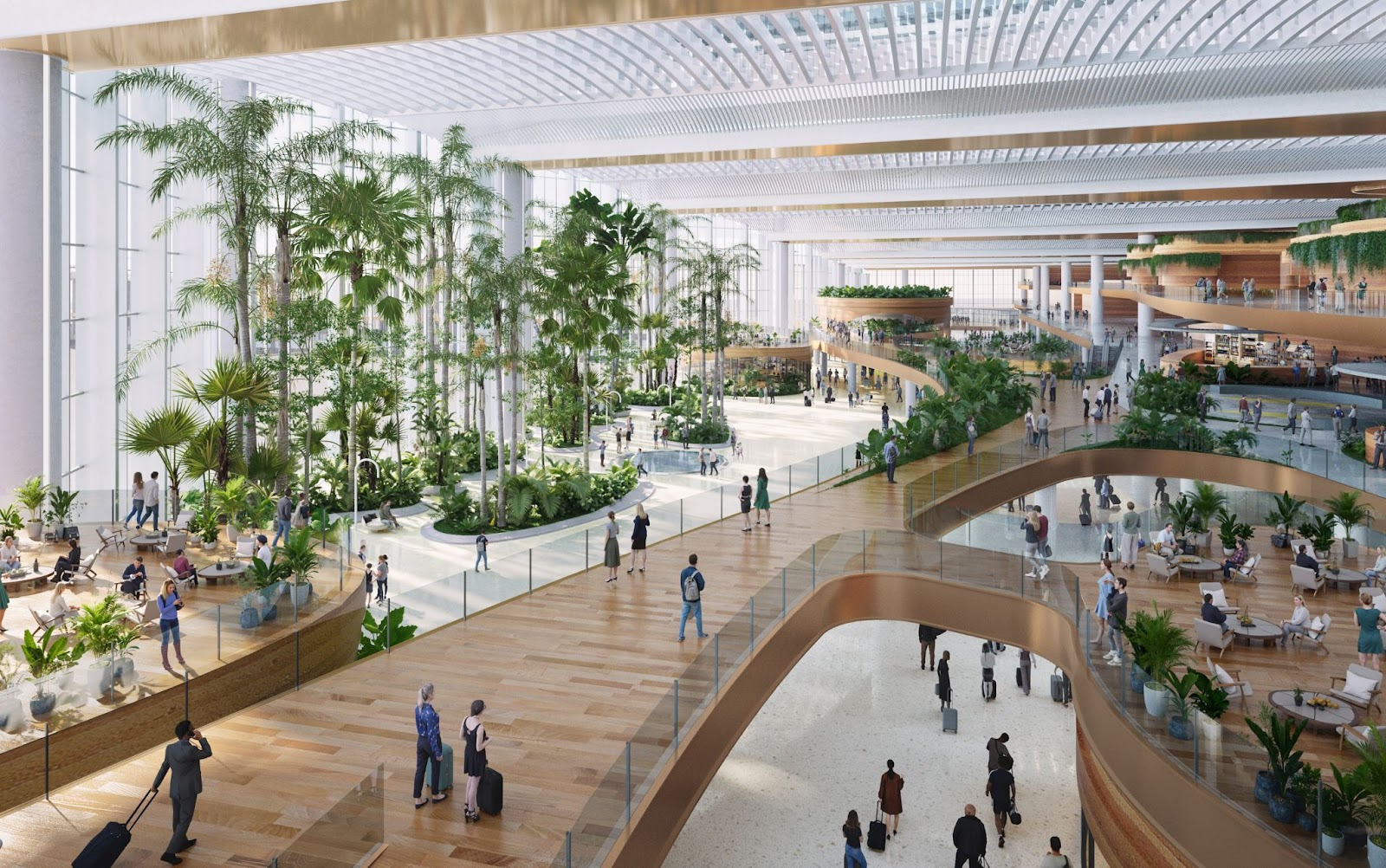
Perspective of Phu Quoc International Airport Passenger Terminal.
International practice shows that destinations that have hosted major events like APEC or the Olympics – from Singapore, Busan to Jeju Island – have all made strong breakthroughs in infrastructure, position, and global competitiveness. For Phu Quoc, APEC 2027 is an important catalyst to promote the transformation from a paradise for resort tourism into a modern, innovative center for marine economy, tourism, and services in Vietnam and the region.