
















1. Overview of APEC and the context of APEC 2027
The Asia-Pacific Economic Cooperation (APEC) forum was established in 1989 with the goal of promoting regional economic integration, trade and investment liberalization, and creating a favorable environment for economies to develop harmoniously.
From its inception, APEC was designed as an open cooperation mechanism, based on consensus and voluntary principles, without legal binding force. This has helped APEC remain flexible, adaptable, and suitable for the great diversity in political institutions, development scales, and economic interests among its members.
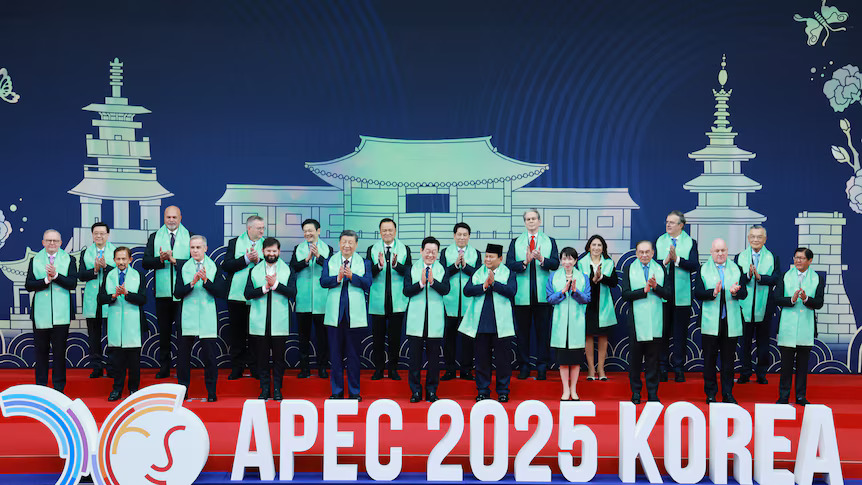
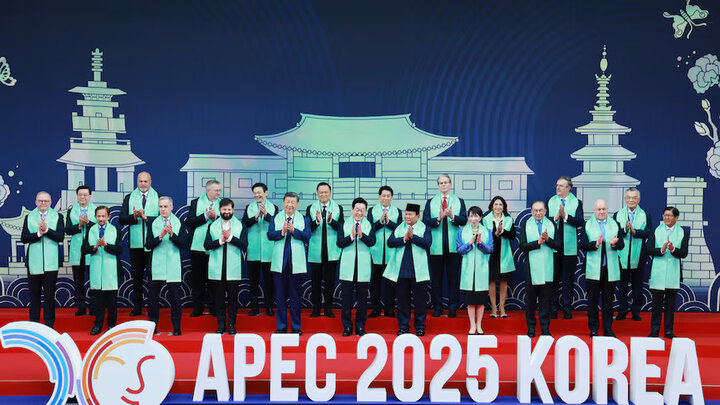
APEC 2025 conference held in Gyeongju city, South Korea from October 27 to November 1, 2025.
Today, APEC is a forum that brings together 21 member economies, accounting for about 60% of global GDP and nearly 50% of world trade. It is where leaders, ministers, and senior officials of the region discuss policies, coordinate cooperation in supply chains, digital economy development, green growth, and sustainable development. APEC's role becomes even more important amidst a volatile global economy, increasing strategic competition, and the growing need to create an open space for cooperation.
In that context, APEC 2027 - an event hosted by Vietnam - becomes one of the most anticipated milestones in regional economic cooperation. The APEC 2027 conference is expected to attract the participation of leaders from 21 member economies, thousands of businesses, international organizations, and global media. Notably, the selection of Phu Quoc as the venue makes the phrase APEC 2027 Phu Quoc a shining example, reflecting Vietnam's remarkable growth in its capacity to organize large-scale international events. With modern infrastructure, unique landscapes, and high-class services, Phu Quoc is expected to be a premier conference venue, contributing to the success of the year APEC 2027 .
2. Founding members of APEC and the expansion process
2.1. Which countries are the founding members of APEC?
According to forum documents and academic sources, in 1989, in Canberra (Australia), APEC was established with 12 founding economies, including: Australia, Brunei, Canada, Indonesia, Japan, South Korea, Malaysia, New Zealand, Philippines, Singapore, Thailand, and the United States.
This founding group represents many strategic regions of the Pacific Rim and is considered the vanguard force promoting global trade liberalization. The diversity of the founding economies - from developed to emerging economies - creates a flexible foundation, ensuring APEC becomes an open and comprehensive cooperation platform. This is why APEC has quickly become one of the most influential economic and trade mechanisms in the world.
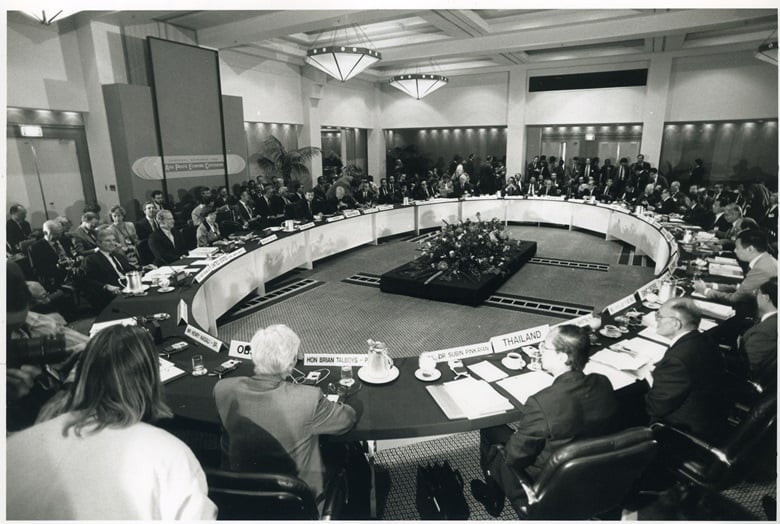
APEC was established in 1989 in Canberra (Australia).
2.2. First Expansion in 1991: China, Hong Kong (China), Taiwan (China)
In 1991, APEC conducted its first expansion with the participation of China, Hong Kong (China), and Taiwan (China). These are three important economic centers in East Asia, playing a significant role in international trade and global supply chains.
The 1991 expansion not only enhanced APEC's competitiveness but also created strategic balance among its internal regions. The participation of major economies elevated APEC's position in global trade discussions and laid the foundation for a period of strong growth in regional trade.
2.3. Expansion 1993-1994: Mexico, Papua New Guinea, Chile
The 1993-1994 period marked a significant shift as APEC expanded into Latin America. Mexico and Papua New Guinea joined in 1993, followed by Chile in 1994, completing the trans-Pacific connectivity network. Thanks to the participation of these economies, APEC's scope of cooperation became more comprehensive, truly reflecting its nature as a forum connecting both sides of the Pacific.
This expansion also helped APEC consolidate its central role in global trade issues, connecting supply chains between Asia and the Americas – two regions with the most dynamic growth rates in the post-Cold War era. The participation of new economies also brought diversity of interests, making discussions within APEC more substantive.
2.4. Expansion in 1998: Peru, Russia, Viet Nam
In 1998, the third and final expansion was carried out, with the accession of Peru, Russia, and Viet Nam. This is considered a milestone that completed APEC's geographical scope, as the forum officially encompassed the entire Pacific Rim. Characterized by three economies from important geopolitical regions, this accession helped APEC increase its coverage and consolidate its role as the world's largest inter-regional economic cooperation forum.
For Viet Nam, 1998 was a historic turning point. Joining APEC helped Viet Nam expand its export markets, promote economic reforms, and access advanced governance models. Viet Nam also had the opportunity to participate deeply in global value chains and learn from the development experiences of leading economies.
After the 1998 expansion, APEC decided to temporarily suspend the admission of new members to stabilize its internal structure. Since then, the forum has maintained 21 member economies. This policy aims to ensure coordination efficiency, preventing the forum from becoming too large and making it difficult to reach consensus on important policy issues. The use of the term 'economy' reflects APEC's flexible approach to regional cooperation, complementing its operating principles of non-binding decisions, consensus, and respect for differences among members.
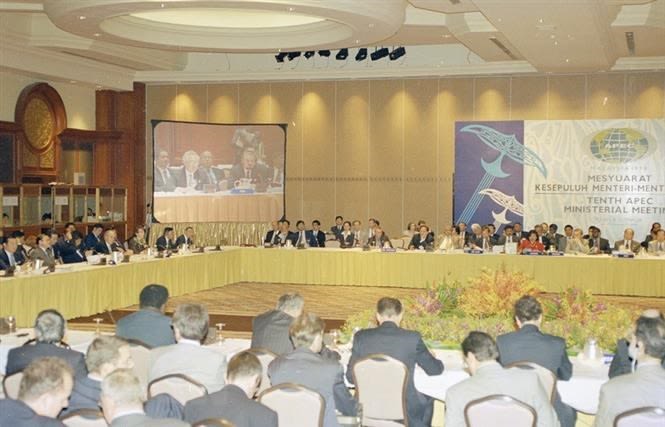
The 10th APEC Ministerial Meeting in Kuala Lumpur (Malaysia), November 14, 1998. At the opening session of the conference, Vietnam, Russia, and Peru were admitted to APEC, bringing the total number of members to 21.
3. Vietnam in APEC - Role, Contributions, and Hosting
3.1. When did Vietnam join APEC?
Vietnam became a member economy of APEC in 1998, at a time when Vietnam was strongly promoting international integration and economic opening. This was an opportunity for Vietnam to learn management experience, attract investment, and participate deeply in regional supply chains. This event helped Vietnam enhance its position and expand cooperation in many fields.
3.2. How many times has Vietnam hosted APEC?
Before 2027, Vietnam had hosted APEC twice, in 2006 and 2017. Both events were considered successful, contributing to enhancing Vietnam's image as a reliable and dynamic partner. Successfully hosting two APEC Summits laid the foundation for Vietnam to continue taking on the host role in APEC 2027 Summit.
3.3. Vietnam's Role and Mark in APEC
Vietnam actively promotes initiatives related to inclusive economy, support for small and medium-sized enterprises, human resource development, and digital transformation. Vietnam also plays a bridging role between developed and developing economies, helping discussions within APEC proceed harmoniously. These contributions help Vietnam affirm its positive position in regional cooperation.

Perspective of Phu Quoc International Airport serving the APEC 2027 Summit.
4. APEC 2027 Phu Quoc - Vietnam's Strategic Highlight
4.1. Opportunities for Promotion and Development from APEC 2027
The APEC 2027 Summit presents a golden opportunity for Vietnam and Phu Quoc to promote their image internationally. High-level meetings, business forums, and side events will attract global media, expanding opportunities for investment attraction and service development. Besides political - diplomatic benefits, APEC 2027 also creates significant momentum for the tourism, trade, and investment sectors in the long term.
According to the official planning, 21 projects are divided into five main groups: Transportation - regional connectivity, Water supply - environment, Urban infrastructure - resettlement areas, Digital transformation - smart cities, Conference facilities - APEC services, including many key projects such as the Expansion of Phu Quoc International Airport, the APEC Summit Convention Center, and the Urban electric train line section 1. These projects not only serve APEC 2027 and carry diplomatic significance but also provide a boost for the sustainable development of Phu Quoc's infrastructure, laying the foundation for a modern, smart, and green international coastal city.
4.2. Phu Quoc's Advantages in Hosting APEC 2027 Phu Quoc
Vietnam hosting APEC 2027 demonstrates the region's confidence in Vietnam's coordination and organization capabilities for multilateral events. This is an important opportunity for Vietnam to promote strategic economic goals, strengthen cooperation, and attract investment. The Summit is also an occasion for Vietnam to affirm its commitment to integration and contribute to regional economic stability.
Phu Quoc was chosen to host APEC 2027 thanks to its modern conference infrastructure, high-class tourism space, and impressive accommodation capacity. In recent years, Phu Quoc has emerged as an international destination, possessing many standard resorts and convention centers. This is a factor ensuring the organization of high-level events.