
















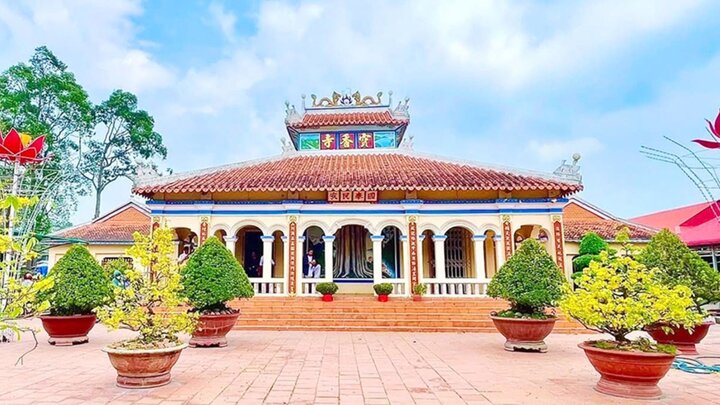
1. Historical Imprint in An Giang with the Shrine of Quan Co Tran Van Thanh
The Shrine of Quan Co Tran Van Thanh, also known as Buu Huong Tu, is located in Bo Dau Hamlet, Thanh My Tay Commune, An Giang Province. This structure was built to commemorate Quan Co Tran Van Thanh, who was associated with the anti-French movement in the Southwest region of Vietnam in the 19th century. The historical site preserves important historical imprints, reflecting the fighting spirit and will of the Gia Nghi rebels in the Lang Linh Bay Thua uprising from 1867 to 1873.
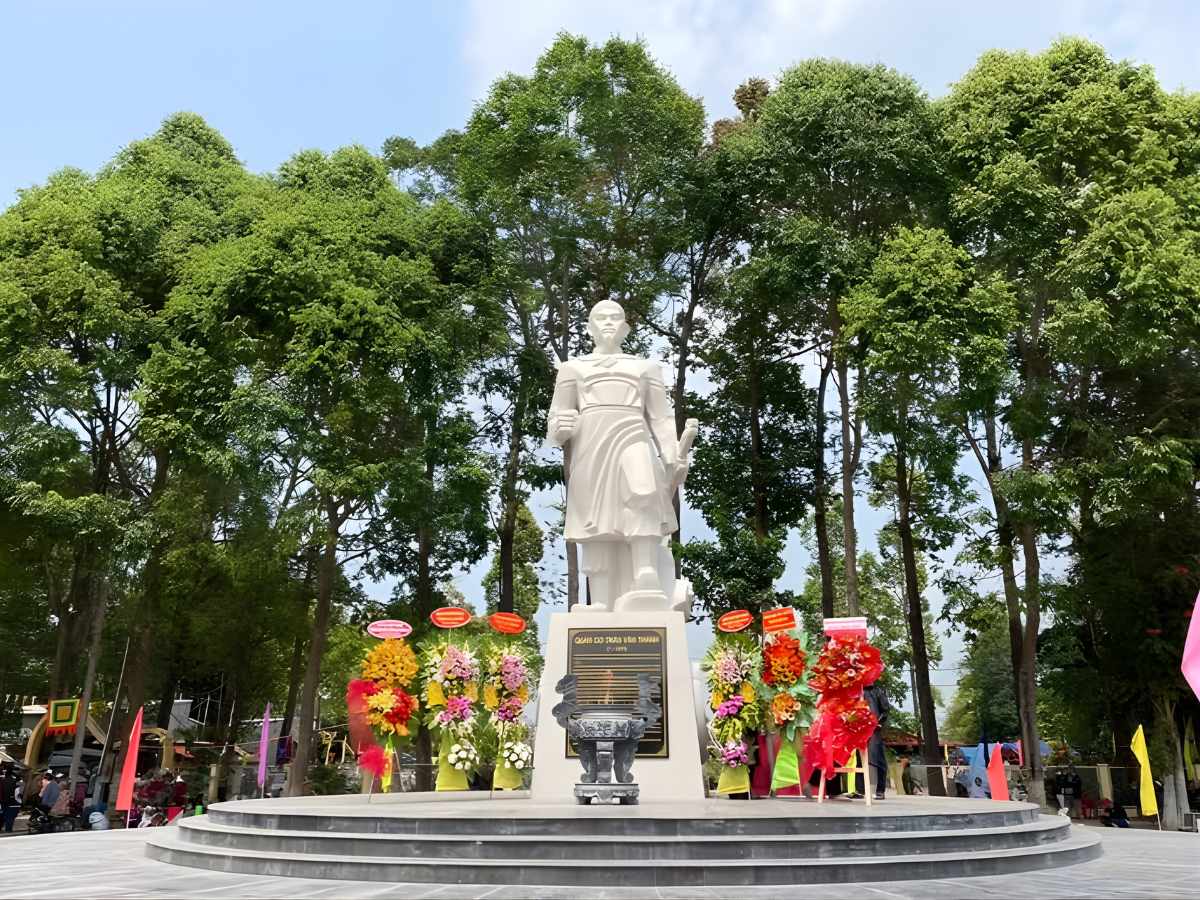
Statue of Quan Co Tran Van Thanh embodies patriotism and the tradition of struggle. (Source: Collected)
Quan Co Tran Van Thanh was born in Binh Thanh Dong commune into a middle-peasant family and had served in the Nguyen Dynasty's army. After the French colonialists invaded, he rose to lead the uprising movement in the Bay Thua region, significantly influencing the local people's struggle. His sacrifice in 1873 left a deep impression, becoming the reason for the people to build a temple to commemorate his merits and preserve historical memory for future generations.
2. Prominent layers of information right within the temple of Quan Co Tran Van Thanh
2.1. Memorial architecture clearly shows its commemorative nature
The temple's architecture is built in the shape of the letter "tam" (三), consisting of the main hall, east wing, and west wing, with a system of wooden columns, tiled roofs, and traditional brick floors. Details such as the twin dragons on the roof, horizontal lacquered boards, and parallel sentences are symbolic, expressing solemnity in the worship space. This arrangement clearly shows the purpose of commemorating and honoring the historical figure, while also reflecting the characteristics of Southern Vietnamese folk architecture.
Inside the temple, the front chamber worships Buddha Thầy Tây An Doan Minh Huyen, while the rear chamber is dedicated to Quan Co Tran Van Thanh and the Gia Nghi soldiers. This division of worship space shows the connection between folk beliefs and the history of resistance, creating a structure that is both spiritual and historical. This helps visitors clearly identify the nature of the relic upon direct approach.
2.2. On-site materials help quickly connect to the historical context
Within the temple grounds, information boards, memorial tablets, and traditional display methods serve as direct sources of documentation. Facts about the Bay Thua uprising, the activities of the Gia Nghi army, and the context of Southern Vietnam in the 19th century are presented through on-site elements. This allows visitors to access history without being entirely dependent on external materials.
The existence of physical traces and documentation helps shorten the gap between information and practical experience. By observing the artifacts, visitors can directly connect with the events that took place, thereby forming a clearer understanding of the historical figure's role. This enhances the educational value of the relic, especially in the context of learning-oriented tourism.
2.3. The general space creates an easily perceivable sense of solemnity
The temple's space is located in the Lang Linh delta area, surrounded by natural landscapes and a system of canals. This location creates a certain separation from densely populated residential areas, contributing to a quiet atmosphere. This spatial element highlights the solemn nature and suitability for commemorative purposes.
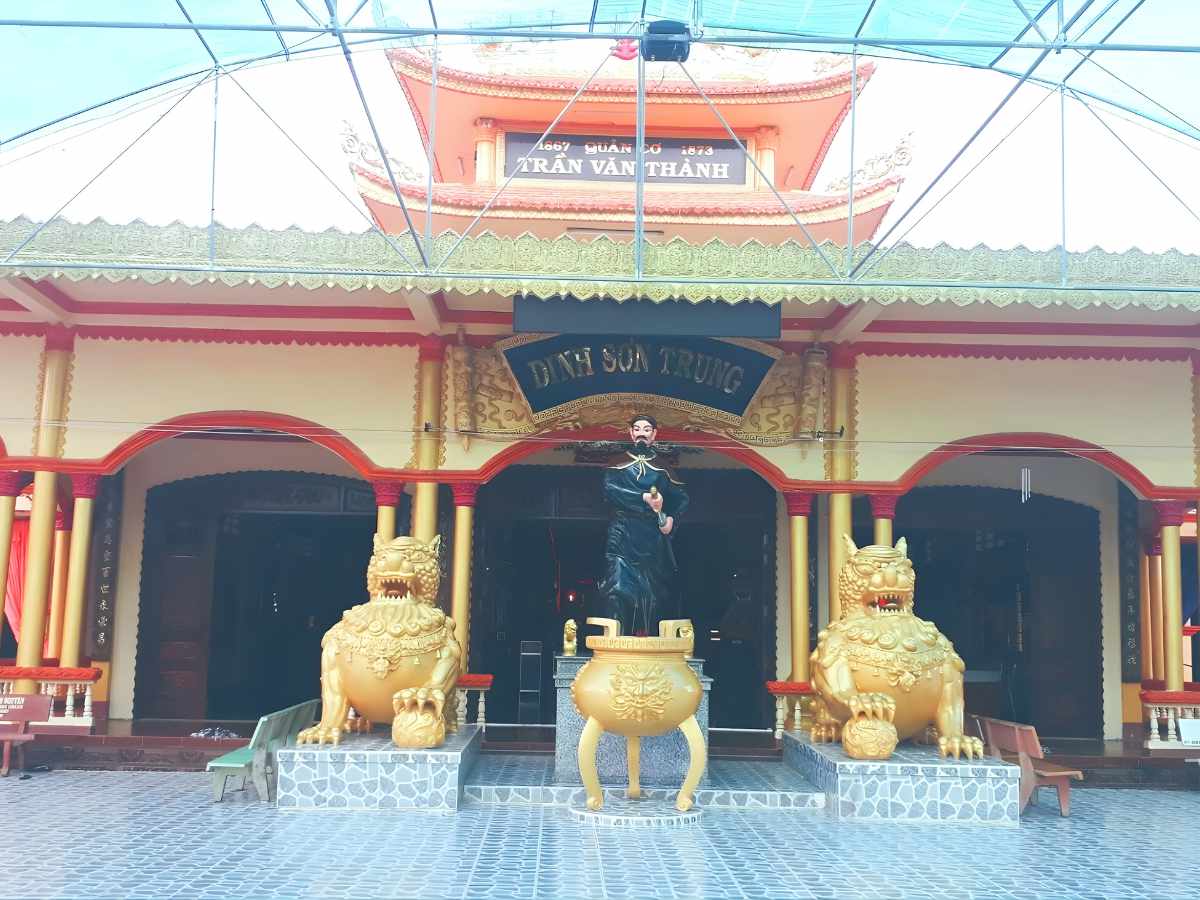
The temple architecture harmonizes with the landscape, creating a solemn and tranquil atmosphere. (Source: Collection)
In addition, the open space organization, combining the ceremonial courtyard and the main worship area, allows visitors to move and observe the overall structure easily. Elements such as monuments, memorial areas, and worship sections form an interconnected system, supporting sequential information reception. As a result, the experience at the Temple of Governor Tran Van Thanh is not only about sightseeing but also about clear historical understanding.
3. How to visit the Temple of Governor Tran Van Thanh to better understand its historical story
3.1. Start with the character introduction before observing the architecture
Learning about Governor Tran Van Thanh before observing the architecture helps to clearly define the historical context. He was a military official of the Nguyen Dynasty, who commanded forces against foreign invaders and organized an insurgent army during the period of French occupation of the South. This information provides a foundation for understanding the meaning of each area within the temple.
Once the basic information about the character is grasped, observing the architectural details becomes more systematic. Visitors can connect the worship elements with the character's life, thereby forming a logical approach. This helps the visiting process not to be fragmented and increases the ability to retain information.
3.2. Proceed to the main worship area to connect the flow of information
The main worship area is where the most symbolic elements are concentrated, including memorial tablets, statues, and traditional decorative details. This area most clearly expresses the veneration for Governor Tran Van Thanh and the Gia Nghi insurgents. Observing these elements directly helps visitors connect historical information with concrete forms of expression.
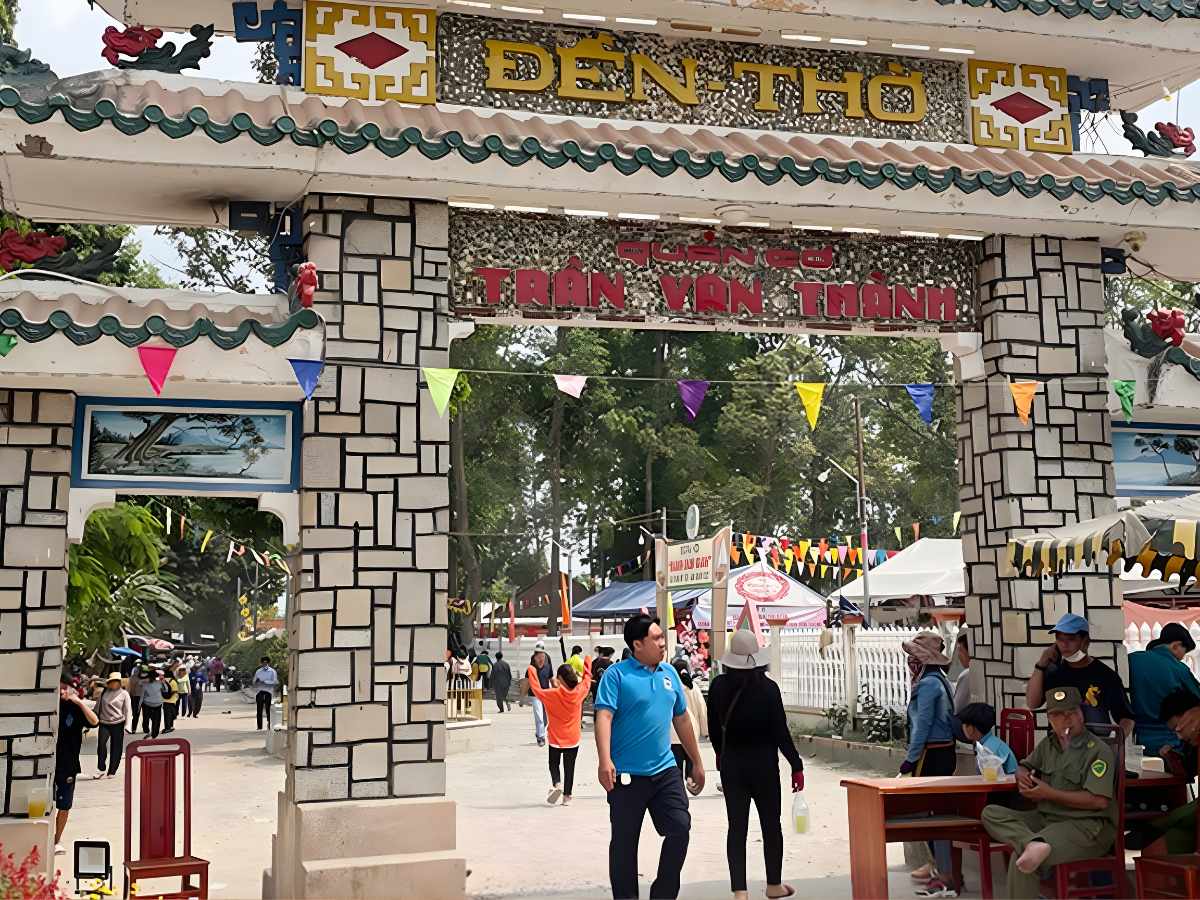
Morning is the best time to visit the temple. (Source: Collected)
During the visit, paying attention to the spatial arrangement and the order of worship will help in better understanding the structure of the relic. Elements such as the front chamber, rear chamber, and auxiliary areas each have their own roles, forming a unified whole. This helps visitors recognize how history is expressed through physical space.
3.3. Conclude with an overall view to consolidate the trip's content
After completing the observation of each area within the temple, stepping back to view the overall space helps in consolidating all the received information. Visitors can connect elements such as architecture, artifacts, and historical context to form a clearer narrative. This approach helps reduce fragmentation during the visit and supports information retention through deliberate synthesis.
Observing the panoramic view also helps to clearly identify the role of the Temple of Commander Tran Van Thanh within the local relic system. By placing individual details into a larger context, visitors can better understand the relationship between the historical figure and the memorial space. This adds depth to the experience, especially for journeys focused on historical exploration rather than just a casual visit.
4. Which tourist routes is the Temple of Commander Tran Van Thanh suitable for?
4.1. Historical exploration routes within An Giang province
Tourist routes focusing on history within An Giang province are often built around clusters of relics related to resistance movements and the formation of the land. Among these, the Temple of Commander Tran Van Thanh serves as a highlight, associated with the Bay Thua uprising in the late 19th century. When placed within the overall route, this relic helps to clearly position a specific historical period and provides a basis for connecting with other sites of the same context.
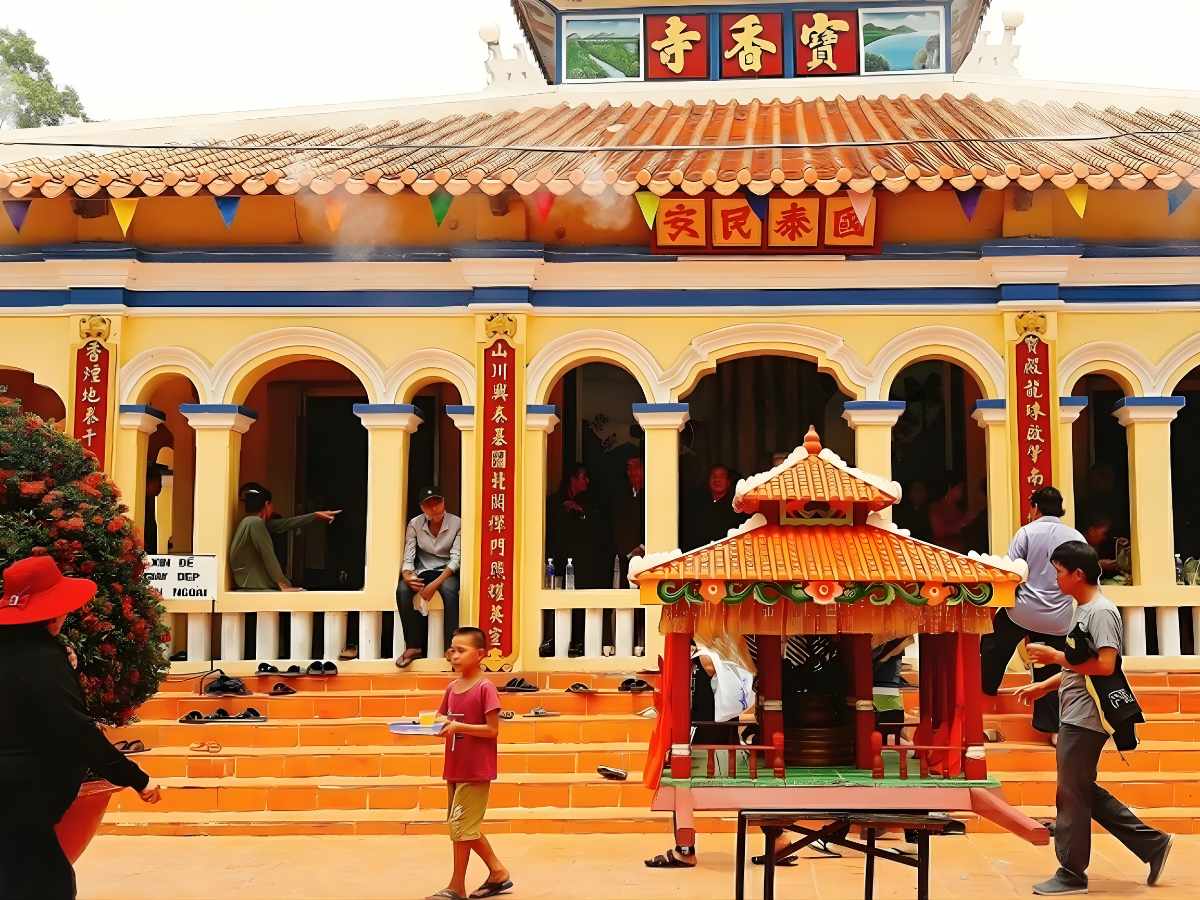
Temple visiting activities take place in a solemn and meaningful atmosphere. (Source: Collected)
Developing routes with a historical theme helps visitors access information more clearly in chronological and spatial order. As visitors move between points, facts about characters, events, and operational areas will be gradually supplemented, forming a connected information system. This approach helps highlight the role of each relic in the overall local history, while enhancing information retention through practical experience.
4.2. Short route combined with a nearby relic site
Located in Chau Phu district, An Giang province, the temple area can be included in a short tour lasting about half a day to a full day. The itinerary often combines with a nearby relic site related to the local historical context or beliefs, helping to create content linkage. Choosing nearby points helps reduce travel time while maintaining a seamless information access flow.
During the visit, participants can compare the spatial organization, worship methods, and formation context of each location. This helps clarify the unique characteristics of each relic while also showing the connections in the region's history. Short routes do not emphasize the number of destinations but focus on the ability to connect information between points, thereby creating a systematic experience.
4.3. Full-day tour focusing on content depth
For those interested in historical content, a full-day tour focusing on a single site like the Temple of Governor Tran Van Thanh allows for more detailed information access. The extended time enables visitors to carefully observe each area, from architecture and artifacts to the arrangement of the worship space. This provides an opportunity to better understand the context of the uprising and the role of the historical figure in a specific period.
Devoting a full day to one destination helps limit the fragmented reception of information that can occur when traveling to multiple places. Visitors can follow a sequence from the introduction, the main worship area, to the overall space, thereby piecing together facts into a complete narrative. This approach is suitable for in-depth research activities, especially in the context of tourism linked to local historical education.
The Temple of Governor Tran Van Thanh is a destination bearing historical and cultural significance tied to the land of An Giang. The worship space and the preserved documents help visitors better understand the local people's struggle movement in the past. In an expanded journey from familiar destinations like Sun World Hon Thom, the Temple of Governor Tran Van Thanh helps further illuminate the historical values of the An Giang region.