















1. Historical Imprint of An Giang Land by Tam Bao Pagoda Rach Gia
1.1. Milestones of Origin and Development Phases
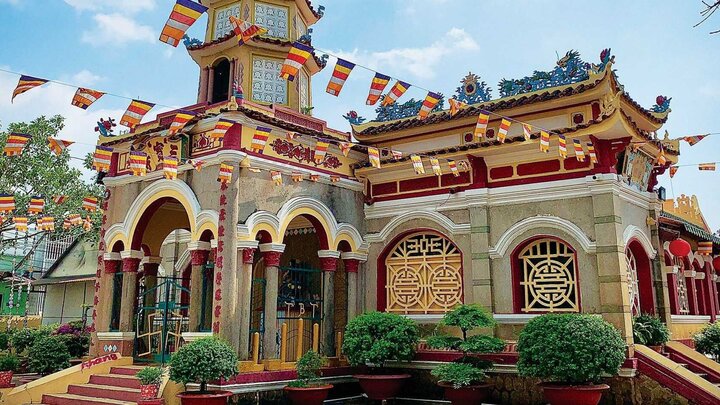
Tam Bao Pagoda, also known as Sac Tu Tam Bao, is located on Su Thien An street, Rach Gia ward, An Giang province. The pagoda was formed in the late 18th century by Buddhist follower Duong Thi Oan, with an initial modest scale, suitable for the religious living conditions of the early period. The appearance of the pagoda is associated with the process of settlement and land reclamation by Vietnamese residents in the Southwest region.
The space of Tam Bao Pagoda reflects the imprint of Southern Buddhism amidst the urban An Giang. (Source: Collected)
During the turbulent historical period of the late 18th century, Tam Bao Pagoda was once a refuge for Nguyen Anh when he was fighting the Tay Son dynasty. After ascending the throne as King Gia Long, he bestowed a royal decree upon the pagoda, hence forming the name Sac Tu Tam Bao and affirming the pagoda's position in the local Buddhist life. This milestone helped the pagoda become more closely associated with the political and cultural history of the An Giang region.
Throughout various periods, Tam Bao Pagoda Rach Gia has been renovated and expanded, notably during the renovation from 1915 to 1917 under the abbacy of Most Venerable Thich Tri Thien. This period shaped the basic architecture that is still preserved today, while also marking the pagoda's role as an important Buddhist center in An Giang. The architecture and living space from this era still significantly influence the pagoda's current appearance.
Besides its religious function, Tam Bao Pagoda also played a social role in the 1930s and 1940s. It hosted various community activities such as opening classes, organizing free medicine dispensaries, and supporting patriotic movements. These activities demonstrate that the pagoda was not detached from social life but was always connected to the common destiny of the local community.
1.2. Outstanding Values in the Spiritual Life of Rach Gia Residents
Tam Bao Pagoda holds an important position in the religious life of Rach Gia residents, serving as a familiar spiritual gathering place during Buddhist holidays and full moon days each month. Buddhists visit the pagoda to chant scriptures, perform rituals, and seek spiritual tranquility. The regular presence of the community has created a strong bond between the pagoda and the local people.
Annually, festivals such as Vesak (Buddha's Birthday) or Ullambana attract a large number of Buddhists from within and outside the region. These activities not only carry religious significance but also contribute to maintaining the traditional cultural lifestyle of Rach Gia residents. Thus, the pagoda becomes a space for intergenerational encounters and the sharing of spiritual values.
1.3. Cultural Values Associated with Southern Buddhism
Tam Bao Pagoda Rach Gia clearly reflects the blend of Buddhism and Southern culture through its rituals and religious activities. Chanting, incense offering, and memorial ceremonies are conducted according to Buddhist traditions, while also being integrated with the community life of the Mekong Delta. This creates a unique identity for the pagoda's space within Rach Gia city.
Besides rituals, the pagoda also preserves many architectural works and artifacts of Southern Buddhist architectural value. The Tam Quan (three-gate entrance), the main hall, and the Buddha statue system are crafted in traditional styles, reflecting the inheritance of religious art through many periods. These elements contribute to portraying the cultural landscape of Buddhism in the Mekong Delta region.
2. Architecture and Worship Space
2.1. Overall Architectural Layout of the Pagoda
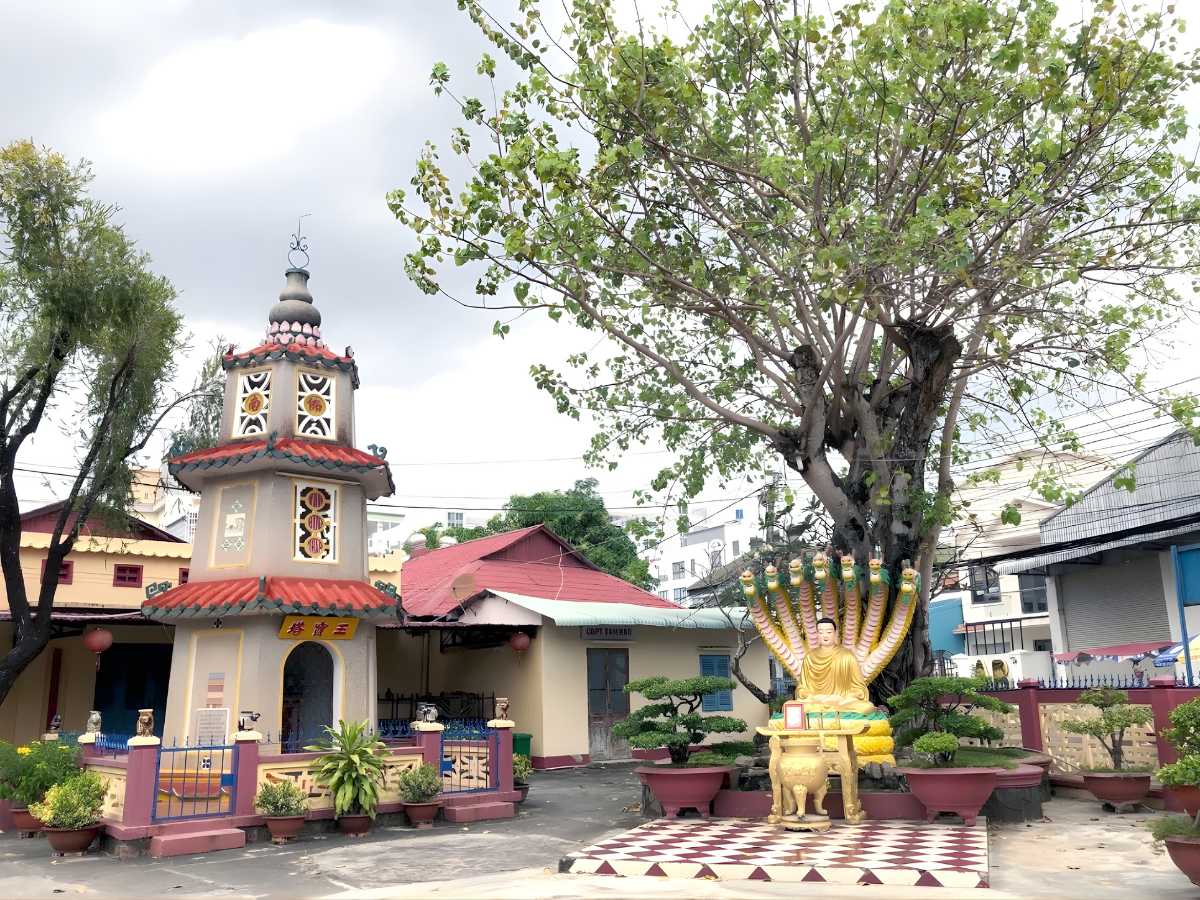
The space of Tam Bao Pagoda Rach Gia is planned according to the traditional layout of Southern Buddhism, including the Tam Quan, the main hall, the cloister buildings, and the ancestral area, arranged with a balanced distribution of elements. The overall architecture creates a sense of harmony, opening up a religious living space separate from the urban bustle outside. This spatial organization clearly reflects Buddhist architectural thinking linked to community activities.
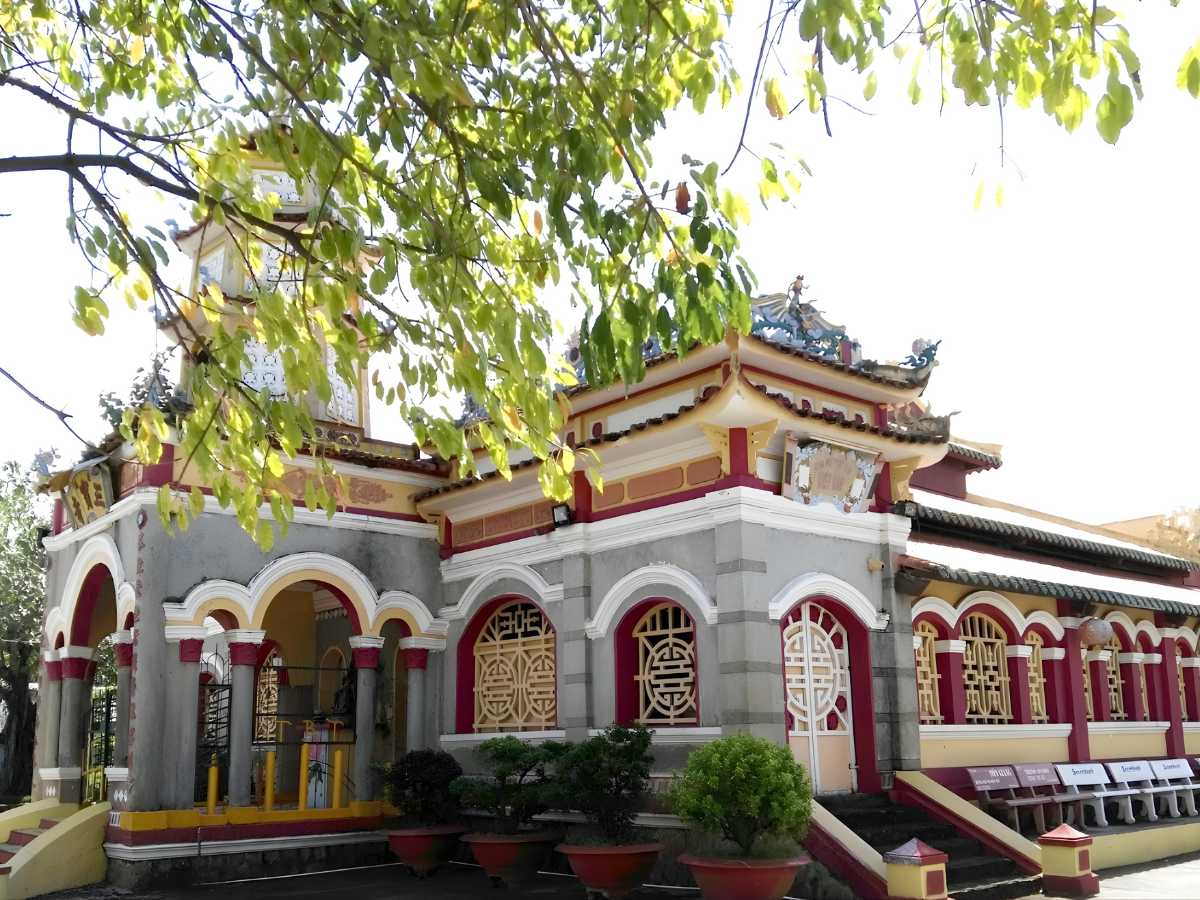
The architectural layout of the pagoda harmonizes Buddhist beliefs with local community activities. (Source: Collected)
The Tam Quan gate area is the starting point for the entire pagoda space, characterized by traditional architecture with curved tiled roofs and sturdy columns. Decorative patterns are subtly expressed, creating visual accents without compromising the necessary solemnity. This also serves as a transition space, helping visitors adjust their emotional rhythm before entering the main worship area.
2.2. Worship space and symbolic meaning
The worship space of Tam Bao Pagoda is arranged according to Buddhist tradition, with a system of Buddha and Bodhisattva statues carrying clear symbolic meanings. In the main hall, the statue of Sakyamuni Buddha holds the central position, representing the core role of Buddhist teachings in religious life. This arrangement helps worshippers easily focus on spiritual rituals.
The statues in the pagoda are arranged symmetrically and consistently in their orientation, usually facing east according to traditional beliefs. This orientation is associated with the Buddhist symbolism of light and wisdom, creating a spiritually guiding space. The uniformity in arrangement contributes to maintaining the solemnity of the entire worship area.
2.3. Landscape and tranquility amidst the city
Although located in the central area of Rach Gia city, Tam Bao Pagoda retains a quiet space, separate from the outside hustle and bustle. The pagoda grounds are covered with greenery, shaded pathways, and open spaces. These elements create a sense of relaxation for visitors, even for a short stay.
The pagoda's tranquility serves as a spiritual space for local residents amidst an increasingly developed urban environment. Many people visit the pagoda not only for worship but also to find peace for themselves. This space helps balance emotions and facilitates introspection.
3. Religious activities and community values
3.1. Typical Buddhist ceremonies
At Tam Bao Pagoda, Buddhist ceremonies are held regularly according to the traditional schedule, such as Vesak Day, Ullambana Festival, and monthly full moon days. These occasions attract a large number of local Buddhists to participate in a solemn and orderly atmosphere. Through each ceremony, moral and spiritual values are disseminated within the community.
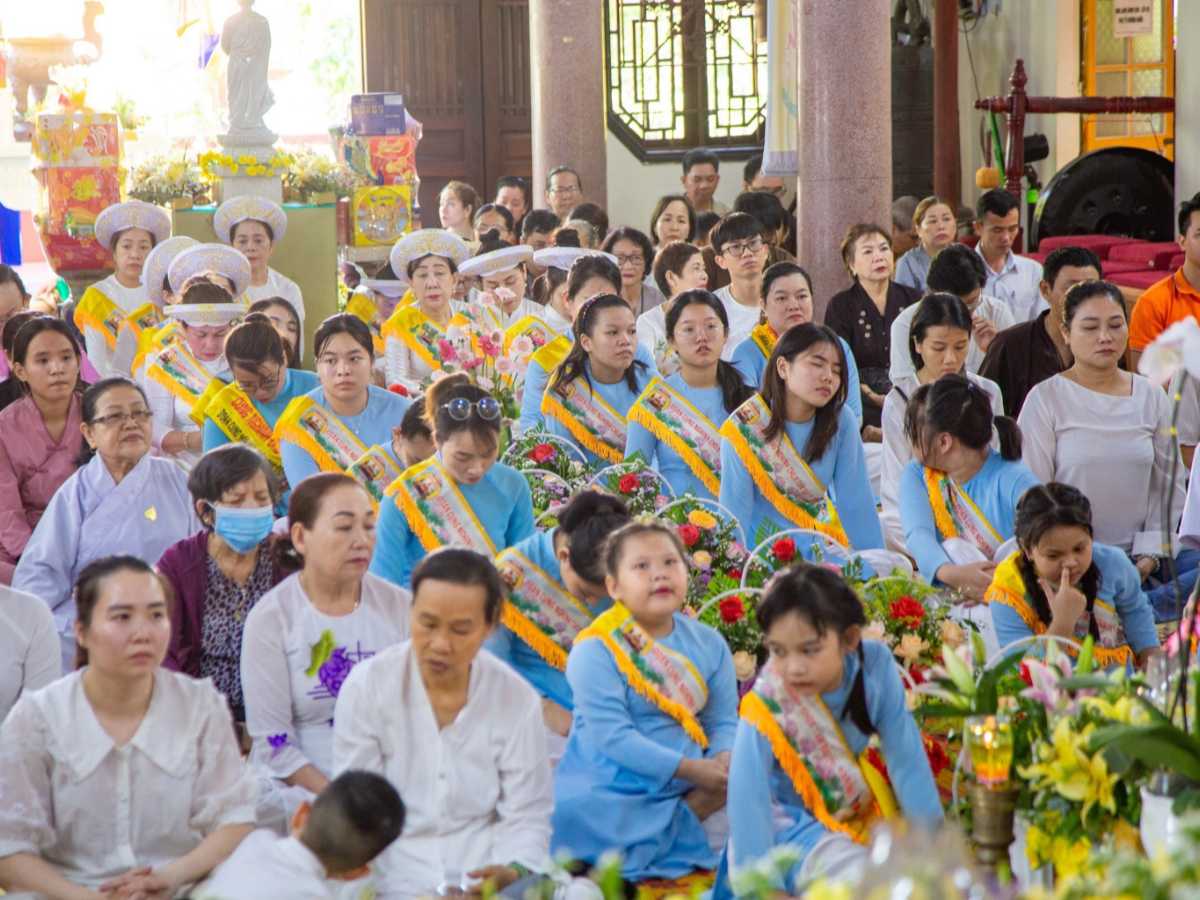
Buddhist rituals at Tam Bao Pagoda reflect a spiritual life that connects the community. (Source: Collected)
During ceremonies, rituals of chanting, offering incense, and almsgiving are performed according to the familiar sequence of Southern Buddhism. These activities help participants focus their minds on tranquility, cultivate compassion, and foster a sense of sharing. The ceremonial space thus becomes a bridge between Buddhist teachings and daily life.
3.2. Community Bonding Activities
Besides its religious role, Tam Bao Pagoda also serves as a space for many community-oriented social activities. Historically, the pagoda organized basic education classes and free clinics to support people during difficult times. These activities demonstrate the engaged Buddhism practiced locally.
Charitable programs and community support initiatives organized by the pagoda always receive participation from various resident groups. The primary beneficiaries are those facing hardship, the elderly, and children in the area. Through these efforts, the pagoda contributes to maintaining the spirit of mutual support and social responsibility within the Rach Gia community.
3.3. Tam Bao Pagoda in Modern Life
Amidst the urbanization of Rach Gia city, Tam Bao Pagoda has maintained its traditional architecture and stable way of life. The pagoda adapts to societal changes without disrupting its core Buddhist affairs. This balance allows the pagoda to continue its familiar role in the spiritual life of residents.
The pagoda still oversees the activities of the Buddhist Executive Council of An Giang province. Training programs for monks and nuns, meditation retreats, and Buddhist activities are regularly organized. This role helps maintain the connection among Buddhist establishments throughout the province.
4. The Journey Connecting Rach Gia to Phu Quoc
4.1. From Spiritual Space to Island Journey
The journey from Rach Gia to Phu Quoc is not just a travel route between two destinations but also signifies a transition in experience. Rach Gia, with its spiritual sites like Tam Bao Pagoda, serves as the starting point for a journey exploring cultural depth. From this foundation, visitors continue to expand their experience to the island landscape of An Giang.
Combining a visit to Tam Bao Pagoda with a trip to Phu Quoc makes the journey more emotionally diverse. On one side is a tranquil space connected to history and belief, while on the other is the seascape and island life. This transition creates a seamless journey, suitable for travelers who enjoy exploring multiple layers of value.
4.2. Sun World Hon Thom in An Giang's Tourism Landscape
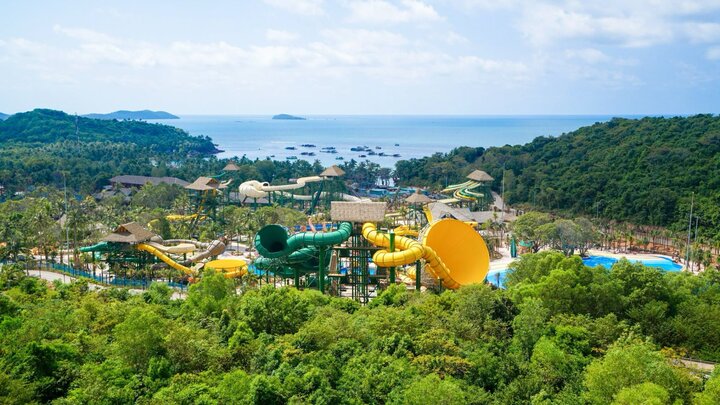
Sun World Hon Thom is an entertainment complex located on Hon Thom island, in An Thoi ward, Phu Quoc city. This area is developed with various island experience types, suitable for different tourist groups. The presence of Sun World Hon Thom contributes to enriching the entertainment experience for exploring An Giang.
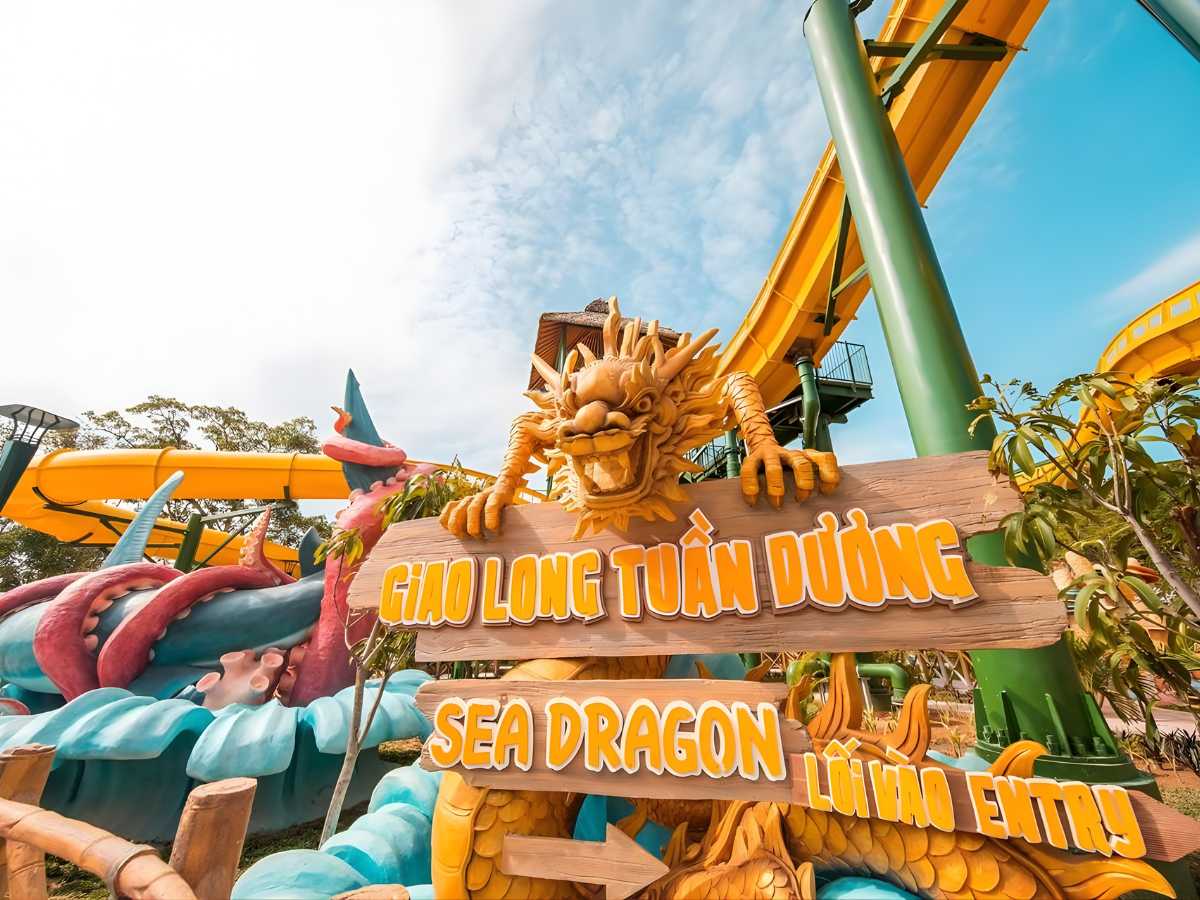
Sun World Hon Thom adds modern entertainment experiences to the exploration journey of An Giang. (Source: Compiled)
Here, visitors can choose activities ranging from water parks, active games to seaside relaxation areas. These experiences create a balance when combined with destinations that have cultural and spiritual elements. Thus, the travel journey is not limited to a single type.
>>> Book Sun World Hon Thom tickets now to fully explore Hon Thom HERE.
4.3. Hon Thom Cable Car as a symbol of connection
The Hon Thom cable car system connecting An Thoi ward with Hon Thom island is one of Phu Quoc's characteristic transportation routes. This cable car line shortens travel time and opens up panoramic views of the southern sea of the island. The travel experience thus becomes part of the sightseeing journey.
Throughout the aerial journey, visitors can observe small islands, the sea surface, and the coastal area of An Thoi. The open space and stable movement create a relaxing feeling, different from traditional means of transport. This makes the trip lighter and more accessible.
Chua Tam Bao Rach Gia is a spiritual space closely associated with the spiritual life and history of the people of An Giang. By placing the pagoda within the connection with Phu Quoc, Sun World Hon Thom, and the Hon Thom cable car system, the exploration journey of this land expands across multiple layers of experience. The combination of culture, spirituality, and island tourism creates a harmonious tourism picture for An Giang.