















1. Overview of Ta Pa Lake
1.1. Where is Ta Pa Lake located?
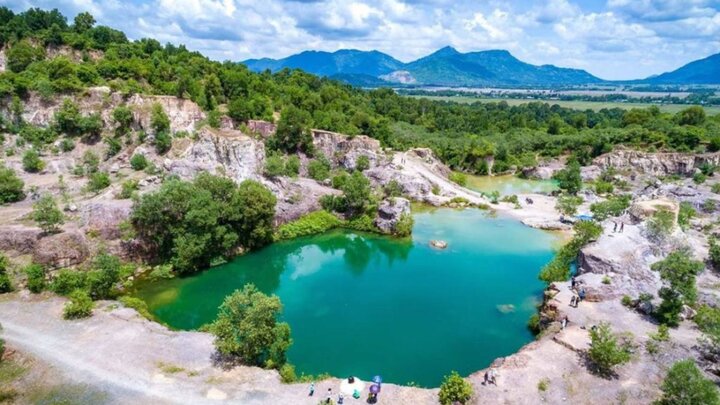
Ta Pa Lake is located in Tri Ton commune, An Giang province, within the Bay Nui (Seven Mountains) region and bordering the An Giang provincial boundary. This lake was formed after the quarry ceased operations, with a calm water surface surrounded by cliffs and natural mountainous terrain, creating an open space. The water color is often jade green, reflecting the sky and surrounding mountains, bringing a sense of tranquility to this area.
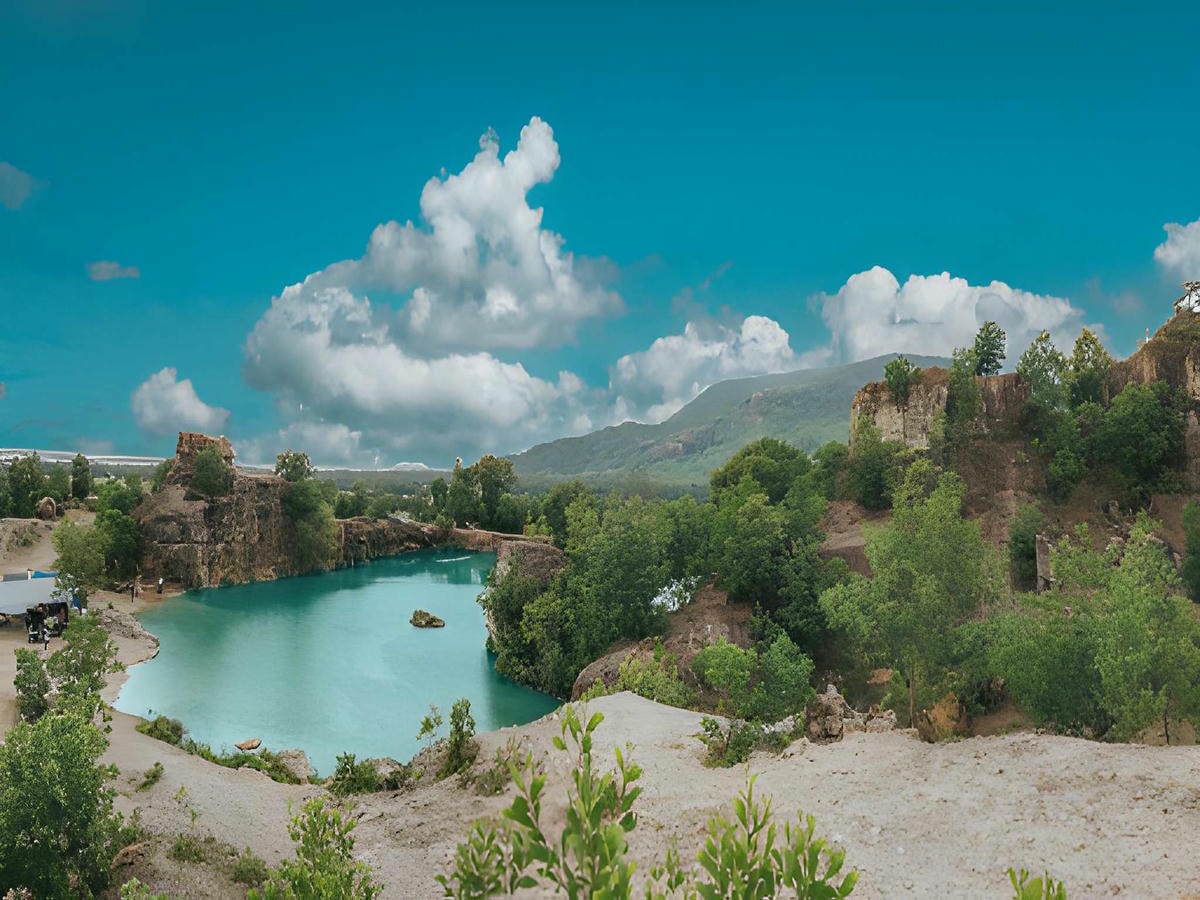
Ta Pa Lake stands out for its geographical location and natural setting amidst the An Giang mountains. (Source: Compilation)
The space around the lake is a combination of hills, native vegetation, and natural limestone formations, creating a diverse landscape. High cliffs surrounding the lake along with constantly changing terrain cause light to reflect on the water's surface in various shades throughout the day. As a result, the landscape of Ta Pa Lake always offers different perceptions when viewed from each position.
The lake's surface has a relatively large area, considered by many tourists as a notable natural stop in Tri Ton. This area expands the experience of exploring the mountainous region of An Giang province alongside familiar destinations. The area around the lake has few residential houses, retaining many original features compared to other tourist areas in the Mekong Delta.
1.2. The origin of the name and cultural values
The name Ta Pa originates from Ta Pa hill, a local name associated with the long-standing Khmer community. This name reflects the connection between the indigenous residents and the hilly land where they cultivate and live according to the seasons. Over time, the name Ta Pa has become a familiar mark in local life.
For the local people, the lake is not only a natural landscape but also associated with daily life and community memories. Ta Pa Pagoda, located on the hill near the lake, is a place for spiritual activities and plays an important role in the spiritual life of the Khmer people. This space contributes to forming the unique culture of the region.
The cultural value of the lake is also reflected in community activities associated with different times of the year. Traditional Khmer festivals like Chol Chnam Thmay create a characteristic atmosphere around the lake area. Thus, Ta Pa Lake is not only a place to visit but also a point for learning about local culture.
1.3. The characteristic scenic beauty of Ta Pa Lake
Ta Pa Lake possesses water colors that change with light and depth, shifting from deep blue to light blue and sometimes reflecting yellow hues. This variation creates diverse perspectives for visitors strolling around the lake at different times. The water surface reflects the surrounding scenery, making the space more vibrant.
The natural rocky terrain around the lake consists of many layers of rocks with different shapes, creating a unique scenic highlight. The rock formations combined with the water surface inspire natural landscape photography. The area around the lake remains quiet, suitable for gentle sightseeing activities.
Additionally, patches of forest, bushes, and sugar palm trees along the lake create a layered natural picture. This combination allows the landscape of Ta Pa Lake to clearly reflect the characteristics of the Bay Nui region. This is an area where mountainous terrain and plains intersect.
2. Outstanding experiences when visiting Ta Pa Lake
2.1. Enjoying nature and checking in
Along the lake shore, there are many convenient spots to observe the water surface, mountains, and the vast sky. This space is suitable for walking and capturing natural moments during the trip. Early morning and late afternoon times usually make the water colors more apparent under the soft light.
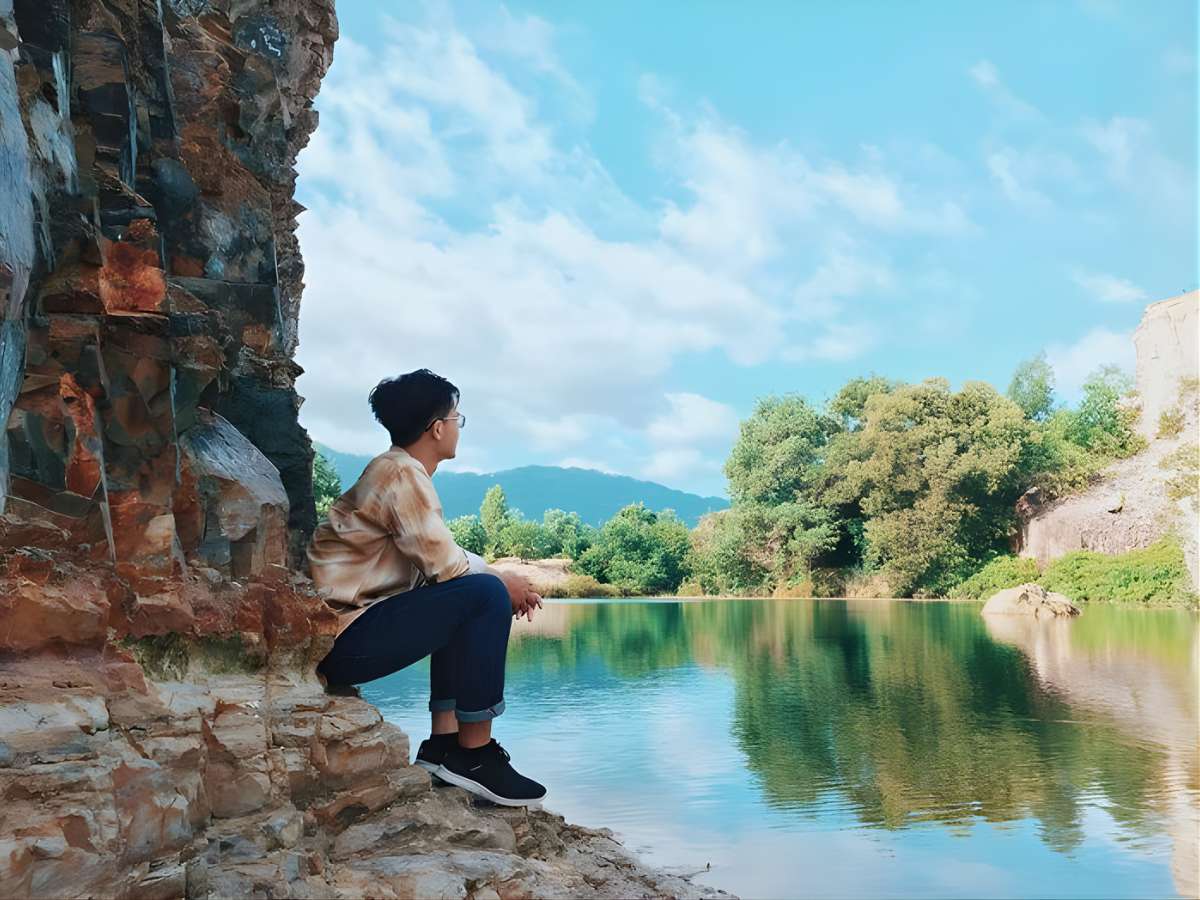
Sightseeing and checking in at Ta Pa Lake offers an experience close to nature. (Source: Collected)
Visitors can walk along the trails around the lake to observe the reflection of the water under the sunlight. Natural sounds like birds chirping and gentle breezes create a relaxing feeling during the visit. This experience is suitable for those who want to enjoy a peaceful atmosphere rather than focusing on technical photography.
The area around the lake is also chosen by many for landscape photography with hills and water as the background. Some areas along the shore have flat ground, convenient for resting. From here, visitors can observe the entire lake in an open space.
2.2. Experiencing Khmer Cultural Life in Tri Ton
Tri Ton is an area with a large Khmer community, whose cultural imprints are evident in the temple architecture. Ta Pa Pagoda, located on a hill near the lake, is where local spiritual activities take place. This structure contributes to the unique cultural identity of the region.
Observing the daily life of the people around the lake helps visitors understand mountain life better. Agricultural and community activities are carried out seasonally, closely linked to natural conditions. These factors demonstrate a harmonious relationship between people and the landscape.
Traditional festivals of the Khmer community in Tri Ton offer opportunities to learn about local culture. Costumes, music, and rituals clearly reflect the identity preserved through generations. This enriches the visiting experience of Ta Pa Lake.
2.3. Slow Tourism and Mental Relaxation
Ta Pa Lake is a suitable destination for slow tourism, helping visitors temporarily escape the hustle and bustle of daily life. The quiet atmosphere around the lake facilitates walking and observing the scenery. Simply sitting and gazing at the water also brings a sense of relaxation.
The experience here is ideal for trips focused on personal feelings and connection with nature. Visitors can spend time recording their emotions instead of following a packed itinerary. The area around the lake strongly supports mental rest.
Slow tourism at Ta Pa Lake emphasizes the connection between people, the landscape, and local culture. This aligns with an approach to tourism based on emotions and observation. Consequently, the trip becomes a distinctly personal experiential journey.
3. Time and How to Get to Ta Pa Lake
3.1. Best Time of Year
An Giang clearly distinguishes between the dry and rainy seasons. The dry season, from around October to April of the following year, typically has stable weather and less rain. This period is favorable for outdoor activities as the roads are dry and easier to travel. The lake's surface is also clearer during the dry season, allowing the water to reflect the surrounding scenery more vividly.

The beautiful time of year from October to April helps Ta Pa Lake show its water colors. (Source: Collected)
During the rainy season, the water level in the lake and surrounding areas tends to rise, creating a cooler green space. However, the rocky terrain around the lake can become slippery, affecting movement and sightseeing. Therefore, monitoring the weather before your trip is something to consider during this period.
The period from December to April also coincides with many traditional festivals of the Khmer community in Tri Ton. This creates an opportunity to combine sightseeing with learning about local cultural life. The trip therefore gains more experiential depth instead of just stopping at sightseeing.
3.2. Directions to Tri Ton, An Giang
From Ho Chi Minh City, the common route is to travel by bus to Chau Doc or Long Xuyen, then continue to Tri Ton town. The total distance from Ho Chi Minh City to this area is usually over 250 km, depending on the chosen route. The travel time is suitable for short trips or combining multiple attractions.
Buses from Ho Chi Minh City to Chau Doc and Ho Chi Minh City to Long Xuyen have fixed schedules daily. Tourists can proactively choose a time slot that suits their personal plan. Upon arrival in An Giang, continuing the journey by personal vehicle allows for more flexibility in time.
3.3. Transportation and sightseeing around the lake area
In the Bay Mountains area, sightseeing tours often combine several nearby attractions such as Ta Pa Pagoda on the hill and the Ta Pa fields. The distance between these points is not far, suitable for slow-paced travel. This arrangement helps the trip not feel too rushed.
Traveling around the lake by motorbike or taxi allows for stops to observe the scenery from various positions. Tourists can flexibly rest, admire the view, or take photos when they find a suitable angle. This makes the experience more comfortable throughout the journey.
4. Notes when visiting Ta Pa Lake
4.1. Things to know when visiting and taking photos
The area around the lake has rocky terrain and many steep sections, so movement should be done carefully. Wearing shoes with good grip helps prevent slipping on rocky surfaces. This is especially important when visiting during wet periods.
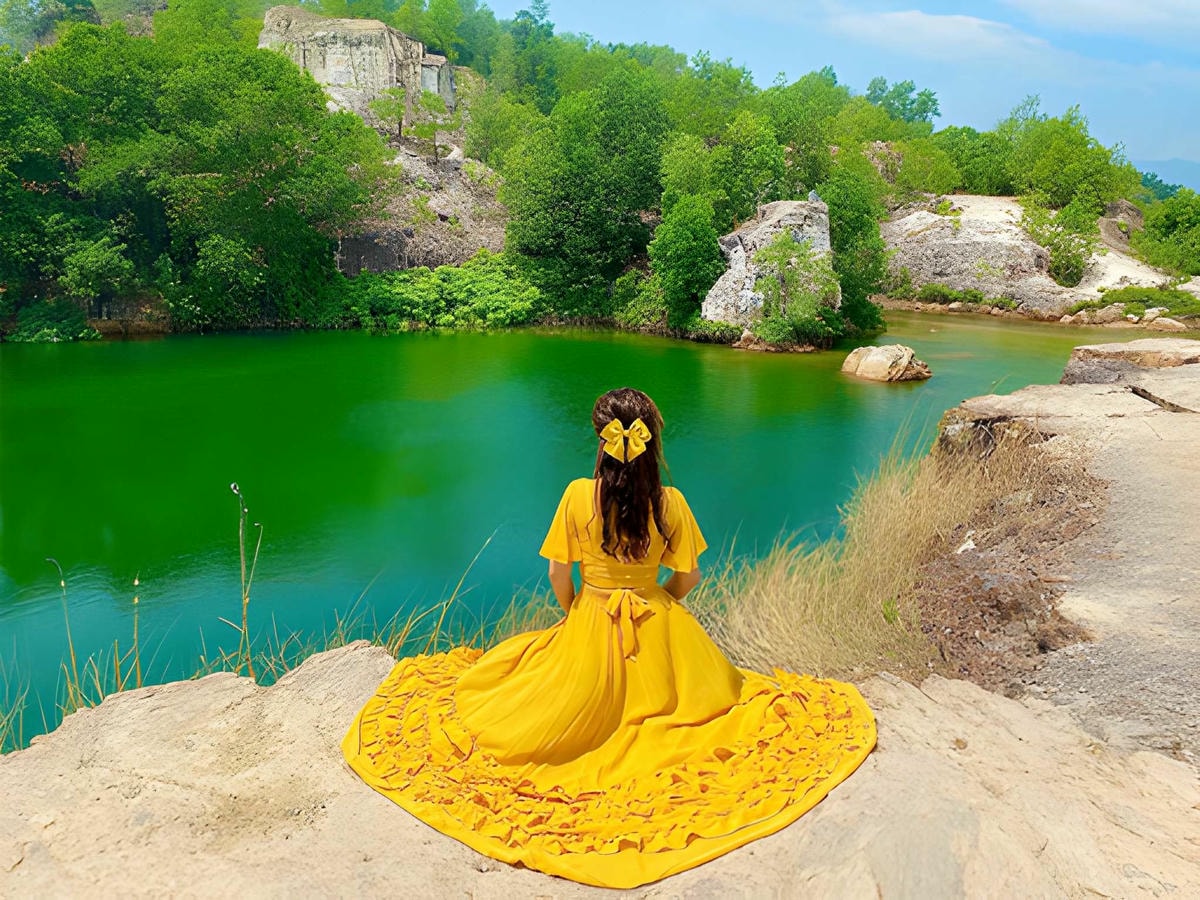
Safety notes when visiting and taking photos around Ta Pa Lake with steep rocky terrain. (Source: Collected)
The natural space around the lake is quite sensitive and needs to be preserved during visits. Not littering and minimizing impact on the landscape helps maintain the general environment. Environmental awareness contributes to maintaining a sustainable experience for future visitors.
When taking photos, avoid standing too close to the water's edge or areas with steep slopes. Observing the surrounding terrain helps ensure your safety and that of your companions. This allows for a more comfortable trip.
4.2. Suggested Half-Day Itinerary
A half-day itinerary typically begins in the morning with a stroll around Ta Pa Lake to observe the scenery and capture photos. Afterwards, visiting Ta Pa Pagoda on the hill adds a cultural element to the trip. The morning hours are also suitable for outdoor activities.
In the afternoon, the journey can continue around the Ta Pa fields by walking or by motorbike. The rural landscape of the Mekong Delta offers a gentle and familiar feeling. This is an opportunity to observe rural life and local activities.
4.3. Suggested Itinerary for Cultural and Artistic Experiences
Those interested in cultural depth can extend their itinerary to artistic sites in the Southwestern region. Some local art exhibition spaces offer a different perspective on local life. Combining these elements makes the trip more diverse.
The connection between visiting Ta Pa Lake, learning about Khmer culture, and experiencing art creates a seamless itinerary. Each stop contributes to enriching the travel experience. This aligns with the trend of personalized experiential tourism.
Ta Pa Lake is not only a beautiful scenic destination but also a place that preserves layers of cultural sediment and unique emotions of An Giang. Amidst the blue water, rocky mountains, and the slow pace of life in the Bay Nui region, visitors can easily find peace and connect more deeply with nature. This is a suitable stop for journeys seeking sustainable, refined, and inspiring experiences.