















1. Discovering the Temple of Thoai Ngoc Hau Thoai Son
1.1. Location and Scenic Space of the Temple
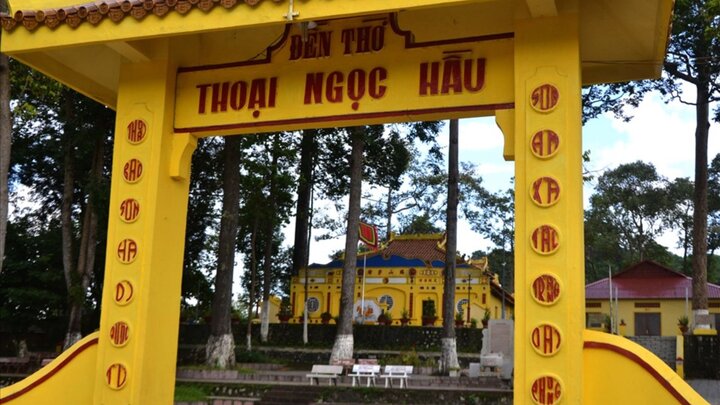
The Temple of Thoai Ngoc Hau is located in Nui Sap town, An Giang province, at the foot of Nui Sap mountain, part of the Thoai Son mountain complex. This area features a harmonious blend of low mountains and a vast plain, creating a characteristic landscape of the Mekong Delta. The space around the temple offers a sense of tranquility, suitable for worship and sightseeing activities.
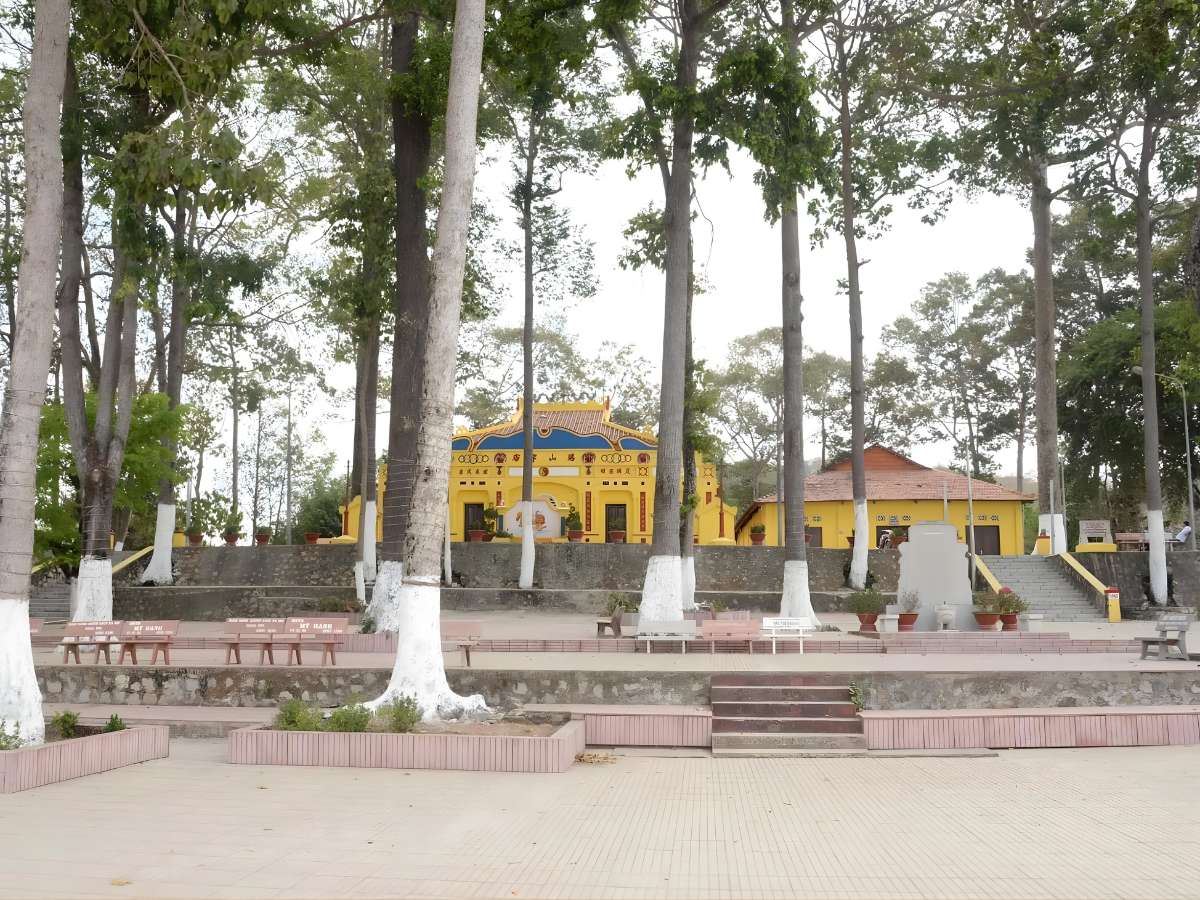
The space of Thoai Ngoc Hau Temple carries a solemn atmosphere amidst the nature of Nui Sap. (Source: Collected)
According to folk belief, the land's position is considered auspicious, with its back against the mountain and facing a wide open plain. This factor contributes to the solemnity and tranquility when visitors enter the relic site. The surrounding natural landscape helps the temple maintain a close connection with the local residents' living environment.
The temple grounds are covered by many native trees, creating a cool and pleasant atmosphere. The paths leading to the temple often pass through fields and small residential areas, clearly reflecting the rural life of An Giang. This element helps the visiting experience become leisurely and culturally profound.
1.2. Thoai Ngoc Hau and the historical imprint on the Thoai Son region
Thoai Ngoc Hau, whose real name was Nguyen Van Thoai, was born in 1761 in Quang Nam and was a distinguished mandarin under the Nguyen Dynasty. He was entrusted with many important responsibilities and played a significant role in managing and developing the southwestern region of the country. His contributions are closely linked to the shaping of economic and social life in An Giang.
During his tenure as governor of Vinh Thanh, Thoai Ngoc Hau directed the excavation of the Thoai Ha Canal and the Vinh Te Canal, which helped connect waterways and support agricultural production. These projects expanded the cultivation area and promoted trade among the residents in the region. The impact of these works continues to influence local life to this day.
In addition to infrastructure development, he also participated in establishing villages, stabilizing the population, and organizing community life. His merits are remembered by the people, reflected in the construction of temples to commemorate him. The Thoai Ngoc Hau Temple thus carries profound historical significance, embodying the tradition of gratitude of the people of Thoai Son towards their ancestors.
1.3. Landscape features and natural ecosystem
Thuy Tien Lake is located in the Thien An hills area with low hilly terrain, surrounded by pine forests and natural greenery. The wide surface of the lake creates a sense of openness, offering many scenic viewpoints suitable for strolling and observing nature. The space here is quite quiet compared to tourist areas located in the city center.
As an artificial lake from an old project, the ecosystem at Thuy Tien Lake is not as diverse as natural ecological areas. However, the vegetation around the lake has developed naturally over time, interspersed with abandoned structures, creating a characteristic wildness. This intermingling brings a unique feeling to visitors who love natural spaces with minimal human intervention.
The landscape at Thuy Tien Lake changes at different times of the day, especially in the early morning and late afternoon. The light reflecting on the lake surface combined with the pine forest creates a serene scene, suitable for those seeking a gentle experience. This is also a factor that has led Thuy Tien Lake to be gradually mentioned as a discovery point on journeys to Hue.
2. Historical and architectural values of the temple
2.1. Formation context and restoration process
The Thoai Ngoc Hau Temple of Thoai Son was built to commemorate the merits of Nguyen Van Thoai to the Thoai Son region and its surroundings. Through many historical periods, the structure has been affected by time and the natural conditions of the Mekong Delta. Preservation and restoration efforts have been carried out to maintain the worship space and its inherent cultural values.
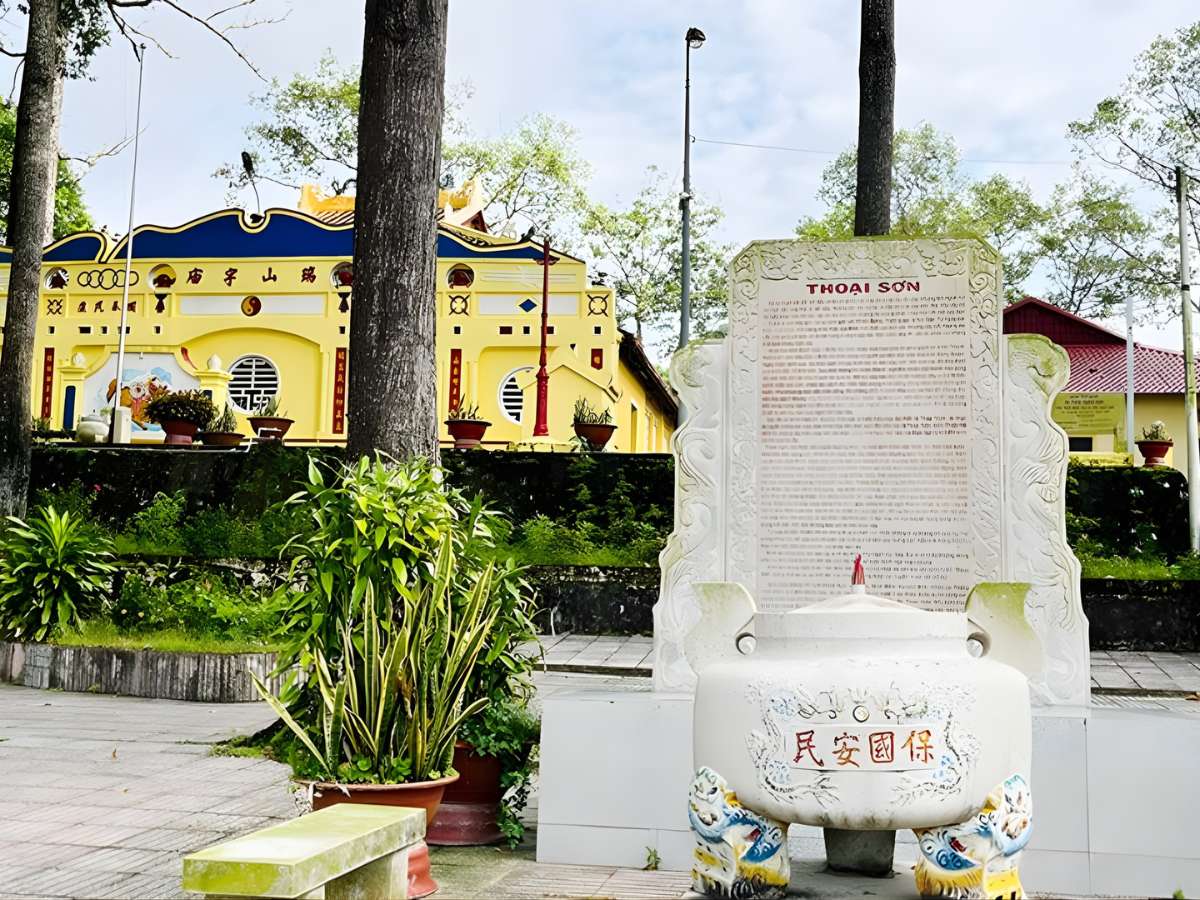
Relic of Thoai Ngoc Hau Temple is associated with the formation of the land. (Source: Collected)
During the renovation process, degraded items such as the tiled roof, column and rafter system, and surrounding grounds were reinforced to match the original architecture. These activities aim to ensure the safety of residents and visitors when they come to visit and worship. At the same time, historical factors are always considered to avoid altering the identity of the relic.
The local community plays an important role in maintaining the temple's activities. Locals regularly participate by contributing labor, offerings, and organizing traditional ceremonies. This connection helps the temple continue to exist as a familiar part of the spiritual life of Thoai Son.
Periodic repair campaigns also demonstrate the awareness of preserving heritage for future generations. Thanks to this, the temple retains its ancient charm and solemn atmosphere. This is a factor that helps the relic continue to promote its value in the context of modern life.
2.2. Architecture and typical features
Thoai Ngoc Hau Temple in Thoai Son features a traditional Southern Vietnamese architectural style, using familiar materials such as wood and tiles. The overall layout is harmoniously arranged, fitting with the landscape of Sap Mountain and the surrounding plains. This architecture reflects the adaptation of the local residents to natural conditions.
The front yard serves as a communal living space, often used during festivals and religious ceremonies. From the yard, visitors can clearly feel the tranquility and solemnity of the worship area inside. This arrangement creates a gentle transition between the outer space and the main hall.
The main hall is where Thoai Ngoc Hau is worshipped, arranged in a traditional manner with carved details featuring familiar patterns of Southern Vietnamese architecture. The wooden column and rafter system is meticulously crafted, demonstrating the skill of ancient artisans. This space creates a solemn atmosphere, suitable for incense offering and commemoration activities.
Besides the main hall, auxiliary structures such as the Thoai Son stele and green spaces contribute to completing the overall architecture. These elements help the temple not only be a place of worship but also a cultural space connected to the history of the land. Architectural and landscape values are thus preserved simultaneously over time.
3. Spiritual Experience Highlights at the Temple
3.1. Incense Offering and Worship Activities
Upon visiting Thoai Ngoc Hau Temple, visitors often perform the ritual of offering incense at the main hall to commemorate the mandarin Nguyen Van Thoai. The worship area is kept solemn, creating a tranquil atmosphere for participants. Activities proceed slowly, in keeping with the spiritual ambiance of the relic.
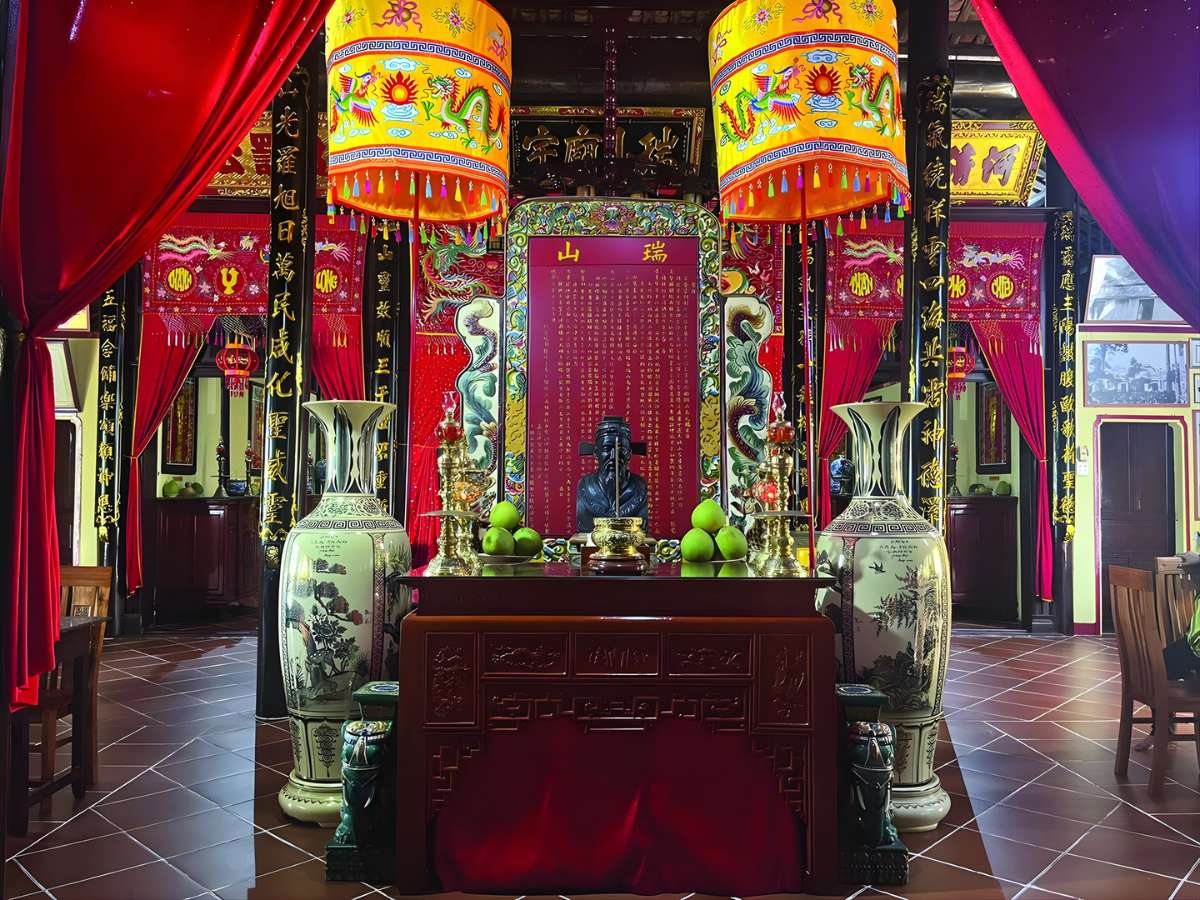
The incense offering ritual at the temple was solemn, expressing gratitude. (Source: Collected)
On normal days, the number of visitors to the temple is not too crowded, allowing for peaceful worship. Visitors can spend time learning about the history of Thoai Ngoc Hau through local legends. This is a gentle approach to better understand his role in the exploration of the Southern region of Vietnam.
During the death anniversary of Thoai Ngoc Hau on the 6th day of the 6th lunar month, the temple grounds become more bustling with the participation of many people. Traditional rituals are organized according to Southern customs, expressing gratitude to the ancestors. This activity contributes to community connection through shared values.
3.2. Festivals and cultural life associated with the temple
Annually, the Thoai Son Thoai Ngoc Hau Temple is the venue for many traditional festivals of the Thoai Son residents. The festivals are organized to commemorate the merits of the distinguished official and pray for peace for the community. The festival atmosphere is both solemn and close to folk life.
One of the common activities is the Ky Yen festival with familiar religious rituals of the Southern region. This festival expresses wishes for favorable harvests and stable lives for the local people. Through this, cultural values are maintained and passed down to future generations.
Besides the ceremonial part, cultural activities such as folk singing and traditional games are also organized. These activities create a space for exchange and community bonding during the festival. Participating visitors can clearly feel the local cultural life.
4. Extending the tourism and sightseeing experience
4.1. Combining visits to Thoai Son and nearby destinations
After visiting the Thoai Ngoc Hau Temple, tourists can continue their journey to explore the Thoai Son area with many local cultural imprints. Sap Mountain is a familiar stop, offering a gentle natural space and paths suitable for strolling. The scenery here helps balance spiritual experience with relaxation.
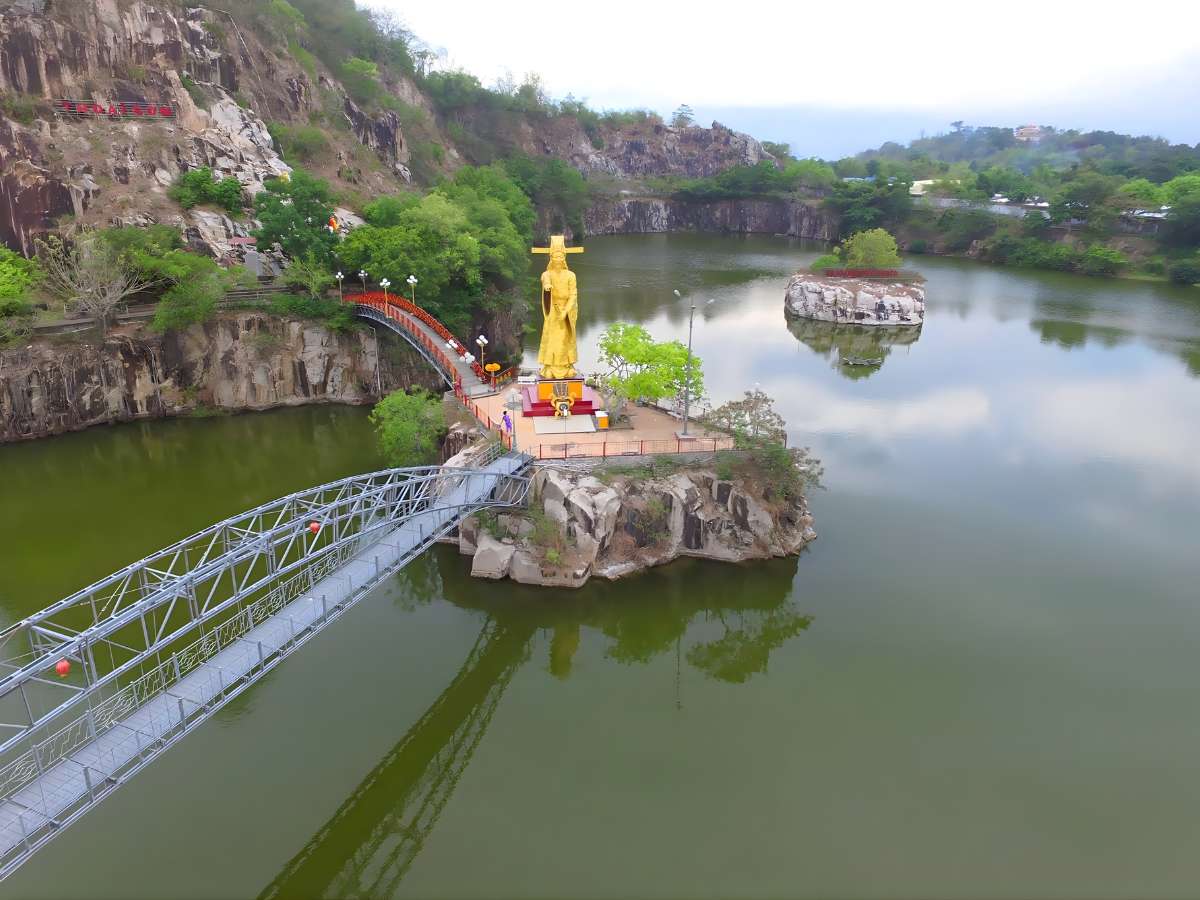
Nui Sap landscape combines visiting historical sites and spiritual experiences. (Source: Collected)
Ong Thoai Lake is another option for tourists who want to learn more about the history and life of An Giang residents. The tranquil water space along with the surrounding plain scenery creates an experience close to nature. This is a suitable spot to rest after visiting historical sites.
Furthermore, visiting the villages around Thoai Son helps tourists better understand the daily life of local people. Images of rice fields, canals, and garden houses create a typical Southern Vietnamese life picture. This experience adds depth to the trip.
4.2. Extend your itinerary to Phu Quoc with Sun World experiences
From Thoai Son, tourists can extend their itinerary to Phu Quoc to combine island experiences. The transition from historical sites to coastal scenery brings a fresh feeling to the trip. This enriches the Mekong Delta travel itinerary.
In Phu Quoc, the Sun World Hon Thom area is of great interest to many tourists due to its diverse island tourism ecosystem. The space here offers entertainment and resort experiences suitable for many audiences. The presence of Sun World Hon Thom adds a modern highlight to the journey.
The combination of visiting Thoai Ngoc Hau Temple and experiencing Phu Quoc creates a balanced itinerary between culture and resort tourism. Tourists have the opportunity to clearly feel the diversity of landscapes and experiences in the southern region. This is a suitable suggestion for multi-day trips.
Thoai Son Thoai Ngoc Hau Temple is a space preserving historical and spiritual values associated with the formation of the An Giang land. Visiting this place, tourists have the opportunity to learn about the merits of ancestors in a peaceful and serene natural setting. From this stopover, the exploration journey can continue to expand, connecting cultural heritage with modern tourism experiences.