















1. The Position of Rô Băm Art in the Cultural Flow of Southern Khmer
1.1. Heritage Origins and Historical Context
Rô Băm art is a traditional theater form associated with the Southern Khmer community. In Khmer, Rô Băm is understood as a form of theatrical singing and dancing, where "Rô" or "Rom" means dance, and "Băm" refers to the dances performed in traditional plays. Initially, Rô Băm was influenced by court dances and religious rituals, then spread into community life in the Mekong Delta provinces such as Sóc Trăng, Trà Vinh, and An Giang.
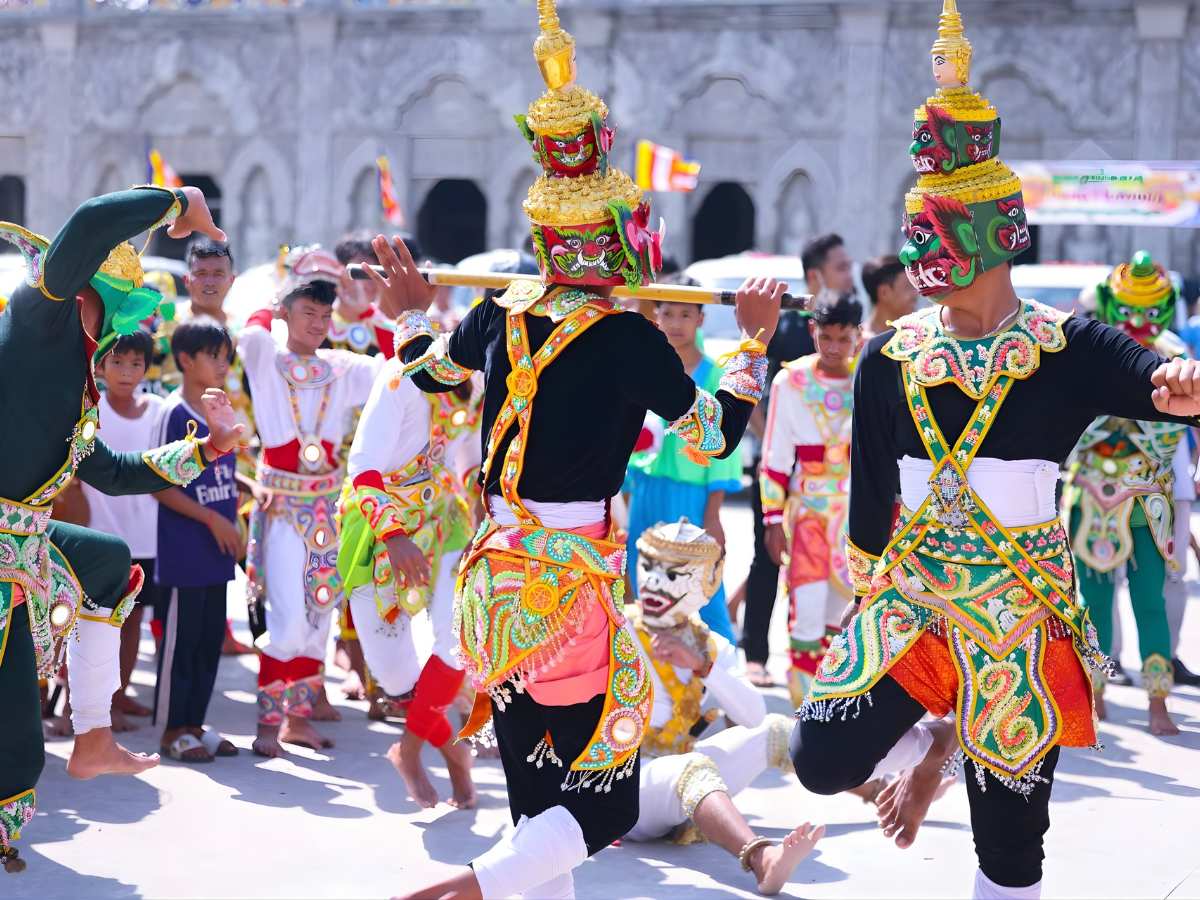
The Ro Bam art form reflects the historical origins and beliefs of the Southern Khmer people. (Source: Collected)
1.2. The pivotal influence of Ro Bam in the spiritual life of the Khmer people
In the spiritual life of the Southern Khmer people, Ro Bam plays an important role and often appears during traditional festivals such as Tet Chol Chnam Thmay, Sen Dolta, or Ok Om Bok. Beyond its entertainment value after the harvest season, Ro Bam also serves as a medium for conveying historical stories, moral principles, and the community's life philosophies. Through body language, music, and costumes, this theatrical form contributes to community bonding and the preservation of traditional cultural values.
1.3. Original Beauty: When Cultural Values Become a Pride Preserved Through Ro Bam
The cultural value of Ro Bam art is clearly expressed through its stylized body language, traditional music, costumes, and epic-like storylines. Each dance in Ro Bam carries symbolic meaning, reflecting the relationship between humans, nature, and spiritual life. Through hand and foot movements and slow rhythms, Ro Bam helps preserve the Khmer cultural identity and pass down traditional values to future generations.
2. Artistic Characteristics Defining Ro Bam's Identity
2.1. Stylized Dance Art and Body Language
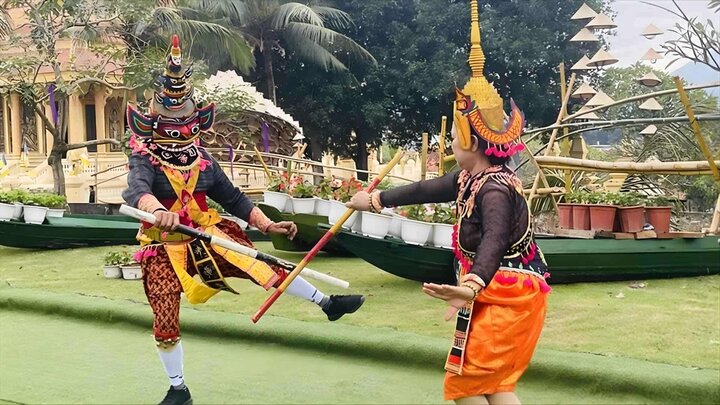
One of the elements that makes Ro Bam distinctive lies in its highly stylized dance art and body language. On stage, each movement not only creates form but also plays a role in storytelling and expressing characters' emotions and personalities. Hand and foot movements are strictly codified, with slow rhythms, allowing the audience to perceive the play's content without excessive dialogue.
Dance movements and body language of Robam convey theatrical content. (Source: Collected)
2.2. Music and Traditional Musical Instruments in Robam
Music plays a role in guiding emotions and connecting the layers of performance in Robam art. The orchestra uses drums, gongs, and many folk instruments, creating a soundscape associated with traditional Khmer theatre. Drum beats and rhythms are flexibly adjusted according to each segment, supporting the acting and highlighting the characters' psychological developments.
2.3. Costumes, Makeup, and Stage Art
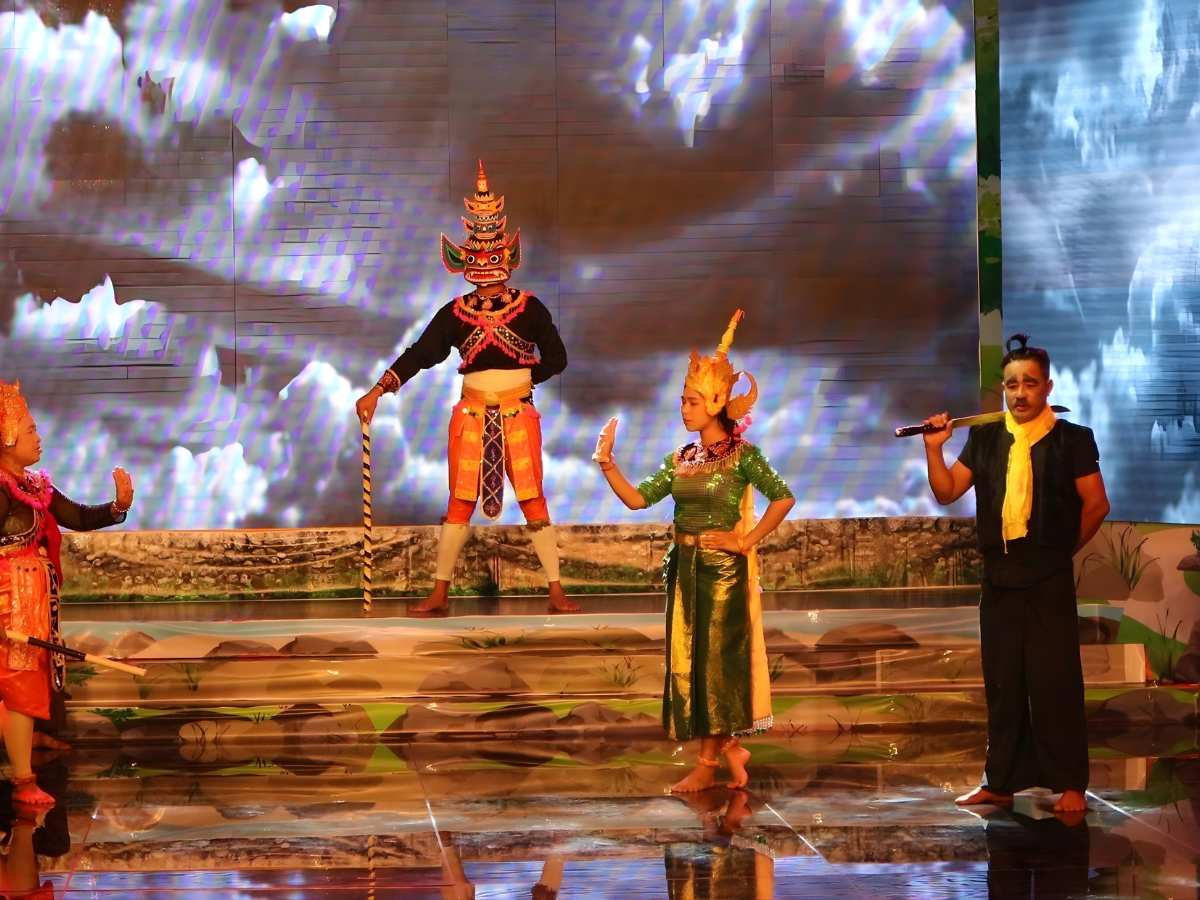
Costumes in Robam bear the strong imprint of Southern Khmer culture, with harmonious colors and symbolic designs. Each type of costume represents the character's status, personality, and role through patterns, styles, and color combinations. Furthermore, makeup and stage props contribute to completing the character's image, helping the audience easily recognize and follow the story.
3. Script Content and Character Archetypes in Robam
3.1. Epic Plots and Indian Cultural Influence
Robam scripts are often based on epics and legends familiar in the spiritual life of the Southern Khmer people. Prominent among these is Ream Kê, the Khmer version of the Ramayana epic, reflecting concepts of good and evil, karma, and social morality. Through these stories, Robam demonstrates the assimilation of Indian culture, which has been harmonized and localized within the Khmer cultural space.
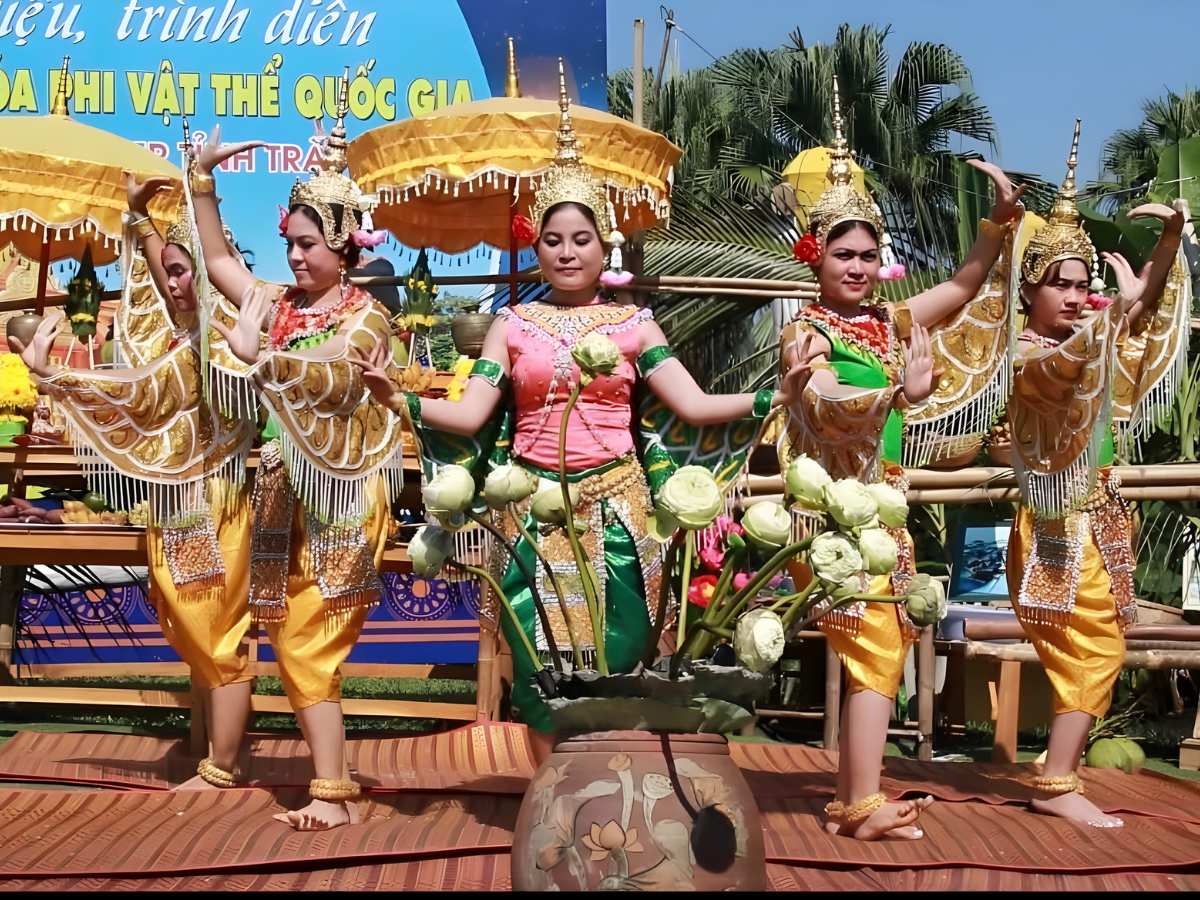
Robam stage is influenced by Indian culture through its creation and dance. (Source: Collected)
3.2. Character system and performance conventions
The character system in Robam is built according to clear conventions, including roles of kings, princes, princesses, generals, as well as villains and deities. Each group of characters is distinguished through costumes, masks, dance movements, and makeup styles, creating visual recognition on stage. These conventions help the audience easily follow the story's progression and understand the role of each character.
4. Robam art and suggested connecting tourist attractions in An Giang
4.1. Sun World Hon Thom
From the Southern Khmer cultural space, Robam art can be connected with island tourism journeys in the Phu Quoc special administrative region, An Giang province. This art form is associated with dance, masks, costumes, and folk tales, often appearing in the festive activities of the Khmer people. After the cultural experience, Sun World Hon Thom is a suitable stop for groups of guests who want to expand their itinerary to entertainment and recreation.
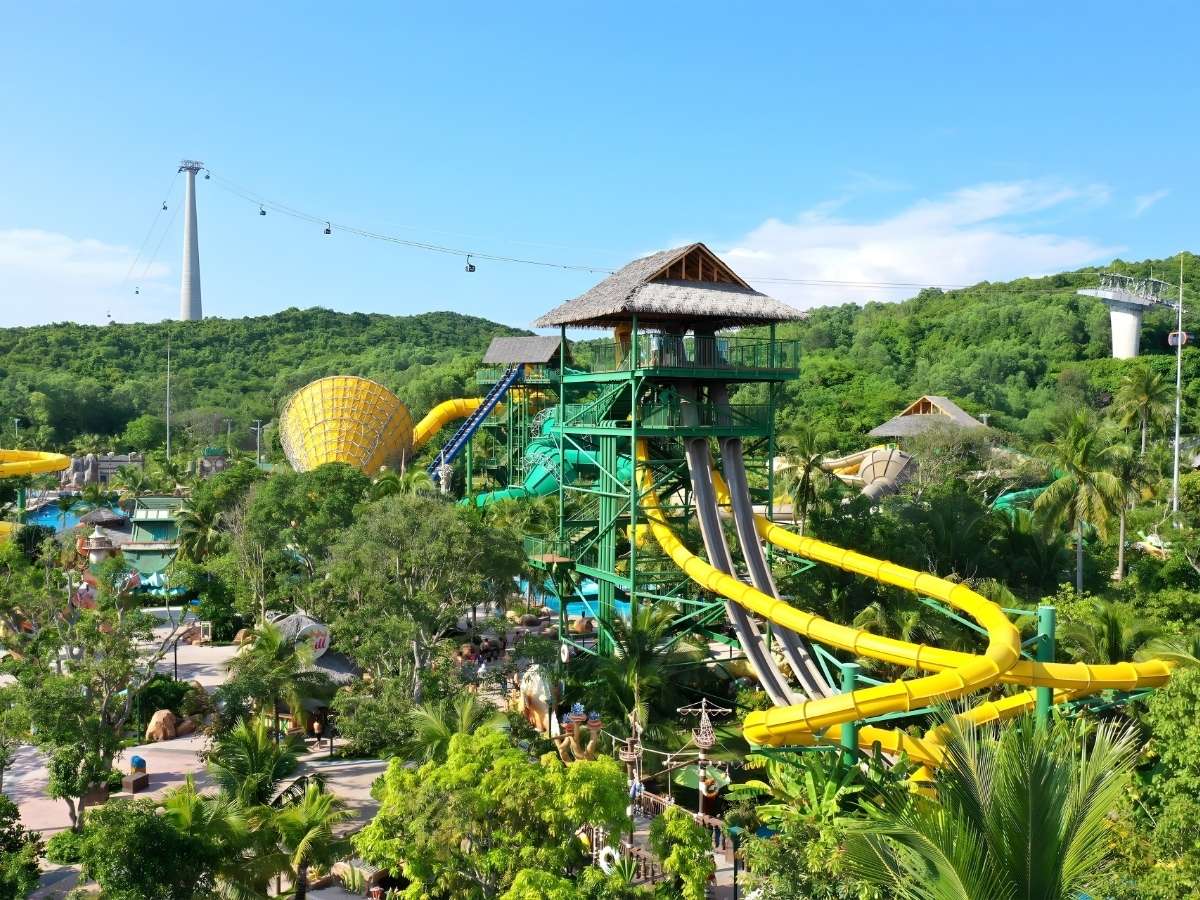
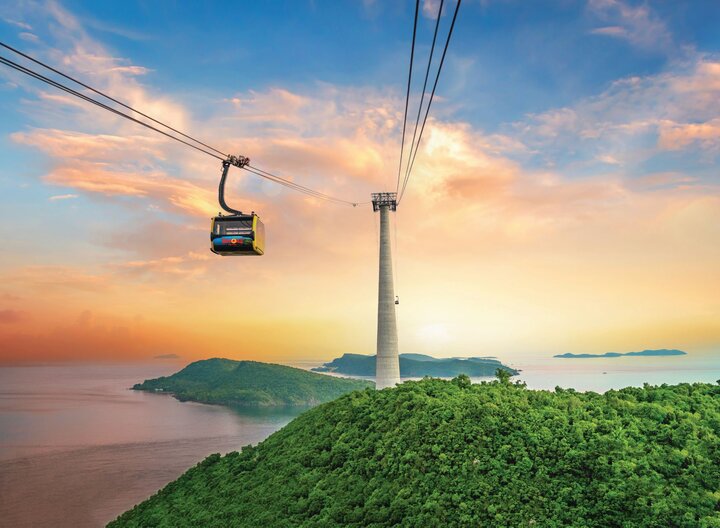
The 3-wire cable car crossing the sea to Hon Thom achieved a Guinness World Record. (Source: Collected)
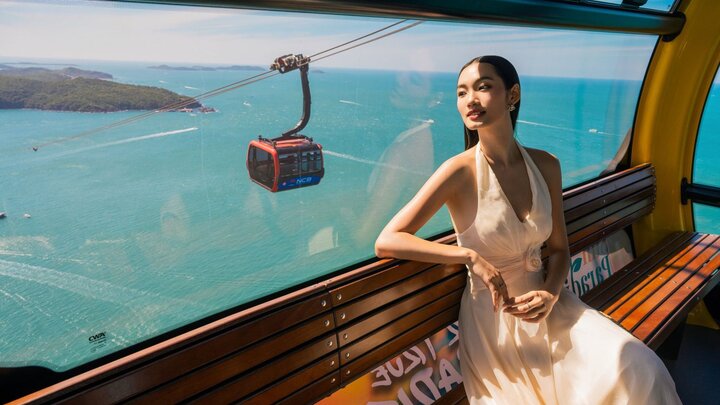
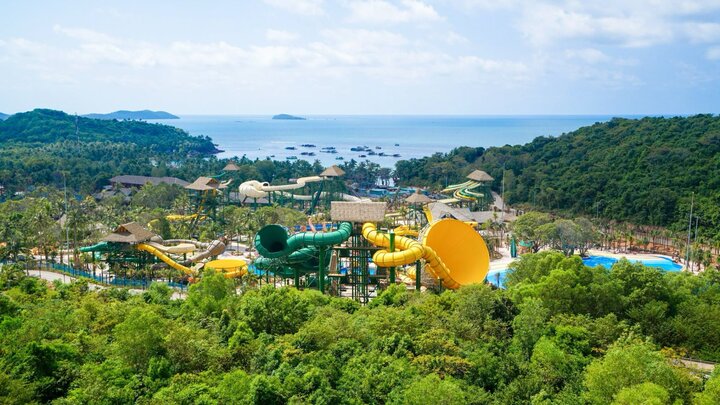
This tourist area is notable for the 7,899.9 m long 3-wire Hon Thom cable car, recognized by Guinness when it opened in 2018. The cable car journey connects the An Thoi area with Hon Thom island, providing a panoramic view of the sea, islands, and coastal residential clusters. Additionally, Aquatopia water park is developed as an entertainment complex, suitable for families and young travelers.
>>> Book Sun World Hon Thom tickets now to fully explore Hon Thom HERE.
4.2. Sunset Town
Sunset Town is a destination that can be combined after exploring cultural sites, thanks to its location in the southern part of Phu Quoc special administrative region. The area is planned as a coastal tourist urban area, focusing on landscape, architecture, art performances, and night activities. From July 1, 2025, Phu Quoc will be a special administrative region directly under An Giang province, providing a basis for developing inter-regional cultural and island tourism products.
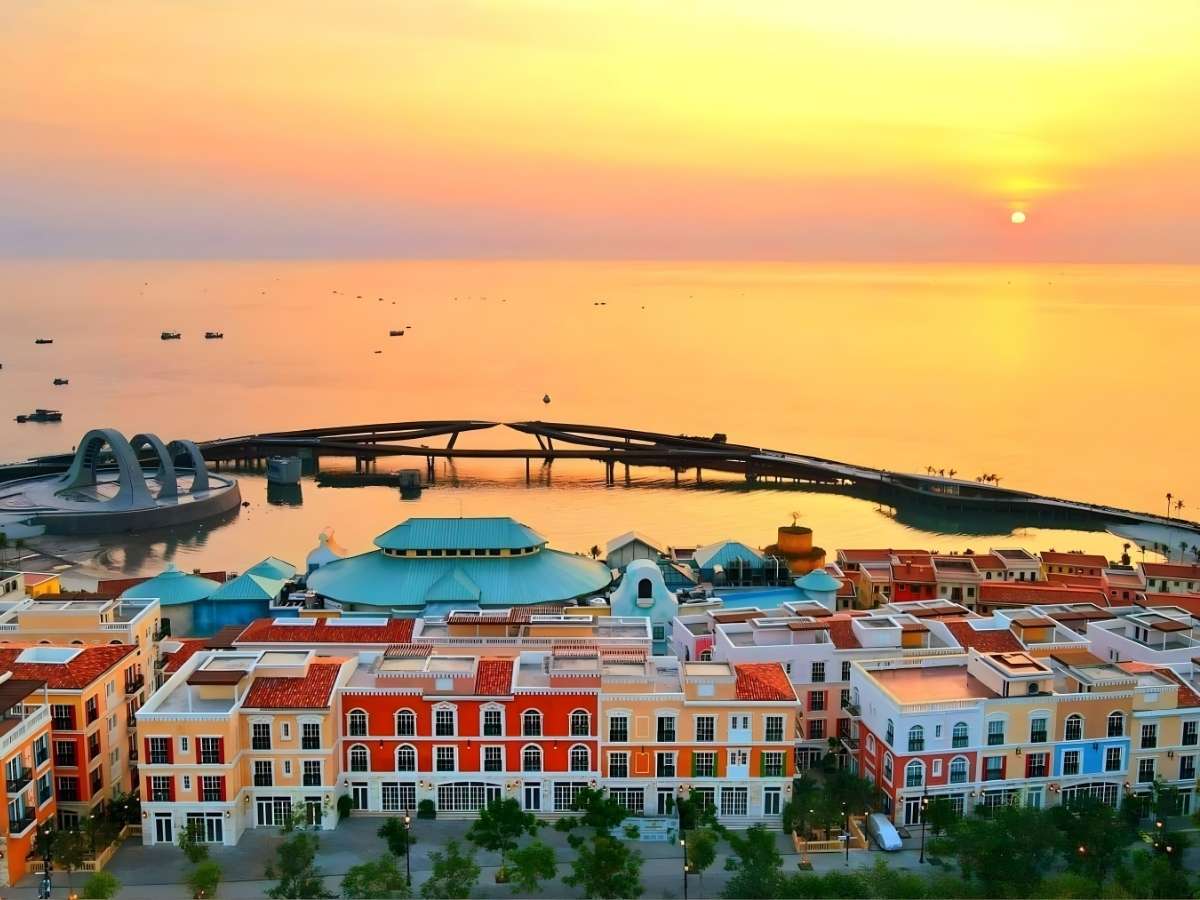
Sea view from the vibrant Hoang Hon Town during the light festival. (Source: Collected)
The highlight in this area is the Kiss Bridge, a structure designed as a landscape icon associated with the sunset viewing experience. Here, the Symphony of the Sea show takes place at the Kiss Bridge and the Kiss of the Sea show at a nearby stage. Fireworks displays twice a night, 365 days a year, also add to the nighttime entertainment offerings for tourists staying in Phu Quoc.
4.3. Khem Beach
Khem Beach is a suitable connecting point for itineraries focused on relaxation after participating in cultural and entertainment activities. This beach is located in the southern part of the island, about 25 km from the old Duong Dong center, making it convenient to combine with An Thoi, Hon Thom, and Hoang Hon Town. The beach area benefits from its small bay landscape, light-colored sand, and relatively calm waters during suitable weather periods.
In the tourism development orientation of An Giang after administrative boundary adjustments, Phu Quoc is considered an important island and sea area, complementing the mountain, forest, border, and Khmer cultural resources. Therefore, a journey from Robam art to destinations like Hon Thom, Hoang Hon Town, and Khem Beach can form a diverse experience route. This connection allows tourists to access both cultural depth and relaxation spaces within the same trip.
Amidst contemporary life, Robam art still exists as a maintained part of the cultural heritage of the Southern Khmer community. The preservation and promotion of Robam contribute to maintaining traditional identity while opening up new approaches for cultural tourism. When placed in a suitable experiential space, Robam becomes a bridge helping tourists understand the cultural depth in each exploration journey.