
















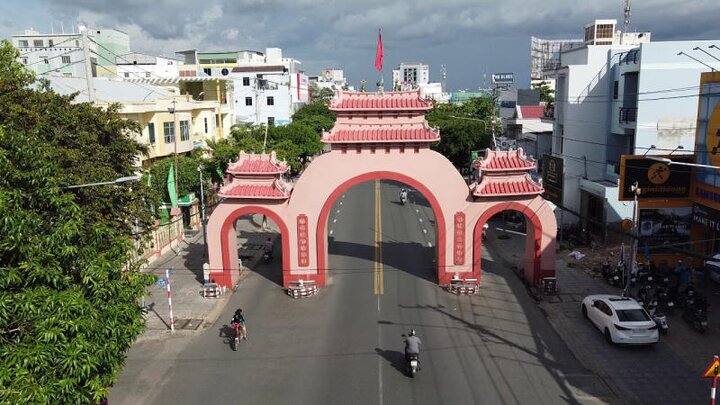
1. General introduction to Rach Gia Tam Quan Gate
1.1. Location and role in urban space
Rach Gia Tam Quan Gate is located in the central area, connected to the important cultural and spiritual space axis of Rach Gia city. It not only serves as an iconic entrance but is also considered an urban identity marker, helping to connect community living areas, religious sites, and the city's main roads.
In the context of continuous urban development, Rach Gia Tam Quan Gate still maintains its role as an architectural highlight, contributing to shaping the landscape and creating Rach Gia's unique identity. It is also a place where residents and tourists can easily recognize the imprint of traditional culture amidst the modern city space.
1.2. Architecture imbued with traditional values
Architecturally, Rach Gia Tam Quan Gate is built in the familiar Tam Quan style of East Asian culture, consisting of three passageways symbolizing profound philosophical and spiritual values. The design of the roof, pillars, and decorative details all exhibit harmony and balance, deeply reflecting Vietnamese traditional architectural features.
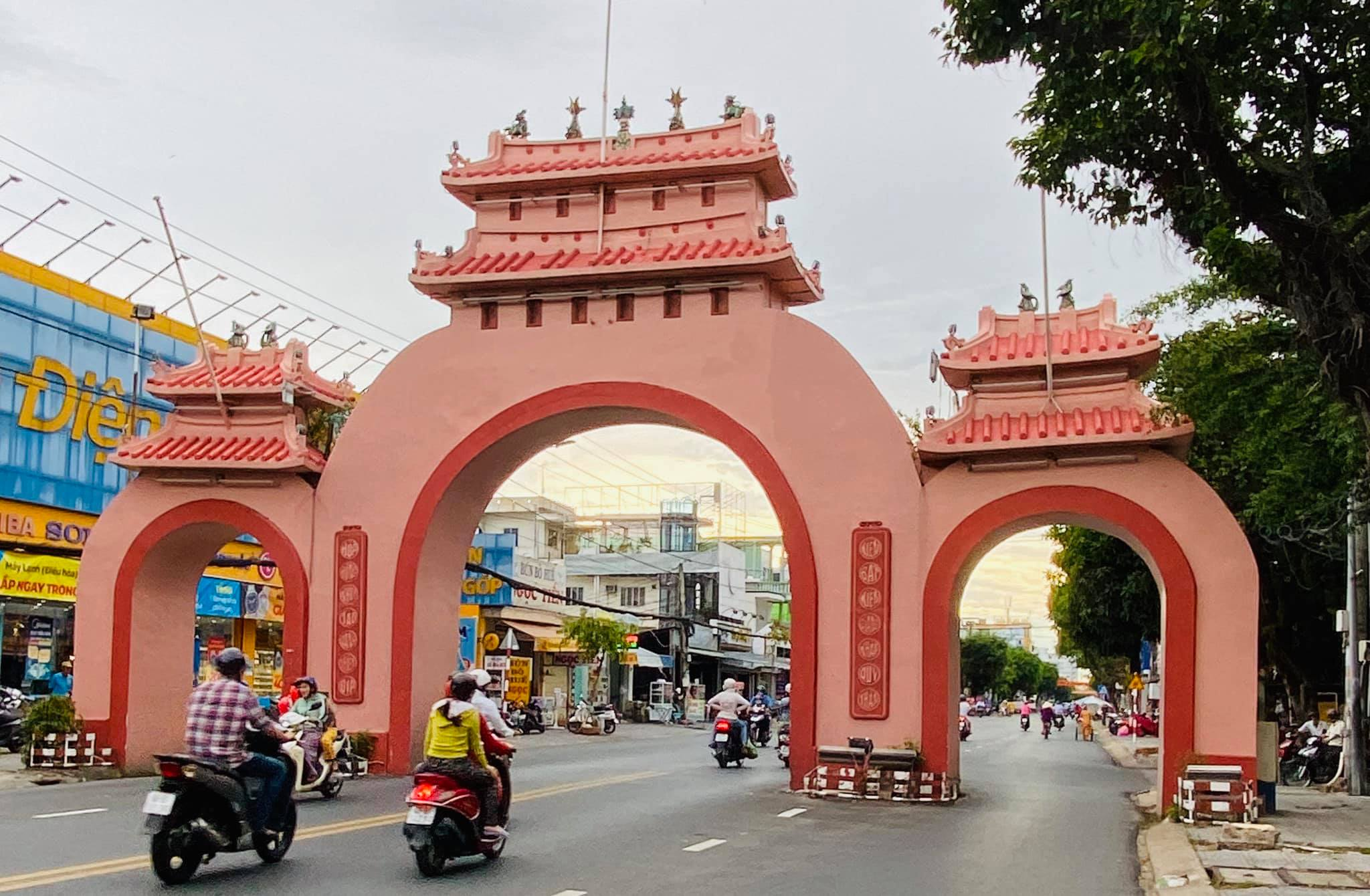
The Tam Quan Gate is one of Rach Gia's prominent structures (Source: Collected)
Not only impressive with its imposing form, the Tam Quan Gate of Rach Gia also attracts with its patterns and motifs carrying spiritual and cultural significance. These details contribute to creating a solemn, ancient appearance, while also reflecting the local people's respect for long-standing historical and religious values.
1.3. A cultural symbol intertwined with people's lives
More than just an architectural work, the Tam Quan Gate of Rach Gia is a cultural symbol closely associated with the spiritual life of the people of An Giang. It often appears in community activities, festivals, and in the memories and familiar images of many generations of Rach Gia residents.
For tourists, the Tam Quan Gate of Rach Gia is not just a sightseeing or check-in spot, but also a place to better understand the cultural depth of this land. Through this structure, traditional values, beliefs, and local identity are clearly expressed, contributing to enriching the experience of exploring Rach Gia and An Giang in general.
2. History and significance of the Tam Quan Gate of Rach Gia
2.1. Context of origin and formation process
The Tam Quan Gate of Rach Gia was formed as the city gradually completed its cultural and spiritual space alongside urban development. The structure was built to create an iconic architectural highlight, while also affirming the traditional cultural identity of the An Giang region in the modern flow.
Over time, the Tam Quan Gate of Rach Gia has not only served as a ceremonial entrance but has also become a familiar part of the local community's life. The enduring existence of the structure reflects the historical and spiritual value that the community places on this space.
2.2. Spiritual meaning and symbolic philosophy
According to traditional beliefs, tam quan is an image symbolizing profound philosophical values in Eastern culture. For the Tam Quan Gate of Rach Gia, the three passageways not only have architectural significance but also contain a message about the balance between humans, nature, and spiritual life.
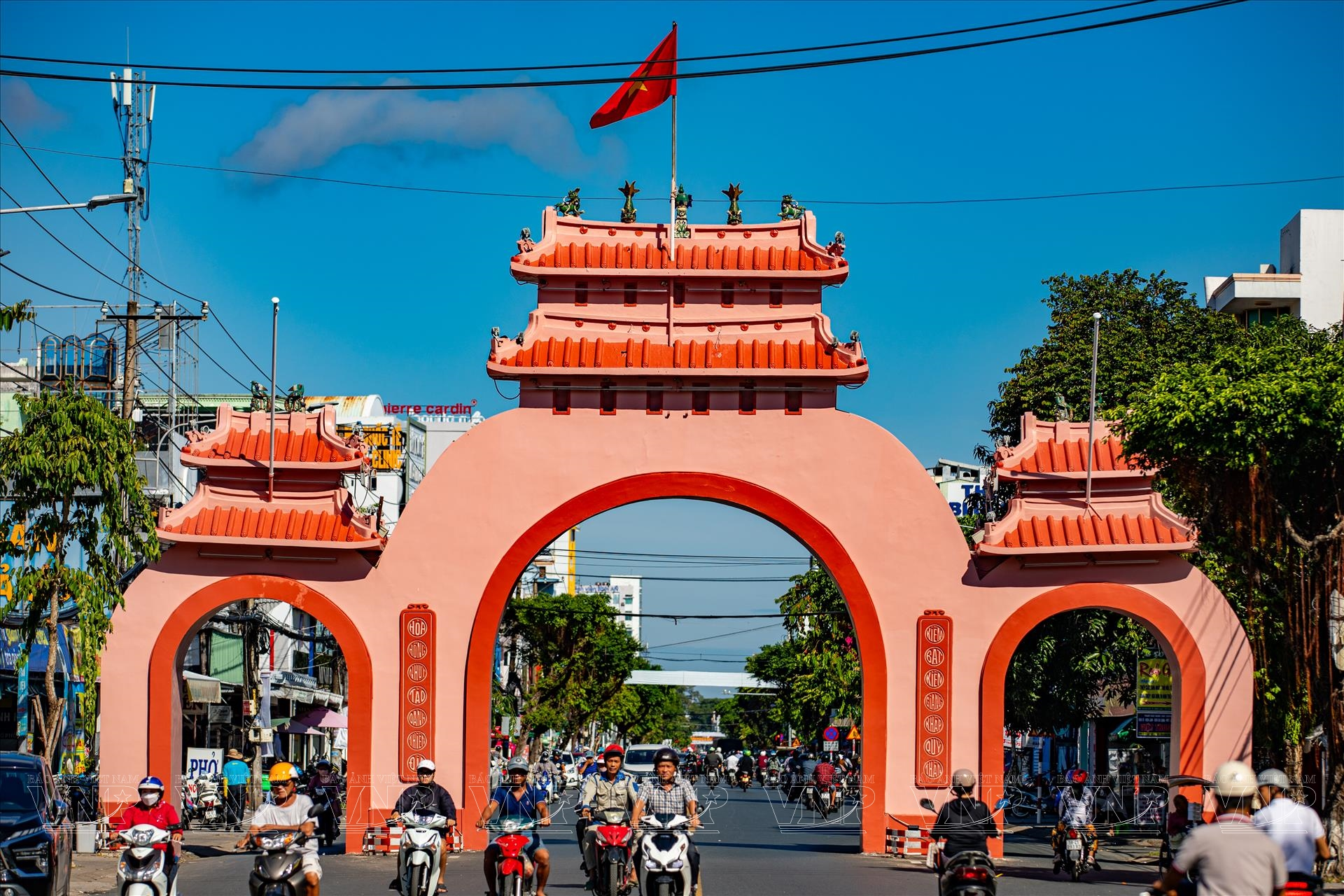
The Three-Gate Archway holds many spiritual values and holds significant meaning in the lives of Rach Gia people (Source: Collected)
The tam quan structure embodies the wish for peace, goodness, and harmony in life. Therefore, the Rach Gia Three-Gate Archway is not merely a physical structure but also a spiritual symbol, where people place their faith and reverence for long-standing cultural and spiritual values.
2.3. Cultural Value Through Time
Over time, the Rach Gia Three-Gate Archway has transcended its original meaning to become a cultural symbol associated with the city's urban memory. The structure appears in many community activities, traditional festivals, and cultural events, contributing to maintaining the connection between the past and the present.
For tourists, understanding the history and significance of the Rach Gia Three-Gate Archway elevates the sightseeing experience beyond just admiring the architecture, opening a deeper perspective on the cultural identity of An Giang. This is the enduring value that makes the three-gate archway a destination rich in depth within the urban space of Rach Gia.
3. Rach Gia Three-Gate Archway Architecture: Unique and Philosophical
3.1. Harmonious and Balanced Tam Quan Layout
The Rach Gia Three-Gate Archway is designed according to the traditional tam quan layout with three parallel passageways, creating a harmonious and balanced overall structure. The central main passageway is usually larger, signifying its central role and solemnity, while the two side passages create symmetry, contributing to the completion of the architectural form.
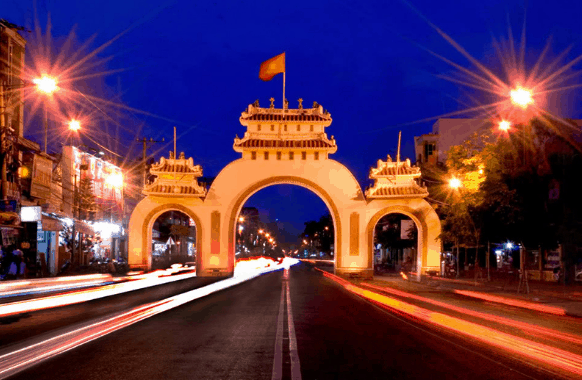
Balanced layout in the design of Rach Gia Triple Gateway (Source: Collected)
This layout not only possesses aesthetic value but also contains a profound philosophy about balance in life. Through the triple gateway structure, Rach Gia Triple Gateway expresses the concept of harmony between humans, nature, and the spiritual world – a familiar idea in traditional East Asian architecture.
3.2. Architectural details bearing traditional imprints
The architectural details of the Rach Gia Triple Gateway are meticulously crafted, from the sturdy pillars to the tiled roof and symbolic decorative panels. The soft, curved lines combined with the imposing forms create a solemn yet not heavy appearance, both ancient and close to the surrounding space.
The patterns and decorative motifs on the Rach Gia Triple Gateway are often associated with familiar cultural and spiritual symbols, expressing wishes for peace, luck, and prosperity. It is these details that contribute to highlighting the philosophical depth, making the work not just architecture to admire but also a place that conveys spiritual values.
3.3. Combination of architecture and landscape
A special feature in the architecture of the Rach Gia Triple Gateway is its close connection with the surrounding landscape. The structure does not stand isolated but blends into the overall urban space, creating a focal point that is both prominent and harmonious within the city context.
Thanks to this combination, the Rach Gia Triple Gateway not only realizes its architectural value but also serves as a landscape highlight, contributing to enhancing the cultural space of Rach Gia. This is also a factor that helps the work maintain its long-term appeal, becoming a landmark with a strong traditional imprint in the heart of the modern city.
4. Cultural and tourism value of Rach Gia Triple Gateway
4.1. Cultural symbol associated with local identity
The Rach Gia Triple Gateway is not just an architectural work but also carries profound symbolic value for the spiritual and cultural life of the local people. The familiar image of the triple gateway evokes ancient traditional values, reflecting the intersection of beliefs, life philosophies, and East Asian aesthetics.
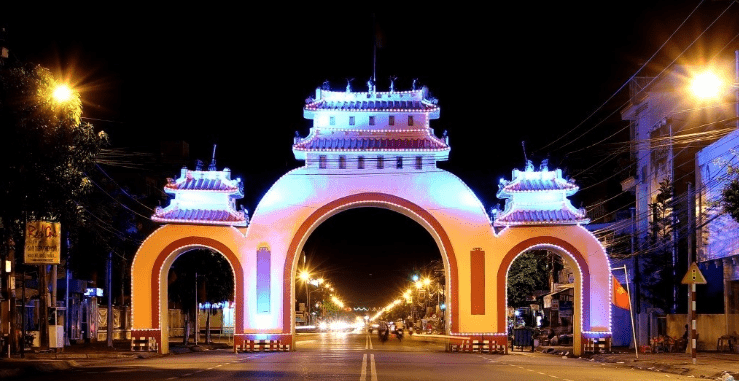
The Three-Gate Archway of Rach Gia is a cultural symbol closely associated with local life (Source: Collected)
Amidst the flow of urban development, the Three-Gate Archway of Rach Gia still serves as a “cultural milestone,” helping to preserve community memories and remind people of their roots. This is what makes the structure a spiritual anchor, contributing to shaping Rach Gia’s unique identity amidst modernization.
4.2. A highlight for sightseeing and check-ins by tourists
With its unique architecture and easily accessible location, the Three-Gate Archway of Rach Gia increasingly attracts tourists for visits and souvenir photos. The space around the archway offers a solemn yet friendly atmosphere, suitable for both tourists who love cultural exploration and those seeking a check-in spot with a strong local imprint.
The presence of the Three-Gate Archway of Rach Gia in sightseeing itineraries has contributed to enriching the tourism experience in Rach Gia. The structure is not just a brief stop but also a place for visitors to feel the cultural depth through its architectural details.
4.3. A driving force for sustainable cultural tourism
In the strategy for sustainable tourism development, the Three-Gate Archway of Rach Gia is considered a valuable cultural resource. Preserving and promoting this structure not only helps safeguard architectural heritage but also lays the foundation for developing tourism products linked to local culture.
When connected with other attractions and cultural activities, the Three-Gate Archway of Rach Gia can become a crucial link in the journey of exploring Rach Gia. Thereby, the structure contributes to spreading traditional cultural values while enhancing the city's tourism appeal in the long term.
Over time, the Three-Gate Archway of Rach Gia has become more than just an architectural work; it has transformed into a cultural symbol intertwined with the memories and spiritual life of the local people. From its historical formation, philosophical meaning, to its tourism value, the three-gate archway clearly demonstrates its role in connecting tradition and modernity. In the ever-changing urban landscape, the presence of the Three-Gate Archway of Rach Gia helps preserve identity while creating a distinctive cultural highlight, adding depth and allure to Rach Gia in the eyes of tourists.