
















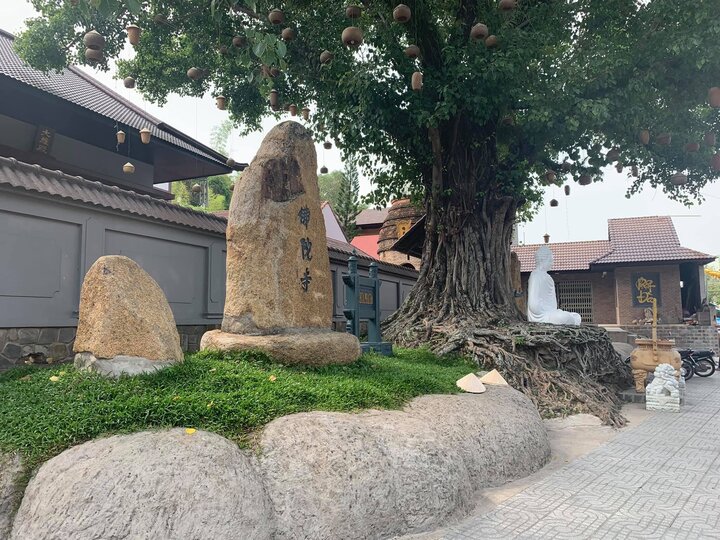
1. General Introduction to Phat Da Temple
1.1. Address, Location, and Role in Religious Life
Phat Da Temple is one of the oldest and most prominent temples in Ha Tien, An Giang province, located in the Binh San ward area – right at the foot of the majestic Binh San mountain, near famous historical sites and scenic spots of the southern border region. This location is not only convenient for pilgrimage but also makes the temple a stopover point for many tourists combining it into their Ha Tien exploration itinerary.
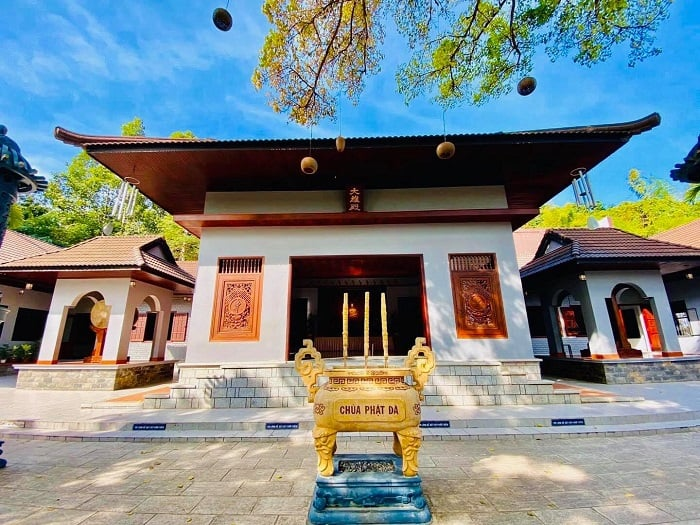
Buddha Temple is the leading sacred destination in An Giang province (Source: Collected)
Not only a place of practice for Buddhist monks and nuns, Buddha Temple (Chua Phat Da) also plays an important role in the spiritual life of the local people. The temple frequently hosts festivals, chanting sessions, and spiritual ceremonies, especially during full moon days and major Buddhist holidays. This ensures the pagoda remains vividly present in the memory of the people of Ha Tien – from one generation to the next.
1.2. Historical value and reputation of the relic
The history of Buddha Temple (Chua Phat Da) is closely linked to the development of Buddhism in the Ha Tien region, which was a cultural crossroads for the Kinh, Khmer, and Hoa ethnic groups centuries ago. Today, Buddha Temple (Chua Phat Da) stands as a vivid testament to the influence of Buddhism in the Mekong Delta and is a destination many seek to understand this religious journey.
The fame of Buddha Temple (Chua Phat Da) is not confined to Kien Giang province but is also known to many domestic and international tourists through spiritual and travel journeys. Those who have visited are impressed by the solemn atmosphere; both the temple grounds and architecture possess a unique charm, reflecting the fusion of traditional Buddhist art and local culture.
1.3. Architectural characteristics and surrounding landscape
Buddha Temple (Chua Phat Da) is distinguished by its traditional East Asian architecture, blending Buddhist artistic elements with the natural environment around the foot of Binh San mountain. The temple grounds are spacious and serene, surrounded by lush greenery and winding paths that create a sense of tranquility from the very first step.
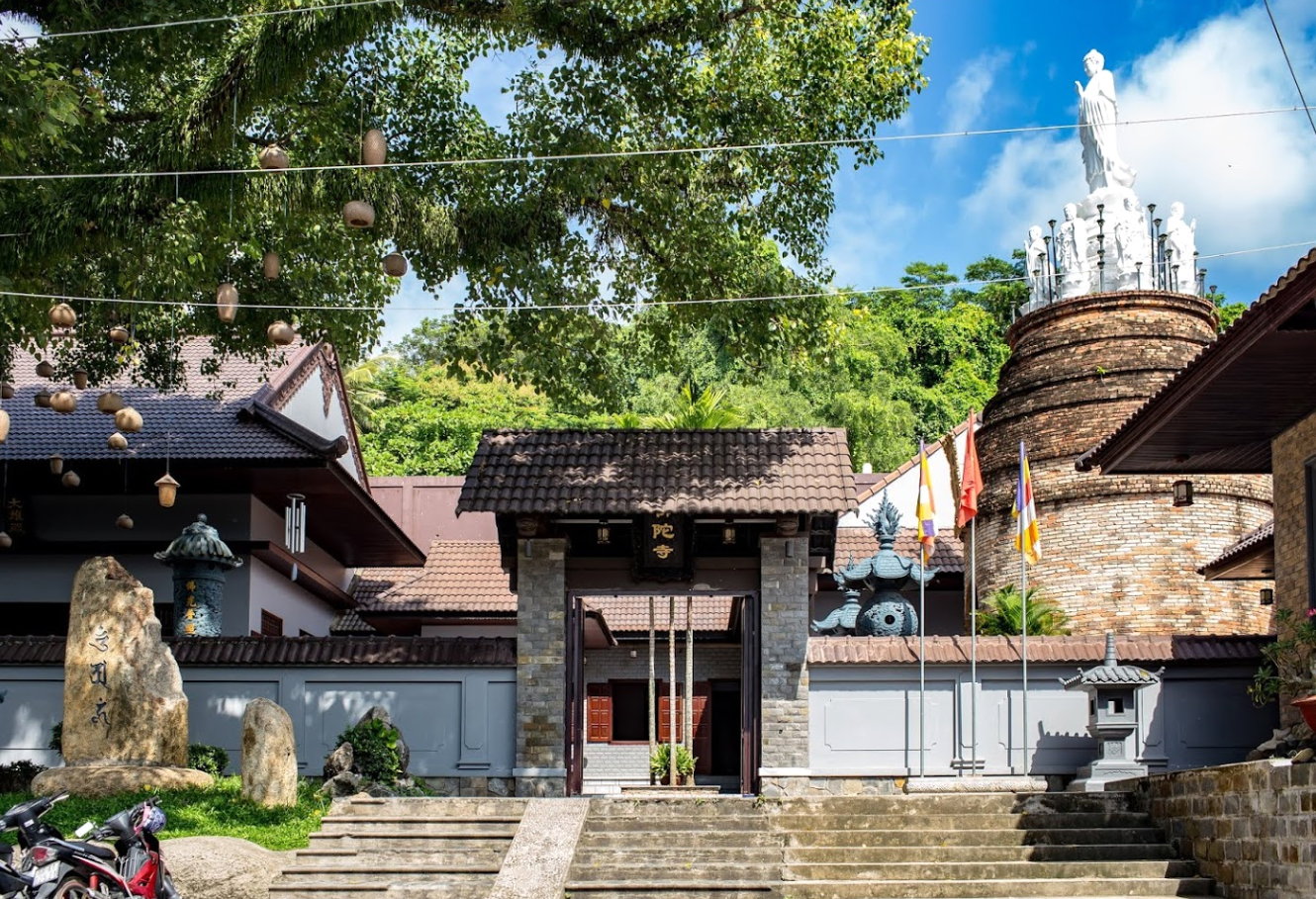
The architecture of Chua Phat Da harmoniously blends Buddhism with the surrounding nature (Source: Collected)
One of the temple's attractions is the arrangement of architectural items along a central axis, including the Tam Quan gate, the main sanctuary, the ancestral house, and auxiliary worship areas. The carved details, bas-reliefs, and patterns on the pillars and roof of the pagoda all demonstrate the skill and sophistication of ancient artisans, making Chua Phat Da an architectural work that possesses both artistic value and deep spirituality.
2. History of formation and development of Chua Phat Da
2.1. Origin tied to the ancient land of Ha Tien
Chua Phat Da was formed in the context of Ha Tien being a new land in the southwestern tip of the country, a convergence of many different cultural and religious currents. The pagoda was established to meet the spiritual and cultivation needs of the local community, while also contributing to the spread of Buddhist ideology in the spiritual life of the people in the border region.
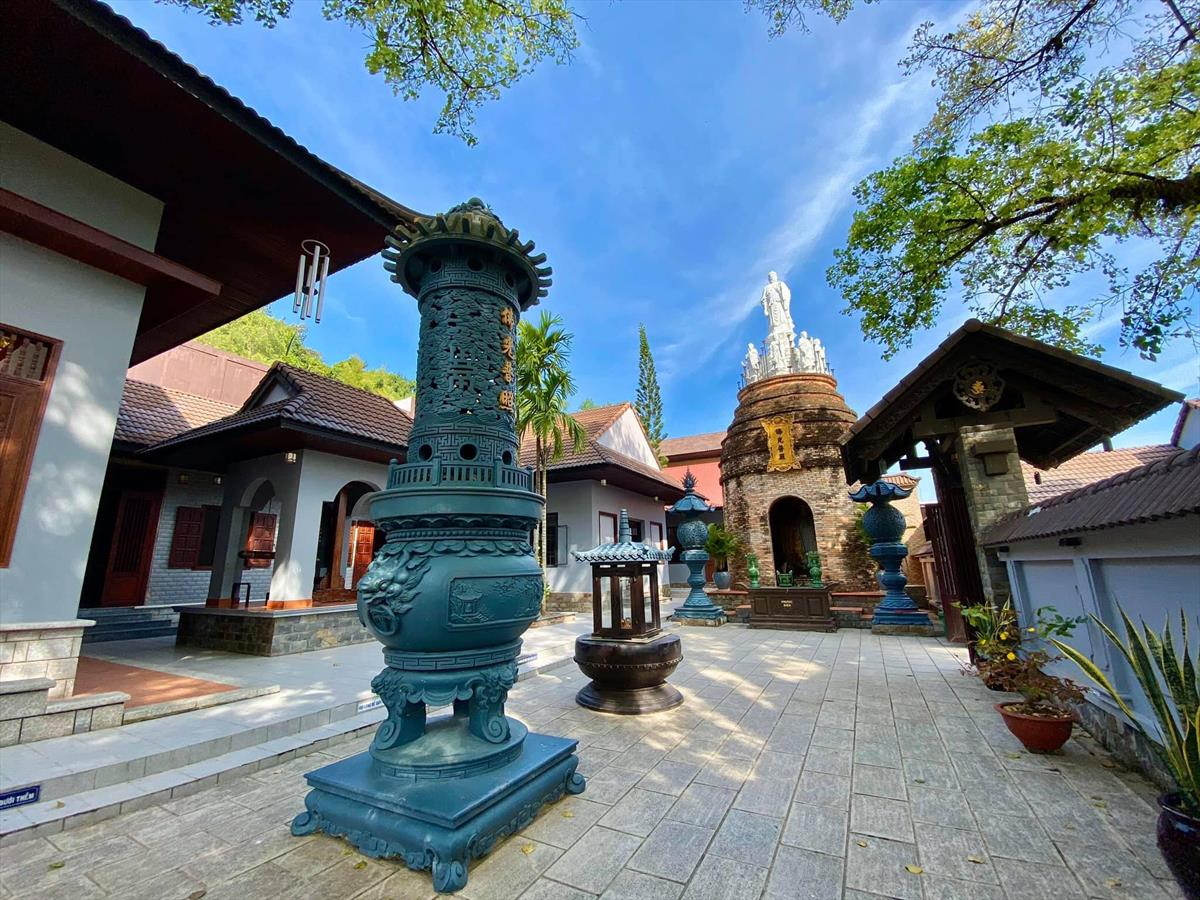
Phu Dat Pagoda is associated with the formation and development of Ha Tien (Source: Collected)
From the very beginning, Phu Dat Pagoda was considered one of the important Buddhist centers in Ha Tien. The pagoda is not only a place of worship but also a spiritual refuge, where people come to pray for peace, cultivate good deeds, and preserve traditional moral values during the process of pioneering and settling in the new land.
2.2. Historical Milestones and Renovation Periods
Through many historical periods with considerable fluctuations, Phu Dat Pagoda was affected by time, war, and natural conditions. However, with the reverence of Buddhists and the preservation by generations of monks and nuns, the pagoda has been renovated and restored many times to maintain its solemn appearance and inherent spiritual value.
Each renovation not only aimed at repairing the architecture but also served as an opportunity to supplement and complete the worship facilities, making the pagoda more spacious and magnificent. Despite certain changes to adapt to new conditions, Phu Dat Pagoda has preserved the architectural spirit and tranquil atmosphere characteristic of an ancient pagoda in the Mekong Delta.
2.3. The Pagoda's Role in Local Cultural and Spiritual Life
Throughout its history, Phu Dat Pagoda has always played an important role in the cultural and religious life of the people of Ha Tien. The pagoda is where traditional Buddhist rituals, meditation retreats, festivals, and community activities take place, contributing to nurturing the spiritual and moral life of society.
Beyond its religious significance, Phu Dat Pagoda is also considered a part of Ha Tien's cultural memory. Stories about the pagoda and the eminent monks who once practiced here have become part of the historical narrative of this region, making the pagoda not just a relic but also a symbol deeply connected to the local community.
3. Architecture and Landscape of Phu Dat Pagoda
3.1. Overall Architecture Harmonizing with Ha Tien's Rocky Landscape
Phu Dat Pagoda possesses an architecture that deeply reflects traditional Buddhism, while also harmonizing with the characteristic rocky terrain of Ha Tien. The pagoda is built with its back against the mountain, creating a "facing the mountain, looking towards the water" posture, which is both feng shui-stable and brings a sense of peace and tranquility to the place of practice.
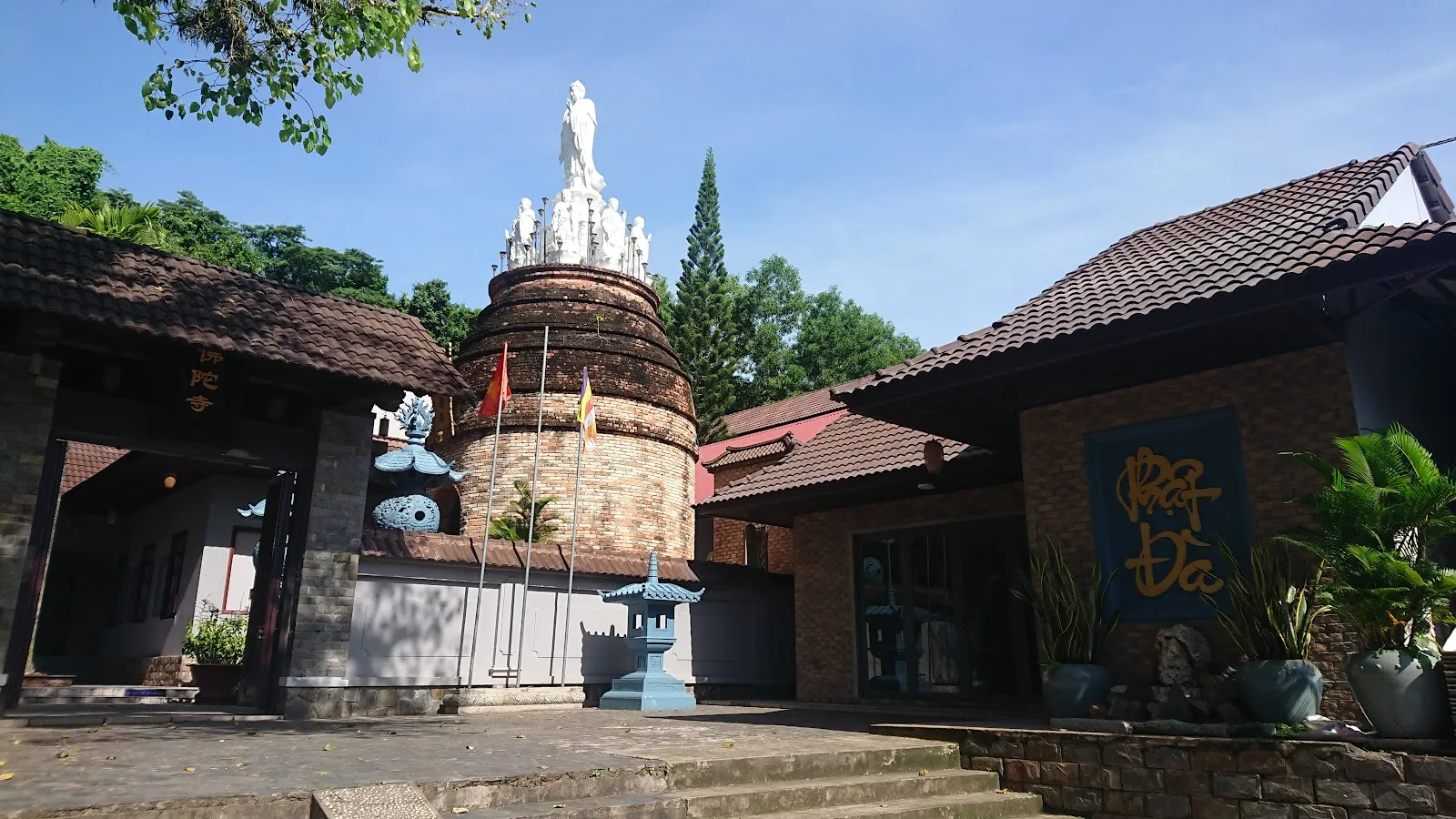
Traditional Buddhist architectural style at Chua Phat Da Temple (Source: Collected)
The overall temple is not too grand but balanced and solemn, with reasonably arranged sections, creating a close connection between the main hall, the worship area, and auxiliary structures. The simplicity and rustic nature of the architecture have contributed to highlighting its pure beauty, in line with the spirit of a Buddhist monastery.
3.2. Main Hall and Worship System
The main hall of Chua Phat Da Temple is the most sacred space, housing Buddha statues with a solemn and gentle depiction style. The arrangement inside the main hall emphasizes balance and solemnity, helping visitors easily feel the pure, introspective atmosphere.
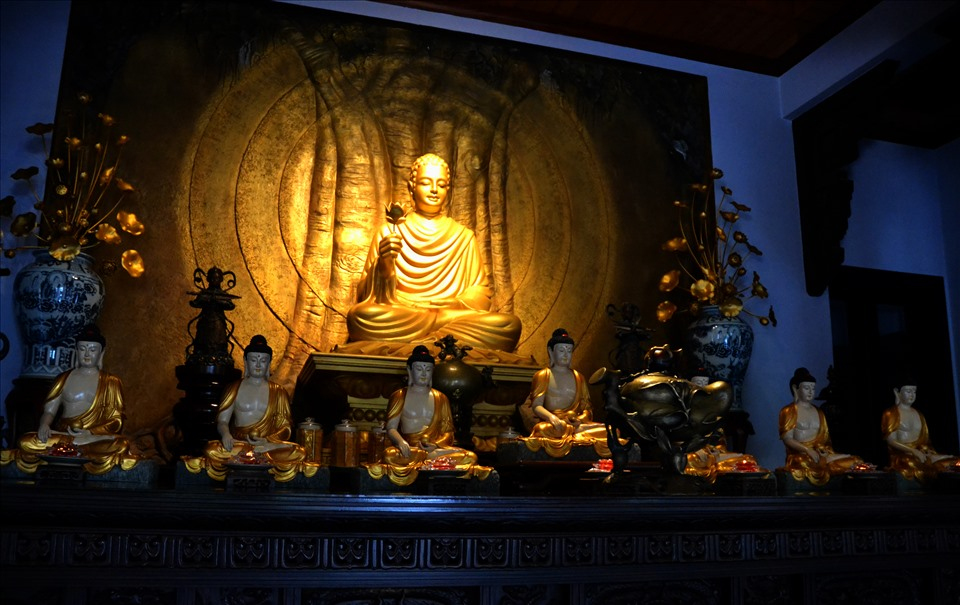
The worship space inside Phat Da Pagoda (Source: Compilation)
Besides the main hall, the pagoda also has subsidiary worship areas and spaces for Buddhist activities. Each section is neatly arranged, not elaborate, but still shows reverence for the Three Jewels and traditional spiritual values.
3.3. The space of rocky mountains and caves associated with the pagoda
One of the unique features that creates the distinct impression for Phat Da Pagoda is the combination of pagoda architecture and the surrounding natural rocky mountain and cave system. The limestone blocks with natural shapes embrace the pagoda, creating a landscape that is both wild and mystical.
This space provides a sense of separation from the noisy life outside, very suitable for contemplation, meditation, and finding inner peace. Natural light filters through the rock crevices, blending with the sound of the wind and the pagoda bells, creating a unique experience that visitors can hardly find in other pagodas.
3.4. Aesthetic value and experience for visitors
With the combination of traditional Buddhist architecture and natural rocky landscape, Phat Da Pagoda is not only a spiritual destination but also possesses high aesthetic value. Visitors can worship and stroll leisurely, feeling the tranquil and ancient beauty of the pagoda amidst the characteristic natural landscape of Ha Tien.
It is this peace and harmony that makes Phat Da Pagoda an ideal stop for those who want to learn about Buddhist culture, explore historical sites, and enjoy moments of tranquility in their journey to discover Ha Tien.
4. Visiting experience and notes when visiting Phat Da Pagoda
4.1. Experiencing the pure spiritual space
Upon arriving at Phat Da Pagoda, the most easily felt aspect is the peaceful atmosphere, separate from the hustle and bustle of the city. The pagoda's space is nestled among rocky mountains and green trees, bringing a cool, gentle feeling, very suitable for worship, meditation, and finding balance in spiritual life.
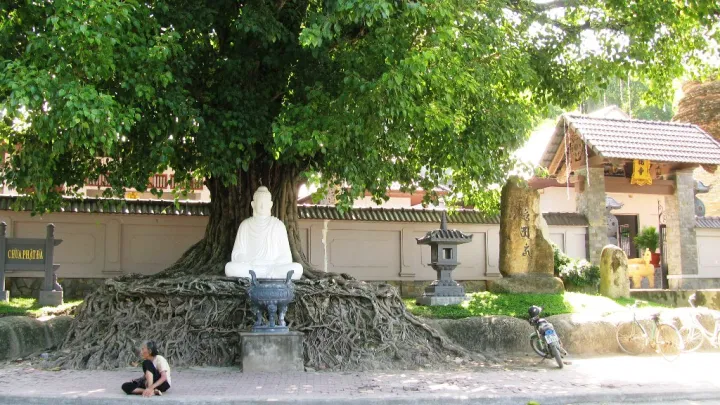
The serene space at Chua Phat Da attracts many visitors (Source: Collected)
Visitors often spend time leisurely strolling around the temple grounds, listening to the sound of bells, observing the scenery, and feeling the harmony between Buddhist architecture and nature. This is also an ideal place for pilgrimage, praying for peace and good fortune for oneself and family.
4.2. Visiting, learning about history and cultural values
Besides the spiritual aspect, Chua Phat Da is also an attractive destination for those who love to learn about the history and culture of Ha Tien. During the visit, visitors can learn about the formation of the temple, its role in local spiritual life, as well as historical imprints associated with the ancient land of Ha Tien.
Observing the architecture, the arrangement of altars, and the worship space will help visitors better understand the characteristics of Southern Buddhism, and at the same time feel the cultural depth preserved through generations.
4.3. Ideal time to visit
The most suitable time to visit Chua Phat Da is early morning or late afternoon. At that time, the weather is cool, the light is gentle, and the temple space becomes even more serene and pleasant. On full moon days, the first day of the lunar month, or during Buddhist holidays, the temple is often crowded with worshippers, creating a solemn yet more bustling atmosphere than usual.
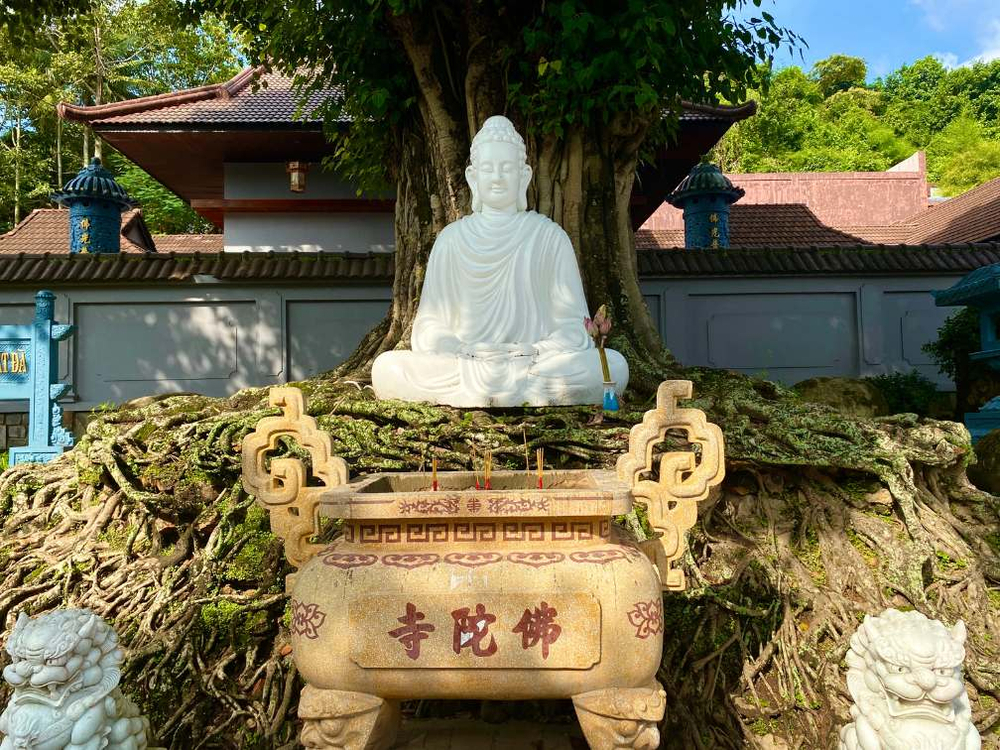
Early morning or late afternoon is a suitable time for visitors and locals to visit the pagoda (Source: Collected)
If you want to fully enjoy the tranquility and have ample time for sightseeing, visitors should avoid peak hours or major holidays.
4.4. Some notes when visiting the pagoda
When visiting Phuc Da Pagoda, visitors should choose polite, modest attire, suitable for the spiritual space. Maintaining order, speaking softly, and limiting noisy behavior will help ensure the sanctity of the place of worship.
In addition, visitors should pay attention to protecting the general landscape, not littering, and not arbitrarily touching artifacts or worship areas. For areas with rocky terrain, move carefully to ensure safety throughout the visit.
Having gone through many historical ups and downs, Phuc Da Pagoda still retains its spiritual, architectural, and cultural values amidst the heart of Ha Tien. Not only a place of religious practice for local people, the pagoda is also a meaningful destination for tourists who love to learn about history, Buddhist culture, and wish to find a peaceful space to pause amidst modern life. Visiting Phuc Da Pagoda, every step brings a sense of peace and a deep connection with this traditional land.