















1. Overview from A-Z of Khmer pentatonic music
1.1. Definition of Khmer pentatonic music
Khmer pentatonic music is a traditional musical genre characteristic of the Khmer community in the Southern region, built upon a system of five basic tones, commonly referred to as pentatonic. This sound system is not only artistic but also reflects the concepts of Yin and Yang and the Five Elements within Khmer cultural thought. Through the coordination of musical instruments, pentatonic music creates a harmonious overall sound when performed.
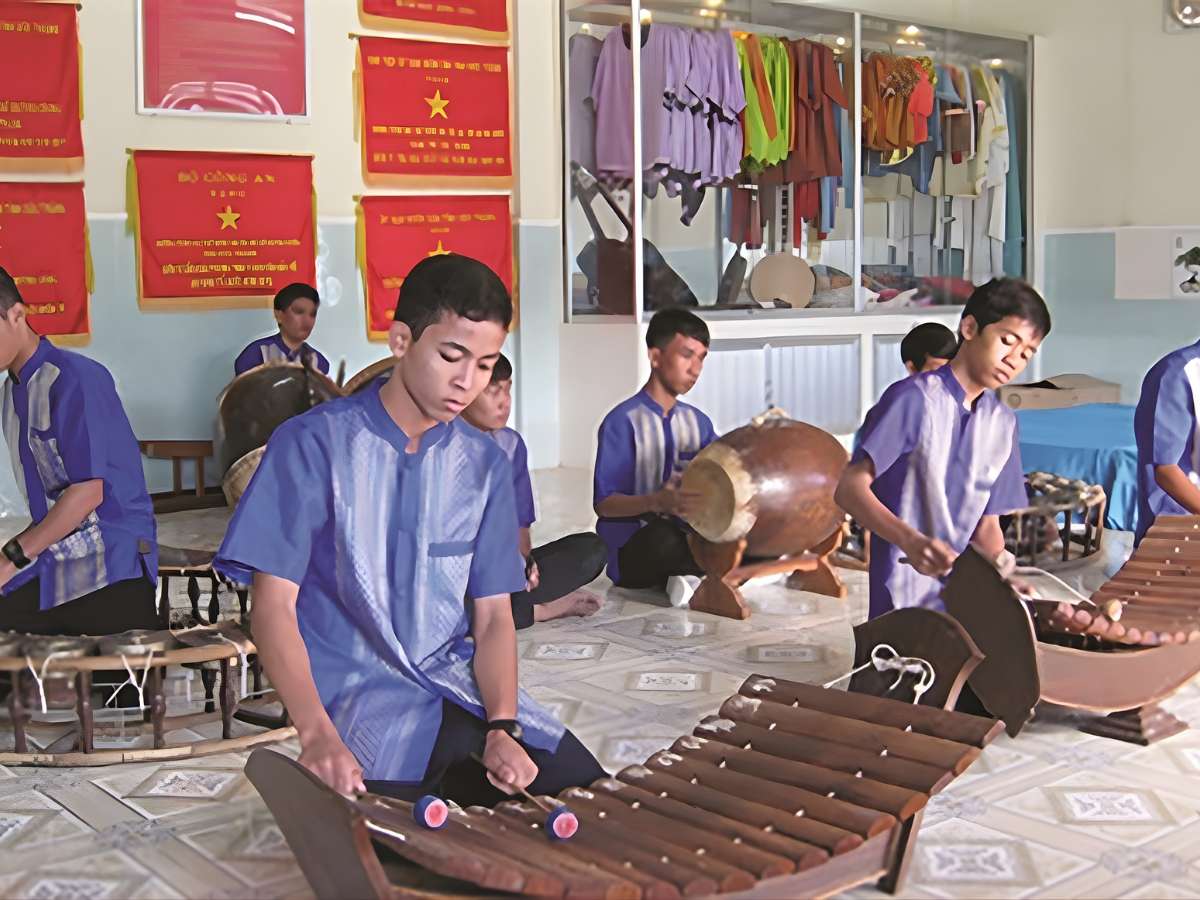
Khmer artisans performing traditional five-tone music in community gathering spaces. (Source: Collected)
In cultural life, the term ngu am emphasizes the five different tones of traditional musical instruments, combined into a unified whole. This type of music is also known by the name Pinn Peat, associated with many Buddhist rituals and folk festivals. In Southern Vietnam, ngu am music is present as a familiar part of the community life of the Khmer people.
1.2. Space of formation and development
Khmer ngu am music was formed and developed mainly in the Mekong Delta region, where the Khmer community has lived concentrated for generations. Provinces such as Soc Trang, Tra Vinh, and An Giang are typical cultural spaces where ngu am music is preserved and frequently practiced. From there, this type of music contributes to shaping the distinctive cultural identity of Southern Vietnam.
The performance space for ngu am music is associated with villages, pagodas, and traditional community activities. These are spiritual cultural centers where music plays a role in connecting people to their religious life. Over time, ngu am music has become an inseparable part of the cultural landscape of the Khmer people in Southern Vietnam.
1.3. Analysis of the position of ngu am music in community life
In the spiritual life of the Khmer community in Southern Vietnam, ngu am music plays an important role in traditional rituals and festivals. When the orchestra's sounds resonate, the community gathering space becomes solemn and ritualistic. The music contributes to expressing the connection between people, ancestors, and spiritual life.
Ngu am music often appears in festivals such as Chôl Chnăm Thmay, Oóc Om Bóc, or Sen Dolta, contributing to creating a cohesive community atmosphere. Through rhythms and tones, the orchestra conveys messages of blessings and gratitude to heaven, earth, and ancestors. This is also how the Khmer people maintain the flow of culture in their daily lives.
2. Musical instruments in the Khmer ngu am orchestra
2.1. Dominant percussion instrument group
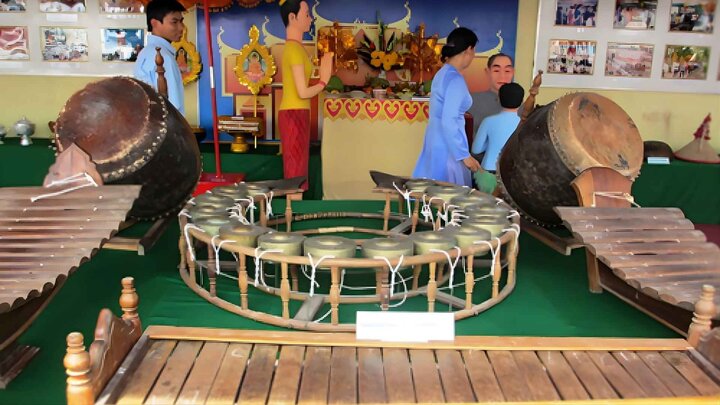
In the Khmer ngu am orchestra, the percussion instrument group plays the role of creating rhythm and shaping the sound structure for the entire performance. Drums such as Samphô and Skô Thum often appear throughout, helping to maintain a stable tempo in traditional rituals and festivals. The sound of the drums not only carries musical value but also contributes to guiding the emotions of the community gathering space.
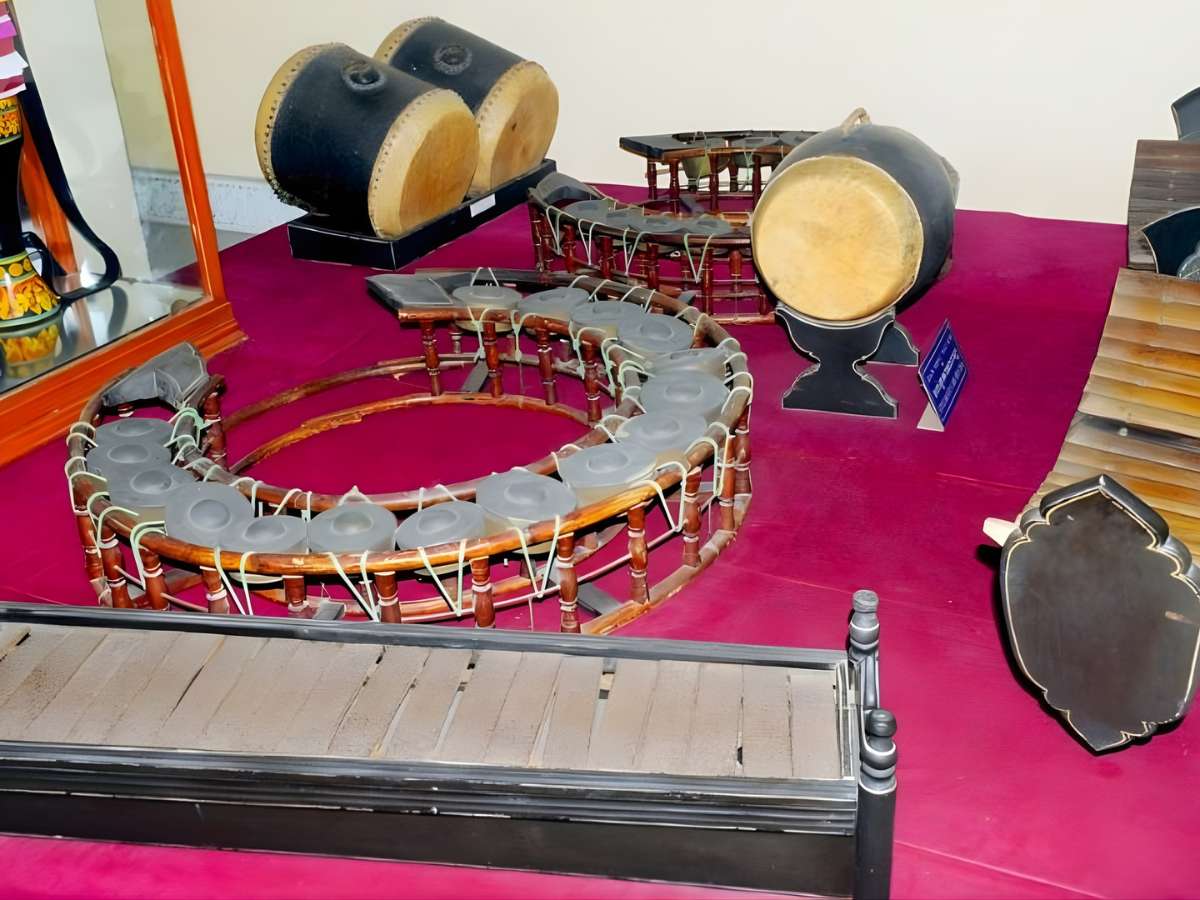
Traditional percussion instruments create the characteristic soundscape of Khmer ngu ngu am music. (Source: Collected)
2.2. Melodic Instrument Group
The melodic instrument group plays a role in creating the distinctive colors of Khmer ngu ngu am music through its main sound layers. Instruments in this group are often made of wood or metal, bringing distinct and recognizable timbres. The harmonious coordination between instruments helps the orchestra create a balanced whole when performing.
2.3. Artisans and Performance Techniques
Artisans of Khmer ngu ngu am music are the ones who directly preserve and transmit the values of this traditional musical form. The performance process requires harmonious coordination between instruments, along with the ability to perceive rhythm and cultural space. Each artisan is not only a performer but also a bridge between generations within the community.
3. Khmer Ngu Ngu Am Music in Festivals and Cultural Activities
3.1. Ngu Ngu Am Music in Traditional Festivals
Khmer ngu ngu am music is associated with many traditional festivals carrying spiritual and community significance for the Khmer people in the South. During the Chôl Chnăm Thmay festival, the sound of the orchestra echoes in pagodas and villages, contributing to creating a solemn yet intimate festival atmosphere. The familiar rhythms help connect generations and maintain the flow of cultural activities according to traditional time cycles.
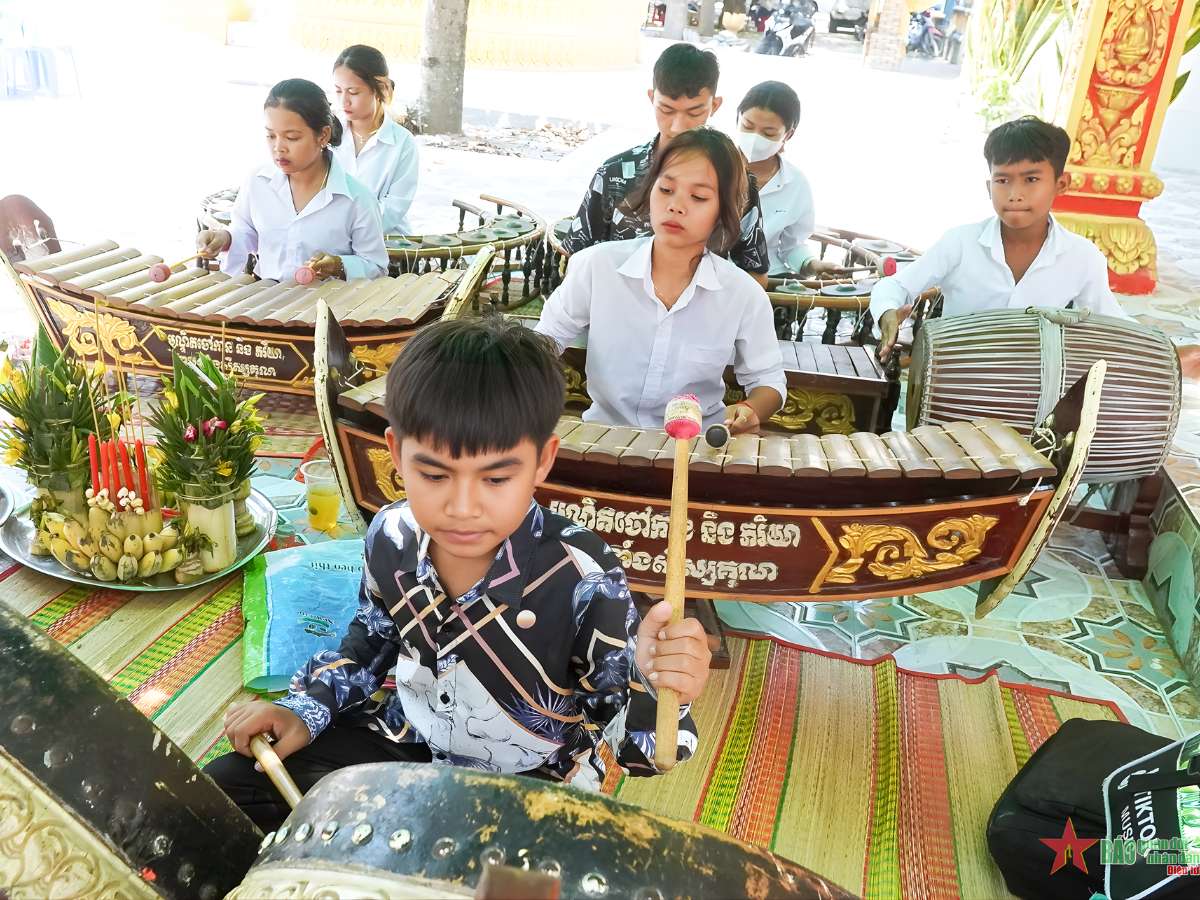
Khmer five-tone music resonates during festivals, connecting the spiritual life of the Khmer people. (Source: Collected)
3.2. Connecting Khmer Five-Tone Music with Folk Art Performances
In folk art performance activities, Khmer five-tone music is often combined with traditional dance and singing. Music serves as the foundation for Ram Vong, A Day dances, and many familiar performance forms within the community. The harmony between sound and movement helps the performances carry the distinct imprint of local culture.
4. Tourist Destinations Connected After Exploring Khmer Five-Tone Music in An Giang
4.1. Sunset Town
After learning about Khmer Five-Tone Music, tourists can continue their journey to Sunset Town in Phu Quoc Special Administrative Region, An Giang Province. This area is known for its coastal architectural space, sloping streets, and sunset views. Since 2024, it has featured nightly fireworks, adding an extra highlight to the night tourism in the South of the island.
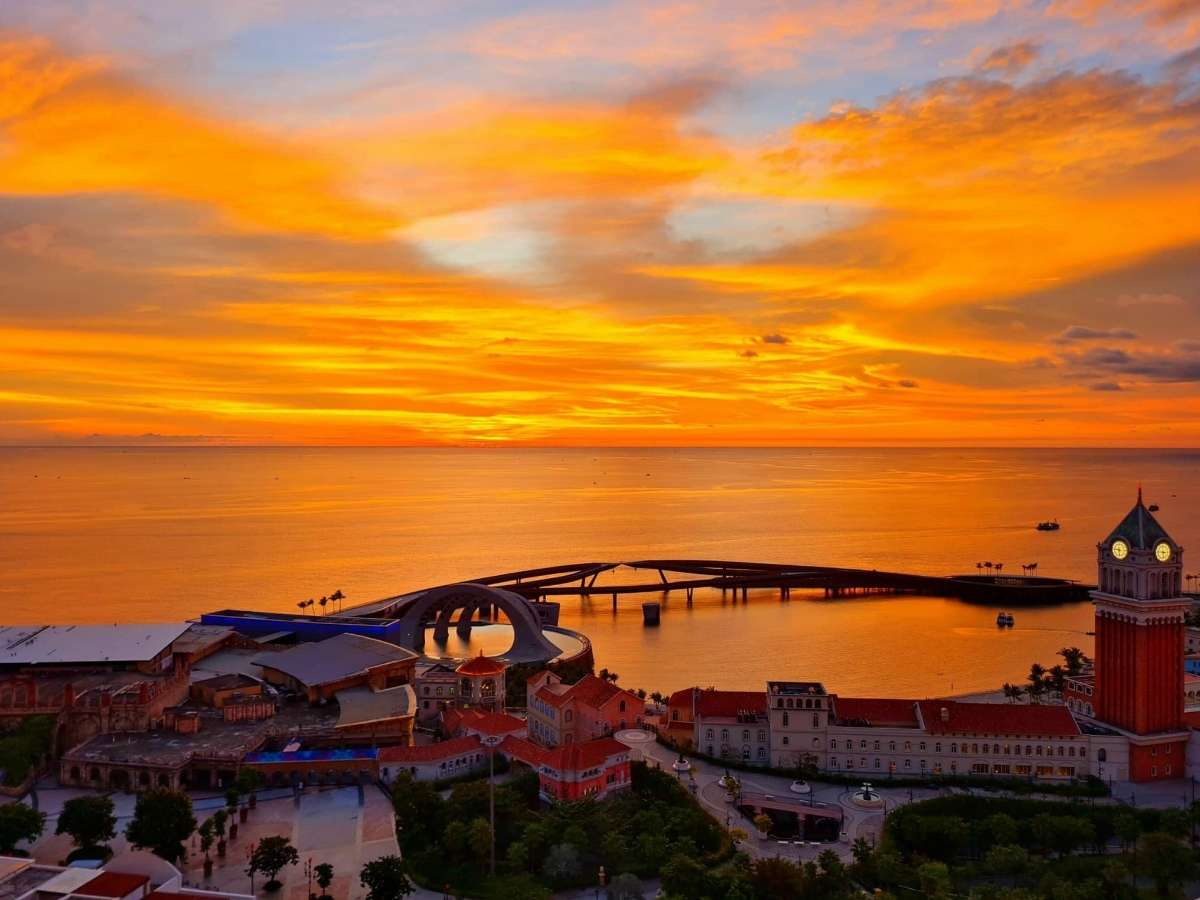
The characteristic gap of the Kiss Bridge helps capture the sunset moment. (Source: Collected)
A notable point is that fireworks are performed twice each night throughout 365 days a year, associated with entertainment shows in this area. The Symphony of the Sea show takes place at Kiss Bridge, while the Kiss of the Sea show is held at a nearby stage, combining light, water, music, and fireworks. Kiss Bridge is a prominent structure in Sunset Town, often featured in tours, photo opportunities, and sea-gazing.
4.2. Sun World Hon Thom
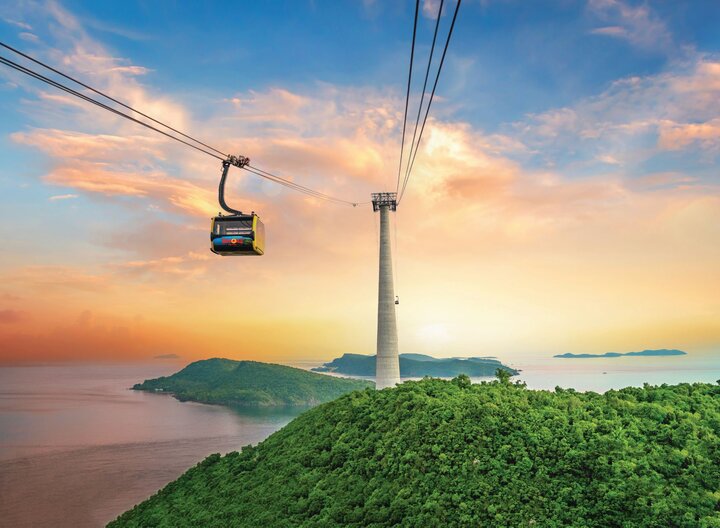
Sun World Hon Thom is a suitable connection point after exploring Khmer traditional music, especially for families or guests who want to combine culture and entertainment. The resort is located in the South Phu Quoc area, An Giang province, connected to the mainland by an offshore cable car. The Hon Thom cable car line, with a length of 7,899.9 m, was recognized by Guinness as the longest 3-wire cable car in the world when it opened in 2018.
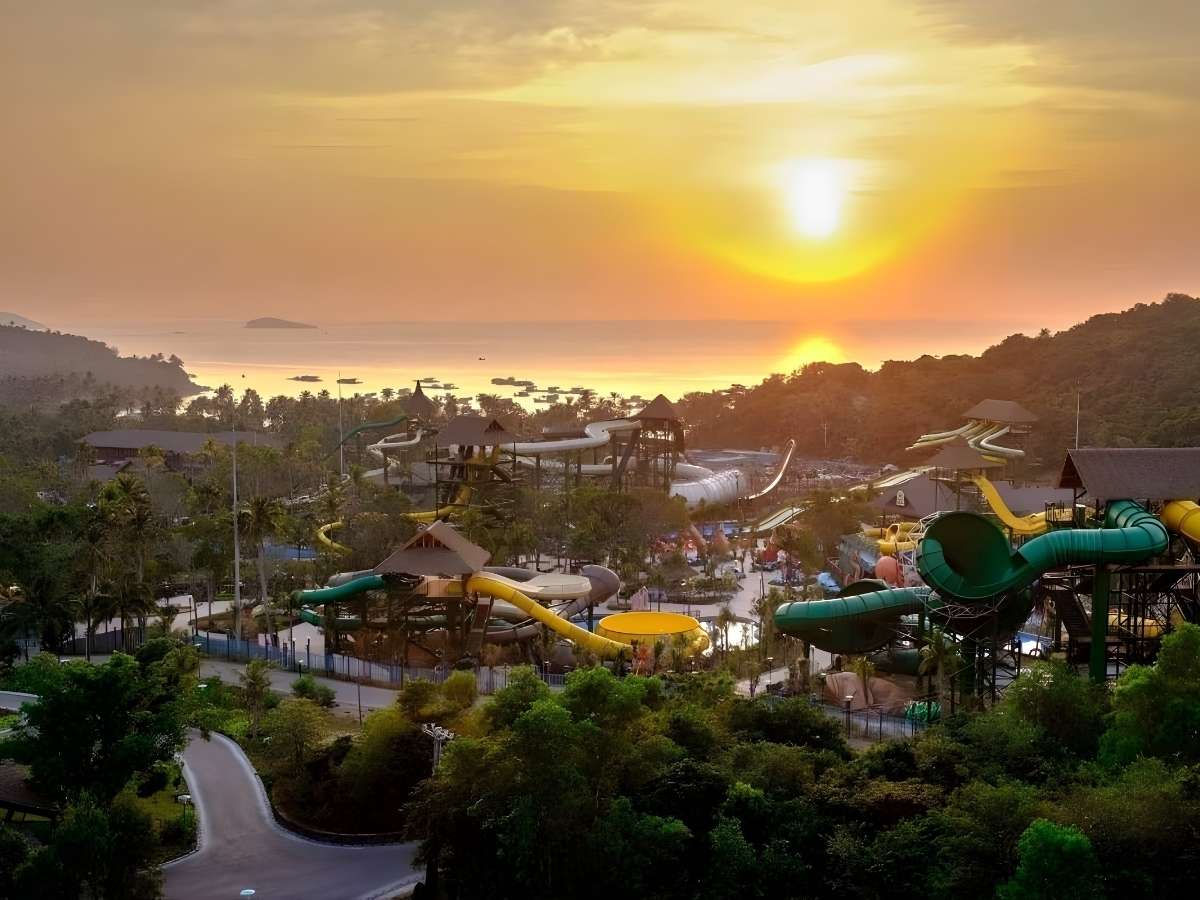
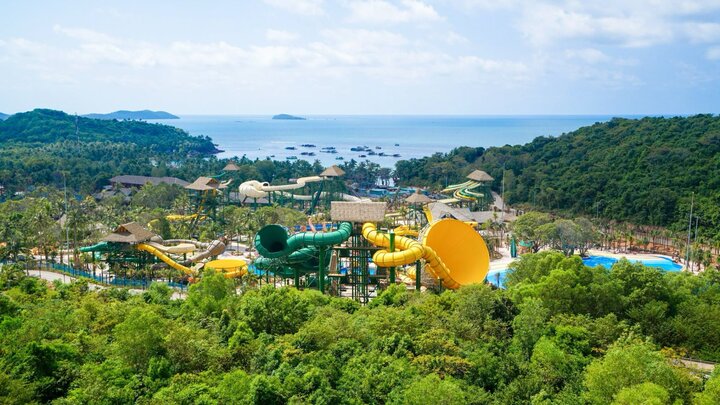
Sun World Hon Thom entertainment and resort complex from above. (Source: Collected)
Besides the experience of admiring the sea from the cabin, this area also has Aquatopia water park with many underwater attractions. Some domestic tourism information notes that cable car tickets are often combined with water park experiences, helping the day's itinerary have more options for activity and relaxation. The sea space, cable car, and water park create a different visiting rhythm compared to the previous cultural exploration route.
>>> Book Sun World Hon Thom tickets now to fully explore Hon Thom HERE.
4.3. Phu Quoc Prison
Phu Quoc Prison is a historical site that can be visited after learning about Khmer traditional music (Nhac ngu am Khmer), adding a layer of information about war memories and social life to the journey. The relic is located in Phu Quoc, An Giang province, formerly known as Nha Lao Cay Dua. The original structure was built in 1953 and later became a place where many revolutionary soldiers were imprisoned during various war periods.
The relic site is classified as a Special National Historical Site under Decision No. 2408/QD-TTg dated December 31, 2014. Some official documents record that the prison camp once covered hundreds of hectares, including many sub-areas and restored sections for tourism. When compared to the coastal entertainment spots, Phu Quoc Prison offers a more somber atmosphere, suitable for a tour combining culture, history, and local experiences.
Khmer traditional music (Nhac ngu am Khmer) is a cultural symbol associated with the spiritual life and identity of the Southern Khmer community. In the modern context, preserving and promoting this type of music contributes to maintaining traditional values and expanding cultural experience spaces. Through community and tourism activities, traditional Khmer music continues to be disseminated in a way that suits contemporary life.