
















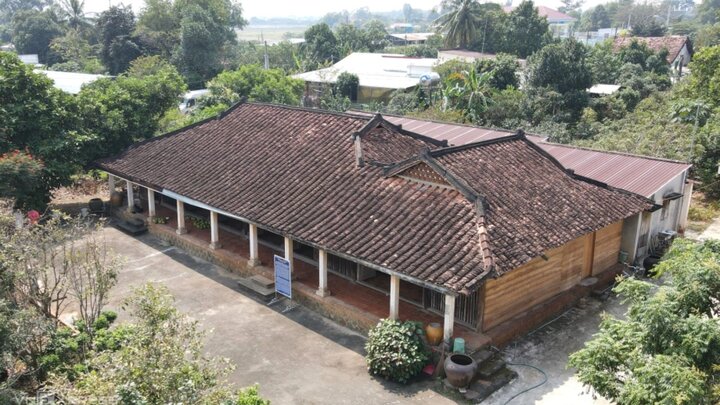
1. General introduction to the Cu Lao Gieng Hundred-Pillar Ancient House
1.1. Where is the Cu Lao Gieng Hundred-Pillar Ancient House?
Nestled amidst the lush greenery of the islet on the Tien River, the Cu Lao Gieng Hundred-Pillar Ancient House is located in Cu Lao Gieng commune, An Giang province, a place that has preserved the slow and peaceful rhythm of life characteristic of the Mekong Delta. Surrounded by fruit-laden gardens, a gentle river, and small tree-lined paths, it creates a landscape rich in the "Miet Vuon" (orchard) style. From the center of Long Xuyen, visitors can easily travel via An Hoa ferry or My Luong bridge to reach here, embarking on a journey to explore a space that is both familiar and rich in local cultural values.
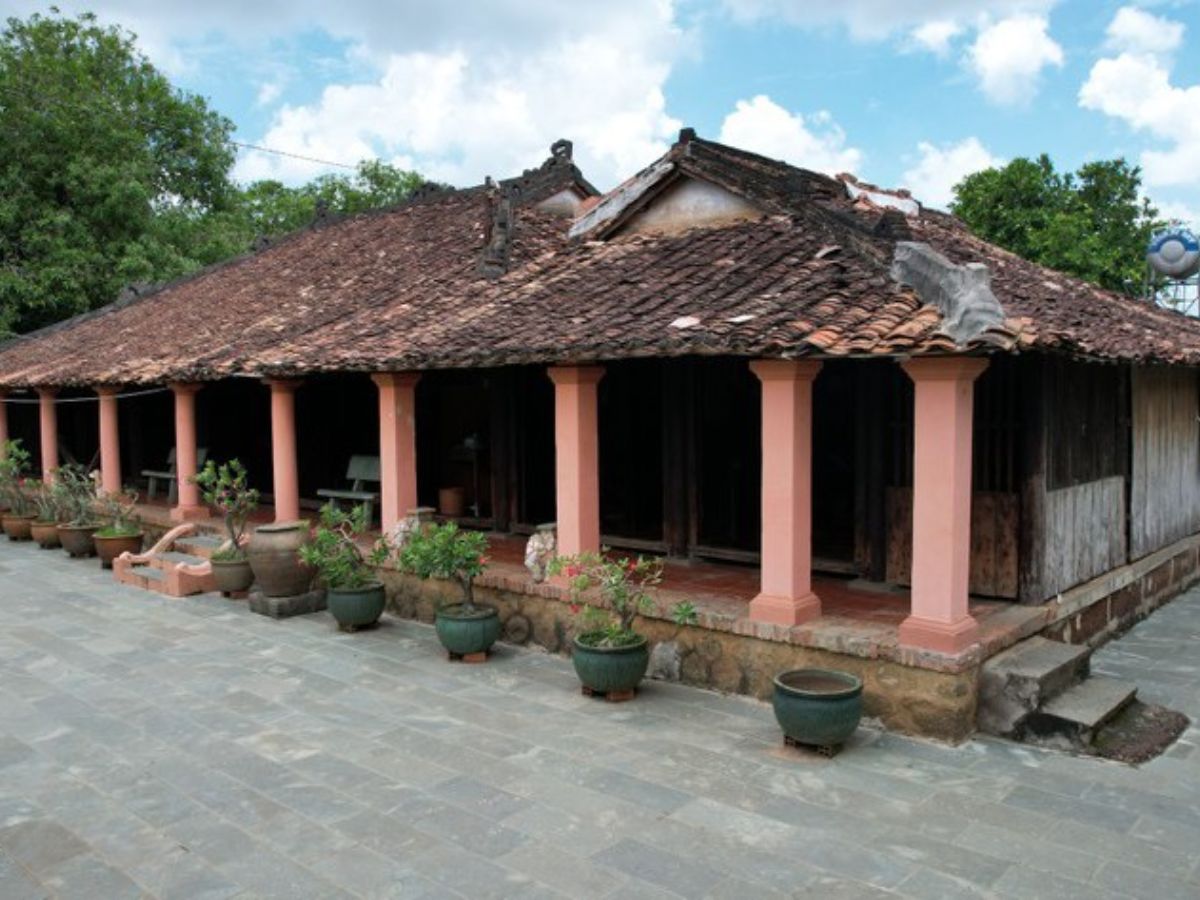
The hundred-pillar ancient house in Cu Lao Giang commune, An Giang, features the architectural characteristics of Western Vietnam houses. (Source: Collected)
1.2. A Century of Imprint in Architecture and Culture
Built in 1916, the house is a crystallization of Southern Vietnamese architecture in the early 20th century, notable for its three-bay, two-side-room structure, a sturdy wooden pillar system, and exquisite carved details. After more than a century, the structure still retains its ancient beauty almost intact, clearly reflecting the life of the affluent class of the past. The interior space harmonizes traditional elements with Western influences, from arched doorways and spacious corridors to a meticulously arranged garden, creating an overall impression that is both solemn and intimate, rich in historical depth.
2. How to Get to the Cu Lao Giang Hundred-Pillar Ancient House
2.1. Traveling from Ho Chi Minh City to the Cu Lao Giang Hundred-Pillar Ancient House
From Ho Chi Minh City, visitors can take a bus to Long Xuyen or Cho Moi, which takes about 5-6 hours, and then continue to the Cu Lao Giang hundred-pillar ancient house. If traveling by private car, the common route is via National Highway 1A, connecting to QL80 and QL91 towards Long Xuyen, covering a distance of about 180-200 km. From there, you travel to An Hoa ferry to cross to Cho Moi district, then continue towards My Luong – Tan My bridge to enter the island. The journey is not too complicated, the roads are easy to identify and suitable for both short trips and weekend explorations.
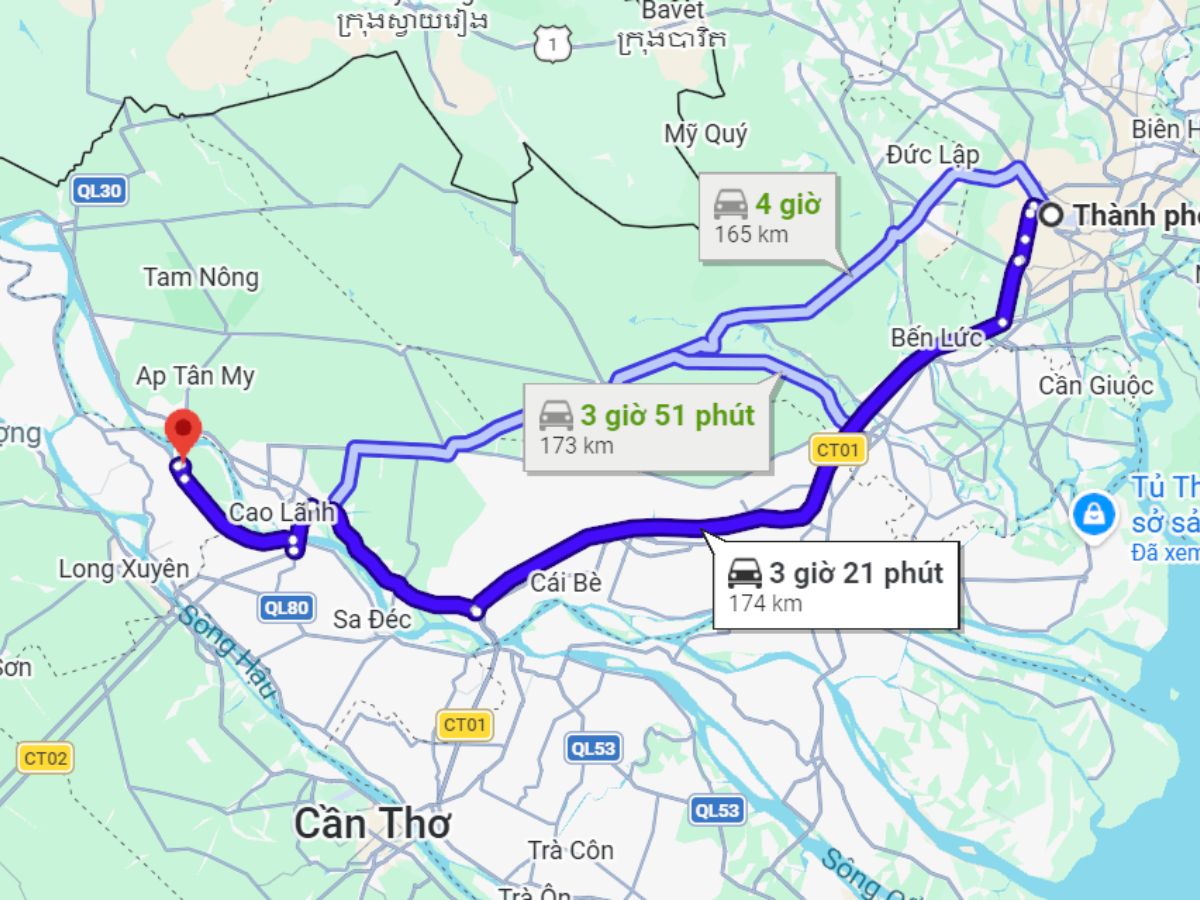
Moving from Ho Chi Minh City to the hundred-pillar ancient house is about 180 km. (Source: Collected)
2.2. Moving from Long Xuyen, Chau Doc to the attraction
From Long Xuyen, the journey to the Cu Lao Gieng hundred-pillar ancient house is quite convenient with a distance of about 25 km, traveling by motorbike or taxi in 30–45 minutes. You go to An Hoa ferry, cross the river, then continue along the road towards Cho Moi and My Luong bridge to enter Cu Lao Gieng commune.
If starting from Chau Doc, the distance is longer, about 60 km, following National Highway 91 towards Long Xuyen and then continuing the journey similarly, with a total time of about 1.5–2 hours. The road is quite straight, easy to travel, and suitable for independent travelers who want to combine visiting many places in An Giang.
2.3. Moving within Cu Lao Gieng to the ancient house
Once you arrive in Cu Lao Gieng, moving to the Cu Lao Gieng hundred-pillar ancient house becomes simple with a system of small, flat roads with little traffic. Motorbikes are the most suitable option, taking only about 5–10 minutes from My Luong bridge to reach the attraction.
On the same route, visitors can easily combine visits to prominent landmarks such as Cu Lao Gieng Church, Phanxico Monastery, or Dao Nam Pagoda. If you are not driving yourself, you can hire a local motorbike taxi. Remember to check the operating schedule of the An Hoa ferry if returning late to manage your travel time.
3. Ideal time to visit the ancient house
The ideal time to visit the Cu Lao Gieng hundred-pillar ancient house is usually during the dry season from December to April, when the weather is cool, with little rain, and convenient for traveling on the small roads within the islet. This is also the period when the atmosphere is fresh, and the light is beautiful, making it very suitable for exploring the ancient architecture and taking photos. The morning offers gentle, clear sunlight, while the afternoon is the ideal time to capture warm golden shots through the wooden doors. If you want to experience the Western Vietnamese life more vividly, visitors can visit during the flood season from September to November, when the river landscape becomes lively and distinctly local.
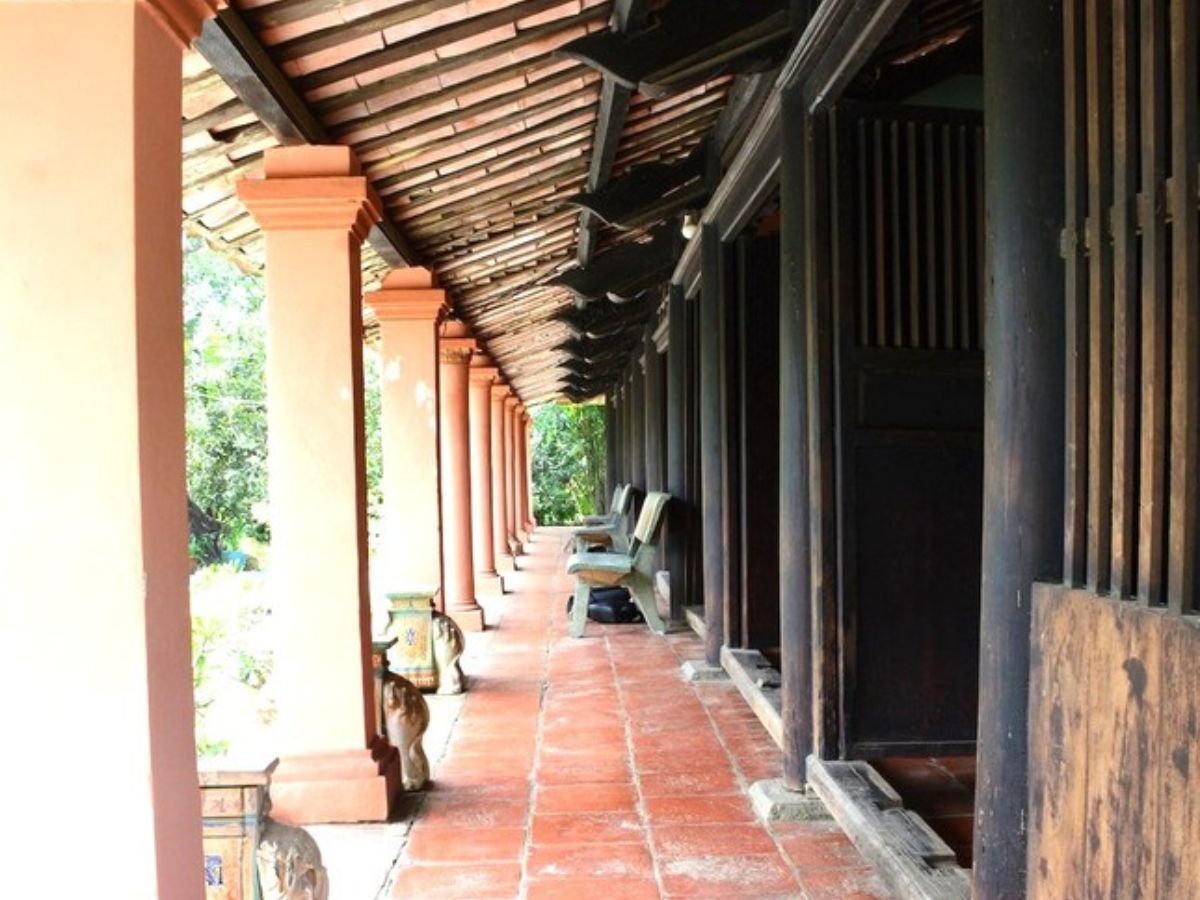
Visitors can visit the ancient house during the dry season, when the weather is favorable. (Source: Collected)
4. Outstanding experiences at the hundred-pillar ancient house in An Giang
4.1. Hundred-pillar architecture with strong Southern Vietnamese imprint
Entering the space of the hundred-pillar ancient house in Cu Lao Gieng, visitors can easily feel the grandeur and balance in every architectural line. The house was built in the typical three-bay, two-lean-to style of the early 20th century, nổi bật with a system of large wooden columns arranged symmetrically, supporting the entire sturdy structure. The wide open corridor, soft arched doors combined with surrounding brick walls create a harmonious overall. In front is a traditional garden courtyard, carrying feng shui meaning and clearly showing the gentle lifestyle of ancient Southern Vietnamese families.
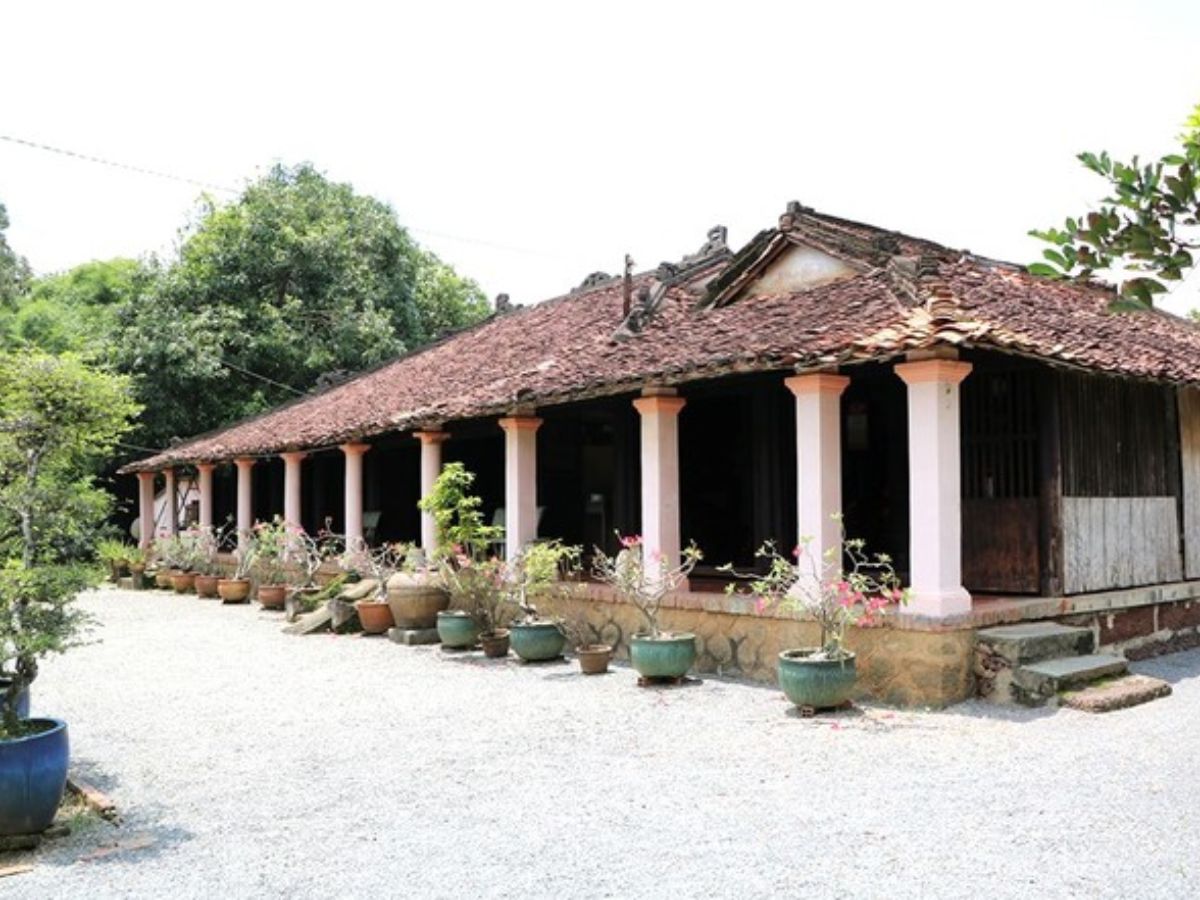
Ancient house architecture bearing the strong imprint of old Southern Vietnam. (Source: Collected)
4.2. Wood carving art and living space of the past
Not only impressive in scale, the house also preserves the quintessence of traditional wood carving art with meticulously handcrafted motifs of the four sacred animals and classic patterns. The smooth wooden surface over time further highlights the ancient value of the structure. Inside, the living space is clearly arranged with a central living room, a solemn altar room, and bedrooms on both sides, fully recreating the life of the affluent class in the early last century. Every antique item is still preserved, contributing to telling the story of a life deeply imbued with the garden-house lifestyle.
4.3. Experiencing a nostalgic space amidst a peaceful islet
Amidst the gentle river landscape, the hundred-pillar ancient house of Cu Lao Gieng offers a leisurely yet emotionally rich visiting experience. Natural light filters through arched windows, casting shadows on the tiled floors and wooden columns, creating a captivating nostalgic scene. Every corner of the house, from the verandas and corridors to the green courtyards, becomes an ideal spot for taking old-fashioned photos. Without noise or rush, this place is suitable for those who want to rediscover a slow pace of life and feel the rustic beauty of the Mekong Delta.
5. Detailed tips for visiting the hundred-pillar ancient house
When visiting the hundred-pillar ancient house of Cu Lao Gieng, visitors should prepare polite and modest attire to suit the ancient architectural space and the sacred elements inside the house. Prioritize comfortable footwear for easy movement as the paths on the islet are narrow and often shaded by trees. As this is still a family living space, it is important to preserve the artifacts, refrain from touching antiques, and proactively ask for permission before taking photos. The ideal time to visit is early morning, when the space is quiet and the natural light is beautiful, making it easy to capture the ancient charm. Additionally, take advantage of the corridors, wooden window frames, or house verandas to get harmonious photos that embody the spirit of the Mekong Delta.
6. Suggested itinerary for a complete exploration of Cu Lao Gieng
6.1. One-day itinerary to explore the hundred-pillar ancient house of Cu Lao Gieng
The journey to explore the hundred-pillar ancient house of Cu Lao Gieng can begin in the morning, by traveling via An Hoa ferry or My Luong bridge to reach Tan My commune. Spend about 1-2 hours visiting the ancient house built in 1916, admiring its wooden architecture and intricate carvings. For lunch, stop at local eateries to enjoy Mekong Delta specialties like grilled snakehead fish, fermented fish hotpot, then rest in the garden-house ambiance. In the afternoon, continue to explore the islet by motorbike, enjoying the peaceful pace of life before returning the same day, ensuring you catch the ferry.
6.2. Suggested nearby attractions
Besides the hundred-pillar ancient house of Cu Lao Gieng, visitors can combine their trip with visits to many other unique cultural and religious structures along the same route. Notably, Cu Lao Gieng Church, with its ancient Gothic architecture, solemn atmosphere, and long history. Nearby is the Franciscan Monastery, impressive with its spacious grounds, lush greenery, and classic European architectural style. Additionally, Chua Thanh Hoa, also known as Chua Ong Dao Nam, is an interesting stop with its unique architecture amidst a green garden, deeply reflecting local culture and beliefs.
When visiting An Giang, tourists can also extend their itinerary to Phu Quoc, a prominent destination in the southern sea region, offering a full range of resort, entertainment, and exploration experiences. The Pearl Island impresses with its clear blue beaches, fine white sand, and a system of luxurious 5-star resorts stretching along the coast, providing a private and upscale vacation experience.
At Hon Thom, visitors can experience the world's longest sea-crossing cable car, offering breathtaking panoramic ocean views. This destination also stands out with the Sun World Hon Thom entertainment complex, featuring the modern Aquatopia water park and many exciting games, providing a vibrant experience amidst the island's natural beauty. As night falls, Phu Quoc becomes lively with a series of large-scale festivals and light shows at Sunset Town, along with unique iconic structures, creating a complete exploration journey day and night.

Aquatopia Water Park at Sun World Hon Thom offers a modern entertainment experience. (Source: Collected)
Cu Lao Gieng Hundred-Pillar Ancient House is not only an architectural work over a hundred years old but also a place that fully preserves the cultural values and ancient Southern Vietnamese way of life. Amidst the peaceful islet space, this destination offers a gentle, profound experience for those who love nostalgic beauty. Combined with nearby relics and landscapes, the journey to explore this place promises to leave many memorable impressions.