
















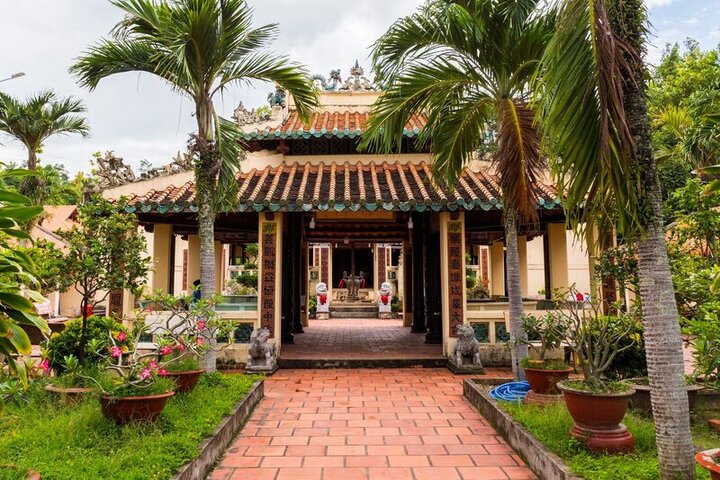
1. Overview of Mac Cuu Ha Tien Mausoleum
1.1 Location and Historical Overview
Mac Cuu Ha Tien Mausoleum is located at the foot of Binh San Mountain, Binh San Ward, Ha Tien City, An Giang Province (later administratively merged from Kien Giang). The relic site is situated in a special feng shui location, with flat land facing the sea in front and leaning against the mountain behind, creating a rare "sitting on the mountain, gazing at the water" posture in the Mekong Delta region.
The construction is associated with Mac Cuu – the person considered the "founding father" of the ancient Ha Tien region. From a Chinese merchant who came to settle here in the late 17th century, Mac Cuu attracted people to establish settlements, expand the territory, and lay the foundation for the formation of a bustling economic and cultural center in the far southwest of the country.
1.2 Historical and Cultural Significance of the Mausoleum Complex
After submitting to Lord Nguyen, Mac Cuu was appointed as the General Commander of Ha Tien, marking Ha Tien's official incorporation into the territory of Dai Viet. Upon his death, his son Mac Thien Tich had the mausoleum complex and temple built to commemorate his father's merits and to honor the ancestors of the family.
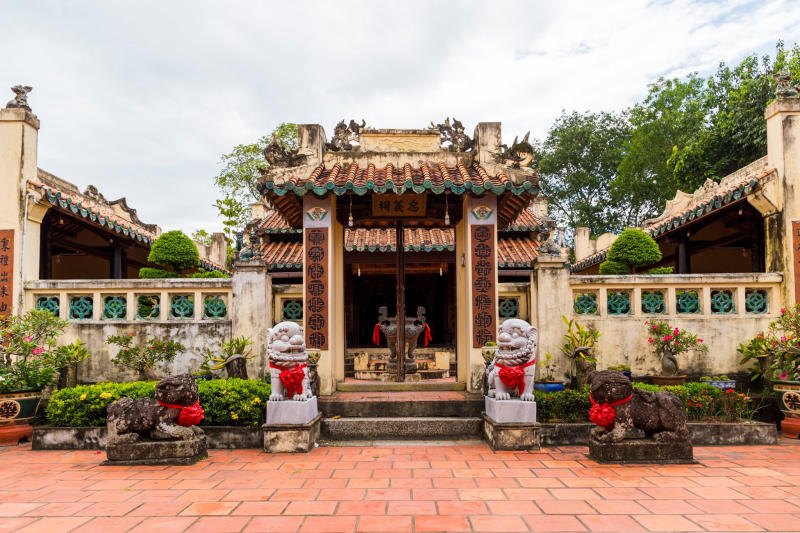
Mac Cuu Mausoleum is one of the famous relics in Ha Tien (Source: Collection)
Not only does it hold commemorative value, but the Mac Cuu Mausoleum Ha Tien also clearly reflects the history of southern territorial expansion, a place where many Vietnamese – Chinese – Khmer cultural streams intersect. Over centuries, the mausoleum complex has become a symbol of the pioneering spirit, persistent will, and strategic vision of those who laid the foundation for the land of Ha Tien.
1.3 Scale and highlights of the relic
The entire relic complex includes the Trung Nghia Tu temple, the tomb of Mac Cuu, and a system of dozens of graves belonging to the Mac family and their close meritorious officials. The structures are harmoniously arranged along the mountainside, adhering to traditional feng shui principles while creating a sacred and tranquil space.
Today, the Mac Cuu Mausoleum Ha Tien is not only a familiar spiritual destination for local residents but also an important tourist attraction for history enthusiasts. Amidst the modern pace of life in Ha Tien, the mausoleum complex retains its ancient, peaceful charm, serving as a silent witness to the formation and development of this land at the southwestern frontier.
2. Discover the unique architecture of Mac Cuu Mausoleum Ha Tien
2.1. The temple area
The temple area within the Mac Cuu Mausoleum Ha Tien is also known as Trung Nghia Tu. It is where Mac Cuu and subsequent generations who contributed to the land of Ha Tien are worshipped. The structure is built in traditional East Asian architectural style, with a symmetrical layout, yin-yang tiled roof, and a solemn, tranquil worship space.
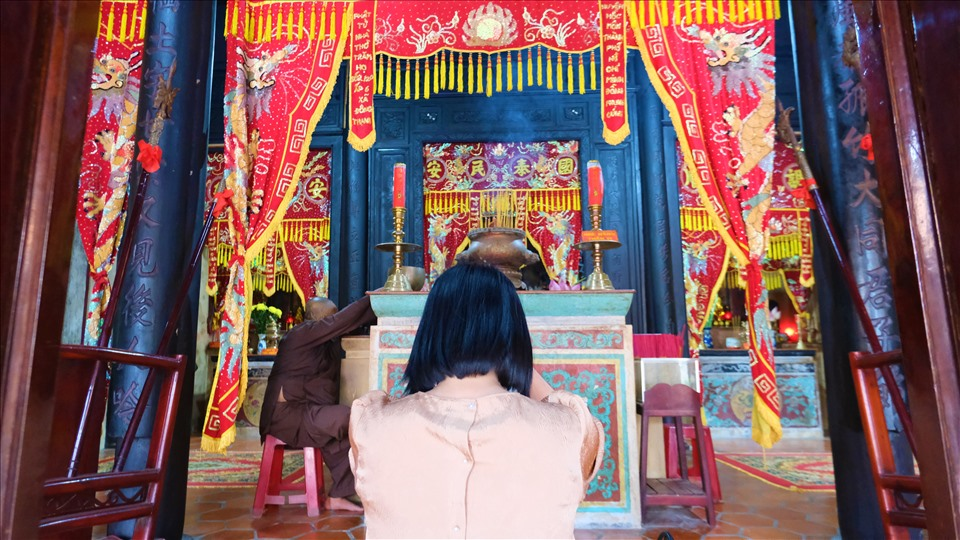
The worship space inside Mac Cuu Mausoleum (Source: Collected)
Inside the temple, the horizontal boards and couplets in Han characters are intricately carved, praising the merits of pioneering and defending the territory by the Mac family. The space here not only holds spiritual value but also clearly reflects the architectural thinking and beliefs of the intellectual – official class in the southern border region of the past.
2.2. Main Mausoleum Area
The main mausoleum area is where Mac Cuu rests, located in a high, dry position at the foot of Binh San mountain, facing East. This choice of location clearly reflects traditional Feng Shui principles, with a stable landform, harmonious between mountains – plains – sea, symbolizing protection and eternity.
The tomb is built sturdily, of moderate scale but solemn, not ostentatious, fitting the spirit of a founding official in the border region. Within the overall complex of Mac Cuu Mausoleum in Ha Tien, the main mausoleum area plays a central role, serving as the focal point in terms of space, history, and spiritual value of the entire relic complex.
2.3. Construction Materials and Distinctive Motifs
The structures within Mac Cuu Mausoleum in Ha Tien are primarily built with stone, ancient bricks, and traditional lime mortar, ensuring high durability despite hundreds of years. Having undergone several restorations, the mausoleum still retains its original structure and initial architectural spirit.
The decorative motifs here bear a strong imprint of Vietnamese – Chinese cultural exchange, evident in images of dragons, phoenixes, flora, and auspicious symbols. The carved details are not overly elaborate but are refined enough to enhance the ancient, solemn beauty, contributing to the unique character of the relic complex in the heart of Ha Tien.
3. Heritage Value and Mysteries Related to Mac Cuu Mausoleum in Ha Tien
3.1. System of Mausoleums within the Complex
Besides the tomb of Mac Cuu, the Mac Cuu Mausoleum in Ha Tien complex also includes mausoleums of many other important figures from the family, such as Mac Thien Tich, Mac Tu Hoang, as well as officials, wives, and close relatives. The tombs are distributed along the slopes of Binh San mountain, forming an interconnected system, unified in space, and clearly reflecting the hierarchy and roles of each figure in Ha Tien's history.
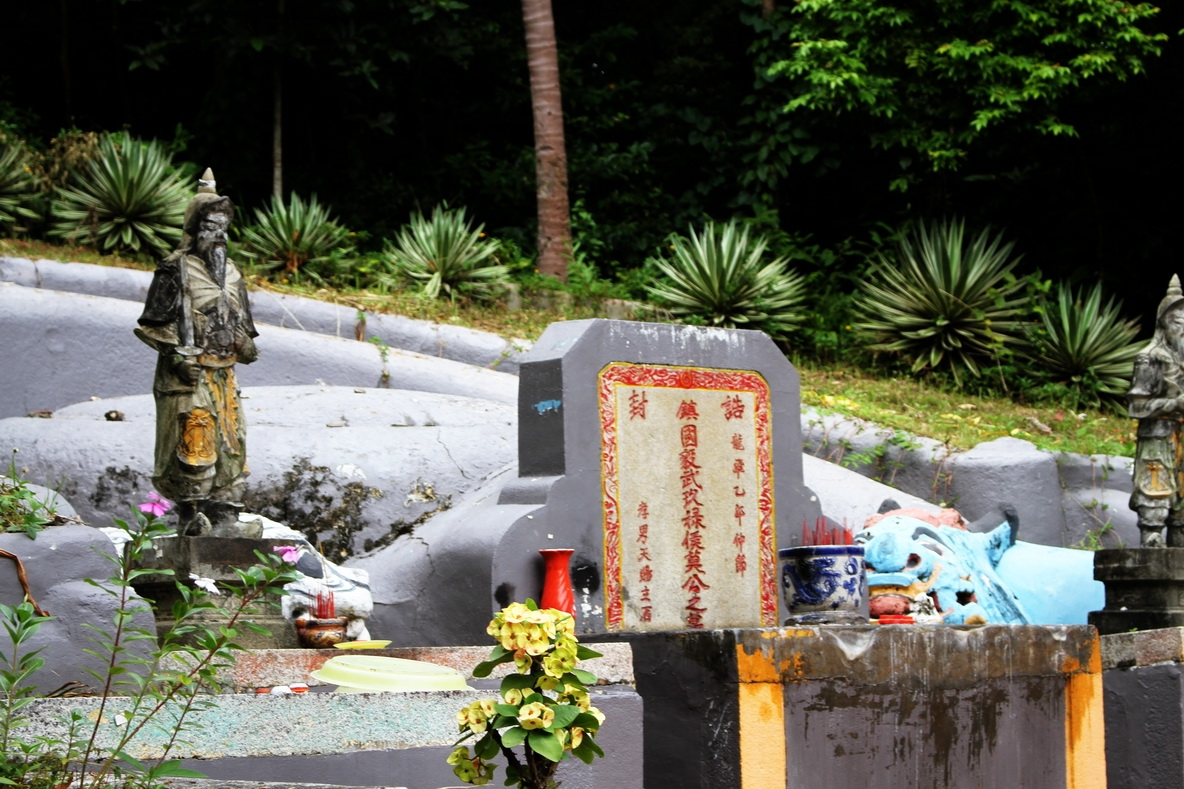
The tombs at Mac Cuu's Mausoleum (Source: Collected)
Compared to the central iconic Mac Cuu's Mausoleum, the tombs of descendants vary in scale but strictly adhere to traditional feng shui and architectural principles. The presence of an entire mausoleum complex signifies the generational importance of the Mac family and affirms this clan's origin, status, and long-lasting influence on the land of Ha Tien for centuries.
3.2. Mac Cuu's Mausoleum and the development of Ha Tien over 7 generations
From a newly reclaimed land, Ha Tien under Mac Cuu quickly became a bustling trading port, a hub for commerce between Dai Viet, China, and regional countries. This development was not short-lived but was sustained continuously through 7 generations of Mac family governors, creating a rare period of prosperity in the southern border region.
In this process, Mac Cuu's Mausoleum in Ha Tien became a symbol associated with power, responsibility, and the close connection between the Mac family and the Nguyen dynasty. The construction of the Mac Cong Temple, also known as Mac Cong Mieu, was not only to commemorate ancestral merits but also to reinforce loyalty and affirm the role of protecting and developing Ha Tien as a strategic outpost for the nation.
3.3. Untold mysteries and legends
Around Mac Cuu's Mausoleum in Ha Tien, many folk legends exist about dragon veins and the "toạ ngưu" (sitting ox) land formation, suggesting the mausoleum is situated on a sacred spot where the vital energy of the mountains and the sea converges. According to ancient feng shui beliefs, this land formation not only brings prosperity to the family but also helps protect the entire Ha Tien region from historical upheavals.
A detail often mentioned is the mausoleum facing the sea, symbolizing an outward-looking vision and the role of guarding the border. The imagery of Ha Tien, its ramparts, Binh San Mountain, and the Mac family has also been immortalized in poetry, becoming a source of inspiration for scholars and literati, contributing to the mystical cultural-historical layer surrounding the relic site to this day.
4. How to get to Mac Cuu's Mausoleum in Ha Tien
4.1. Traveling from other provinces to Ha Tien
To reach Mac Cuu's Mausoleum in Ha Tien, the first step is to travel to Ha Tien city, Kien Giang province – the central point of the relic site. Ha Tien is a coastal town located in the southwesternmost part, near the Cambodian border, and has convenient transportation infrastructure for visitors from many provinces.
If departing from Ho Chi Minh City, you can take a sleeper bus to Ha Tien, taking about 8–10 hours, with many companies like Phuong Trang (Futa), Kumho, or limousine services. From Can Tho, Ha Tien is only about 4 hours away by car, with many bus routes serving daily. If you are from the North or further away, you can fly to Rach Gia Airport – then take a taxi or bus to Ha Tien.
4.2. From Ha Tien center to the relic site
Once you arrive in Ha Tien, getting to Mac Cuu's Mausoleum in Ha Tien is quite simple as the relic site is located right in the town center, easily accessible with many transportation options.
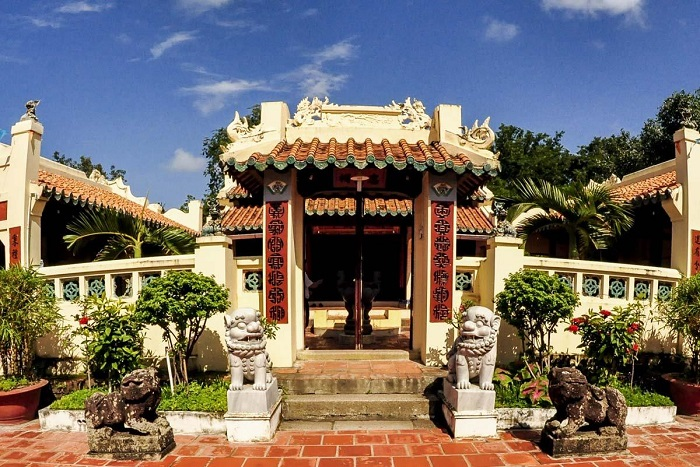
Mac Cuu Mausoleum is located right in the town center, making it very convenient to get to (Source: Collected)
From the central square or the Ha Tien People's Committee, you can walk or take a motorbike/taxi for only a few hundred meters along Mac Cuu street to reach the relic site. If you are staying at a hotel near the bus station or the town center, it's only about 750–1,200 m walk to the mausoleum complex – very suitable for tourists who want to stroll and explore Ha Tien while visiting the relic.
4.3. Notes on transportation and vehicle selection
When choosing a vehicle from your starting point, you should consider time and experience: sleeper buses are suitable for overnight trips to save time, while if you prefer sightseeing, traveling during the day by high-quality bus will be more comfortable.
In Ha Tien, besides taxis and motorbikes, you can also rent a motorbike if you want the freedom to explore other tourist attractions such as Thach Dong, Bai Mui Nai, or nearby caves and beaches.
5. Tips for visiting Mac Cuu Mausoleum in Ha Tien
5.1. Ideal time to visit
The ideal time to visit Mac Cuu Mausoleum in Ha Tien is during the dry season, from around November to April of the following year. During this time, the weather in Ha Tien is dry, with light sunshine, which is convenient for walking to explore the entire mausoleum complex at the foot of Binh San mountain without worrying about rain or slippery conditions.
If you want to combine the experience with traditional ceremonies, you can visit during festivals or death anniversaries related to the Mac family. However, on these days, the number of visitors is usually higher, and the quiet atmosphere characteristic of the relic site will be somewhat diminished compared to normal days.
5.2. Dress code and etiquette when visiting
As Mac Cuu Mausoleum in Ha Tien is a historical and spiritual relic site, visitors should choose modest and polite attire, avoiding overly short or offensive clothing. This not only shows respect for the sacred space but also helps you have a complete visiting experience in the spirit of the culture.
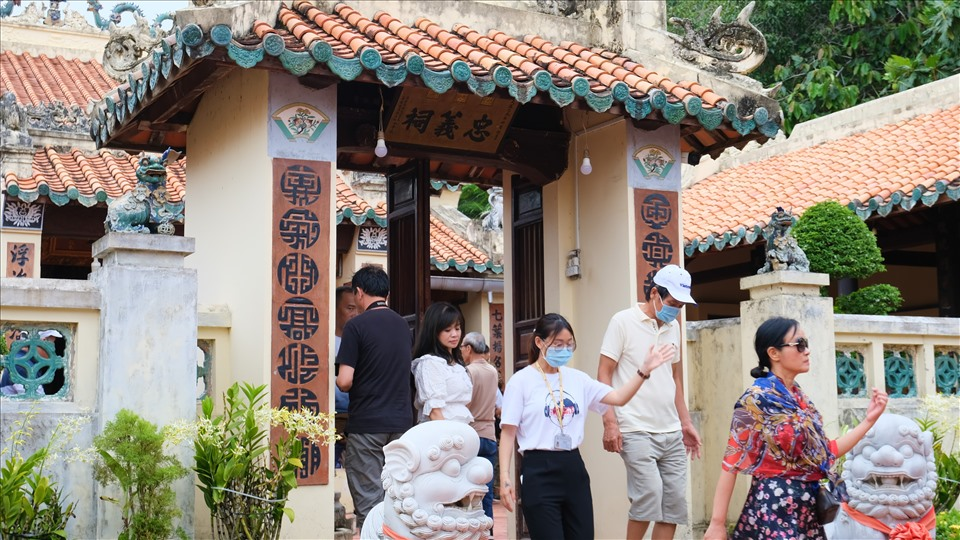
Visitors should choose polite attire when visiting spiritual sites such as Mac Cuu Mausoleum (Source: Collected)
When entering the temple and mausoleum areas, you should maintain order, refrain from speaking loudly, and not touch artifacts or tombstones without permission. Adhering to these basic behavioral principles will contribute to preserving the historical value and maintaining the solemnity of this historical space.
5.3. Suggestions for combining visits to nearby attractions
After visiting Mac Cuu Mausoleum in Ha Tien, you can easily combine it with exploring other famous tourist attractions in Ha Tien such as Binh San Mountain, Thach Dong, Phu Dung Pagoda, or Mui Nai Beach. These locations are quite close to each other, convenient for a half-day or full-day itinerary.
Additionally, you should also take time to stroll around the center of Ha Tien, enjoy local cuisine, and watch the sunset by the sea. Combining historical site visits with landscape and cultural experiences will make your trip more complete and emotionally rich.
Amidst the modern pace of life in Ha Tien today, Mac Cuu Mausoleum in Ha Tien still retains its tranquil and majestic appearance, like a silent witness to history. Every stone step, tiled roof, or ancient stele here tells a story about the people who laid the foundation for the southwesternmost land of the country, a place where the sea, mountains, and culture converge.
Not only possessing architectural and spiritual value, the mausoleum area also serves as a connection between the past and the present, helping visitors better understand the formation and development journey of Ha Tien through generations. A visit here is not merely a tour, but a journey back in time, pausing in a peaceful space to feel the depth of the Southern heritage.