
















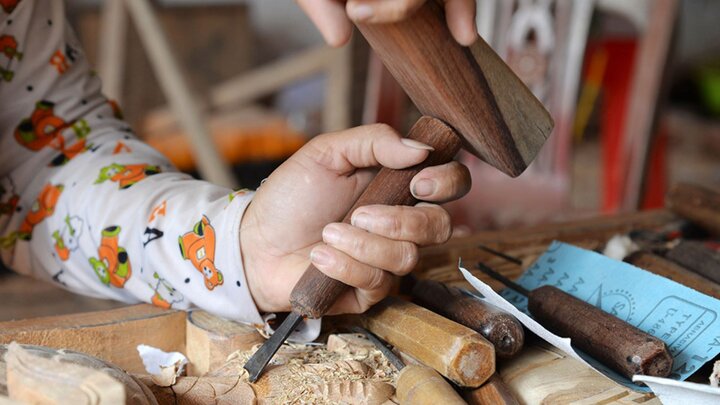
1. General introduction to Cho Moi carpentry village, An Giang
1.1. Where is Cho Moi carpentry village?
Cho Moi carpentry village is located in the Cho Moi area, An Giang province, mainly spread across Long Dien, Nhon My, and Cu Lao Gieng communes - a fertile islet region situated between the Tien and Hau river branches. Thanks to this special location, it has long been a convenient transit point for timber sources and handicraft trade. The craft village space is imbued with the Western Vietnamese spirit, featuring small paths, carpentry workshops interspersed with lush green gardens, creating a picture that is both simple and vibrant, clearly reflecting the working rhythm tied to the river life.
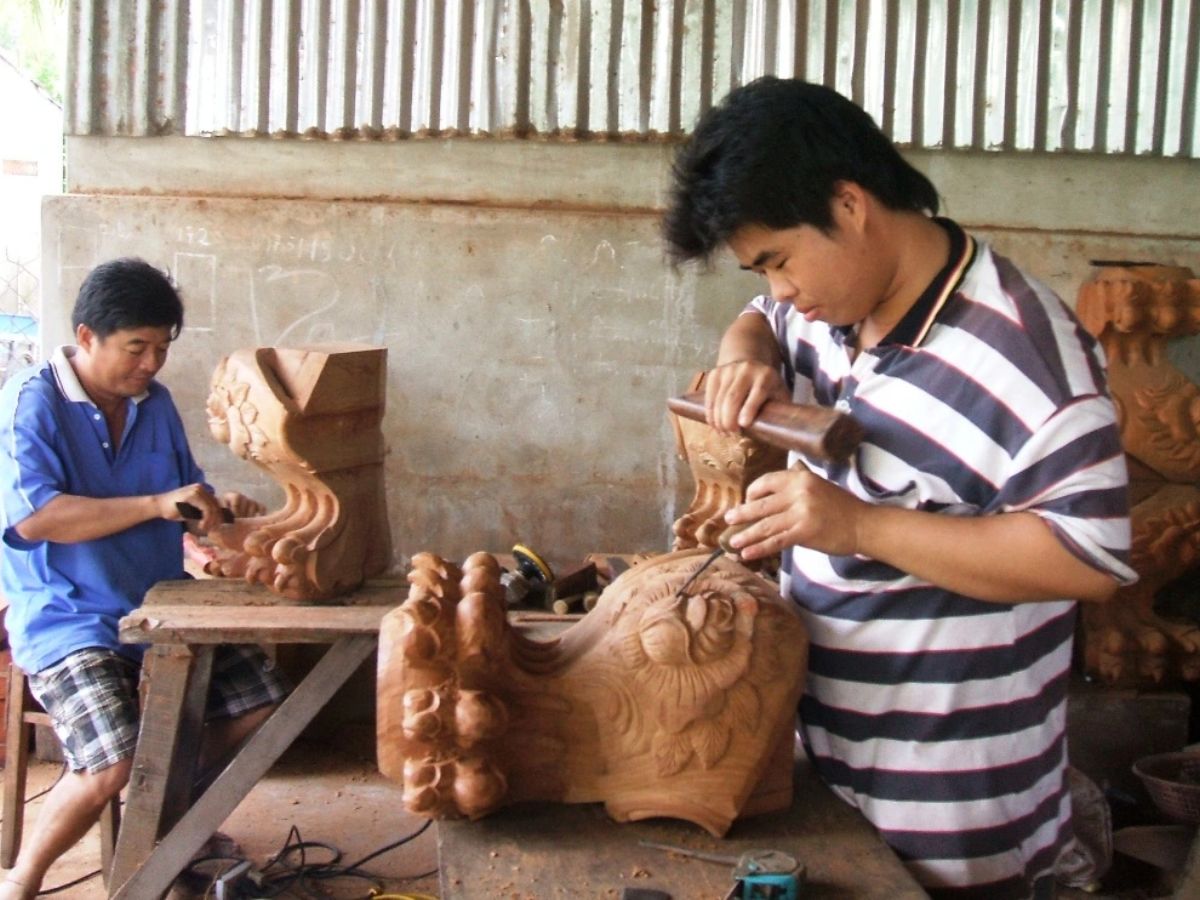
The wood carving village is located in Long Dien, Nhon My, Cu Lao Giang communes. (Source: Collected)
1.2. The hundred-year legacy of the traditional wood carving village
Formed in the late 19th century, the Cho Moi wood carving village is associated with the needs of building houses, making boats, and crafting religious items for the residents of the Southern river region. Through many generations, the woodworking craft here has been preserved and developed, creating a community of skilled artisans with exquisite carving techniques. Products made from precious wood not only have practical value but also reflect cultural depth, contributing to shaping the local identity. To this day, the village craft plays an important role in the economic life and is an attractive destination for those who want to learn about traditional handicraft art.
2. How to get to Cho Moi Wood Carving Village
2.1. Traveling from Ho Chi Minh City to Cho Moi Wood Carving Village
From Ho Chi Minh City, tourists can choose sleeper buses departing from Mien Tay Bus Station to Cho Moi, taking about 6–7 hours. If you have your own vehicle, traveling by car or motorbike along National Highway 1A combined with Road N2 or QL91 towards Long Xuyen is a popular option, covering a distance of about 180–200 km. From there, continue to cross An Hoa ferry or bridge to reach the island area. The route is quite easy to navigate, suitable for a day trip or a weekend getaway to explore the Cho Moi Wood Carving Village.
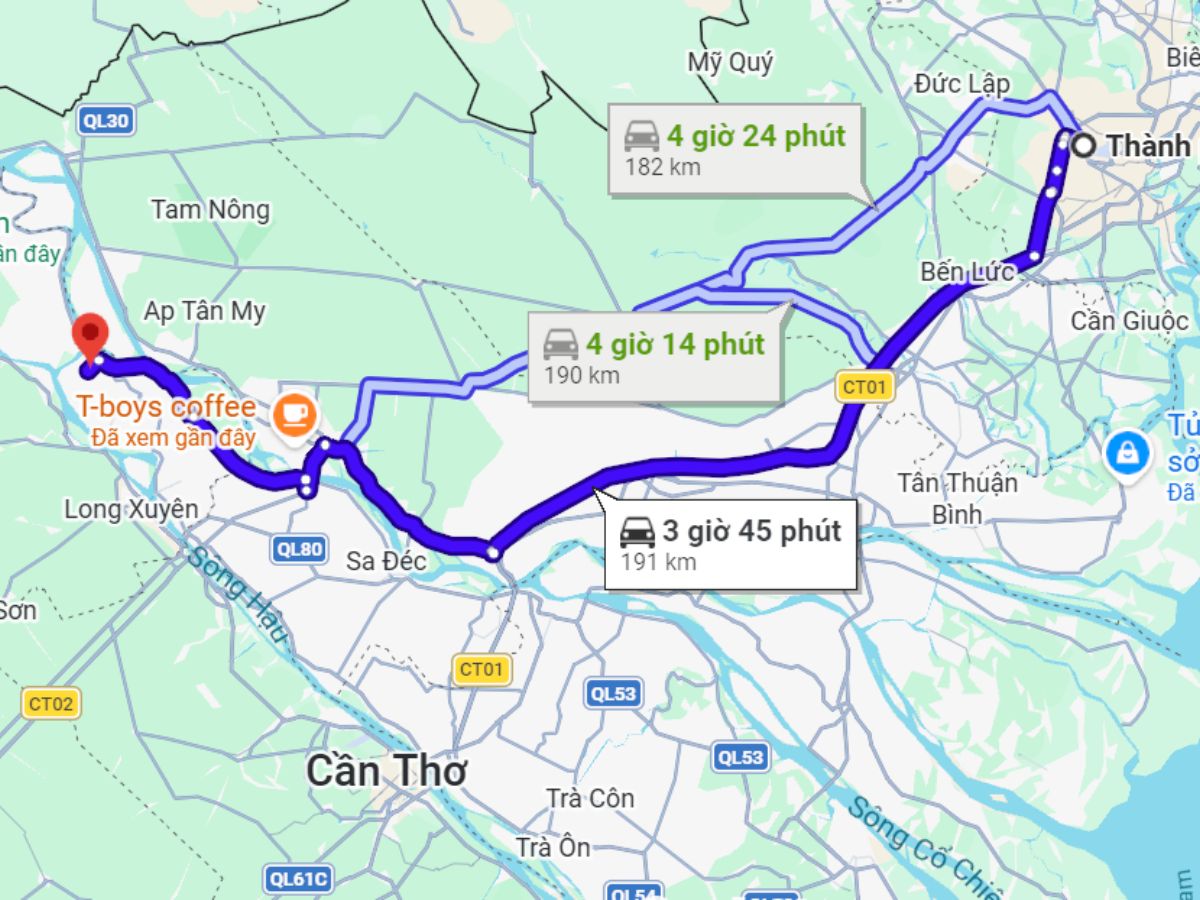
Visitors travel for nearly 4 hours to reach the Cho Moi carpentry village. (Source: Collected)
2.2. From Long Xuyen to Cho Moi carpentry village
Starting from Long Xuyen, you travel along DT943 to An Hoa ferry, then cross the river and continue along DT944 to reach the Cho Moi area. From here, turn into the roads leading to Long Dien commune, where many old wooden workshops of the Cho Moi carpentry village are concentrated. The total travel time is about 1 hour, the road is quite straight and easy to identify. Visitors can choose a motorbike for flexible travel or a taxi if traveling in a group, conveniently combining visits to many nearby attractions in the same itinerary.
2.3. Notes when traveling in the islet area
When arriving in the Cho Moi carpentry village area, visitors should prioritize traveling by motorbike to easily navigate the small roads leading to the production workshops. Roads in the islet are often narrow with many turns, so pay attention to signs or use a map to avoid getting lost. During the rainy season, some sections may be slippery or slightly flooded, so check the weather before going. Additionally, plan your return time to match the ferry schedule, prepare cash, and maintain a respectful attitude when visiting production facilities.
3. Ideal time to explore Cho Moi carpentry village
The time to explore the Cho Moi carpentry village is quite flexible as the workshops operate year-round, not dependent on seasons like many other craft villages. However, for convenient travel and sightseeing, visitors should go during the dry season from December to April, when there is less rain, the roads in the islet are dry, and the workshops are easily accessible. The most ideal time of day is in the morning, when the working atmosphere is bustling, the sounds of saws and chisels are clear, and the entire production process can be easily observed. It is advisable to avoid going in the middle of the day as the weather is hot, many workshops are closed or operating at a reduced capacity, and the experience will not be complete.
4. What's special about the Cho Moi carpentry village experience?
4.1. Traditional woodworking process and the value of traditional craft
Coming to the Cho Moi carpentry village, visitors can not only sightsee but also have the opportunity to directly observe the wood processing process taking place in the workshops. From selecting wood, sawing planks, shaping, to carving patterns, all require precision and years of accumulated experience. Despite the support of modern machinery, important stages are still performed manually to ensure exquisiteness. The attraction lies not only in the technique but also in the story of passing down the trade, where each craftsman dedicates their life to every piece of wood, preserving a labor value deeply imbued with the identity of the Mekong Delta.
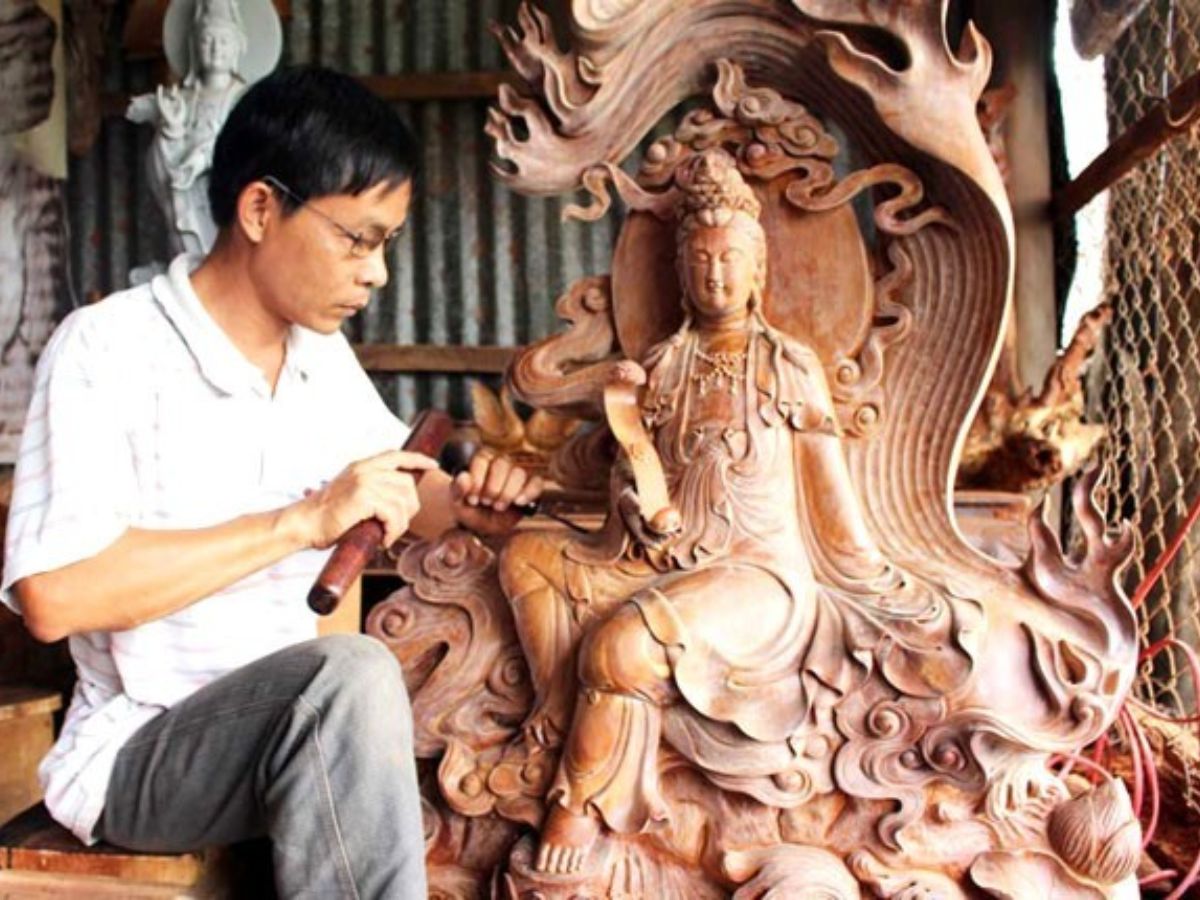
Experience the craft village space and woodworking process here. (Source: Collected)
4.2. Craft Village Space and Rustic Life Experience
The space at the Cho Moi woodworking craft village evokes a very "authentic" feeling, where wooden workshops are open all day with the characteristic aroma of wood and the constant sound of labor. Visitors can see artisans meticulously working on intricate carvings, or finished products like tables, chairs, and altars neatly arranged. This is also an ideal spot for check-ins with genuine photos, reflecting the local working rhythm. Unpretentious and close to nature, it is this simplicity and familiarity that create a unique experience when visiting the craft village.
5. What to Eat and Do in Cho Moi?
5.1. Savor An Giang Specialties with Southern Flavors
After visiting the Cho Moi woodworking craft village , your journey will be more complete when you take time to explore the local cuisine. A highlight is Bun Ca Long Xuyen (Long Xuyen fish noodle soup) with its sweet and savory broth made from turmeric-marinated fish, served with fresh herbs and rice paper, offering an unmistakable characteristic flavor. Besides, Mien Tay hot pot (Lau Mam) is an ideal choice for lunch, with the rich taste of fermented fish blended with shrimp, meat, and local vegetables. Don't forget to try crispy Banh Xeo (savory pancakes) or sweet and chewy Banh Bo Thot Not (palm sugar sponge cake), simple yet authentic An Giang dishes, often served at roadside eateries or on the islets.
5.2. Suggested Attractions Near Cho Moi Craft Village
From the Cho Moi woodworking craft village, visitors can easily extend their journey to many attractive nearby destinations. Long Xuyen city, about 30-40 km away, is an ideal place to experience floating markets and enjoy riverside cuisine. Closer by, Ong Ho islet offers a lush green space with fruit orchards and a characteristic river life. If you have more time, a trip to Chau Doc – Sam Mountain will take you to explore famous spiritual sites like Mieu Ba Chua Xu (Lady Chua Xu Temple) and Tay An Pagoda. Each destination contributes to enriching the Western Vietnam cultural experience during the trip.
From An Giang, the journey can be extended with inspiration to Phu Quoc – a prominent southern resort destination, where island beauty and modern entertainment ecosystems converge. The island impresses with its clear blue beaches like Bai Kem and Bai Sao, where fine white sand and turquoise waters create a characteristic relaxing tropical landscape. The Hon Thom cable car experience offers panoramic ocean views, connecting to Sun World Hon Thom with Aquatopia water park and many exciting recreational activities. As evening falls, Sunset Town emerges with its unique Mediterranean architecture, featuring iconic structures and world-class light shows, fireworks, and art performances, creating an entertainment scene that lasts until night.

Tourists enjoy themselves at Aquatopia Water Park with many exciting recreational activities. (Source: Collected)
Cho Moi Carpentry Village is not only a place that preserves the essence of traditional craftsmanship but also a destination imbued with the spirit of life in the Mekong Delta. Every wood grain, every carving line reflects the meticulousness and dedication of the artisans through generations. Combined with the peaceful islet landscape and nearby attractions, a journey here offers an authentic experience, helping tourists gain a deeper understanding of the cultural and labor values of the An Giang region.