















1. General Introduction to Cu Lao Giang Church
1.1. Where is Cu Lao Giang Church located?
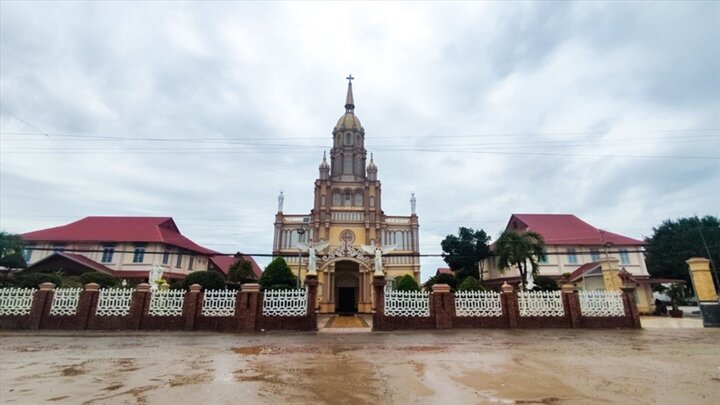
Located in Tan Binh Hamlet, Cu Lao Giang Commune, An Giang Province, Cu Lao Giang Church is nestled amidst a lush green islet on the gentle Tien River. Unlike the bustling city, this place offers a sense of seclusion and peace with shady trees and a typical Mekong Delta rural atmosphere. The journey to the church is also an interesting experience as visitors pass through small village roads, feeling the slow and friendly pace of local life.
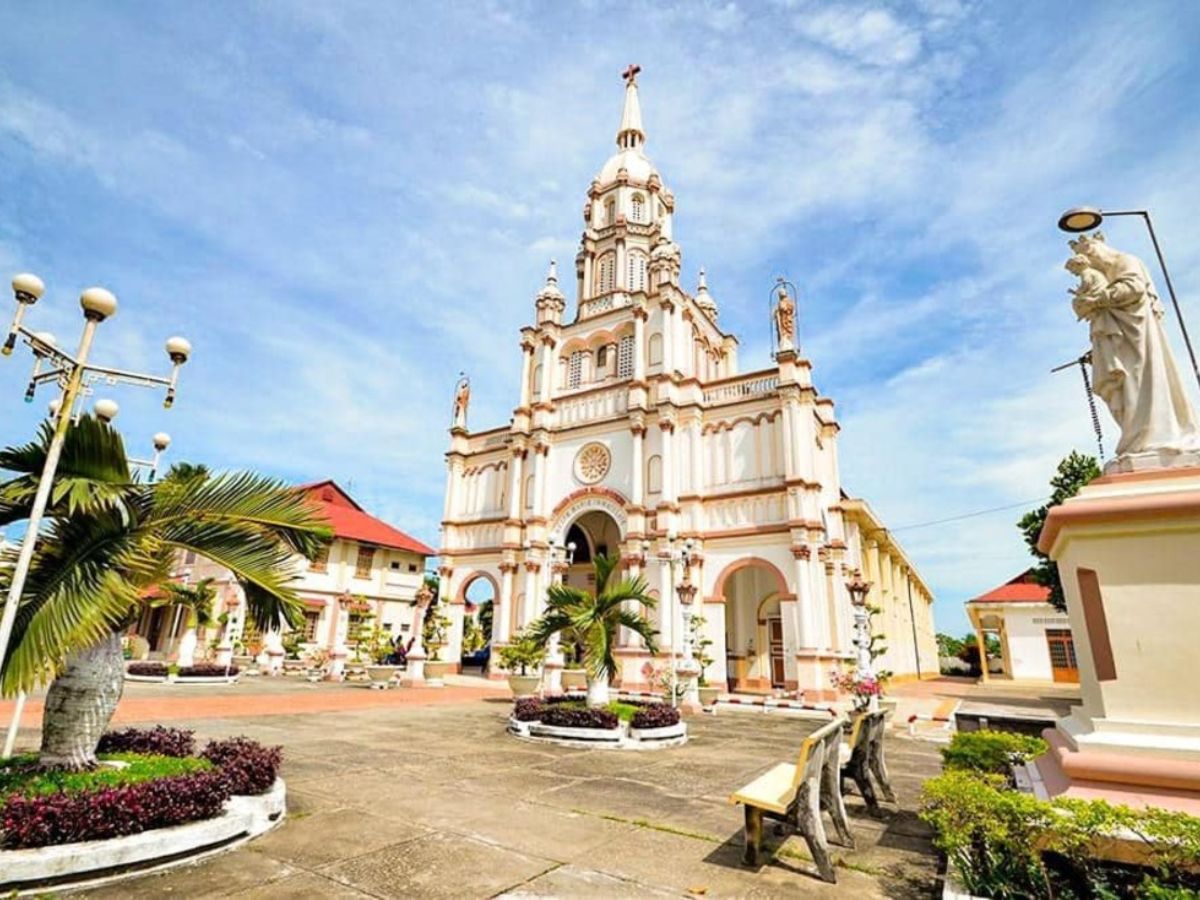
Cu Lao Giang Church lies nestled amidst a lush green islet. (Source: Compilation)
1.2. History of Cu Lao Giang Church's over 100 years of formation
Initiated in the late 19th century, the church bears a long historical imprint tied to the formation of the Catholic community in the South. The construction took many years, with materials transported from Europe, reflecting persistent efforts amidst the challenging conditions of the islet. Having existed for over a century, this place is not only a religious site but also a witness to historical changes, fully preserving the ancient charm and distinctive cultural values of the An Giang region.
2. How to get to Cu Lao Giang Church
2.1. Traveling from Ho Chi Minh City to An Giang
The journey from Ho Chi Minh City to An Giang is quite convenient, suitable for both short trips and immersive Mekong Delta tours. Visitors can opt for intercity buses with flexible schedules, taking about 5–6 hours via the Trung Luong – My Thuan expressway or National Highway 1A, enjoying views of sprawling rice fields and the gradually emerging riverine life.
For those who prefer independence, a motorbike or personal car offers a more exciting experience, traversing the lush Western roads, stopping anywhere to fully appreciate the simple beauty of this land before reaching Long Xuyen.
2.2. Journey to Cu Lao Giang
From the center of Long Xuyen, the journey to Cu Lao Giang unfolds with roads bearing the distinct mark of An Giang's countryside. Visitors travel about 25 km towards the Cho Moi area, crossing the An Hoa ferry or taking the bridge route to enter the islet situated in the middle of the Tien River. Upon arriving on the island, the scenery becomes more tranquil with small, tree-lined paths and houses peeking through fruit orchards. It takes only an additional 20–30 minutes of travel to reach the Tan My area, where the ancient church appears amidst the lush greenery, creating a feeling of both closeness and seclusion.
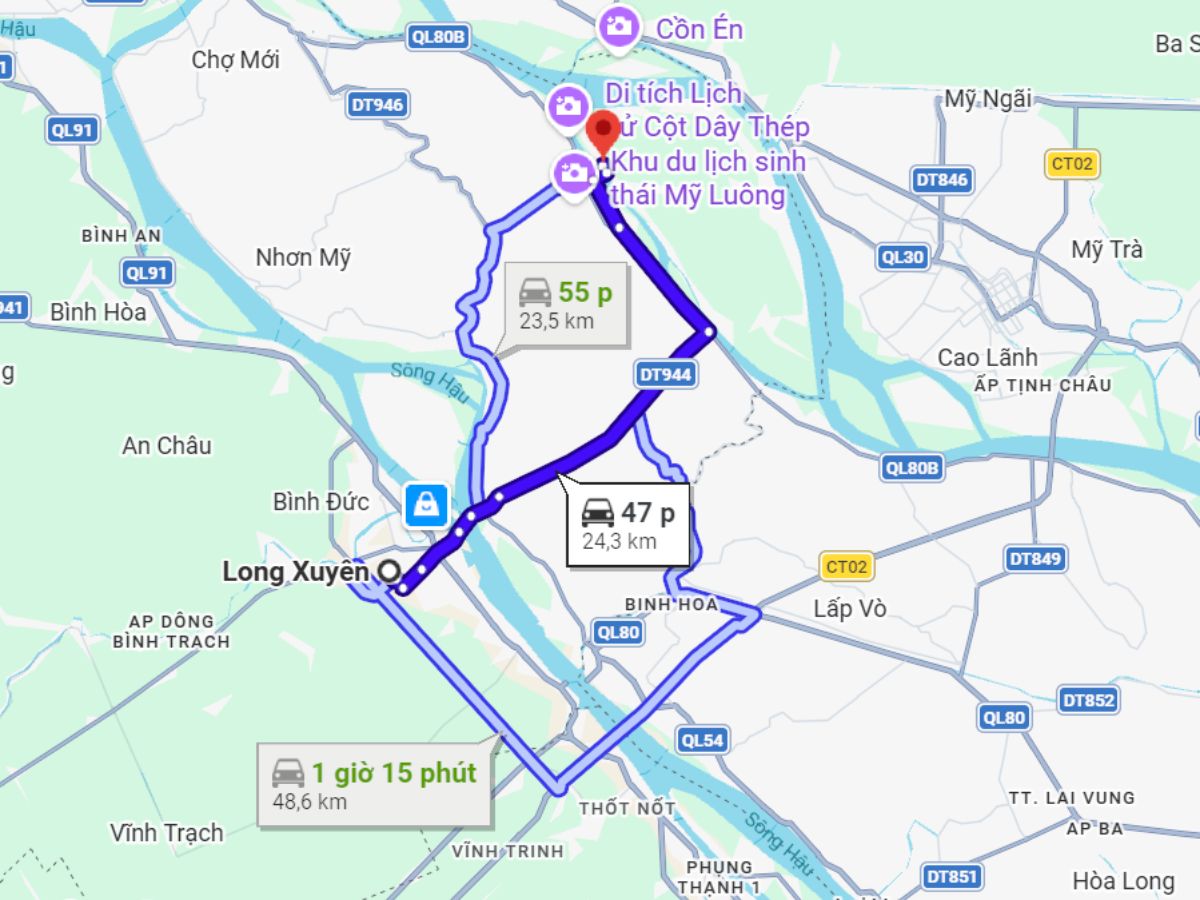
Moving from the center of Long Xuyen to the church is about nearly 50 km. (Source: Collected)
2.3. Notes when moving around the islet area
Moving within the islet area requires proactivity and caution for a smooth journey. If choosing to travel by ferry, visitors should check operating hours in advance to avoid itinerary disruptions. Once on the islet, the main routes are small village roads, with some narrow and poorly lit sections, so it's necessary to move slowly and observe carefully. For a complete experience, it's advisable to go in the early morning or cool afternoon, when the weather is pleasant and the Western Vietnamese scenery appears clearer and fresher.
3. Ideal time to visit Cu Lao Giang Church
Cu Lao Giang Church is a destination that can be visited year-round, suitable for various travel itineraries as it does not depend on festival seasons. However, according to An Giang travel experience, the most ideal time is the dry season from around November to April, when there is less rain, light sunshine, and travel by ferry or motorbike on the islet becomes more convenient. Especially, the early months of the year are highly rated for their pleasant atmosphere, suitable for combining church visits, garden strolls, and exploring local life. During the day, visitors should arrive in the early morning or cool afternoon to avoid strong sun and take advantage of beautiful light for photography, making the journey more complete.
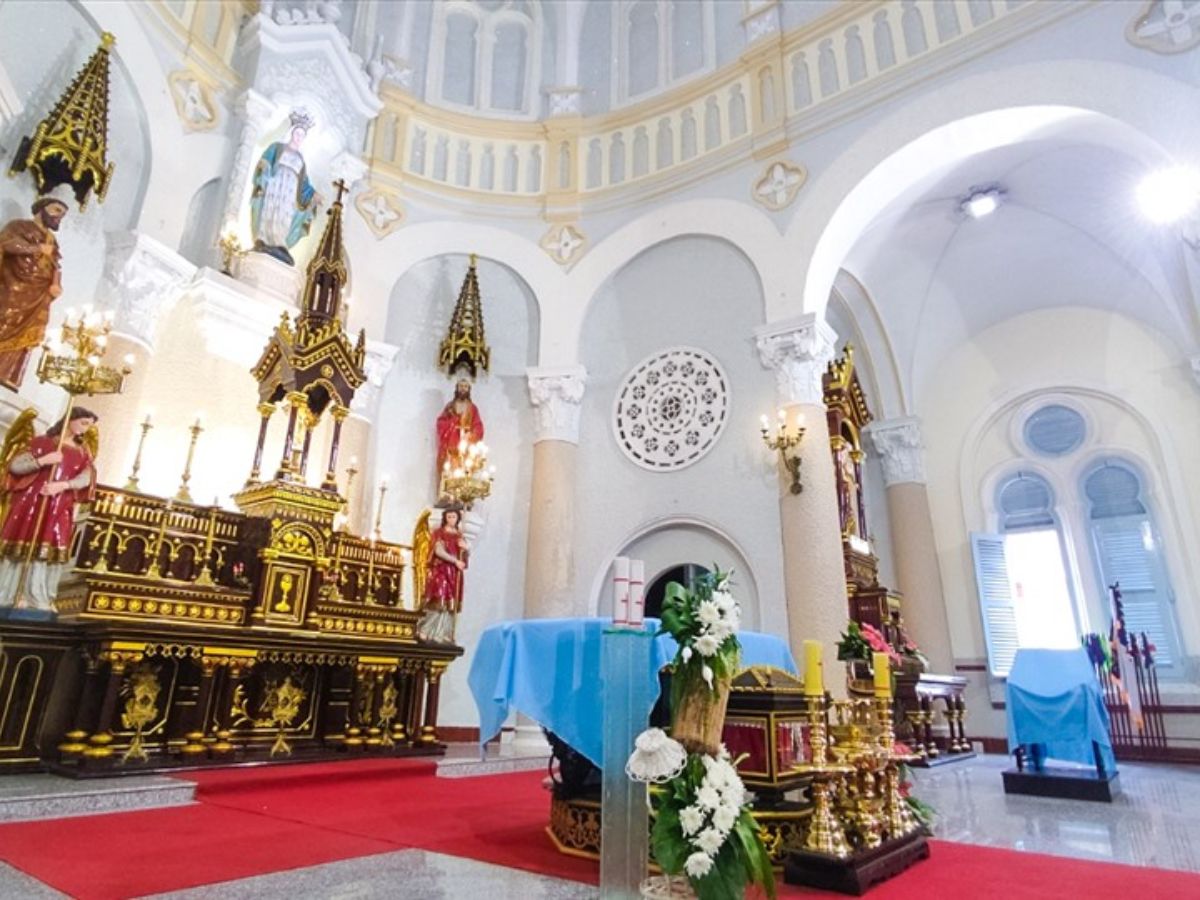
The dry season has little rain, dry weather, suitable for visiting churches in the Cu Lao Giang area. (Source: Collected)
4. Tourist Attraction of Cu Lao Giang Church
4.1. Ancient French Architecture Stands Out Amidst the River Landscape
The first impressive point of Cu Lao Giang Church is its architecture, which bears a strong European imprint amidst the simple Western Vietnamese scenery. The structure was built in the Romanesque style, combined with some Gothic details, featuring a symmetrical facade, high vaulted ceilings, and sturdy columns that create a majestic and ancient appearance. The most prominent feature is the bell tower, approximately 35 meters high, serving as both an architectural highlight and a distant landmark. The primary building materials were thick solid bricks, with a durable structure, helping the edifice remain almost intact after more than a century. The fusion of Western architecture and the riverine setting has created a unique and distinctive charm.
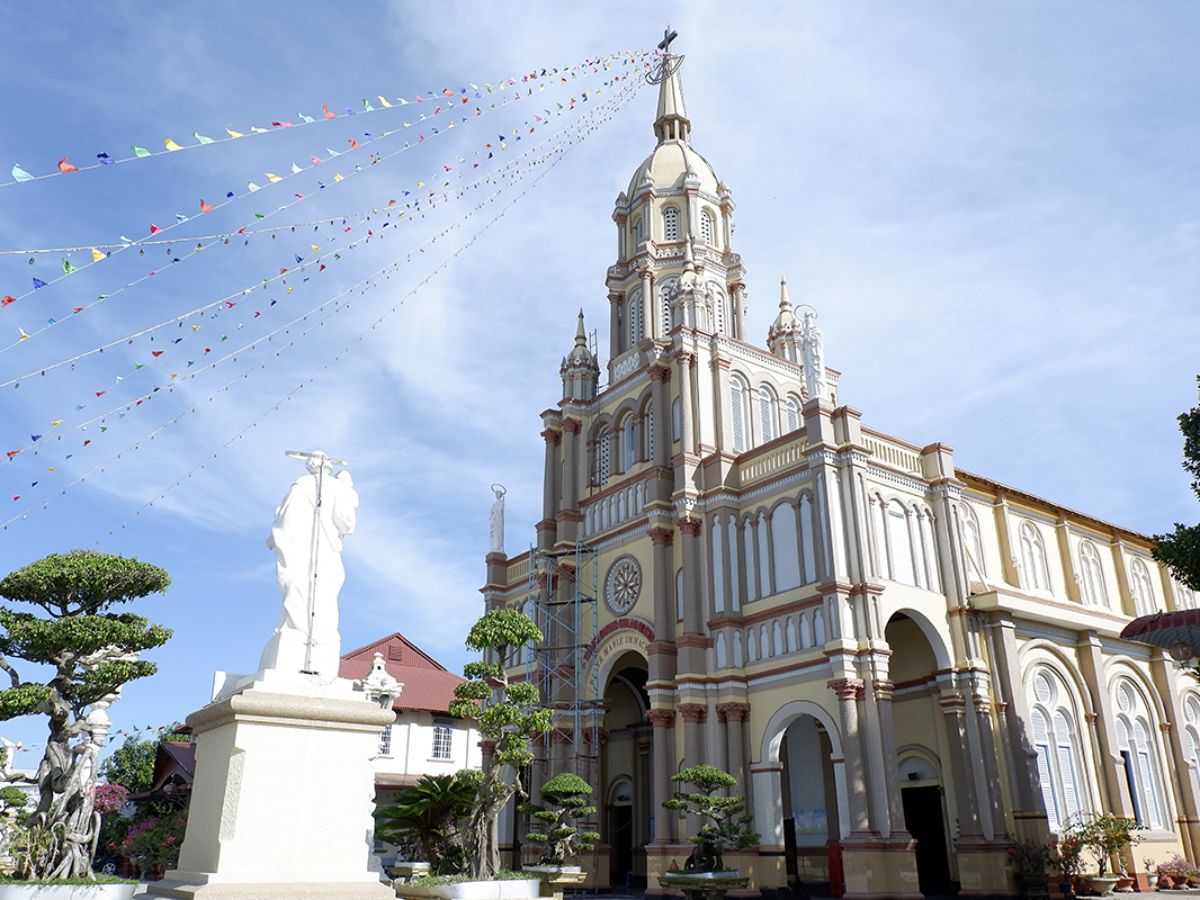
Outstanding architecture of Cu Lao Gieng Church amidst the riverine landscape. (Source: Collected)
4.2. Interior space and grounds rich in experience
The interior space of the church offers a solemn yet airy feeling, with a high vaulted ceiling and a spacious three-bay layout. Natural light filtering through arched windows and stained glass creates a gentle visual effect, highlighting the carefully preserved altar details and saint statues. Outside, the spacious grounds shaded by old trees provide a quiet, pleasant atmosphere. The combination of ancient architecture and the surrounding garden landscape creates an ideal space for strolling and relaxing, while also offering a slow, intimate, and emotional travel experience.
4.3. Historical value and distinctive spiritual destination
Beyond its architectural impressiveness, the church holds deep historical and religious significance, linked to the missionary process in the South from the late 19th century. It is one of the oldest churches in the Southern region and an important religious center for the local Catholic community in Cu Lao Gieng. Through several renovations, the structure has retained its original details, from the brick floors and patterns to areas bearing the marks of time. Today, it serves not only as a pilgrimage site but also as a cultural and tourist destination, helping visitors gain a deeper understanding of local history and religious life.
5. Experiences when visiting Cu Lao Gieng Church
5.1. Check-in with ancient architecture amidst green space
One of the unmissable experiences when visiting Cu Lao Gieng Church is capturing impressive moments with its time-worn ancient architecture. The church's facade, with its symmetrical layout, tall bell tower, and muted colors, creates an ideal backdrop for European-style photos amidst the Mekong Delta. Additionally, the long corridors, arched doorways, and moss-covered walls offer many visually rich photo opportunities. The harmonious blend of the architectural structure and the surrounding green trees ensures that every frame conveys a sense of peace and relaxation.
5.2. Feeling the religious life and spiritual space
More than just a sightseeing spot, the church is a place where visitors can keenly feel the religious life of the local community. You can observe the daily activities of the parishioners, from prayer sessions to preparations for mass. If timing and regulations permit, attending a service will offer a deeper experience of the solemn spiritual space. In the quiet atmosphere, with gentle light and the ringing of bells, visitors can easily feel the peace and the distinctive religious culture of the islet region.
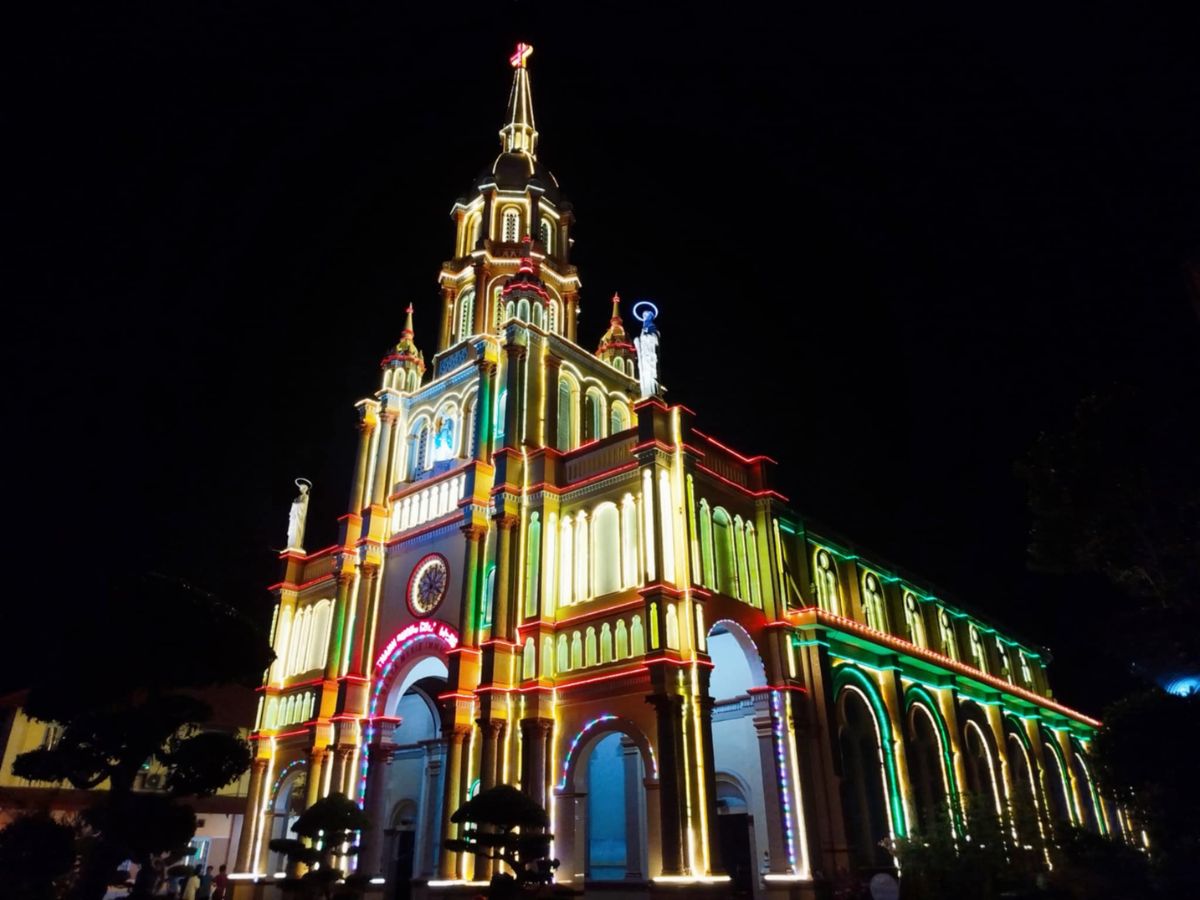
Visitors feel the real, tranquil space amidst the riverine orchards of An Giang. (Source: Collected)
5.3. Discover the slow pace of life on Gieng Islet
The journey will be more complete when you spend time exploring Gieng Islet, which preserves the rustic beauty of the Mekong Delta. Cycling along tree-lined village paths, visiting traditional craft villages, or chatting with local people will bring a close, authentic experience. The peaceful atmosphere, lush gardens, and slow pace of life here help visitors temporarily escape the hustle and bustle, enjoying a rare sense of relaxation. This is also a way to understand more deeply the culture, people, and characteristic life of the islet region on the Tien River.
6. Detailed tips for visiting Gieng Islet Church
When visiting Gieng Islet Church, visitors should prepare polite and modest attire to suit the religious space, and bring hats, water, and cameras for convenient travel and capturing beautiful moments. During the visit, maintain order, limit loud talking, and comply with regulations such as not taking photos in prohibited areas or during ceremonies. For a complete experience, it is advisable to visit in the early morning or late afternoon to avoid the sun and crowds, and to combine exploration with nearby spots on the islet. Learning about the history and significance of the structure beforehand will also make the trip more profound and meaningful.
7. Suggested itinerary for visiting around Gieng Islet Church
7.1. Attractions near the church
Around Gieng Islet Church is a system of religious structures and ancient craft villages, forming a culturally rich complex. Just a few hundred meters away, the Franciscan Convent and the Convent of Our Lady of Providence appear with ancient architecture, tranquil spaces, and tree-lined paths, bringing a characteristic sense of peace.
In addition, the exploration journey extends to traditional craft villages such as boat and canoe making in My Hiep, which preserves centuries-old handicraft techniques. Wandering around the islet, visitors can easily encounter small workshops, green gardens, and a simple way of life, contributing to a multi-dimensional experience that is both historical and close to local life.
7.2. One-day itinerary to explore Gieng Islet
A day exploring Gieng Islet Church can begin in the early morning, when the air is cool and gentle sunlight covers the ancient structures. From around 7 AM to 10 AM, visitors tour the church, then move a short distance to the nearby convents to continue admiring the architecture and taking photos.
At noon, stop at local eateries to enjoy Mekong Delta specialties and savor the peaceful orchard scenery. In the afternoon, when the sun softens, visitors can cycle or travel through craft villages, riverbanks, and fruit orchards, experiencing the slow pace of life on the islet. The journey concludes in the gentle sunset, offering a complete and emotional experience.
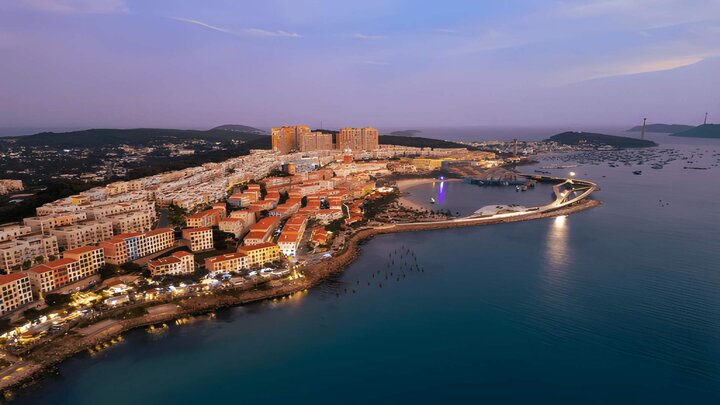
If you have more time while traveling in An Giang, you can extend your trip to Phu Quoc to experience a completely different color. Dubbed the "resort paradise," Phu Quoc impresses with famous beaches like Bai Truong, Bai Khem, and Bai Sao, along with a system of high-class coastal resorts. In the South of the island, the Kiss Bridge at Sunset Town is a popular spot for watching the sunset, alongside vibrant shows and street festivals. Additionally, experiencing the nearly 8 km long sea-crossing cable car to Sun World Hon Thom or snorkeling to see coral also offers a diverse and complete exploration journey.
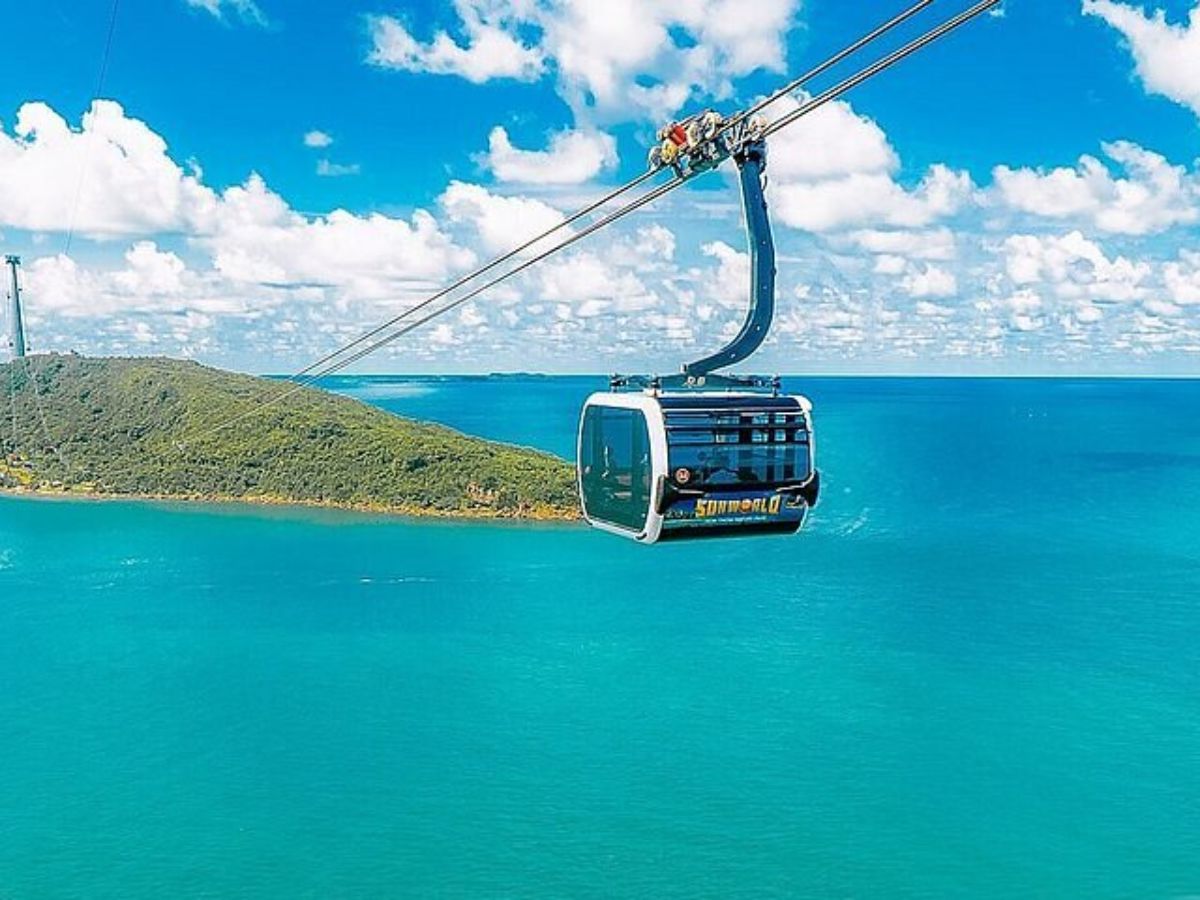
The Hon Thom sea-crossing cable car is nearly 8 km long, allowing tourists to admire the panoramic view of the island bay from above. (Source: Collected)
The journey to discover Cu Lao Gieng Church is not just a visit to an ancient architectural work, but also an opportunity to touch upon the characteristic historical, cultural, and religious life values of the Mekong Delta. Amidst the peaceful space of the islet, every small corner brings a feeling of relaxation and depth. If you are looking for a destination that is both gentle and rich in experience, Cu Lao Gieng Church is definitely a worthwhile choice to stop by.