















1. Detailed exploration of the Cham Islam community in An Giang
1.1. Historical overview of arrival and settlement
The Cham community living in An Giang originates from the South Central region, linked to the history of the Champa kingdom in the central strip of Vietnam. During historical upheavals, the Cham people migrated south, passing through the land of Chân Lạp before settling along both banks of the Hau River. This migration flow occurred over centuries, leaving a distinct mark on the current community structure.
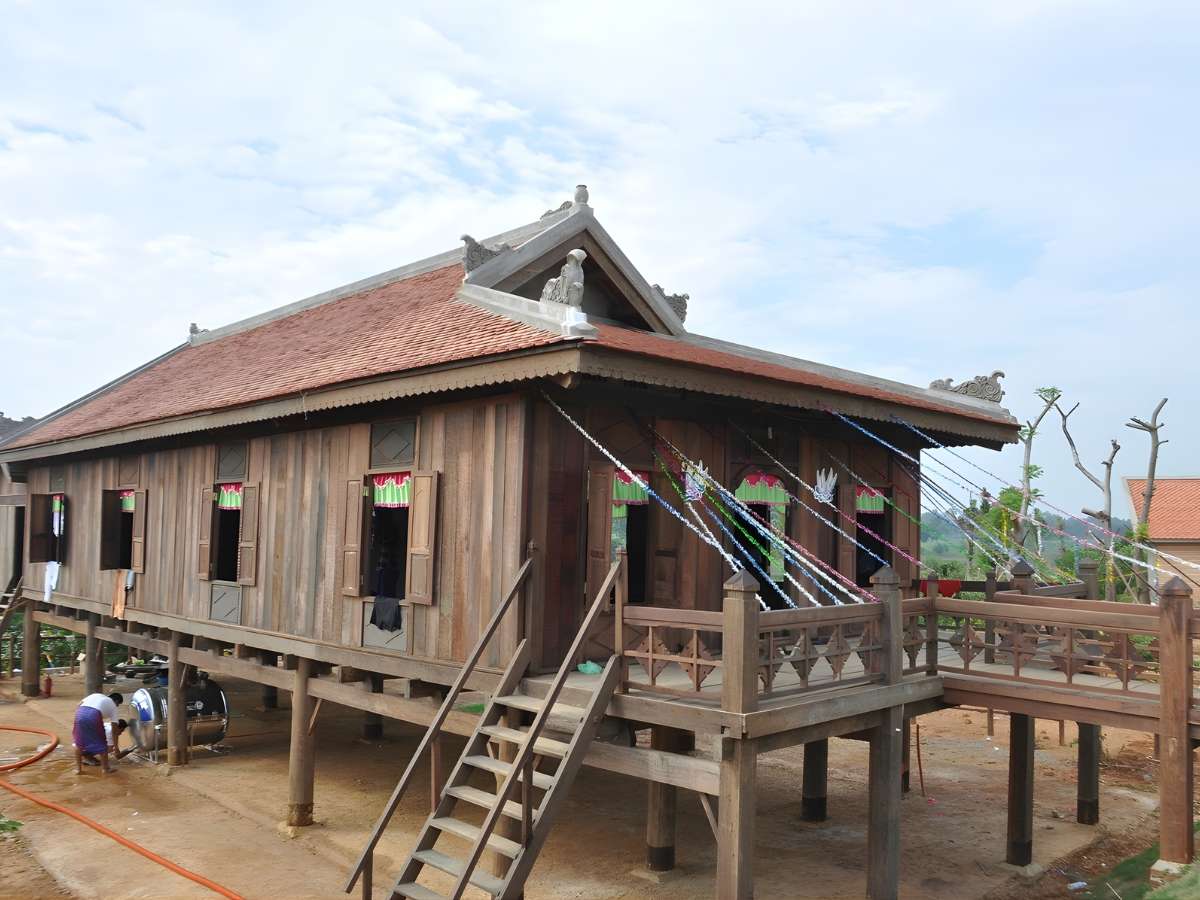
Traditional stilt houses reflect the history of the formation of the Cham Islam community in An Giang. (Source: Collected)
In An Giang, the Cham people formed traditional riverside villages such as Chau Giang, Da Phuoc, and Phum Soai. These residential areas are linked to riverine livelihoods, creating conditions for the community to maintain a stable and long-lasting life. Over time, An Giang has become one of the areas with a large concentration of Cham Islam people in Vietnam.
According to recent statistics, the Cham Islam community in An Giang has a population of over 11,000 people, accounting for about 0.6–0.7% of the province's total population. The Cham people reside mainly in the districts of An Phu, Chau Phu, Phu Tan, and Tan Chau town, concentrated along the Hau River. This distribution contributes to shaping the characteristic Cham cultural space of the An Giang region.
1.2. Population distribution and community characteristics
The Cham Islam people in An Giang live in a concentrated community model, forming separate villages along the river. Village spaces are often built on islets or high ground, adapting to the natural conditions of the Mekong Delta. The community's center of activity usually revolves around the mosque and common living areas.
In daily life, the community relationships of the Cham people are maintained through religious activities and collective events. This cohesion helps the community maintain a stable rhythm of life, while also transmitting traditional values through generations. This is also the foundation that helps preserve the culture of the Cham Islam people in An Giang sustainably.
1.3. The role of Cham Islam people in An Giang's cultural landscape
The presence of the Cham Islam community contributes to enriching the cultural and religious life in An Giang. Along with the Kinh, Khmer, and Hoa people, the Cham people create a harmonious cultural intersection, clearly reflecting the diversity of this land. Elements such as festivals, costumes, and mosque architecture have become familiar highlights in local life.
Besides cultural values, the Cham Islam people also participate in traditional economic activities such as brocade weaving, trading, and border commerce. These activities not only contribute to improving livelihoods but also help spread the Cham cultural identity in contemporary life. Thus, the Cham Islam community continues to play an important role in An Giang's cultural structure.
2. Islam and its profound influence on the lives of the Cham people
2.1. Islam in daily life
Islam plays a central role in the spiritual life of the Cham community in An Giang, influencing many aspects of daily activities. Cham Muslims believe in Allah and practice religious rituals such as praying five times a day, adhering to halal dietary standards, and maintaining moral standards in social interactions. These rules are naturally maintained, creating a stable and disciplined rhythm of life within the community.
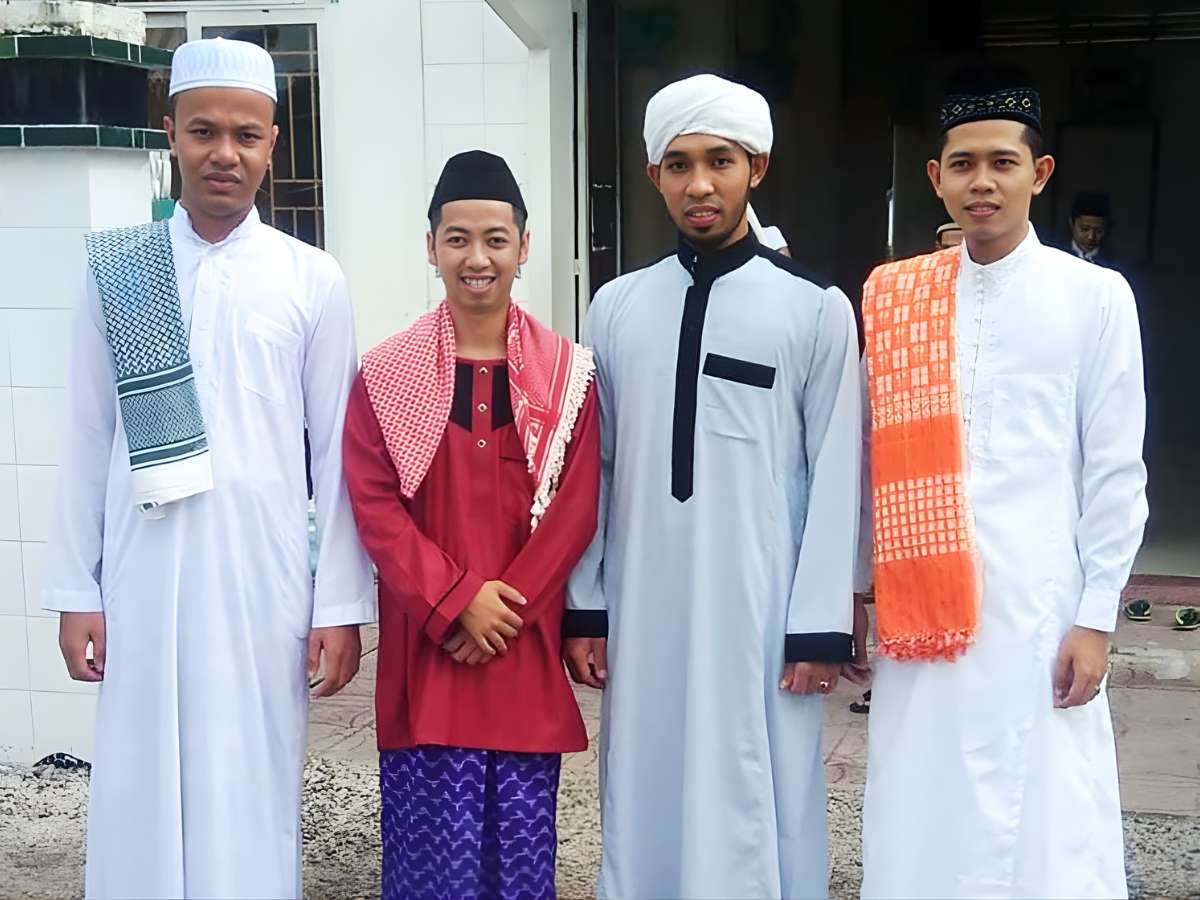
Daily religious attire and activities reflect the cultural identity of Cham Islam. (Source: Collected)
Islamic faith is not separate from life but integrated into every daily activity of the Cham people. From eating habits, behavior to community organization, Islamic teachings contribute to shaping a lifestyle of cohesion and mutual respect. This is also a factor that helps the Cham Islam community in An Giang preserve its cultural identity amidst modern changes.
2.2. Islamic Mosques and Spiritual Activity Space
Islamic mosques serve as centers of faith and community activities for the Cham Islam people in An Giang. Structures like Mubarak Mosque or Jamiul Azhar Mosque not only cater to prayer needs but also host educational and community exchange activities. The mosque architecture with its characteristic domes and patterns creates a unique imprint on the local cultural landscape.
The mosque space also serves to connect generations within the Cham community. Here, adults and children participate together in religious activities, learning, and the transmission of traditional values. For visitors, visiting the mosque offers an opportunity to observe the spiritual life of the Cham Islam people in An Giang more closely.
2.3. Religious Education and Cultural Transmission
The teaching of the Quran and Cham Arabic script is particularly emphasized by the Cham Islam community. Classes are often organized at the mosque, allowing the younger generation to access Islamic teachings while understanding their cultural roots. This activity contributes to maintaining the continuity between generations within the community.
Religious education not only carries spiritual significance but also helps shape an awareness of preserving cultural identity. Through learning and practice, the younger generation of Cham people have the opportunity to understand traditions and community values more deeply. This forms the foundation for the culture of the Cham Islam people in An Giang to continue to be preserved in the context of a changing society.
3. Customs, Festivals, and Characteristic Cultural Life
3.1. Ramadan Festival and Important Rituals
Ramadan is a significant fasting month in the religious life of the Cham Islam people in An Giang. During this period, the community practices fasting from sunrise to sunset, while increasing prayers and focusing on spiritual values. The atmosphere of Ramadan creates a sense of contemplation, cohesion, and sharing within each Cham family and village.
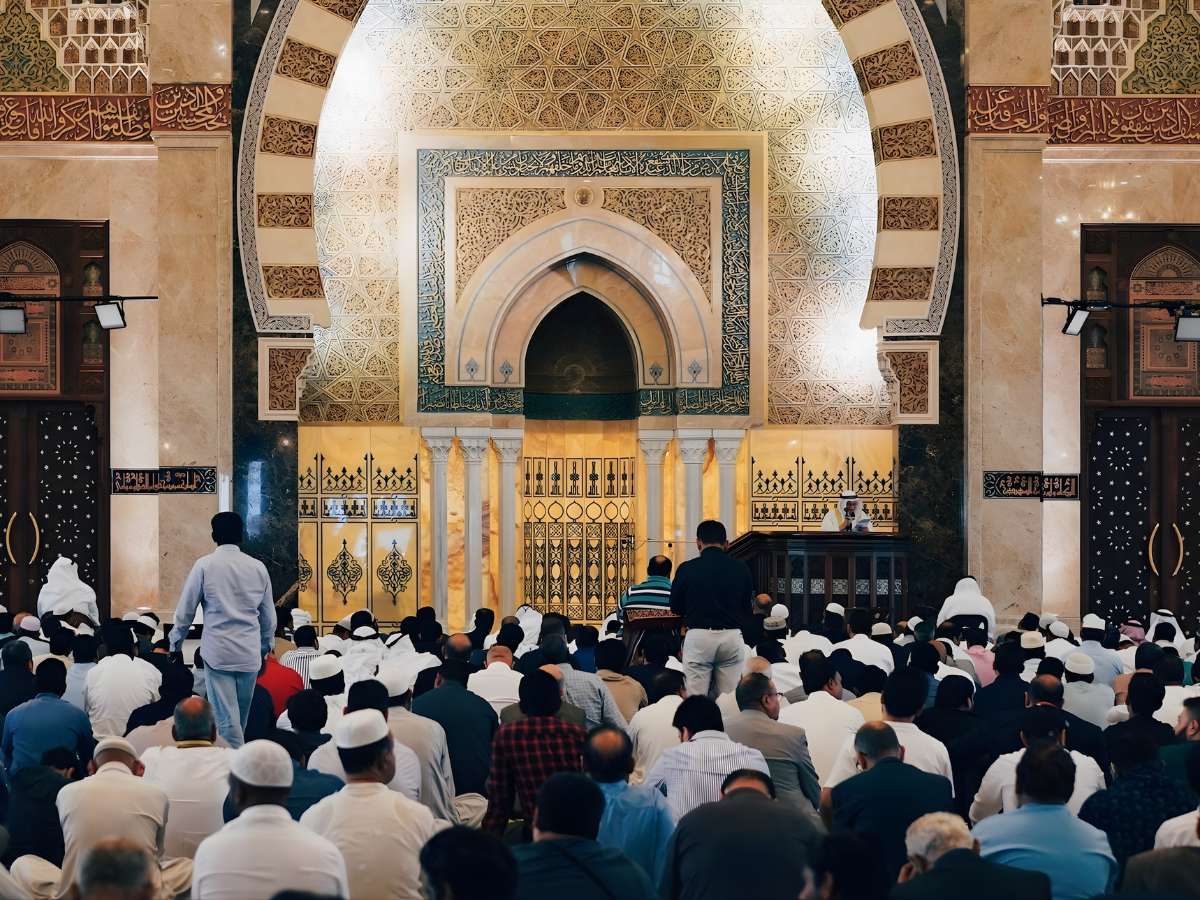
The Cham Islam community observes the important Ramadan festival within the mosque space. (Source: Collected)
Besides Ramadan, the Cham Islam people also organize other religious ceremonies according to the Islamic calendar such as Eid al Adha and peace-praying ceremonies. These occasions are often associated with collective activities at the mosque and community events. For tourists, learning about these festivals helps to clearly feel the spiritual cultural depth of the Cham people in An Giang.
3.2. Marriage, Family Customs, and Traditional Attire
The marriage customs of the Cham Islam people are organized according to religious regulations, emphasizing the role of family and community ties. Wedding ceremonies are conducted solemnly, clearly reflecting the influence of Islam in social life. Family is considered an important foundation, where traditional values are preserved and taught.
The traditional attire of the Cham Islam people clearly expresses their cultural identity in daily life. Women often wear hijabs and sarongs, in accordance with religious and cultural norms. Men wear traditional clothing for festivals and community events, creating a characteristic image of the Cham villages along the Hau River.
3.3. Cham Islam Cuisine in An Giang
The cuisine of the Cham Islam people in An Giang is closely linked to their beliefs and the natural conditions of the riverine region. All dishes comply with halal standards, using familiar ingredients and cooking methods that bear their own cultural imprint. This creates a distinct culinary identity within the Mekong Delta's food landscape.
Dishes such as com ni served with ca pua or tung lo mo made from beef are often present in family meals and on festive occasions. The flavors of these dishes reflect the intermingling of Cham culture and the southern Vietnamese environment. For tourists, experiencing Cham Islam cuisine is an accessible way to feel the local cultural life.
4. Cham Islam Culture Combined with Tourism and Modern Experiences
4.1. Sunset Town
Sunset Town in Phu Quoc United Center is developed as a coastal tourist space, combining architecture, art performances, and night entertainment activities. This area is associated with the Kissing Bridge, a structure located on the south of the island, often mentioned as a scenic highlight for visitors. According to updated information for 2026, Phu Quoc features daily fireworks displays in this area, adding to the nighttime activities for tourists.
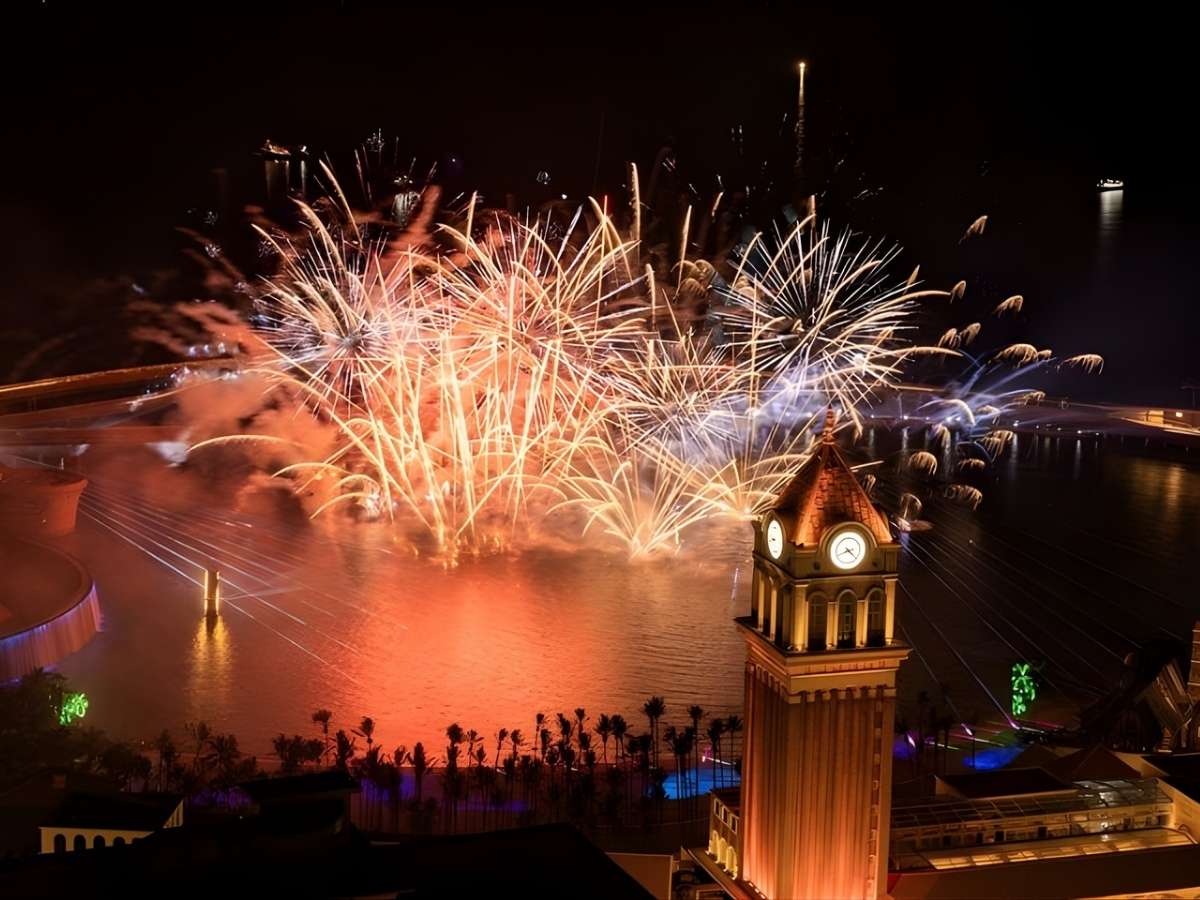
Nighttime fireworks displays create an unforgettable experience for tourists. (Source: Collected)
Here, the Symphony of the Sea show takes place in the Cau Hon area, while the Kiss of the Sea show is organized at a nearby stage. Both programs utilize sound, light, water, fire, sea performances, and fireworks, aligning with modern experiential tourism trends. The content of firing fireworks twice every night for 365 days is considered a factor that helps Sunset Town maintain stable nighttime operations.
>>> Book Symphony of the Sea tickets now to experience the South of Phu Quoc Island HERE.
4.2. Sun World Hon Thom
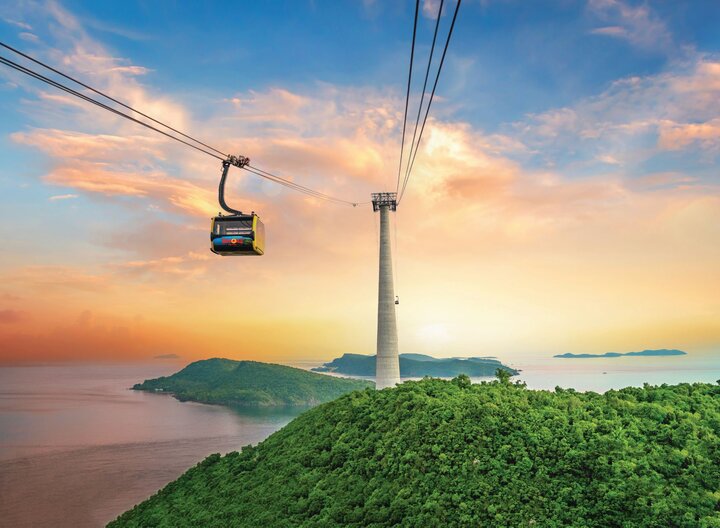
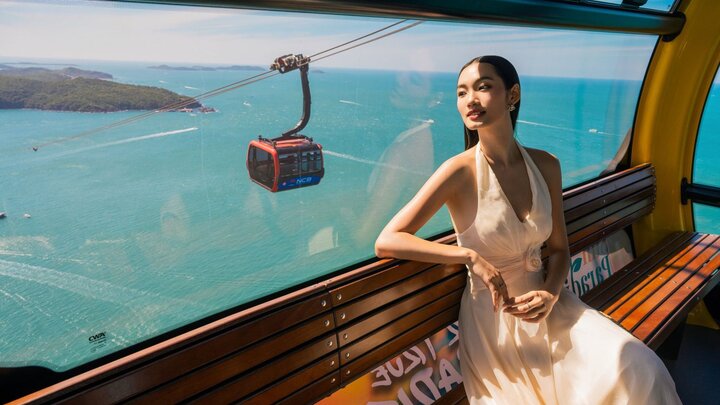
Sun World Hon Thom is an entertainment complex in the southern part of Phu Quoc Island, connected from An Thoi station to Hon Thom Island by a 3-wire cable car system. This cable car line is 7,899.9 meters long, with a travel time of about 15 minutes, and was once recognized by Guinness as the longest 3-wire cable car in the world. Parameters such as 6 pylons, 69 cabins, and a capacity of about 30 passengers per cabin indicate the large operational scale of this connecting line.
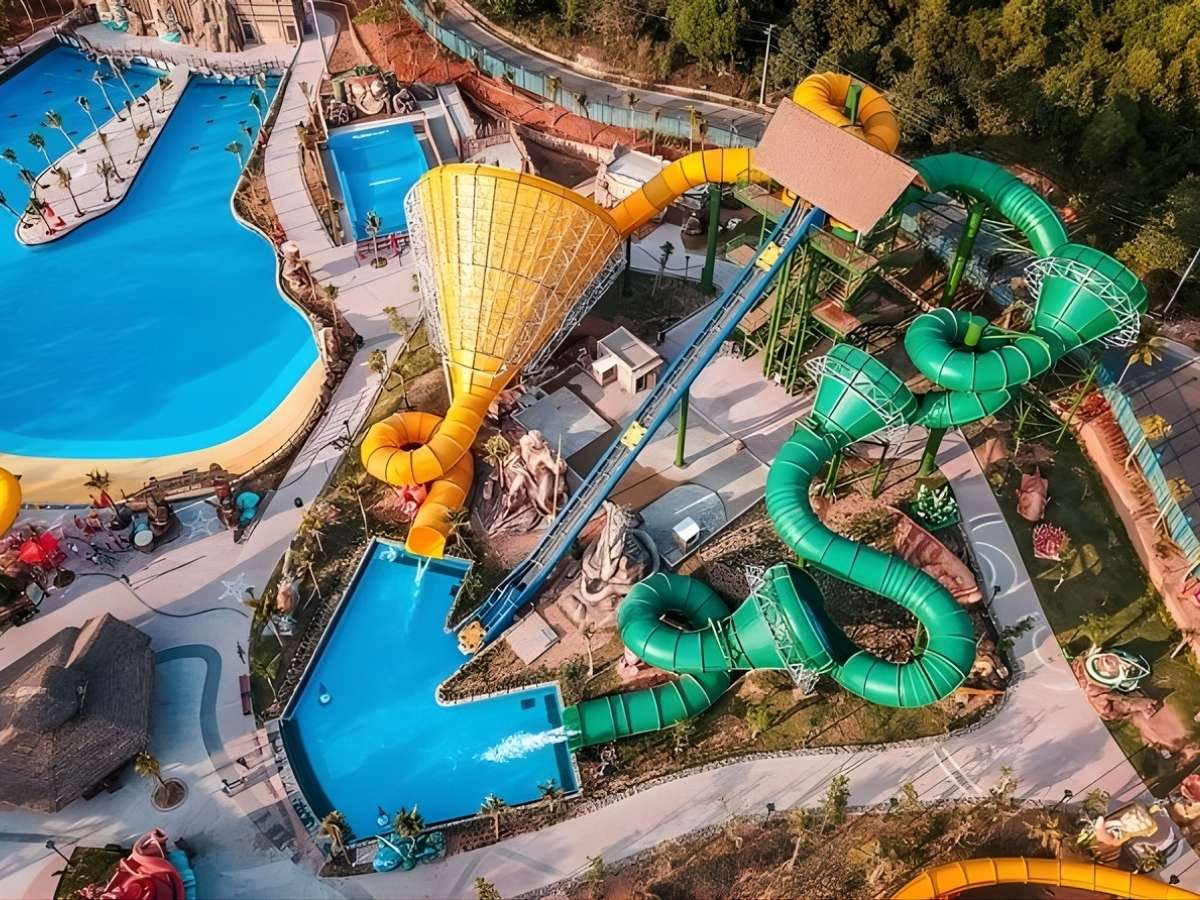
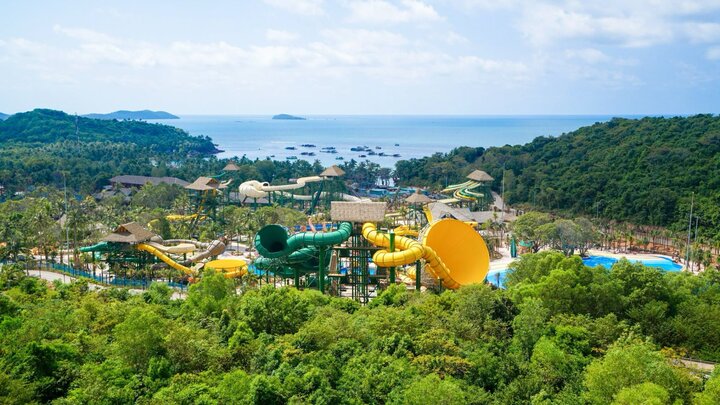
Vibrant water play activities at Aquatopia. (Source: Collected)
Inside the complex, Aquatopia water park is an entertainment category suitable for families, groups of friends, and tourists staying in Phu Quoc. This space adds daytime experiences, while the Sunset Town area creates activity in the afternoon and evening. The combination of cable cars, water parks, and art shows helps the South Island form a relatively seamless service chain.
>>> Book Sun World Hon Thom tickets now to enjoy a full day of fun HERE.
4.3. Hon May Rut
Hon May Rut, belonging to the An Thoi archipelago, Phu Quoc Special Administrative Region, is a sea and island destination often included in tours of the South Island. This area has a pier for tourist transport, a beach, clear water, and rocky shores creating an outdoor relaxation space. According to Vietnam tourism information, Hon May Rut is in the group of islands with a quiet landscape, suitable for swimming, photography, and short-day trips.
In the tourism product structure, Hon May Rut adds a natural element to itineraries that include culture, entertainment, and modern experiences in Phu Quoc. Tourists can access this destination through island tour routes departing from the South Island area. The combination of natural islands, Hon Thom cable car, and shows at Sunset Town creates a journey with multiple layers of experience within the same geographical area.
The Cham Islam culture of An Giang contributes to the depth of the Mekong Delta's cultural tapestry. Through their beliefs, customs, and daily life, the Cham community maintains its unique identity amidst modern life. Exploring and appreciating these values makes a trip to An Giang more meaningful and enriching.