















1. Chua Moi in the context of An Giang tourism development
1.1. Chua Moi in urban and rural spaces
Chua Moi is a Southern Khmer Buddhist temple located in Xuan Hoa Hamlet, An Giang Province, situated on National Highway 91, convenient for travel from the central area to the residential area. Its location, about 2 km from Tinh Bien International Border Gate Market, allows tourists to easily combine a visit to the temple with their journey to explore the border region. It serves as both a religious space for the local Khmer community and a spiritual stop on the An Giang tourist route.
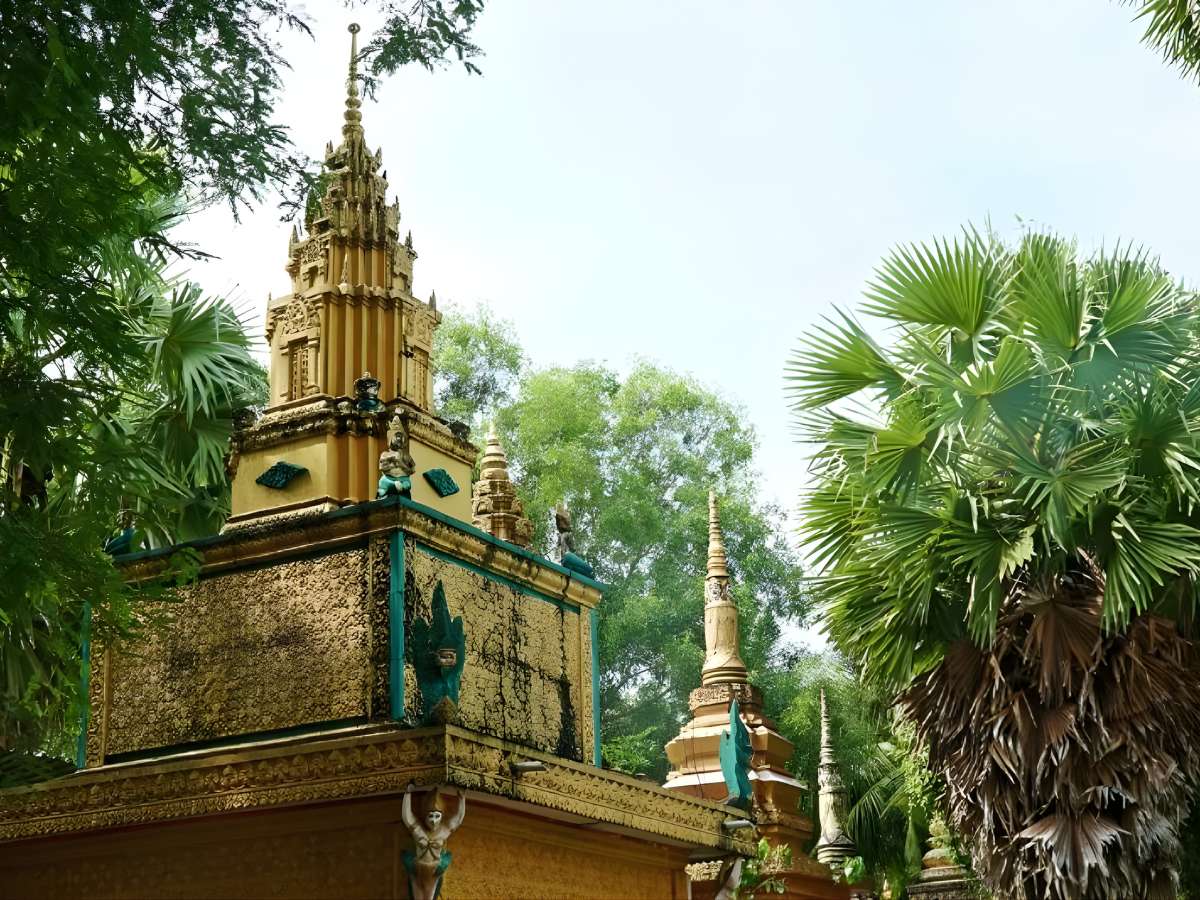
Chua Moi as a religious intersection point between the rural-urban space of An Giang. (Source: Collected)
The pagoda's space reflects the shift from the traditional village pagoda model to a light sightseeing stop, suitable for the current pace of tourism. The pagoda is not too far from the town center but still maintains its tranquility, connected to rural life and the daily activities of the local people. The connection between Chua Moi and the main transportation routes helps visitors conveniently combine multiple attractions in the same itinerary.
1.2. Chua Moi and its role as a stopover point in the tour
In An Giang's tourist routes, especially the Tinh Bien and Tri Ton itinerary, Chua Moi is often chosen as a resting point to balance the pace of travel. The pagoda is not a specialized historical or large-scale architectural attraction, so the time spent there is usually moderate, suitable for day trips. This helps visitors avoid time pressure when combining multiple destinations.
When visiting the pagoda, tourists can experience the religious atmosphere, observe Khmer architecture, and find a moment of peace amidst nature exploration activities. As the pagoda is still a place of regular activity for the Khmer community, welcoming visitors occurs in a natural setting, not commercialized. The experience here is therefore intimate, different from crowded tourist spots.
1.3. Visitors' initial impressions upon visiting Chua Moi
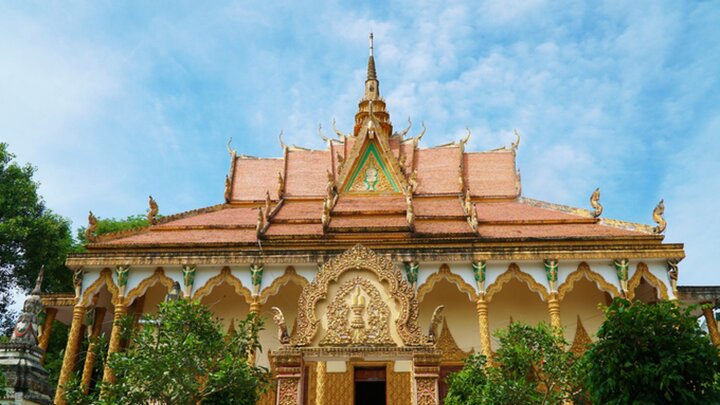
Visitors' first impression upon arriving at Chua Moi often comes from its Khmer cultural architecture, standing out under the sunlight with many characteristic decorative motifs. Figures of bird heads, celestial nymphs, and Naga serpents appear on the roof, pillars, and gate of the pagoda, creating a clear visual impact. The overall architecture conveys a sense of solemnity yet approachability.
Stepping into the grounds, visitors easily notice the blend of spiritual space and traditional cultural elements. Inside the main hall, the statue of Buddha Shakyamuni seated on a lotus is the center of worship, carved with details in the Khmer style. These elements help visitors gain a complete impression from their very first encounter with the pagoda's space.
2. What stands out at Chua Moi during a visit
2.1. Accessible space for first-time visitors
The pagoda's space is organized with a clear layout, featuring distinct areas for the gate, courtyard, and worship area, making them relatively easy to identify. This helps first-time visitors navigate without difficulty. The pathways are wide and free of obstacles, suitable for various visitors, including the elderly or families.
Furthermore, its proximity to the main road makes access more convenient compared to many pagodas located on mountains or far from the center. Not having to travel over complex terrain optimizes visiting time, fitting short itineraries. This is an important factor in the context of An Giang tourism developing towards flexibility and multi-destination visits.
2.2. The worship area as the main stop during the visit
The worship area is the central part of the pagoda, where religious activities and sightseeing are concentrated. The interior space is often decorated with many symbolic details of Theravada Khmer Buddhism, creating a clear distinction from common pagodas in the delta. This is where visitors spend the most time during their visit.
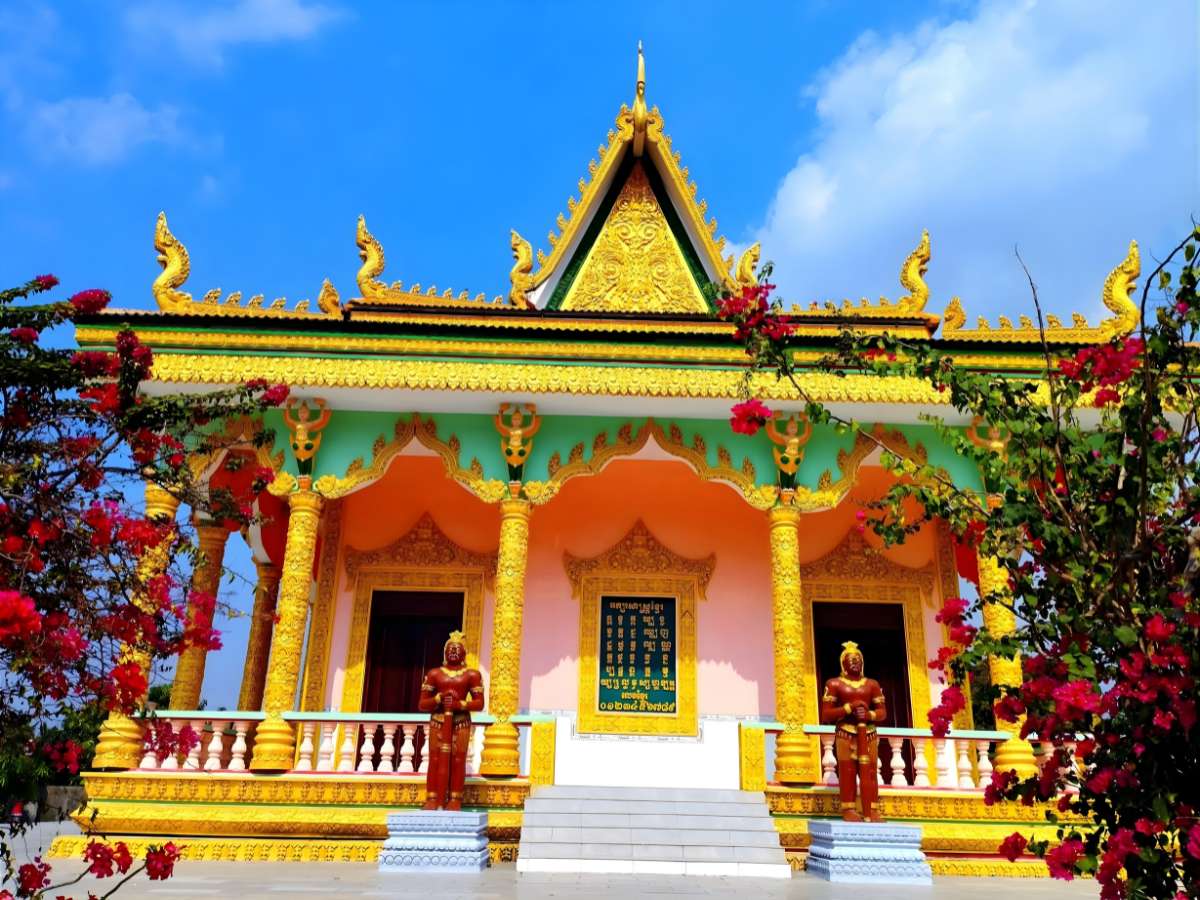
The space of Chua Moi is arranged methodically and neatly, convenient for tourists to visit and experience. (Source: Collected)
Besides its religious function, this area also reflects the spiritual life of the local community. The pagoda is not only a place for religious practice but also a cultural center for the Khmer people in the region. This helps visitors gain more insight into the social role of pagodas in daily life.
2.3. Surrounding landscape makes the visit more relaxing
The surrounding landscape of the pagoda often includes green trees and open spaces, creating a relaxing atmosphere during the visit. This is especially suitable for leisurely exploration trips that do not require much activity. The quiet space allows visitors to easily observe and feel the surrounding environment.
In addition, the Tinh Bien area has diverse terrain with plains interspersed with low mountains, creating a rich landscape. Combining pagoda visits with nearby attractions helps balance the journey between cultural and natural elements. This is a popular trend in An Giang tourism routes today.
3. How should the visit to Chua Moi be experienced?
3.1. Observe the overall view before entering the worship area
Upon arriving at the pagoda, observing the overall view from the gate and courtyard helps visitors understand the spatial structure before moving deeper inside. Khmer architecture often has many decorative details, so looking at the overall view helps easily identify the main and secondary areas. This also helps limit moving in the wrong direction within the premises.
Furthermore, observing the exterior helps visitors feel the harmony between the architecture and the surrounding environment. The colors, shapes, and layout of the structures all reflect local cultural characteristics. This is the initial step in building a foundation for an observational and learning experience.
3.2. Spend time exploring the main space of the pagoda
The main space of the pagoda is where the cultural and religious elements are most clearly expressed. Visitors can spend time observing architectural details, statues, and the arrangement to better understand Southern Theravada Buddhism of the Khmer people. These elements are often symbolic and have their own meanings in each area.
Exploring the main space also helps to better understand the pagoda's history. With over a century of existence, the pagoda reflects the development process of the Khmer community in Tịnh Biên. This provides value not only for sightseeing but also for local cultural and historical research.
3.3. Stroll around the grounds to feel the local rhythm of life
After visiting the main area, strolling around the grounds allows visitors to get closer to local life. The daily activities of people around the pagoda are usually gentle and connected to the traditional cultural space. This creates a realistic observational experience.
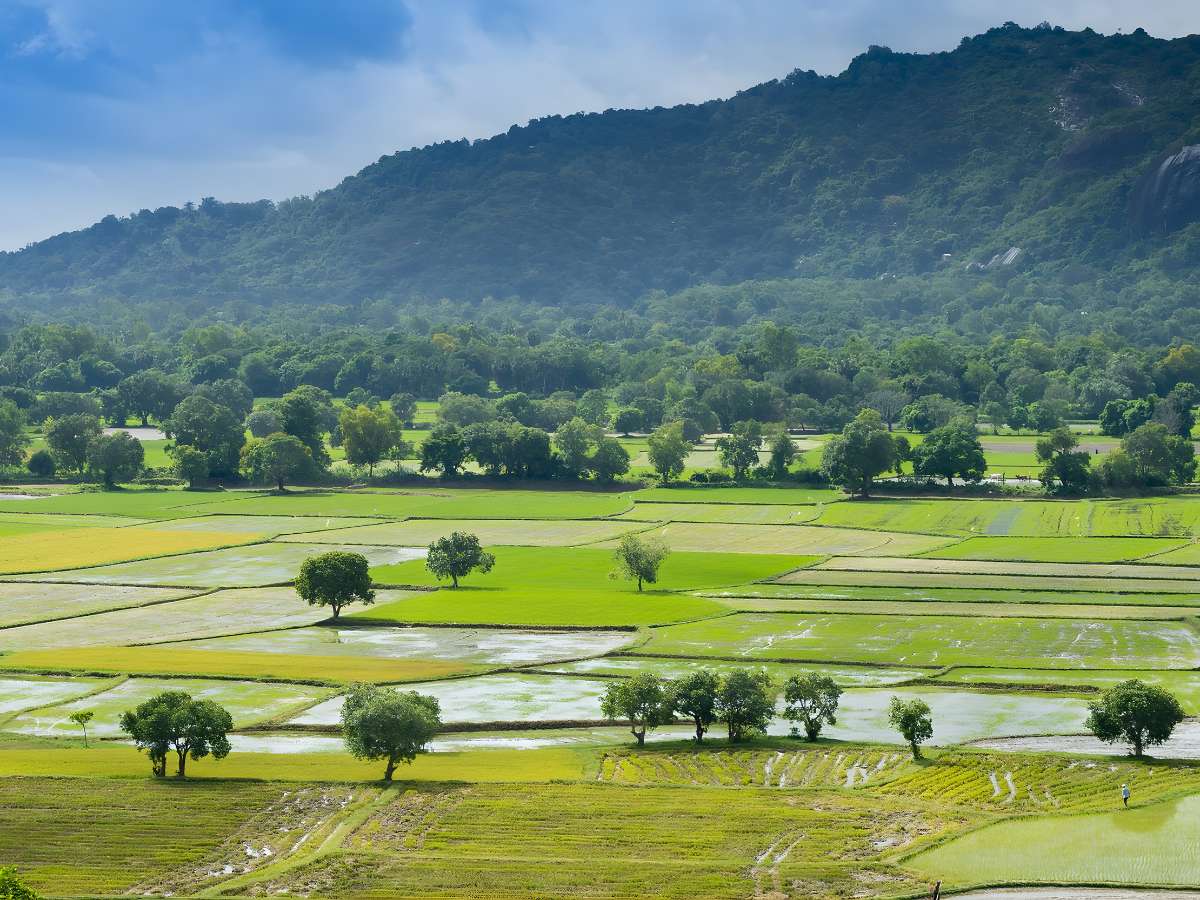
The temple space opens up to a rural landscape associated with agricultural production. (Source: Collected)
The area around the temple also reflects the rhythm of life in the border region with cultural exchange. Visitors can notice the combination of religious elements and daily life. This is a difference compared to tourist areas that are crowded or highly commercial.
4. Things to know when visiting Chua Moi for visitors
4.1. Attire should be suitable for the spiritual space
When visiting the temple, attire should ensure suitability for the religious space. Modest, polite clothing is usually chosen to show respect for the place of worship. This is also in line with general regulations at many temples in the Mekong Delta region.
Choosing appropriate attire also helps create convenience in movement and sightseeing. The temple space often requires a lot of walking, so simple and neat clothing will support a better experience. This is a practical factor to note on short trips.
4.2. Avoid visiting when it is too crowded
The time of visit directly affects the experience at the temple. Festival occasions or weekends usually have an increased number of visitors, making the space more crowded than on weekdays. Choosing a suitable time helps maintain tranquility and easier observation.
In addition, the weather in An Giang has a tropical climate characteristic, so choosing to visit in the morning or afternoon helps reduce the impact of temperature. This makes the trip smoother and fits within the daily travel schedule.
4.3. Behavior when visiting the temple area
When visiting a temple, maintaining order and adhering to general regulations are important. The temple space is sacred, so noisy or inappropriate behavior should be limited. This helps maintain a common environment for both local people and visitors.
Besides, observing and learning from the behavior of local people is also part of the experience. Actions such as walking quietly, speaking softly, and keeping the space clean are usually performed in the temple area. These are factors that contribute to a culturally rich visiting experience.
4.4. Note on duration of stay
The duration of stay at Chua Moi is usually not too long, commonly ranging from 30 to 60 minutes depending on the visitor's level of exploration. Allocating time reasonably helps ensure the overall itinerary when combined with visiting nearby attractions in Tinh Bien district. In reality, many An Giang tours are designed as half-day or full-day trips, so the time spent at the temple is usually balanced to not affect other destinations.
In addition, planning transportation before visiting the temple helps avoid itinerary disruptions, especially during peak hours on Route 91. The distances between tourist spots in the area are not too far, but vehicle density can increase during holidays or weekends. Therefore, determining the order of destinations and travel time in advance will help the visit proceed smoothly and be suitable for local traffic conditions.
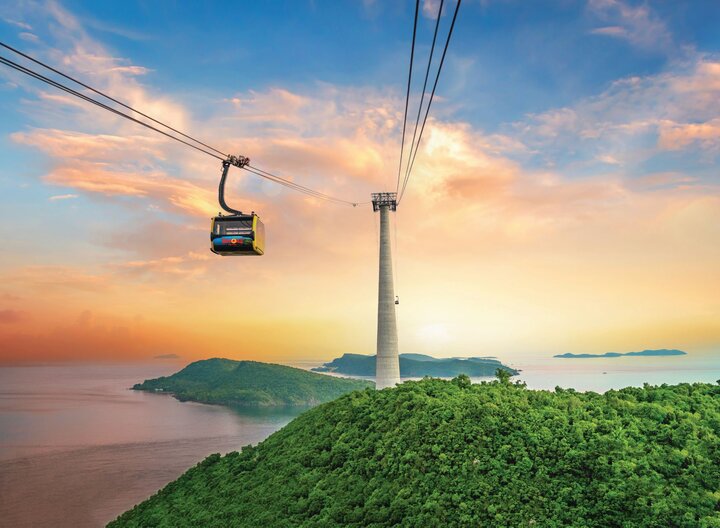
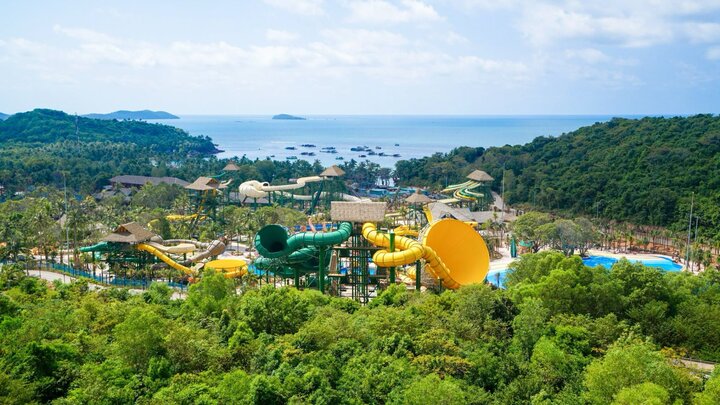
Chua Moi concludes the Tri Ton journey with a serene space, where visitors can easily find balance after days of travel. The closeness and slow pace of life here add depth to the travel experience. Chua Moi is often included at the end of the itinerary, providing a tranquil stop after visitors have experienced the vibrant spaces of Sun World Hon Thom.