















1. Overview of An Giang's Forbidden Mountain
1.1. Location and Significance of Forbidden Mountain in An Giang Tourism
Forbidden Mountain, also known as Thien Cam Son, is part of the That Son mountain range and is located in An Giang province. With an altitude of about 705 m, this area stands out amidst the Mekong Delta, creating a distinct topographical feature. This location makes Forbidden Mountain a familiar stopover on tourist routes in the southwestern border region.
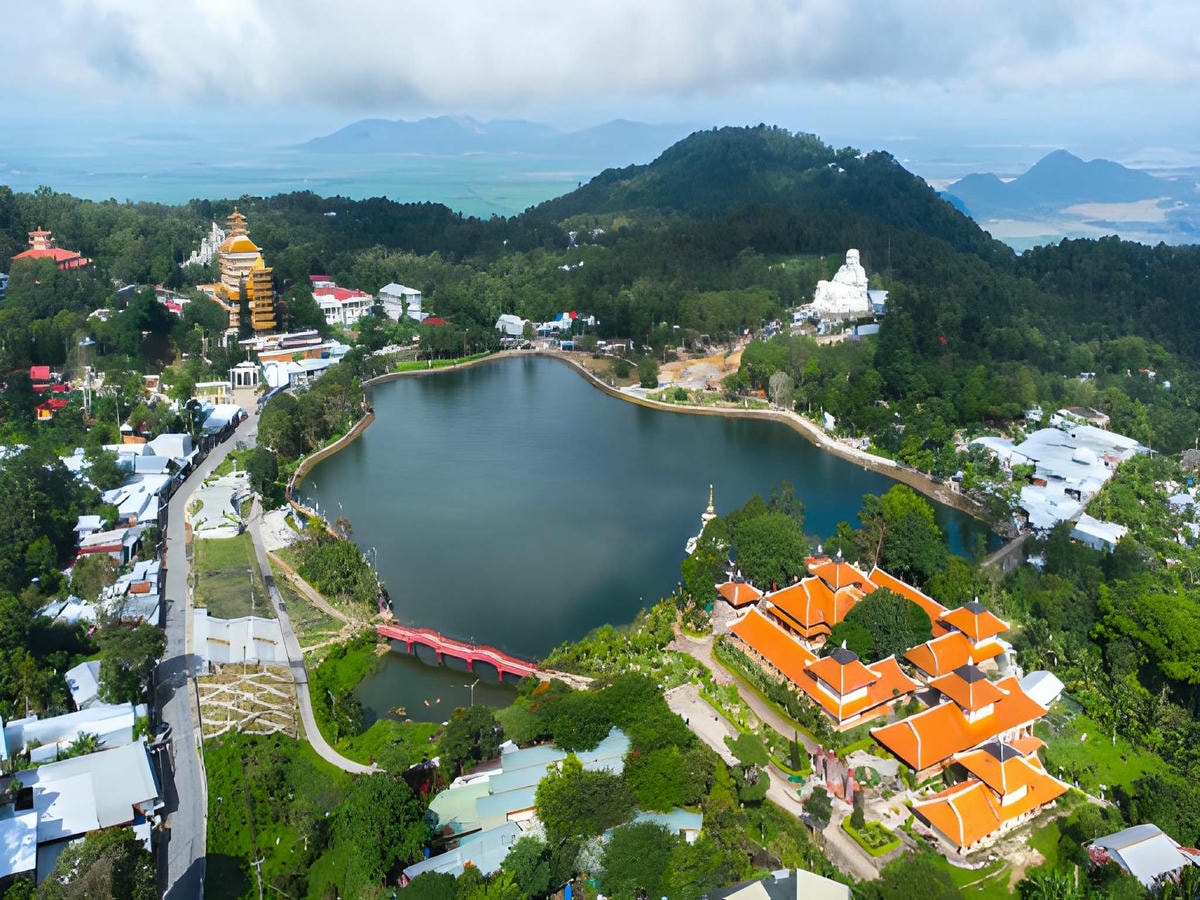
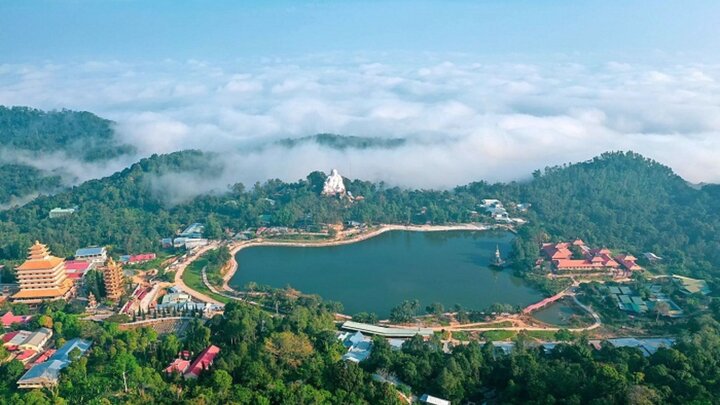
Forbidden Mountain (Nui Cam) plays a role as an ecological and spiritual tourist highlight of An Giang. (Source: Collected)
In the general picture of An Giang tourism, Forbidden Mountain (Nui Cam) plays an important role in attracting tourists annually. Many local exploration journeys often combine this destination with nearby cultural and ecological attractions. Thanks to that, Forbidden Mountain (Nui Cam) contributes to creating diversity for the province's tourism products.
Besides the landscape factor, Forbidden Mountain (Nui Cam) is also associated with spiritual tourism activities, attracting local people and tourists from many regions. The mountain and forest space combined with religious structures create an experience of both sightseeing and pilgrimage. This combination helps Forbidden Mountain (Nui Cam) maintain stable appeal on the An Giang tourism map.
1.2. Origin of the name and cultural-spiritual values
The name Forbidden Mountain (Nui Cam) is associated with oral stories and spiritual beliefs about the tranquility and purity of the mountain over generations of residents in the area. According to folk beliefs, this place signifies the connection between humans and spiritual life, serving as a space to find balance in daily life. This factor creates the unique characteristic of Forbidden Mountain (Nui Cam) in the spiritual tourism journey.
Local legends and beliefs suggest that this mountainous region is associated with the presence of sacred elements and mysterious stories. Over time, these beliefs have shaped spiritual activities closely linked to the lives of the Southern Vietnamese people. Forbidden Mountain (Nui Cam) has therefore become a familiar pilgrimage site for both the local community and visitors from other regions.
1.3. Outstanding natural elements and climate
Forbidden Mountain (Nui Cam) belongs to the Seven Mountains (That Son) system with a height of 705 m above sea level, creating a landscape of mountains intertwined with green spaces and tranquility. The forest area and characteristic terrain make this region distinctly different from the surrounding plains. As a result, the air here often provides a pleasant feeling for visitors at many times of the year.
The climate on Forbidden Mountain (Nui Cam) is cool and less affected by urbanization, suitable for those seeking a tranquil space amidst nature. This weather condition makes sightseeing, resting, and pilgrimage activities more convenient. The travel experience here is therefore often associated with relaxation and a slow pace.
Besides the mountains and forests, the natural landscape of Forbidden Mountain (Nui Cam) also includes spots like Thuy Liem Lake with its clear blue water, creating a resting and photo-taking space for visitors. The combination of terrain, vegetation, and cool atmosphere provides a pleasant feeling throughout the sightseeing journey. This is also why many people choose Forbidden Mountain (Nui Cam) for short trips.
2. Travel and experience journey at Forbidden Mountain (Nui Cam)
2.1. Routes to Forbidden Mountain (Nui Cam) from An Giang center and Ho Chi Minh City
Tourists can travel to Forbidden Mountain (Nui Cam) from various starting points, commonly from the center of An Giang province or from Ho Chi Minh City. From the Chau Doc area, the distance to An Hao commune, Tinh Bien district, where Forbidden Mountain (Nui Cam) is located, ranges from about 35 to 40 km and can be traveled by car, motorbike, or tour bus. National and provincial roads connect conveniently for this journey.
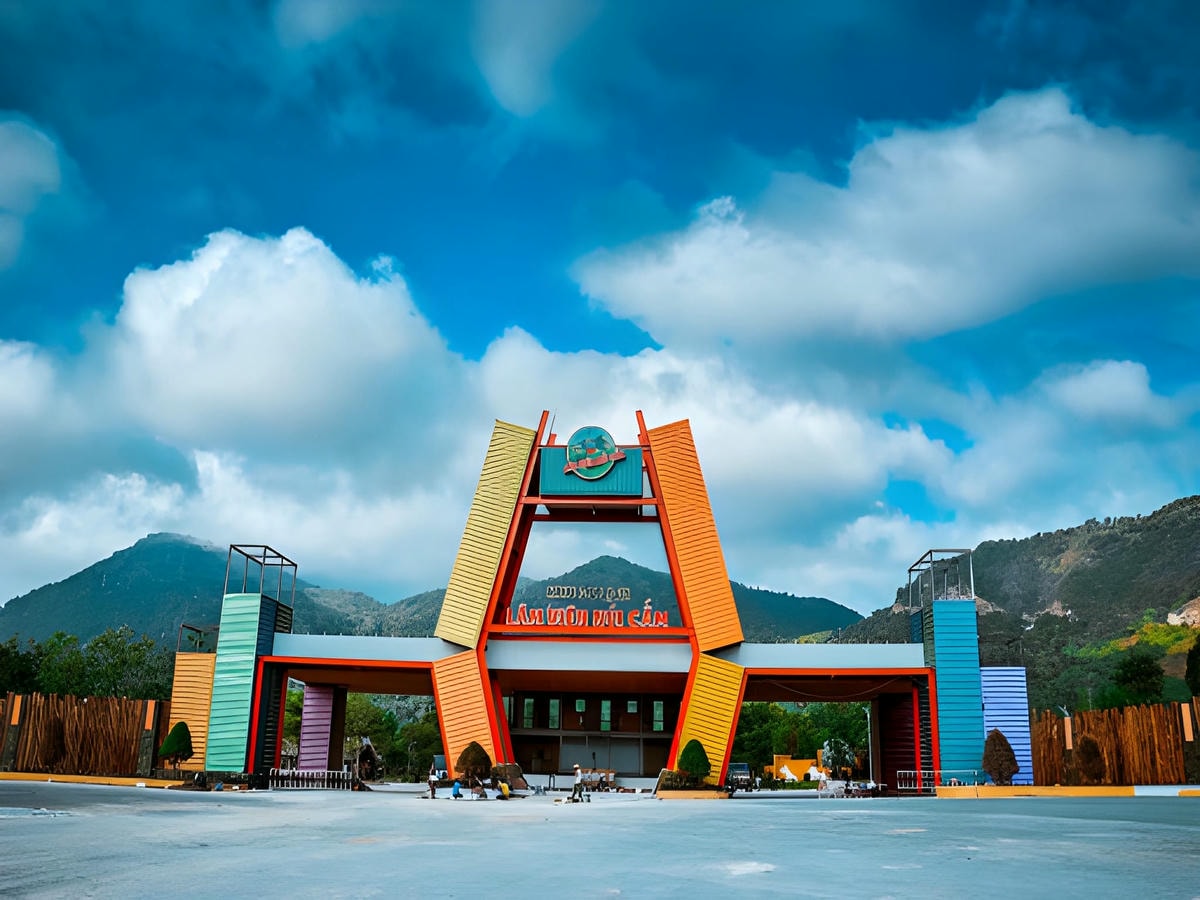
The routes to Cam Mountain are conveniently invested, connecting the center of An Giang and Ho Chi Minh City. (Source: Collected)
For tourists departing from Ho Chi Minh City, the route usually follows National Highway 1 to Long Xuyen City, then continues to move to Chau Doc and turns into the road leading to Cam Mountain. The total travel time usually lasts from 6 to 7 hours, depending on the means of transport and traffic situation. Proper time arrangement helps the trip go more smoothly.
Besides traveling by personal vehicle, tourists can choose long-distance buses from Ho Chi Minh City to Chau Doc or Long Xuyen. From here, continuing the journey by taxi, motorbike taxi, or small tourist car is quite convenient. These travel options allow tourists to easily combine visiting Cam Mountain with other destinations in An Giang province.
2.2. Cable Car and Road Experience to the Mountain
The experience that many tourists are interested in at Cam Mountain is traveling by cable car from the foot of the mountain to the upper area, which shortens the travel time. Cable car travel time is usually about 15 to 20 minutes, suitable for those who want to save energy. From the cabin, tourists can observe the mountain and forest scenery from an altitude of over 700 m.
Compared to traveling by road or motorbike on steep routes, the cable car offers a gentler and safer experience. This option is suitable for families with elderly members or tourists who are not accustomed to much physical activity. At the same time, enjoying the scenery from above makes the journey more relaxing.
Traveling by road up Cam Mountain offers a closer experience with the surrounding nature. Tourists can stop at roadside points to rest or take photos. This method is often chosen by those who love exploration and want to feel the slow rhythm of the That Son mountain range.
2.3. Best Time to Visit Cam Mountain
According to travel experience and climate characteristics, the period from December to April each year is often considered the favorable time to visit Cam Mountain. The weather during this period is quite dry, suitable for outdoor activities. Tourists can comfortably visit spiritual sites and landscapes on the mountain.
During this time, the vegetation remains green, creating a pleasant feeling when moving and taking photos. The mountain and forest space offers relaxation for trips combined with rest. This is also the time when many families choose to arrange their travel schedules.
Besides, some tourists choose to visit Cam Mountain during local traditional festivals to experience the cultural life atmosphere. This time often has a larger number of visitors, so it is necessary to proactively plan accordingly. Preparing in advance helps the trip be more complete.
3. Featured Destinations on Cam Mountain
3.1. Temple and Buddha Statue Complex on the Mountain
Cam Mountain possesses a rich system of spiritual relics, among which Van Linh Pagoda is a familiar stop for many pilgrims. The construction was built in 1927 and has an East Asian architectural style harmoniously integrated with the mountain and forest landscape. The approximately 40m high Quan Am Stupa creates a distinct visual impression when viewed from many areas on the mountain.
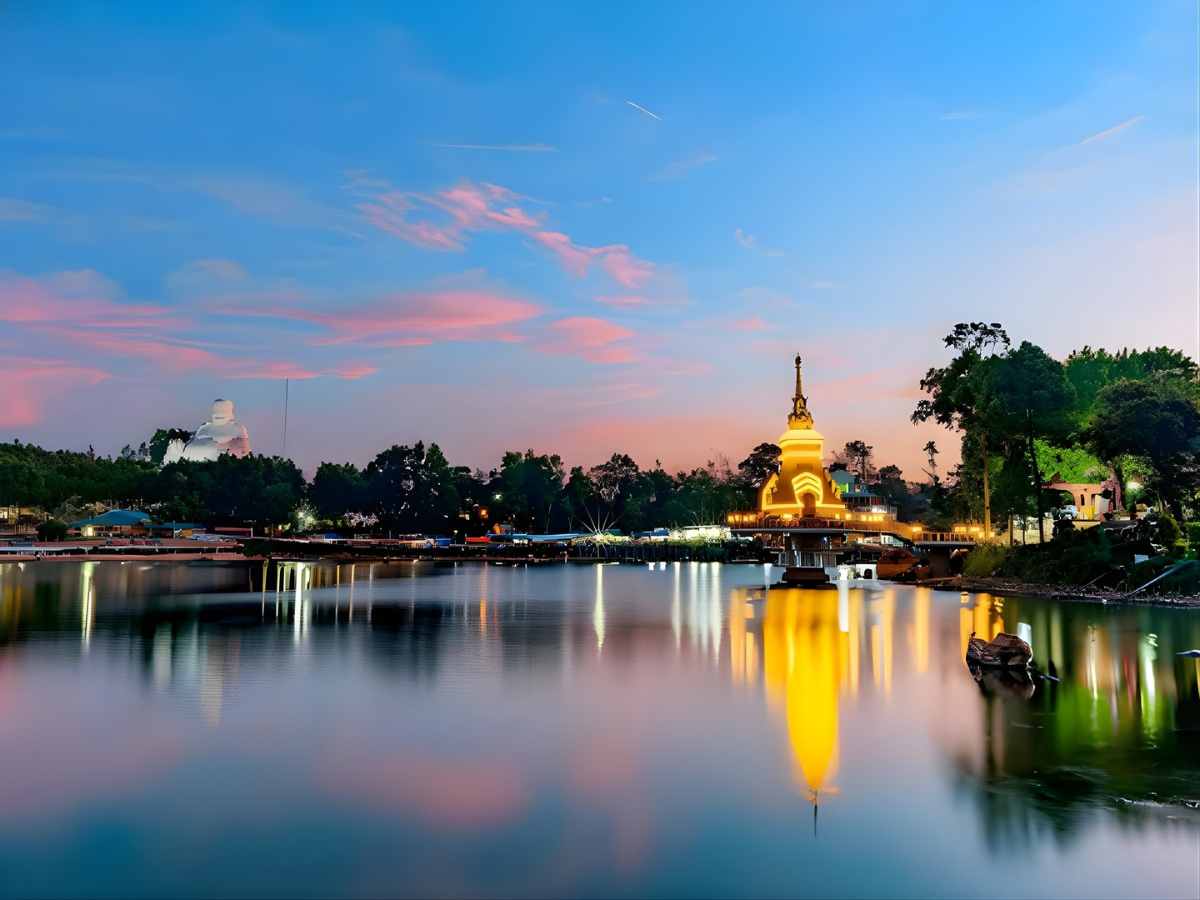
The complex of pagodas and Buddha statues creates a characteristic spiritual space on Cam Mountain. (Source: Collected)
The space at Van Linh Pagoda offers a sense of tranquility, suitable for worship and spiritual relaxation. Many tourists choose to stop here to visit, learn about the architecture, and find inner peace. The scenery around the pagoda makes the pilgrimage experience more serene.
3.2 Natural Landscape and An Giang Panoramic Viewpoints
From the high areas of Cam Mountain, visitors can observe the lush green mountain and forest landscape stretching along the That Son terrain. Thuy Liem Lake, with an area of about 60,000 m², is nestled amidst the natural scenery, creating a harmonious highlight. The lake surface reflects light, adding to the peaceful atmosphere.
Many resting spots on the mountain are conveniently located for tourists to admire the panoramic view of the surrounding area. From here, one can observe the town, fields, and river system below at different times of the day. This experience is suitable for nature lovers and photographers.
3.3 Cam Mountain in the Regional Tourism Picture
Cam Mountain is not only considered an independent destination but also part of the interconnected tourism of the Mekong Delta. Journeys exploring An Giang often combine Cam Mountain with cultural and ecological sites in the region. This route planning helps tourists gain a more diverse perspective on the locality.
In the trend of multi-destination tourism, many people choose to compare the spiritual and natural experiences at Cam Mountain with island destinations like Sun World Hon Thom. The difference in space and type of tourism makes the journey more balanced. This reflects the demand for combining multiple experiences in a single trip.
4. Complete Guide to Visiting Cam Mountain
4.1. Recommended Attire and Items to Prepare
When visiting Cam Mountain, choosing attire suitable for the mountain terrain is important. Light, breathable clothing makes moving between attractions more convenient. Shoes with good grip also help ensure safety throughout the journey.
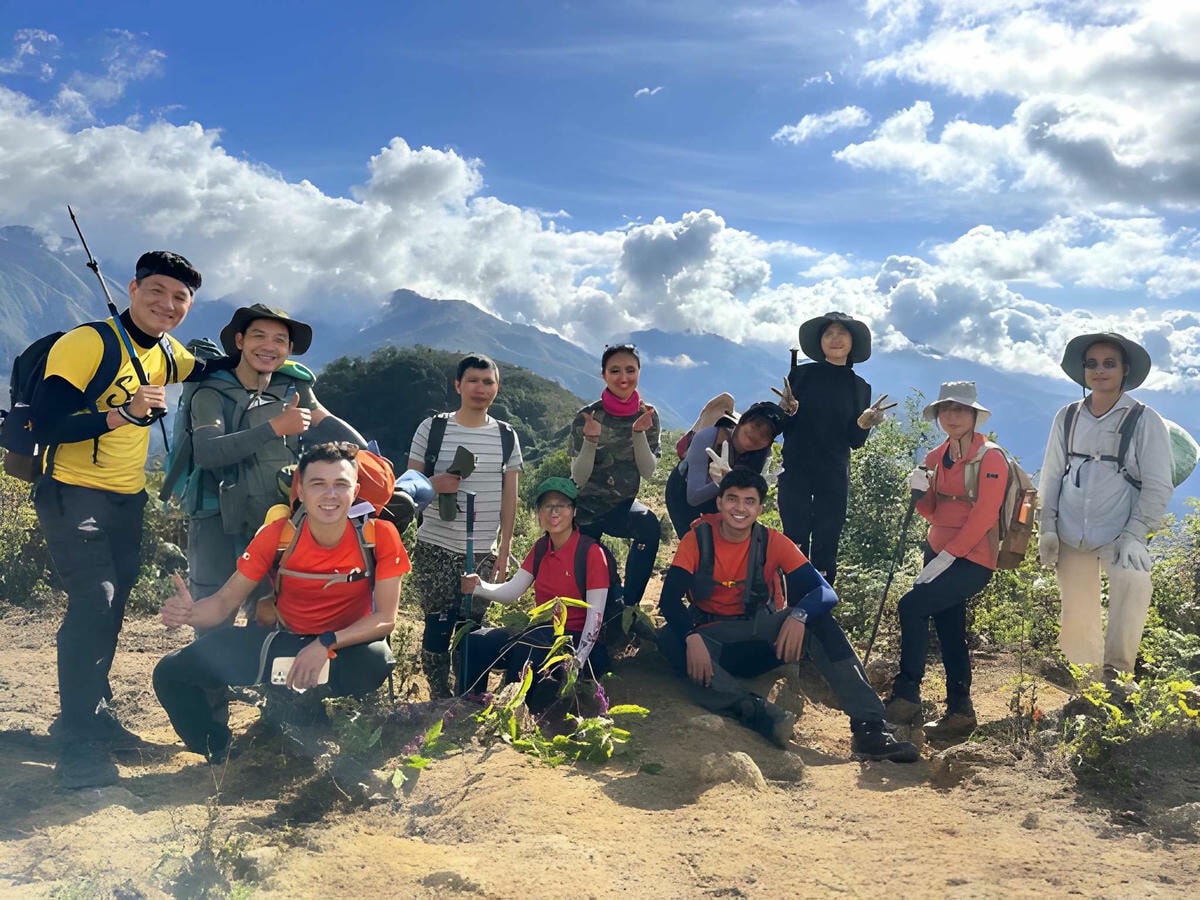
Appropriate clothing helps visitors conquer Nui Cam safely and conveniently. (Source: Collection)
As the sightseeing space combines spirituality and nature, clothing needs to be polite and neat. This helps visitors feel comfortable when entering temple areas. Proper preparation contributes to a more complete experience.
4.2 Important things to note when visiting and making pilgrimages
During visits to the spiritual areas on Nui Cam, visitors should maintain order and speak softly. Adhering to regulations at temples like Van Linh Pagoda or Phat Lon Pagoda helps maintain a common quiet atmosphere. This is also a way to show respect for the sacred place.
When taking photos or resting, choose appropriate locations and ensure safety. Avoid standing in areas that obstruct pathways or affect others. A civilized visiting attitude helps the journey proceed smoothly.
4.3 Choosing suitable combinations for exploring An Giang
To enrich the trip, visitors can combine visiting Nui Cam with nearby destinations in An Giang province. Places like Tra Su Melaleuca Forest or historical sites in Chau Doc city are often included in the same itinerary. This arrangement helps save travel time.
Combining multiple attractions offers a multi-dimensional perspective on the local nature and culture. Visitors have the opportunity to experience the rhythm of life and daily activities of the local people. The journey thus becomes more balanced between exploration and rest.
Nui Cam is not only a destination deeply imbued with the spiritual essence of An Giang but also a place for visitors to reconnect with pristine nature and a rare, slow pace of life. When placed within the overall context of a Mekong Delta travel itinerary and linked with modern destinations in Vietnam's tourism, Nui Cam further demonstrates its sustainable value and long-lasting appeal to all generations of tourists.