
















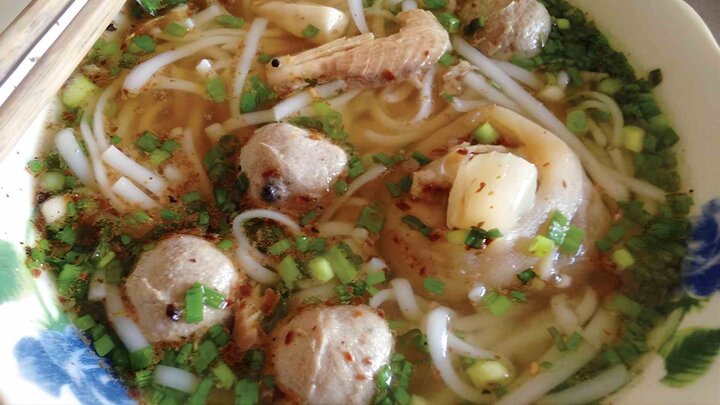
1. Journey to enjoy Bay Nui beef ball noodle soup in the culinary life of the That Son region
1.1. Bay Nui and the characteristics of its culinary lifestyle
Bay Nui is an area in An Giang province with low hills and plains, creating diverse natural conditions for the life and cuisine of the local residents. The people here rely heavily on agricultural and aquatic products, thereby forming eating habits associated with soupy dishes to supplement energy in changing weather conditions between sun and rain.
Bay Nui beef ball noodle soup is one of the familiar soupy dishes, with soft white noodles and a moderate amount of beef balls in a hot broth. The dish reflects simplicity in culinary choices as people prioritize easy-to-eat, easy-to-digest meals that suit their daily rhythm. Beef ball noodle soup stalls often appear in markets and along roadsides in Bay Nui and Chau Doc city, serving the dining needs of local residents and visitors.
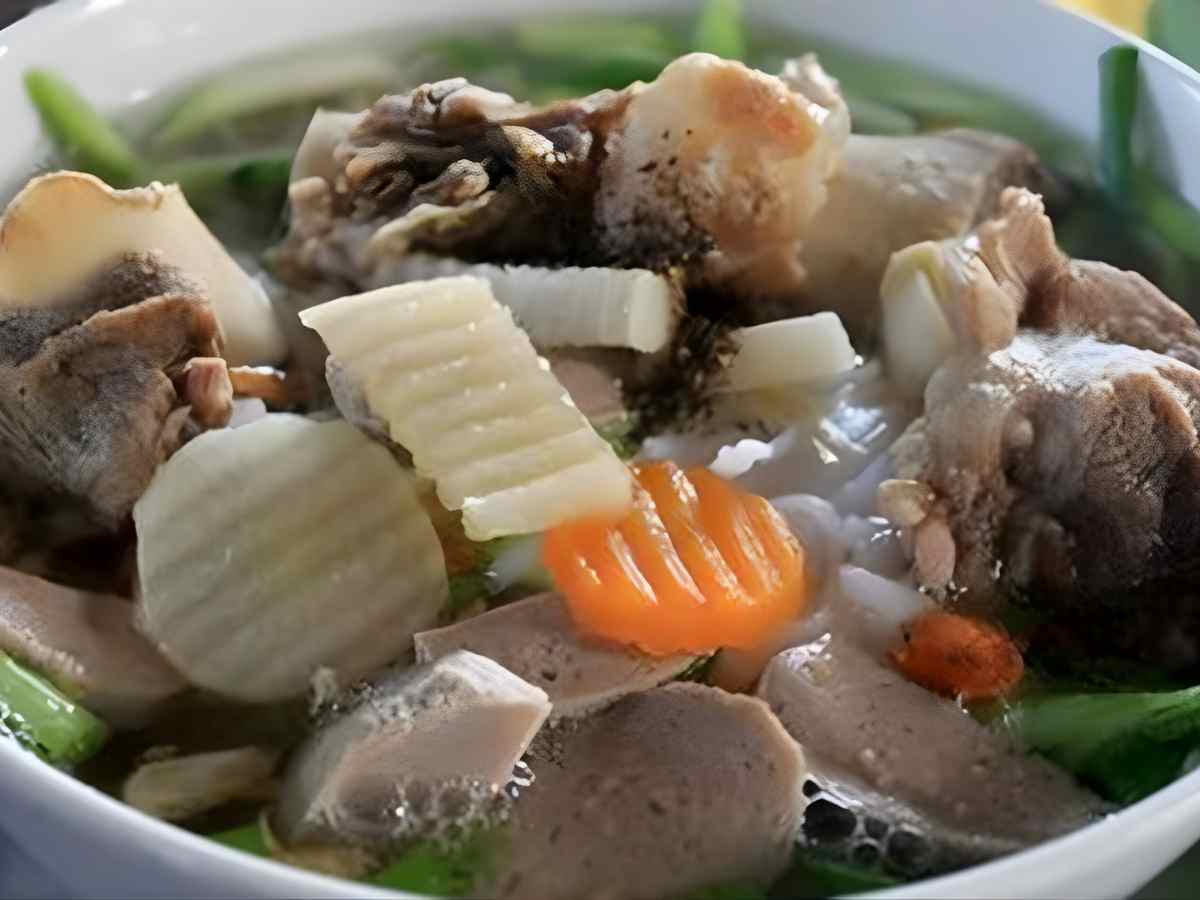
Beef Ball Noodle Soup reflects the culinary characteristics of the Bay Nui residents. (Source: Collected)
The price for each bowl of Beef Ball Noodle Soup ranges from about 20,000 to 30,000 VND, suitable for various customer groups. The dish also reflects the familiar gathering habits of the Southern Vietnam region, where people dine together to chat and share daily life. Local ingredients like Neang Nhen rice help the noodles maintain their chewiness and natural slight sweetness, creating a harmonious taste experience.
The broth is simmered from pork, chicken, or seafood bones or meat, providing a pleasant, light sweetness. The beef balls are processed to maintain a moderate chewiness, contributing to the meal's energy. The combination of ingredients creates a noodle soup dish that bears the mark of the culinary life of the That Son region's residents.
1.2. Analyzing the dish's position in people's memories
Beef Ball Noodle Soup stalls are often located in markets, small street corners, or densely populated residential areas in Bay Nui, becoming familiar spaces in community life. The image of hot bowls of noodle soup served early in the morning or late in the afternoon is closely linked to the daily rhythm of local residents. Many families have the habit of visiting their regular stalls for meals, creating a bond between the dish and community life.
Beef Ball Noodle Soup not only satisfies hunger but also carries the meaning of connection in family and friend gatherings. The dish evokes memories of simple get-togethers, where people share meals and daily stories. Over time, Beef Ball Noodle Soup has gradually become a familiar part of the culinary memory of the Bay Nui region's residents.
2. Ingredients and techniques that create the dish's identity
2.1. Beef balls and ingredient preparation
The beef balls in Bay Nui noodle soup are typically made from fresh beef, carefully selected to suit the cooking method in hot broth. The beef is meticulously prepared to preserve its natural flavor and minimize its characteristic smell during cooking. This ingredient selection reflects the emphasis on quality in local culinary practices.
After preparation, the beef is minced and mixed with seasonings in a moderate proportion, suiting the familiar taste preferences of the Bay Nui residents. The mixing and kneading process is done evenly to create the necessary elasticity for the beef balls. This ensures the beef balls maintain a stable texture when cooked in hot broth.
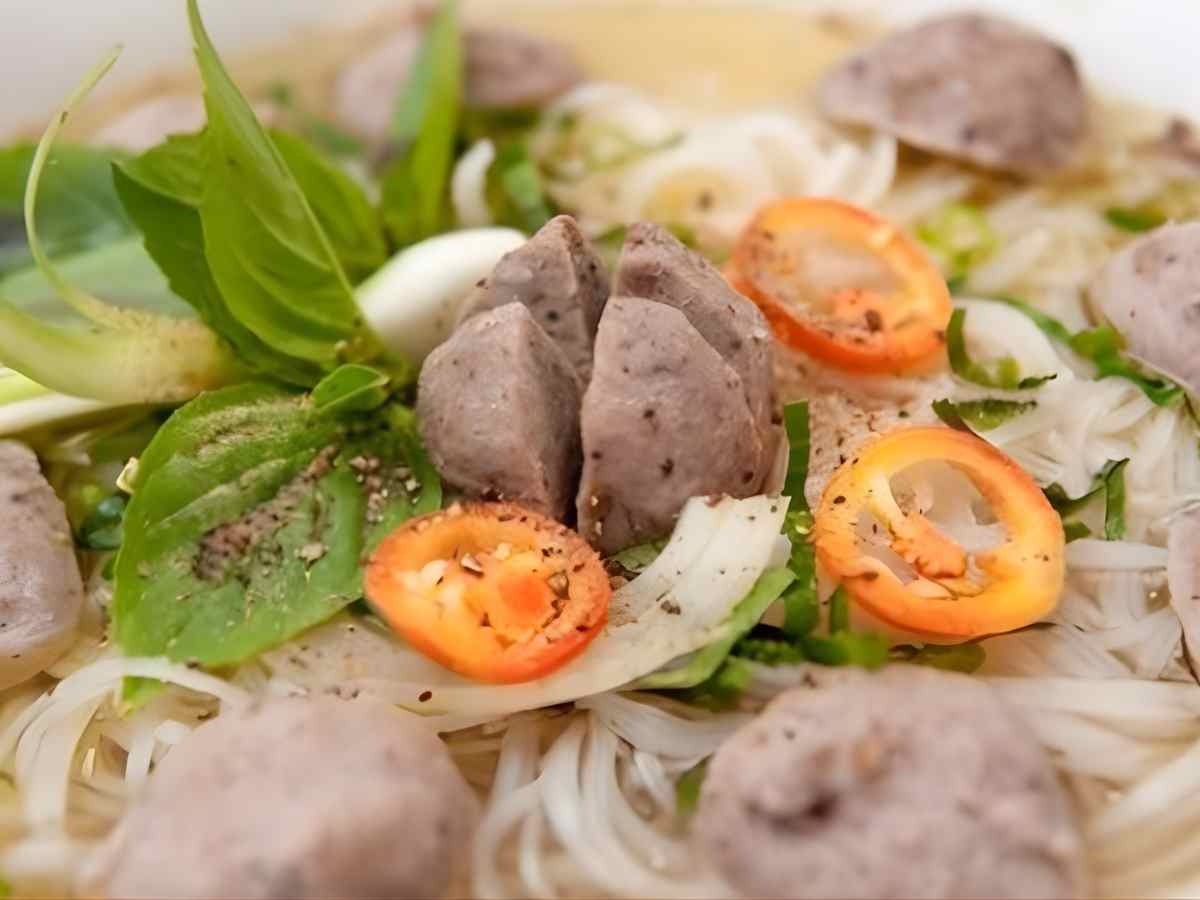
Beef balls are carefully prepared, creating a harmonious flavor for the traditional banh canh. (Source: Collected)
Some eateries add tapioca starch during the meat mixing process to increase the binding of the beef balls. This method helps the beef balls not become mushy when cooked for a long time in broth. The flexible adjustments in preparation techniques create slight differences among banh canh eateries in the area.
When finished, the beef balls are usually of moderate size, not too large, making them easy to eat with banh canh noodles. The beef balls easily absorb the broth's flavor, creating a harmonious eating experience. This ingredient handling and preparation contribute to forming the unique identity of Bay Nui beef ball banh canh.
2.2. Broth and Banh Canh Noodles
The broth in Bay Nui beef ball banh canh is mainly simmered from pork bones, chicken, or a combination of seafood bones. The simmering process takes a long time to extract the natural sweetness from the ingredients. This cooking method results in a clear, easy-to-eat broth that suits many diners.
During cooking, some eateries add vegetables like white radish or carrots to enhance the broth's aroma. These additional ingredients help balance the flavor without overpowering the main bone essence. Thus, the broth maintains its lightness and harmony within the overall dish.
The banh canh noodles are typically made from pure rice, commonly the local Neang Nhen rice variety. The rice is soaked, ground into a fine paste, and then rolled into sheets before being cut into noodles, creating a soft yet not mushy texture. This handmade method aligns with the traditional preparation habits of the Bay Nui residents.
When blanched in boiling water, the noodles retain a moderate chewiness and do not break apart during consumption. The combination of noodles, broth, and beef balls creates a complete eating experience. Each component plays its role, contributing to the distinctive characteristics of Bay Nui beef ball banh canh.
3. Enjoying Bay Nui Beef Ball Banh Canh
3.1. Ambiance and Suitable Times for Eating
Beef ball banh canh is typically enjoyed in simple settings at roadside eateries or local markets, where daily life begins early in the morning. These small eateries are intertwined with the daily lives of the people, reflecting a close and practical eating habit. Dining in such a familiar environment allows diners to better feel the rhythm of life in the Bay Nui region.
Mornings are when many people choose beef ball banh canh for their first meal of the day, when the body needs to replenish energy after a long night. A hot bowl of banh canh stimulates the taste buds and provides a comforting feeling in the often hot climate of the Mekong Delta during midday. This habit has formed from the need for quick yet satisfying meals that keep one warm.
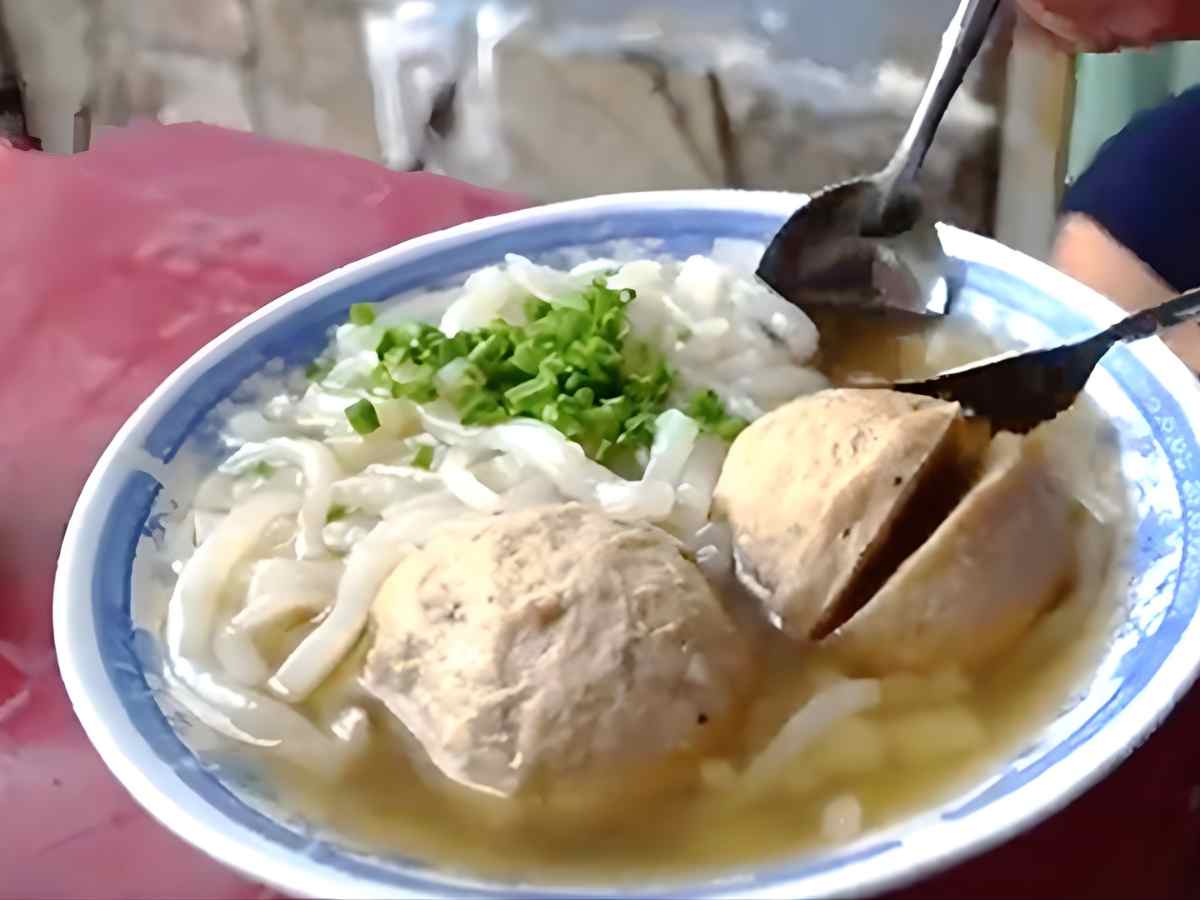
Banh canh bo vien is often enjoyed in the morning in local eateries. (Source: Collected)
In the late afternoon, banh canh bo vien continues to appear as a familiar choice before the end of the workday. At this time, the air begins to cool, making it pleasant to enjoy a hot soup dish. A light afternoon meal helps balance daily rhythms and brings a sense of relaxation.
The small eatery space with simple tables and chairs, and the aroma of broth spreading, creates a sense of familiarity for diners. Banh canh bo vien is therefore associated with the simple daily life moments of the local people. These experiences are often remembered by many when mentioning the Bay Nui region.
3.2. Banh canh bo vien in the culinary exploration journey
For tourists, the first impression when tasting banh canh bo vien Bay Nui often comes from the natural sweetness of the broth. The combination of soft noodles and chewy beef balls creates a harmonious sensation when enjoyed. This flavor offers a different experience compared to many familiar soup dishes in other regions.
Each bowl of banh canh reflects how local people choose ingredients and cooking techniques suitable for their daily lives. The dish is not elaborate but clearly shows meticulous preparation. Through this, tourists can partly feel the culinary life of the Bay Nui region.
Enjoying banh canh bo vien at small roadside eateries or local markets offers an experience closely tied to the actual environment. Tourists not only taste the food but also observe the surrounding daily life. This experience makes the culinary exploration journey more vibrant.
The harmonious flavor of the broth and the texture of the noodles often linger in the taste memory after the trip. Many tourists consider banh canh bo vien a familiar stop on their journey to explore Bay Nui. The memory of the dish is associated with a sense of familiarity and connection to the local culture.
4. Diverse activities from local cuisine to modern tourism experiences
4.1. The value of rustic dishes in contemporary tourism
In the context of current tourism development, rustic dishes like banh canh bo vien Bay Nui are highlighted as part of the local cultural identity. Cuisine not only meets the needs of eating but also contributes to creating emotional experiences for tourists throughout their journey. Through the dishes, tourists have the opportunity to access the daily lives and living habits of the local people.
Local cuisine plays a role in balancing the emotional rhythm of a trip, especially when interspersed with sightseeing and relaxation activities. A simple dish like banh canh bo vien brings a sense of familiarity, making the journey lighter. The presence of familiar dishes contributes to a harmonious tourism experience.
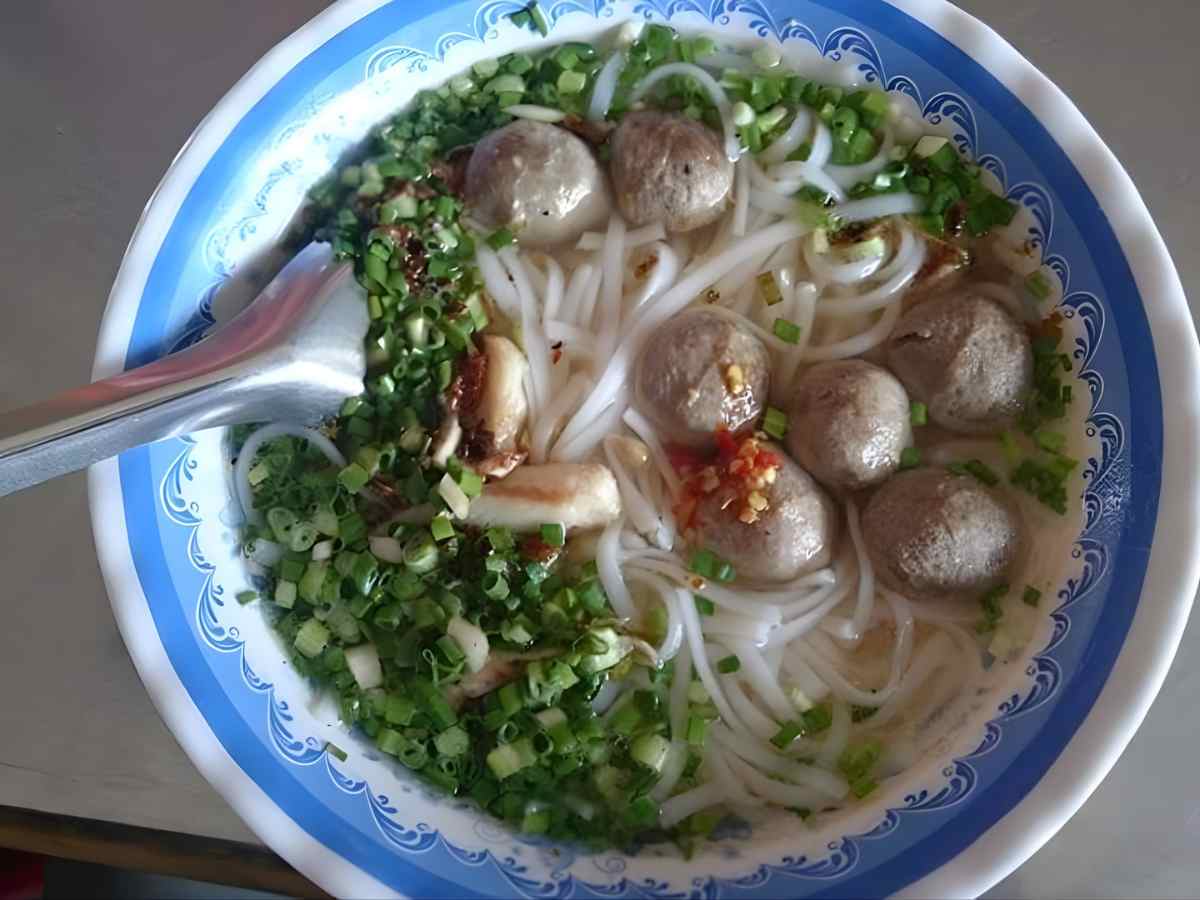
Beef Meatball Noodle Soup contributes to creating a balanced culinary experience in modern tourism. (Source: Collected)
The contrast between simple dishes and modern tourist spaces with convenient services creates depth for the journey's perception. Tourists experience the convenience of tourism infrastructure while also feeling the local life through cuisine. This combination helps the trip have more layers of different experiences.
Introducing local dishes in tourist tours helps connect the Bay Nui region with visitors from many places. Rustic cuisine becomes a part of the diverse tourism picture, alongside landscapes and sightseeing activities. The spiritual value that the dish brings contributes to making the journey more memorable for tourists.
4.2. Connecting the Experience with Southern Phu Quoc Island
Evoking the culinary emotions of the Bay Nui mountainous region when placed alongside destinations like southern Phu Quoc Island creates diversity in tourism experiences. Tourists can clearly feel the difference between the mountainous living space and the beach resort atmosphere. This transition makes the journey richer in emotions.
Experiencing simple Western Vietnamese cuisine when compared to the beach environment in Phu Quoc highlights the diversity of regional cultures. On one side are rustic dishes associated with daily life, and on the other is an expansive resort space associated with the sea and sun. This contrast provides a more comprehensive perspective on Vietnamese tourism.
Connecting the culinary journey from Beef Meatball Noodle Soup to attractions and entertainment helps tourists clearly feel the difference between traditional and modern tourism. Experiencing multiple types of tourism within the same trip creates a natural transition. Thus, the journey is not monotonous but gains depth of experience.
Bay Nui Beef Meatball Noodle Soup has a rustic cooking style, while also reflecting the life and character of the people in the That Son region. When this dish is placed in the context of modern tourism experiences, its value lies not only in its flavor but also in its ability to evoke local identity. As a result, the exploration journey becomes more seamless and profound.