
















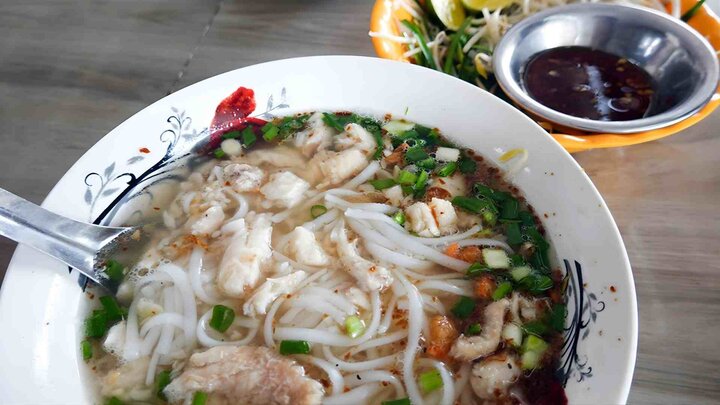
1. Culinary experience of Vinh Trung Banh Canh in the culinary life of An Giang
1.1. Vinh Trung and the context of the dish's formation
Vinh Trung Banh Canh is associated with the culinary life in Vinh Trung commune, now An Cu commune, An Giang province, where daily activities, labor, and cultural exchanges take place. In the rhythm of life of the Bay Nui region's residents, noodle soups like banh canh often appear in the morning or late afternoon, reflecting the habit of preferring easy-to-eat and energy-rich dishes. This dish originated from the utilization of local ingredients such as Neang Nhen rice flour and broth simmered from bones or river fish, creating a characteristic natural sweetness.
With manual processing and local raw materials, Vinh Trung Banh Canh has become a familiar choice in the daily meals of the people, from family meals to small roadside eateries. The frequent presence of the dish in daily life reflects a culinary culture closely linked to the local natural conditions and agricultural activities. Therefore, banh canh not only meets the needs of eating but also reflects culinary habits that have been formed over many years.
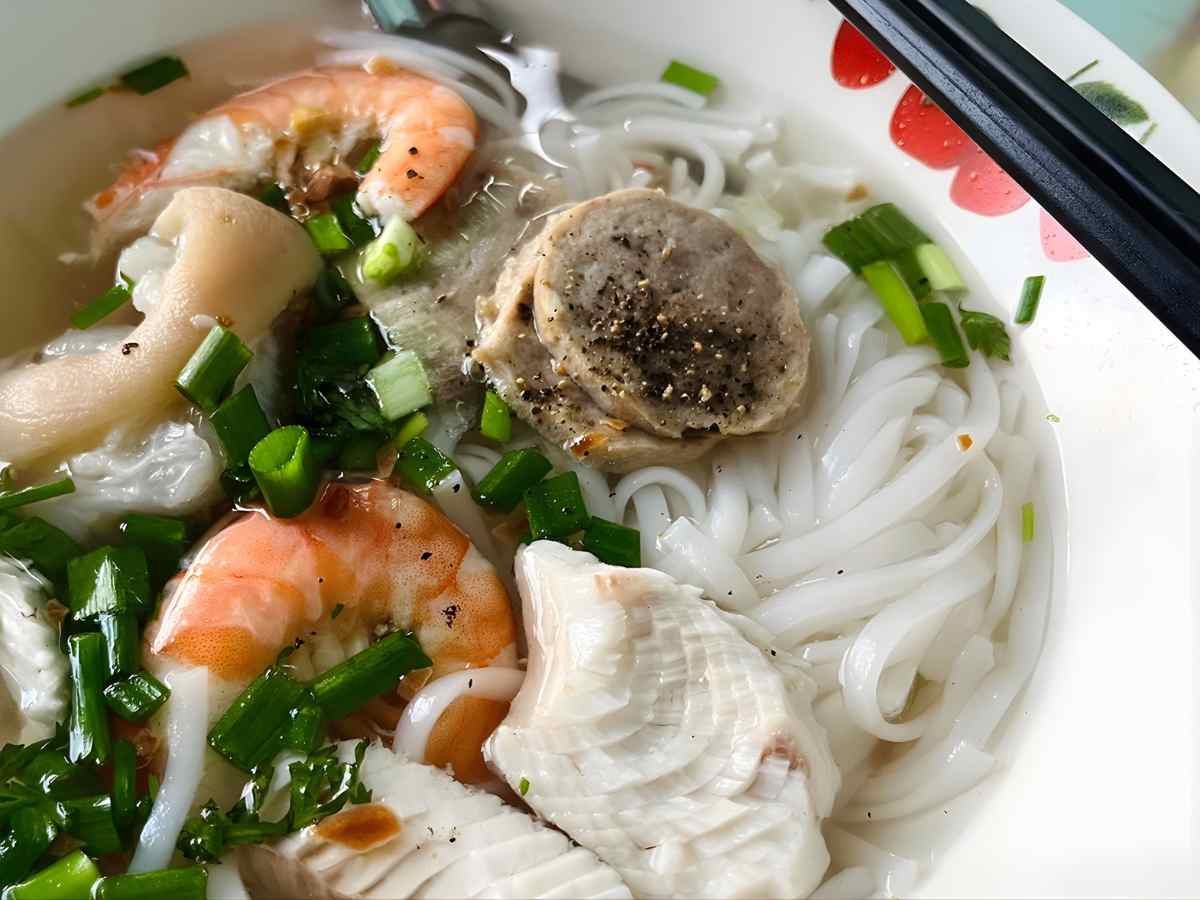
Vinh Trung noodle soup reflects the local living context and culinary culture. (Source: Collected).
Vinh Trung noodle soup became widely known as eateries gradually appeared along Le Loi street, connecting Tinh Bien center with the border area. Local diners and passersby often stopped to enjoy it, making the dish a familiar stop in daily life. Over time, the noodle soup has become an indispensable part of the culinary life of the Bay Nui region.
In the process of formation and development, Vinh Trung noodle soup was clearly influenced by the natural conditions and local pace of life. The utilization of readily available rice, local fish, and pork bones made the dish suitable for the daily lives of residents in the mountainous areas interspersed with plains. It is this close connection with the living environment that has helped the noodle soup maintain a stable position in people's meals over many years.
1.2. Vinh Trung noodle soup in community memory
Vinh Trung noodle soup is associated with many generations of local residents, as the image of noodle soup stalls has become familiar in daily life memories. From early morning to late afternoon, small stalls with steaming broth pots contribute to the simple rhythm of life in the Southern Vietnamese countryside. This dish has gradually become an imprint closely linked to the childhood and community activities of the people here.
More than just a filling meal, the noodle soup carries life stories, connecting generations within families and villages. A hot bowl of noodle soup evokes a sense of familiarity, like a part of the memory associated with the homeland for many An Giang natives. It is this spiritual value that makes Vinh Trung noodle soup cherished by the people alongside its culinary significance.
For many who have left their hometowns for the city, the flavor of Vinh Trung noodle soup remains a memory easily recalled when An Giang is mentioned. Mornings spent at a small stall, eating a hot bowl of noodle soup amidst the countryside atmosphere, have become an unforgettable familiar image. It is these simple experiences that have helped the noodle soup play a special role in the local community's memory.
2. Characteristics that create the unique flavor of Vinh Trung noodle soup
2.1. Noodles and main ingredients
The noodles of Vinh Trung noodle soup are made from Neang Nhen rice, a local specialty rice often used to create a chewy and smooth texture when immersed in hot broth. The noodles are flat, slender, and drier compared to many other types of noodle soup in different regions, while retaining their glossiness and natural aroma from the rice after processing. The process of rolling the dough and cutting the noodles is done evenly to ensure the noodles do not break or become mushy when added to the broth.
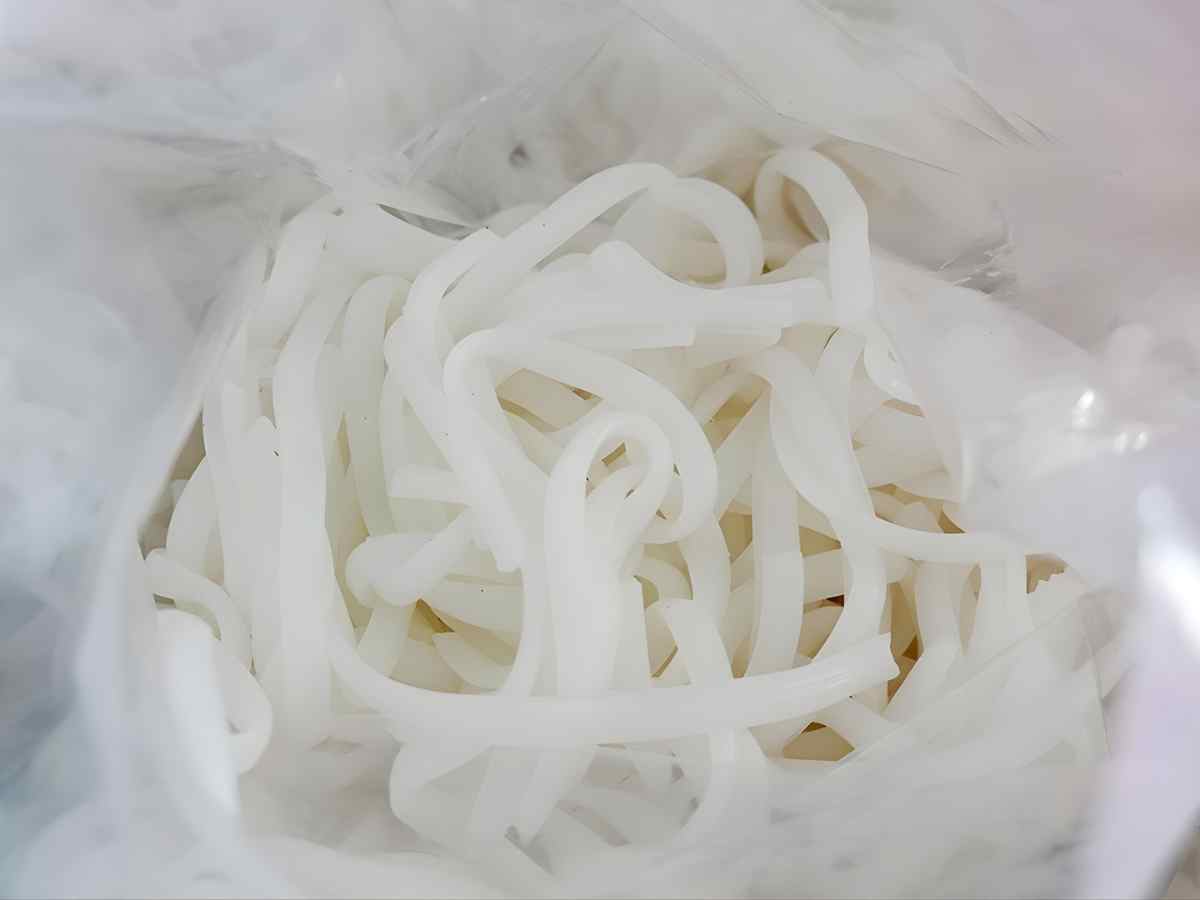
Nang Nhen rice noodle strands create chewiness and natural flavor. (Source: Collected).
When enjoyed, the noodle strands are moderately soft, harmoniously combined with the clear, sweet broth, offering a different experience compared to the thick, round bánh canh noodles commonly found in many regions. Accompanying ingredients such as snakehead fish, pork hock, shrimp, chicken, or beef balls are flexibly chosen according to the diner's taste. The variety of toppings contributes to enriching the way Vinh Trung bánh canh is enjoyed, reflecting the unique characteristics of local culinary culture.
2.2. Broth and Seasoning
The broth of Vinh Trung bánh canh is simmered from pork bones, chicken bones, and dried shrimp for many hours, creating the characteristic natural sweetness of the dish. The broth is moderately clear, not too fatty, helping to highlight the chewy noodle strands after being blanched. The aroma from the ingredients blends to create a harmonious and enjoyable overall taste.
Local seasoning focuses on balancing salt, pepper, and fish sauce according to Southern Vietnamese taste, preserving the original flavor of the main ingredients. The limited use of strong spices gives the broth a distinct character, easily recognizable when tasted. For many eateries in Vinh Trung, the cooking recipe has been kept stable over time, contributing to maintaining a familiar culinary experience for diners.
During the cooking process, vendors often maintain a moderate heat so the broth retains its clarity and natural flavor. The broth pot is continuously kept warm, allowing the aroma to spread and maintaining its deliciousness when served to diners. It is this meticulous attention to each cooking step that contributes to the well-rounded flavor experience of Vinh Trung bánh canh.
3. The Journey of Experiencing the Culinary Flavors of Vinh Trung Bánh Canh
3.1. Suitable Times and Ambiance
Vinh Trung bánh canh is often chosen by locals and tourists for breakfast or an afternoon snack. This is when the dish fully realizes its value, providing just enough satiety without feeling heavy. This habit is linked to the regular rhythm of life for the residents of the Bay Mountains region.
In the early morning, the atmosphere of a bánh canh eatery carries the characteristic tranquility of the An Giang countryside. The heat from the broth pot and the spreading aroma create a warm and pleasant feeling. Diners can enjoy their meal while observing the rhythm of life as a new day begins.
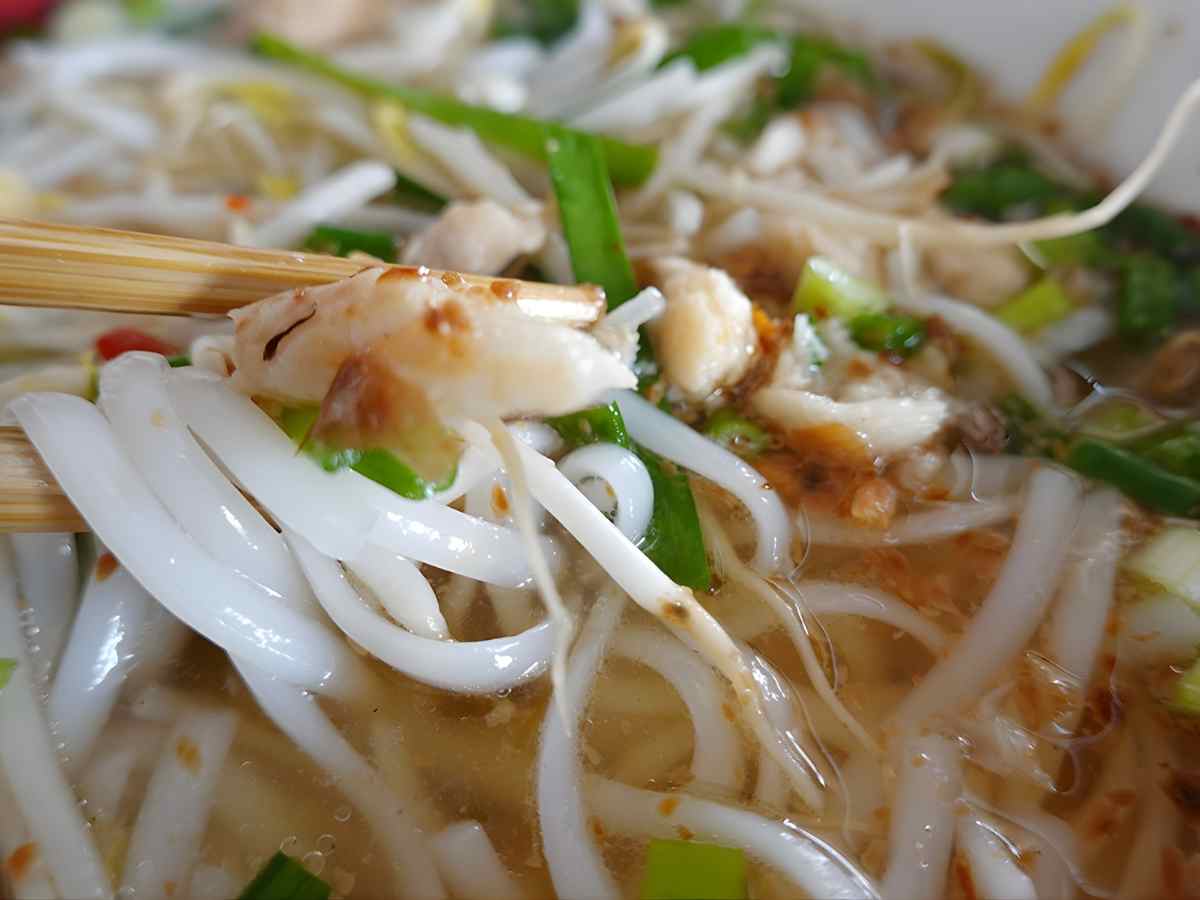
Vinh Trung noodle soup is often enjoyed in the morning in a familiar setting. (Source: Collected).
Banh canh eateries are often located by the roadside or in residential areas, with simple and familiar decor. Rustic tables and chairs, and an open space help diners feel comfortable and close. This simplicity creates a unique characteristic for the experience of enjoying Vinh Trung banh canh.
The unpretentious space, however, suits the spirit of the traditional dish. Diners come to the eatery not just to eat but also to enjoy a leisurely moment during the day. The combination of scenery and flavor makes this experience easily memorable for many.
3.2. Noodle soup tied to the culinary journey experience
In the journey of exploring Southern Vietnamese cuisine, Vinh Trung banh canh is often considered a familiar stop. The dish appears in the itinerary of many tourists when visiting An Giang, thanks to its palatable flavor and intimate dining atmosphere. This helps banh canh become a distinctly local culinary experience.
Vinh Trung banh canh reflects the combination of local ingredients and long-standing eating habits. The flat noodles and the sweet, clear broth offer a different sensation compared to many other popular noodle dishes. Thus, the dish contributes to showcasing the diversity of the riverine region's cuisine.
For tourists, enjoying banh canh is not just about the taste. The dish also opens up opportunities to access the daily life and culinary culture of the local people. Conversations at small eateries make the trip more intimate and authentic.
After leaving An Giang, many people still remember the taste of banh canh as part of their travel memories. The dish helps make the exploration journey complete and profound. Therefore, Vinh Trung banh canh retains its unique position in the culinary landscape of the South.
4. Connecting local cuisine with diverse travel experiences
4.1. Traditional cuisine in modern life
In today's travel, traditional cuisine plays an important role in connecting tourists with local culture. Simple dishes like Vinh Trung banh canh help diners access local life in an intimate and natural way. Through each meal, tourists gain more insight into the daily habits of Southern Vietnamese residents.
Banh canh not only satisfies hunger but also carries cultural experience value. The dish reflects how people choose ingredients, prepare food, and maintain culinary habits over many years. This makes banh canh a part of the daily life tapestry of the An Giang region.
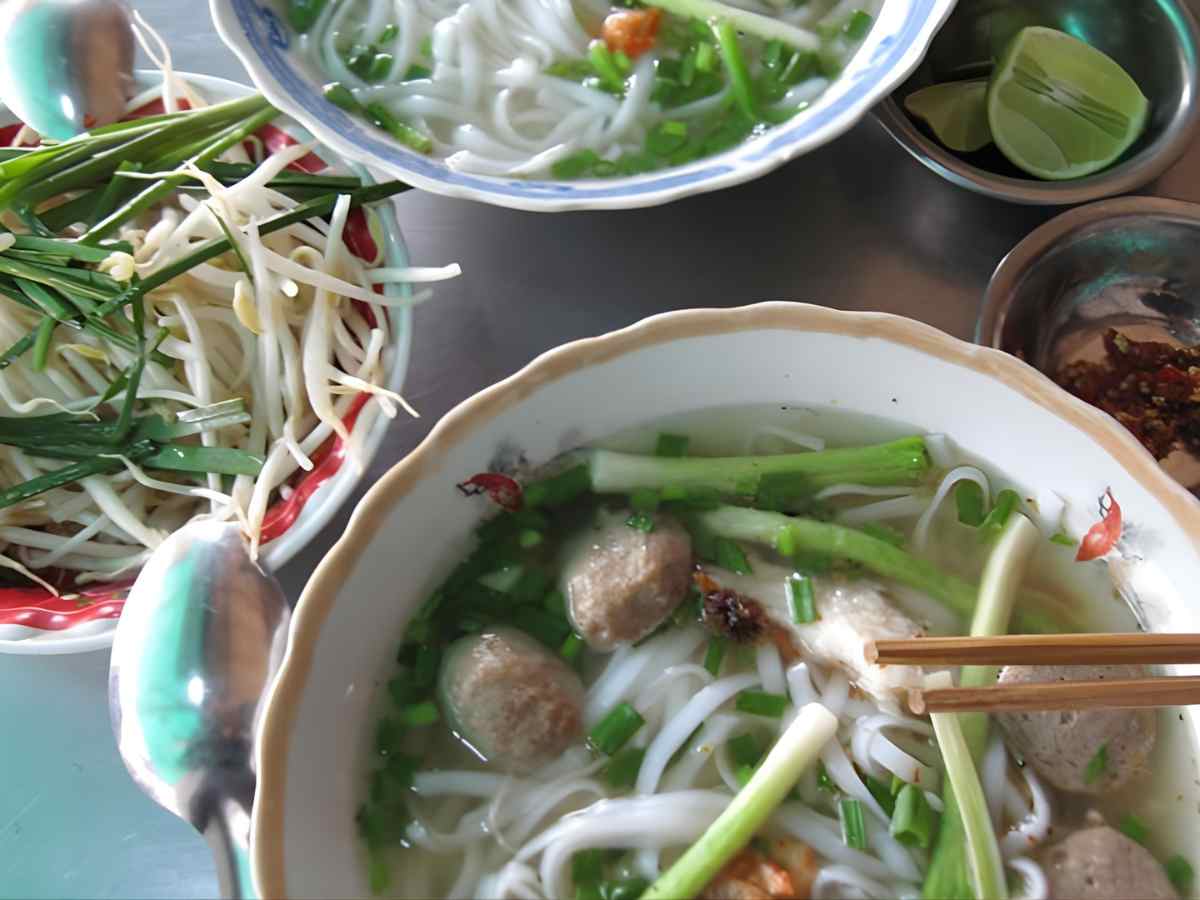
From a traditional dish, banh canh becomes a contemporary culinary experience. (Source: Collected).
In travel guides, traditional dishes are often introduced alongside landscapes and attractions. The presence of Banh Canh Vinh Trung in the exploration journey adds depth to the trip. Tourists not only admire the scenery but also gain a deeper understanding of local life through cuisine.
Amidst modern life, preserving and introducing traditional dishes contributes to preserving local cultural values. Banh Canh Vinh Trung brings a genuine and familiar feeling to those who experience it. This is also why this dish still holds a certain position in travel itineraries to An Giang.
4.2. Discover Southern Phu Quoc Island through an experiential journey
After enjoying Banh Canh Vinh Trung in An Giang, many tourists easily feel the spatial transition when continuing their journey to Southern Phu Quoc Island. The difference between the simple cuisine of the Mekong Delta and the island resort atmosphere creates a multi-dimensional experience. This makes the trip richer in emotions.
In Southern Phu Quoc Island, tourists have the opportunity to access entertainment and sightseeing activities with an experiential nature. Playgrounds and art performance spaces contribute to broadening the perception of modern tourism. The change in pace from slow to vibrant creates a memorable highlight in the journey.
Connecting emotions from traditional dishes to entertainment experiences helps the trip flow seamlessly. Tourists both retain memories of local flavors and enjoy diverse tourist spaces. This combination offers a more comprehensive perspective on the exploration journey.
From the river region of the Mekong Delta to the pearl island of Phu Quoc, each destination leaves its own mark. Banh Canh Vinh Trung, therefore, is not just a culinary experience, but also evokes associations with a multi-faceted travel journey. Through this, the trip becomes a continuous series of experiences combining culture, cuisine, and exploration spaces.
Simple in ingredients but rich in emotional depth, Banh Canh Vinh Trung clearly reflects how cuisine is intertwined with the lives of the people of An Giang. When placing this dish alongside modern tourist experiences, its traditional value does not fade but rather helps the journey become more harmonious and complete. It is precisely this balance between local cuisine and contemporary life that makes the trip leave many memorable aftertastes.