
















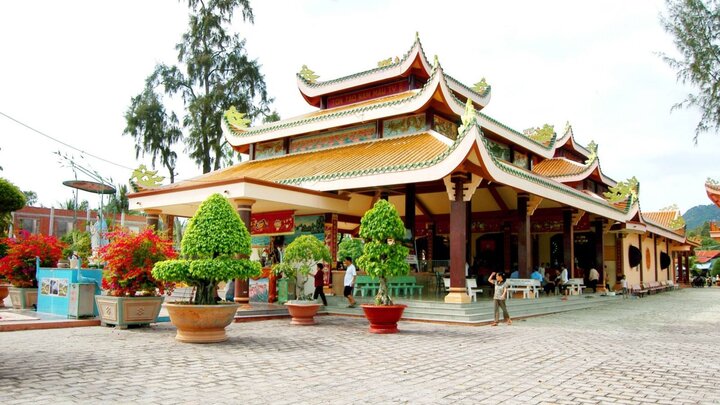
1. The Value of Mieu Ba Chua Xu Bau Muop in Local Spiritual Life
Mieu Ba Chua Xu Bau Muop is a spiritual space closely associated with the spiritual life of the community in Nha Bang town, Tinh Bien district, An Giang province. This place is not only a place of worship but also reflects folk beliefs formed alongside the process of residents coming to reclaim and settle in this land. Over time, the shrine has become a part of the daily spiritual activities of the local people.
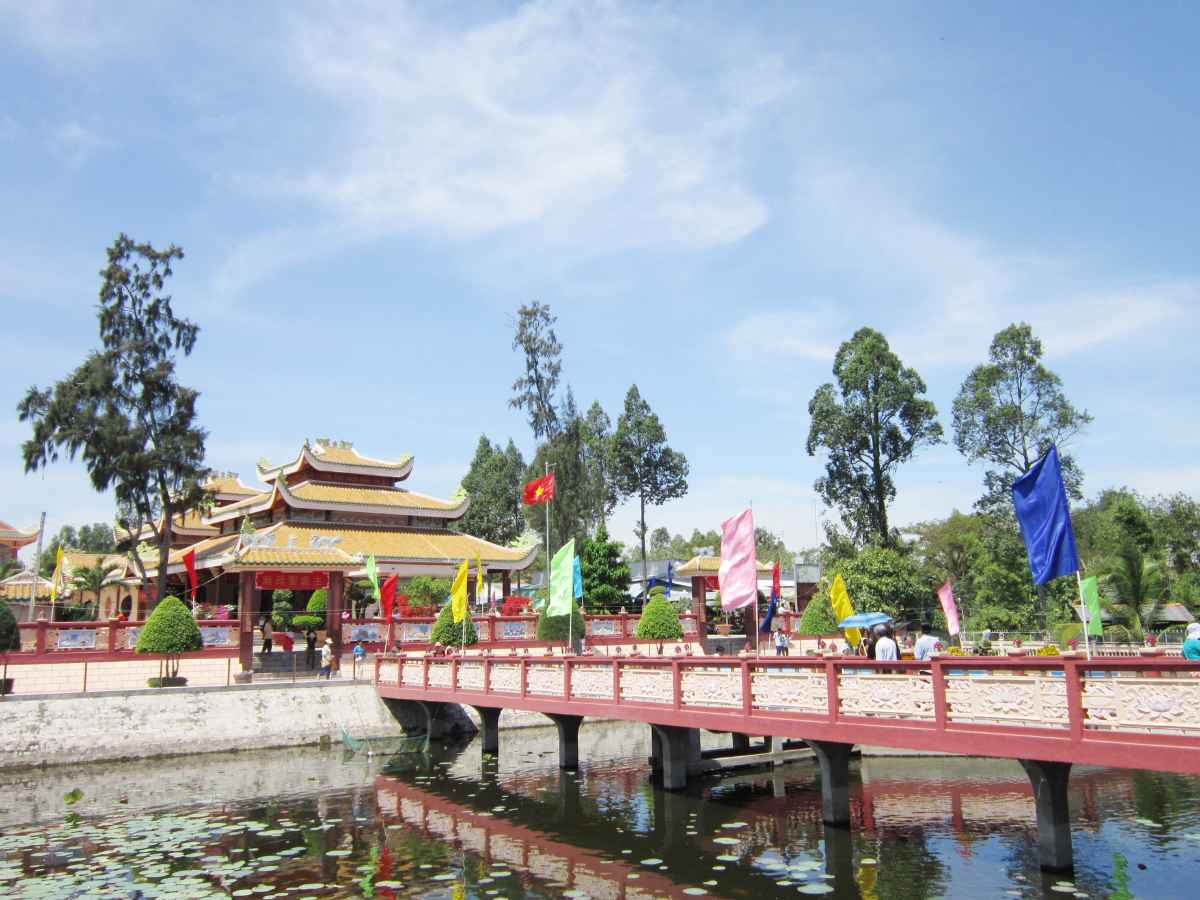
The Temple of Lady Chúa Xứ Bàu Mướp (Mieu Ba Chua Xu Bau Muop) stands as a spiritual center deeply connected to the rural community life of An Giang. (Source: Collected)
The temple was built in the mid-19th century by Phật Thầy Tây An Đoàn Minh Huyên and his followers who were clearing land and establishing settlements, to meet the spiritual needs of the new villagers. The formation of the temple is linked to the context of land expansion, life stabilization, and the creation of spiritual support for the community in the early stages. This indicates that the worship at the temple originated from the practical needs of the people's lives.
The temple's origin is not associated with large-scale construction but clearly reflects folk beliefs closely tied to daily life. The worship space was formed in harmony with nature and the surrounding landscape, creating a sense of familiarity for the local residents. Through this, the Temple of Lady Chúa Xứ Bàu Mướp (Mieu Ba Chua Xu Bau Muop) demonstrates the strong connection between faith, people, and the land.
2. Worship Space and Activities at the Temple
2.1. Temple Layout and Main Components
The overall space of the Temple of Lady Chúa Xứ Bàu Mướp (Mieu Ba Chua Xu Bau Muop) includes the main sanctuary for worshipping Thánh Mẫu Tiên Nương, a three-gate entrance (cổng tam quan), and a spacious courtyard in front. In addition to the main area, the temple has auxiliary sections such as altars, a display area for traditional farming tools, and a pond associated with the memory of the locality's freshwater pond. This arrangement reflects the organization of a spiritual space integrated with agricultural life and local community activities.
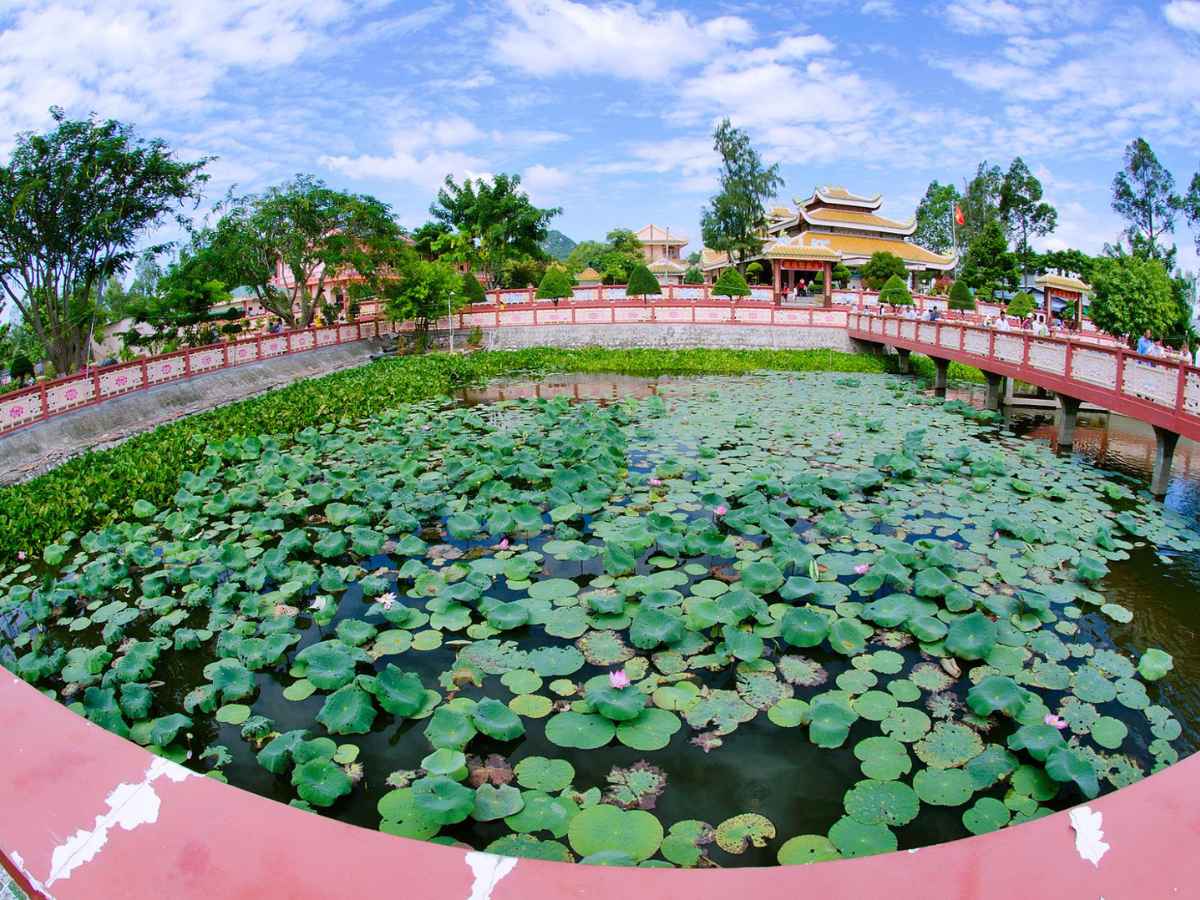
The temple layout harmoniously blends a lotus pond, ceremonial sân, and traditional Southern Vietnamese architecture. (Source: Compilation)
The areas within the temple are clearly divided to concurrently serve the purpose of worship and the community's daily life. The temple yard is spacious and airy, surrounded by greenery and natural landscapes, creating a sense of closeness and accessibility for both locals and pilgrims. The overall architecture is simple, reflecting the characteristics of folk beliefs in the An Giang region.
2.2. How locals access the worship space
Locals access the worship space at the temple through familiar actions such as lighting incense, offering fruits and flowers, and praying for family and work. These activities take place in a simple manner, stemming from sincere devotion and spiritual beliefs passed down through generations. The worship space thus becomes a place for each person to entrust their wishes and find peace.
Visits to the temple are often maintained at the beginning of the year or on the first and fifteenth days of the lunar month as a recurring habit over time. This mode of interaction shows a continuous bond between individuals and the spiritual space, rather than just a short-term act of worship. With each visit, the spiritual connection between people and folk beliefs continues to be nurtured.
2.3. The temple's atmosphere on normal days and during festivals
On normal days, the atmosphere at Mieu Ba Chua Xu Bau Muop is tranquil with few visitors, mainly local residents and some individual pilgrims. The surrounding landscape with greenery, the lake, and natural sounds creates a sense of serenity, suitable for introspection and personal wishes. This rhythm of life clearly reflects the daily spiritual life, which is gentle and familiar.
During the festivals of Ba Chua Xu Bau Muop, held on the 19th, 20th, and 21st of the 4th lunar month, the temple area becomes more bustling with the participation of many people and visitors from various places. Rituals such as the Ba's bathing ceremony, the main sacrifice, and the "bong roi" dance create a solemn atmosphere, demonstrating the depth of cultural beliefs maintained over generations.
The clear difference between normal days and festival occasions is also reflected in the sense of community as people gather, participate in rituals, and share common beliefs. These activities contribute to maintaining the flow of traditional spiritual life, while also strengthening the connection between individuals, the community, and the local spiritual space.
3. Significance of the Ba Temple as a destination
3.1. The temple as a place for personal faith
The medium-sized worship space of Mieu Ba Chua Xu Bau Muop creates a sense of closeness for visitors due to its simple architecture and unpretentious rituals. This familiarity helps visitors easily enter the spiritual space without feeling alienated. Thus, the temple becomes a familiar spiritual stop in daily life.
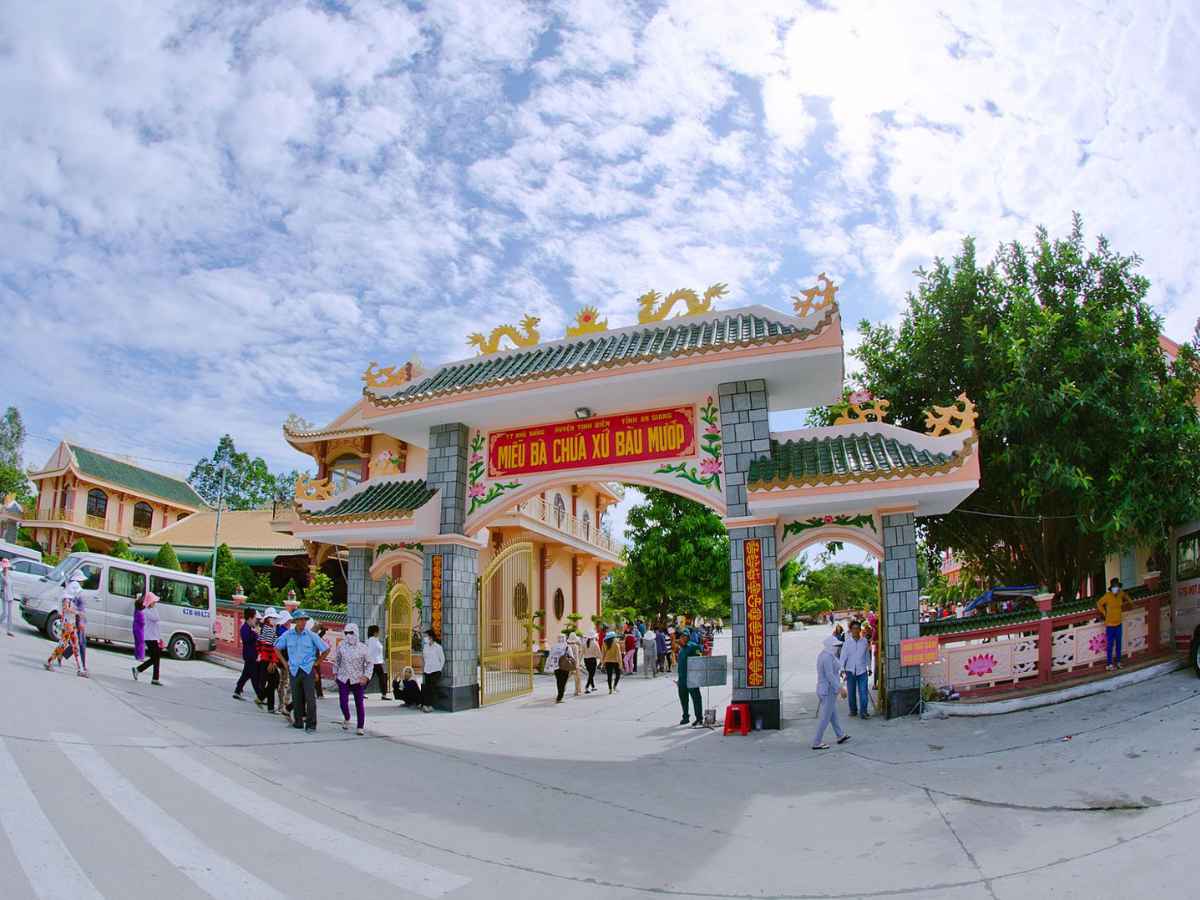
The temple space creates a sense of closeness, where folk beliefs are preserved through daily life. (Source: Collected)
Many people visit the temple to entrust their personal wishes such as health, peace for their family, or success in work. These private prayers make the sacred space more serene and profound. Each visit to the temple is an opportunity for visitors to commune with their own beliefs.
A sense of peace is formed when visitors can access the temple space naturally without needing complex rituals. Thus, religious activities are integrated into daily life rather than occurring only on special occasions. Over time, personal faith is nurtured in a stable and enduring manner.
3.2. Formation of Spiritual Memories Across Generations
Mieu Ba Chua Xu Bau Muop is a place that preserves spiritual memories intertwined with the family and local community life. Many families bring their children to the temple from an early age, considering it a familiar part of their cultural activities. These early visits gradually become cherished childhood memories.
Besides worship, stories about Ba are passed down during each visit, contributing to nurturing faith through narration and real-life experiences. These stories not only hold religious significance but also create connections between family generations. Thus, the temple stands as a long-term spiritual anchor.
The repetition of temple visits during festivals or religious days creates a continuous chain of memories in each person's life. The temple space is associated with different life stages, from childhood to adulthood. Through this, spiritual memories are naturally passed down from one generation to another.
4. Notes and Appropriate Visiting Etiquette for Mieu Ba Chua Xu Bau Muop
4.1. Maintain a Respectful Attitude in a Sacred Space
When visiting Mieu Ba Chua Xu Bau Muop, maintaining a respectful attitude is essential for every visitor. This is demonstrated through quiet movement, minimizing noise, and adhering to the general regulations within the temple grounds. Appropriate behavior helps maintain the solemnity of the sacred space.
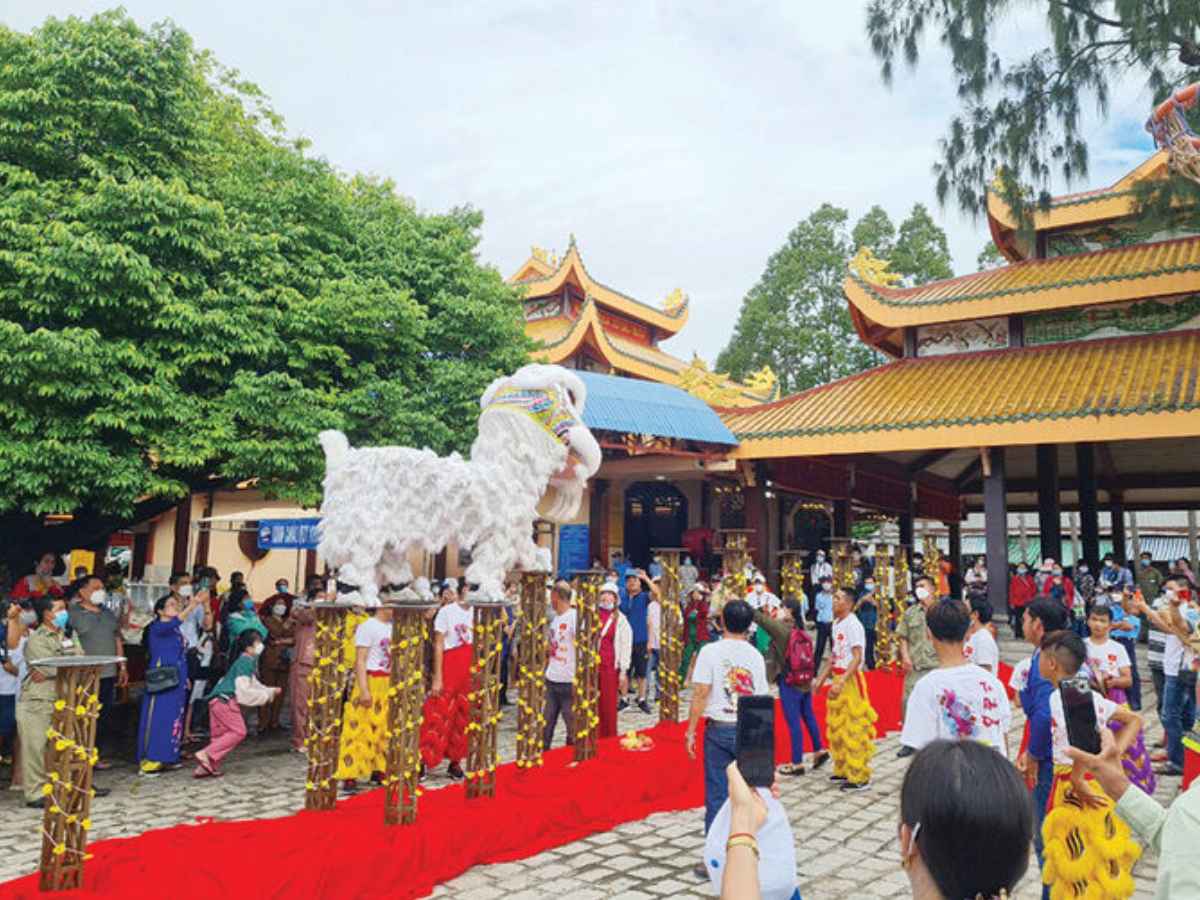
Festival activities and visits require a respectful attitude to maintain solemnity. (Source: Collected)
Respect is also shown by not interrupting the rituals of others who are worshipping. Allocating appropriate space and time for the local community is a way to show restraint when participating in religious activities. This contributes to creating a harmonious atmosphere in the temple area.
Besides, maintaining general hygiene and the surrounding landscape is also part of a respectful attitude. A clean space helps visitors better feel the cultural and spiritual values of this place. Thereby, the experience at the temple becomes more complete.
4.2. Attire and preparation of offerings
Attire when visiting Mieu Ba Chua Xu Bau Muop should be chosen for simplicity and politeness. Dressing appropriately helps visitors blend into the solemn atmosphere of the spiritual space. This also shows respect for local customs.
The preparation of offerings is usually simple, with familiar items such as fresh flowers, fruits, and incense. Offerings signify sincerity rather than outward appearance. This preparation method is suitable for local religious practices.
When offerings are prepared with sincerity, visitors can easily feel the connection between themselves and the worship space. The experience of visiting the temple thus becomes lighter and more profound. This helps maintain the beauty of community religious activities.
4.3. Respecting local community activities
Respecting the daily activities of the local community is an important factor when visiting Mieu Ba Chua Xu Bau Muop. Visitors should avoid disrupting the general rhythm of life and not interrupt ongoing religious activities. This approach helps maintain a balance between visitors and the surrounding residents.
Observing and learning about local customs should be done with restraint and attentiveness. The temple space is closely linked to the spiritual life of the people, so respect is essential. This helps visitors better understand the cultural values of the area.
When approaching the temple with a spirit of respect, the experience becomes more meaningful for both visitors and the local community. Harmonious interaction contributes to preserving the spiritual values that have been maintained for generations. Thus, the spiritual space continues to be maintained in its original role.
Mieu Ba Chua Xu Bau Muop is a destination with a very distinct folk spiritual character. The temple space is simple yet sacred, attracting tourists seeking peace. When mentioning Mieu Ba Chua Xu Bau Muop, Sun World Hon Thom is often included as an example of a different tourism development approach.