















1. Discover An Giang's green rice flakes and the culinary landscape of the Mekong Delta
1.1. The value of green rice flakes in the life of the Southern Khmer people
An Giang's green rice flakes are a dish closely associated with the Southern Khmer community, often appearing in daily life and traditional festivals such as the Ok Om Bok festival. In this ritual, green rice flakes are used as offerings to the deities, expressing gratitude for the harvest and the land. The dish not only serves culinary needs but also reflects the strong relationship between humans, nature, and the community's spiritual life.
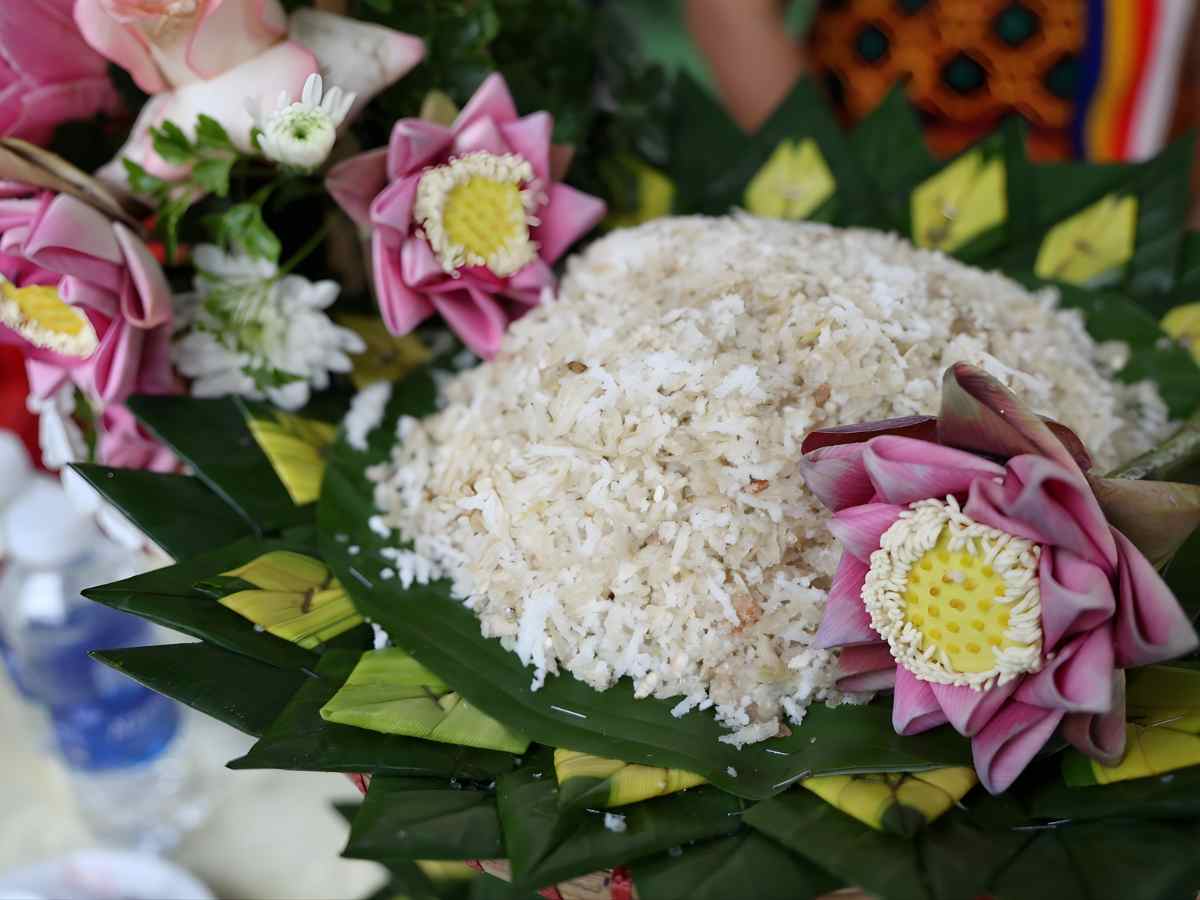
Com dep (flattened rice flakes) plays an important role in the cultural life of the Southern Khmer people. (Source: Collected).
In the life of the Khmer people, making and enjoying com dep (flattened rice flakes) carries a meaning that goes beyond daily meals. Com dep (flattened rice flakes) is often associated with the end of the harvest season, marking the agricultural production cycle of the year. The presence of this dish in moon worship ceremonies clearly reflects the connection between individuals, families, and the community.
Besides its ceremonial value, com dep (flattened rice flakes) is also a cultural symbol passed down through generations. From selecting rice to processing, each step bears the mark of folk knowledge. This is what helps com dep (flattened rice flakes) maintain its important role in the spiritual life of the Southern Khmer people.
1.2. Why An Giang is considered a typical com dep (flattened rice flakes) region
An Giang is considered one of the typical com dep (flattened rice flakes) regions of the South due to its favorable rice cultivation conditions and fertile land. Besides natural factors, the Khmer community here still maintains the traditional com dep (flattened rice flakes) making craft through many generations. This inheritance contributes to preserving the processing techniques and characteristic flavor of the dish.
The glutinous rice selected is usually young rice, just reaching the milky stage, which is crucial for the chewiness and aroma of the finished com dep (flattened rice flakes). Harvesting at the right time helps the rice grains retain their soft texture and natural rice aroma. This is the foundation for An Giang com dep (flattened rice flakes) to have its own distinct characteristic in taste perception.
The process of making com dep (flattened rice flakes) in An Giang requires meticulousness from selecting grains, soaking rice to roasting and pounding. Localities like Tri Ton and Tinh Bien still have many families maintaining the seasonal com dep (flattened rice flakes) making craft. Products from these areas have their own unique characteristics, difficult to confuse with com dep (flattened rice flakes) from other regions.
2. The process that creates An Giang com dep (flattened rice flakes)
2.1. Glutinous rice and harvest time
The main ingredient for making An Giang com dep (flattened rice flakes) is young glutinous rice, harvested when the grains are still soft and milky, which directly affects the chewiness of the finished com dep (flattened rice flakes). Khmer people often harvest the rice before it is fully ripe, commonly around the 8th to 10th lunar months. This timing helps retain the natural aroma and soft texture of the rice grains.
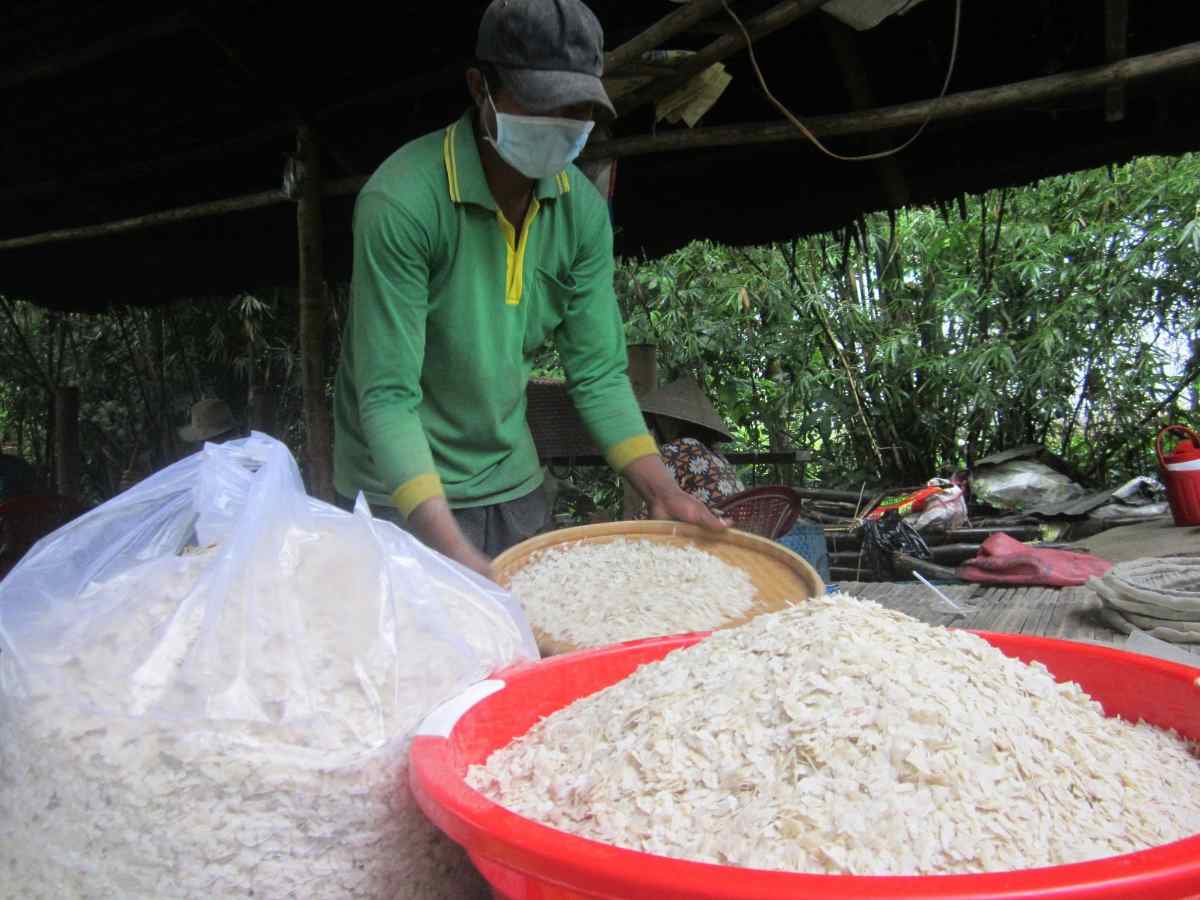
Young sticky rice harvested at the right time creates the quality of An Giang com dep. (Source: Collection).
Harvesting at the right season plays an important role in the quality of com dep after processing. When the sticky rice grains are still young, the roasting and pounding process will create a moderate chewiness, not becoming hard or dry. This is also the reason why com dep is often associated with the harvest season and the rhythm of local agricultural life.
2.2. Traditional manual processing steps
The manual process of making com dep in An Giang goes through many meticulous, sequential steps such as roasting, pounding, and winnowing. Each step requires skill, experience, and harmonious coordination from the artisans to create soft, chewy com grains with the aroma of new rice.
First, the harvested sticky rice is carefully selected and cleaned to remove impurities. The artisans usually choose moderately young sticky rice, as this is an important factor for the com grains to retain their chewiness and characteristic aroma after processing. Then, the sticky rice is roasted over a wood fire or in a large clay pot. The roasting stage requires the artisan to control the heat evenly while stirring continuously so that the sticky rice cooks slowly. When the rice begins to emit a light aroma and the husk turns a moderate color, it is time for the sticky rice to move to the next step.
Next is the pounding stage – a crucial step that determines the quality of com dep. The hot roasted rice is placed in a large wooden mortar, and long pestles are used for continuous pounding. Typically, this process requires two to three people to coordinate: one pounds, while the other stirs the rice and adjusts the pounding rhythm to be even. The pestle strokes must be decisive but not too strong, allowing the rice grains to flatten gradually while separating the husk. It is the rhythmic pounding that helps the com grains retain their softness, chewiness, and beautiful shape.
After pounding, the com is winnowed using a bamboo tray – a step that removes the husk, shell, and any substandard rice grains. The com makers usually shake the tray gently with rhythmic hand movements to let the husk fly out, keeping only the standard com grains. Good com grains are usually pale green or naturally bright yellow, flat, soft, and emit a gentle aroma of new rice.
This is the final step before the com is consumed directly or processed with other ingredients such as shredded coconut, palm sugar, or roasted sesame seeds. Thanks to the meticulous manual process and generations of inherited experience, An Giang com dep is not only a rustic dish but also a characteristic culinary culture of the Mekong Delta region.
2.3. Flavor formed from technique and memory
The flavor of An Giang com dep comes not only from processing techniques but also from the memories of local people. Each step of making com requires time and care, creating a sense of closeness during the processing. This contributes to forming a flavor that is more about the experience than a quickly made product.
Compared to machine production methods, manual com dep retains the chewiness and natural aroma of sticky rice. The sound of the pounding pestles, the smell of roasted rice, and the cozy family atmosphere are familiar images to many generations. These memories become part of the dish's value.
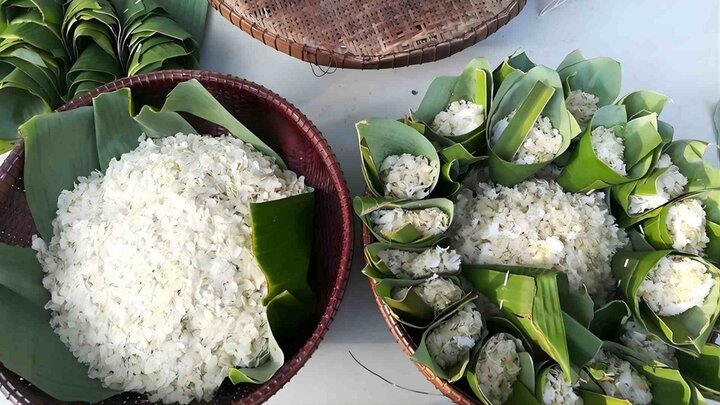
After completion, the com grains are a light ivory white, soft, and easily combined with shredded coconut and sugar according to local taste. This simple mixing method highlights the sticky rice flavor and the local culinary essence. As a result, com dep is not just a dish but also reflects the cultural depth and traditions of the region.
3. An Giang com dep on the journey of exploring the South
3.1. Com dep as a gift with strong identity
An Giang com dep is often chosen by tourists as a souvenir after exploring the West of Vietnam because of the cultural story associated with the product. The com dish evokes memories of the harvest, the hands of manual artisans, and the community life of local residents. It is these values that make com dep transcend the meaning of an ordinary gift.
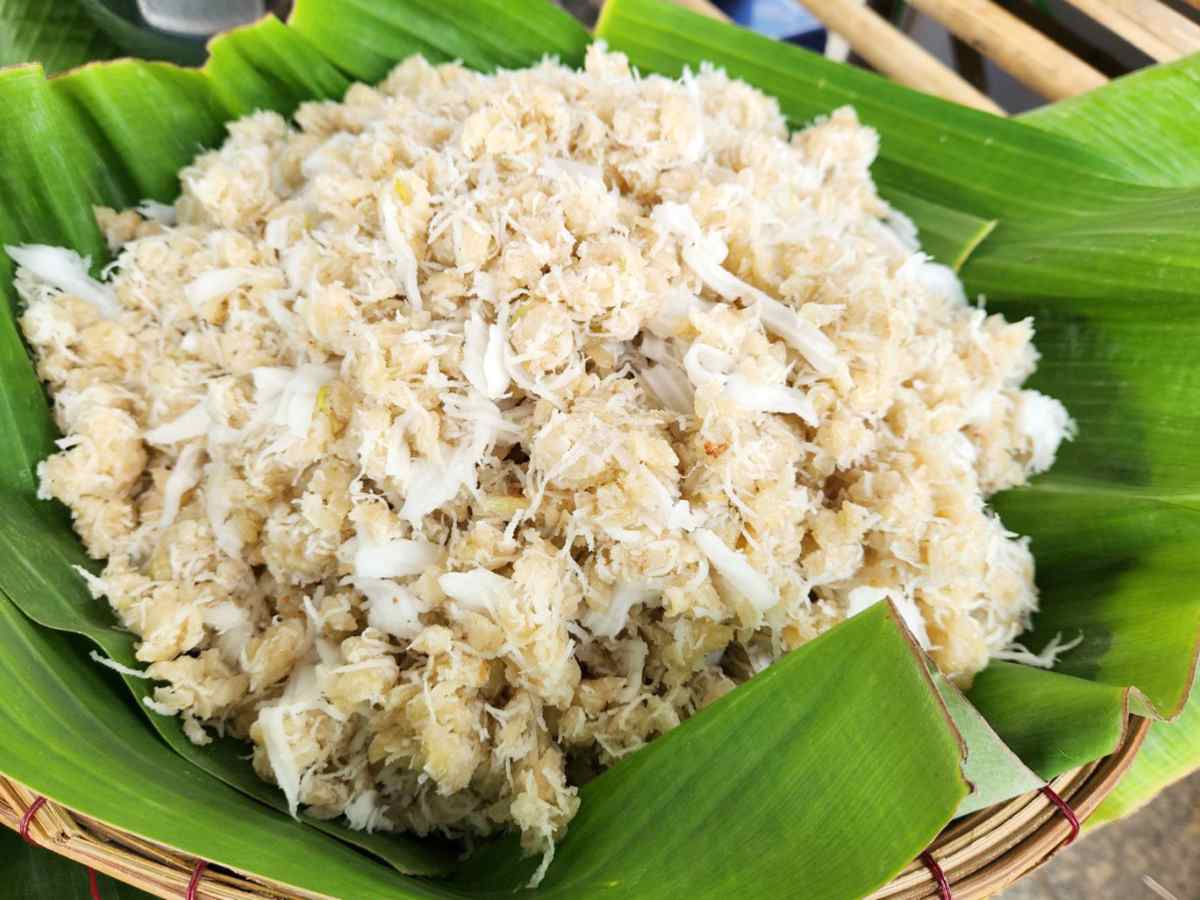
Com dep becomes a gift imbued with local identity and memories. (Source: Collected).
When presented as a gift, com dep not only carries a rustic flavor but also expresses appreciation for local traditions and life. Recipients can somewhat feel the rhythm of life and the skill of making com dep by the people of the Mekong Delta. This small gift thus becomes a bridge between tourism experiences and cultural memories.
3.2. Connecting Culinary and Tourism Experiences
The experience of enjoying An Giang's com dep can be integrated into Vietnam travel itineraries, from the Mekong Delta to island destinations. When traveling from the riverine region of Bay Nui, An Giang to the South of Phu Quoc Island, the local culinary narrative continues alongside other tourism experiences. This connection makes the journey seamless and culturally rich.
Transitioning from the sensation of enjoying traditional food to modern entertainment activities creates a diverse tourism picture. The image of com dep becomes a starting point for a series of continuing cultural experiences in new settings. Consequently, the traditional flavor contributes to enriching the visitor's overall perception of the destination.
3.3. Emotional Imprint from Traditional Cuisine to Modern Shows
The association between the slow enjoyment of com dep and visual art experiences like the Kiss of The Sea show reflects the intersection of tradition and modernity. In the peaceful space of the Mekong Delta, the fragrant chewiness of com dep brings a sense of closeness and tranquility. This experience creates a distinct emotional foundation before engaging in more vibrant entertainment activities.
In destinations like the South of Phu Quoc Island, modern art programs expand visual and auditory experiences. The distinct yet complementary nature of traditional cuisine and artistic performances creates a multi-dimensional travel journey. The transition of emotions from peace to modern life contributes to creating lasting memories after the trip.
From simple young rice grains, An Giang's com dep gradually transcends its role as a dish to become a cultural symbol associated with community memories and regional exploration. Amidst the development of modern tourism, this rustic value is preserved as part of the identity, reminding us that each memorable trip often begins with familiar and authentic flavors.